



Star Trek postage stamps
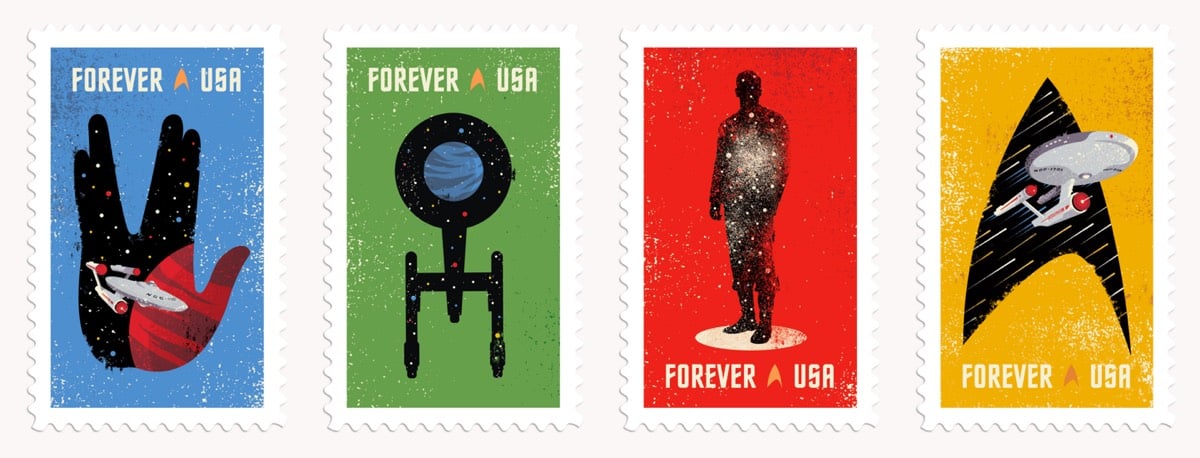
The USPS is releasing a set of four commemorative Star Trek stamps on the 50th anniversary of the original series. The stamps were designed by Heads of State and you can buy there here.

This site is made possible by member support. 💞
Big thanks to Arcustech for hosting the site and offering amazing tech support.
When you buy through links on kottke.org, I may earn an affiliate commission. Thanks for supporting the site!
kottke.org. home of fine hypertext products since 1998.
Beloved by 86.47% of the web.
The USPS is releasing a set of four commemorative Star Trek stamps on the 50th anniversary of the original series. The stamps were designed by Heads of State and you can buy there here.
Mike Upchurch was a writer for Mr. Show and MADtv but now he’s making these clever little videos with additional actors spliced into the narratives of Cocktail (the Tom Cruise movie) and the Dragnet TV series.
Both feature actor/comedian Chris Fairbanks in the lead role and are noted as “proof-of-concepts” for a series called Electric Television that Upchurch is presumably developing. Someone should greenlight it. (via @dunstan)
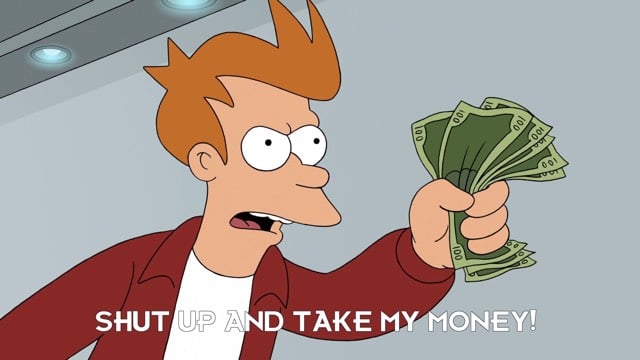
Morbotron is a screencap search engine for Futurama. The cap above is perhaps the most popular use case. It also does animated GIFs. See also Frinkiac, the Simpsons screencap search engine.
Brendan Dassey, who was one of two men convicted for the murder of Theresa Halbach, may be released from prison soon. A federal judge issued a ruling overturning his conviction today:
Concluding the 91-page decision, Duffin found that investigators made false promises to Dassey during multiple interrogations.
“These repeated false promises, when considered in conjunction with all relevant factors, most especially Dassey’s age, intellectual deficits, and the absence of a supportive adult, rendered Dassey’s confession involuntary under the Fifth and Fourteenth Amendments. The Wisconsin Court of Appeals’ decision to the contrary was an unreasonable application of clearly established federal law,” Duffin wrote.
Prosecutors have 90 days to decide to retry Dassey or release him. It was fairly clear to me, having watched Making a Murderer, that Dassey was innocent (or at the very least, was not given a fair trial).
From 1971, here’s Jesse Jackson on Sesame Street doing a call-and-response with the children of the poem I Am - Somebody.
I Am
Somebody
I Am
Somebody
I May Be Poor
But I Am
Somebody
I May Be Young
But I Am
Somebody
I May Be On Welfare
But I Am
Somebody
It’s difficult to imagine something like this airing on the show now. Sesame Street was originally designed to serve the needs of children in low-income homes, but now the newest episodes of the show air first on HBO…a trickle-down educational experience. (via @kathrynyu)
ZAPP presents…Famous Trump Quotations! pic.twitter.com/cFq1rQ4veY
— Billy West (@TheBillyWest) August 11, 2016
ZAPP presents … Famous Trump Quotes! #WednesdayWisdom #ManWithAPlan pic.twitter.com/dpKJOVkTmA
— Billy West (@TheBillyWest) August 10, 2016
Billy West, who does the voice of Futurama’s Zapp Brannigan, is taking quotes from Donald Trump and speaking them in Brannigan’s voice. This is silly and dumb, but I can’t help loving these.
Update: The addition of Kif’s reactions really takes these to the next level.
Zapp (& Kif) present…Famous Quotes from Donald J Trump#MakeAmericaBrannigan@MAURICELAMARCHE pic.twitter.com/g7zEzy3sGZ
— Billy West (@TheBillyWest) August 15, 2016
Kif sighs for all of America. And this one, I mean…if they wrote this dialogue for the show it would be rejected because not even Zapp is that outlandishly dim and egotistical.
Zapp presents…Famous Quotations from Donald J Trump! pic.twitter.com/eorklqXsMk
— Billy West (@TheBillyWest) August 12, 2016
Transparent returns to Amazon for a third season on September 23. I’ve said this before, but Transparent is my favorite show on TV right now. If you haven’t watched it yet, summer is the perfect opportunity to catch up before the new season starts.
Like many of you, I have been watching Stranger Things on Netflix. My 80s movie fixations tilted towards the War Games/Explorers/Goonies end of the spectrum rather than the supernatural/horror/Steven King end so I’m not obsessed, but I am definitely enjoying it. You can watch the first 8 minutes of the show to judge for yourself.
But I love the opening credits, especially the music. (Both remind me of the opening credits for Halt and Catch Fire.) The title song was composed by Kyle Dixon and Michael Stein, members of Austin synth band Survive. Someone did a 10-minute extended version of the song and put it up on Soundcloud:
Currently on repeat for the last hour with no sign of stopping. You may also be interested in a pair of playlists featuring music from the show:
What else? Here’s a deep dive into the font used for the opening credits (which was also used for the Choose Your Own Adventure books back in the 80s). Alissa Walker wrote about the free-range children on display in ST, something that also grabbed my attention. When I was a kid, I rode my bike everywhere. On summer weekends, I typically ate breakfast at my house and was gone until dinnertime. My parents had no clue where I was or what I was up to…and none of my classmates’ parents did either.
Update: Garrett Shane Bryant made a 50-track playlist of songs that sound like the score of the show. Outstanding. (via @dozens)
Update: From the NY Times, The ‘Stranger Things’ School of Parenting.
Still, “Stranger Things” is a reminder of a kind of unstructured childhood wandering that — because of all the cellphones, the fear of child molesters, a move toward more involved parenting or a combination of all three — seems less possible than it once was.
The show’s references to beloved films of the ’80s have been much remarked upon, but “Stranger Things” also calls to mind all those books and TV shows — from “The Chronicles of Narnia” to “Muppet Babies” — where parents are either absent or pushed into the background.
These stories let children imagine breaking the rules, but they also allow them to picture themselves solving mysteries or hunting down monsters all on their own. Often it’s only when the parents aren’t watching that a child can become a hero.
(via @CognoscoCuro)
Update: The official soundtrack for the show is available on iTunes. It’s the score though, not the classic 80s tunes.
Update: Vox spoke to a creative director at Imaginary Forces about their process for designing the opening titles.
Update: And the score is now available on Spotify. This is my working music for the day.
Update: Dixon and Stein talked about how the music for the show came about.
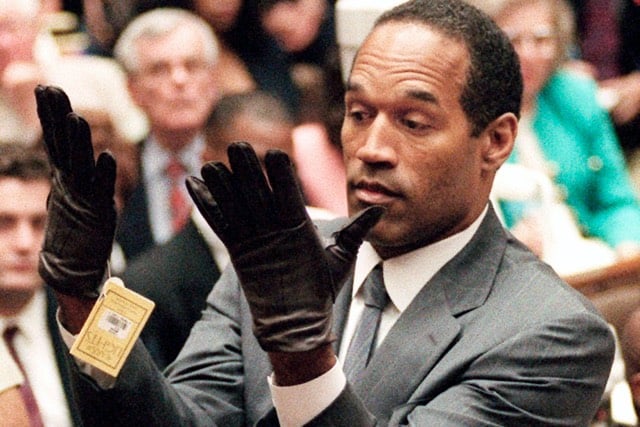
Last night, I finished OJ: Made in America, ESPN’s 8-hour documentary series about OJ Simpson. Prior to starting the series, I would rather have poked an eye out than spend another second of my life thinking about OJ Simpson; I’d gotten my fill back in the 90s. But I’d heard so many good things about it that I gave it a shot. Pretty quickly, you realize this is not just the biography of a man or the story of a trial but is a deep look at racism, policing, and celebrity in the US. OJ: Made in America is excellent and I recommend it unreservedly. From Brian Tallerico’s review:
Ezra Edelman’s stunningly ambitious, eight-hour documentary is a masterpiece, a refined piece of investigative journalism that places the subject it illuminates into the broader context of the end of the 20th century. You may think you know everything about The Trial of the Century, especially if you watched FX’s excellent “The People vs. OJ Simpson: American Crime Story,” but “OJ: Made in America” not only fills in details about the case but offers background and commentary that you’ve never heard before. It is an examination of race, domestic abuse, celebrity, civil rights, the LAPD, the legal process and murder over the last fifty years, using the OJ Simpson story as a way to refract society. Its length may seem daunting, but I would have watched it for another eight hours and will almost certainly watch it again before the summer is over. It’s that good.
The only real criticism I have of the series is that the treatment of women in America should have been explored more, on the same level as racism and celebrity. A.O. Scott picked up on this in his NY Times review:
It is hard not to notice the predominance of male voices among the interview subjects, and the narrowness of the film’s discussion of domestic violence. This is not to say that the issue is ignored: Mr. Simpson’s history of abusing Nicole is extensively and graphically documented, as is the fact that most of his friends ignored what was going on at their Rockingham estate. But the film, which so persuasively treats law enforcement racism as a systemic problem, can’t figure out how to treat violence against women with the same kind of rigor or nuance.
A fuller discussion of domestic violence in the US and misogyny in sports would have provided another powerful, reinforcing aspect of the story.
I really like Sherlock, but a little less so every season…and this trailer seems to point in what I feel is a bad direction. Why does everything have to be so cartoonishly big and important? This isn’t James Bond with the entire world under imminent threat every 12 months from some heretofore unknown super-villain who is in charge of a global cabal of baddies that suddenly materialized, fully formed, out of nowhere. To be fair, Sherlock is far from the only show/movie series that does this (and to be more fair, they do it less than most), but the constant raising of the stakes is lazy writing and leads only into a corner.
The two most suspenseful movies I saw last year were Mad Max: Fury Road and Spotlight. Both focused on relatively small actions — the rescue and survival of five women in the former and the gathering of long hidden truths about the Catholic Church in the latter — and both were edge-of-your-seat the entire time. And the movie about journalism (journalism!) was actually the more suspenseful of the two, even though I knew the outcome the entire time. That’s excellent writing. I know the Sherlock team is capable of excellent writing — it’s one of the most inventive shows out there — and I hope this season will be more interesting than the OH MY GOD THE WORLD IS ENDING AND ONLY SHERLOCK CAN SAVE US vibe I’m getting from the trailer. TL;DR: the trailer for a TV show is too exciting. (Oh brother.)
Narcos season 2 starts on Netflix on September 2. Oh, how I missed that stare! Wagner Moura is fantastic.
Well! Laura Ricciardi and Moira Demos, directors of Making a Murderer, are working on six more episodes of the series for Netflix.
The new episodes of Making A Murderer will provide an in-depth look at the post-conviction process of convicted murderer Steven Avery, and his co-defendant, Brendan Dassey, as their respective investigative and legal teams challenge their convictions and the State fights to have their life sentences upheld.
They will also offer access to Avery’s new lawyer Kathleen Zellner and Dassey’s legal team, led by Laura Nirider and Steve Drizin, as well as the families and characters close to the case.
I thought Making a Murderer was excellent, one of the best things I watched last year. Reminder: the entire first episode of the show is on YouTube for free. (via @beaucolburn)
HBO did a beginner’s guide to Game of Thrones and got Samuel L. Jackson to narrate it.
Over in Westeros, Lord Eddard Stark, aka Ned, is asked by his friend the King, Robert Baratheon, to be the Hand of the King, aka his right hand man. Ned doesn’t wanna go, but das his boy! So he uproots his family and heads to King’s Landing. Nice family, right? Don’t get attached. I’m just saying.
Does anyone swear as delightfully well as Samuel L. Jackson?
The Internet Archive has just uploaded a bunch of commercials that were shown during Saturday morning cartoons during the 70s, 80s, and 90s.1 Holy nostalgia bomb, OMG that Frosted Mini Wheats commercial! I somehow remember most of the 80s ones…can I delete those memories somehow to make more room for new thoughts about AI, self-driving cars, and climate change?
For you youngsters out there, it used to be that cartoon shows on TV were shown on Saturday mornings…and only on Saturday mornings (mostly). Evenings were for dramas and sitcoms, afternoons were for soaps and game shows, and Sundays were for news shows and religion. It was an Event…and the only time during the week when parents could sleep in knowing for sure where the kids would be and what they were doing. Oh and also, there were only four channels and the TV screen was about as large as a sheet of paper…in B&W. And the phone was on the wall and had a rotary dial! And at the store, they looked your credit card number up in a book to make sure the card was valid! And you had to hand-crank your car to start it! And when the flint started to go on your axe, you just chipped yourself a new one….↩
Even though I was one of the (relative) few to watch the first episode when it originally aired,1 I had forgotten how weird the pilot for Seinfeld was. The theme music is completely different, Michael Richards’ character is called “Kessler” (because the network had legal concerns related to Larry David’s real-life neighbor, Kenny Kramer, on whom the character was based), and Elaine2 neither appears or is mentioned. Oh, and the first season was only five episodes long (NBC was very skeptical about the show) and both Steve Buscemi and David Alan Grier auditioned for the role of George.
Update: Well, that got taken down from Vimeo fairly quickly. You can still watch the pilot on Hulu.
I watched an incredible amount of TV as a kid. I would read TV Guide from cover to cover each week and have seen every episode of a number of embarrassing shows.↩
Fun fact: Julia Louis-Dreyfus wasn’t even aware of the existence of the Elaine-less pilot episode until 2004 (6 years after the show ended) and plans never to watch it. Whoever told her must have earned a solid GET! OUT! shove in the chest.↩
Aaron Christian shot footage of the fashionably dressed gentlemen attending the Pitti Uomo menswear trade show and paired it with David Attenborough-esque commentary about peacocks.
Unlike the cues outside of the city shows, where photographers have a few seconds to snap their favourite look. Pitti Uomo is a four day long menswear trade show, in Florence, Italy.
It’s a vast space where attendees spend all day walking around, visiting stands, eating in the sun or catching up with fellow fashion colleagues — and so consequently it has become a prime spot for the worlds top street style photographers to document and shoot some of the most stylish men on the planet.
It’s become a peacock parade where the men show off their outfits in all their glory hoping to get snapped by the top photographers.
It’s quite comical, the way the fully grown men pace around subtly trying their best to get snapped, and it’s the perfect location for this wildlife style mockumentary to take place.
Icelandic band Sigur Rós is doing a live slow TV event: a broadcast of a drive around the entirety of Iceland with a soundtrack generated by software based on a new song of theirs.
driving anti-clockwise round the island, the journey will pass by many of the country’s most notable landmarks, including vatnajökull, europe’s largest ice-sheet; the glacial lagoon, jökulsárlón; as well as the east fjords and the desolate black sands of möðrudalur.
the soundtrack to the journey is being created moment-by-moment via generative music software. the individual musical elements of unreleased song, and current sigur rós festival set opener, óveður, are seeded through the evolving music app bronze, to create a unique ephemeral sonic experience. headphones, external speakers and full-screen viewing are recommended.
[Spoilers!] This season, Game of Thrones is experimenting with time travel. A few years ago, Harrison Densmore created a chart showing the three kinds of time travel that happens in movies: fixed timeline (as in 12 Monkeys), dynamic timeline (as in Back to the Future), and multiverse (as in Terminator 2). So which kind of time travel is happening in Game of Thrones?
P.S. In addition to the extensive spoilers about what’s already happened on the show, the latter moments of the video also offers some fan theories about what might happen on the show in the future. If that sort of thing bothers you, maybe stop watching around the 4:05 mark.
On Last Week Tonight last night, John Oliver not only blasted the debt buying industry but ended up starting a company, bought $15 million worth of medical debt from Texas, and forgave it.
Update: I forgot to add, Occupy Wall Street did a similar thing back in 2012.
OWS is going to start buying distressed debt (medical bills, student loans, etc.) in order to forgive it. As a test run, we spent $500, which bought $14,000 of distressed debt. We then ERASED THAT DEBT. (If you’re a debt broker, once you own someone’s debt you can do whatever you want with it - traditionally, you hound debtors to their grave trying to collect. We’re playing a different game. A MORE AWESOME GAME.)
Update: It’s disappointing that Last Week Tonight did not acknowledge the work and assistance of the Debt Collective and their Rolling Jubilee.
At the last minute Wilson told us LWT did not want to associate themselves with the work of the Rolling Jubilee due to its roots in Occupy Wall Street. Instead John Oliver framed the debt buy as his idea: a giveaway to compete with Oprah. The lead researcher who worked on this segment invoked the cover of journalism to justify distancing themselves from our project.
Riffing on Ken Mondschein’s Strategies of War in Westeros, Evan Puschak explores why Westeros seems culturally and technologically stuck in the Middle Ages.
Update: Or does Game of Thrones depict the early modern period?
What Martin actually gives us is a fantasy version of what the historian Alfred Crosby called the Post-Columbian exchange: the globalizing epoch of the 16th and 17th centuries. A world where merchants trade exotic drugs and spices between continents, where professional standing armies can number in the tens or hundreds of thousands, where scholars study the stars via telescopes, and proto-corporations like the Iron Bank of Braavos and the Spicers of Qarth control global trade. It’s also a world of slavery on a gigantic scale, and huge wars that disrupt daily life to an unprecedented degree.
(via @arbesman)
As a child, Danica McKellar played Winnie Cooper on The Wonder Years. After the show was over, McKellar had difficulty breaking away from other people’s perceptions of her. But in college, she discovered an aptitude for mathematics, went on to have a theorem named after her — not because she was famous but because she’d helped prove it — and forged a new identity. (via @stevenstrogatz)
There are tons of movie references in The Simpsons, but the show leans more heavily on referencing Stanley Kubrick’s films than perhaps any other director. As you can see in the video, there are dozens of references to 2001, Dr. Strangelove, The Shining, and even Eyes Wide Shut sprinkled throughout the series.
This 90s TV interview with Seinfeld theme song composer Jonathan Wolff is more interesting than you’d think. He talks through how he matched the theme to Jerry’s standup delivery tempo and how each episode’s song had to be customized the match the pacing of Jerry’s particular monologue that week. (via digg, which is particularly good today)
Update: The Sideshow podcast featured Wolff on an episode last year.
The show’s producers were having difficulty finding music that wouldn’t overpower the comedian’s opening routines. “Jerry, you’ve already given me the melody and theme,” Wolff told Seinfeld. “My job is going to be to support you and the organic nature of your voice.” Wolff sampled his own mouth noises and slapped some funky bass over it and the rest is history. He built the theme to be manipulated - the rhythm of the mouth pops, shakers, and bass notes changed ever so slightly to fit the different monologues that opened every show.
(via @TheFarceur)
Update: Here’s a recent video about Wolff and how the Seinfeld theme came to be.
Of course the network hated the song. Of course.
The couch gag on last night Simpsons episode was illustrated in the style of an Ikea instruction manual. See also the Ikea instructions for making Dick in the Box.
Season two of Mr. Robot premieres on July 13. You can watch season one on USA’s site with a cable login or on Amazon video.
When a show spans 27 seasons and almost 600 episodes, you’re bound to hit your futuristic mark at least some of the time. Here are ten instances in which The Simpsons predicted inventions which have since come to pass, including smartwatches you can talk to, baby translators, and left-handed stores.

Hot Wheels released a die-cast version of The Homer, the “everyman” car designed by Homer Simpson in season two episode of The Simpsons. Designed for his half-brother’s car company, the car was so bad and expensive that it drove (ha!) the company out of business. And now it can be yours!
On Last Week Tonight last night, John Oliver took the media’s often shoddy coverage of science to task. Like cherry picking the results of single studies that “prove” that chocolate prevents cancer and that sort of thing.
As a somewhat reluctant member of “the media”, I’ve been guilty of this sort of behavior to varying degrees in the past. In the last few years, I’ve been working to improve on this count — by reading studies, declining to post stuff that doesn’t make the grade, reading what other trusted media sources are saying, using softer language like “could” or “may” instead of “does”, distinguishing between correlation and causation — but I still make mistakes.
At a certain point though, you have to rely on the scientific literacy of your readers. I can’t explain the scientific process to everyone every single time. At some point, I need to assume we’re all taking the results of studies with a similarly sized grain of salt.
In the end, I love science and I want you to love it too. That’s why I often write about it, about the history of how we came to know what we know, about the limits of our knowledge, and, especially, about efforts to push beyond the boundaries of the known. There’s always the temptation to gussy science up, to fit the facts to my world view. But deep down, I know that’s unnecessary — science is awesome all by itself! — and harms the goal of increasing scientific literacy and interest. I’m gonna trying reminding myself of that more in the future.
On The Late Show with James Corden, Alanis Morrissette sung an updated version of her hit song, Ironic. Here are the lyrics:
An old friend sends you a Facebook request
You only find out they’re racist after you accept
There’s free office cake on the first day of your diet
It’s like they announce a new iPhone the day after you buy it
And isn’t it ironic, don’t you think?It’s like swiping left on your future soulmate
It’s a Snapchat that you wish you had saved
It’s a funny tweet that nobody faves
And who would’ve thought it figures
Get Alanis in the studio (alone), produce it, cut it, release it.
In this Simpsons couch gag, the show pays homage to some classic Disney animation styles. Featured are Steamboat Willie, Cinderella, Snow White and the Seven Dwarfs, The Jungle Book and Fantasia. The animation was done by Eric Goldberg, who worked at Disney on films like Aladdin and Pocahontas.

Socials & More