kottke.org posts about Covid-19
In popular press and social media, there’s been a misunderstanding of what is actually meant when scientists say that the Pfizer and Moderna Covid-19 vaccines have an efficacy of 94-95%. It does not mean that 95% of vaccinated people are protected from infection — these vaccines are better than that. Dr. Piero Olliaro explains in a letter to The Lancet:
The mRNA-based Pfizer and Moderna vaccines were shown to have 94-95% efficacy in preventing symptomatic COVID-19, calculated as 100 x (1 minus the attack rate with vaccine divided by the attack rate with placebo). It means that in a population such as the one enrolled in the trials, with a cumulated COVID-19 attack rate over a period of 3 months of about 1% without a vaccine, we would expect roughly 0.05% of vaccinated people would get diseased.
Another way to put it: you’re 20 times less likely to get Covid-19 with a vaccine than without. (And again, data indicates these are safe vaccines.) Olliaro explains with some simple math:
If we vaccinated a population of 100,000 and protected 95% of them, that would leave 5000 individuals diseased over 3 months, which is almost the current overall COVID-19 case rate in the UK. Rather, a 95% vaccine efficacy means that instead of 1000 COVID-19 cases in a population of 100,000 without vaccine (from the placebo arm of the abovementioned trials, approximately 1% would be ill with COVID-19 and 99% would not) we would expect 50 cases (99.95% of the population is disease-free, at least for 3 months).
And of course if you vaccinate widely, it becomes a compounding situation because the virus just runs out of people to infect.
Over the past week or two, I’ve read a number of articles and threads about why Covid-19 cases are falling so rapidly in the US. The explanations have all been somewhat unsatisfying to me. Cases have indeed dropped off quite quickly and it happened pretty uniformly all over the country. Look at the mini state graphs on the NY Times Covid page — they all look about the same. Hospitalizations and positivity rates have dropped too, so while the number of daily tests has fallen too, this appears to be a real drop and not just an artifact of a lack of testing. Which is great news! Imagine a February and March that looked like December — a disaster compounded.
So what’s going on here? For The Atlantic, Derek Thompson lists four reasons for the decline in cases and hospitalizations that mirror the arguments I’ve seen elsewhere: “social distancing, seasonality, seroprevalence, and shots”.
The vaccine explanation is the weakest one for me: not enough people outside of healthcare workers had gotten them early enough to start bending that curve sharply downward in early January. But as Thompson notes, it could be having more of an effect on hospitalizations because the folks getting shots (and therefore immunity against severe infection) are those most likely to end up in hospitals due to infection. And obviously, vaccines are going to become the dominant factor in falling case numbers as more and more people get jabbed.
I’m also skeptical of the seasonality argument, but (again, as Thompson notes) there’s a lot we don’t know about how temperature, sunlight, humidity, and this specific coronavirus interact. Obviously Covid-19 is a seasonal thing and that’s definitely a contributing factor here, but that sharp of a drop in early January? I don’t know if it’s the primary driver here. Also, the seasonal flu typically peaks in February in the US.
The seroprevalence argument is an interesting one. Here’s Johns Hopkins infectious disease epidemiologist David Dowdy in a great Twitter thread about the US case decline:
I think the most logical explanation is one proposed initially by @mgmgomes1 and others — namely that we are seeing the effects of population immunity with heterogeneous mixing + strong behavioral effects. Take a(n overly) simple example. Assume 60% of a population has zero respiratory contacts, while the other 40% lives life as normal. If 75% of that high-mixing group has immunity (e.g., 30% population seroprevalence), you could easily see herd effects.
Basically, a large percentage of the folks at the greatest risk of getting Covid-19 in the US (i.e. folks who aren’t able or willing to keep from seeing other people and/or take proper precautions) have gotten it, resulting in a sort of localized “herd immunity” among those folks. After the massive holiday surge in cases (more on that in a sec), this hypothesis suggests, the virus started running out of people to infect and rates dropped quickly. This is the first explanation I read that really made sense to me.
Thompson leads off his piece with the behavioral explanation: “Maybe Americans finally got the hang of this mask and social-distancing thing.” I do not buy that people who previously weren’t doing so before suddenly started wearing masks (or better masks), keeping distant, spending less time indoors with others, and staying home from work started doing so in numbers large enough to cause such a sharp downturn. But you can’t consider the decline without also looking at how cases got so high in the first place. Here’s Steven Johnson on Twitter, zooming out a few months:
[It’s] not so much that people got the hang of social distancing, but rather that the holiday season compelled people to relax social distancing for in-person family gatherings. So the current decline is mostly reversion to where we were in Oct-Nov.
Yes, this. Without these holidays, we may have seen much more of a winter plateau than a spike. So here’s what seems plausible to me. As the cold weather made the coronavirus more effective at infection, people gathered for Halloween, Thanksgiving, Hanukkah, Christmas, and New Year’s — each subsequent holiday building on the previous one — and it pushed cases much higher than they would have been without those major gatherings. After two months of massive infection rates, the virus burned itself out among the high-mixing group and everyone else retreated back into their homes and pods to hunker down, resulting in the steep decline we’re seeing.
Obviously, careful scientific study will be necessary to tease out how significant each of these (and other!) causes were to the holiday spike and subsequent decline. But for now, the way forward is continuing to social distance, wear (better) masks, limit close contacts, and get people vaccinated — before B.1.1.7 and the other variants hit.
This guide to Covid-19 variants (SARS-CoV-2 viruses that have evolved changes to meaningfully alter their behavior) by Michaeleen Doucleff and Meredith Rizzo at NPR cleverly visualizes how mutations of the virus’s spike proteins help bind it more easily to ACE2 receptors on human cells. The key to the visualization is Meredith Miotke’s illustrations of the viruses using Lego pieces to represent the virus spikes and cell receptors. The usual SARS-CoV-2 has 1x1 Lego pieces that can bind with 1x2 pieces, like so:
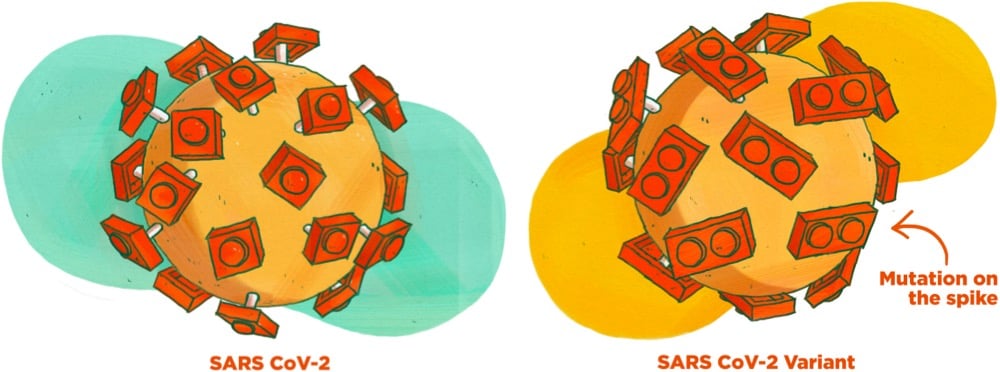
But, as everyone who has ever worked with a Lego set knows, a 1x1 piece stuck to a 1x2 piece is not super stable. So when a version of the virus with a 1x2 piece shows up, it’s able to form a better connection to the 1x2 receptor:
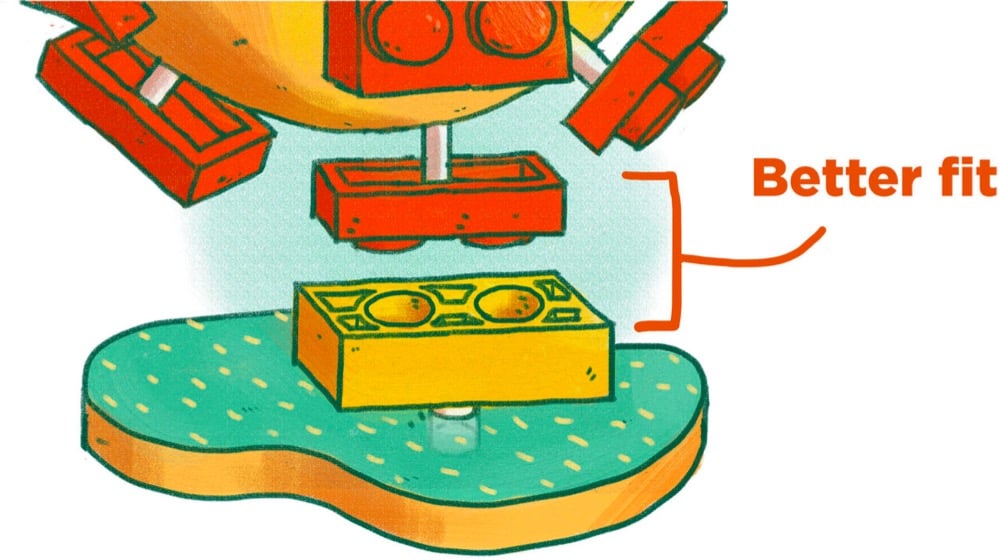
The analogy breaks down if you look too hard at it1 but for many people, it can be a quick way to get the gist of the mechanism at work here. (via @EricTopol)
Concerned that recent articles like this one about screen time panic were not adequately capturing the perspective of the kids themselves, Anne Helen Petersen asked a group of parents and caregivers to conduct interviews with kids about gaming and screen time.
So I wanted to hear them talk about their own relationship to the games they play: what they like about it, when they like to play, how games make them feel, who they like to play with, and how they respond to anxiety about their gaming/screen time.
I pulled out a few quotes from the kids but the whole thing is worth a read.
When people say that screentime is bad, I want to say, hey, I want to be more social at the moment and it’s hard to do that right now and I can only do it with technology.
I feel annoyed and angry with the “too much time playing video games argument,” because people don’t really understand. They don’t play these games. They don’t have any experience themselves, and they’re judging what we do based on what they’ve heard or read. Gaming is so new that there’s no conclusive evidence yet to prove if it’s actually harmful. It feels like they’re just trying to control us and tell us what to do.
When adults say that kids play too many video games it makes me kinda angry and confused. We’re already stuck at home and it feels like they’re trying to cut us off from our friends even more. So it’s kinda annoying.
Honestly I don’t really worry about spending too much time game at all. I already spend almost all my time on there anyway and it doesn’t seem to have any negative side effects. Key word “seem.” People need to make sure they don’t get correlation and causation mixed together.
Like many other parents, we’ve been struggling mightily with games, devices, and screen time during the pandemic (although for us this is an issue that carried over from The Before Times). As Petersen says, this is a complicated challenge and I am sympathetic to both the arguments these kids make (which mirror what I’ve heard from my kids) and parental concerns about too much time on devices (the effects of which I’ve seen in my kids).
What we’ve done, imperfectly, is prioritize the social aspect of gaming time — playing with friends, gaming clubs, playing together in the living room — over manically grinding away for hours on end in a dark room. We try to meet them on their terms — ask them what they did today in Minecraft or Among Us, show real interest about their progress, etc. I empathize and commiserate when I can — I grew up playing video games and I still get a little too into them on my phone or iPad sometimes. But we also encourage them to get outside and move their bodies, find ways to connect with friends that don’t involve killing virtual people, and try to get them to recognize some of the worst effects of too much screen time (they do, if you catch them at the right moment about it). Keeping a good connection with your kids around gaming & screens is the key bit, I think. With that in hand, in theory it’s at least possible to keep kids and parents alike safe and sane during all of this.
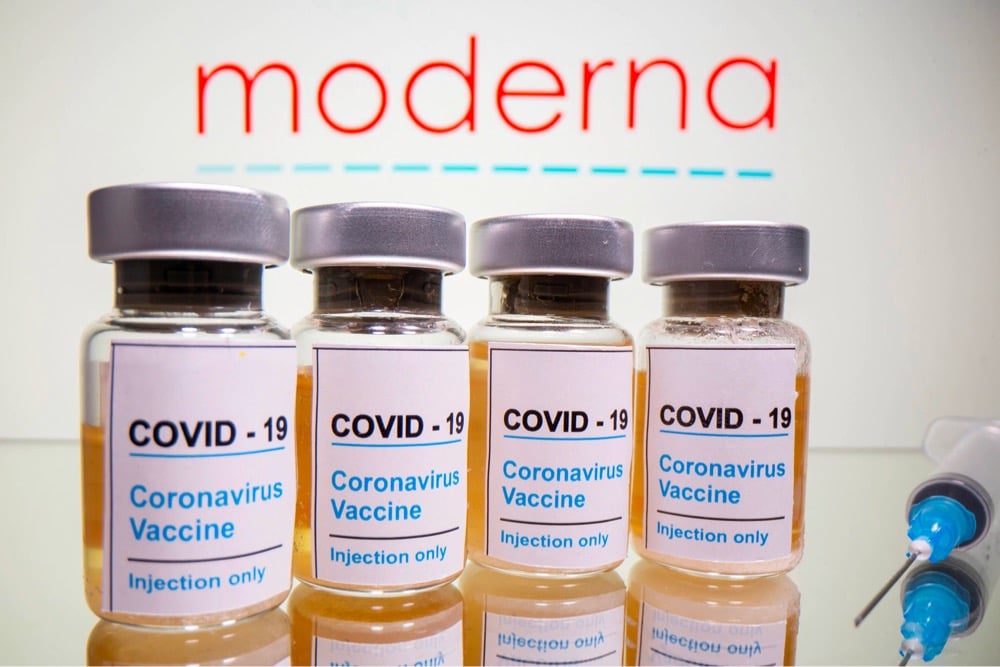
You probably read something yesterday, maybe just a headline, about Moderna’s Covid-19 vaccine being “six times less effective” against the B.1.351 coronavirus variant first identified in South Africa. This is, to put it plainly, a bullshit take on what is actually excellent news. This is the important bit, via Stat:
Both the Moderna vaccine and the immunization from Pfizer-BioNTech produce such powerful levels of immune protection — generating higher levels of antibodies on average than people who recover from a Covid-19 infection have — that they should be able to withstand some drop in their potency without really losing their ability to guard people from getting sick.
“There is a very slight, modest diminution in the efficacy of a vaccine against it, but there’s enough cushion with the vaccines that we have that we still consider them to be effective,” Anthony Fauci, the top U.S. infectious diseases official, said Monday on the “Today” show.
Let’s hear that again: “Both the Moderna vaccine and the immunization from Pfizer-BioNTech produce such powerful levels of immune protection…” These vaccines are so good, so potent, that even this sixfold drop in one measure of the vaccines’ ability to neutralize this one SARS-CoV-2 variant isn’t even enough to significantly reduce their overall protective power.1 That’s the important news here, that’s the very good news, that’s what you should be taking away from this. We have miraculously developed a near-perfect medicine for a plague that has significantly disrupted all human life on Earth and we’re flipping out over some technical details that the experts assure us don’t mean much in terms of overall effectiveness?! No thank you. Not today.
In a Twitter thread, Zeynep Tufekci is tearing her hair out because of the media’s misunderstanding and sensationalization of the “sixfold drop”.
I know people are tired but needless anxiety isn’t helping us. Let’s focus on getting through these months — better masks if indoors with others, more strict attention to our precautions — and the real problem: making more of these amazing vaccines quickly & getting them out there!
I get it, we want to understand but not how it works. Stop worrying about Nab titers. That does NOT mean the vaccine is six times less effective. People whose job it is to worry about it are on it & we just got confirmation: it works against the variants.
Plea to media: this isn’t a good headline. It makes people think the vaccine is six times less effective against the new variants (FALSE!) when the news today is *excellent*: The vaccine continues to work well against the new variants. That’s the headline.
For a much more technical take on the efficacy of the vaccines against variants, see virologist Florian Krammer’s long thread. His conclusion:
mRNA vaccines induce very high neutralizing antibodies after the second shot (consistently in the upper 25-30% of what we see with convalescent sera). If that activity is reduced by 10-fold, it is still decent neutralizing activity that will very likely protect. Furthermore, we know that the mRNA vaccines are already protective after the first shot when neutralizing antibody titers are low or undetectable in most individuals.
There is a concern here and it’s that B.1.351 or B.1.1.7 might mutate into variants that are significantly resistant against the vaccines’ good effects. Krammer again:
First, we need to do what every good scientist is praying for a year now: We need to cut down on virus circulation. The more the virus replicates, the more infections there are the higher are the chances for new variants to arise. Also, we need to try and contain B.1.351 and B.1.1.248/P.1 as much as possible.
That’s why, aside from preventing hundreds of thousands of deaths in the next several months, getting these vaccines into people’s arms is so important: the less the virus spreads, the less opportunity it will have to mutate into something even more dangerous. The US vaccination effort is slowly ramping up — we’re at an average of 1.3 million doses per day right now and the trend is heading in the right direction. We can get this done!
So what can you do about this right now? 1. Stop worrying about the variants until the experts let us know we have something to worry about. 2. If you are eligible for the vaccine, get it! 3. Spread the word about vaccine availability in your area. Yesterday Vermont opened signups for vaccination appointments for all Vermonters 75 and older, and I texted/emailed everyone I could think of who was over 75 or who had parents/relatives/friends who are over 75 to urge them to sign up or spread the word. 4. Continue to wear a mask (a better one if possible), wash your hands, social distance, stay home when possible, don’t spend time indoors w/ strangers, etc. Thanks to these remarkable vaccines, real relief is in sight — let’s keep on track and see this thing through.
With tongue in cheek, Jon Methven writes about what it’s like to take a walk during the pandemic.
My knapsack is full. I’ve stowed backup masks should I encounter any maskless pandemic denialists. I have Band-Aids, cotton balls and large-wound bandages, in case my run-in with the anti-maskers goes awry. I packed five gallons of backup sanitizer and a refill funnel. I have nine factory-sealed packages of antiseptic wipes. I packed face shields and oral swabs and disposable thermometers in case I need to self-test. I have a rolling oxygen tank. This jaunt is just what I need to unwind.
At least now people without kids know what it’s like leaving the house with a toddler.
In response to comments about a video of him getting the Covid-19 vaccine — “Come with me if you want to live!” — Arnold Schwarzenegger says that if you want to build biceps, you should listen to him. He’s the expert. But if you want to know what to do about Covid-19, you should listen to epidemiologists and doctors.
Dr. Fauci and all of the virologists and epidemiologists and doctors have studied diseases and vaccines for their entire lives, so I listen to them and I urge you to do the same. None of us are going to learn more than them by watching a few hours of videos. It’s simple: if your house is on fire, you don’t go on YouTube, you call the damn fire department. If you have a heart attack, you don’t check your Facebook group, you call an ambulance. If 9 doctors tell you you have cancer and need to treat it or you will die, and 1 doctor says the cancer will disappear, you should always side with the 9. In this case, virtually all of the real experts around the world are telling us the vaccine is safe and some people on Facebook are saying it isn’t.
In general, I think if the circle of people you trust gets smaller and smaller and you find yourself more and more isolated, it should be a warning sign that you’re going down a rabbit hole of misinformation. Some people say it is weak to listen to experts. That’s bogus. It takes strength to admit you don’t know everything. Weakness is thinking you don’t need expert advice and only listening to sources that confirm what you want to believe.
On his blog, Conor Barnes shared an eclectic list of 100 Tips For A Better Life. I’m less keen on these sorts of lists than I used to be because they’re often written for people who already have pretty good lives and it’s too easy to imagine that a list advocating the opposite of each tip would also lead to a better life. To be fair, Barnes’ list acknowledges the difficulty with generalized advice:
31. The best advice is personal and comes from somebody who knows you well. Take broad-spectrum advice like this as needed, but the best way to get help is to ask honest friends who love you.
That said, here are some of the list items that resonated with me in some way.
3. Things you use for a significant fraction of your life (bed: 1/3rd, office-chair: 1/4th) are worth investing in.
I recently upgraded my mattress from a cheap memory foam one I’d been using for almost 7 years to a hybrid mattress that was probably 3X the cost but is so comfortable and better for my back.
13. When googling a recipe, precede it with ‘best’. You’ll find better recipes.
I’ve been doing this over the past year with mixed results. Google has become a terrible way to find good recipes, even with this trick. My version of this is googling “kenji {name of dish}” — works great.
27. Discipline is superior to motivation. The former can be trained, the latter is fleeting. You won’t be able to accomplish great things if you’re only relying on motivation.
My motivation is sometimes very low when it comes to working on this here website. But my discipline is off the charts, so it gets done 99 days out of 100, even in a pandemic. (I am still unclear whether this is healthy for me or not…)
46. Things that aren’t your fault can still be your responsibility.
48. Keep your identity small. “I’m not the kind of person who does things like that” is not an explanation, it’s a trap. It prevents nerds from working out and men from dancing.
Oh, this used to be me: “I’m this sort of person.” Turns out, not so much.
56. Sometimes unsolvable questions like “what is my purpose?” and “why should I exist?” lose their force upon lifestyle fixes. In other words, seeing friends regularly and getting enough sleep can go a long way to solving existentialism.
75. Don’t complain about your partner to coworkers or online. The benefits are negligible and the cost is destroying a bit of your soul.
Interpreting “partner” broadly here, I completely agree with this one. If they are truly a partner (romantic, business, parenting), complaining is counterproductive. Instead, talk to others about how those relationships can be repaired, strengthened, or, if necessary, brought to an appropriate end.
88. Remember that many people suffer invisibly, and some of the worst suffering is shame. Not everybody can make their pain legible.
91. Human mood and well-being are heavily influenced by simple things: Exercise, good sleep, light, being in nature. It’s cheap to experiment with these.
This is good advice, but some of these things actually aren’t “cheap” for some people.
100. Bad things happen dramatically (a pandemic). Good things happen gradually (malaria deaths dropping annually) and don’t feel like ‘news’. Endeavour to keep track of the good things to avoid an inaccurate and dismal view of the world.
Oof, this ended on a flat note. Many bad things seem to happen dramatically because we don’t notice the results of small bad decisions accumulating over time that lead to sudden outcomes. Like Hemingway said about how bankruptcy happens: gradually, then suddenly. Lung cancer doesn’t happen suddenly; it’s the 40 years of cigarettes. California’s wildfires are the inevitable result of 250 years of climate change & poor forestry management techniques. Miami and other coastal cities are being slowly claimed by the ocean — they will reach breaking points in the near future. Even the results of something like earthquakes or hurricanes can be traced to insufficient investment in safety measures, policy, etc.
The pandemic seemed to come out of nowhere, but experts in epidemiology & infectious diseases had been warning about a pandemic just like this one for years and even decades. The erosion of public trust in government, the politicization of healthcare, the deemphasis of public health, and the Republican death cult (which is its own slow-developing disaster now reaching a crisis) controlling key aspects of federal, state, and local government made the pandemic impossible to contain in America. (This is true of most acute crises in the United States. Where you find people suffering, there are probably decades or even centuries of public policy to blame.)
Bad news happens slowly and unnoticed all the time. You don’t have to look any further for evidence of this than how numb we are to the fact that thousands of Americans are dying every single day from a disease that we know how to control. So, endeavour to keep track of the bad things to avoid an inaccurate and unrealistically optimistic view of the world — it helps in making a list of injustices to pay attention to and work against.
In an opinion piece for the NY Times, Zeynep Tufekci and epidemiologist Michael Mina are urging for new trials of the Moderna and Pfizer/BioNTech Covid-19 vaccines to begin immediately to see how effective a single dose might be in preventing new infections. If the trials do indicate that a single dose works, that would effectively double the number of people we could vaccinate within a certain time period, saving countless lives in the US and worldwide.
Both vaccines are supposed to be administered in two doses, a prime and a booster, 21 days apart for Pfizer and 28 days for Moderna. However, in data provided to the F.D.A., there are clues for a tantalizing possibility: that even a single dose may provide significant levels of protection against the disease.
If that’s shown to be the case, this would be a game changer, allowing us to vaccinate up to twice the number of people and greatly alleviating the suffering not just in the United States, but also in countries where vaccine shortages may take years to resolve.
But to get there — to test this possibility — we must act fast and must quickly acquire more data.
For both vaccines, the sharp drop in disease in the vaccinated group started about 10 to 14 days after the first dose, before receiving the second. Moderna reported the initial dose to be 92.1 percent efficacious in preventing Covid-19 starting two weeks after the initial shot, when the immune system effects from the vaccine kick in, before the second injection on the 28th day
That raises the question of whether we should already be administrating only a single dose. But while the data is suggestive, it is also limited; important questions remain, and approval would require high standards and more trials.
The piece concludes: “The possibility of adding hundreds of millions to those who can be vaccinated immediately in the coming year is not something to be dismissed.”
In remarks to the German parliament today, German Chancellor Angela Merkel advocated for tighter Covid-19 restrictions, as cases & deaths in Germany reach new peaks. The restrictions she’s referring to were recommended by “a national academy of scientists and academics” and are intended at reducing the spread of Covid-19 over the December holidays. The impassioned argument that she makes in this short video clip (full report here) is difficult for me to find fault with (even though conservative members of her parliament and Twitter commenters disagree). Here’s a partial transcript:
If the price we pay is 590 deaths per day, then that is unacceptable in my view. And when scientists are practically begging us to reduce our contacts for a week before we see Grandma and Grandpa, grandparents and older people at Christmas, then perhaps we really should think again about whether we can’t find a way to start the school holidays on the 16th instead of the 19th. What will we say when we look back on this once-in-a-century event if we weren’t able to find a solution for these three days? And it may be the case that sending children home is the wrong thing to do, if so then it will have to be digital lessons or something else. I don’t know, this is not my area of expertise and I don’t want to interfere. I only want to say: if we have too many contacts now, in the run-up to Christmas, and it ends up being the last Christmas with our grandparents, then we will have done something wrong. She should not let this happen.
I teared up watching her talk. In the US, we are dealing with many more cases (which will turn into eventual deaths) and deaths than Germany, both in absolute and per capita terms. It’s like 10 fully-loaded passenger planes a day are crashing with no survivors and there are small things that we all can do to keep many of those people alive and … many of us just don’t want to do those things!
Like Merkel says, we are going to look back on this and be completely ashamed that we didn’t do these things and that we elected people that won’t advocate for these things on our behalf and that we let 300-400,000 Americans die and countless others lose loved ones and go bankrupt and get evicted and lose their businesses and be chronically ill and be food insecure and and and. If we aren’t ashamed, if we don’t reckon with all of this someday, then maybe nothing can redeem us and we deserved it all.
The Kottke Ride Home podcast has been humming away since August and host Jackson Bird has been sharing some great stuff lately. From today’s show comes this New York magazine piece by David Wallace-Wells about the stunning speed with which the Covid-19 vaccine was developed:
You may be surprised to learn that of the trio of long-awaited coronavirus vaccines, the most promising, Moderna’s mRNA-1273, which reported a 94.5 percent efficacy rate on November 16, had been designed by January 13. This was just two days after the genetic sequence had been made public in an act of scientific and humanitarian generosity that resulted in China’s Yong-Zhen Zhang’s being temporarily forced out of his lab. In Massachusetts, the Moderna vaccine design took all of one weekend. It was completed before China had even acknowledged that the disease could be transmitted from human to human, more than a week before the first confirmed coronavirus case in the United States. By the time the first American death was announced a month later, the vaccine had already been manufactured and shipped to the National Institutes of Health for the beginning of its Phase I clinical trial.
Monday’s show featured the intrigue behind the discovery of a real life treasure:
And if you look back to last week, Jackson clued us in to Radiooooo (“The Musical Time Machine”), Tetris championships, China’s Chang’e 5 mission to the Moon, and DeepMind’s AI breakthrough in protein folding.
If any or all of that sounds interesting to you, you can subscribe to Kottke Ride Home right here or in your favorite podcast app.
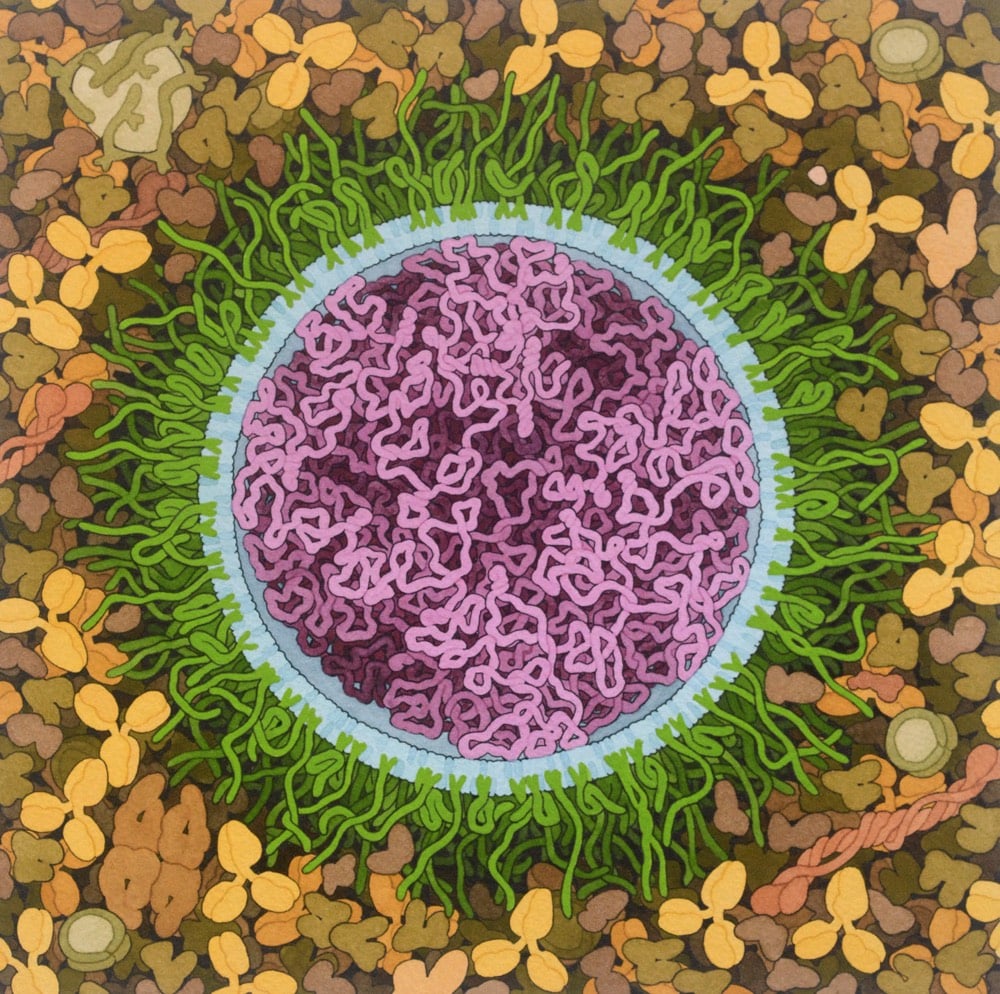
Artist and biologist David Goodsell has done a painting of the Covid-19 mRNA vaccine.
The vaccine structure is highly idealized, with spike mRNA in magenta, lipids in blue, and PEG-lipid in green. The background is blood serum or lymph.
Both the Pfizer/BioNTech and the Moderna Covid-19 vaccines are based on mRNA — you can brush up on how they work at Stat or the CDC.
mRNA vaccines are a new type of vaccine to protect against infectious diseases. To trigger an immune response, many vaccines put a weakened or inactivated germ into our bodies. Not mRNA vaccines. Instead, they teach our cells how to make a protein — or even just a piece of a protein — that triggers an immune response inside our bodies. That immune response, which produces antibodies, is what protects us from getting infected if the real virus enters our bodies.
See also Goodsell’s painting of a SARS coronavirus from back in February.
The NY Times recently surveyed 700 epidemiologists about how they are personally living during the pandemic and what they think is going to happen next. Epidemiologists should have a better idea than most of us about how to act during a viral pandemic, so there’s lots of good information in there about vaccines and high-risk behaviors. But I found their answers to a pair of speculative questions about a return to normalcy most interesting.
How and when will life go back to normal?
“For some, it has gone back to normal, and because of this, it will be two to three years before things are back to normal for the cautious, at least in the U.S.”
- Cathryn Bock, associate professor, Wayne State University
“The new normal will be continued masking for the next 12 to 18 months and possibly the next few years. This is a paradigm shift.”
- Roberta Bruhn, co-director, Vitalant Research Institute
What will never return to normal?
“My relationships with people who have taken this pandemic lightly and ignored public health messages and recommendations.”
- Victoria Holt, professor emeritus, University of Washington
“Every part of my daily life that involves interaction with anyone other than my spouse.”
- Charles Poole, associate professor, University of North Carolina
For many people, the pandemic has altered almost every aspect of their lives. If we listen to what epidemiologists are telling us (like we should have back in early 2020 to avoid much of our present hardship), it could help us accept that the pandemic will continue to affect most aspects of our lives even after it is “over”.
Free Covid-19 illustration courtesy of Pixel True.
Zeynep Tufekci reports on a small study from Korea that has big implications on how we think about transmission of SARS-CoV-2. Scientists traced two cases back to a restaurant and discovered that transmission had occurred over quite a long distance in a very short period of time.
If you just want the results: one person (Case B) infected two other people (case A and C) from a distance away of 6.5 meters (~21 feet) and 4.8m (~15 feet). Case B and case A overlapped for just five minutes at quite a distance away. These people were well beyond the current 6 feet / 2 meter guidelines of CDC and much further than the current 3 feet / one meter distance advocated by the WHO. And they still transmitted the virus.
As Tufekci goes on to explain, the way they figured this out was quite clever: they contact traced, used CCTV footage from the restaurant, recreated the airflow in the space, and verified the transmission chain with genome sequencing. Here’s a seating diagram that shows the airflow in relation to where everyone was sitting:
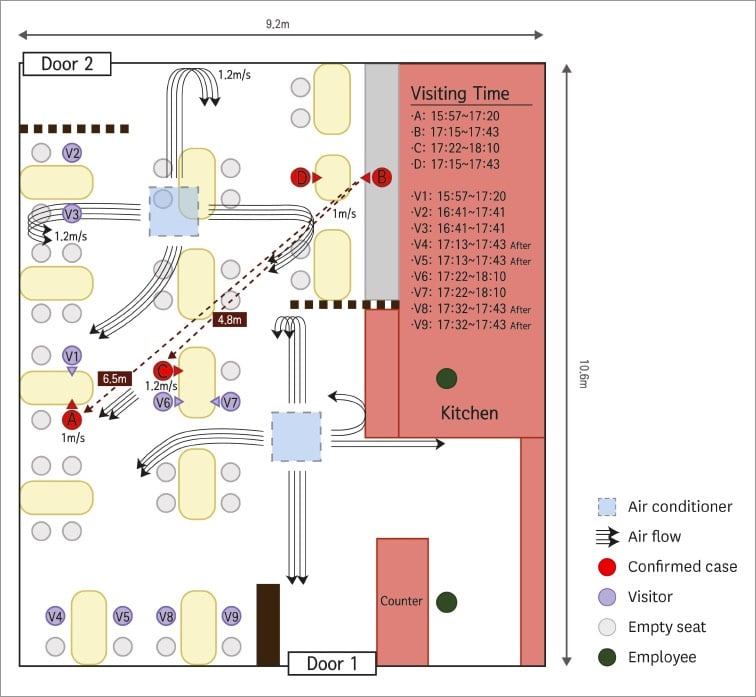
Someone infecting another person 21 feet away in only five minutes while others who were closer for longer went uninfected is an extraordinary claim and they absolutely nailed it down. As Sherlock Holmes said: “Once you eliminate the impossible, whatever remains, no matter how improbable, must be the truth.” And the truth is that in some cases, the recommended 6 feet of distance indoors is not sufficient when people aren’t wearing masks. Airflow matters. Ventilation matters. Which way people are facing matters. How much people are talking/laughing/yelling/singing matters. Masks matter. 6 feet of distance does not confer magical protection. All that can make it tough to figure out if certain situations are safe or not, but for me it’s an easy calculation: absolutely no time indoors with other people not wearing masks. Period. As Tufekci concludes:
I think there are three broad lessons here. One, small data can be extremely illuminating. Two, air flow and talking seem to matter a great deal. Three, sadly, indoor dining and any activity where people are either singing or huffing and puffing (like a gym) indoors, especially with poor ventilation, clearly remains high risk.
Read her whole post — as she says, it’s “perhaps one of the finest examples of shoe-leather epidemiology I’ve seen since the beginning of the pandemic”.
With the first approved Covid-19 vaccines set to roll out in the US soon, some of the focus has shifted to how the vaccine will be distributed and its equitable allocation. Part of the distribution logistics puzzle is making sure there are enough glass vials to hold and transport the vaccine around the nation to those waiting to be vaccinated. For the New Yorker, Christopher Payne took some photos of two Corning factories that are manufacturing vials as fast as they can.
But back in the early 19th century, for a colonial empire dealing with overseas smallpox epidemics, glass vials were not an option. Smallpox vaccination at that time was most reliably accomplished by transferring material from cowpox blisters on one person (or cow) to another person. The freshly inoculated person got a little sick but later proved to be immune to the much deadlier smallpox. So when Spain’s Royal Philanthropic Vaccine Expedition set sail in 1803 to inoculate the inhabitants of their overseas colonies for smallpox, they used the bodies of human beings to transport the vaccine. To be more specific, they used “twenty-two orphan boys, ages three to nine”.1
And so it was that, “in the era before refrigeration, freeze-dried vaccines, and jet aircraft,” writes medical historian John Bowers, “the successful circumnavigation of the globe with the vaccine…rested on a single medium — little boys.” During the long crossing, approximately twenty-two orphans who had not previously contracted smallpox or cowpox were “vaccinated in pairs every ninth or tenth day,” via arm-to-arm inoculation (taking lymph from an unbroken pustule on a recently vaccinated boy and introducing it under the skin of another). This created a vaccine chain — the vaccine remained active and viable for the entire journey.
The three-year expedition was success and an early & effective example of philanthropic healthcare, but you also have to note here that the reason the Americas were ravaged by smallpox was because Spain brought it there in the first place.
Update: In The Atlantic, Sam Kean provides some more detail on the vaccination effort.
Given the era, it’s likely that no one asked the orphans whether they wanted to participate — and some seemed too young to consent anyway. They’d been abandoned by their parents, were living in institutions, and had no power to resist. But the Spanish king, Carlos IV, decided to make them a few promises: They would be stuffed with food on the voyage over to make sure they looked hearty and hale upon arrival. After all, no one would want lymph from the arm of a sickly child. Appearance mattered. And they’d get a free education in the colonies, plus the chance at a new life there with an adoptive family. It was a far better shake than they’d get in Spain.
Newer posts
Older posts





Socials & More