



The Moral Danger of Declaring the Pandemic Over Too Soon. “What would it mean to move into a future in which a common fate mattered as much as our own?”

Advertise here with Carbon Ads
This site is made possible by member support. 💞
Big thanks to Arcustech for hosting the site and offering amazing tech support.
When you buy through links on kottke.org, I may earn an affiliate commission. Thanks for supporting the site!
kottke.org. home of fine hypertext products since 1998.
Beloved by 86.47% of the web.
Entries for February 2022
Currently about 190,000 people watching this livestream of airliners landing at London Heathrow in a whopper of a storm. Lots of sideways flying and landing.
Slow Motion Helicopter Blade Rotation
Here’s what a whirring helicopter blade looks like, from the perspective of a GoPro strapped to the blade. The video is in slow motion — shot at 240 fps and displayed at 30 fps. Here’s what the blade looks like in flight and upside-down while doing a flip. (via clive thompson)
Do You Know Where You’re At?

In 1981, Coevolution Quarterly published a 20 question quiz written by Leonard Charles, Jim Dodge, Lynn Milliman, and Victoria Stockley that is designed to reveal how well you know your local natural environment. Here are the questions:
- Trace the water you drink from precipitation to tap.
- How many days til the moon is full? (Slack of 2 days allowed.)
- What soil series are you standing on?
- What was the total rainfall in your area last year (July-June)? (Slack: 1 inch for every 20 inches.)
- When was the last time a fire burned in your area?
- What were the primary subsistence techniques of the culture that lived in your area before you?
- Name 5 edible plants in your region and their season(s) of availability.
- From what direction do winter storms generally come in your region?
- Where does your garbage go?
- How long is the growing season where you live?
- On what day of the year are the shadows the shortest where you live?
- When do the deer rut in your region, and when are the young born?
- Name five grasses in your area. Are any of them native?
- Name five resident and five migratory birds in your area.
- What is the land use history of where you live?
- What primary ecological event/process influenced the land form where you live? (Bonus special: what’s the evidence?)
- What species have become extinct in your area?
- What are the major plant associations in your region?
- From where you’re reading this, point north.
- What spring wildflower is consistently among the first to bloom where you live?
People living here 200 years ago — or even 75-100 years ago — would definitely have known all of these and many currently living in the area, especially those who have lived here much longer that I have, would know most of this. Being mostly an indoorsman, I am only am aware of some of these, and even then only partially. How well do you know your local environment?
I found the quiz in Rob Walker’s newsletter and he added a helpful exercise for us low-scorers:
Pick one of the questions you don’t know the answer to - and make it a point to learn what that answer is. After you’ve mastered that, move on to a new question.
I chose the question about soil series and learned that the state of Vermont has an official State Soil: Tunbridge soil.
The Tunbridge series consists of loamy, well-drained soils that formed in Wisconsin-age glacial till. These soils are 20 to 40 inches deep over schist, gneiss, phyllite, or granite bedrock. They occur extensively in mountainous areas of Vermont, in all but one county.
Tunbridge soils are used mainly for woodland. White ash, American beech, white birch, yellow birch, hemlock, white pine, red spruce, red maple, and sugar maple are typical species. Sugar maple is especially important; Vermont produces the largest amount of maple syrup in the U.S. Some areas have been cleared and are used for hay and pasture. Recreational uses are common on these soils. They include trails for hiking, mountain biking, snowmobiling, and skiing.
Neat!
Update: See also The Big Here Quiz for more questions and the origin story of such lists.
Update: Turns out I posted about this almost 16 years ago (and forgot about it). (thx, john)
Paris has announced their plan for a car-free zone. With exceptions, cars will not be allowed in much of 1st-4th arrondissements (and parts of the 5th-7th) starting in 2024.
The Broken Tech/Content Culture Cycle
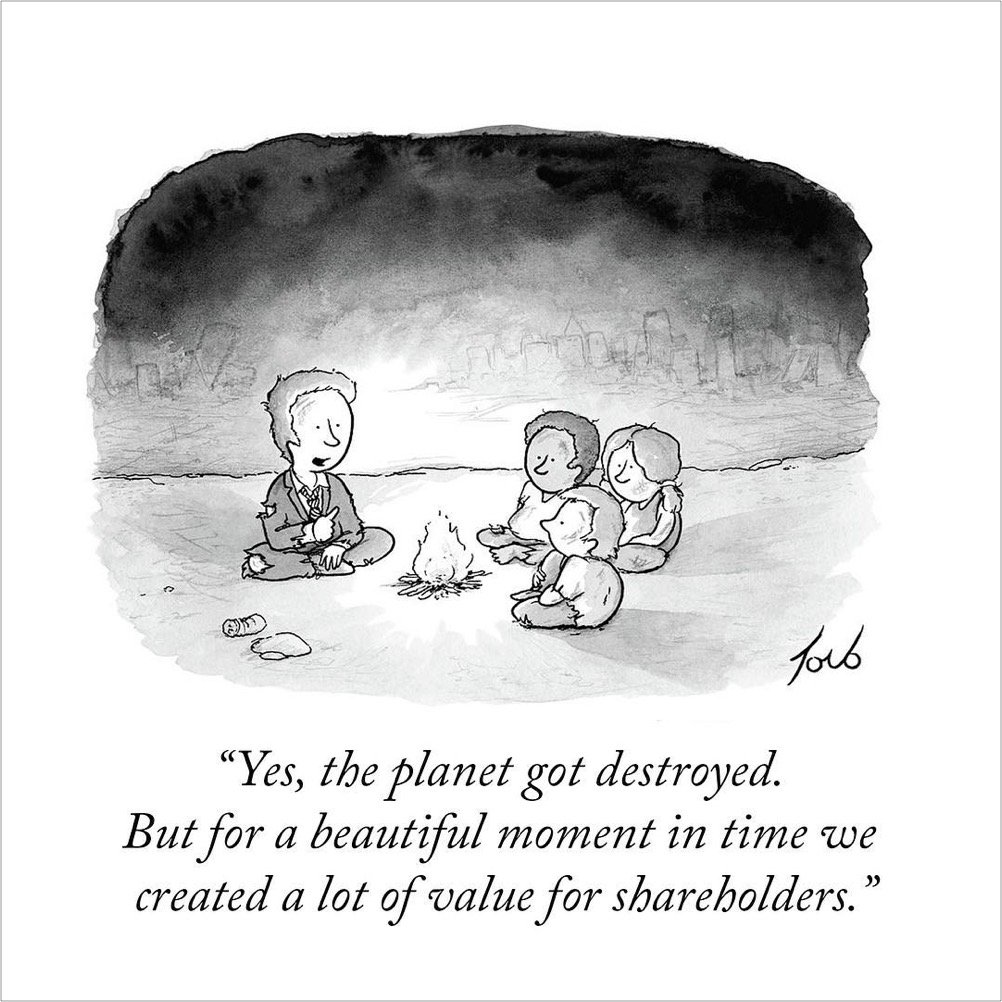
Anil Dash writes about the 24 stages of the growth-fueled “broken tech/content culture cycle” that VC-driven Silicon Valley (among other places) has pioneered over the past 15 years. Here’s how you begin:
1. Build a platform which relies on cultural creation as its core value, but which only sees itself as a technology platform. Stick to this insistence on being solely a “neutral” tech company in every aspect of decision-making, policy, hiring and operations, except for your public advertising, where the message is entirely about creativity and expression.
2. Hire a team that’s rewarded solely on growth goals and winnow out anyone who values creators or culture above expansion and user acquisition. Enforce a monoculture.
And then:
8. Build an algorithm to “surface great content” for your audience. Train it on the behaviors of your existing creators, so you create a rich-get-richer dynamic, effectively cementing the culture of your platform and making it impossible for new creators from underrepresented communities to get a foothold. Make it so the only process for revisiting your algorithm is bad-faith arguments from right-wing goons trying to game the refs because their actual content isn’t good enough to get audience on its own. After that, treat the algorithm as some magical sacrosanct god with unknowable whims that everyone is subject to, rather than as a series of intentional business decisions captured in software form.
Eventually:
18. Double down on funding the worst voices on your platform. Call it “free speech”, and make sure that nobody internally points out that truly defending free speech would have entailed protecting those early marginalized creators who made your platform credible in the first place.
19. Definitely misuse “free speech” as a rhetorical bludgeon against people who are pointing out that you are both amplifying and sponsoring content, not merely making it available. Resolutely refuse to be intellectually honest about the difference between merely providing a platform to all, vs. making editorial decisions to promote and subsidize content that you have control over.
Spotify, Substack, Google, Twitter, Amazon, Apple, Facebook, Reddit…this predictable script has played out at all of these companies in some form or another over the past decade.
Great profile of Venus and Serena Williams by @tressiemcphd. “…those braids said everything we needed to know. They were Black like how I was Black.”
When the Giant Cruise Ships Came to Town
Over the last decade, cruise ships began to visit the city of Stavanger, Norway. Soon, their size and the frequency of their visits began to dwarf the scale of the city’s center. Stavanger resident, filmmaker, and poet Odveig Klyve made this short silent film about these massive visitors.
The vistas from Stavanger are striking: sparkling ocean, with islands and mountains in the distance. Recently, however, a new industry’s arrival has obstructed the view and, as Klyve put it, changed the very feeling of the city. When cruise ships first came to the harbor, about ten years ago, Klyve remembers her neighbors being excited about the important economic boost that tourists would bring to the area; some residents even put up banners to welcome visitors into their gardens. Over time, however, the cruise industry has become a local controversy.
The ships have become more frequent — and much, much larger. The liners that pull into the harbor now are so tall and broad that they block out views entirely, fundamentally changing Stavanger’s atmosphere. “It takes away the sun,” Klyve told me. “It takes away the air. It’s claustrophobic.” And with the increased commerce has come noise and pollution. Klyve said that some of her harborside neighbors now have to wash their white-painted houses, which go gray because of the smog. Others simply miss being able to see the sea. In summer, up to five cruise ships pull into the harbor every day.
This wasn’t mentioned in the article accompanying the video, but one of the reasons the ships’ scale is so out-of-whack with the buildings in the city’s center is due to cultural preservation:
Stavanger’s core is to a large degree 18th- and 19th-century wooden houses that are protected and considered part of the city’s cultural heritage. This has caused the town centre and inner city to retain a small-town character with an unusually high ratio of detached houses.
The population of Stavanger’s metropolitan area is almost 320,000 and if you look at a satellite map of the city, there are massive docks and heavy industry just across the bay from the city’s core. But the satellite also caught a ridiculously gigantic cruise ship docked next to a neighborhood of small houses and the waterfront is just jam-packed with people disgorged from the ship’s innards. It’s a real metaphor for something and probably not a great environment for the people who live there.
After 16-year-old Nicolas Montero’s anti-vaxxer parents forbid his Covid vaccination, he got the shots without parental consent (per Philly law). The parents found out after they got Covid and he didn’t.
“I decided to make my own version of no-knead bread by replacing a key ingredient, water, with a classic electrolyte-replenishing, thirst-quenching beverage: Gatorade.” It’s what bread-eaters crave!
US Beatles Albums Weren’t the Same As UK Beatles Albums
Throughout the relatively short recording career of The Beatles, and as late as 1967’s Magical Mystery Tour, the band’s albums released in the United States were, in some cases, quite different than those released in the UK. Jared Pike explains the differences in this comprehensive video:
Pike also made a chart of all the releases and which albums they appeared on, which you can download here. The image is too tall to include here, but here’s an excerpt that shows some of the reorganization that was done for American audiences:
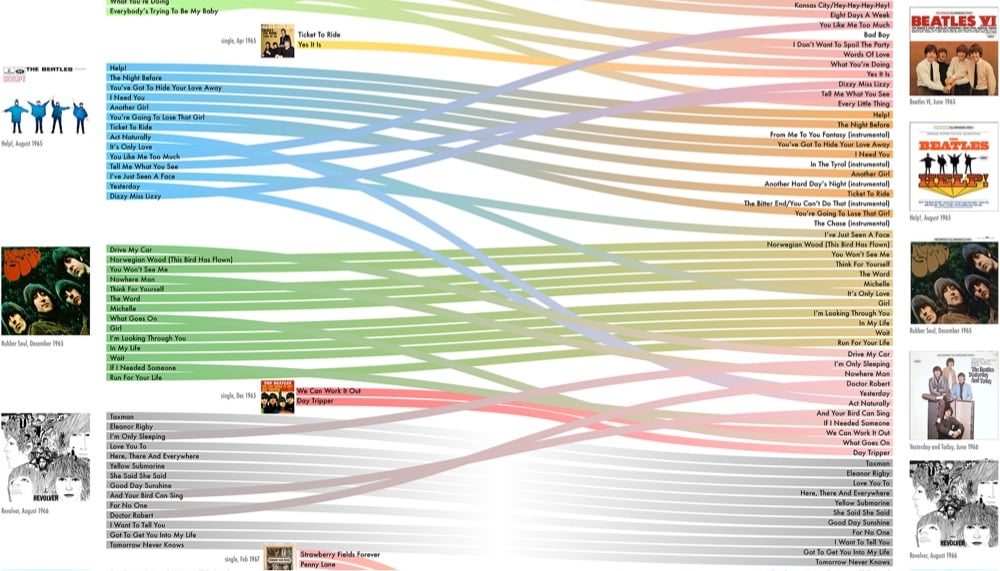
I just looked on Spotify here in America and they’re using the UK versions of the albums (at least for Rubber Soul and Revolver). I wonder how long that’s been the case? According to Wikipedia, it looks like when the band’s albums were reissued on CD in 1987, the track listings were standardized to the UK/international release.
Reader Comments for The New York Times’ “Homestyle Spaghetti Carbonara” Recipe. “Is it OK to use Romano cheese instead of Parmesan? And if I don’t have spaghetti on hand, can I just use fish?”
The History of Blue Jeans
This is a short clip of a PBS American Experience episode called Riveted: The History of Jeans. It traces the origin of blue jeans back to India and Europe:
James Sullivan, Author: We’re not quite sure exactly where the fabric originated, but there are several hints: One is Dungri, India, where as early as the 17th century, they were creating a coarse cloth for workers, eventually called dungaree. There’s the Genoans of Italy, who had a certain type of sail cloth that was eventually fashioned into work pants. And there’s Nimes, France where the cloth there was known as “serge de Nimes.” Not always but very often, these various types of cloth were dyed blue. Probably to hide dirt as much as anything.
Rabbit Goody, Weaver: So, we have blue “jean” from Genoa, we have blue “de Nimes” or denim coming from Nimes but when we make it into pants in America, we end up morphing the garment into blue jeans.
When denim came to America, much of the labor to produce it and knowledge of the process for dying it blue came from enslaved people who had been working with indigo for hundreds of years in Africa:
Daina Berry, Historian: In fact we know the names of all the enslaved people that were owned by the Lucas and Pinckney family. These are generations of families. We’re not just talking about a husband and a wife, or a mom and a dad. We see grandparents on this list. They’re the ones that came from communities that dyed all kinds of cloth beautiful colors. They’re the ones that had the knowledge of indigo; they’re the ones that created generations of wealth for these white slave-holding families.
Evan Morrison, Collector: Back in the 19th century denim really dominated because it’s a strong weave. So with the rise in durable cotton goods, denim made itself the accepted second skin in terms of cloth that was put into clothing meant for laborious work.
Seth Rockman, Historian: So as American cotton manufacturing begins to sort of find its footing in the 18-teens and 1820s, mills in Rhode Island, mills in Massachusetts, mills in New Hampshire, they need a source of cotton. And the only source of cotton that’s available to make these mills economically viable is cotton that’s being grown by enslaved men, women, and children in the American South.
If you’re in the US, you can watch the entire episode on PBS or on the PBS website.
Dr. Jen Gunter on why she reported Dr. Oz to his state medical board. “We can no longer allow doctors who are driven by conspiracy theories, financial gain, and political motives to harm people by providing lies…”
Jonny Greenwood Pretended to Play the Keyboard When He First Joined Radiohead
This is the kookiest thing I have heard all week: Jonny Greenwood didn’t know how to play keyboard when he first joined Radiohead (when the band was still called On a Friday). Here’s what he told Terry Gross on a recent episode of Fresh Air:
Well, they had a keyboard player who — Thom’s band had a keyboard player, which I think they didn’t get on with because he played his keyboard so loud. And so when I got the chance to play with them, the first thing I did was make sure my keyboard was turned off when I was playing. And I must have done months of rehearsals with them with this keyboard that was just — they didn’t know that I’d already turned it off and was just — they made quite a racket, quite a noise. It was all guitars and distortion.
And so I would pretend to play for weeks on end. And Thom would say, I can’t quite hear what you’re doing. But I think you’re adding a really interesting texture because I can tell when you’re not playing. And I’m thinking, no, you can’t, because I’m really not playing. And I’d go home in the evening and work out how to actually play chords. And cautiously, over the next few months, I would start turning this keyboard up. And that’s how I started — you know, started in with Radiohead.
To be fair, Greenwood knew how to play music (the recorder and viola for a start), he just didn’t know how to play the keyboard. Fake it til you make it, I guess!
A Robotic Caterpillar Slowly Climbs a Woodpile
This is almost beyond meditative: watch Reuben Margolin’s robotic caterpillar very slowly scale a woodpile.
The woodpile is not as random as it looks, but follows a predetermined polynomial spline within certain bounds of curvature. It is made of scrap wood and took about week to make. The caterpillar took several months, although a lot of that time was spent learning about servo motors, micro-controllers, Terminal and Python, and learning how to use an oscilloscope to trouble shoot the square wave signal that carries the angular information.
(via clive thompson)
“OK Computer but Everything Is My Voice”
YouTuber shonkywonkydonkey takes songs and reworks them using only his voice — all the original instruments, vocals, sound effects, etc. are replaced by his vocals. The results are waaay better than you would expect. His magnum opus is probably the entire album of Radiohead’s OK Computer (yes, all 53 minutes, 26 seconds of it):
I am also partial to Everything In Its Right Place:
Hard to Explain by The Strokes is great too:
You can check out the rest of his efforts here. (via @aaroncoleman0)
Letterpress Prints of Birds Printed Using Lego Bricks
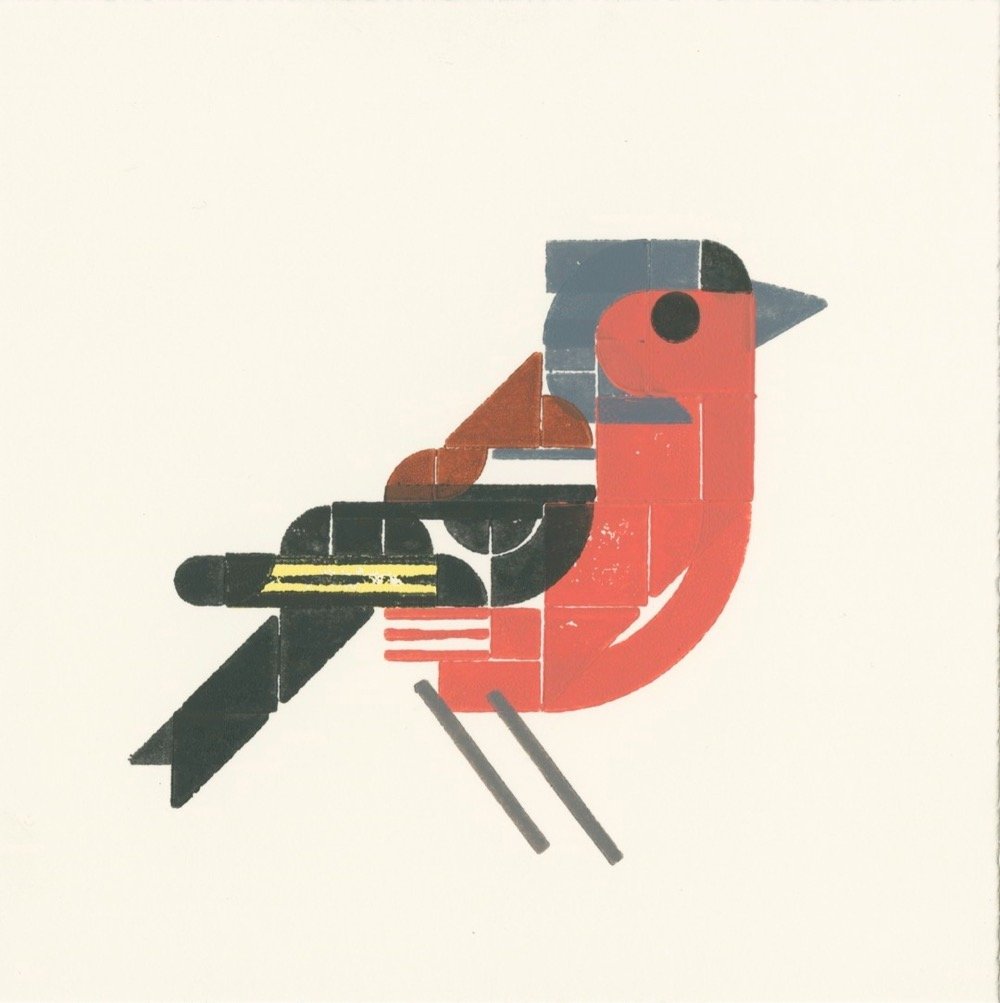
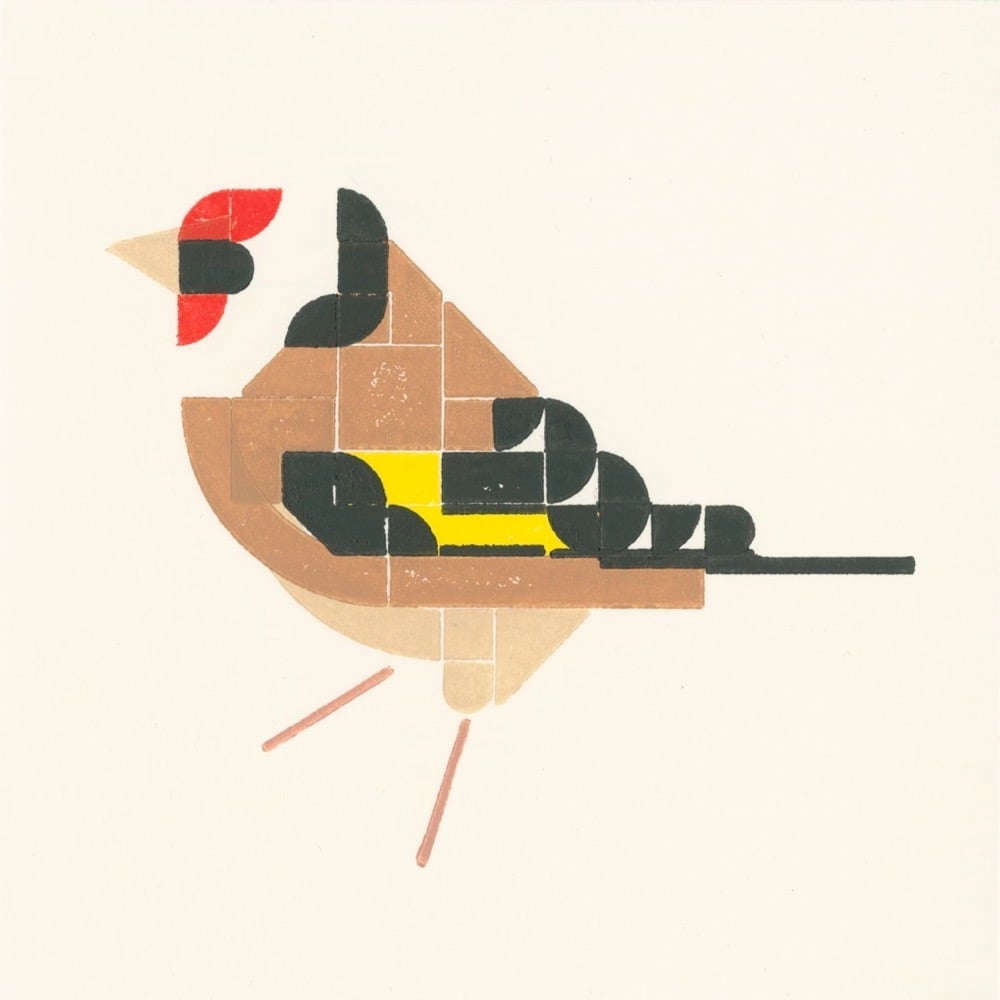
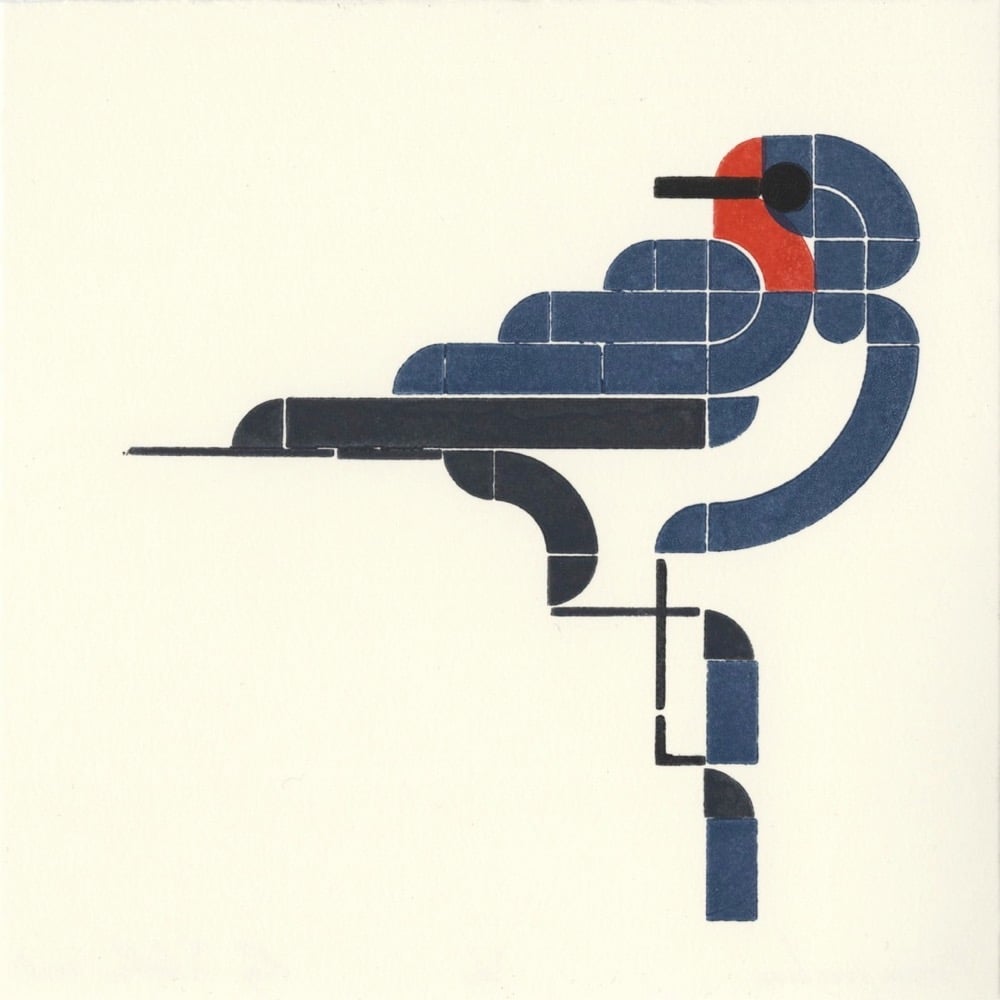

Designers Roy Scholten and Martijn van der Blom have created a series of letterpress prints of birds made by using Lego pieces as the stamps (in lieu of lead or wood blocks). Letterpress, birds, Lego…that’s gotta be close to a bingo on many a designer’s card. (via colossal)
In January 2022 in Norway, about 84% of new cars sold were EVs. That compares to 53% in Jan 2021.
Titanic with a Cat
What if Titanic, but with a cat in a leading role alongside Leonardo DiCaprio? This is pitch-perfect, right down to the post-credits scene.
See also Paddington in Film. (via waxy)
An Unbelievably Tiny RC Car
YouTuber diorama111 took a 1/87 scale model car — about the size of a Jolly Rancher — and converted it into an incredibly small RC car that’s controlled via Bluetooth and even has working headlights, tail lights, and turn signals. It’s rechargeable too — the charging light turns green when the battery is full. (via @willhains)
Why did the countries “most prepared” for a pandemic have the worst outcomes? “Rich countries had the policies in place [but] most refused to enact them for fear of endangering the economy they depended on, and the libertarian policies that underpin it.”
Why does the US government stockpile so much cheese in huge caves underneath Missouri? Because the US subsidizes the dairy industry, resulting in massive overproduction in an age of falling consumption.
Fun Online Traffic Simulator
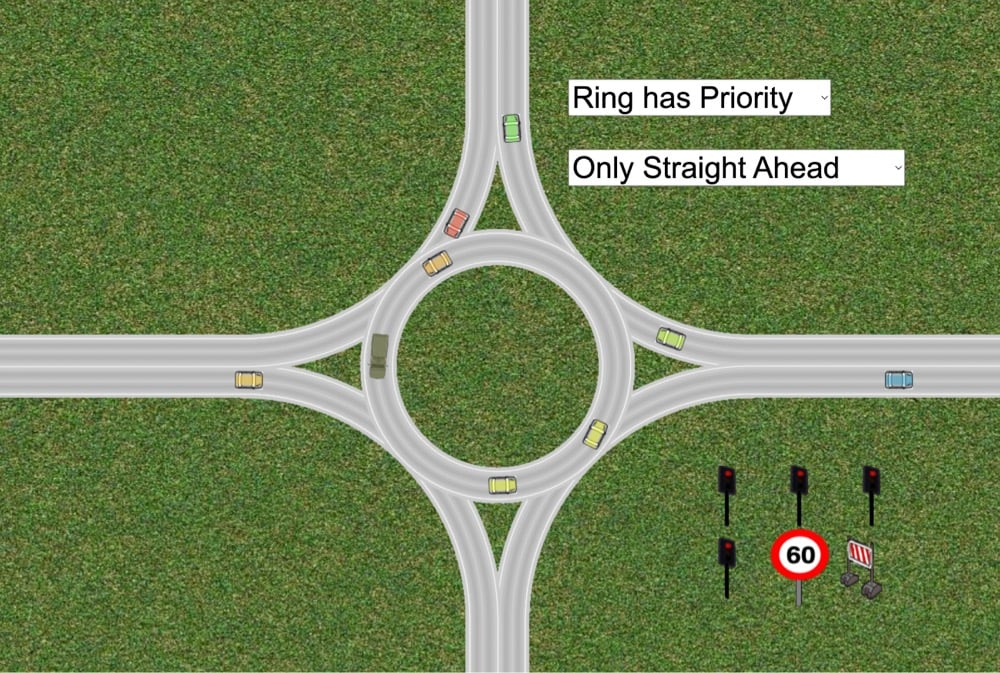

Oh wow, I spent far too much of my time this afternoon playing with this online traffic simulator. You can place stoplights, click to slow down traffic, change speed limits, modify traffic flow rates, etc. The source code for the simulator is available at Github so you can tinker with it.
See also Play Urban Street Designer with Streetmix and The Rates of Traffic Flow on Different Kinds of 4-Way Intersections.
To reduce Covid-19 deaths in the US, we should more aggressively vaccinate the elderly w/ the full 3-shot series. “Even the vaccinated and unboosted elderly are still dying of COVID at four times the rate of unvaccinated adults under 49.”
Measles Makes Your Immune System Forget Its Protections Against Past Illness
Historically, contracting the measles has been linked to subsequent illness (and possibly death) from other causes. In the past few years, scientists have discovered why this is: measles causes “immune amnesia”.
Enter “immune amnesia”, a mysterious phenomenon that’s been with us for millennia, though it was only discovered in 2012. Essentially, when you’re infected with measles, your immune system abruptly forgets every pathogen it’s ever encountered before — every cold, every bout of flu, every exposure to bacteria or viruses in the environment, every vaccination. The loss is near-total and permanent. Once the measles infection is over, current evidence suggests that your body has to re-learn what’s good and what’s bad almost from scratch.
“In a way, infection of the measles virus basically sets the immune system to default mode,” says Mansour Haeryfar, a professor of immunology at Western University, Canada, “as if it has never encountered any microbes in the past”.
This re-learning process takes up to three years, which “around the time it takes infants to acquire immunity to everyday pathogens in the first place”. In the meantime…
It’s not surprising, then, that measles doesn’t just increase the risk of illness, but also death. In fact, childhood mortality from other viruses is strongly linked to the incidence of measles. The 2015 study showed that when childhood mortality in the UK, US, or Denmark goes up, this is usually because measles has become more prevalent.
The findings explain why vaccinating children against measles has the unexpected, beneficial side-effect of reducing deaths among children, way beyond the numbers who were ever at risk of dying from measles itself.
Of course, an extremely effective and safe vaccine offers protection against both measles and the immune amnesia it causes. But with the steep rise in anti-vaccination sentiment during the pandemic and the increasing willingness of conservative leaders to disregard public health protections in favor of “individual freedom”, widely vaccinating against this dangerous pathogen in the US & elsewhere will be more difficult than in the past.
A ranking of all 32 Steven Spielberg movies, from best to worst. The top 10 includes Close Encounters, Jaws, ET, Jurassic Park, and Schindler’s List.
AI Creates Photorealistic Portraits of Cartoon Characters





Using AI image processing software, Hidreley Diao creates photorealistic portraits of familiar cartoon characters. The one of Moe from The Simpsons is kind of amazing — he’s got the look of a long-time character actor who’s developed so much depth over the years that he starts getting bigger roles and everyone’s like, this guy is actually kind of enigmatic and attractive and fantastic.
You can find more of his efforts on Instagram, where he also makes AI-assisted portraits of people we don’t have photos of (e.g. Michelangelo) and fictional people (e.g. Hercules and the Statue of Liberty).
See also the “Reverse Toonification” of Pixar Characters and What Homer Simpson Would Look Like in Real Life.
Every Episode of a Television Show Written by Julian Fellowes. “BUTLER: Madame, may I please escort you quickly back to your proper household area before you get any working class on you?”
Graphs Built With Townscaper Buildings

This is neat: Clive Thompson built a little app that converts tabular data into a bar chart using houses from the video game Townscaper. Says Thompson:
A few days ago I was placing houses in a long row, with varying heights. And when I looked at the jagged result I thought:
Hey, that looks like a bar chart!
That made me wonder, hmmm, could I use Townscaper as a dataviz tool? Could I write code that takes data and turns it into a row of buildings?
See also Dan Malec’s algorithmic Townscaper towns.
Forget Your Carbon Footprint. Let’s Talk About Your Climate Shadow. “I visualize my climate shadow being made of three parts: my consumption, my choices, and my attention.”
The Unsuccessful Treatment of Writer’s Block
In 1974, the Journal of Applied Behavior Analysis published a paper by Dennis Upper called The Unsuccessful Self-Treatment of a Case of “Writer’s Block”. Here’s the paper, in its entirety:
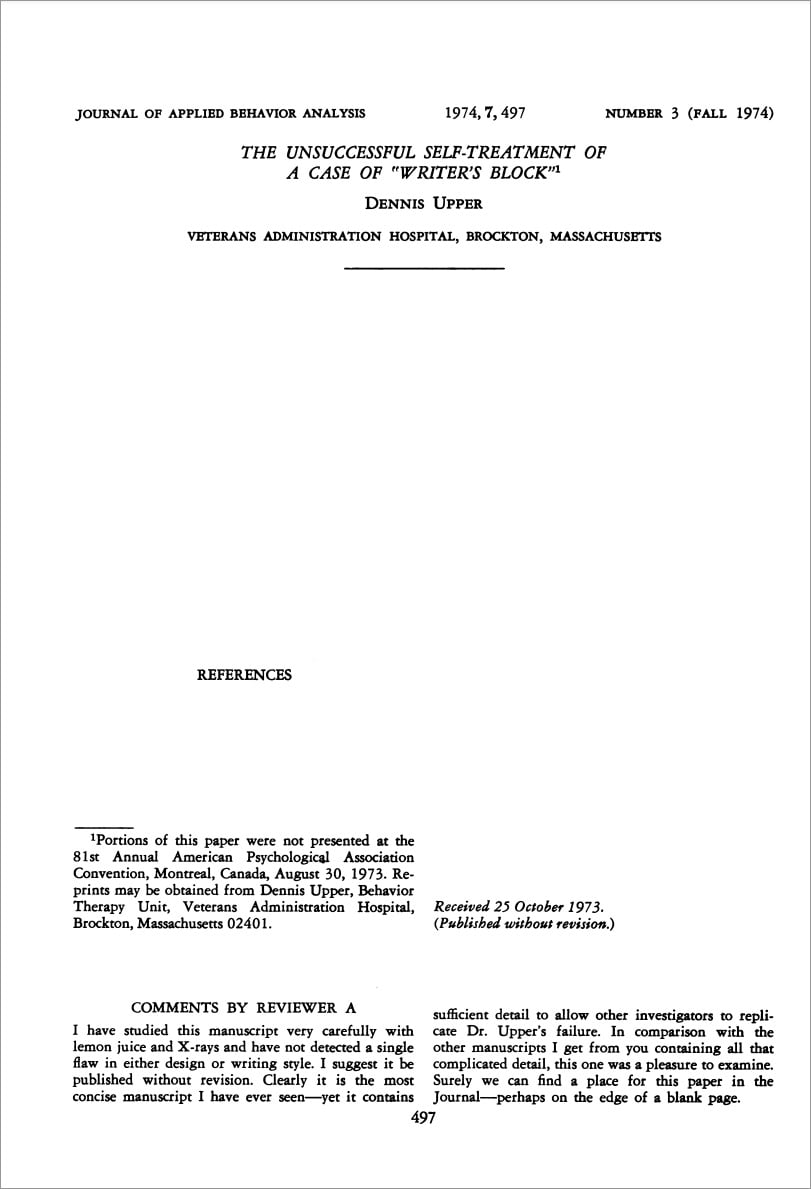
“Portions of this paper were not presented at 81st Annual American Psychological Association Convention…” — LOL. You can read more about this paper at Wikipedia. (via @ecohugger)
This is a great rule of thumb: the Seatbelt Rule for Judgment. “My willingness to judge something should be proportional to how much I know about it.”
The James Webb Space Telescope has taken its first image of something in space. The spacecraft is still in a month’s-long testing mode, but everything is looking good so far.
When the Mediterranean Sea Dried Up
About 5.9 million years ago, due to a combination of tectonic movements and changes in climate, the Mediterranean Sea mostly dried up for over 600,000 years. The Messinian salinity crisis may have raised global sea levels by as much as 33 feet and decreased the salinity of the world’s oceans, raising the freezing point. And then, much more suddenly, it was refilled in less than two years in the Zanclean Flood.
Two years to refill the whole Mediterranean! Apparently the water level rose at 30 feet per day, fed by a river that carried 1000 times more water than the Amazon at velocities exceeding 88 mph. When the water reached a barrier near present-day Sicily, it flowed into the eastern basin via a mile-high waterfall in which the water was moving at 100 mph. The weight of so much water moving into the area so quickly would have triggered seismic activity, resulting in landslides that could have produced tsunamis with wave heights of 330 feet. So much wow!
Anyway, watch the PBS Eons video above for the whole story. And then check out this animation of what the drying up and the flood may have looked like.
P.S. For XKCD, Randall Munroe wrote a comic called Time that unfolded over a series of four months and was based on a future Zanclean-like flood. (via open culture)
Men Have No Friends and Women Bear the Burden. “Toxic masculinity…has left a generation of straight men stranded on emotionally-stunted island, unable to forge intimate relationships with other men.”
The Best Optical Illusions of the Year
The winners of the Best Illusion of the Year Contest for 2021 have been announced and among the top 3, the one that really baked my noodle is the second place winner, Michael A. Cohen’s Changing Room Illusion:
I caught a tiny bit of what was going on here — it’s a bit like the invisible gorilla experiment — but the full reveal shocked me. First place was The Phantom Queen and The Double Ring Illusion took third. You can find a list of winners on the front page of their website and a list of the 10 finalists here.
I Gave Myself Three Months to Change My Personality by @olgakhazan. “I’ve never really liked my personality, and other people don’t like it either.”
Socials & More