Entries for July 2021

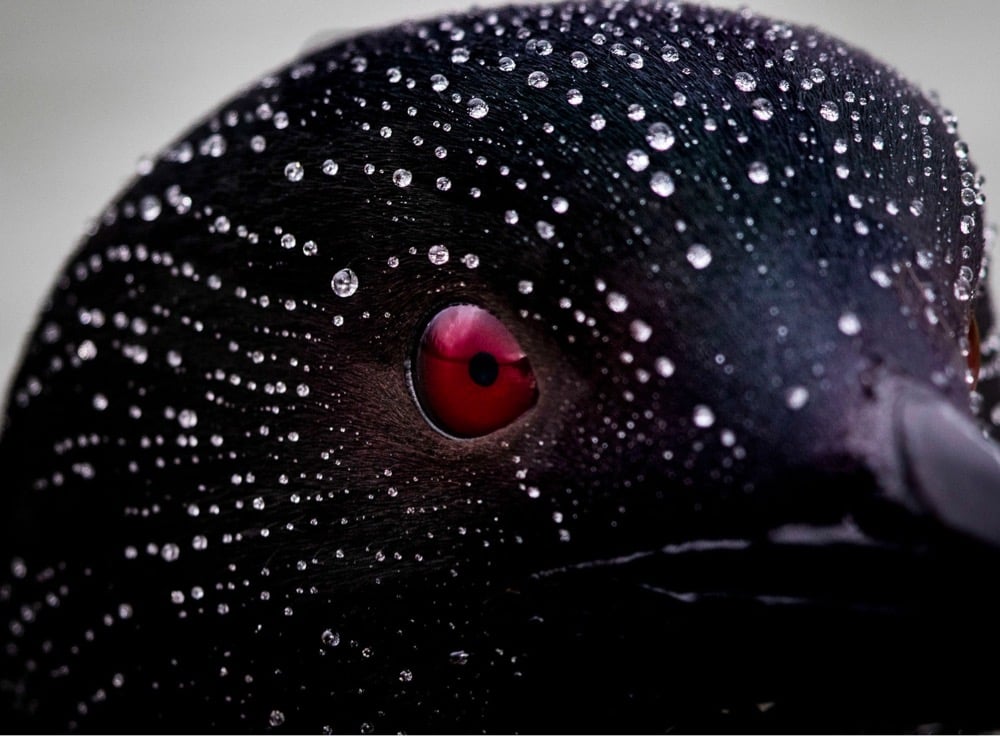

The National Audubon Society has announced the winners of the their photography competition for 2021. They also selected a top 100 from the rest of the submissions to complement the winners. The photos above are by Jerry am Ende, Sue Dougherty, and Tim Timmis. (via in focus)
This cover of the Rolling Stones’ (I Can’t Get No) Satisfaction by PJ Harvey and Bjork at the 1994 Brit Awards is kind of amazing — I’d never seen this before. The duet is a slow burn, but it really gets there in the end. BTW, this was the same night that Elton John and RuPaul performed Don’t Go Breaking My Heart together. (via @brianmcc)
The Well-Tempered Traveler is a single serving site from Google (??) that shows year-round temperatures & precipitation levels for dozens of cities around the world.
Filmmaker James Robinson has an eye condition he calls “whale eyes” that causes him to see differently than (and look differently to) most people. In this short film, he makes a plea to “normal” people for acceptance of his and others’ differences.
But his video is also an essay on seeing, in the deeper sense of the word — seeing and being seen, recognition and understanding, sensitivity and compassion, the stuff of meaningful human connection.
In a society that does a lousy job of accommodating the disabled, Mr. Robinson appeals for more acceptance of people who are commonly perceived as different or not normal.
“I don’t have a problem with the way that I see,” he says. “My only problem is with the way that I’m seen.”
There’s new short fiction from Sally Rooney in the New Yorker: Unread Messages.
For the rest of the afternoon in the office, the woman worked on the same text-editing interface, moving apostrophes and deleting commas. After closing one file and before opening another, she routinely checked her social-media feeds. Her expression, her posture, did not vary depending on the information she encountered there: a news report about a horrific natural disaster, a photograph of someone’s beloved pet, a female journalist speaking out about death threats, a recondite joke requiring familiarity with several other previous Internet jokes in order to be even vaguely comprehensible, a passionate condemnation of white supremacy, or a promoted tweet advertising a health supplement for expectant mothers. Nothing changed in her outward relationship to the world that would allow an observer to determine what she felt about what she saw. Then, after some length of time, with no apparent trigger, she closed the browser window and reopened the text editor. Occasionally one of her colleagues would interject with a work-related question and she would answer, or someone would share a funny anecdote with the office and they would all laugh, but mostly the work continued quietly.
Per an interview with Rooney, the piece is excerpted from her next novel, Beautiful World, Where Are You, due out in September and eagerly anticipated in this household.
This is quite a paragraph from David Bentley Hart’s Three Cheers for Socialism in Commonweal:
Americans are, of course, the most thoroughly and passively indoctrinated people on earth. They know next to nothing as a rule about their own history, or the histories of other nations, or the histories of the various social movements that have risen and fallen in the past, and they certainly know little or nothing of the complexities and contradictions comprised within words like “socialism” and “capitalism.” Chiefly, what they have been trained not to know or even suspect is that, in many ways, they enjoy far fewer freedoms, and suffer under a more intrusive centralized state, than do the citizens of countries with more vigorous social-democratic institutions. This is at once the most comic and most tragic aspect of the excitable alarm that talk of social democracy or democratic socialism can elicit on these shores. An enormous number of Americans have been persuaded to believe that they are freer in the abstract than, say, Germans or Danes precisely because they possess far fewer freedoms in the concrete. They are far more vulnerable to medical and financial crisis, far more likely to receive inadequate health coverage, far more prone to irreparable insolvency, far more unprotected against predatory creditors, far more subject to income inequality, and so forth, while effectively paying more in tax (when one figures in federal, state, local, and sales taxes, and then compounds those by all the expenditures that in this country, as almost nowhere else, their taxes do not cover). One might think that a people who once rebelled against the mightiest empire on earth on the principle of no taxation without representation would not meekly accept taxation without adequate government services. But we accept what we have become used to, I suppose. Even so, one has to ask, what state apparatus in the “free” world could be more powerful and tyrannical than the one that taxes its citizens while providing no substantial civic benefits in return, solely in order to enrich a piratically overinflated military-industrial complex and to ease the tax burdens of the immensely wealthy?
I mean, when you put it like that…
This is an animation of how quickly an object falls 1 km to the surfaces of solar system objects like the Earth, Sun, Ceres, Jupiter, the Moon, and Pluto. For instance, it takes 14.3 seconds to cover that distance on Earth and 13.8 seconds on Saturn.
It might be surprising to see large planets have a pull comparable to smaller ones at the surface, for example Uranus pulls the ball down slower than at Earth! Why? Because the low average density of Uranus puts the surface far away from the majority of the mass. Similarly, Mars is nearly twice the mass of Mercury, but you can see the surface gravity is actually the same… this indicates that Mercury is much denser than Mars.
(via @thekidshouldsee)
A NASA study is predicting a surge of coastal flooding starting in the 2030s. The cause is rising sea levels due to climate change amplified by a wobble in the Moon’s orbit.


Alexander Ladanivskyy recently photographed the Great Pyramid at Giza from an unusual vantage point: straight overhead with a drone. The final photo in the series is so close-up that you can see the graffiti on the stones at the tip of the pyramid. (via colossal)
See also How the Great Pyramid at Giza Looked in 2560 BCE.
Instant new favorite weather app: Weather Strip. As @craigmod notes, the weather timeline is the best weather visualization around.
John Oliver’s HBO show is on hiatus for the summer, but he really wanted you to know some facts about the many species of amazing octopuses out there (and why it is “octopuses” and not “octopi”).
See also My Octopus Teacher and A Dreaming Octopus Changes Color.
Ok I know you’ve probably seen the teaser trailer for season 3 of Succession by now but I was away and missed it so we’re all going to watch it together mmm’kay? New season starts “this fall”, whatever that means. I guess that’s enough time for a rewatch of the first two seasons?
Instagram Has Become SkyMall. “These days when I open up the app, every ad customized for me is some decidedly loopy gewgaw.”
For more than 21 years, Noah Kalina has taken a photograph of himself. Periodically, he makes video compilations of the photos — you’ve probably seen them here or elsewhere. For his latest video, he’s collaborated with Michael Notter (visuals) and Paul O’Mara (sound) on a video called 7777 Days.
In a first step, Michael used the machine learning library dlib (http://dlib.net/) and some custom Python code to detected in each of Noah’s photos 5 face landmarks (i.e. both eyes, the nose and the two corners of the mouth). These landmarks were then used to align the faces in all photos, so that the eyes and corner of the mouth were horizontally oriented and always an equal distance apart. After that, some small image intensity correction were applied to make very dark images a bit brighter and very bright ones a bit darker. This was followed by an upscaling of all images (where needed) to a 4K resolution.
The result is a 2-minute video (reminiscent of Jason Salavon’s work) that spans half of Kalina’s life — in the video he ages 2 months every second and 10 years a minute.
Update: Kalina and Notter explain how this video came about and how it was made.
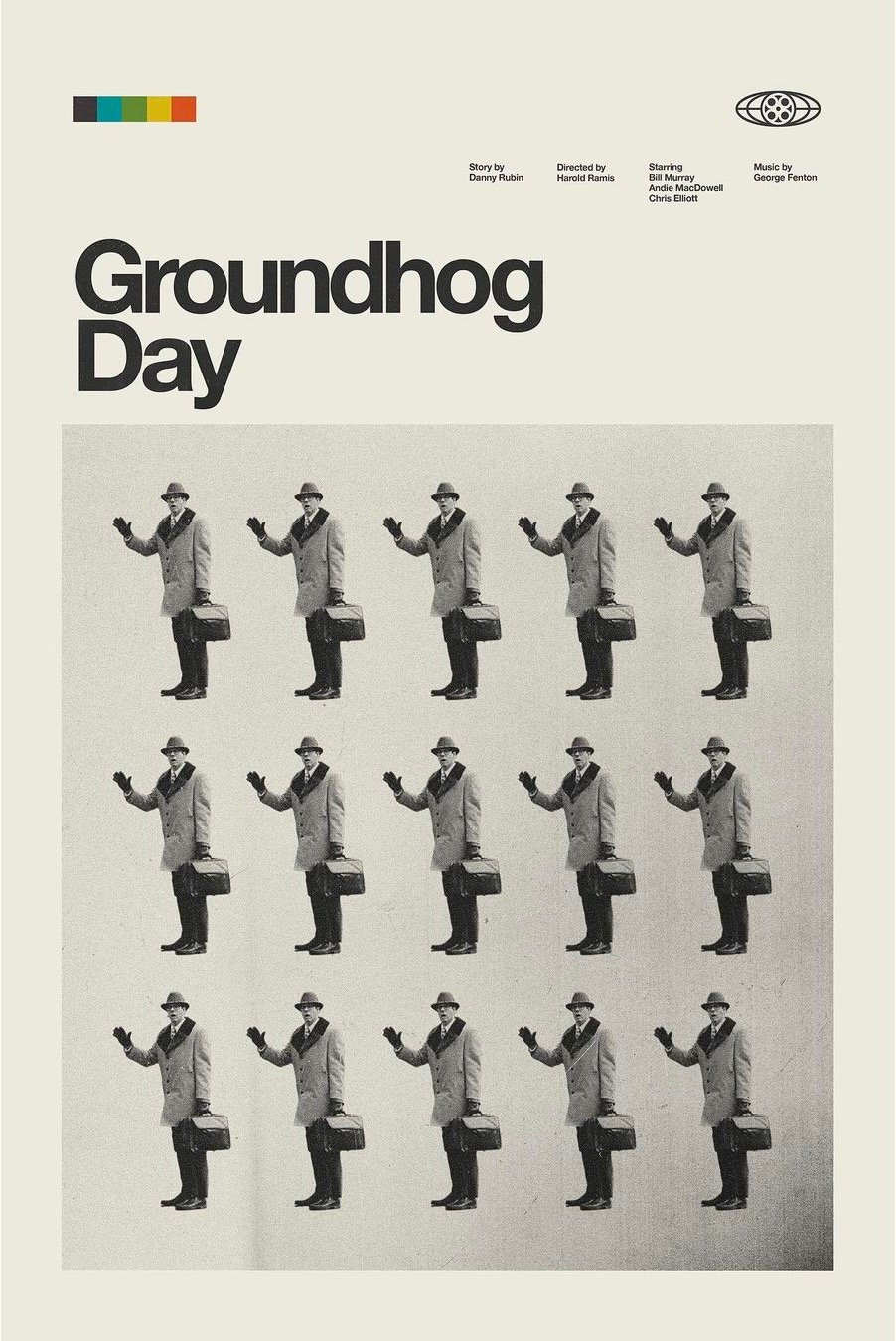


Check out these retro modern movie posters from Patrick Concepcion; the Groundhog Day one is simple perfection. You can check out Concepcion’s work on his website and Instagram or buy prints on Etsy.
The Myth of the Cast Iron Pan. “Having sprung from the core of the earth, it will die a tragic death if exposed to the tiniest soap bubble. The mortal gently cleanses the cast-iron with water, like a doting river nymph.”
Mr. @glennf is hosting the Kottke Ride Home podcast this week while @jackisnotabird is away on vacation. Listen in! (Also, Jack and I finally met in person recently – so good to chat w/ him about the evolution of social media & many other things.)
In collaboration with Jun Takahashi, Thom Yorke has released a “Very 2021” remix of his band’s iconic Creep. Slow and reverby, the singer’s perhaps-least-favorite Radiohead song takes on new life for this (second?) oddest of years. On first listen, I like but maybe don’t love this version, but some of the YT comments are worth reading:
Can’t believe Thom Yorke finally collaborated with Radiohead. Two of my favorite artists making a song together
Thom has went so far into artistic discovery he looped back on himself. It’s like post-post-irony, but musically
I can’t believe Thom made a doomer wave version of his own fucking song
Thom nailed this one, he sounds just like the originals singer!
You can find the song on a variety of platforms.

Car and Driver has a good article that both assesses the brief history of electric car design and looks at where things might be headed going forward, as designers break free of some early conceptions about what a car (or what a specifically electric car) needed to look like. Some highlights:
Many early EV ventures used existing platforms and arranged electric powertrains to fit where gas engines and transmissions had previously resided. Even Tesla’s first attempt was a revamped Lotus Elise without its 1.8-liter inline-four. Working on a nondedicated, or “nonnative,” electric platform limited designers’ options for positioning the battery and motor. Automakers often stacked batteries under the rear seat—which is why early EVs sometimes offered less legroom or cargo space than their gas counterparts—and put the motor assemblies under the hood. Even the Nissan Leaf, which packages an underfloor battery in a dedicated EV platform, still follows the old philosophy of carrying a motor where an engine normally goes. Aesthetically, too, the early electrics couldn’t break away from distinct grille shells and large air vents…
“We have the opportunity to give the car a totally new kind of proportion,” says Steffen Köhl, Mercedes-Benz director of advanced exterior design. Köhl worked on the EQS, the first car on Mercedes’s new Electric Vehicle Architecture (EVA). The EQS is a luxury sedan with a long wheelbase, a sweeping bridge of a roofline, and a large, screen-filled cabin. Think of it as the S-class of EVs. The underpinnings of an EV allow for bigger interiors in smaller vehicles, he says. It can be “cabin-forward, with short overhangs in front and rear. Since the battery is flat ground, we can try a new kind of interior—smooth panels, the center console floating. There are no more ups and downs between the seats.”
For my part, even this broader vision is still too focused on coupes, sedans, SUVs, and other “traditional” four-to-five seat cars. There’s a brief discussion of the new F-150 electric pickup truck, but very little about buses or single-rider ATV designs. A lot of looks at the “skateboard” chassis popularized by Tesla, not enough actual skateboards. If we’re going to cast a broader view, let’s cast it as broad as we can.

Vice has a sometimes less-than-flattering profile of Best Electronics’ Bradley Koda, a persnickety entrepreneur who has an unrivaled catalog of old-school Atari console parts and a reputation for shutting out buyers who get impatient with doing things his way:
Among Atari fans, Best is almost as famous for ignoring and blacklisting badly behaved customers as it is for selling Atari parts. A first attempt to buy from Best Electronics is a sink-or-swim proposition: learn the rules, or accept your fate…
Koda is a monopolist, of a sort, but he’s no Jeff Bezos. Best Electronics has no virtual shopping cart, or any other Amazon-esque conveniences. The store’s website looks the same as it has since the early 2000s: it’s a lengthy, multicoloured text scroll, as if Jack Kerouac quit the novel-writing business (but not the benzedrine) and started typing about Atari…
Anyone who can’t figure out this system risks being deemed a time-waster. In emails to customers, Koda often laments his busy schedule, and he seems to take distractions personally. He would rather lose a sale than suffer someone who hasn’t learned the rules.
Best has been in business more than 25 years. Its equipment is mostly unused Atari originals, not salvaged parts. The company’s catalog was printed more than 20 years ago (and is available only in print); corrections (including changes in price) are only available online. His customers both love him and fear him.
In short, it’s a throwback to old-school nerd retail, the kind lampooned by The Simpsons’ Comic Book Guy. What, did you think finding first-rate replacement parts for your forty-year old video game machine would be like buying AA batteries?
Cuttlefish don’t live a long time like corvids or have highly social lives like chimpanzees. They don’t even perform magic tricks squeezing into caves or holes like octopi. But they’re smart. How do they do it?

Along with a liveblog of the last few rounds of this year’s Scripps National Spelling Bee, The New York Times has an excellent profile of its champion, 14 year-old Zaila Avant-garde from New Orleans, Louisiana. (One fun fact: Zaila’s last name is an homage by her father to John Coltrane.)
Zaila, who just finished eighth grade in her hometown, Harvey, La., showed a prowess for spelling at 10, when her father, who had been watching finals of the Scripps National Spelling Bee on ESPN, asked her how to spell the winning word: marocain.
Zaila spelled it perfectly. Then he asked her to spell the winning words going back to 1999. She spelled nearly all of them correctly and was able to tell him the books where she had seen them.
“He was a bit surprised by that,” Zaila said in an interview before the finals.
This is a heck of a party trick that kids with hyperlexia can do; I can do it, and unsurprisingly, hyperlexia (and possibly a photographic memory) is an advantage for competitive spelling.
But Zaila’s talents don’t end there:
A gifted basketball player, she set three Guinness world records for the most basketballs dribbled simultaneously (six basketballs for 30 seconds); the most basketballs bounces (307 bounces in 30 seconds); and the most bounce juggles in one minute (255 using four basketballs). With her victory on Thursday, she also became the first winner from Louisiana.
In 2018, she appeared in a Steph Curry commercial that showcased her skills. She also learned how to speed read and figured out that she could divide five-digit numbers by two-digit numbers in her head, a skill she said she had a hard time explaining.
“It’s like asking a millipede how they walk with all those legs,” said Zaila, who has three younger brothers.
[I can… kinda do this? (I can’t really do this very well. The point is, all of this is very impressive!)]
Zaila just graduated eighth grade, and she’s the first African-American spelling champ in the bee’s history. She’s got skills and drive to spare.

This is a somewhat sentimental post for me: years ago, I had dinner with Jason at a restaurant in Manhattan (I forget which one) and ordered a brandy alexander. It turned out that the bartender didn’t know how to make one, so I tried my best to explain — in the end, I wound up with a white Russian instead.
But! A brandy alexander is a dang nice drink, and everyone should know how to make one. Even the internet turns up some pretty bizarre recipes that morph into that white Russian I had back in 2016. My favorite (of the ones that I remember) was probably twenty-one years ago, when I was a college student on vacation in Paris, ordered at a piano bar where tourists and locals alike belted out American showtunes. I’ll never be that young again.
But! It’s Thursday and it’s 5:30 on the east coast, so there’s no reason (except, like me, not having creme de cacao on hand) you can’t make yourself one of these so you can feel that young yourself.
This recipe largely follows the one at liquor.com, which offers a solid history for the cocktail (it used to be made with gin? okay, weird; most cocktails used to be made with brandy, not the other way around) and also feels the least objectionable:
Ingredients:
- 1 1/2 ounces cognac
- 1 ounce dark creme de cacao
- 1 ounce cream
- Garnish: grated nutmeg
Steps:
- Add cognac, dark creme de cacao and cream into a shaker with ice and shake until well-chilled.
- Strain into a chilled cocktail glass or a coupe glass.
- Garnish with freshly grated nutmeg.
Notes:
- Cognac is brandy, but cognac is fancy brandy; other brandies can be good but cognac is pretty much always good. So why not use cognac?
- I like a coupe glass; cocktail glasses look pretty but are a good way to spill your drink.
- You could go equal parts cognac, creme de cacao, and cream, but why? It’s better with more liquor in it.
- Don’t add more ice, even if you serve it in a rocks glass. Up is the way to go here.
- You can get very dessert-y with brandy alexanders (whipped cream, ice cream, shaved chocolate, etc.), but at heart the thing is a cocktail, so treat it like a cocktail.
Postscript:
“Brandy Alexander” is a fun song by Feist (and songwriter Ron Sexsmith). It also (somewhat on the sly) references a famous 1974 incident where John Lennon, drunk on the cocktail with Harry Nilsson, got thrown out of the Troubadour during Lennon’s “lost weekend” in Los Angeles. You don’t have to like any of the music to like the drink, or vice versa.
The Atlantic’s Ed Yong is one of our great biology writers. He recently won a Pulitzer for his coverage of the COVID-19 pandemic, but it’s equally illuminating and much more fun to read him write about tapeworms or some other more benign form of life.
In this case, it’s about songbirds, which have two unusual things in common besides their love of song: they all evolved to detect and eat sugar in the form of sap and nectar [and did so in a way different from hummingbirds, who also love the sweet stuff], and they all did this in Australia, and from there spread out all over the world.
Songbirds probably evolved sweet perception about 30 million years ago, when Australia was much wetter. As the climate dried, the soils became poorer and the eucalyptus trees expanded. The forests abounded with new sources of sugar such as manna, which the songbirds were already primed to find and exploit. Perhaps the extra energy from these abundant calories allowed them to migrate over long distances and travel to other continents. Perhaps they could thrive in their new homes by finding flowers that were already baiting insects with nectar. “They are the most successful group of birds,” Eisthen told me. “You have to wonder how much of their success is due to this hidden talent, which allows them to invade new niches and feed on food sources that other animals are not exploiting.” …
Meanwhile, Sushma Reddy, an ornithologist at the University of Minnesota, points out that hummingbirds, songbirds, and parrots, three groups of birds with lots of nectar-eating species, “are also the same lineages that have convergently evolved vocal learning”—the ability to make new songs and sounds after listening to other individuals. Could these traits be related? Perhaps there’s a hidden connection between the sugary riches of Australia’s forests and the beautiful tunes that fill the air of every continent—between sweetness of palate and sweetness of voice.
Side note: Ed mentions in a parenthetical here that “fans of the board game Wingspan and its Oceania expansion will be familiar with the importance of nectar to Australian birds.” I, in fact, was not familiar with the board game Wingspan or any expansions thereof, so I looked it up:
You are bird enthusiasts—researchers, bird watchers, ornithologists, and collectors—seeking to discover and attract the best birds to your network of wildlife preserves. Each bird extends a chain of powerful combinations in one of your habitats (actions). These habitats focus on several key aspects of growth:
- Gain food tokens via custom dice in a birdfeeder dice tower
- Lay eggs using egg miniatures in a variety of colors
- Draw from hundreds of unique bird cards and play them
The winner is the player with the most points after 4 rounds.
Also, apparently it’s a card-based game, but is also available for computers via Steam. The more you know!
Most US-centric attempts to imagine a future where artists and humanists’ work is better supported by the government hearkens back to the Works Progress Administration (later, the Work Projects Administration) of the late 1930s and early 1940s. There are, however, more recent models outside the US worth emulating, although their stories often don’t end so well as the WPA’s appears to.
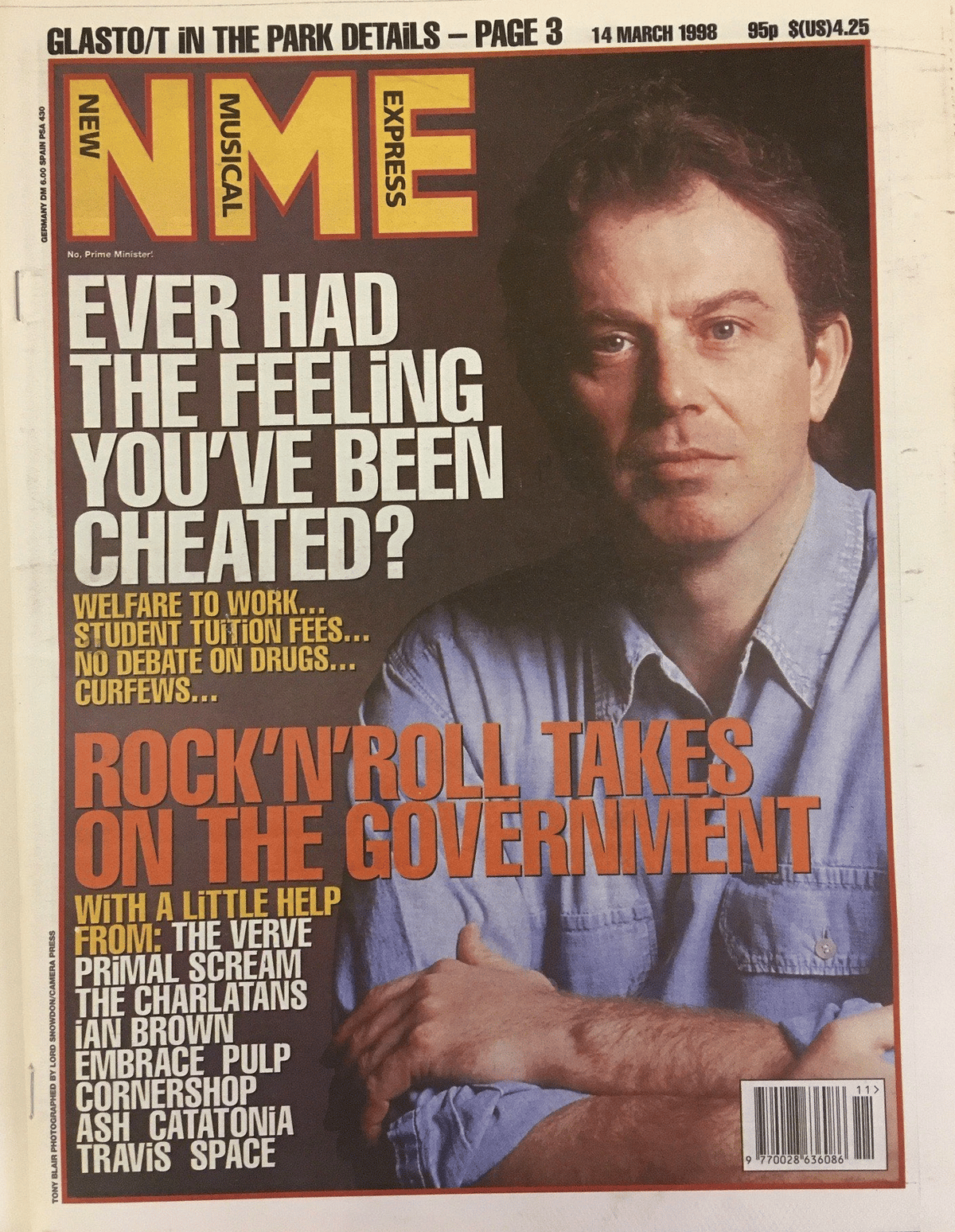
Until the New Labour movement overhauled the British welfare system in the late 1990s, aspiring musicians were often able to exploit loopholes in the welfare system to support their own work. There’s some irony in the fact that the more progressive of the two parties winning control of government effectively ended some of the more progressive social programs that thrived under the conservative regime, although that’s not limited to the UK.
In a recent blog post, David Lance Callahan, who’s writing a book about the intersection of music and the welfare state in the UK, looked at this moment in the late 1990s, when the UK’s music scene went from underground to overground, and the welfare state fell apart:
However, despite these ideological ogres [the Tories] being in power throughout the 1980s and most of the ’90s, their attempts to massage the massive unemployment figures their policies created inadvertently led to an expansion of the opportunities available to find state support for one’s creative endeavours. The ability to get off the dole for a year as part of the Enterprise Allowance Scheme was particularly welcome - if you could get £1,000 put into your bank account for the one day the Department of Social Security demanded to see it there. Often the money was returned to a generous friend or relative the very next day, but the scheme meant that a budding or struggling musician (or manager, record label or sound engineer) could start their own business and be mostly left alone to write, record, tour and promote the results. If you could show some financial or business progress or actual success over that year, then all the better.
This was as true of bands in the ’90s as it was in the previous couple of decades. Very few could have existed without the time and space afforded by signing on and the skin-of-the-teeth security provided by cheap (or free) housing and supplementary benefit - or a non-returnable student grant for art school or uni. Things could only get better with Labour in charge, right?
It feels like on some days it’s easier to imagine how much simpler it could be with debt forgiveness, free or inexpensive higher education, and a universal basic income, and on other days all one can do is imagine how any of those programs, grossly implemented, could be used to tear the existing social safety net (sparse as it is) apart. We have good reason to fear such things! In the 1990s, they happened! It wasn’t a hundred years ago; we remember it ourselves.
Bonus: Callahan’s post includes many clippings of artists from some of your favorite 90s UK bands (Pulp, Belle and Sebastian, Primal Scream, and more) somewhat ambivalently reflecting on their time on welfare and how it enabled them to become successful musicians.
(Via Bethany Klein)
Currently in the United States, an author’s copyright expires 70 years after the author’s death or 95 years after its first publication. But what about when an author of a work grants their exclusive copyright to a publisher or some other partnership? In that case, an author can request that the work’s copyright revert to their sole ownership after 35 years.
It’s called reversion, and it doesn’t happen often, because it’s not automatic; there are legal hurdles to jump through to file copyright termination notices, meaning you need money, help, and strong motivation to make it happen. And in some famous cases (see virtually every famous superhero ever), if you’ve created something as a work for hire, copyright termination alone isn’t always going to get it done. But it does happen, and it’s interesting to see (and to measure, at scale) in just what cases it comes together.
That’s the subject of a new academic study by Joshua Yuvaraj, Rebecca Giblin, Daniel Russo-Batterham, and Genevieve Grant. The authors also created a complete dataset of copyright termination notices from 1978 to 2020 for other researchers to parse; their initial findings are summarized here by Cory Doctorow.
Few creators have managed to revert but the ones that have are fascinating. Stephen King is a leading reverter, as are George RR Martin, Nora Roberts and David Eddings. - successful authors who are able to claim back their works and seek new deals based on their track records.
A single YA author - Francine Pascal_ - accounts for nearly all the YA reversions, thanks to her reclaiming of all 305 of her Sweet Valley High novels (in kids’ books, Ann Martin attains another high-water mark for reverting the Baby-Sitters Club books).
But the most fascinating entry is funk titan George Clinton, who pursued his former manager Nene Montes for years, claiming he’d forged Clinton’s signature and defrauded him to steal the rights to most of Clinton’s prodigious and profitable catalog.
Thanks to reversion, Clinton was able to finally settle all question of title without expensive litigation - he simply reverted 1,413 works.
Other notable filers of termination notices include Philadelphia-based musical partners Gamble and Huff and Hall and Oates, and the heirs of Superman co-creator Jerry Siegel and playwright August Wilson. Another somewhat ironic entry is Pat Boone, who famously re-recorded many, many popular Black artists’ songs to cash in on segregated radio; Boone submitted 643 copyright termination notices for songs under his assigned copyright.
As the authors point out, there are limitations in the data set. Filing a copyright termination notice doesn’t mean that copyright automatically reverts back to the author; an author or their heirs might use the termination notice to successfully renegotiate their deal with the current licensee, or there may have been mistakes in their legal filings, or some other mishap.
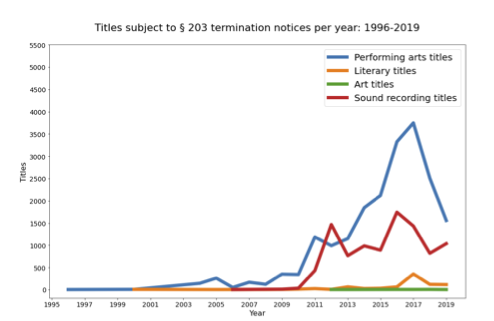
Strangely, however, the authors note that while there are periodic spikes in copyright termination notice activity (for example, immediately after the statute was first passed in the 1970s), there’s currently a dip in termination requests under both sections of the copyright law that allows rights to be reverted. And the authors do not precisely whether it’s a periodic flux, or a long-term trend, or why either might be the case.
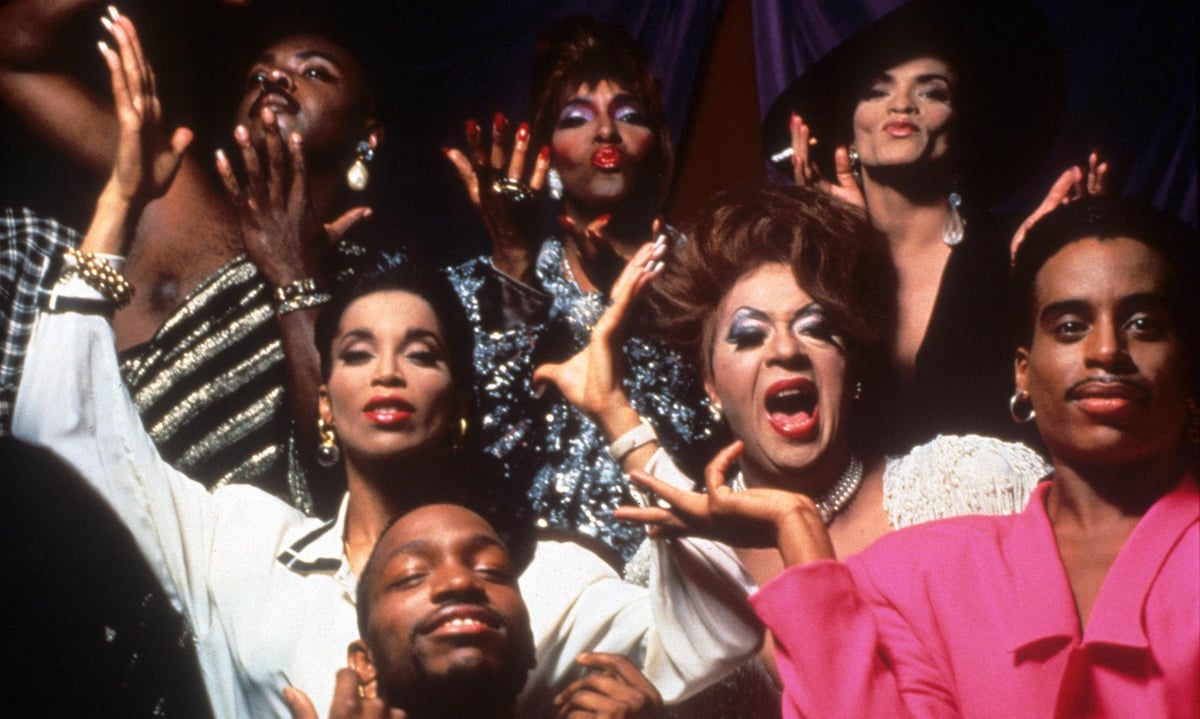
Drag has always been a world of aspirations and contradictions, playing not just on gender, but on race, power, wealth, and respectability. So in some sense, it’s not surprising that being a contestant on RuPaul’s Drag Race and its affiliated series is remarkably expensive:
“I spent more coming into this competition than I did as the down payment on my house,” Kameron says, her tone serious now.
“I spent more on this competition than I did on college,” Cracker replies solemnly, and a moment of silence falls over both queens.
Contestants estimate that the cost of all the outfits in a current season of the show is between $20,000 and $30,000. This is five to six times as much as the earlier, more low-budget seasons.
But perhaps this is a case of some well-bankrolled contestants getting overzealous, and others struggling to keep up? Not exactly:
During Episode 5’s critiques, judge Michelle Visage took issue with contestant Joe Black’s look from the week’s maxi challenge. Earlier in the episode, Joe had sung and danced his way through the Eurovision girl-group challenge wearing a pink knee-length dress with a high neck and puffy sleeves. “You came out wearing a finger wave wig, and something I probably could have bought off the rack at Primark, no joke,” Michelle says. In response, Joe stage-whispers, “Aiiitch and emmmmm,” and then laughs.
The music hits a dramatic note as the camera cuts to RuPaul, who looks… grim. “That outfit off the rack was a huge disappointment to me,” Ru says. “That’s what everyday people do, and you are a star. And this goes to all of you up here: If it is from H&M, you better glitter the fuck out of it, and make it something special. We’re looking for Great Britain’s next superstar. Don’t waste my time. I don’t want to see any fucking H&M.”
The harsh criticism of a downmarket dress didn’t look great coming from a world-famous drag queen who owns a 60,000-acre ranch in Wyoming. And it got worse. Joe Black had been eliminated in Episode 1, then unexpectedly brought back to replace a different contestant after the show’s mid-season seven-month COVID hiatus, but had been forced to sell all of his costumes during lockdown. (The pandemic decimated live entertainment, including drag performances.) “I had sold them because I needed the money to live,” Joe said. “So not only did I need to find the money, but I also needed to get the costumes again.”
But there is also a sense in which drag and ball culture is only newly big business (with Drag Race as the showcase):
The idea of investing a ton of money in a drag career and having it pay off is a relatively modern one. According to Tom Fitzgerald and Lorenzo Marquez, authors of Legendary Children: The First Decade of RuPaul’s Drag Race and the Last Century of Queer Life, performers simply didn’t have access to many venues for most of drag’s history—largely because cross-dressing was illegal throughout the United States until the 1970s. Most drag performers never left their community, and while their local gigs may have been emotionally rewarding, they weren’t particularly lucrative.
Social and financial marginalization forced drag artists to be creative. “Up until the 80s and the 90s, drag queens essentially dressed in vintage clothing,” Fitzgerald told VICE. “Trans women and queer men couldn’t walk into a department store and buy dresses. It was easier and safer to go look for a size 13 pump in a used store than it was to go into the ladies section. The underground aspect of drag defined the aesthetic for a very long time.”
Even in earlier seasons of Drag Race, when contestants were competing for an amount of money that was unprecedented in the drag world, the runways had nowhere near the scale that they do in more recent seasons. “When Drag Race first started, they were literally coming in off the street to do this TV show,” Fitzgerald said. “And now it’s 13 years later, it’s won all of these Emmys, it’s HD, it’s got superstar guest stars. The stakes are just higher.”
50 Years of Text Games by Aaron Reed is a favorite newsletter of mine. (It’s a hard newsletter to read in your email right away, but a rewarding one to pile up and save.) It specializes in in-depth explorations, typically at a single game per newsletter, but also takes a wider view to try to understand why this game at that moment was particularly significant or representative.
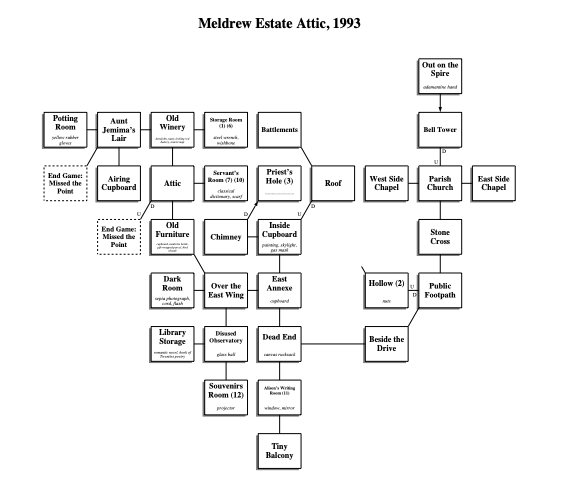
Here’s an example of a great newsletter about a game I do not know well: Graham Nelson’s Curses, from 1993. Curses, Reed, argues, emerges at an unlikely moment (surrounded by emerging CD-ROM games and exploding console popularity) to bring about an equally unlikely renaissance of interactive fiction.
Curses is scavenger hunt meets Dante’s Inferno, “an allegorical rite of passage,” adventure game by way of historical footnote. It certainly owes a great debt to Infocom, recreating the company’s signature style even while literally resurrecting its technical bones…
But Nelson also took much inspiration from history and classics. When asked once about his favorite games and authors, he gave much more space to the latter, listing “Auden, Eliot, Donne, Browning, Elizabeth Bishop… For plays, Tom Stoppard, Christopher Hampton, David Hare.” Curses is steeped in antiquities, from the abandoned odds and ends squirreled away in the Meldrew attics—an old wireless radio, for instance, which seems to do nothing when turned on until you realize it just takes a few turns to warm up—to its detailed time travel excursions to lovingly researched long-ago eras. It’s a game very much about odd corners and margins: interstitial places…
Nelson’s game would take over the IF newsgroups as players who thought they’d seen the last of the great text adventures discovered a worthy modern successor. “Congratulations,” wrote one poster: “Its almost like having Infocom back.” It helped that the game had so many nooks and crannies and puzzles, endless puzzles, that at least some of them were bound to be stumpers for any given player. Hint requests and discussion of the game proliferated, and dominated the newsgroups through the rest of 1993 and 1994: so much so there was a half-hearted proposal to split it all off into a dedicated new group, rec.games.curses, just so there’d be enough oxygen to talk about anything else.
The other big thing Nelson did with Curses is build a compiler for the Infocom virtual machine so that players and designers could create their own text adventures. Kind of like Dante importing the classic epic into the vernacular. Everybody could now do it themselves.
That juncture — a compelling world, an obsessed and supportive community, and (there’s no better way to put this) the means of creative production — have proved over and over again to be the secret formula for building something beautiful and new in art.
The galaxy is wild. Our solar system, with its surprising abundance of living creatures and nonstop radiation and asteroid showers, is a placid, private garden compared to the rest of it.
In particular, there are perhaps trillions of rogue planets (planetary bodies ranging from little rocky Earth-sized guys to super-Jupiter gas giants) in the Milky Way, including a surprisingly large fleet of the things right near the galactic core.
This is unusual, since the typical way we detect exoplanets is by marking their repeated procession across a star. But rogue planets, by definition, don’t orbit stars. So the way astronomers find them is a little different, requiring use of gravitational microlensing.
Gizmodo breaks it down:
Data gathered by NASA’s now-retired Kepler Space Telescope has revealed a small population of free-floating planets near the Galactic Bulge. The new finding raises hope that a pair of upcoming missions will result in further detections of unbound planets, which drift through space separated from their home stars….
It’s impossible to know what the conditions are like on these presumed rogue exoplanets, but [astronomer Iain] McDonald said they could be “cold, icy wastelands,” and, if similar in size to Earth, their surfaces would “closely resemble bodies in the outer Solar System, like Pluto.”
The new paper suggests the presence of a large population of Earth-sized rogue planets in the Milky Way. It’s becoming clear that free-floating planets are common. McDonald said his team is currently working to come up with a more precise estimate for how many of them might exist.
Did you catch that part about how McDonald’s team made this discovery using a now-retired telescope? Yeah. Apparently the new telescope projects coming online are both more powerful and (in particular) better equipped to detect gravitational lensing effects, and therefore more likely to detect rogue planets in the future.
Newer posts
Older posts




Socials & More