

The New Vera C. Rubin Observatory Is a Firehose of Astronomical Imagery & Data
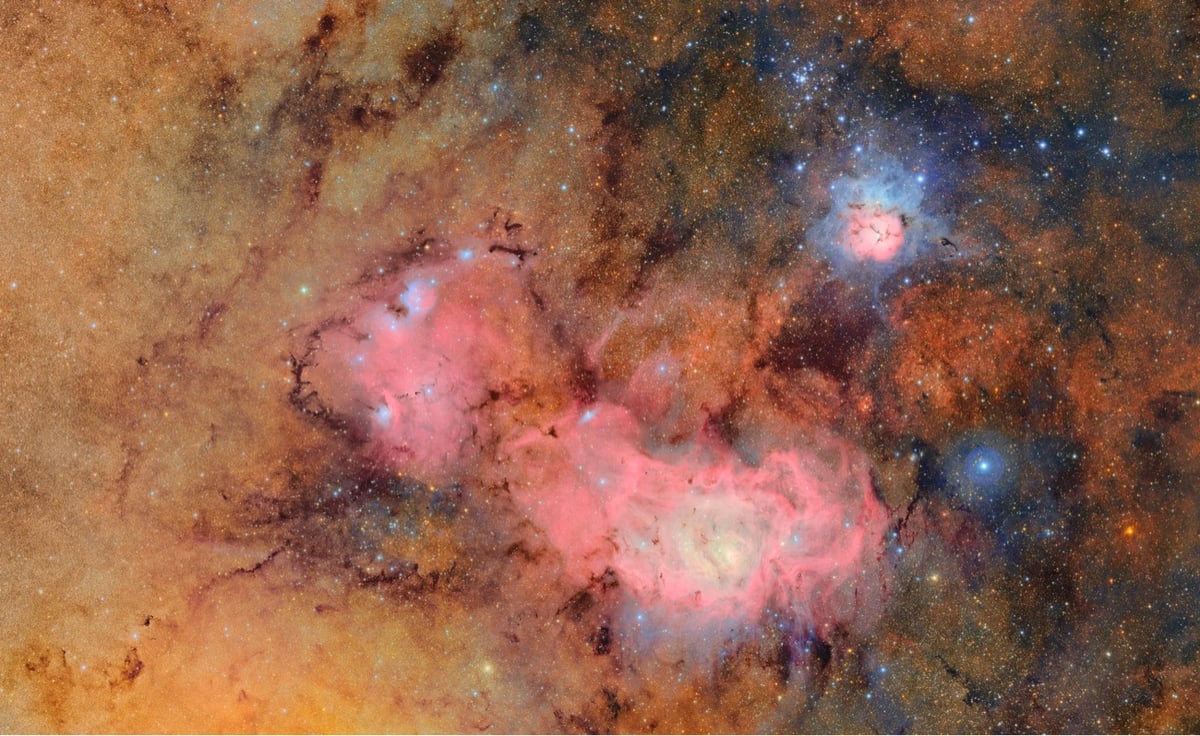

The Vera C. Rubin Observatory in Chile is operational and will soon embark on its primary mission: to take a detailed image of the sky every night for the next ten years.
A powerful new observatory has unveiled its first images to the public, showing off what it can do as it gets ready to start its main mission: making a vivid time-lapse video of the night sky that will let astronomers study all the cosmic events that occur over ten years.
“As the saying goes, a picture is worth a thousand words. But a snapshot doesn’t tell the whole story. And what astronomy has given us mostly so far are just snapshots,” says Yusra AlSayyad, a Princeton University researcher who oversees image processing for the Vera C. Rubin Observatory.
“The sky and the world aren’t static,” she points out. “There’s asteroids zipping by, supernovae exploding.”
And the Vera C. Rubin Observatory, conceived nearly 30 years ago, is designed to capture all of it.
These images will revolutionize how astronomy is done:
Astronomy is following in the path of scientific fields like biology, which today is awash in DNA sequences, and particle physics, in which scientists must sift through torrents of debris from particle collisions to tease out hints of something new.
“We produce lots of data for everyone,” said William O’Mullane, the associate director for data management at the observatory. “So this idea of coming to the telescope and making your observation doesn’t exist, right? Your observation was made already. You just have to find it.”
“Your observation was made already. You just have to find it.” I love that.
The Rubin team has released some images from the telescope’s initial run, to inform the public of what the project is capable of. In less than a half-day’s operation, the Rubin discovered 2,104 new asteroids in our solar system.
In about 10 hours of observations, NSF-DOE Vera C. Rubin Observatory discovered 2104 never-before-seen asteroids in our Solar System, including seven near-Earth asteroids (which pose no danger). Annually, about 20,000 asteroids are discovered in total by all other ground and space-based observatories. Rubin Observatory alone will discover millions of new asteroids within the first two years of the Legacy Survey of Space and Time. Rubin will also be the most effective observatory at spotting interstellar objects passing through the Solar System.
Not bad, rook. The team has set up a dedicated image viewer for their massive images.


You can read more about the Rubin at The Atlantic, The Rubin Observatory Is a Cosmic Cathedral, written by Michael Jones McKean, the observatory’s artist in residence:
Rubin is also a rare scientific megaproject that feels excitingly relatable. Instruments such as particle accelerators, neutrino detectors, and even radio telescopes might command our awe, but they roam in realms far outside sensorial experience. At its core, Rubin is an optical telescope. This links it to a long continuum of prosthetic tools that help our bodies better do what they already do naturally — see and process light.
And a trio of videos on how the observatory works from BBC News, New Scientist, and astrophysicist Becky Smethurst.
Socials & More