Entries for July 2021

Fermi’s paradox is fairly well known: given what we know about the chance of intelligent life appearing somewhere in the universe, why haven’t any other species to date so far made contact with humanity? You can formalize the paradox via the Drake equation or some other method, but that’s the crux of it.
What’s less clear is how Enrico Fermi originally phrased the paradox. At Language Log, Mark Lieberman points out that each of the participants in the original conversation remembers it differently:
At lunch, Fermi suddenly exclaimed, “Where are they?” (Teller’s remembrance), or “Don’t you ever wonder where everybody is?” (York’s remembrance), or “But where is everybody?” (Konopinski’s remembrance).
As Liberman writes, “our memory of exact word sequences usually fades more quickly than our memory of (contextually interpreted) meanings. More broadly, the exact auditory sensations normally fade very quickly; the corresponding word sequences fade a bit more slowly; and the interpreted meanings last longest.”
My own favorite (for purely aesthetic reasons) is “where is everybody?” It just kind of says everything you want such an observation to say.
Beavers are unusual among animals in their ability to radically alter their habitat. They build dams to turn small streams and flood plains into ponds that they use to store food and hide from predators.
It turns out that this is useful for other species who like to radically alter their habitats, like humans. Let’s say you’ve got a dried out flood plain in California you want to restore in order to mitigate the effects of a drought, or even to help stop wildfires. Why not hire some beavers?
The Doty Ravine project cost about $58,000, money that went toward preparing the site for beavers to do their work.
In comparison, a traditional constructed restoration project using heavy equipment across that much land could cost $1 to $2 million, according to Batt…
“It’s huge when you think about fires in California because time is so valuable,” Fairfax said. “If you can stall the fire, if you can stop it from just ripping through the landscape, even if that beaver pond can’t actually stop the fire itself, just stalling it can give the firefighters a chance to get a hold on it.”
These lush green beaver wetlands also protect wildlife that can’t outrun a wildfire.
The weird thing is that humans have been drafting off of beavers literally as long as there have been humans and beavers, especially in North America. Humans come along, find these beautiful ponds and water sources that are perfect for commerce and agriculture, then proceed to trap and kill off the beavers that made it, either directly for their pelts or because the beavers become a nuisance for crops. (Harold Innis, who later became famous for his theories of media and communication, wrote a terrific book about this called The Fur Trade In Canada back in 1930.)
The idea that beavers might be a low-cost, low-impact way to mitigate the destruction of the environment by climate change (and other forms of human meddling) is an attractive one. But we have to be careful not to introduce beavers (or any other species) anyplace where they are unlikely to thrive, or where they’re just going to come into conflict with humans or other species, starting a cycle of destruction all over again.
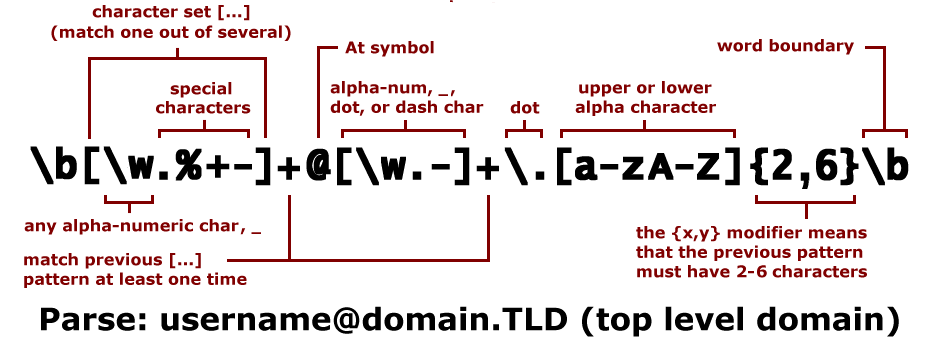
I have an unusually good memory, especially for symbols, words, and text, but since I don’t use regular expressions (ahem) regularly, they’re one of those parts of computer programming and HTML/EPUB editing that I find myself relearning over and over each time I need it. How did something this arcane but powerful even get started? Naturally, its creators were trying to discover (or model) artificial intelligence.
That’s the crux of this short history of “regex” by Buzz Andersen over at “Why is this interesting?”
The term itself originated with mathematician Stephen Kleene. In 1943, neuroscientist Warren McCulloch and logician Walter Pitts had just described the first mathematical model of an artificial neuron, and Kleene, who specialized in theories of computation, wanted to investigate what networks of these artificial neurons could, well, theoretically compute.
In a 1951 paper for the RAND Corporation, Kleene reasoned about the types of patterns neural networks were able to detect by applying them to very simple toy languages—so-called “regular languages.” For example: given a language whose “grammar” allows only the letters “A” and “B”, is there a neural network that can detect whether an arbitrary string of letters is valid within the “A/B” grammar or not? Kleene developed an algebraic notation for encapsulating these “regular grammars” (for example, a*b* in the case of our “A/B” language), and the regular expression was born.
Kleene’s work was later expanded upon by such luminaries as linguist Noam Chomsky and AI researcher Marvin Minsky, who formally established the relationship between regular expressions, neural networks, and a class of theoretical computing abstraction called “finite state machines.”
This whole line of inquiry soon falls apart, for reasons both structural and interpersonal: Pitts, McCullough, and Jerome Lettvin (another early AI researcher) have a big falling out with Norbert Wiener (of cybernetics fame), Minsky writes a book (Perceptrons) that throws cold water on the whole simple neural network as model of the human mind thing, and Pitts drinks himself to death. Minsky later gets mixed up with Jeffrey Epstein’s philanthropy/sex trafficking ring. The world of early theoretical AI is just weird.
But! Ken Thompson, one of the creators of UNIX at Bell Labs comes along and starts using regexes for text editor searches in 1968. And renewed takes on neural networks come along in the 21st century that give some of that older research new life for machine learning and other algorithms. So, until Skynet/global warming kills us all, it all kind of works out? At least, intellectually speaking.
(Via Jim Ray)

A new history of late medieval Ethiopia and its interactions with Europe by historian Verena Krebs does something a little unusual, at least for a professor at a European university: it treats the horn of Africa as the center of civilization that it was, and Europeans as the members of far-flung satellite states that Ethiopians could not help but see them as being.
It’s not that modern historians of the medieval Mediterranean, Europe and Africa have been ignorant about contacts between Ethiopia and Europe; the issue was that they had the power dynamic reversed. The traditional narrative stressed Ethiopia as weak and in trouble in the face of aggression from external forces, especially the Mamluks in Egypt, so Ethiopia sought military assistance from their fellow Christians to the north—the expanding kingdoms of Aragon (in modern Spain), and France. But the real story, buried in plain sight in medieval diplomatic texts, simply had not yet been put together by modern scholars. Krebs’ research not only transforms our understanding of the specific relationship between Ethiopia and other kingdoms, but joins a welcome chorus of medieval African scholarship pushing scholars of medieval Europe to broaden their scope and imagine a much more richly connected medieval world.
The Solomonic kings of Ethiopia, in Krebs’ retelling, forged trans-regional connections. They “discovered” the kingdoms of late medieval Europe, not the other way around. It was the Africans who, in the early-15th century, sent ambassadors out into strange and distant lands. They sought curiosities and sacred relics from foreign leaders that could serve as symbols of prestige and greatness. Their emissaries descended onto a territory that they saw as more or less a uniform “other,” even if locals knew it to be a diverse land of many peoples. At the beginning of the so-called Age of Exploration, a narrative that paints European rulers as heroes for sending out their ships to foreign lands, Krebs has found evidence that the kings of Ethiopia were sponsoring their own missions of diplomacy, faith and commerce.
In fact, it would probably be accurate to say that Ethiopia (which over its long history has included areas now in Eritrea, Somalia, Sudan, Yemen, and parts of Saudi Arabia) was undergoing its own Renaissance, complete with the rediscovery of a lost classical kingdom, Aksum (sometimes called Axum).
Around the third century, Aksum was considered an imperial power on the scale of Rome, China, and Persia. It was part to better understand the historical legacy of Aksum that east Africans circa 1400 reestablished trading ties and military partnerships with their old Roman trading partners — or, in their absence, the Germanic barbarians who’d replaced them.
Europe, Krebs says, was for the Ethiopians a mysterious and perhaps even slightly barbaric land with an interesting history and, importantly, sacred stuff that Ethiopian kings could obtain. They knew about the Pope, she says, “But other than that, it’s Frankland. [Medieval Ethiopians] had much more precise terms for Greek Christianity, Syriac Christianity, Armenian Christianity, the Copts, of course. All of the Orthodox and Oriental Orthodox churches. But everything Latin Christian [to the Ethiopians] is Frankland.”
It turns out that today (July 5th) is the 50th anniversary of Louis Armstrong’s final recording, made the night before he passed away in 1971. Armstrong, born August 4th, 1901 (he often told people he was born July 4th, 1900) was a month shy of 70 years old.
(Hi, this is Tim Carmody filling in for Jason this week. Hope you all have had a lovely holiday and are ready for more bloggy goodness here at kottke dot org.)
For a variety of reasons, I recently found myself inside a legal marijuana dispensary for the first time. I wasn’t sure exactly what I expected the retail experience to be like — a liquor store? a coffee shop? a used car lot? the paraphrenelia shops I first checked out as a teenager? — but I was nevertheless surprised.
The closest analogy I can think of is a jewelry store. There was pretty decent security, including a whole separate room for customers to check in, and everything was presented in a secure display case. A salesperson walked you through the samples to answer questions, guide you in one direction or another, and take your order, while the order itself was filled in a secure area away from the showroom. The other shopping experience I’ve had that’s similar was buying medical equipment, which makes some sense given the origin of a lot of retail dispensaries in the medical marijuana era. You could also say it’s a little like a pharmacy (which again, is probably unsurprising).
Some of the setup of dispensaries is a function of legal regulations (do you need to check IDs and differentiate between medical and recreational customers?) and some of it solves some practical problems (weed is expensive and there’s still a viable aftermarket, so you are in principle a target for theft).
But it’s also a question of culture: who’s involved in the transaction as a seller and as a buyer, and what are their assumptions and competencies that they’re bringing to the party (so to speak)?
For instance, today Lifehacker (I know, right?) has a short interview with an entrepreneur who runs dispensaries in California, who comes out of the restaurant industry. (It’s titled “How to Break Into the Legal Weed Industry” which is, I think, a very rare kind of service journalism, or more likely, a simple explainer masquerading as service journalism.)
“My entrance into the cannabis industry was several years ago,” said Captor Capital’s Adam Wilks, who operates dispensaries in California, where he reported the business is “smooth sailing” for the most part. “I had worked in the restaurant industry for major brands, including Pinkberry. When I entered, we were just starting to see traction with federal legalization pushes like the SAFE Banking Act and statewide sweeps. I think I entered during the ‘sweet spot’ period where there was still a lot of excitement about an emerging industry and a lot of big money wasn’t quite ready to take risks. Now, everyone is funneling into cannabis.”
Now, a restaurant is a very different industry and has a very different culture than a pharmacy or jeweler or the marijuana sales industry as it’s existed pre-legalization. One might expect a very different retail experience by people with those competencies and expectations. As people from other industries enter the world of cannabis, an amalgamated lingua franca might start to emerge, or you might get very differentiated experiences in different markets.
There’s an Achewood comic titled “Marijuana is not coffee” that’s about five years old now that compares the emerging legal cannabis industry to coffee shops — not just ubiquitous but gentrified, made completely palatable by the American retail industry’s ability to turn anything into a consumer-friendly experience. The characters also imagine a whole cannabis-specific jargon, on the model of coffee talk. Here’s an excerpt:

I don’t know; someone with more than a passing acquaintance with these shops and their alternatives will have to do the full anthropology. But it does seem to me that with the legalization of marijuana, we are in the process of changing more than who is allowed to get high and who is allowed to get paid without being punished.
This weekend, some Texas-based white supremacists marched through Philadelphia’s Center City. Then they started engaging Philly residents. “Somebody threw a smoke bomb to cover their retreat, and they literally ran away from the people of Philadelphia”
It’s Time for the FDA to Fully Approve the mRNA Vaccines. “Others may not get immunized unless their employers require it, and many organizations…are waiting for the vaccines to be fully approved before instituting such mandates.”
Olga Khazan writing for The Atlantic:
After an inept coronavirus response, will the United States do better when the next pandemic strikes? Experts generally agree that America learned from the past year, and that the next public-health crisis won’t be quite as bewildering. But America’s pandemic preparedness still has major gaps, some of which are too big for any one administration to fix. In recent weeks, I’ve called back many of the experts I interviewed over the past 18 months about masks, testing, contact tracing, quarantine, and more. I asked them, “Are we ready for another one?” The short answer is “Not quite.” The long answer is that being truly “ready” will be harder than anyone realizes.
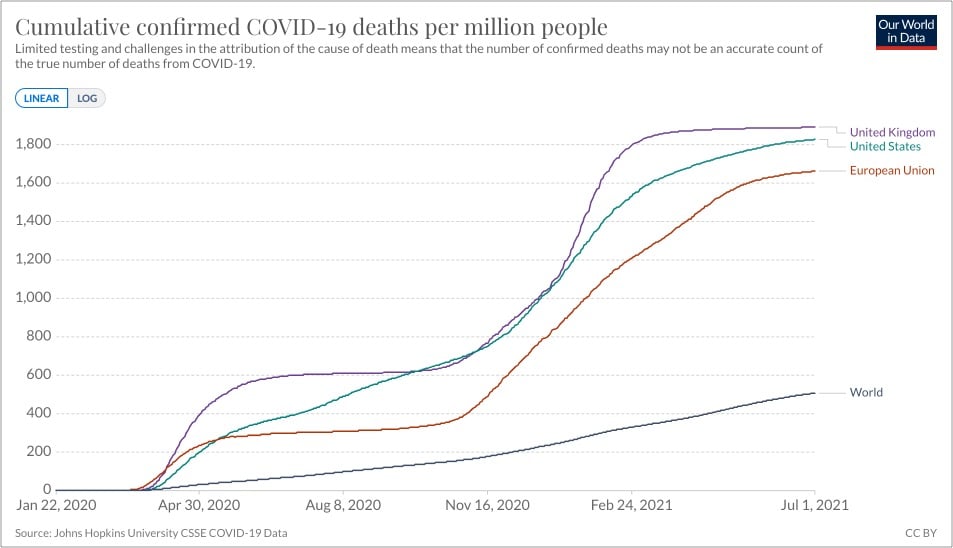
The Trump administration mishandled the American response to Covid-19 so completely that it’s tempting to pin most of the pandemic carnage on him. But the more I read about the pandemic (Michael Lewis’s The Premonition is a recent example), the more I have come to believe that the majority of the American pandemic deaths were baked in, no matter who was President. Trump was definitely a worst-case scenario, but even a more competent person in the White House in Jan 2020 (like Clinton or Sanders or Romney) would not have done so much better. Poor public health infrastructure, politicized government agencies, no mandatory paid leave, an overpriced healthcare system that only works for some, uncoordinated national response (+ federalism), years of defunding government programs, a reactive (rather than proactive) CDC, unhealthy populace, poverty, systemic racism in medicine, entitled individualism, high rate of uninsured people, growing anti-science sentiment — the pandemic was destined to race through the United States like a brush fire no matter what.
Even the European Union, whose member nations do not share many of America’s aforementioned challenges (but have other issues), did only marginally better than the US in preventing Covid deaths. The UK did worse:
Hermit Nicolas Cage goes on a crusade to find the person who kidnapped his truffle-hunting pig? Yes, please. (This is going to be terrible, right? Or fantastic? No in-between I’m guessing. Would make an interesting triple feature with The Truffle Hunters .)
Bear with me, I am on a bit of an art kick lately. As I said earlier this week, I’ve been slowly working my way through James Payne’s Great Art Explained video series. But then — bang! — he came out with a new episode on Vincent van Gogh and his masterpiece, Starry Night. Having seen this painting in person for the first time in a few years just days ago at MoMA, I abandoned the back catalog and dug in to this new one immediately.
Van Gogh is one of my favorites — I spent several happy hours at his museum in Amsterdam in 2017 — and Payne does a good job of contextualizing his life and work around the time he painted Starry Night, particularly the emphasis on the influence of Japanese art on his work and his probable incorporation of spiral galaxy imagery into Starry Night. Highly recommended, especially if you’ve seen the painting in person.
ILM visual effects artist Todd Vaziri asked his Twitter followers to share their favorite shots from a movie made in the last decade. The replies are a visual feast (and heavy on blockbusters) — here are a few of my favorites.

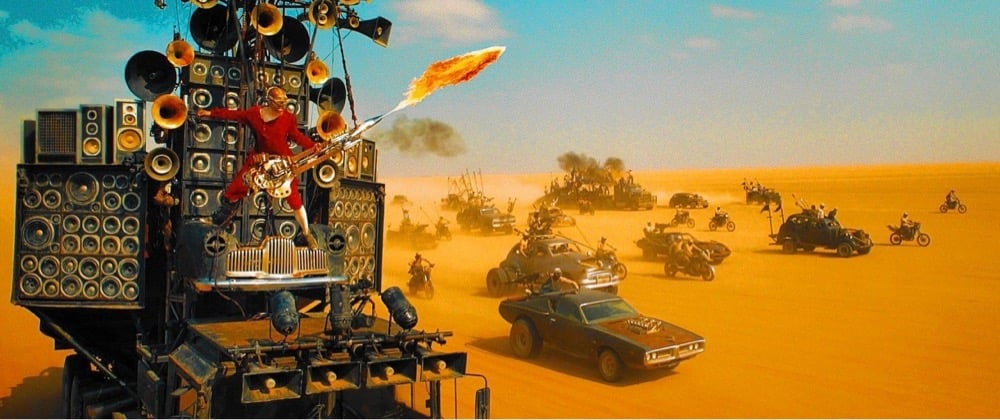



From top to bottom: Blade Runner 2049, Mad Max: Fury Road, Spider-Man: Into the Spider-Verse, Widows, Arrival, and Thor: Ragnarok. There are probably several deserving scenes omitted from the thread (no Wes Anderson fans…the sushi scene from Isle of Dogs?), but that Blade Runner shot is probably my favorite from the decade. I would also have included a shot from Dunkirk (one of the expansive plane chase vistas that looked incredible in IMAX) , Portrait of a Lady on Fire, and the final scene in Carol — that look gives me chills just writing about it.
Update: A video compilation of some of the best shots of the decade.
(via @nielsmann)
Evan Puschak looks at how the personal nature, intimacy, and stylistic approachability have given Frida Kahlo’s work enduring and increasing popularity.
The danger of the Delta variant of Covid-19. “Vaccinated people are safer than ever despite the variants. But unvaccinated people are in more danger than ever because of the variants.”

A new iOS app called Brickit has been developed to breathe new life into your old Lego pile. Just dump your bricks out into a pile and the app will analyze what Lego bricks you have, what new creations you can build with them, and provide you with detailed build instructions. It can even guide you to find individual pieces in the pile. View a short demo — I’m assuming they’re using some sort of AI/machine learning to do this?
My kids have approximately a billion Legos at my house, so I downloaded Brickit to try it out. The process is a little slow and you need to do a little bit of pre-sorting (by taking out the big pieces and spreading your pile out evenly), but watching the app do its thing is kinda magical. When I have more time later, I’m definitely going to go back and try to build some of the ideas it found for me. (via @marcprecipice)
This is an incredible video investigation by the NY Times of the January 6th attack on Congress by terrorists, rioters, and supporters of Donald Trump. They analyzed hundreds of videos, police bodycam footage, and police communications to reconstruct a minute-by-minute account of the Capital breach.
From the accompanying article of six takeaways from the investigation:
Most of the videos we analyzed were filmed by the rioters. By carefully listening to the unfiltered chatter within the crowd, we found a clear feedback loop between President Trump and his supporters.
As Mr. Trump spoke near the White House, supporters who had already gathered at the Capitol building hoping to disrupt the certification responded. Hearing his message to “walk down to the Capitol,” they interpreted it as the president sending reinforcements. “There’s about a million people on their way now,” we heard a man in the crowd say, as Mr. Trump’s speech played from a loudspeaker.
The call and response didn’t stop there. We found evidence of his influence once the violence was well underway. In one moment, a woman with a megaphone urged rioters to climb through a broken window by asking them to “stand up for our country and Constitution” — echoing the language in an earlier tweet from Mr. Trump. In another, as the police were pushing to clear the mob off the building, a rioter screamed at officers: “I was invited here by the president.”
It is astonishing to me how close we came to having a hostage or assassination situation with members of Congress and the Vice-President — like literal seconds and minutes away — and how is this not the only topic of conversation over the past 6 months in our country? And not only that, it’s clear that we’re not really going to do anything about it, aside from beefing up Capitol security and imprisoning some of the insurrectionists. This isn’t over — as the video’s narration states near the end: “The forces that brought them there have not gone away.”
Update: From Brian Stelter’s Reliable Sources newsletter:
But Rangappa could have also been talking about CNN’s efforts in court to obtain riot footage; or ProPublica’s recent investigation that indicated “Senior Trump Aides Knew Jan. 6 Rally Could Get Chaotic;” or Just Security’s new “clearinghouse” for riot research. Her broader point is spot on: Newsrooms have been putting the January 6 puzzle pieces together, creating a detailed rough draft of history, in spite of partisan efforts to bury that history.
Newer posts





Socials & More