Entries for October 2020
Back to the Future is 35 years old this year and to celebrate, Universal has cut together eight fan-made animations of action from the film into an abridged version of the beloved movie.
See also a deepfake version of BTTF with Tom Holland as Marty and Robert Downey Jr. as Doc.
Another thing that people are doing during the pandemic is repainting their home interiors. And a quarantine palette has emerged. “What we want on our walls now are blues and greens; organic neutrals…”
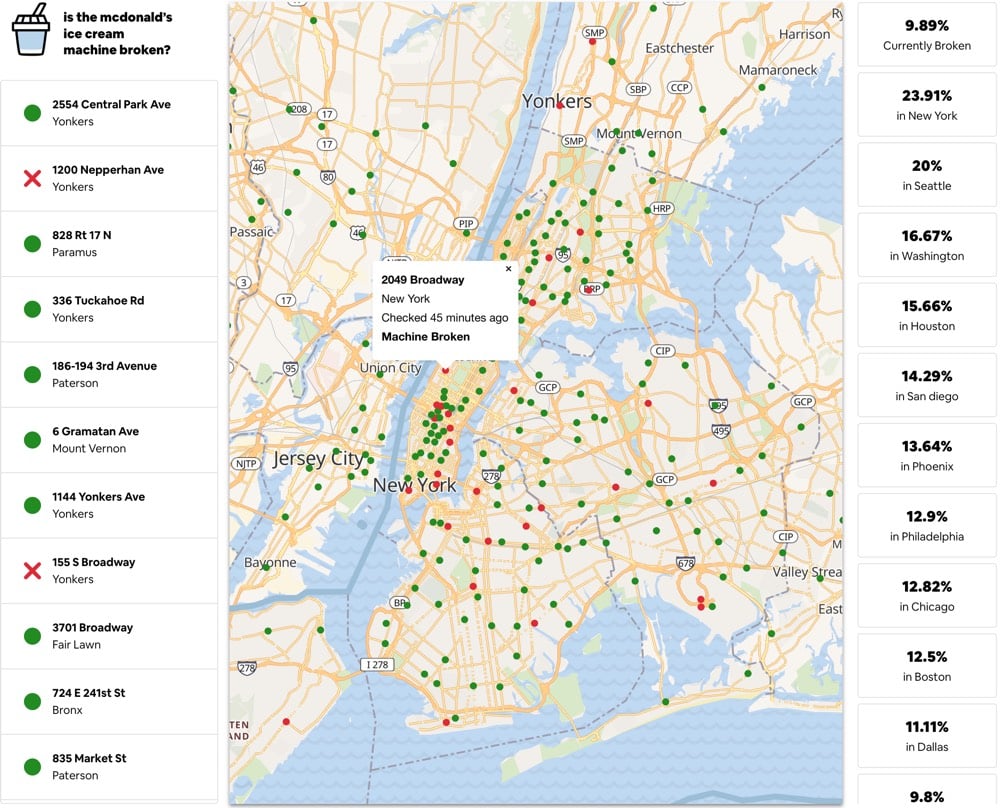
Software developer Rashiq Zahid figured out McDonald’s ordering API and built a program that attempts to order ice cream from every single McDonald’s in the US to check if their ice cream machine is working. If your McFlurry or McSundae cannot be added to the shopping cart, the program assumes the ice cream machine is broken. The program runs several times a day and the results are displayed on a map. From The Verge:
Initially, he created an API that attempted to add a McSundae from every McDonald’s location to its cart once every minute. The app figured out what he was up to and blocked him — “It was like, you can’t do this, you look like a bot,” he recalled.
After a night of trial and error, Zahid figured out the magic time frame. Now, his bot attempts to add a McSundae every 30 minutes. If the bot successfully adds the item, it lets McBroken know that the location’s machine is working. If it can’t, the location gets a red dot.
From the current map, it looks like almost 10% of McDonald’s ice cream machines in the US are not working. In NYC, nearly a quarter of McDonald’s restaurants don’t have a working ice cream machine. I’m wondering though: is the assumption that the machine is broken a good one? What if ice cream ingredients are out of stock or some franchises don’t offer ice cream products at all hours? When The Verge wrote their story last night, they reported only 7.5% of national machines and 15.2% of NYC machines were broken. Did 10% of McDonald’s ice cream machines in NYC break in the last 12 hours? Or are they just not selling McSundaes at 10am?
Update: A company started selling a device that helped franchise owners keep the notoriously finicky ice cream machines running — but then McDonald’s all but shut them down.
Update: In a 30-minute video, Johnny Harris investigated why the McDonald’s ice cream machines are broken so often.
At the heart of this ice cream problem is that McDonald’s customers are not actually the people who buy their food but the franchisees that run the restaurants. That and McDonald’s is actually a real estate business, not a food service business.
The animation above shows how bridges were built in medieval times, well before the advent of backhoes, cranes, and bulldozers powered by steam and gasoline. I could explain what you’re about to see, but you should just watch the video.
The bridge constructed in the video is the real-life Charles Bridge in Prague, which was built over several decades in the 14th and 15th centuries. From Amusing Planet:
Construction of the Charles Bridge started in 1357, under the auspices of King Charles IV, but it was not completed until the beginning of the 15th century. The bridge has 16 arches and 15 pillars, each shielded by ice guards. It’s 512 meters long and nearly 10 meters wide. The balustrade is decorated with 30 statues and statuaries depicting various saints and patron saints, although these were erected much later, between 1683 and 1714. To preserve these statues, they were replaced with replicas during the 1960s. The originals are at Prague’s National Museum.
Until the middle of the 19th century, the Charles Bridge was the only crossing on river Vltava, which made the bridge an important connection between Prague Castle and the city’s Old Town and adjacent areas.
When I was younger, I remember watching (and loving) a PBS series on the building techniques used to construct the pyramids in Egypt, Stonehenge, the Colosseum, and Incan buildings. That the internet is now overflowing with engaging history videos like this bridge video is truly wonderful.

The English language, for better or worse, is constantly shifting and changing, with dozens of new and useful words being added to our collective vocabulary each year. With Merriam-Webster’s Time Traveler tool, you can browse what new words were first used in years dating all the way back to 1500 (and even earlier). The obvious thing is to look up your birth year, so I did that and then poked around for some other interesting years.
1973 (my birth year): automated teller machine, bikini wax, closed-captioning, gender dysphoria, hot tub, Joe Six-Pack, LCD, reverse engineer, soccer mom, televangelist.
2007 (the year my son was born): Bechdel Test, hashtag, retweet, crowdfunding, DM.
1969: ageism, crystal meth, gangbanger, in vitro fertilization, life coach, point guard, sexual harassment, sport utility vehicle.
1945: A-bomb, cold war, d’oh, game theory, graffiti, name-dropping, passive-aggressive.
1929: antiviral, blue-collar, burp, eyeliner, Marxism-Leninism, penicillin, preteen, QWERTY, Sasquatch, spacecraft.
1865: anti-Muslim, baseball cap, gasoline, pessimistic, potato chip, showerhead.
1776: anthrax, division of labor, killjoy, natural resource, slaveholder, sour cream.
1619: bungled, diagram, libelous, retributive, sarcasm.
1561: aristocracy, curator, index, orgy, random, tarantula, well-being.
1500: cadaver, illness, minion, polite.
This is extremely inexpensive time travel. Almost every year is a gold mine (1605!) of terms that are seemingly out of time, either too early or too late. Careful, you might lose several hours to this. (thx, megan)

Daisugi is a sustainable forestry technique that originated in Kyoto in the 14th or 15th century. The tops of Kitayama cedar trees are carefully pruned so that a stand of very straight branches grow straight up from a main platform. From Spoon & Tamago:
The technique was developed in Kyoto as a means of solving a seedling shortage and was used to create a sustainable harvest of timber from a single tree. Done right, the technique can prevent deforestation and result in perfectly round and straight timber known as taruki, which are used in the roofs of Japanese teahouses.
The technique is not really used in forestry anymore, but daisugi are popular as garden trees and bonsai. There are lots of terrible videos about daisugi on YouTube, so I’d recommend watching this one from NHK about how Kitayama cedars are pruned & harvested, what the wood is used for, and a short segment on daisugi near the end.
On Tuesday, NASA’s OSIRIS-REx spacecraft touched down on an asteroid called Bennu for about six seconds in order to collect a mineral sample to bring back to Earth.
The Origins Spectral Interpretation Resource Identification Security - Regolith Explorer spacecraft will travel to a near-Earth asteroid, called Bennu (formerly 1999 RQ36), and bring at least a 2.1-ounce sample back to Earth for study. The mission will help scientists investigate how planets formed and how life began, as well as improve our understanding of asteroids that could impact Earth.
The video above is a time lapse sequence of the touch down, sampling, and subsequent take off.
These images were captured over approximately a five-minute period. The imaging sequence begins at about 82 feet (25 meters) above the surface, and runs through the back-away maneuver, with the last image in the sequence taken at approximately 43 feet (13 meters) in altitude — about 35 seconds after backing away. The sequence was created using 82 SamCam images, with 1.25 seconds between frames.
The “nuclear sponge” is a colorfully named Cold War-era concept whereby stationing a massive collection of ICBMs in sparsely populated areas of the United States would serve to “soak up” a nuclear attack from the Soviet Union, drawing fire away from populated targets like NYC, Chicago, and Seattle.
Before the development of nuclear-armed submarines that can hide their locations at sea, ICBMs were the crux of American nuclear strategy. Today, however, their only purpose is to draw fire away from other targets (like New York and San Francisco) in the (suicidal and thus highly unlikely) event of a first strike by Russia. The Air Force does not plan to launch the missiles in a war, but to have them draw a nuclear attack to the Upper Midwest.
We’re not making this up — that’s what former Defense Secretary Jim Mattis told Congress.
Here’s what the nuclear sponge looks like, courtesy of the National Park Service (areas in black have been decommissioned):

The amazing/crazy thing is that the sponge is not only still an active strategy, but the Pentagon is planning on replacing the sponge arsenal with new missiles at a cost of $95.8 billion.
Using an AI-based framework called Pixel2Style2Pixel and searching for faces in a dataset harvested from Flickr, Nathan Shipley made some more photorealistic faces for Pixar characters.



In response to a reader suggestion, Shipley fed the generated image for Dash back into the system and this happened:

I cannot tell where these images should live in the uncanny valley. You can see some similar experiments from Shipley here: a more realistic version of Miles from Spider-Verse, images of Frida Kahlo and Diego Rivera “reverse engineered” from paintings, and an image generated from a Rembrandt self-portrait.
This is a superb essay by Wesley Morris where he starts off talking about his quarantine mustache but ends up considering where he fits in on the broadening spectrum of Blackness, from Carlton Banks to Malcolm X.
My friend had identified a mighty American tradition and placed my face within it. Any time 20th-century Black people found themselves entangled in racialized peril, anytime the roots of racism pushed up some new, hideous weed, a thoughtful-looking, solemn-seeming, crisply attired gentleman would be photographed entering a courthouse or seated somewhere (a library, a living room) alongside the wronged and imperiled. He was probably a lawyer, and he was likely to have been mustached.
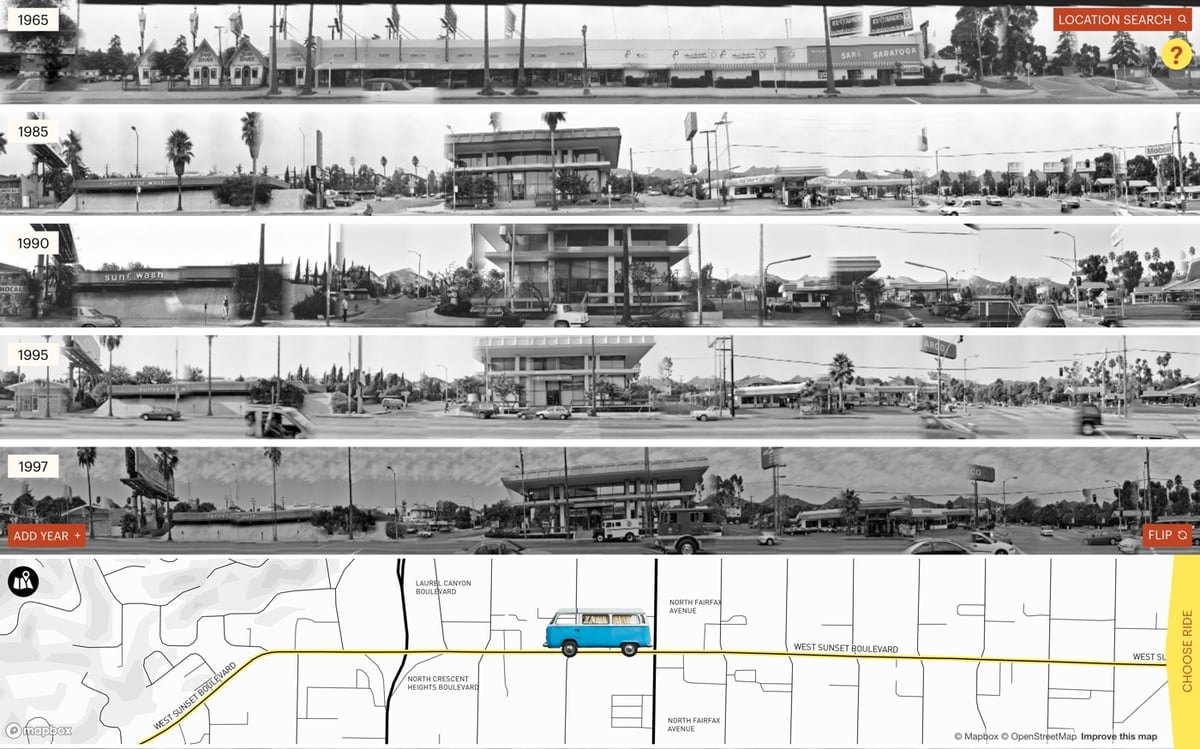
Since 1965, American artist Ed Ruscha has been taking photos all along the length of Sunset Boulevard in LA. The Getty has made those photos available on the Getty Research Institute website and Stamen Design built this fantastic interface called 12 Sunsets for virtually cruising up and down the street.
This is so much fun to play with! You can use the mouse or arrow keys to drive, the spacebar to flip to the other side of the street, and you can change or add years to the display. It’s really interesting to add a bunch of different years to the display and then motor up and down the street to see what’s changed over the decades. It’s the perfect interface for this art.
Oh goody, the new 2021 human glands have been announced. “A team of researchers…has discovered what may be a set of previously unidentified organs: a pair of large salivary glands, lurking in the nook where the nasal cavity meets the throat.”
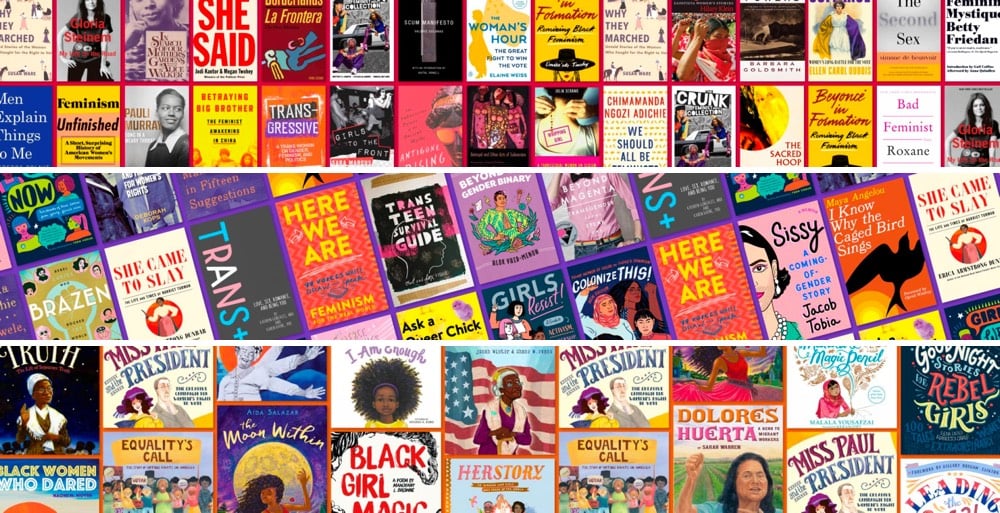
To mark the 100th anniversary of the ratification of the 19th Amendment to the Constitution that made some women eligible to vote in the United States, the New York Public Library is sharing its picks for Essential Reads on Feminism.
The list includes first-hand accounts and histories of the suffrage movement that chronicle both its successes and its limitations — particularly for women of color — as well as contemporary essays on how feminism intersects with race, class, education, and LGBTQ+ activism. From personal memoirs to historical overviews, featuring writing by seminal figures and lesser-known pioneers, the list traces the development of the feminist ideas that have powered the campaign for gender equality, in all its complexity and boldness. While far from complete, the list nevertheless provides a starting point for learning about the history of feminism and for exploring the issues and challenges that many women face today.
They’ve split the list into three main sections according to reader age: kids, teens, and adults. I’m going to highlight a few of the selections from each list here.
For kids:
Black Girl Magic by Mahogany L. Browne. “Black Girl Magic is a journey from girlhood to womanhood and an invitation to readers to find magic in themselves.”
Good Night Stories for Rebel Girls: 100 Tales of Extraordinary Women by Elena Favilli & Francesca Cavallo. My daughter tells me about the women she’s read about in this book all the time.
I Am Enough by Grace Byers. “We are all here for a purpose. We are more than enough. We just need to believe it.”
Malala’s Magic Pencil by Malala Yousafzai. “Nobel Peace Prize winner and New York Times bestselling author Malala Yousafzai’s first picture book, inspired by her own childhood.”
Shaking Things Up: 14 Young Women Who Changed the World by Susan Hood. “Fresh, accessible, and inspiring, Shaking Things Up introduces fourteen revolutionary young women — each paired with a noteworthy female artist — to the next generation of activists, trail-blazers, and rabble-rousers.”
For teens:
I Know Why the Caged Bird Sings by Maya Angelou. “Here is a book as joyous and painful, as mysterious and memorable, as childhood itself.”
Amazons, Abolitionists, and Activists: A Graphic History of Women’s Fight for Their Rights by Mikki Kendall. “Amazons, Abolitionists, and Activists is an indispensable resource for people of all genders interested in the fight for a more liberated future.”
Dear Ijeawele, or a Feminist Manifesto In Fifteen Suggestions by Chimamanda Ngozi Adichie. “Filled with compassionate guidance and advice, it gets right to the heart of sexual politics in the twenty-first century, and starts a new and urgently needed conversation about what it really means to be a woman today.”
Modern Herstory: Stories of Women and Nonbinary People Rewriting History by Blair Imani. “An inspiring and radical celebration of 70 women, girls, and gender nonbinary people who have changed — and are still changing — the world, from the Civil Rights Movement and Stonewall riots through Black Lives Matter and beyond.”
Rethinking Normal: A Memoir in Transition by Katie Rain Hill. “Rethinking Normal is a coming-of-age story about transcending physical appearances and redefining the parameters of ‘normalcy’ to embody one’s true self.”
For adults:
Bad Feminist by Roxane Gay. “A collection of essays spanning politics, criticism, and feminism from one of the most-watched young cultural observers of her generation, Roxane Gay.”
Beyoncé in Formation: Remixing Black Feminism by Omise’eke Tinsley. “In Beyoncé in Formation, Tinsley now takes her rich observations beyond the classroom, using the blockbuster album and video Lemonade as a soundtrack for vital new-millennium narratives.”
A Black Women’s History of the United States by Daina Ramey Berry & Kali Nicole Gross. “A vibrant and empowering history that emphasizes the perspectives and stories of African American women to show how they are — and have always been — instrumental in shaping our country.”
How We Get Free: Black Feminism and the Combahee River Collective by Keeanga-Yamahtta Taylor. “The Combahee River Collective, a path-breaking group of radical black feminists, was one of the most important organizations to develop out of the antiracist and women’s liberation movements of the 1960s and 70s.”
Men Explain Things to Me by Rebecca Solnit. “The antidote to mansplaining.”
We Should All Be Feminists by Chimamanda Ngozi Adichie. “Chimamanda Ngozi Adichie offers readers a unique definition of feminism for the twenty-first century, one rooted in inclusion and awareness.”
Again, you can access NYPL’s lists here.
I Was In Charge of the Deck Chairs On the Titanic, and They Absolutely Did Need Rearranging. “When the Titanic slid beneath the waves, taking hundreds of souls with her, she did so with the most becoming, loveliest deck amenities imaginable.”
Kamala versus Daenerys and the difference between mispronunciation & dispronunciation. “As far as I can tell, Americans have no problem saying ‘Daenerys Targaryen.’ Or ‘supercalifragilisticexpialidocious.’ Or ‘Hakeem Olajuwon.’”

New York City has a new digital subway map that reflects the current status of the subway lines. And you can even see the trains moving, right on the map. (Finally!!) Visually, the new map combines the styles of two past maps, each beloved in their own way.1 Fast Company explains:
The first map is that by Massimo Vignelli, who simplified the snaking subway system into a clean diagram which traded geographic literality for graphical clarity. This elegant simplification turns the confounding subway into a logical system. But the main Vignelli map was scorned by New Yorkers because it wasn’t an actual map, and it was quickly replaced (though a permutation actually lives on as the MTA’s Weekender diagram, which signals weekend services). Meanwhile, the primary map the MTA uses today was created by Unimark International and Michael Hertz Associates. It’s more geographically accurate, but it actually condenses information that was in the Vignelli map. For example, it combines individual train lines such as the C, D, and E lines into singular trunks.
Here’s a video from filmmaker Gary Huswit that shows how the team came up with the new map:
Zooming the map in and out, you see different levels of detail, just like with Google or Apple Maps. I like it — a good combination of form and function.2
Update: A reader reminded me of designer Eddie Jabbour’s Kick Map of the NYC subway, which effectively melded the styles of the Vignelli and Hertz maps together more than 15 years ago.

What’s interesting is that the MTA explicitly rejected and criticized the Kick Map but ended up doing something quite similar with the new digital map. I think Jabbour’s effort deserves to be acknowledged here. (thx, nicolas)
This image-stabilized video of Tomasz Furmanek kayaking through the fjords of western Norway is almost obscenely beautiful. I want to go to there. (Really dislike the music though…this would have been so much better just with the ambient noise of the boat and paddle slipping through the water. Like this video.)
Well, this is interesting. A World of Calm is a new TV series from HBO Max based on a sleep & meditation app called Calm.
A timely antidote for our modern lives, each half-hour episode takes audiences on an immersive visual journey into another world. Building on the record-breaking success of Calm’s Sleep Stories™ — bedtime stories for grown ups with over 250m listens — each relaxing tale is designed to transform how you feel. Transporting the viewer into tranquility through scientifically-engineered narratives, enchanting music and astounding footage, to naturally calm your body and soothe the mind. Each story is brought to life by a different iconic voice.
Narrators include Lucy Liu, Mahershala Ali, Idris Elba, Zoe Kravitz, Keanu Reeves, and Kate Winslet. Based on the trailer (above) that hits a number of kottke.org pet topics — relaxing videos, soothing sounds, nature documentaries, aerial photography, craftsmanship — I will likely be spending some time with A World of Calm soon, possibly while high?
Sixty-two Films That Shaped the Art of Documentary Filmmaking. This is from Richard Brody, so you know going in that it’s not a list of the greatest hits (heavy hitters like The Thin Blue Line or Hoop Dreams aren’t on here).
The SSC Tuatara has snatched the title of the world’s fastest production car away from its rivals by an absurd margin — and it wasn’t even going as fast as it could have.
After the satellite data from the onboard GPS system had been analyzed-the devices tracked two runs in opposite directions and calculated the average-Webb’s last dash came in at a staggering 331.15 mph. The final verified average was 316.11 miles per hour, handily beating both the Koenigsegg and the Bugatti records and cracking the metric milestone of 500 kilometers per hour just for good measure. In addition, the morning’s effort garnered records for the fastest flying mile on a public road (313.12 mph) and the highest speed achieved on a public road (331.15 mph).
How fast is that? “We were covering one and a half football fields each second.” *insert eyes-bugging-out emoji here* The cockpit video above is incredible. Just watch how smoothly and effortlessly the car accelerates right up to 331.15 mph before the driver lets off the gas — there was clearly plenty left. Indeed, the driver hadn’t even shifted into the car’s final gear.
A timeline map of where Covid-19 cases occurred in the US. NYC + cities at first, then the South, and more recently the Midwest/West.
Pete Souza was the White House photographer for Ronald Reagan and Barack Obama. Reflecting on his experience and the how the current President comports himself while in office, Souza published two books: Obama: An Intimate Portrait and Shade: A Tale of Two Presidents. Those books form the basis for a documentary directed by Dawn Porter on Souza and his work called The Way I See It.
Based on the New York Times #1 bestseller comes The Way I See It, an unprecedented look behind the scenes of two of the most iconic Presidents in American History, Barack Obama and Ronald Reagan, as seen through the eyes of renowned photographer Pete Souza. As Official White House Photographer, Souza was an eyewitness to the unique and tremendous responsibilities of being the most powerful person on Earth. The movie reveals how Souza transforms from a respected photojournalist to a searing commentator on the issues we face as a country and a people.
I didn’t know that Trump’s presidency is not really getting recorded photographically as past presidencies have, but I’m not surprised.
The film was shown on MSNBC the other day…I don’t know if they’re rerunning it or what. It’s also out in theaters but with many of those still closed, I assume it’ll be out on streaming at some point soonish? (Update: According to the MSNBC schedule, it looks like it’s re-airing at midnight on Friday.)
What A Summer Of COVID-19 Taught Scientists About Indoor vs. Outdoor Transmission. “If there is one thing we can definitively state, it’s that this virus is much, much less likely to spread outdoors than in.”
From the NY Times, a great profile of the inspiring Angela Davis. “As a bridge between the past and present eras of protest, Davis can explain both what went right and wrong while also helping to shape the future.”

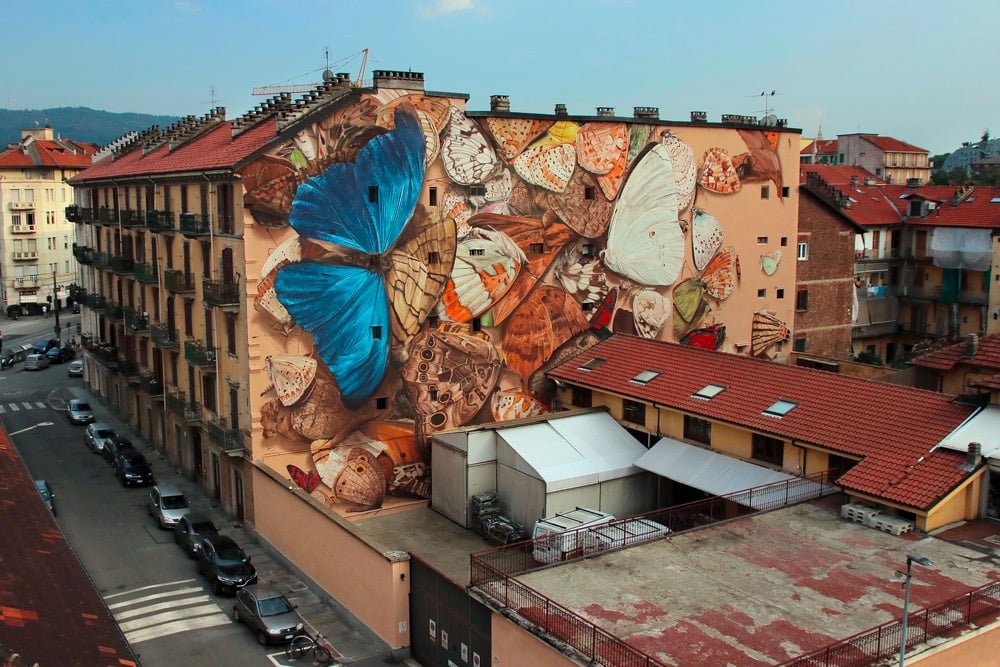
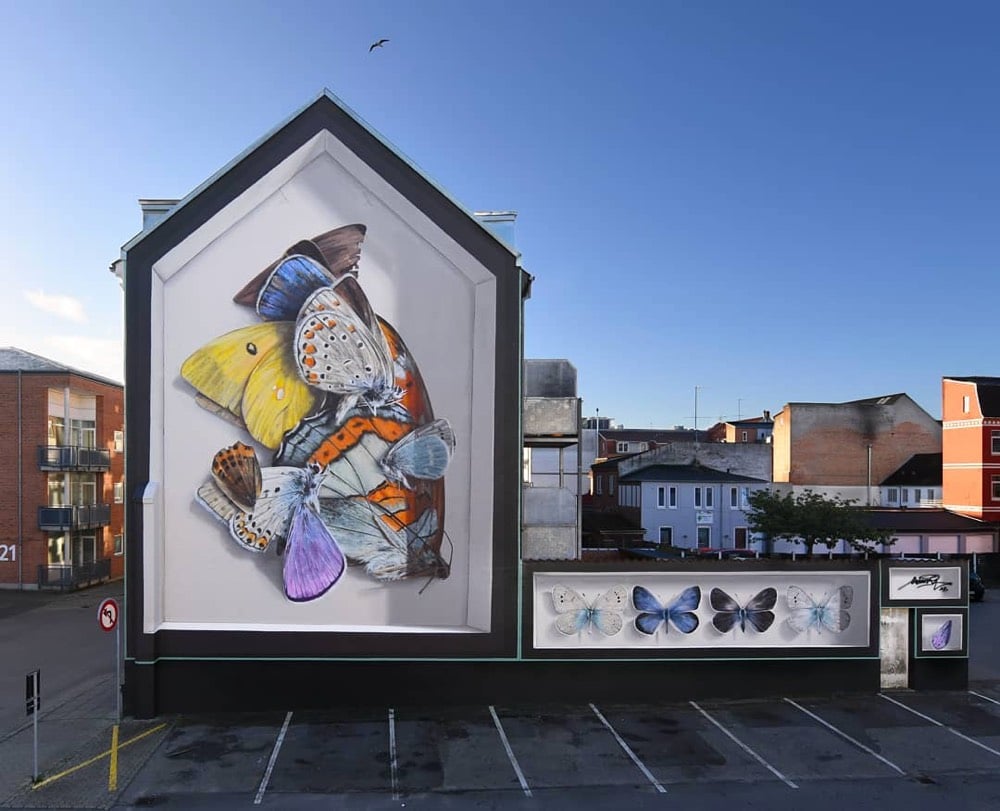
I love these building-sized murals featuring butterflies by French street artist Mantra (Instagram). From a Colossal post about the artist:
In a conversation with Colossal, Mantra said he’s harbored a lifelong fascination with entomology that stems from spending hours in French gardens and bucolic areas as a kid. “As a child, I was interested, curious, and focused on the small life forms in those places,” he says. His current practice hearkens back to those carefree hours and connects with an adolescent desire to become a naturalist. “My approach is as a scientist,” the artist says, noting that education about environmental care and issues is part of the goal.
Although Mantra considers all insects and natural life beautiful and crucial to maintaining biodiversity, the focus on butterflies revolves around his artistic ambitions because the vivid creatures allow him to experiment with color, shape, and texture. Each specimen is rendered freehand before the artist adds detail and the illusory shadows that make them appear three-dimensional. By painting various Lepidoptera species again and again, the artist is “repeating a mantra,” a detail of his practice that informs the moniker he works under.
The Swedish COVID-19 Response Is a Disaster. It Shouldn’t Be a Model for the Rest of the World. “From early on, the Swedish government seemed to treat it as a foregone conclusion that many people would die.”
Which states had the best pandemic response? “If the country as a whole had the same per capita death rate as Vermont, the nationwide death toll would be 30,000 instead of more than 215,000.”
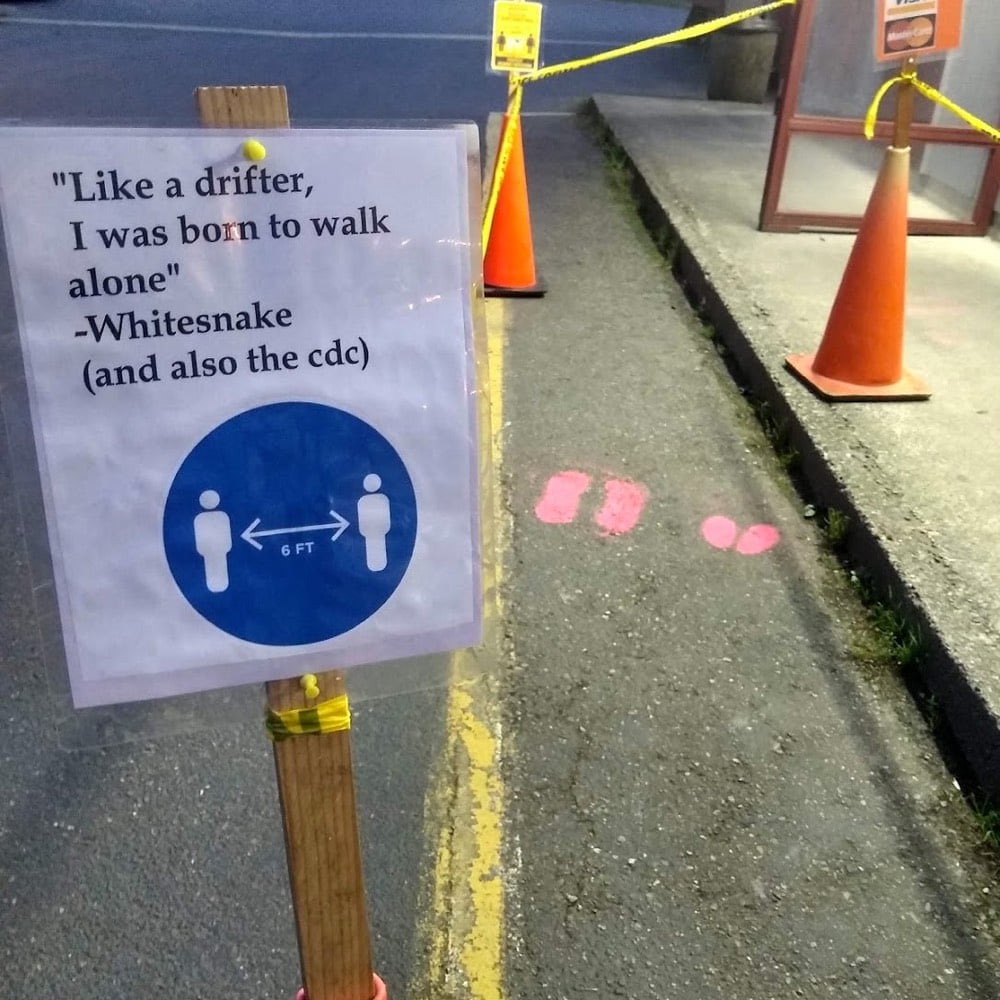
Public health safety measures don’t have to be bureaucratic, dour, and oppressive. They can even be fun. This is a sign from my local hardware store here in Vermont reminding shoppers to social distance:

Journalist Rebecca Boyle recently asked her followers to share their local Covid-19 signage and they responded with some great examples.
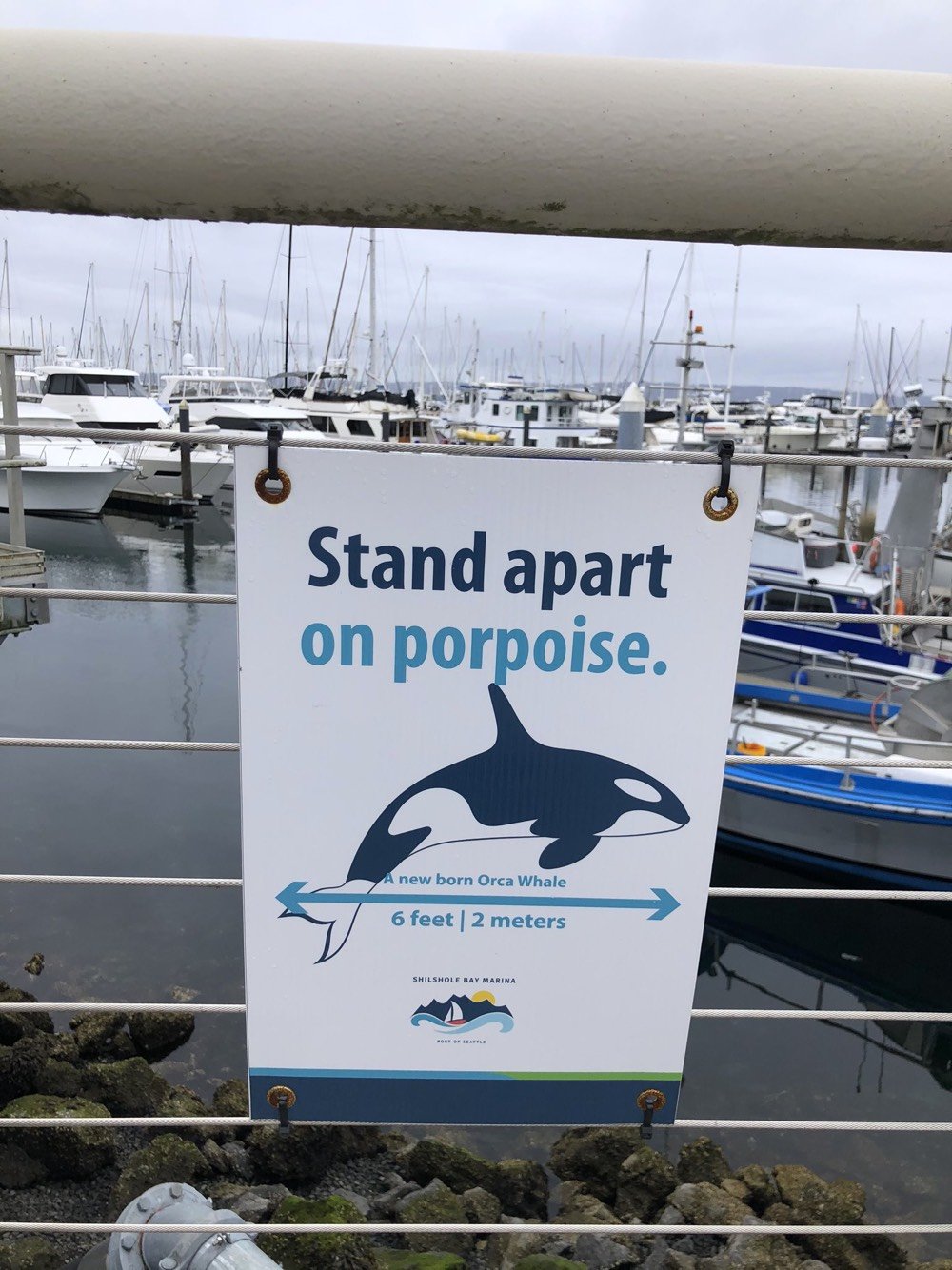
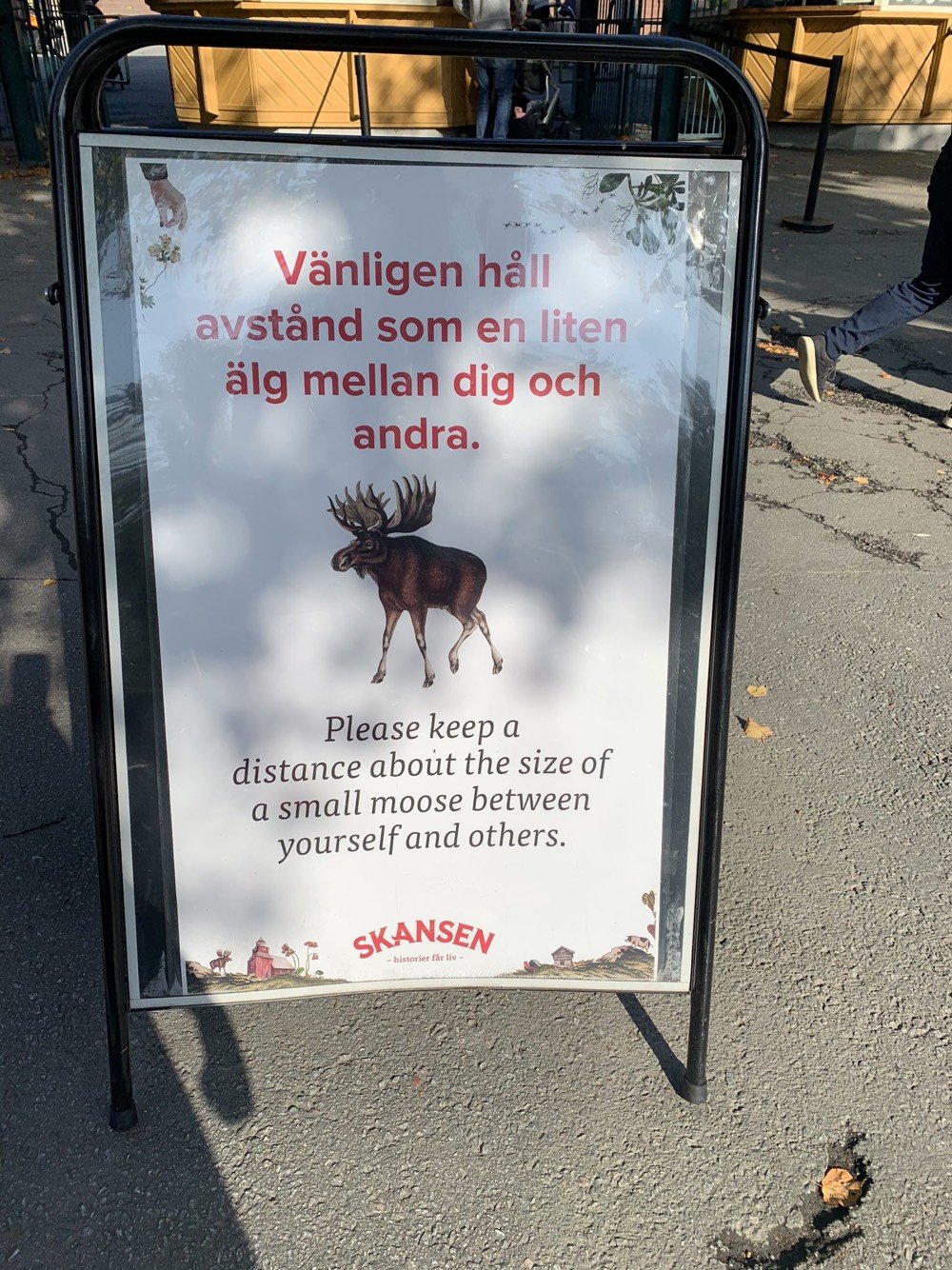
This homage to the Ministry of Silly Walks might be my favorite:

You can scroll through the whole thread for many more.
Herd immunity without a vaccine = mass murder. “The real death toll needed to reach herd immunity could far exceed one million.”
Inside the Fall of the CDC. “How the world’s greatest public health organization was brought to its knees by a virus, the president and the capitulation of its own leaders, causing damage that could last much longer than the coronavirus.”
I don’t know if you’ve been listening lately, but yesterday’s episode of Kottke Ride Home was a particularly good one.
I was amused by the jetpack story (as well as Casey Niestat’s denial) and the idea that there’s a 50/50 chance we’re all living in a simulation is right up my alley. But I was most interested in the segment on how we can curtail our phone usage using proven techniques learned from people who have successfully quit smoking (aka the thing that people did with their hands when they had free moment before phones came along).
From the article by McKinley Valentine that Jackson highlighted:
I tried turning notifications off on every app. I just got anxious and opened the apps more often.
I tried deleting the apps that caused problems-social media, news, messages-from my phone. I ended up just accessing them in the browser.
I tried using apps like Stay Focused to block my access. I’d just disable them.
I tried just not checking my phone — the cold turkey method — and folks, it didn’t go great. All it did was add a layer of guilt to my bad habit and sour mood.
I thought: I have to get smarter about this. Who knows about addiction? What addiction has been studied in-depth, for decades, with an absolutely massive group of experiment subjects, to establish the best-practice methods? Cigarettes!
Valentine tried three main methods to kick her phone addiction habit: substitution, urge-surfing, and following the techniques in Allen Carr’s Easy Way to Stop Smoking. Carr’s advice was the most effective:
Carr notes that there is a huge disconnect between what we want and what we actually enjoy. They’re different neurological processes. That’s why you can desperately crave, for example, an entire blueberry cheesecake, but when you actually eat it, it’s only OK. Or why you often don’t feel like going out with your friends at all — it seems like kind of a hassle — but when you actually see them, you have an amazing time.
So Carr recommends working to really notice and internalise that disconnect. He tells smokers to pay attention to their next cigarette. It’s like mindfulness but for noticing the unpleasantness. How does it taste? Not, “how did you imagine it would taste when you were craving it,” but how does it actually taste? Does it smell nice? Do your hands smell nice? How do you feel — do you actually feel more relaxed, or do you feel worse?
Wow, “a huge disconnect between what we want and what we actually enjoy”…boy, have I observed that in my life many times. Gonna totally use this on some of my less constructive pandemic coping habits… (via kottke ride home)
Alan Taylor has been curating photos online for so long that you kinda forget how good he is at it. Each photo here is related to the previous photo either visually, thematically, or metaphorically. Fun to figure out the connections.
What I’ve Learned From Having A Trans Partner. “My partner doesn’t want his body. But I do.”

Some combination of vintage tech, nature, the ambiguous scale, fog, and color palette in this digital image by Eric Mack is really tickling my brain in all the right ways today. (via @FedeItaliano76)
Newer posts
Older posts




Socials & More