Since 2014, Abraham Riesman has kept a regularly updated list of the best superhero movies since Blade. This is partly an arbitrary starting point (would it really be so hard to rank the early Superman and Batman movies too?), and partly not: Blade moved away from the Superman and Batman top character mini-franchises, kicked off Marvel’s entry into modern superhero cinema, and started the pattern of every-other-year/no, every-year/wait-how-many-superhero-movies-are-out-this-year? sprawling multiverses we associate with the genre(s) today.
While there were a lot of superhero movies between 1998 and 2014, there have been, um, a lot more since. And some of the very best ones, too. “When I did the first edition of this list in the fall of 2014, I did not in any way predict that it would become my life’s work in the way it has,” Abe writes.
Today, a new entry cracks the top five. Abe rates the animated Spider-Man: Into the Spider-Verse, starring the former Ultimate Comics hero Miles Morales, fifth on his list, well ahead of the rest of the Spider-movies and just behind the highly revered The Dark Knight. Abe writes:
The unassuming and artistic Miles, a more recent addition to the comics’ Spider-canon, feels new and Zeitgeist-y in a way that Peter hasn’t in decades, and we want desperately for him to find his footing as he tries to be a hero. Luckily, he has the assistance of an array of other Spider-people from alternate dimensions — a gimmick common in comics, never before dared on the big screen, and here executed with deft and thrilling elegance. The story, performances, and jokes are all top-flight, but perhaps the greatest delight is the film’s awe-inspiring mastery of visual whizbang: Rather than try to ape reality, everyone is designed to evoke a feeling, be it the hulking intimidation of the inhumanly massive Kingpin or the proud wackiness of the stoutly cartoony Spider-Ham. It’s a damn shame that Lee and Ditko both died a matter of weeks and months before they could see the release of Into the Spider-Verse (though the famously reclusive Ditko wouldn’t have watched it, anyway), but their beloved baby is in good hands.
I love Miles Morales, and can’t wait to see him on screen. It’s been surprising that Marvel and DC haven’t done more with animation outside of television: cartoons are proven family-friendly money makers at the box office, and there’s a natural connection between comics and animation. Here’s hoping this spurs the superhero cabal to give more formats a try.
Miles is also in a new comic book series, written by Saladin Ahmed and drawn by Javier Garrón. Issue #1 comes out next Wednesday, December 12.
Forensic scientist Thiago Piwowarczyk and art historian Jeffrey Taylor are often called upon to authenticate purported paintings by well-known artists. Using a drip painting resembling Jackson Pollock’s work, they show how they use historical research, hardcore science, and good-ol’ human observation. The steps they go through are:
1. Provenance research. Is there any documentation of the artist painting this? Who owned it and when? Forged documentation can be an issue here.
2. Visual analysis. Does the material used for the painting fit the artist and the timeframe? Often, a forger won’t sign a fake to mitigate any potential legal ramifications.
3. Photography and ultraviolet analysis. Was the canvas reused? Is there an under-painting or drawing?
4. X-ray fluorescence spectroscopy. What elements are present in the paint? Do they match those in the paints normally used by the artist?
5. Microscopy & Raman spectroscopy. What kind of paint was used? Did that paint exist when the artist was working?
Super interesting. All of the craft aside, Piwowarczyk also says that “if the deal is too good, there’s something wrong”. $25,000 for a Pollack? Nope. (via open culture)
All prints are lovingly made by myself and print robot Epson 3880. They are fully archival and should last until well after I am dead, assuming they are properly cared for. I am super uptight/compulsive and quality control is strict. I spent many years making my living as an exhibition printer and no image of mine will leave my hands unless I am happy with it. If something not up to spec manages to squeak through, I will happily replace.
The post also doubles as a look into the process of photography & printmaking and how to price your art.
Pricing is the hard part for me. On one side there is there $12 in materials that that make and pack each print for shipping and the minimal labor involved in making the physical objects once the hard work in photoshop is already done. Based on that I could sell them for $15 and make a profit. Then, of course, are the hours spent processing and compositing each image. Oh, and then, there is the time spent driving and flying and and actually making the images. And days spent on Google Maps and Flight Aware observing flight patterns and planning my routes and locations. The mosquitoes. Hypothermia.
But, really, I am OK with doing all of that because I will do it regardless of whether I am getting paid or not (see “compulsive” above). I do it because I fucking love it. The point of all this is not to justify my labor and obsessions. The point of this is to pay for an awesome show so I can share these in the real world with other real humans like yourselves. As stated previously, all proceeds from this sale will go towards production, materials, software, prints, monitors, frames, and all the other inevitable costs that I can’t think of right now and that keep me up at night.
I read something years ago about the expense of art and photography that’s always stuck with me. Time, materials, and equipment are one part of the equation, but really what you are paying for is the lifetime of expertise, the hundreds of thousands of their previous shots and an aesthetic honed to a razor-sharp edge. $5000 for shoot by someone who knows exactly how to get the perfect shot in just 20 minutes can seem like an outrageous price (that’s $15,000/hour!), but $1000 for an two-hour-long shoot by some doofus often isn’t going to get you the result you actually need.
As of December 1, 2018, the LIGO experiment has detected gravitational waves from 10 black hole merger events. In the computer simulations shown in this video, you can see what each of the mergers looked like along with the corresponding gravitational waves generated and subsequently observed by the LIGO detectors.
2018 was the year that tsundoku entered our cultural vocabulary. It’s a Japanese word that doesn’t translate cleanly into English but it basically means you buy books and let them pile up unread. The end-of-the-year book lists coming out right now won’t help any of us with our tsundoku problems, but there are worse things in life than having too many books around. I took at look at a bunch of these lists and picked out some of the best book recommendations for 2018 from book editors, voracious readers, and retailers. Let’s dig in.
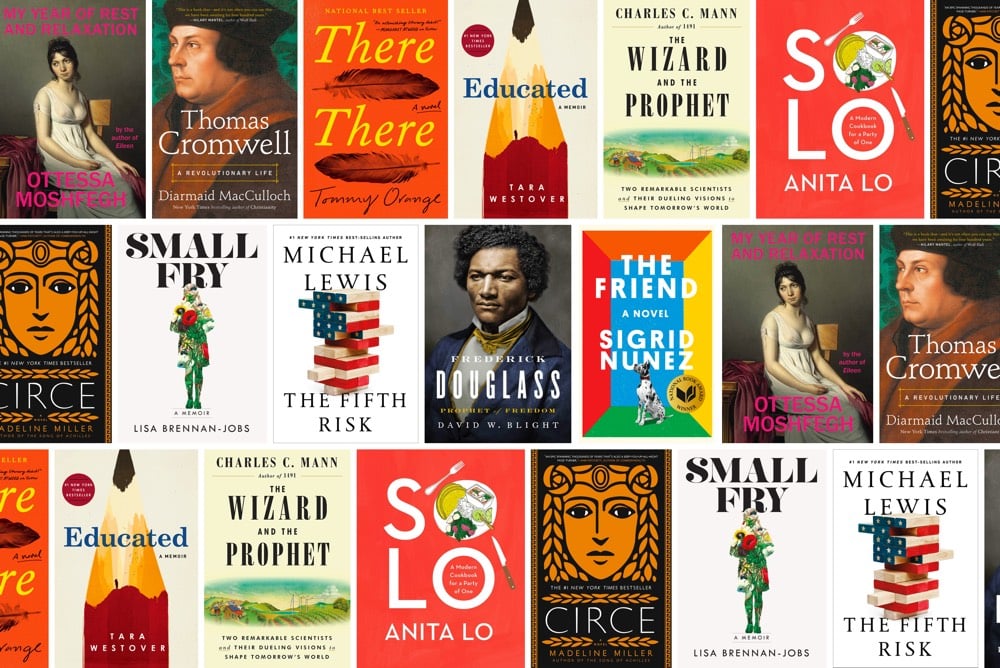
I am delighted to see Lisa Brennan-Jobs’ memoir Small Fry on the Times’ top 10 list as well. I’m gonna have more to say about this in an upcoming post, but in an era where we’re re-evaluating the importance of the personal conduct and personalities of the people running massive tech and media companies, this book did not get the attention it deserved, particularly in the tech press.
Amazon’s editors selected Tara Westover’s Educated as their top book of the year. Also on the list is Tommy Orange’s There There, which appears on many other lists as well. Amazon’s This Year in Books is also worth a look…it is definitely not the critic’s view of what we read: the most-sold fiction book was Ready Player One and the most-sold nonfiction book was Michael Wolf’s book about Trump, Fire and Fury.
For The Guardian’s Best Books of 2018, a group of authors including Hilary Mantel, Chris Ware, and Yuval Noah Harari share their top picks of the year. Mantel, the author of an excellent pair of books on Thomas Cromwell (Wolf Hall and Bring Up the Bodies) recommends Diarmaid MacCulloch’s biography of Cromwell, who was Henry the VIII’s chief minister, a key figure of the English Reformation. Harari recommends Michael Pollan’s How to Change Your Mind: The New Science of Psychedelics, which also features on a number of other lists. Oh, and Yotam Ottolenghi highlights Lateral Cooking by Niki Segnit, a cookbook “designed to help creative cooks develop their own recipes”.
Google finally announced a consumer service around the self-driving car technology they’ve been developing for almost a decade. Waymo One is basically a taxi hailing service backed by a fleet of automated cars. The promotional video for the service is an upbeat but ho-hum reminder of the convenience of app-hailed transportation:
But there’s a voiceover line about halfway through that gets at the heart of why self-driving cars seem so compelling to people:
What if getting there felt like being there?
Sure, it’s not so much the destination that matters, it’s the journey…but commuting isn’t a journey. People in cities spend a lot of their time in rooms: working, reading, drinking, chatting, etc. Waymo’s cars aren’t quite rooms, but that’s where they’re headed: private rooms for hire that also get you from one place to another. It’s WeWork on wheels, a mobile Starbucks, a portable third place. Along the way, you could have a beer or coffee, do karaoke, make some work calls, watch a movie, chat with friends, make out, or answer some emails. C-suite executives with dedicated chauffeured transportion are already doing this with custom vans. Private jets are essentially vacation homes that can travel anywhere in the world. (Cruises offer this experience too.) If Waymo (or someone else) can make this happen for a much larger segment of the population, that’s a compelling service: transportation-less transportation.
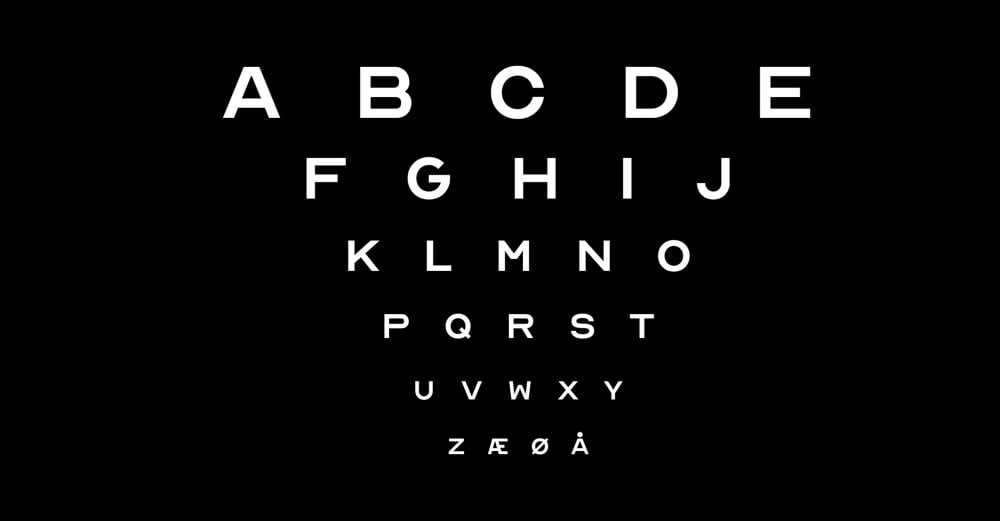
Eye charts at your optometrist’s office typically only have 10 letters on them: CDHKNORSVZ. Inspired by that lettering, creative agency ANTI Hamar and typographer Fábio Duarte Martins have expanded that abbreviated alphabet into a free font with a full alphabet called Optician Sans. Here’s a video look at how they did it:
In this episode of Modern History, Jason Kingsley and Chris Carr talk about the kind of food that an English knight would encounter on the road…i.e. what might commonly be termed “peasant food”. Depending on what was in season, the midday meal offered would be the sort of farm-to-table artisanal fare that urban dwellers crave at their neighborhood bistro on date night: house-brewed beer, artisan bread made from interesting grains, fresh salmon, peas from the garden, and a drizzled sauce made from an unusual herb.
The pair discuss what a knight would eat at home in a follow-up episode. A knight’s dedicated cook would consult with his physician on dietary matters and the ingredients and level of processing would reflect the knight’s higher status in society, e.g. his bread would be white and not dark, basically the opposite of today.
Jazz crossed over into pop music territory in the 70s, with jazz artists like Grover Washington Jr. and George Benson gaining airplay on the radio but losing the respect of “straight-ahead” jazz critics & peers. One reviewer wrote of a popular album by Benson:
Hearing George Benson on this album is like watching Marlon Brando in the Three Stooges movie. Such is the relationship between the artist and the “art”.
In this third installment of Earworm’s series on jazz, Estelle Caswell charts the rise of smooth jazz from its beginnings in the 70s right on through to Kenny G and the format’s eventual crash in the 2000s. There’s also a Spotify playlist of smooth jazz standards in case you’re in the mood to hear more.
Also, how perfect is it that the term “smooth jazz” was coined by a participant during a focus group convened by a market research firm? That’s so smooth jazz.
4. 35% of Rwanda’s national blood supply outside the capital city is now delivered by drone. [Techmoran]
13. US nuclear testing between the 1940s and 1970s may have killed as many Americans (from radioactive pollution) as were killed by the bombs dropped on Hiroshima and Nagasaki. [Tim Fernholz]
26. Men who’ve experienced earthquakes are willing to take more risks and gamble more. Women show no such effect. [Chie Hanaoka & co]
51. Vanilla pods now cost $500/kg, roughly the same as silver. Madagascan farmers have briefly become vanillionaires, causing chaos in areas where the nearest bank might be a day’s walk away. [Annah Zhu]
My favorite scene in Wes Anderson’s Isle of Dogs is the sushi-making scene. It’s a pure showcase of stop motion animation goodness and wordless storytelling.
Andy Biddle has posted a behind-the-scenes time lapse video of him and Anthony Farquhar-Smith animating that scene:
From the costume changes, it looks like that 40 seconds of video took about 29 days to complete, although obviously not full days in many cases.
Update: Somehow I totally missed the days counter in the upper left corner of the video…the sequence took 32 days to do. (This is like the awareness test with the moonwalking bear.) (thx, all)
Update: Isle of Dogs’ head puppet master explains a bit more about what goes into making these stop motion scenes.
From directors Molly Brass and Stephen Tyler, this is a really lovely & poignant short film about Chess Forum and its owner, Imad Khachan, a Palestinian refugee who came to America to get a PhD in American literature and ended up as the owner/operator of a classic NYC establishment.
Anybody who doesn’t speak any language or different languages, they can sit here and play chess. You can still hold a meaningful conversation without saying a word.
After an ownership agreement between Khachan and a former business mentor fell to pieces, Khachan opened the Chess Forum directly across the street from his former partner’s shop, The Chess Shop. His move triggered what, in New York chess circles, is still known as the Civil War on Thompson Street.
“Sometimes attack is the best defense,” Khachan said of his decision.
His move tore New York’s tight-knit chess community in two. A ceasefire eventually settled in, with each shop courting its own customers and suppliers. His business rival closed in 2012, but the feud taught Khachan a lesson as strong as any he learned on the board.
“Like any chess game it’s the thinking ahead that keeps you one step ahead of the guy who’s shooting after you and not hitting you,” he said. “You have to keep moving.”
Our analysis provides new evidence that even simple turn-based games contain a great deal of interaction richness and subtlety, and that the different levels of communication should be considered by designers as a real and legitimate vehicle for social interaction.
My favorite end-of-the-year review of movies is always David Ehrlich’s video countdown of the top 25 best films. In this year’s review, I was surprised to see Annihilation on the list (I thought it was ok?) and also delighted by the high ranking of Paddington 2. Eighth Grade, The Favourite, and First Reformed all deservedly made the list, along with Mission: Impossible - Fallout, which I really liked. Would have liked to have seen Black Panther on there though.
An ode to Russ & Daughters, a true gem of NYC. “Here is the shining pink lox, that fatty, salty, cured-belly lox that, with cream cheese on a bagel, has given its name to the greatest sandwich ever produced by humankind.”
As I’ve done for the last five years, I’ve spent the past few weeks scouring the internet for the best 2018 gift guides and pulled a few of the most interesting items from each. Think of it as a curated meta-guide for your holiday giving. Let’s dig in.
Charitable giving always tops this list. Check out GiveWell and Charity Navigator to find organizations that will put your money to the best use. (Read up on big charities like Red Cross and Salvation Army…they are often not the best use of your charity dollar.) GiveDirectly sends money directly to people living in extreme poverty around the world. I always recommend Volunteer Match to find local volunteer opportunities but they force you to log in now, so just an FYI. Alternate sites for volunteering are the AARP’s Create the Good and United Way. If you’re giving to the local food shelf, skip buying food yourself for the donation bin and set up a direct debit or CC payment instead…that will put your donation to better use.
The Accidental Shop is a collection of products I’ve previously linked to on kottke.org. It is heavy on books…I’d particularly recommend Emily Wilson’s The Odyssey, Small Fry by Lisa Brennan-Jobs, and Arbitrary Stupid Goal by Tamara Shopsin. Oh, and I’m flying through Madeline Miller’s Circe right now…what a read!
I love my Kindle Paperwhite and there’s an updated version this year that’s waterproof, lighter & thinner, has Bluetooth for audiobooks, and has more storage.
I’ve seen several guides touting so-called “inexpensive” gifts and then going on to recommend $50 bars of soap, so Slate’s The Good Enough List is a welcome effort. They’ve recommended a bunch of items that are almost as good as the best available options but more affordable. My favorite pick is their rec for a $7 pedometer over a Fitbit or Apple Watch. They also highlight the Gulliver crib from Ikea, which I have taken apart and put back together approximately 30 times. It’s a basic, durable, simple, and fantastic crib.
The kids and I have been playing two games pretty heavily this year: Sushi Go Party and Harry Potter Hogwarts Battle. I really like Hogwarts Battle because it’s cooperative — all the players play together against the villans on the board and it’s fun to strategize how to allocate tokens and hearts to get everyone through the danger areas.
Every year I “recommend” this 55-gallon drum of personal lubricant because why would anyone actually buy this? (Have any of you ever bought this? Report back, please!)
Update: From Julia Carrie Wong, the Reverse Gift Guide — “give your friends and family the gift of not having these products”. The list includes DNA kits and “toys that require batteries to make noise”.
David Attenborough’s new nature series, Dynasties, is already airing in the UK and Canada (we have to wait until January 19 in the US) and they’ve also been posting some video clips on YouTube. Perhaps the most compelling is the video above, of a young male lion being attacked by a pack of hyenas.
Every time there’s a new social media app or network that breaks out, someone writes an article about how this new network encourages people to be themselves and have fun without all of the heaviness of other platforms. The latest example of this is Kevin Roose’s NY Times piece about TikTok.
TikTok has none of that. Instead, it’s that rarest of internet creatures: a place where people can let down their guards, act silly with their friends and sample the fruits of human creativity without being barraged by abusive trolls or algorithmically amplified misinformation. It’s a throwback to a time before the commercialization of internet influence, when web culture consisted mainly of harmless weirdos trying to make each other laugh.
Its entire aesthetic flies in the face of how most people behave on Facebook, Instagram and Twitter — as if we’re waiting to be plucked from obscurity by a talent agent or model scout. But Snapchat isn’t the place where you go to be pretty. It’s the place where you go to be yourself, and that is made easy thanks to the app’s inbuilt ephemerality.
It built a ground up culture that feels loose, informal, and — frankly — really fucking weird. Moreover, most of what you see there feels very of-the-moment. Sure, there’s plenty of artistry that goes into making six second loops, and there are volumes of videos with high production values. But far more common are Vines that serve as windows into what people are doing right now.
Implicit in these pieces is the idea that there’s something intrinsic to these apps/networks that makes them hew closer to real life and/or lightheartedness than older and bigger platforms…the ephemerality of Snapchat, the ease of shooting a Vine video, the fun filters and templates of TikTok. Some part of that is surely true, but what if being small and new is the thing that makes these networks fun? As I wrote in response to Wortham’s article a couple of years ago:
Blogs, Flickr, Twitter, Vine, and Instagram all started off as places to be yourself, but as they became more mainstream and their communities developed behavioral norms, the output became more crafted and refined. Users flooded in and optimized for what worked best on each platform. Blogs became more newsy and less personal, Flickr shifted toward professional-style photography, Vine got funnier, and Twitter’s users turned toward carefully crafted cultural commentary and link sharing. Editing worked its way in between the making and sharing steps.
TikTok probably feels a lot like Flickr or Twitter in the early days, where everyone is exploring and the users are all kind of doing the same things with it. As networks get bigger, they reach a point where there isn’t just one big group exploring the same space together. Instead, you have many big groups who have different goals and desires that all need to fit under one roof (essentially, politics becomes necessary)…and that can get messy, particularly when the companies running these apps want to appeal to the widest possible audience for capitalization purposes.
Novelty is probably the biggest factor though. TikTok is fun because it’s new. When you join up, you get new superpowers and flexing those abilities gives the old brain a shot of dopamine, particularly when the flexing is social. Later, when many of the social possibilities have been explored and even exploited, fun becomes harder to come by. Even Twitter can still be fun — see the replies to Wortham’s recent tweet about fave NYC moments — but the templates for interaction on the platform have long since been set in stone. It would be very surprising if a large & mature social network came along that didn’t also get less fun and “real” as it developed. That would be a special achievement.
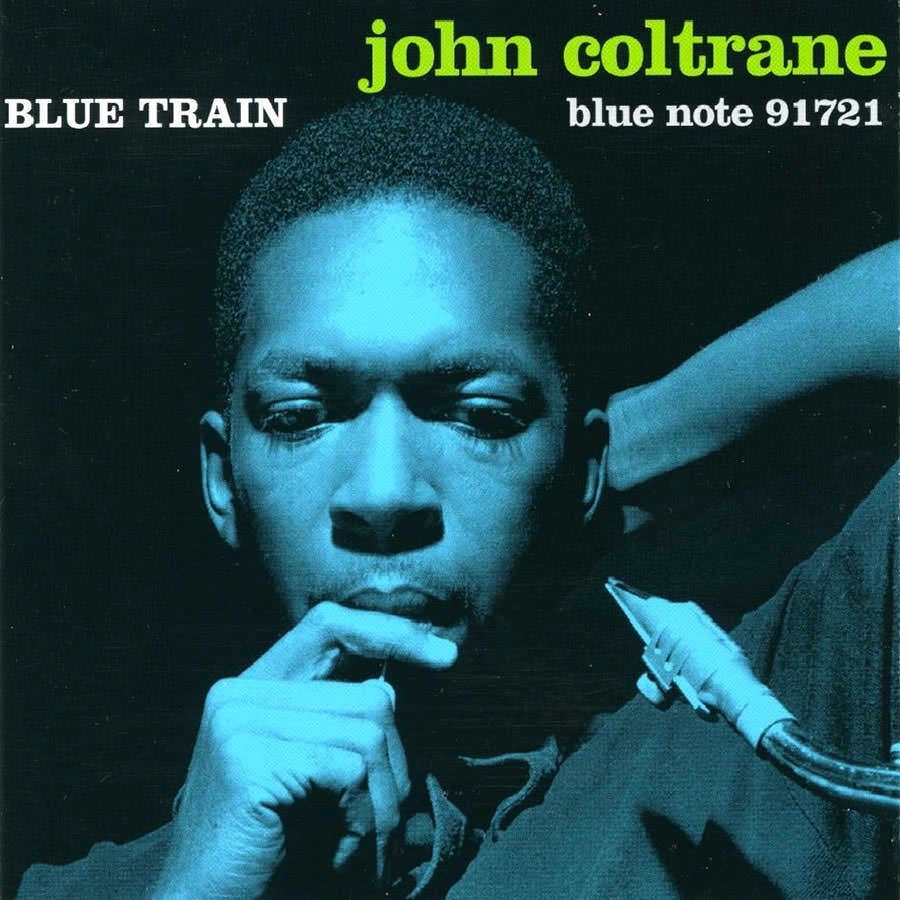
In part 2 of Earworm’s series on jazz, Estelle Caswell talks to producer Michael Cuscuna about the iconic album covers of Blue Note Records.
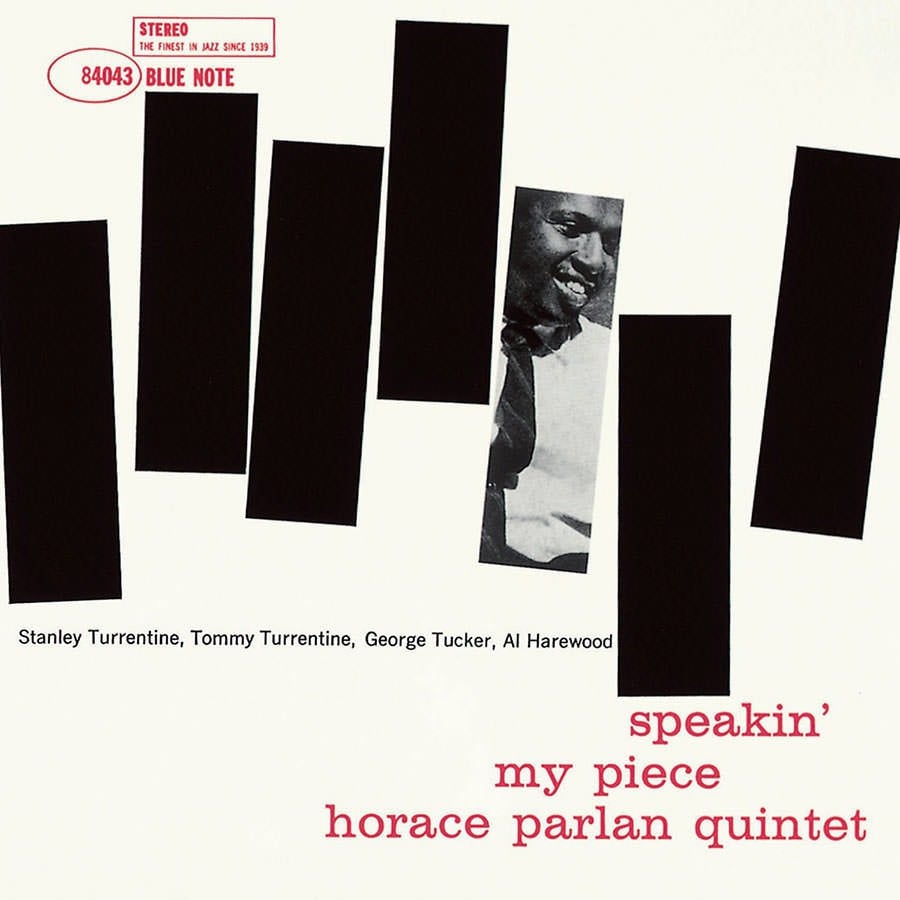
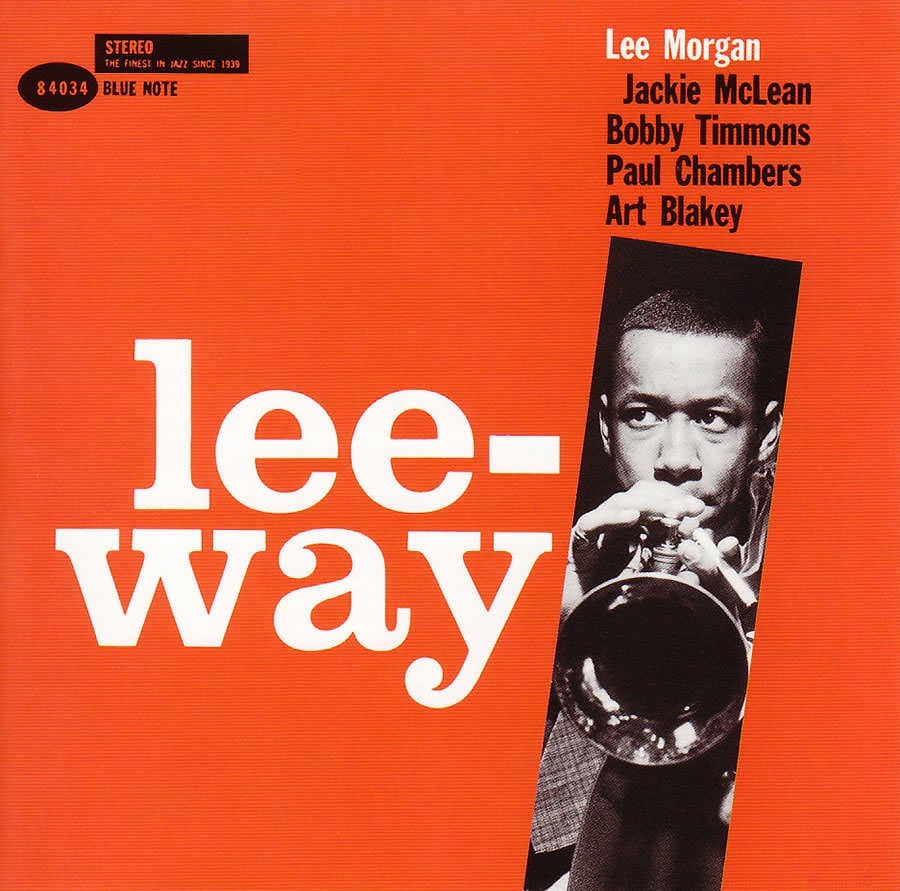
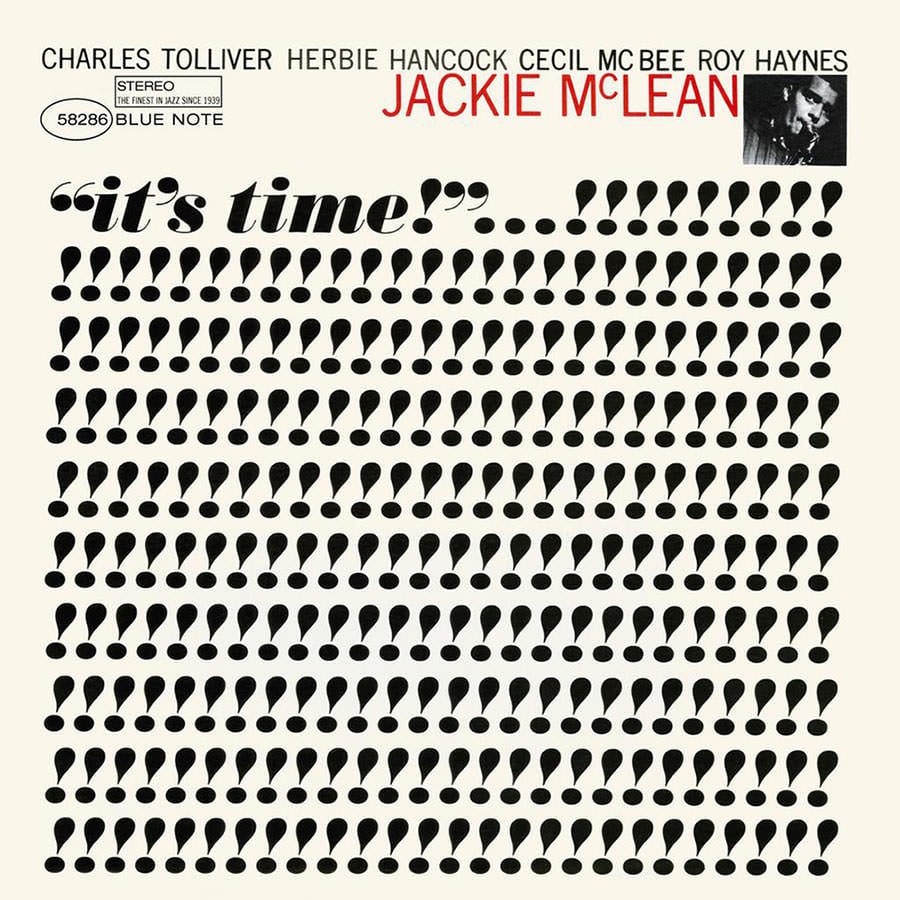
Inspired by the ever present Swiss lettering style that defined 20th century graphic design (think Paul Rand), Blue Note captured the refined sophistication of jazz during the early 60s, particularly during the hard bop era, and gave it a definitive visual identity through album covers.
The covers were the work of Reid Miles, who was paid $50 per cover but later landed a gig making ads for the likes of Coca-Cola to the tune of $1 million per year. Here are a few of the covers designed by Miles for Blue Note:
Tavi Gevinson started Rookie in 2011 when she was 15 years old and late last week announced that the online magazine was ceasing publication. The stories about the struggle of independent online media in the age of Google & Facebook are well-worn by now, but the first couple of pages of Gevinson’s letter really resonated with me and with what I’m doing (and not doing) here at kottke.org. This paragraph specifically:
It has sometimes felt like there are two Rookies: There’s the publication that you read, that I also love reading, writing for, and editing; and then there is the company that I own and am responsible for. The former is an art project; the latter is a business. Each one needs and feeds the other, but when I started Rookie at age 15, I saw the two as mutually exclusive. Rookie had been founded, in part, as a response to feeling constantly marketed to in almost all forms of media; to being seen as a consumer rather than a reader or person. In my black-and-white view of the world, the idea of capitalizing on an audience seemed cynical, selfish, and something only evil adults do. It would be misleading to say I was a total purist, though, because I also thought Rookie was really good, and that it should reach people rather than be small and struggling. I wanted it to be able to hire more editors, pay contributors more, and grow so that not everything would need my oversight and other voices could be more prominent. I also wanted Rookie to eventually be a source of income for me, which I didn’t need it to be when I was a teenager and living at home. In those first few years, however, just the day-to-day running of the site was brain-consuming enough without also actively trying to make it as profitable as possible. And, that was the part I was most passionate about, and adept at: collaborating with writers and artists, curating and editing their work, and watching the conversations that would unfold around it.
Over the years, kottke.org could have gone in many different directions — possible acquisitions by Conde Nast publications, funding, partnerships — but I could never convince myself that any of those options would actually make the site any better or make me any happier. I thought then, and I still think now (more than ever actually), that growing the reach and operations of the site would be a terrific idea, but the business challenge is tougher than ever. Thanks to the support of my readers through the membership program (more on that in a second), the business side is stable-ish and I’ve been able to grow modestly here and there (e.g. the weekly Noticing newsletter written by Tim Carmody), but the scope of this enterprise from a financial standpoint is still just one person. Adding another full-time person to the mix sounds easy, but doubling the size of your business is rocket-ship growth, even when you’re tiny. So I continue to put almost 100% of my efforts into writing the site and almost 0% into things like audience growth, business development, promotion, or marketing…and hoping that the product will continue to speak for itself. This feels both like the right way forward for me and also idiotic, like the foundation of this house I’ve spent 20 years building is slowly rotting away out from under us. It’s a real catch-22 that keeps me up some nights.
But back to Rookie. I’m a little surprised that Gevinson didn’t pursue subscriptions or a membership program, but I can relate to what she writes here:
I also know that the idea of taking money from readers made me feel an immediate and intimidating sense of responsibility. (In retrospect, that may have been a more manageable kind of responsibility than money from investors, and could have been a hint to how I’d feel about investors, but you can’t know what you don’t know.)
The first time I tried funding kottke.org with reader support back in 2005, I ended up scrapping the scheme after a year because of that same “intimidating sense of responsibility”. Now with the membership program, it feels more like the site and the business part are in greater alignment…that this is something we’re all doing together for similar reasons. There should have been a way for a site with a strong sense of community like Rookie to come up with a membership plan that seemed collaborative and not extractive, that felt good for everyone. But maybe Gevinson was just ready to move onto other challenges in other arenas. God knows I can empathize with that myself.
Note: If you are a member and tried to log in, it didn't work, and now you're stuck in a neverending login loop of death, try disabling any ad blockers or extensions. Or try logging out and then back in. Still having trouble? Email me!







Socials & More