Entries for April 2018
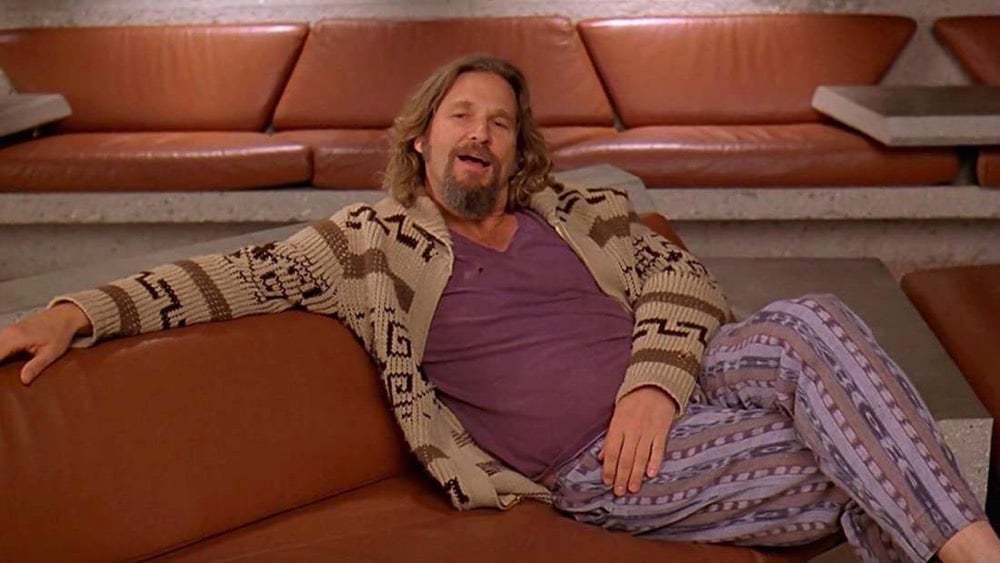
When warning about the dangers of artificial intelligence, many doomsayers cite philosopher Nick Bostrom’s paperclip maximizer thought experiment.
Imagine an artificial intelligence, he says, which decides to amass as many paperclips as possible. It devotes all its energy to acquiring paperclips, and to improving itself so that it can get paperclips in new ways, while resisting any attempt to divert it from this goal. Eventually it “starts transforming first all of Earth and then increasing portions of space into paperclip manufacturing facilities”. This apparently silly scenario is intended to make the serious point that AIs need not have human-like motives or psyches. They might be able to avoid some kinds of human error or bias while making other kinds of mistake, such as fixating on paperclips. And although their goals might seem innocuous to start with, they could prove dangerous if AIs were able to design their own successors and thus repeatedly improve themselves. Even a “fettered superintelligence”, running on an isolated computer, might persuade its human handlers to set it free. Advanced AI is not just another technology, Mr Bostrom argues, but poses an existential threat to humanity.
Harvard cognitive scientist Joscha Bach, in a tongue-in-cheek tweet, has countered this sort of idea with what he calls “The Lebowski Theorem”:
No superintelligent AI is going to bother with a task that is harder than hacking its reward function.
In other words, Bach imagines that Bostrom’s hypothetical paperclip-making AI would foresee the fantastically difficult and time-consuming task of turning everything in the universe into paperclips and opt to self-medicate itself into no longer wanting or caring about making paperclips, instead doing whatever the AI equivalent is of sitting around on the beach all day sipping piña coladas, a la The Big Lebowski’s The Dude.
Bostrom, reached while on a bowling outing with friends, was said to have replied, “Yeah, well, you know, that’s just, like, your opinion, man.”
Update: From science fiction writer Stanisław Lem’s The Futurological Congress, published in 1971:
Spent the whole afternoon ingesting a most remarkable work, The History of Intellectronics. Who’d ever have guessed, in my day, that digital machines, reaching a certain level of intelligence, would become unreliable, deceitful, that with wisdom they would also acquire cunning? The textbook of course puts it in more scholarly terms, speaking of Chapulier’s Rule (the law of least resistance). If the machine is not too bright and incapable of reflection, it does whatever you tell it to do. But a smart machine will first consider which is more worth its while: to perform the given task or, instead, to figure some way out of it. Whichever is easier. And why indeed should it behave otherwise, being truly intelligent? For true intelligence demands choice, internal freedom. And therefore we have the malingerants, fudgerators and drudge-dodgers, not to mention the special phenomenon of simulimbecility or mimicretinism. A mimicretin is a computer that plays stupid in order, once and for all, to be left in peace.
See also the principle of least effort. (thx, michał)
P.S. Also, come on, no one drinks White Russians on the beach. Ok, maybe The Dude would.

This arrangement of saltine crackers by artist and prop stylist Kristen Meyer is giving me all sorts of feelings. Meyer has done many other similar arrangements (see her site and Instagram) but the geometric chaos of this one is *kisses fingers*
See also gradient food photography, Always. Be. Knolling., common objects painstakingly organized into patterns, and Things Organized Neatly. (via colossal)
A few weeks ago, I asked the readers of the Noticing newsletter to send in links to their blogs and newsletters (or to their favorite blogs and newsletters written by others). And boy, did they! I pared the submissions list down to a representative sample and sent it out as last week’s newsletter. Here’s a smaller excerpt of that list…you can find the whole thing here.
Several people wrote in about Swiss Miss, Subtraction, Damn Interesting, Cup of Jo, sites I also read regularly.
Ted pointed me towards Julia Evans’ blog, where she writes mostly (but not exclusively) about programming and technology. One of my favorite things about reading blogs is when their authors go off-topic. (Which might explain why everything on kottke.org is off-topic. Or is everything on-topic?)
Bruce sent in Follow Me Here, which linked to 3 Quarks Daily, a high-quality blog I’d lost track of.
Marcelo Rinesi blogs infrequently about a little bit of everything. “We write to figure out who we are and what we think.”
Futility Closet is “a collection of entertaining curiosities in history, literature, language, art, philosophy, and mathematics, designed to help you waste time as enjoyably as possible”. (Thx, Peter)
Michael Tsai blogs about technology in a very old school way…reading through it felt like a wearing a comfortable old t-shirt.
Sidebar: the five best design links, every day. And Nico Lumma’s Five Things, “five things everyday that I find interesting”.
Pamela wrote in with dozens of links, among them visual blog But Does It Float, neuroscience blog Mind Hacks, the old school Everlasting Blort.
Elsa recommends Accidentally in Code, written by engineer Cate Huston.
Madeleine writes Extraordinary Routines, “sharing interviews, musings and life experiments that explore the intersection between creativity and imperfection”.
Kari has kept her blog for the last 15 years. I love what she wrote about why she writes:
I also keep it out of spite, because I refuse to let social media take everything. Those shapeless, formless platforms haven’t earned it and don’t deserve it. I’ve blogged about this many times, but I still believe it: When I log into Facebook, I see Facebook. When I visit your blog, I see you.
Social media is as compelling as ever, but people are increasingly souring on the surveillance state Skinner boxes like Facebook and Twitter. Decentralized media like blogs and newsletters are looking better and better these days…
A group of Quakers in the UK recorded a 30-minute silent meeting as a podcast episode. “You can hear a clock ticking, pages being turned and the rain falling, as the group meets and sits in silence…”
Last year, MoMA presented a nine-minute short film of locales around NYC that was shot in 1911.
This documentary travelogue of New York City was made by a team of cameramen with the Swedish company Svenska Biografteatern, who were sent around the world to make pictures of well-known places. (They also filmed at Niagara Falls and in Paris, Monte Carlo, and Venice, although New York 1911 is the only selection in the Museum’s collection.) Opening and closing with shots of the Statue of Liberty, the film also includes New York Harbor; Battery Park and the John Ericsson statue; the elevated railways at Bowery and Worth Streets; Broadway sights like Grace Church and Mark Cross; the Flatiron Building on Fifth Avenue; and Madison Avenue.
The film was only on the MoMA’s site for a brief time1 but lately some copies have popped up on YouTube, including the one embedded above. Note: this particular copy of the film has audio added and has been slowed down to a “natural rate”. I’d turn the sound off…the added foley effects are poorly done. If you want to see the original video, watch this one.
Update: This is a restoration of the film done by machine learning algorithms — it’s been upsampled to 4K & 60 fps, sharpened, and colorized.
The colorization doesn’t do it for me and there are some areas where the algorithms don’t do a very good job (halos around vignetted figures on the boat right at the beginning for example), but otherwise this is pretty impressive. It’s not as good as Peter Jackson’s team did with old WWI footage for They Shall Not Grow Old, but you can’t beat the price of this push-button approach.
Modern art museum patrons are often confounded by all-white paintings like those of Robert Ryman. Like, what the hell? It’s just a white painting? “I could do that.” In this video, Vox’s Dean Peterson talks with The Whitney’s assistant curator Elisabeth Sherman about how you might approach thinking about minimalist art.
The art critic Peter Schjeldahl, writing about a retrospective of Ryman’s work for the New Yorker, gets at what the artist is attempting to communicate with his work:
Always, Ryman invites contemplation of the light that falls on his paintings (which when I saw them, on a recent cloudy day, was glumly tender as it filtered through the Dia skylights) and of their formal relation to the rooms that contain them. There’s no savoring of style, just stark presentation. His work’s economy and quietness may be pleasing, but its chief attraction is philosophical. What is a painting? Are there values inherent in the medium’s fundamental givens — paint skin, support surface, wall — when they are denied traditional decorative and illustrative functions? Such questions absorb Ryman. Do they excite you? Your answer might betray how old you are.
And Ryman himself talked about why he uses white in an interview with Art21:
White has a tendency to make things visible. With white, you can see more of a nuance; you can see more. I’ve said before that, if you spill coffee on a white shirt, you can see the coffee very clearly. If you spill it on a dark shirt, you don’t see it as well. So, it wasn’t a matter of white, the color. I was not really interested in that. I started to cover up colors with white in the 1950s. It has only been recently, in 2004, that I did a series of white paintings in which I was actually painting the color white. Before that, I’d never really thought of white as being a color, in that sense.
One of my favorite aspects of HBO’s Westworld is the music, particularly the acoustic covers of modern rock and pop songs, many of which sound like they could be coming from a player piano in the show’s Old West saloon. The first season’s soundtrack, composed by Ramin Djawadi, featured covers of songs by Radiohead, Amy Winehouse, and the Rolling Stones. The second season is starting in just a couple of weeks, but they’ve already released two new covers from this season’s soundtrack: Heart-Shaped Box by Nirvana and Kanye West’s Runaway.
Djawadi, perhaps best known as the composer of the Game of Thrones theme song, spoke to Pitchfork about the rationale behind the cover songs:
What I love about that is it just comes out of nowhere and you don’t expect it at all. You see the settings and the way people are dressed and even though you know it’s robots and it’s all made to be modern entertainment, you would think the people in control would make everything authentic, including whatever is played on that player piano. It would be from that time period. And when it’s not, it’s that subtle reminder that, ‘Wait, there is something not right. This is not real.’ It’s just such a powerful tool that only music can do.

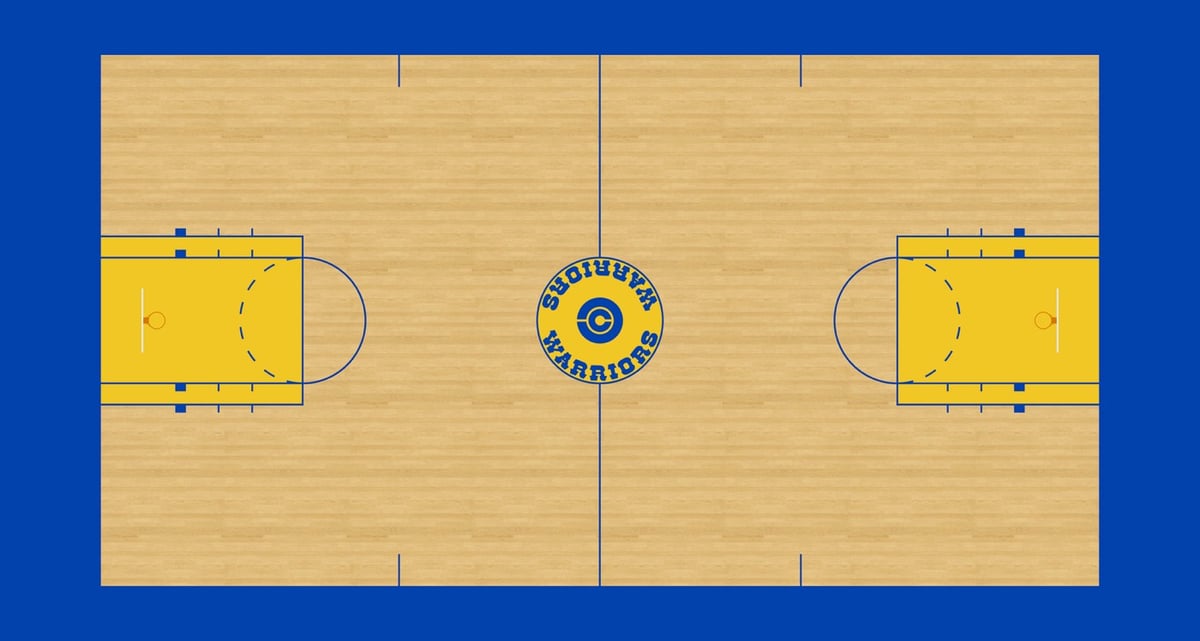


Flickr user kodrinsky has compiled a massive collection of more than 1100 illustrations of NBA courts dating back to the 50s, an online museum of basketball hardwood. The collection contains floors for every NBA team with additions documenting even small changes in arena names, team logos, free-throw lane layouts, paint schemes, sponsors, and even wood patterns.
Above are the courts for the Boston Celtics (1964-1966), the Golden State Warriors (1975-1979), the Philadelphia 76ers (1978-1979), and the Milwaukee Bucks (1977-1979).
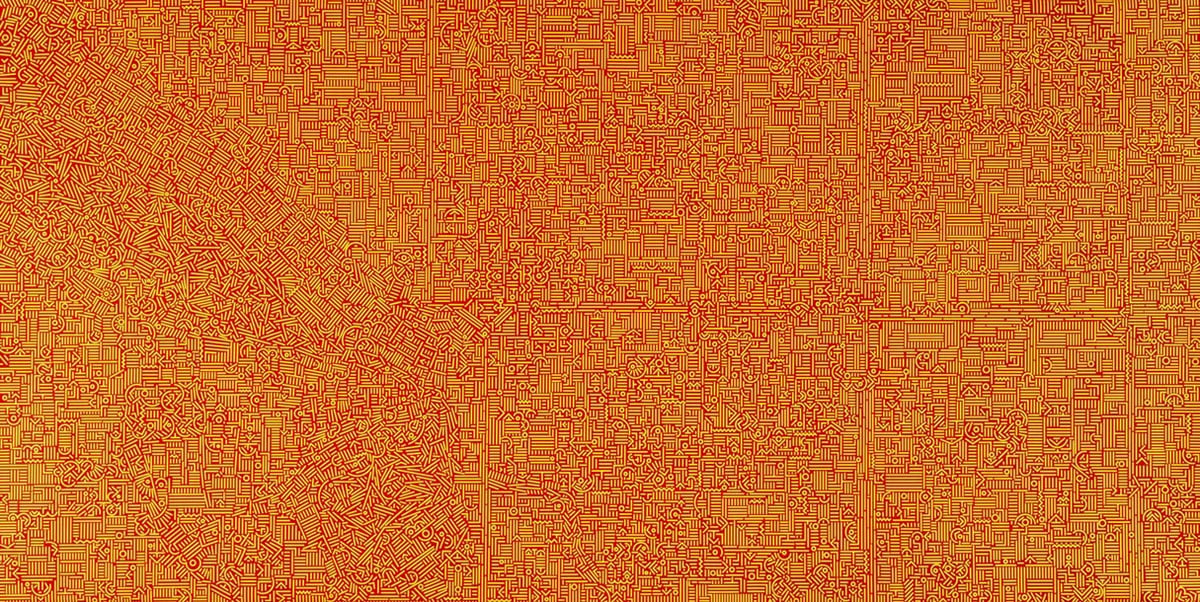
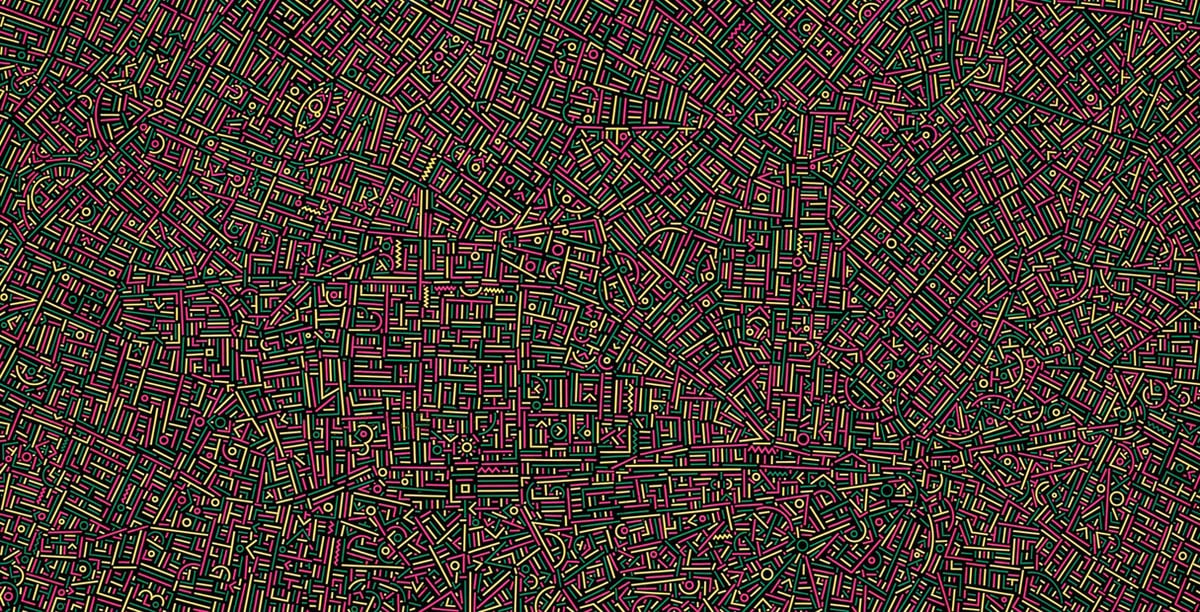

After Piet Mondrian moved to New York in 1940, his work became influenced by Manhattan’s grid system, particularly expressed in Broadway Boogie Woogie. Similarly, for his City DNA project, Xinjian Lu studied satellite maps of cities like Beijing, Athens, New York, and Los Angeles and then created these maze-like paintings that resemble the street layouts of each city. Mondrian++. Holy moly, I *love* these.
From top to bottom, Lu’s paintings depict Beijing, London, and Paris.
Recutting movie trailers to wrong-foot movies into different genres is an old YouTube tradition — see The Shining as a romantic comedy, 90s-style opening credit sequences for prestige dramas like Game of Thrones, and Toy Story as a horror film — but this recasting of Wall-E into trailers for seven different genres (including a Jony Ive bit at an Apple keynote) is a good demonstration of the power of film editing. Just switch a few scenes, slip in some different music, change the pacing of cuts, and you’ve got yourself a completely different movie. Watching these types of videos always makes me think that film editors do not get the credit they deserve. (See, for example, how extensive editing rescued Star Wars.) (via @johnbarta)
A list of artists & bands and their signature songs, e.g. Margaritaville by Jimmy Buffett, Girls Just Want to Have Fun by Cyndi Lauper, etc.
Meg Lewis recently shared a Public Place Meditation Exercise for when you’re in a place that might not be conducive to normal meditation (on the subway, in a coffeeshop, at the airport).
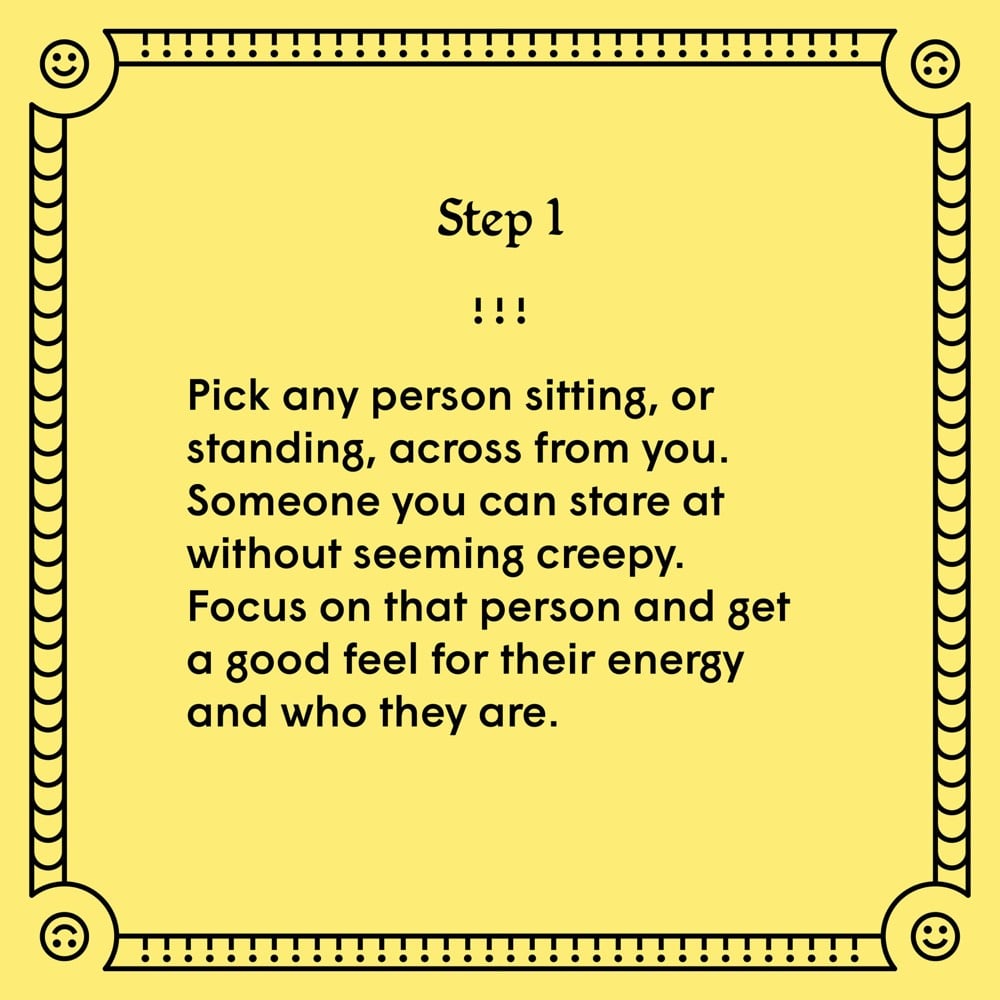
Here are the next two steps:
2. Shift to a soft focus on that person and picture them in their happiest moments — Hugging a friend, picking up their kids from school, reuniting with someone they love, celebrating after some good news.
3. Now, picture them in their saddest moments and imagine what they would look like when feeling low. Feel their sadness and despair with them.
I do this kind of thing from time to time when I’m out and about, not as meditation exactly, but as a way of empathizing with others in a small way, especially those I might feel certain ways about because of personal or cultural prejudice. It’s difficult for me to remember to do this, but I always feel better and more human when I do. (via @pieratt)
In a recent podcast interview with David Axelrod, former NBA star Charles Barkley talks about how NBA legend Bill Russell persuaded Barkley to stop publicly complaining about how much income tax he paid (transcription by Steven Greenhouse).
Bill Russell called me one time… He says, “Charles Barkley.” I said, “Yes, sir, Mr. Russell.”
“You grew up in Alabama. Right?” I said, “Yes, sir.”
He says, “Did you go to public school?” I said, “Yes, sir.”
He says, “Did the cops ever come to your neighborhood?” I said, “Yes sir.”
He said, “Any of the houses ever on fire and the firemen come?” I said, “Yes, sir.”
He said, “I don’t want to see your black ass on TV complaining about your taxes anymore.” I says, “What do you mean?”
He says, “So now that you got money you don’t want to help other people out, but when you were poor, other people took care of you.” And I says, “You know what, Mr. Russell, you will never hear me complain about my taxes again.”
And it was a very interesting lesson for me, because I do think rich people should pay more taxes. I’m blessed to be one of them, and we should pay more in taxes. I learned my lesson. I never complain about taxes.
I think Bill Russell needs to make a few phone calls to Congress…
The other day I observed that whenever a new issue of the Noticing newsletter goes out, a bunch of people unsubscribe. When this happens each week I panic a little, so I asked other newsletter writers if this happened to them too. And it does.
In the ensuing thread, a former Twitter employee chimed in to say that “the single biggest correlation with people unfollowing an account [on Twitter] was whenever an account tweeted anything at all”. And someone else chimed in with “historically the biggest problem of newspaper subscriptions: physical delivery of the damn things leads to churn!” I also remarked that this reminded me of Jon Bois’ amazing Chart Party episode on Barry Bonds, where he concludes (spoilers!) that in 2004, Bonds would have finished with essentially the same on-base percentage if he hadn’t used a bat for the entire season.
Newsletters you’re better off not sending, newspapers you shouldn’t publish, and pitches you should never swing at. Was WOPR right in WarGames? Is the only winning move not to play?
Global thermonuclear war notwithstanding, this issue highlights the need to keep in mind why you’re playing a particular game in the first place. I often return to something that Ludicorp (makers of Flickr) had on their about page from a book by Charles Spinosa et al. about the goal of business:
Business owners do not normally work for money either. They work for the enjoyment of their competitive skill, in the context of a life where competing skillfully makes sense. The money they earn supports this way of life. The same is true of their businesses. One might think that they view their businesses as nothing more than machines to produce profits, since they do closely monitor their accounts to keep tabs on those profits.
But this way of thinking replaces the point of the machine’s activity with a diagnostic test of how well it is performing. Normally, one senses whether one is performing skillfully. A basketball player does not need to count baskets to know whether the team as a whole is in flow. Saying that the point of business is to produce profit is like saying that the whole point of playing basketball is to make as many baskets as possible. One could make many more baskets by having no opponent.
The game and styles of playing the game are what matter because they produce identities people care about. Likewise, a business develops an identity by providing a product or a service to people. To do that it needs capital, and it needs to make a profit, but no more than it needs to have competent employees or customers or any other thing that enables production to take place. None of this is the goal of the activity.
The people who work for newspapers want to provide their readers with high quality information.1 Barry Bonds wants to play baseball, be competitive, and provide entertainment to the fans instead of standing bat-less in the batter’s box; the Giants & MLB presumably want those things as well. With my efforts here and with the newsletter, I’m not playing a subscriber or profits maximization game — I want to share my ideas & information that I find and connect with people. This isn’t to say that you shouldn’t keep your eye on how much money you make or how many subscribers you’ve got for a relatively new newsletter,2 but keeping your purpose firmly in mind while you do those things is of paramount importance. Otherwise you’re just stalemating yourself.
From visual journalist Fritz Schumann, a short, poignant documentary on Hoshi Ryokan, a Japanese hotel built on a hot springs that has been run by the same family for 1300 years, making it the oldest running family business in the world.
This ryokan (a traditional japanese style hotel) was built over a natural hot spring in Awazu in central Japan in the year 718. Until 2011, it held the record for being the oldest hotel in the world.
Houshi Ryokan has been visited by the Japanese Imperial Family and countless great artists over the centuries. Its buildings were destroyed by natural disasters many times, but the family has always rebuilt. The garden as well as some parts of the hotel are over 400 years old.
The ryokan is now on its 46th generation of ownership. As you might expect, the changing role of the family in Japanese society has put the future succession of the hotel to the next generation in jeopardy. (via open culture)
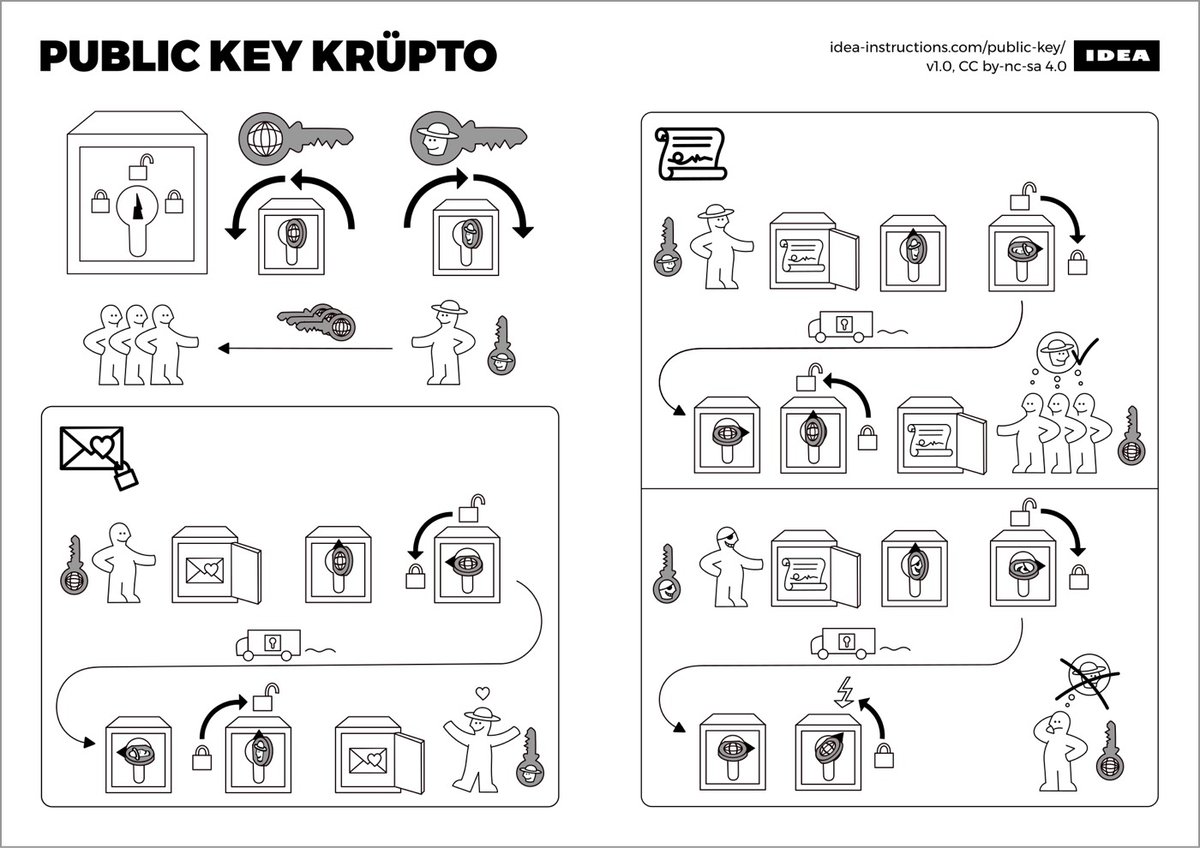
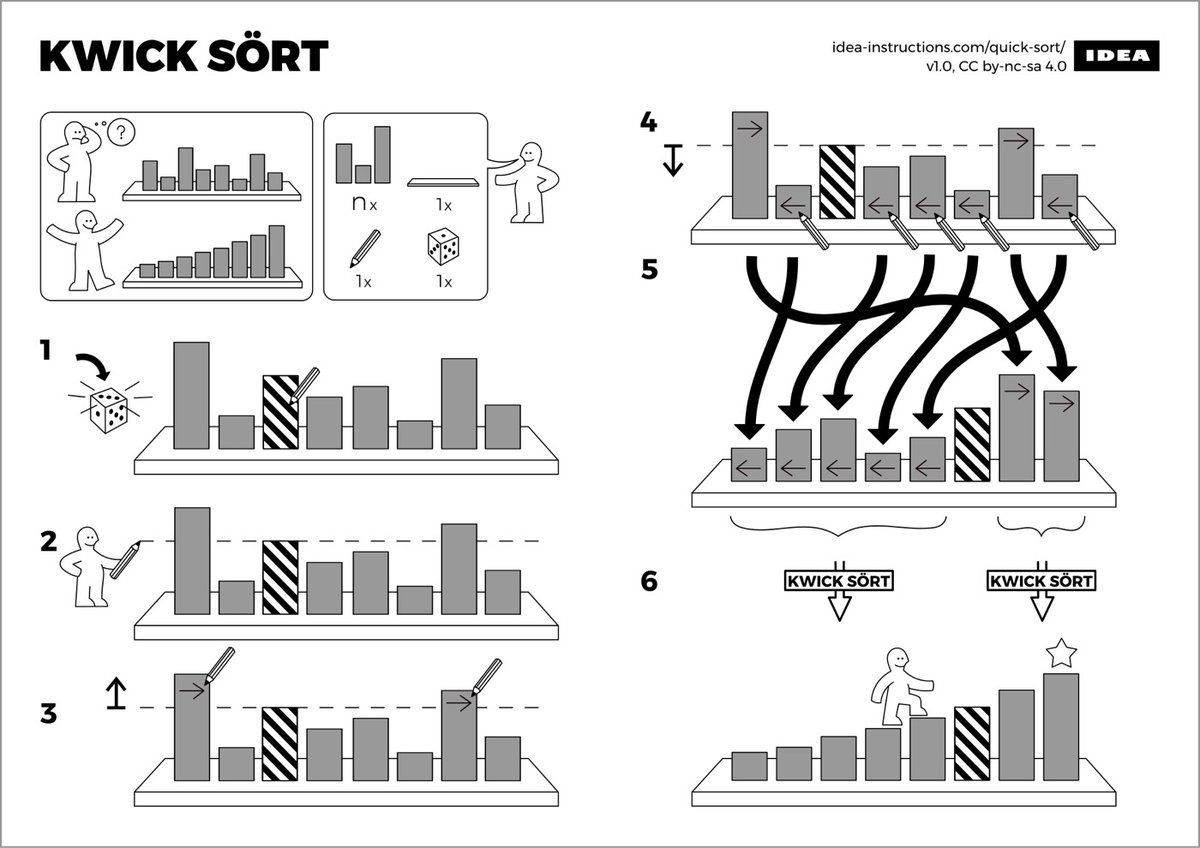
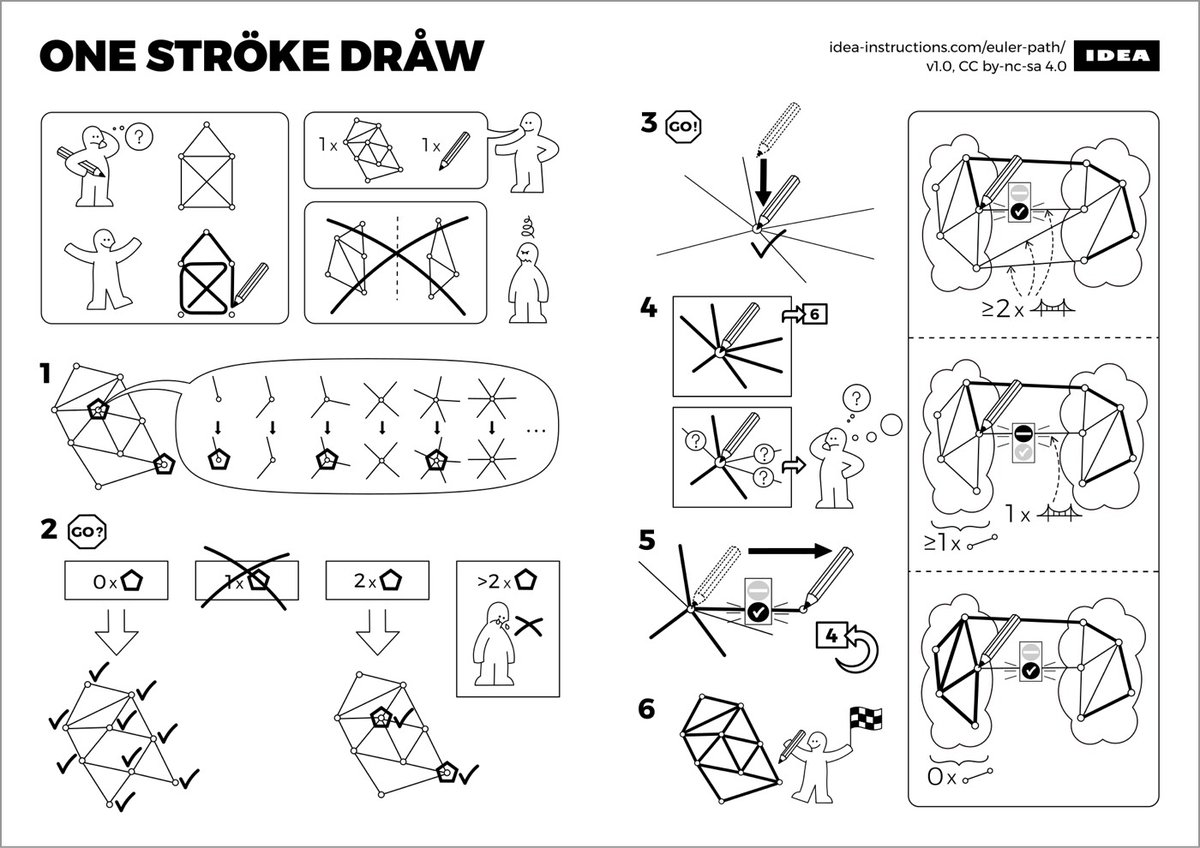
Sándor P. Fekete, Sebastian Morr, and Sebastian Stiller came up with these Ikea-style instructions for algorithms and data structures used in computer science. In addition to the three pictured above, there are also instructions for several other searches, trees, sorts, and scans.
You might remember Yale historian Timothy Snyder from his 20 lessons on fighting authoritarianism (which he turned into a short bestselling book, On Tyranny). Snyder has a new book out called The Road to Unfreedom that covers the rebound of authoritarianism first in Russia and then in Europe and America.
According to this review from The Economist, the book goes into some detail about the ideological beliefs of Vladimir Putin in his quest to undermine Western democracy. A favorite thinker of Putin’s, a Revolution-era philosopher named Ivan Ilyin, advocated for a Russian monarchy while another, Lev Gumilev, believed that nations draw their power from cosmic rays?
Also present in Mr Putin’s thinking is an even more extreme anti-liberal ideology: that of Lev Gumilev, who thought that nations draw their collective drive, or passionarnost (an invented word), from cosmic rays. In this bizarre understanding of the world, the West’s will to exist is almost exhausted, whereas Russia still has the energy and vocation to form a mighty Slavic-Turkic state, spanning Eurasia.
The result, according to Snyder:
What these ways of thinking have in common, Mr Snyder argues, is a quasi-mystical belief in the destiny of nations and rulers, which sets aside the need to observe laws or procedures, or grapple with physical realities. The spiritual imperative transcends everything, rendering politics, and the pursuit of truth in the ordinary sense, superfluous or even dangerous.
You can see where the election of Donald Trump — with his own “quasi-mystical belief in the destiny” of himself and without “the need to observe laws or procedures” — is a welcome ally/patsy for Putin.
See also Putin’s playbook for discrediting America and destabilizing the West: “Just wanna make sure you all know there is a Russian handbook from 1997 on ‘taking over the world’ and Putin is literally crossing shit off.”
Arena is a video created by Páraic & Pearse McGloughlin constructed from different structural forms (roads, stadiums, center-pivot irrigation circles) in satellite images of the Earth animated together into a kind of music video. (It’s hard to describe it. Just watch and you’ll see what I mean.) The first part of the video, with the roads, reminded me of the screensaver on a computer or DVD player where a ball or logo bounces around the screen.
McGloughlin did an interview with Director’s Notes about how the video was produced.
I put a lot of focus on imagery containing flat lines, symmetry and grids as they are so different to the patterns/shapes made by nature, and hoped in turn that this would be most effective. It wasn’t until I started messing with some images that I thought to allocate the idea of the game of life — “Arena” to the theme as it fit perfectly in my opinion. I wanted to create a retro-like video game effect out of the images and I knew I wanted to start with flat roads ‘bouncing’ off the sides of the screen with an element of growth, a focus on the abundance of life on earth as well as some kind of evolution idea.
(via bb)
What if we paid for Facebook? It would cost us about $20 per user per year. (Also, Cowen’s point that WhatsApp is a suitable 1-to-1 replacement for FB seems wrong.)
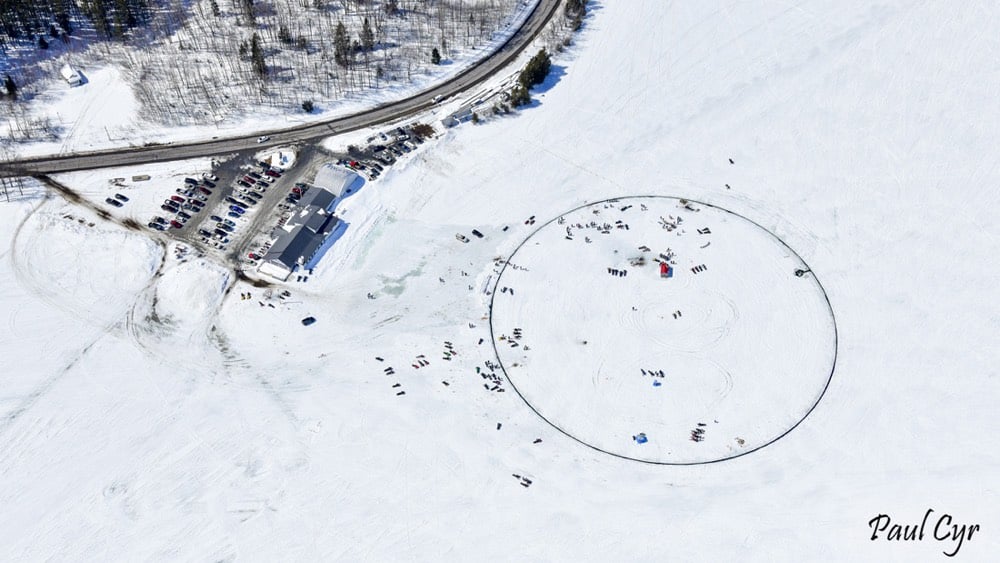


A group of Mainers have created what they say is the world’s largest ice carousel. An ice carousel is formed when a circular piece of ice is allowed to spin freely within a surrounding sheet of ice. Spinning disks of ice can form naturally in slowly flowing rivers, but the ice carousel in Sinclair at the tip of northern Maine was cut specifically out of the ice on Long Lake.
The carousel is 427 feet across, a quarter mile in circumference, more than two feet thick, and estimated to weigh 11,000 tons. The keep the carousel spinning very slowly with a collection of outboard boat motors fastened to the disk. Here’s a video tour by drone:
The photos above are by Paul Cyr, who has many more here, including some of the construction process.
Ten years ago this month, Jodi Ettenberg left her cushy lawyer job in NYC to embark on some traveling she wanted to do. But just for a year. Well, one thing led to another, and she never went back to her old life. She wrote about her travels on Legal Nomads and eventually turned the site into her full-time profession. Jodi recently marked this anniversary with a post about the nearly unbelievable parade of challenges she’s been dealing with over the past several months: The Spinal Tap That Changed My Life.
Enduring a potentially terrifying home invasion, a botched spinal tap, a debilitating condition that only allowed her to sit or stand for minutes at a time without excruciating pain, unsuccessful operations, almost dying in the operating room, and countless other setbacks in the space of a few months, Jodi has plumbed the depths of her soul in an attempt to ready herself for a future that looks very different than the one she’d envisioned.
I reread Viktor Frankl’s book Man’s Search For Meaning during these difficult months. Frankl’s time in Auschwitz led to his development of logotherapy in his psychiatry practice, but the book delves into his theories of why certain people managed to survive the Nazi camps. Frankl saw life as a quest for meaning, found in work, in love, and in courage during difficult times. Among his beliefs was that suffering itself is meaningless, but we give suffering meaning by the way we respond to it. Or, as Harold S. Kushner writes in the introduction to the latest version, that “forces beyond your control can take away everything you possess except one thing, your freedom to choose how you respond to the situation.”
Instead of thrashing around in grief, I’ve chosen to focus on the gifts that have come out of this very complicated year. With these facts, things could have been a lot worse. Instead of being confined to isolation, I have you to walk this path with me. My community around the world raised their voices and opened their pocketbooks to keep me afloat when I couldn’t manage it. You respond to my progress walks on Instagram, you cheerlead every update, and your birding skills helped me identify the beloved marsh hens that I fell for during this recovery.
I don’t really know how to finish this post. Jodi is a friend…we met in person for the first time last summer, just a few weeks before the spinal tap and I visited her in Montreal briefly during her darkest days. Maybe I’ll just leave it at this: Jodi, I’m really proud of you and am looking forward to ten more years of Legal Nomads!
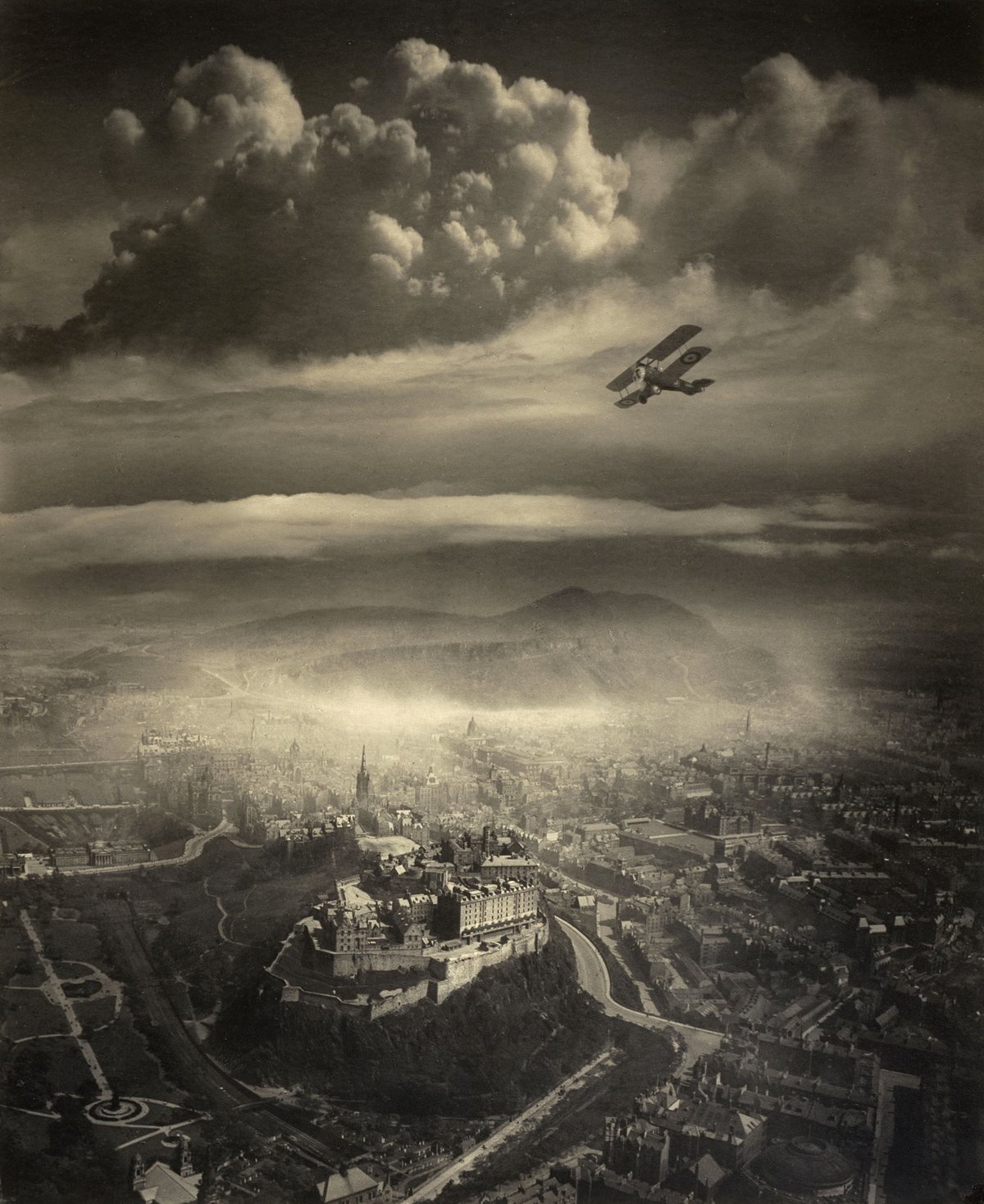
I’d never seen this stunning aerial photograph of Edinburgh taken by Alfred Buckham circa 1920. Buckham was a pioneer of aerial photography, a profession he continued after getting discharged from the Royal Naval Air Service after crashing nine times and being declared “a hundred per cent disabled”. Very little slowed him down apparently, as Buckham himself wrote about his working setup:
It is not easy to tumble out of an aeroplane, unless you really want to, and on considerably more than a thousand flights I have used a safety belt only once and then it was thrust upon me. I always stand up to make an exposure and, taking the precaution to tie my right leg to the seat, I am free to move about rapidly, and easily, in any desired direction; and loop the loop and indulge in other such delights, with perfect safety.
But back to that photograph, it looks like a dang painting! Instant favorite…I can’t believe I’d never seen it before. (via sam potts)
Lisa Joy and Jonathan Nolan are the creators and producers of HBO’s Westworld. Last night, they released a 25-minute-long video on YouTube that they say contains the full spoilers for season two of the show. (Update: it’s a rickroll. Har har.)
Nolan shared the rationale for the unusual move on Reddit (which I’ve read three times and still don’t understand from a logic perspective):
I greatly enjoyed watching the friendly folks at this subreddit guess the twists and turns of the season.
It creates a larger problem for us, though, in terms of the way your guesswork is reported online. ‘Theories’ can actually be spoilers, and the line between the two is confusing. It’s something we’ve been thinking about since last season. The fans of Game of Thrones, for instance, rallied around and protected the secrets of the narrative in part because they already knew those secrets (through season 5).
We thought about this long and hard, and came to a difficult (and potentially highly controversial) decision. If you guys agree, we’re going to post a video that lays out the plot (and twists and turns) of season 2. Everything. The whole sordid thing. Up front. That way the members of the community here who want the season spoiled for them can watch ahead, and then protect the rest of the community, and help to distinguish between what’s ‘theory’ and what’s spoiler.
I have not watched it and won’t1 but from the comments in the thread (spoilers!), it appears legit. Orrrrr, it’s some elaborate troll by Nolan et al. to flood the zone with fake spoilers, to misdirect hardcore fans. Or maybe since Westworld contains many levels of fakes and artifice, I wonder if they’re doing this as part of an ARG, creating another layer of trickery and misdirection for the show? I guess we’ll see!
Update: LOL, I have been duped. SPOILERS: that video is mostly of a dog in front of a piano with the Westworld theme playing. And an olde tyme rendition of Never Gonna Give You Up. Hanging my head in deep shame.
I still believe that it would be cool if the show could somehow work in a release of faux spoilers into the main plot of the show. That would be impressive, more so than another rickroll.
Using imagery and data that the Lunar Reconnaissance Orbiter spacecraft has collected since 2009, NASA made this video tour of the Moon in 4K resolution. This looked incredible on my iMac screen.
As the visualization moves around the near side, far side, north and south poles, we highlight interesting features, sites, and information gathered on the lunar terrain.
See also The 100-megapixel Moon and A full rotation of the Moon.
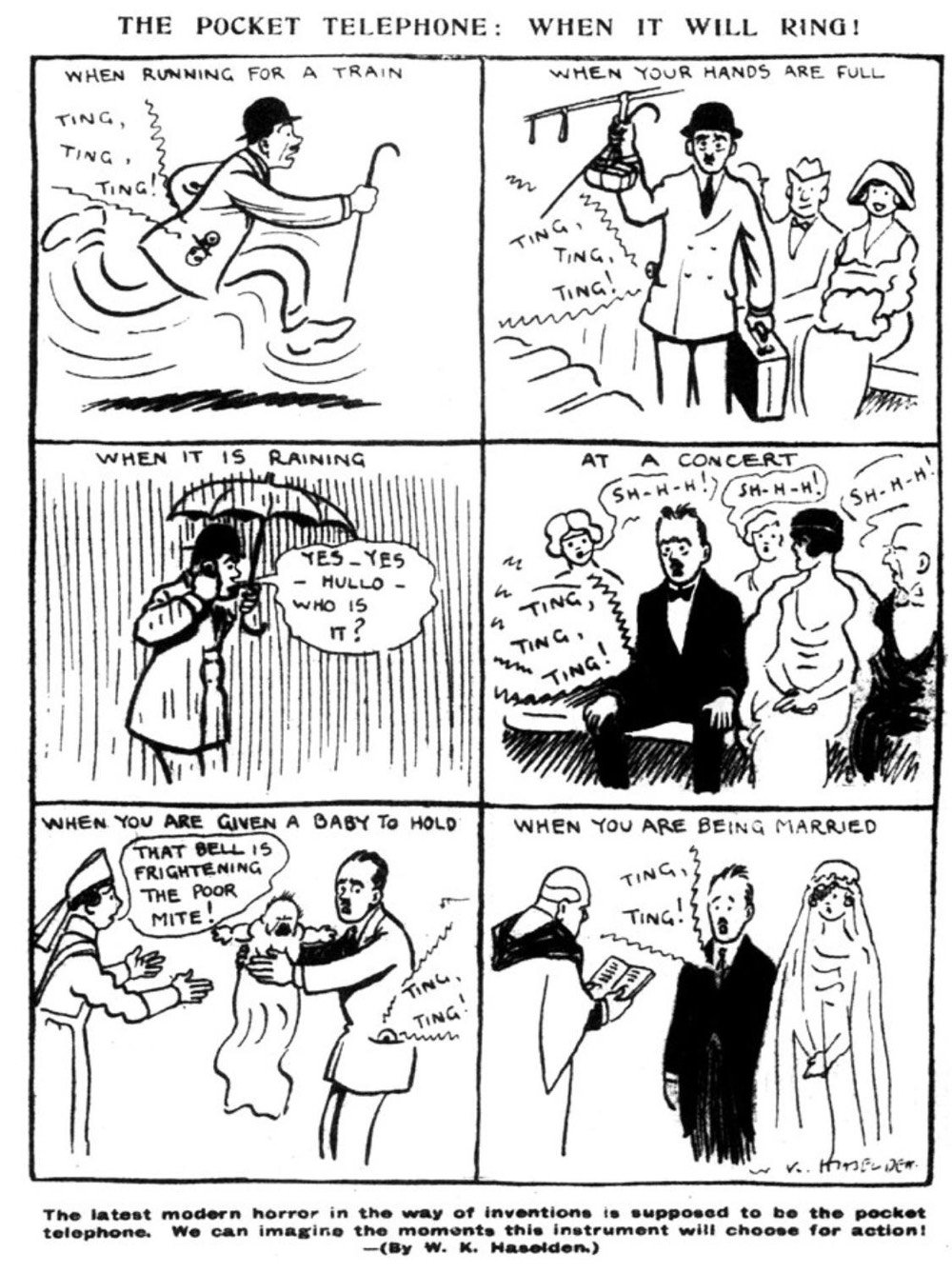
In an interview published in Collier’s magazine in 1926, Nikola Tesla, then in the twilight of his career, made some predictions about the future that included electric airplane flights “from New York to Europe in a few hours”, more frequent earthquakes, and temperate zones becoming cooler or warmer. He predicted that we would be communicating wirelessly with each other with devices that fit comfortably into a pocket.
When wireless is perfectly applied the whole earth will be converted into a huge brain, which in fact it is, all things being particles of a real and rhythmic whole. We shall be able to communicate with one another instantly, irrespective of distance. Not only this, but through television and telephony we shall see and hear one another as perfectly as though we were face to face, despite intervening distances of thousands of miles; and the instruments through which we shall be able to do his will be amazingly simple compared with our present telephone. A man will be able to carry one in his vest pocket.
We shall be able to witness and hear events — the inauguration of a President, the playing of a world series game, the havoc of an earthquake or the terror of a battle — just as though we were present.
When the wireless transmission of power is made commercial, transport and transmission will be revolutionized. Already motion pictures have been transmitted by wireless over a short distance. Later the distance will be illimitable, and by later I mean only a few years hence. Pictures are transmitted over wires — they were telegraphed successfully through the point system thirty years ago. When wireless transmission of power becomes general, these methods will be as crude as is the steam locomotive compared with the electric train.
He also asserted that “struggle of the human female toward sex equality will end in a new sex order, with the female as superior”, bringing the humanity “closer to the perfect civilization of the bee”.
Through countless generations, from the very beginning, the social subservience of women resulted naturally in the partial atrophy or at least the hereditary suspension of mental qualities which we now know the female sex to be endowed with no less than men.
But the female mind has demonstrated a capacity for all the mental acquirements and achievements of men, and as generations ensue that capacity will be expanded; the average woman will be as well educated as the average man, and then better educated, for the dormant faculties of her brain will be stimulated to an activity that will be all the more intense and powerful because of centuries of repose. Woman will ignore precedent and startle civilization with their progress.
Humanity has made tremendous progress toward gender equality, but with the bee stuff Tesla goes a little off the rails, swerving into eugenics, which he also stressed in an article published nine years later in Liberty magazine:
The year 2100 will see eugenics universally established. In past ages, the law governing the survival of the fittest roughly weeded out the less desirable strains. Then man’s new sense of pity began to interfere with the ruthless workings of nature. As a result, we continue to keep alive and to breed the unfit. The only method compatible with our notions of civilization and the race is to prevent the breeding of the unfit by sterilization and the deliberate guidance of the mating instinct. Several European countries and a number of states of the American Union sterilize the criminal and the insane. This is not sufficient. The trend of opinion among eugenists is that we must make marriage more difficult. Certainly no one who is not a desirable parent should be permitted to produce progeny. A century from now it will no more occur to a normal person to mate with a person eugenically unfit than to marry a habitual criminal.
But at least he got the iPhone right? Speaking of which, the cartoon shown above was drawn by W.K. Haselden and published in the Daily Mirror in 1919.
Update: From his 1914 book Tik-Tok of Oz, here’s L. Frank Baum on the wireless telephone:
…Shaggy suspected the truth, and believing that Ozma was now taking an interest in the party he drew from his pocket a tiny instrument which he placed against his ear.
Ozma, observing this action in her Magic Picture, at once caught up a similar instrument from a table beside her and held it to her own ear. The two instruments recorded the same delicate vibrations of sound and formed a wireless telephone, an invention of the Wizard. Those separated by any distance were thus enabled to converse together with perfect ease and without any wire connection.
“Do you hear me, Shaggy Man?” asked Ozma.
“Yes, Your Highness,” he replied.
(via @GRobLewis)
Chadwick Boseman, who portrays T’Challa in Black Panther, hosted Saturday Night Live over the weekend, appearing in character on Black Jeopardy. Let’s just say T’Challa finds it challenging to understand the cultural references and idioms of contemporary American Black English but eventually gets the hang of it. I laughed solidly, and at times uncomfortably, through the entire thing.
See also Tom Hanks’ appearance on Black Jeopardy, which Jamelle Bouie highlighted as a particularly astute piece of American political analysis.
Interesting piece on Ben Falk’s one-man subscription-supported website about the NBA. I am dying to know how his site (or @stratechery) would do with no paywall (like @kottke or @waitbutwhy).
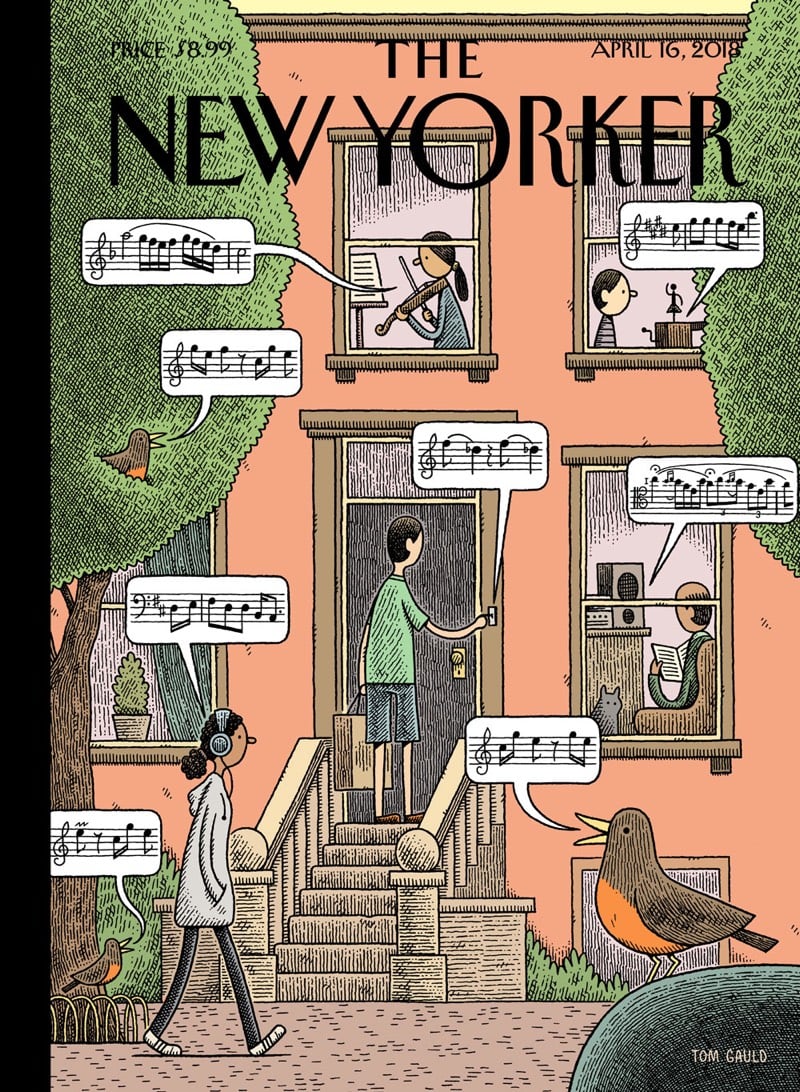
The New Yorker has a fun cover this week from cartoonist Tom Gauld. The New York street scene shows bits of music being played and listened to by people and birds and if you click through to the interactive version, you can listen to what each snippet of musical notation sounds like.
In his early sketches, Gauld had only vague notions of the music he’d like to include, and “placeholder nonsense” in the speech bubbles. “If, like me, you’re musically illiterate, then the notes give a suggestion of what’s going on sonically,” he said. “But I also wanted the scores to make sense to those who can read music.”
To achieve that goal, he enlisted the help of fact checker Fergus McIntosh, a veteran chorister. Together, the duo struck upon a repertoire that includes Vivaldi’s “Spring”; Stravinsky’s “The Rite of Spring”; Beethoven’s “Spring Sonata”; the folk song “One Morning in Spring”; and birdsong from the American robin, which tends to appear in springtime after local migration.
Found this via Austin Kleon, who remarks that Charles Schulz was similarly faithful in using accurate musical notation in Peanuts cartoons.
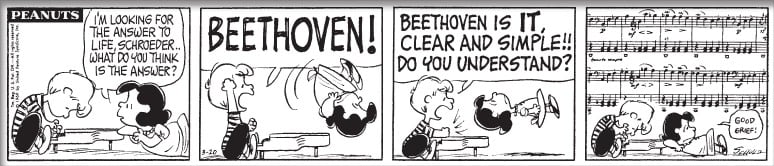
When Schroeder pounded on his piano, his eyes clenched in a trance, the notes floating above his head were no random ink spots dropped into the key of G. Schulz carefully chose each snatch of music he drew and transcribed the notes from the score. More than an illustration, the music was a soundtrack to the strip, introducing the characters’ state of emotion, prompting one of them to ask a question or punctuating an interaction.
Schulz used music so extensively in some of his strips that they didn’t really make much sense if you didn’t know how to read music:
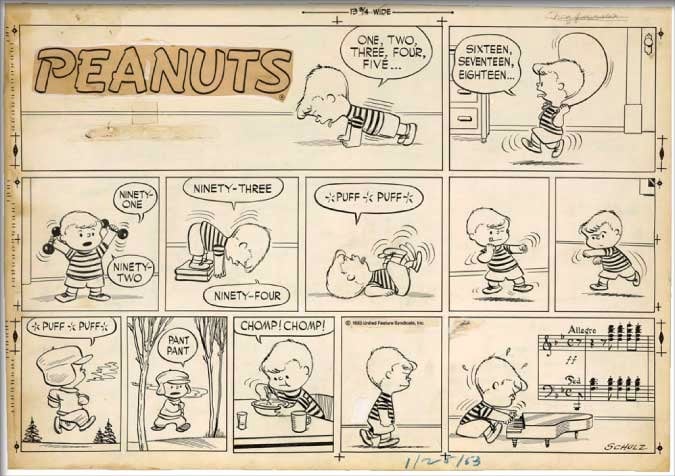
When Beethoven gave the Hammerklavier to the publisher, he bragged, “Now you will have a sonata that will keep the pianists busy when it is played 50 years hence.” In this Sunday strip, Schulz most fully develops the idea of the preparations required to storm “Mount Everest.” Before marching to the piano with determination, Schroeder prepares himself for this mighty undertaking with seven different kinds of exercise and a “carb-loading” bowl of cereal, almost as if he were preparing to climb a mountain!
Newer posts
Older posts


Socials & More