




This site is made possible by member support. 💞
Big thanks to Arcustech for hosting the site and offering amazing tech support.
When you buy through links on kottke.org, I may earn an affiliate commission. Thanks for supporting the site!
kottke.org. home of fine hypertext products since 1998.
Beloved by 86.47% of the web.
Entries for March 2018
I and You: a short appreciation of Martin Buber’s ‘Ich und Du’
When I was in college, I was crazy about Martin Buber. Well, really, I was crazy about Friedrich Nietzsche, and I was dating an evangelical Christian, provisionally going to her church, so I needed a way to put the two together. Buber’s book Ich und Du (I and Thou) was it.
It’s tricky to translate, in one of those “here are some basic differences between English and German” ways. German has two pronouns for you; “du” is the informal one, “sie” the plural or formal. “Sie” is also a third-person pronoun. But “du” is the way you address God, so it winds up turning into “thou.” Still, there’s nothing all that archaic about “du”; you’d call your pets “du.” Kind of like how Freud’s “ich” and “es” become “ego” and “id,” but are really just “I” and “it.” It’s a weird bit of business.
Anyways, Aeon has a new essay on Buber’s I and Thou by a grad student, MM Owen, that’s making me think of picking up Buber again. Here’s his breakdown of the basic insight.
Human existence is fundamentally interpersonal. Human beings are not isolated, free-floating objects, but subjects existing in perpetual, multiple, shifting relationships with other people, the world, and ultimately God. Life is defined by these myriad interactions - by the push and pull of intersubjectivity. This conception ties to Buber’s belief in the primacy of the spoken word. One of his life’s great projects was the 37-year process of producing an idiosyncratic German translation of the Bible wherein, to do justice to its oral roots, the text was divided into ‘breath measures’. For Buber, the act of speech embodied the deep-set interrelatedness of human beings. In speech, as in life, no ‘I’ is an island.
I and Thou argues that within this elementally networked reality there are two basic modes of existence: the I-It, and the I-Thou. These two stances make up our basic ‘twofold attitude’. In the I-It mode, an ‘Ego’ approaches another as an object separate from itself. This type of engagement is driven by a sort of instrumentalism; the object is engaged primarily as something to be known or used, and its nature is always mediated through the subject’s own self-regard. From the I-It stance, we don’t engage with things in their entirety. Instead, we engage with a web of distinct and isolated qualities notable for how they are useful to us. Buber regarded this kind of self-centred outlook - typified, in his view, by proto-existentialists such as Kierkegaard and Nietzsche - as a grave error.
By contrast, in the I-Thou relationship, rather than simply experiencing another, we encounter them. A subject encounters a fellow subject’s whole being, and that being is not filtered through our mediated consciousness, with its litter of preconceptions and projections. ‘No purpose intervenes,’ as Buber put it. The I-Thou stance has a purity and an intimacy, and is inherently reciprocal. In relation to others, he argued, we can step into an intersubjective space where two people coexist in (and co-contribute to) what he called the Between. In this Between lurks the vital, nourishing experience of human life, the real sacred stuff of existence. As he put it: ‘All real living is meeting.’
Is e-paper as good as pen-and-pad really here? (At $700, maybe not quite yet)
“I know a mind virus when I see it.” Paul Ford on cryptocurrency and Silicon Valley’s love for making markets
A close reading of Miyazaki’s sound design in The Wind Rises
I recently rewatched a bunch of Hayao Miyazaki’s films, although “watched” is a bit of a misnomer. I was playing them in the background while I was working, or reading, or trying to sleep, so really I was re-listening to them, and not especially closely.
This almost feels like a sin for movies as beautiful as these, but it did help me notice something. Nausicaa: Valley of the Wind looks different from Princess Mononoke or The Wind Rises, sure; however, it sounds way different. The music, the foley effects, the subtler cues, the sheer sound density are completely different from one end of the career to another.
This made me wonder whether somebody had charted this transformation. I didn’t quite find that, but I did find an outstanding series of blog posts specifically on the sound design in The Wind Rises, which stands in nicely. It’s not well copyedited, but it’s attentive and insightful. A few samples:
Jiro enters his airplane, adjusts his aviator gloves and starts the artisanal machine. By now we have noticed the sound effects of the valves and exhaust pipes made of human mouth sounds and with vocalisations. The first engine starts and it’s clear that human voice is used to portray this activity. But once the propeller activates a low rumble sound effects is introduced, and a sound effect of a servo ascending is applied to the airplane rising, triggered by Jiro’s pulling the lever, and it’s in harmony with the music score. One occurrence with the sound that emphasises the oneiric dimension of this scene is the ‘dreamy’ quality of the reverb applied on the last blow of the machine lifting before it goes crossing the skies [00:02:03].
Here’s a clip a little later in the sequence — I’d never recognized that the dream engine sounds were being made by human mouths, but once you hear it, it’s perfect.
Or consider the earthquake, detail by detail:
It is now that we are in the presence of the horror lived in this earthquake and sound plays such a big role with all its brutality. Different to the traditional approach of western film, the main elements heard are a composition of :
- horrified human screams on a higher-pitch range,
- medium-low pitch throat growls and groans like coming from a big beast,
- that moves upwards in pitch as the image from the houses undulates from a farther plane to a closer one.
- an earthy impact stinger
These elements are introduced a couple of frames before we see the houses being ripped apart.
In the next scene the audience is shown, through close-ups, how the ground is animated in brutal waves breaking and disrupting the order of all man-made constructions. We no longer hear the horrifying screams and the sound designer paints the scene with sound of the ground disrupting, by utilising rumbles and earth debris. The sounds here are in the same universe as those indicated on Jiro’s first dream - choir-like sounds mimicking up and down movements, in which the upwards vocalisations are like rising stingers.
It really helped me appreciate these movies again, as sonic masterpieces.
What America looked like before the EPA, in photos
Popular Science has a series of photos taken by EPA staff in the early years of the agency after it was formed in the 1970s, that have since been digitized.
It’s pretty grim stuff: abandoned cars in Jamaica Bay, broken candy-glass unreturnable bottles everywhere, and one mill after another belching out smoke and dumping refuse in the rivers.

The Atlas Chemical Company, by Marc St. Gil

Oxford Paper Company, by Charles Steinhacker

Burning barge on the Ohio River, by William Strode

Mary Workman holds a jar of undrinkable water from her well, and has filed suit against the Hanna Coal Company - by Erik Calonius
Given that there’s been a renewed, serious push this year to dismantle or undermine the EPA, it’s worth revisiting just why we needed an agency to protect the environment to begin with.
Stevie Nicks sings “Wild Heart” on set
Thanks for following along this week while I filled in here! As my final post, it seems important to share the best YouTube video ever*.
Here you have songbird Stevie Nicks, every makeup artist’s worst nightmare, belting out an early version of her song “Wild Heart” during an Annie Leibowitz cover shoot for Rolling Stone in 1981. If this sends you down a rabbit hole of live versions of “Silver Springs” and corresponding levels of emotion between Buckingham and Nicks, I don’t blame you.
*Feel free to tell me otherwise or to keep in touch on Twitter.
“Stronger Shines the Light Inside”

Photographer Angie Smith spent over a year telling the stories of refugees resettled in Idaho, a state that (according to census data) is over 89% white. Her resulting work, Stronger Shines the Light Inside, focuses on the commonality on the human experience and the strength of community.

Smith’s work will be on view at an upcoming show in Los Angeles, opening April 11, at 1520 N. Cahuenga Boulevard from 6-9pm.
“My baby hasn’t sparked an existential crisis; she is meditation itself.” Beautiful piece from @evianahartman on motherhood at 40
Remembering the Thomas Guide
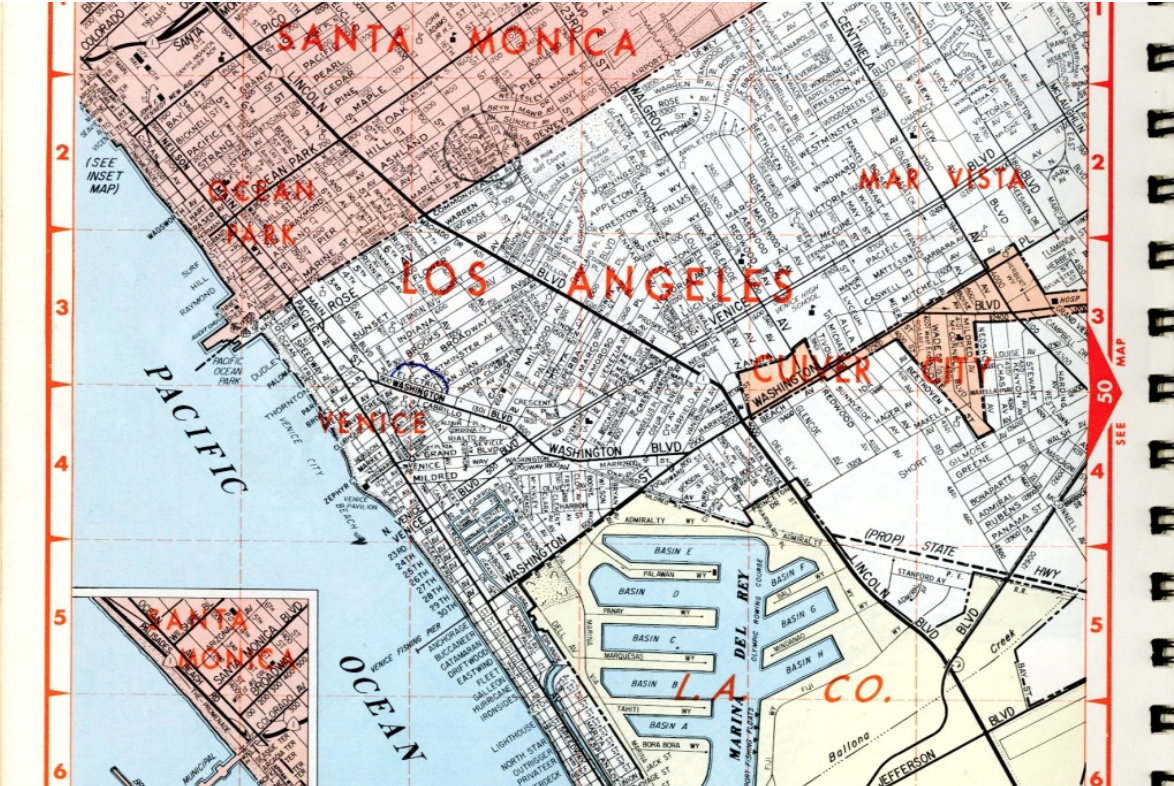
For anyone who loves maps, history, or the history of maps, Airtalk did a segment this week on the beloved Thomas Guide.
During the year I spent in LA in 2004, I have distinct memories of frantically flipping from page to page in the Thomas Guide as co-pilot. You had to memorize the page numbers of the areas you frequented because they were not always in order (a north/south jump would sometimes take you thirty pages off). After a few months of this, we had pages fall out of the spiral-bound guide that we were always shoving back in the book. It was really the only way to navigate the maze of sprawl here other than printing out turn-by-turn directions from Mapquest (which we also did).
Like a (wo)man without a country
The animated short “Your Black Friend,” based on the comic series by Ben Passmore, is a humorous and heartbreaking look at a very real topic. The film was temporarily removed from Facebook due to alt-right trolls earlier this year.
A special hardcover collection of Passmore’s comics series is out soon. It’s a vivid look at life and race in the backdrop of New Orleans.
(thanks Pete)
The charisma of lovable weirdo Jeff Goldblum

Read this homage to Jeff Goldblum in its entirety (preferably out loud, with a close friend) and then re-watch The Big Chill.
Edward Norton (‘Grand Budapest Hotel,’ 2014; ‘Isle of Dogs,’ out in March): A friend of mine was on a flight and was seated next to Jeff. She was reading a book and became aware that Jeff seemed to be looking at what she was reading. She said hello, and he asked her if she was enjoying the book.Jeff Goldblum: It was some good book she was reading! [It was ‘The Private Lives of the Impressionists.’]
Norton: Jeff said, “I don’t know if this would interest you—and if not, of course no problem—but I’m very good at reading books aloud, and if you’d like I’d be happy to read it to you.” She said, “Sure.” She had about 90 pages left, and Jeff read her the rest of it out loud. She said his reading was excellent.
Jeff Goldblum: We got out of the plane, and her boyfriend, Evan Goldberg, who writes with Judd Apatow, contacted me and said, “Look, I’m going to propose to that girl that you sat next to. I’ve written her a poem that’s kind of the proposal. And I want to drive her over to your house and have you read it to her. Can we come over at 7:30 in the morning tomorrow?” “Sure!”
Evan Goldberg: We drove up to the Hollywood Hills in a limo for the proposal haiku.
Jeff Goldblum: I’m in my robe. Ding-dong! Evan goes, “Here, darling, Jeff has something to read to you.” I read, “Dearest angel…would you be my wife?” And there you go. They’re married.
He keeps up with posts tagged #JeffGoldblum on Instagram, pours orange juice over his corn flakes, and smells good. Of course I love the Parker Posey anecdote: partying with Carrie Fisher in the 90s, movie night and a private piano concert with Goldblum and Rosario Dawson. A must read.
Still Processing on location

Jenna Wortham and Wesley Morris take a field trip to see the new Obama portraits in DC in the latest episode of their stellar podcast Still Processing and it’s beautiful. Wortham and Morris address the controversy over Michelle’s portrait and delight in Barack’s and are brilliant as always.
A piece only a Vermonter could write
A guide to the proper usage of the word “dank.”
The protean adjective (or adverb if you want to slink dankly along) is now used for so much more than to merely describe things that are “unpleasantly moist.” In modern usage, dank can be used to pinpoint particular qualities in marijuana, beer, and internet humor, or as a general term of praise. If that sounds confusing, it can be.
On the history of PDFs and political subterfuge
“The history of our generation will probably be in PDF form.”
(via Corrina)
Van Morrison and the Boston counterculture in 1968
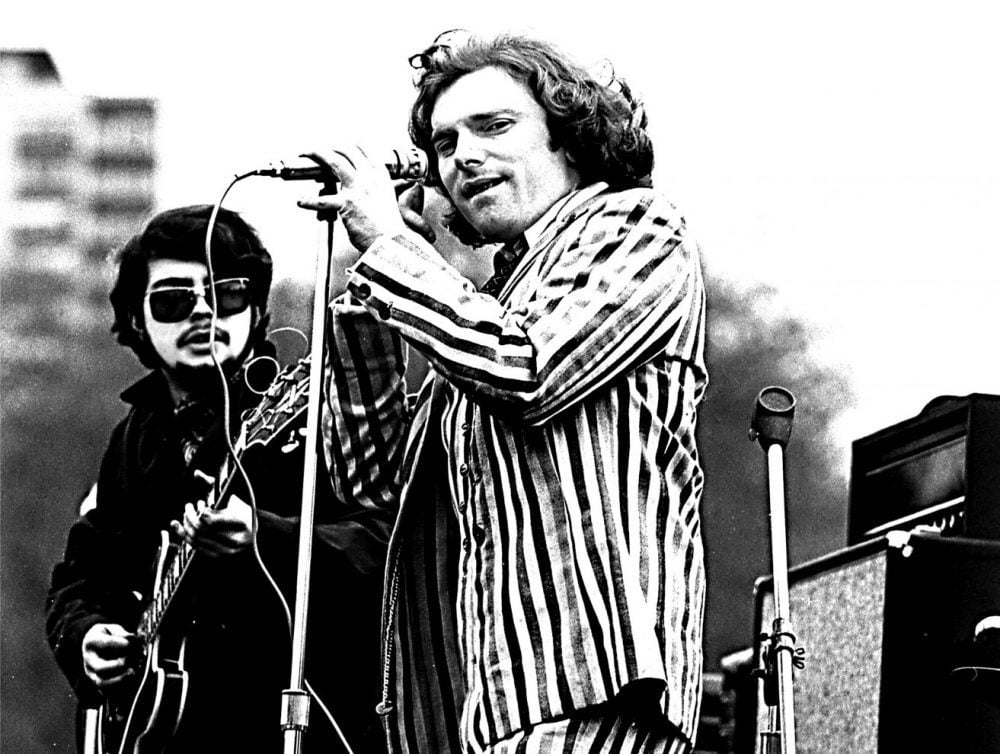
Van Morrison wrote his spare, stringed magnum opus Astral Weeks during his time among the late 60s LSD-fueled counterculture in Boston. Ryan H. Walsh’s new book Astral Weeks: A Secret History of 1968 covers the nine months Morrison spent in Cambridge, as well as a cast of characters both known and not. Among those orbiting Morrison were commune/cult leader Mel Lyman, members of the Velvet Underground, who played the Boston Tea Party club 15 times that year, and Carly Simon’s younger brother, Peter.
The common thread among the myriad personalities and communities profiled by Walsh is a yearning for transcendence and rebirth. These are also the central themes of Van Morrison’s “Astral Weeks.” Morrison’s route to the spiritual plane was through music, not drugs. (A notorious drunk during his time in Boston, he is said to have eschewed dope after “burning [his] brain on hash” when he was younger.) The singer seems to have been guided by his subconscious in creating “Astral Weeks.” Some of the songs emerged from dreams and reveries. Morrison was a student of the occult who believed in automatic writing.
From stories of gigs on Cape Cod where Morrison and his band improvised what became “Moondance,” to him quietly crooning about Cambridgeport “like he’s talking about a misty hobbit village,” Walsh’s book seems to give context for Boston being more culturally significant within the late 60s era than most people give it credit for.
(Image of Van Morrison performing at Spring Sing on Boston Common in 1968 via WBUR.)
Rewriting the NY Times Obit section
The paper of record somehow failed to note the passing of Diane Arbus, Nella Larsen, Sylvia Plath, and twelve other equally influential women over their 167 years of publication. They updated this for International Women’s Day in their series Overlooked.

The whole package is worth a read, but I love the story of Mary Ewing Outerbridge who (probably) brought tennis to the US.
Outerbridge explained that the items were for a game called Sphairistiké, which is Greek for “playing at ball.” She had seen British Army officers engaged in a match during a vacation in Bermuda and was entranced by the graceful strokes and fluid motions. She told the agents she was taking the gear back home, to Staten Island, to teach her friends and family to play.
Also noteworthy: Jane Eyre author Charlotte Brontë.
While Brontë did not get an obituary in The New York Times, her husband, who died 51 years later, did. The article was just five lines long, and the headline said it all: “Charlotte Bronte’s Husband Dead.”
After 40 years, an Indian architect wins the Pritzker

Balkrishna Doshi is the first-ever Indian to receive the Pritzker Architecture Prize. The 90-year-old modernist architect studied under Le Corbusier in Paris and later worked together in India, and collaborated with Louis Kahn, but Doshi was the one to adapt their work to the culture, climate, and topography in India.

Doshi was a vital, though largely unheralded partner in creating India’s meccas for modern architecture. He translated Le Corbusier and Khan’s plans to Indian construction standards and found ways to weave pre-fab materials with artisan-made elements.
“A lot has been said and continues to be said about the shadow of Le Corbusier and Louis Kahn on the city and the country at large, but it was Doshi who grounded their ideas in the soil of India and turned them into something entirely new,” explains Avinash Rajagopal, editor-in-chief of Metropolis magazine.
Don’t move to Los Angeles

As a nice coda to yesterday’s post on gentrification in Los Angeles, the adroit Ann Friedman tells us how not to ruin her adopted city.
I like to think I’m one of the good transplants. (Don’t we all?) I came to California seven years ago when most New Yorkers were still turning up their noses at this city. I had a local job — not a work-remote situation. I befriended my neighbors. I patronized burrito joints that were not endorsed by Anthony Bourdain. I got a public library card. I learned the bus routes near my house. I made sure to vote in local elections.
Image via Rafa Esparza, who asks “What can citizenship outside of colonization and more in tune with cultural stewardship look like?”
This is the question for L.A.’s economically privileged new arrivals: How do you help care for the city that drew you in, rather than allow your presence to steamroll its culture?
Also insert “New York” and “San Francisco,” above.
Privacy at the margins

Privacy and privilege go hand in hand. This collection of scholarly articles in The International Journal of Communication edited by Dr. Alice Marwick and danah boyd takes us to Appalachia, India, Azerbaijan, and among Aboriginal communities. The nine articles are a deep dive into surveillance, coercion, and consent among those typically marginalized.
For many people, privacy is not simply the ability to restrict access to information, but the ability to strategically control a social situation by influencing what information is available to others, how this information is interpreted, and how it will spread. Needless to say, networked technology complicates these dynamics, to the point where most people find themselves constantly negotiating between disclosure, concealment, and connection.
The stark reality is that achieving privacy is especially difficult for those who are marginalized in other areas of life. Parents argue that they have the right to surveil their children “for safety reasons.” Activists who challenge repressive regimes are regularly monitored by state actors. And poor people find themselves forced to provide information in return for basic services. Meanwhile, privacy is increasingly important as data-hungry algorithmic systems are introduced into every part of society, gobbling up data about people and their practices to feed decision-making systems in sectors as varied as criminal justice, advertising, transportation, and news delivery. The privilege to “opt out” of these data-oriented systems is increasingly unattainable.
“LA is the best”
If you’re back east enjoying a snow day today, might I recommend cozying up with the brilliant Ingrid Goes West? Documentary of the year 2017, IMHO.
(Yes, that is Ice Cube, Jr.)
Spike Jonze is very good at making ads
Huh, weird. Spike Jonze made a video of me in my living room last night.
I’m fully here for FKA Twigs being the face of dancing your way out of depression.
F*** hipsters

My former colleagues Andrew Romano and Garance Franke-Ruta took a look at recent protests led by Defend Boyle Heights and the larger radical anti-gentrification movement they’ve inspired. Coffee shops are being targeted and galleries shutting down from harassment on the east side of Los Angeles.
Gentrification isn’t new, nor is anti-gentrification activism. So why are these groups taking to the street now?
Millennials are, simply put, “facing the scariest financial future of any generation since the Great Depression,” as HuffPost’s Michael Hobbes recently put it. They’ve taken on at least 300 percent more student debt than their parents did. They’re about half as likely to own a home as young adults were in 1975. One in five is living in poverty. Based on current trends, many of them won’t be able to retire until they’re 75. Jobs have become gigs; college is exorbitant, starting salaries are paltry the social safety net is shredded.
And all of these trends are especially acute among the poorer, nonwhite millennials who tend to live in major cities. Between 1979 and 2014, for instance, the poverty rate among young high school-only graduates more than tripled, to 22 percent, and roughly 70 percent of black families and 71 percent of Latino families don’t have enough money saved to cover three months of living expenses.
Frank Ocean interviews statistics rapper Timmy T

Frank Ocean interviews Timothée Chalamet and it’s brilliant.
FO The time period of 20th Century Women seems close to Call Me By Your Name, that ’80s time period. Did you get into these past eras of fashion and shit when you were doing the film?
TC Absolutely. I’m a total “nostalgist” and Call Me By Your Name’s director, Luca, grew up in that time period. In fact, the book is set in ‘88 and he changed it to ‘83 because he said that was the year in your life you can hear music from. In the movie, there’s Talking Heads, The Psychedelic Furs, or just the Bach or Beethoven—those are all songs from Luca’s youth, what it was like for him in Italy in the ’80s. Also, in 1988, the AIDS crisis had already hit and that was part of the reasoning for making [the film] a little bit earlier too, so it wasn’t as intense, and could be a little more utopic. What a tragedy for movies now that if you want to be contemporary, phones have to be involved, with texting and FaceTime. I don’t know if [the characters in] Call Me By Your Name would ever have that relationship if there was passive-aggressive commenting and “likes.” They actually had to talk, figure each other out, and struggle with their emotions.
I believe the children are our future
Watching the teenagers from Parkland, Florida instigate change and challenge leadership has been inspiring, to say the least. If anything, it’s a reminder that while it’s probably too late for our generation to make any real change, the kids these days are on it.
Tim Kreider’s op-ed Go Ahead, Millennials, Destroy Us encourages this new crop of activists. (thx Jessa)
My message, as an aging Gen X-er to millennials and those coming after them, is: Go get us. Take us down — all those cringing provincials who still think climate change is a hoax, that being transgender is a fad or that “socialism” means purges and re-education camps. Rid the world of all our outmoded opinions, vestigial prejudices and rotten institutions. Gender roles as disfiguring as foot-binding, the moribund and vampiric two-party system, the savage theology of capitalism — rip it all to the ground. I for one can’t wait till we’re gone. I just wish I could live to see the world without us.
Emma Gray’s timely book The Girl’s Guide to the Resistance: A Feminist Handbook on Fighting for Good is relevant for kids of all genders who want to get involved (though soon enough, they’ll be writing the books explaining change to us).
In this week’s series from The Cut, How To Raise a Boy Michael Kimmel says that instead of shaming bad behavior, we should focus on positive growth.
Fathers: If you want a story to tell your sons, tell that story, the time you did the wrong thing because you were scared. That’s the story we grown men must tell our sons. We must tell them for their sake, because it can help them acknowledge the ways that they, too, may feel pulled between their own values and those of others. But we must also tell them for our own sake, so that we can finally acknowledge the damage done to us, done to our hearts, our souls, by the demands of trying to deny our humanity and be real men.
Anthony McCall’s large-scale sculpture, cinema, drawing objects

Pioneer Works in Red Hook, Brooklyn is currently showing six large-scale pieces by local artist Anthony McCall. The main hall of the massive warehouse space is blacked out and filled with haze for the show of his Solid Light Works series, which he began work on in 1973. The pieces require thirty feet of clearance from the floor to ceiling for the vertical and horizontal cones of light.

McCall regards these works as occupying a place somewhere between sculpture, cinema, and drawing: sculpture because the projected volumes must be occupied and explored by a moving spectator; cinema because these large-scale objects are not static, but structured to progressively shift and change over time; and drawing, because the genesis of each installation is a two-dimensional line-drawing.
Solid Light Works explore the intersections of light, movement, drawing, and space that form evanescent and ever changing three-dimensional forms that exist not only as “objects” in space but also as environments to be experienced.
In anticipation of the show’s closing, Pioneer Works will stay open all night on Saturday. I hope someone’s sending a street style photographer to capture the crowd.
Katja Blichfeld’s personal reinvention

We should all be talking more about High Maintenance, a show sort of about weed but really about the human condition.
Last season’s episode “Grandpa” is unlike anything else I’ve seen on TV, but do yourself a favor and start with their original webisodes and work your way up to the current season on HBO. ”Rachel” is also not to be missed (Dan Stevens plus Rachel Comey, swoon).
Emily Gould’s recent profile on co-creator Katja Blichfeld gives a look at half of the real-life (former) couple behind the show. I particularly like the story of her career trajectory.
Before she was known for High Maintenance, Blichfeld was a casting director, a job at which she was very successful (she won an Emmy for her work on 30 Rock) and at which she arrived via an indirect path. Born in Long Beach, California, to Danish parents, she grew up attending Evangelical Christian schools, where she was taught that much of pop culture was the devil’s doing. “Like I couldn’t watch The Smurfs,” she explains, “because of witchcraft and sorcery.” She spent a couple of semesters at Long Beach City College, dropped out, moved to Chicago, worked in admin at a university, and then, in 2004, followed a relationship that had begun on Friendster to New York. “We were watching a lot of movies together, and the way that I would talk about movies was always very actor-centric. And I remember this person saying, ‘You should be a casting director.’” Blichfeld decided she’d try to get an internship. She made a list of people she wanted to work for, topped with Jennifer McNamara, who had just won a bunch of awards for her work on Sex and the City: “She, being a casting director — you know, very good at seeing potential — saw it in me, lucky me, and took me on.
The life-imitates-art-imitates-life aspect of Blichfeld’s breakup and the show really gets me, too.
Socials & More