




This site is made possible by member support. 💞
Big thanks to Arcustech for hosting the site and offering amazing tech support.
When you buy through links on kottke.org, I may earn an affiliate commission. Thanks for supporting the site!
kottke.org. home of fine hypertext products since 1998.
Beloved by 86.47% of the web.
Entries for February 2017
Free online lessons in storytelling & moviemaking from Pixar
In partnership with Khan Academy, Pixar is offering a number of free online lessons in making 3D animated movies and storytelling called Pixar in a Box. Here’s a video introduction of what courses are available:
There are lessons on rendering, shading, crowds, virtual cameras, and many other topics, but the most accessible for people of all ages/interests is probably the lessons on The Art of Storytelling, which were just posted earlier this week. Here’s the introductory video for that, featuring Pete Docter, director of Up and Inside Out.
This is pretty cool. I’m hoping to spend some more time with this over the weekend.
Play around with this trippy Julia set fractal

Yay! It’s Fractal Friday! (It’s not, I just made that up.) But anyway, courtesy of Christopher Night, you can play around with this Julia set fractal. It works in a desktop browser (by moving the mouse) or on your phone (by dragging your finger).
The Julia set, if you don’t remember, goes thusly: Let f(z) be a complex rational function from the plane into itself, that is, f(z)=p(z)/q(z) f(z)=p(z)/q(z), where p(z) and q(z) are complex polynomials. Then there is a finite number of open sets F1, …, Fr, that are left invariant by f(z) which, uh, is um… yay! Fractal Friday! The colors are so pretty!
The top 10 coin flips in history
The Super Bowl is old news at this point and I have a love/hate thing with Bill Simmons going on, but I loved his ranking of the top 10 coin flips in history, which in typical Simmons fashion, crosses a bunch of different boundaries, from technology:
10. The Wright Brothers. In 1903, Wilbur and Orville flipped a coin to see who would attempt the first airborne flight. Wilbur won … and couldn’t keep the plane in the air. They repaired the plane and three days later Orville nailed the second flight, leading Skip Bayless to tweet, “I know this is Orville’s day but I can’t get over that choke job by Wilbur!”
…to sports:
3. Secretariat. Remember when Penny Chenery and Ogden Phipps flipped a coin for the first pick of two foals that Bold Ruler had sired? And Phipps won and picked a foal born from Bold Ruler and Hasty Matelda? And Chenery settled for Secretariat, the eventual Triple Crown winner that became the most famous race horse who ever lived? And then Diane Lane played Chenery in Disney’s Secretariat movie that was 25 minutes too long? Poor Ogden Phipps.
…to the #1 pick from the musical world (which you might guess but will have to click through for).
The company you work for is not your friend, so here’s how to look out for yourself in the workplace
The Gates Foundation Annual Letter for 2017
Each year, Bill and Melinda Gates write a letter about the work they’re doing with the Bill and Melinda Gates Foundation. In 2006, Warren Buffett donated more than billion to their foundation, which effectively doubled its available resources. This year’s letter from the Gateses is addressed to Buffett and details the return on his investment so far.
Bill: If we could show you only one number that proves how life has changed for the poorest, it would be 122 million — the number of children’s lives saved since 1990.
Melinda: Every September, the UN announces the number of children under five who died the previous year. Every year, this number breaks my heart and gives me hope. It’s tragic that so many children are dying, but every year more children live.
Bill: More children survived in 2015 than in 2014. More survived in 2014 than in 2013, and so on. If you add it all up, 122 million children under age five have been saved over the past 25 years. These are children who would have died if mortality rates had stayed where they were in 1990.
Bill calls saving children’s lives “the best deal in philanthropy”. Melinda continues:
Melinda: And if you want to know the best deal within the deal — it’s vaccines. Coverage for the basic package of childhood vaccines is now the highest it’s ever been, at 86 percent. And the gap between the richest and the poorest countries is the lowest it’s ever been. Vaccines are the biggest reason for the drop in childhood deaths.
Melinda: They’re an incredible investment. The pentavalent vaccine, which protects against five deadly infections in a single shot, now costs under a dollar.
Bill: And for every dollar spent on childhood immunizations, you get $44 in economic benefits. That includes saving the money that families lose when a child is sick and a parent can’t work.
Lincoln in the Bardo by George Saunders
George Saunders has written his first novel and it’s just as unusual as his short stories. Lincoln in the Bardo is historical fiction about Abraham Lincoln mourning the death of his son Willie, who is caught between lives.
February 1862. The Civil War is less than one year old. The fighting has begun in earnest, and the nation has begun to realize it is in for a long, bloody struggle. Meanwhile, President Lincoln’s beloved eleven-year-old son, Willie, lies upstairs in the White House, gravely ill. In a matter of days, despite predictions of a recovery, Willie dies and is laid to rest in a Georgetown cemetery. “My poor boy, he was too good for this earth,” the president says at the time. “God has called him home.” Newspapers report that a grief-stricken Lincoln returns, alone, to the crypt several times to hold his boy’s body.
Buzzfeed has an excerpt of the novel, which takes the form of a collection of quotes.
The boy, frustrated at being denied the attention he felt he deserved, moved in and leaned against his father, as the father continued to hold and gently rock the—
the reverend everly thomasSick-form.
hans vollmanAt one point, moved, I turned away from the scene and found we were not alone.
roger bevins iiiA crowd had gathered outside.
the reverend everly thomasAll were silent.
roger bevins iiiAs the man continued to gently rock his child.
the reverend everly thomasWhile his child, simultaneously, stood quietly leaning against him.
hans vollmanThen the gentleman began to speak.
roger bevins iii
Time to bust out the Google Cardboard: the NY Times VR team adapted a part of the novel into a 10-minute VR film.
Here’s a good interview with Saunders about the book and a review by Colson Whitehead. The book has been hovering near the top of the Amazon best sellers list since its release — it was #2 when I looked yesterday but is currently 6th, right after Orwell’s 19841 — and I’ve seen several people in my Instagram feed reading it…or at least socially signaling that they’re reading it. ;)
The current #1 is a hardcover strategy guide for a new Legend of Zelda game that doesn’t come out until next month.↩
Ten Meter Tower
For their short film Ten Meter Tower, Maximilien Van Aertryck and Axel Danielson coaxed dozens of people to jump off of a 10-meter diving platform for the first time.
Our objective in making this film was something of a psychology experiment: We sought to capture people facing a difficult situation, to make a portrait of humans in doubt. We’ve all seen actors playing doubt in fiction films, but we have few true images of the feeling in documentaries. To make them, we decided to put people in a situation powerful enough not to need any classic narrative framework. A high dive seemed like the perfect scenario.
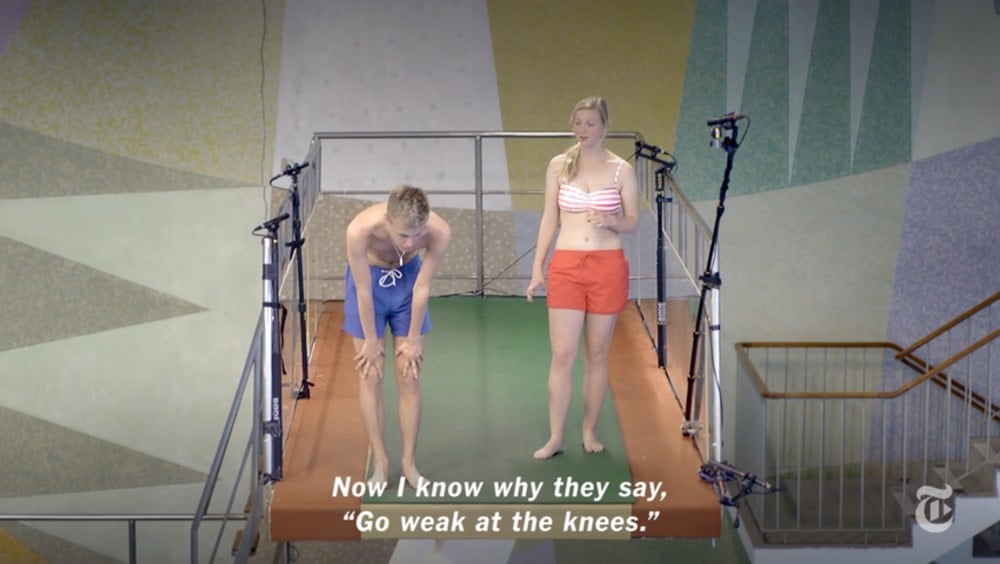
After the first 10 seconds, I was riveted to the screen for the remaining 16 minutes. It’s not at all obvious who will jump easily and who won’t.
My head says, “Go!” But my heart says, “No!”
People often worry about competition from others, but in the sporting world, the workplace, the home, and school, the struggle against the self — closing the gap between what you want your life to be like and reality, what your head wants and what your heart can provide — is always the most significant and difficult. (via @thisiseamonn)
A Day Without Immigrants strike
kottke.org will not be updated today in support of the Day Without Immigrants Strike. From the Washington Post:
Immigrants in D.C. and across the country plan to participate in the “Day Without Immigrants” boycott, a response to President Trump’s pledges to crack down on those in the country illegally, use “extreme vetting” and build a wall along the Mexican border. The social-media-organized protest aims to show the president the effect immigrants have in the country on a daily basis. The boycott calls for immigrants not to attend work, open their businesses, spend money or even send their children to school.
The regularly irregular publishing schedule will resume tomorrow.
Arrival: future communication, past perspective
In his newest video, Evan Puschak talks about Arrival, calling it “a response to bad movies”. Arrival was perhaps my favorite film of 2016, and I agree with him about how well-made this film is. There’s a top-to-bottom attention to craft on display, from how it looks to how it was cast (Amy Adams was the absolute perfect choice for the lead) to the integration of the theme with story to how expertly it was adapted from Ted Chiang’s Story of Your Life. The whole thing’s tight as a drum. If you happened to miss it, don’t watch this video (it gives the whole thing away) and go watch it instead…it’s available to rent/buy on Amazon.
Looking back through the archives, I’m realizing I never did a post about Arrival even though I collected some links about it. So, linkdump time!
Wired wrote about how the movie’s alien alphabet was developed.
Stephen Wolfram wrote about his involvement with the science of the film — his son Christopher wrote Mathematica code for some of the on-screen visuals. 1
Science vs Cinema explored how well the movie represented actual science:
Screenwriter Eric Heisserer wrote about how he adapted Chiang’s short story for the screen.
Jordan Brower wrote a perceptive review/analysis that includes links to several other resources about the film.
Update: The director of photography for Arrival was Bradford Young, who shot Selma and is currently working on the Han Solo movie for Disney. Young did an interview with No Film School just before Arrival came out.
I’m from the South, so quilts are a big part of telling our story. Quilting is ancient, but in the South it’s a very particular translation of idea, time, and space. In my own practice as an image maker, I slowly began to be less concerned with precision and more concerned with feeling.
Quiltmakers are rigorous, but they’re a mixed media format. I think filmmaking should be a mixed media format. I’m just really honoring what quiltmakers do, which is tell a story by using varying texture within a specific framework to communicate an idea. For me, with digital technology, lenses do that the best. The chips don’t do it now-digital film stock is basically all captured the same, but the lenses are how you give the image its textural quality.
(thx, raafi)
Update: James Gleick, author of Time Travel, wrote about Arrival and Story of Your Life for The New York Review of Books.
What if the future is as real as the past? Physicists have been suggesting as much since Einstein. It’s all just the space-time continuum. “So in the future, the sister of the past,” thinks young Stephen Dedalus in Ulysses, “I may see myself as I sit here now but by reflection from that which then I shall be.” Twisty! What if you received knowledge of your own tragic future-as a gift, or perhaps a curse? What if your all-too-vivid sensation of free will is merely an illusion? These are the roads down which Chiang’s story leads us. When I first read it, I meant to discuss it in the book I was writing about time travel, but I could never manage that. It’s not a time-travel story in any literal sense. It’s a remarkable work of imagination, original and cerebral, and, I would have thought, unfilmable. I was wrong.
(via @fquist)
Christopher was 15 or 16 when he worked on the film. His LinkedIn profile states that he’s been a programmer for Wolfram (the company) since he was 13 and that in addition to his work on Arrival, he “implemented the primary cryptography functions in Mathematica”.↩
WhaleSynth, a neat online toy for generating whale sounds

WhaleSynth is a cool little instrument for making whale sounds. There are three different species of whale to choose from, you can add clicks and sonar echoes, and you can also adjust the depth and number of whales in your chorus. Warning: this might occupy many many minutes of your time but could also soothe frayed political nerves.
Green Angels: the NYC drug ring run by former models
The Green Angels is a group of pot dealers that was started by a former fashion model named Honey (not her real name). Many of the dealers and dispatchers are also former models…or at least possess enough good looks and easy charm to talk their way out of trouble with NYPD officers.
Honey is clear-eyed about the nature of her operation: “I tell the girls, it’s not a club; it’s a drug ring.” The whole business is run via text messages between her, the dispatchers in her headquarters, the runners who do the deliveries, and the customers. “I have carpal tunnel in my thumb from all the texting,” Honey says. Dispatchers get 10 percent of each sale; the runners get 20 percent, which averages out to $300 or $400 a day. Several of them, according to Honey, “are paying off their NYU student loans.”
Just like any other business, there are tricks of the trade and protocols to follow:
One of the Angels suggests using a tote bag instead of a backpack to carry the box. She generally uses a WNYC tote bag, which is given out to donors to the public-radio station. The other day, an old lady gave her a high five after seeing her tote. “I thought, If you only knew what I have in this bag,” she says.
Honey tells the girls to get a work phone from MetroPCS, which costs $100. When buying it, they should pay in cash and have a name in mind to put down on the form, in case the police check. “I like to use the names of girls who were my enemies growing up,” Honey says.
The business is organized and disciplined, which I suspect it needs to be if you don’t want to get tossed in jail:
The Green Angels average around 150 orders a day, which is about a fourth of what the busiest services handle. When a customer texts, it goes to one of the cell phones on the table in the living room. There’s a hierarchy: The phones with the pink covers are the lowest; they contain the numbers of the flakes, cheapskates, or people who live in Bed-Stuy. The purple phones contain the good, solid customers. Blue is for the VIPs. There are over a thousand customers on Honey’s master list.
To place an order, a customer is supposed to text “Can we hang out?” and a runner is sent to his apartment. No calling, no other codes or requests. Delivery is guaranteed within an hour and a half. If the customer isn’t home, he gets a strike. Three strikes and he’s 86’d. If he yells at the runner, he’s 86’d immediately.
The Angels work only by referral. The customers should refer people they really know and trust, not strangers, and no one they’ve met in a bar. If you refer someone who becomes a problem, Charley says, you lose your membership.
Really interesting throughout.
In which backwards country do girls as young as 12 still get married? (Spoiler: it’s The United States.)
Winners of the 2017 Underwater Photographer of the Year awards


In Focus is featuring some of the winning shots from the 2017 Underwater Photographer of the Year awards. The top one is Dancing Octopus taken by Gabriel Barathieu and the bottom one is by Qing Lin, who took the photo near Lembeh, Indonesia, which is home to some of the strangest marine life in the world.
If you look at Lin’s photo of the clownfish for more than a second or two — pay attention…this is the nightmarish side to living on the reef that Pixar kept from you in Finding Nemo — you will notice not just three pairs of eyes but six pairs of eyes. In the mouth of each clownfish is a parasitic isopod looking right at the camera. The isopod enters the fish through the gills, attaches itself to the fish’s tongue, feeds on the blood in the tongue until it falls off, and then attaches itself to the tongue stump. And the fish uses the isopod as a replacement tongue! Cool! And gross!
Philip Pullman’s new trilogy, The Book of Dust
Philip Pullman has announced a follow-up to his acclaimed His Dark Materials trilogy called The Book of Dust. The first volume, still untitled, will be out in October and is available for pre-order on Amazon.
Philip Pullman offers these tantalizing details: “I’ve always wanted to tell the story of how Lyra came to be living at Jordan College, and in thinking about it, I discovered a long story that began when she was a baby and will end when she’s grown up. This volume and the next will cover two parts of Lyra’s life: starting at the beginning of her story and returning to her twenty years later. As for the third and final part, my lips are sealed.
“So, second: is it a prequel? Is it a sequel? It’s neither. In fact, The Book of Dust is… an equel. It doesn’t stand before or after His Dark Materials, but beside it. It’s a different story, but there are settings that readers of His Dark Materials will recognize, and characters they’ve met before. Also, of course, there are some characters who are new to us, including an ordinary boy (a boy we have glimpsed in an earlier part of Lyra’s story, if we were paying attention) who, with Lyra, is caught up in a terrifying adventure that takes him into a new world.
Valentine’s Day word problems
Writing for The New Yorker, Tom Batten has come up with some Valentine’s Day themed math word problems.
3. A local pizzeria is offering one large pizza for eleven dollars and seventy-five cents on Valentine’s Day. If you have forty-six dollars in your checking account, it takes you twenty-five minutes to eat a large pizza all by yourself, and your only plan for the evening is to spend ninety minutes scrolling through the Instagram account of a woman you had a crush on in high school for clues that her marriage might be faltering, how did it come to this?
See also how to decipher what’s inside each chocolate in a box of chocolates.
The Book of Circles
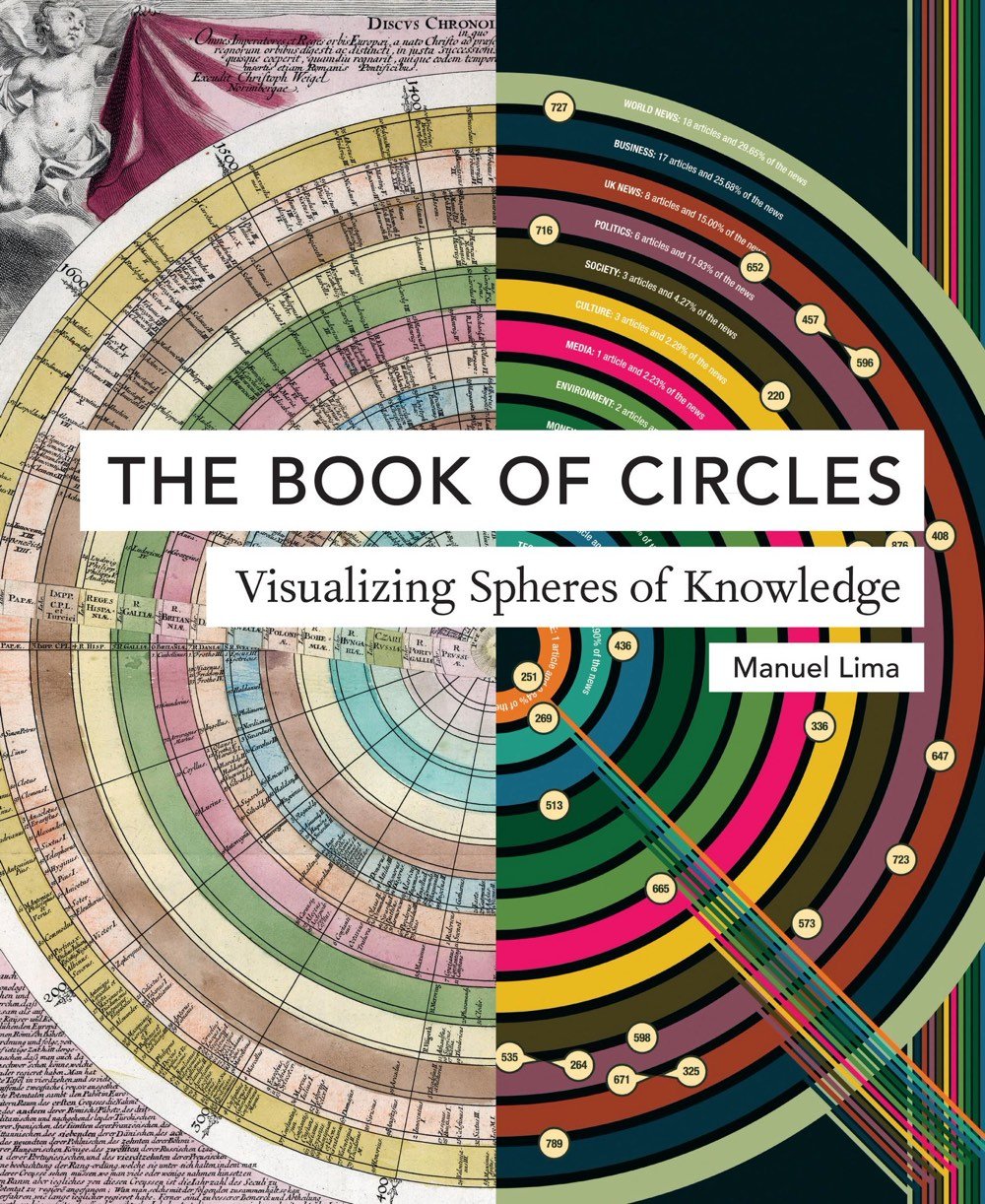
The Book of Circles is an upcoming book by Manuel Lima about the use of circles in information design.
In this follow-up to his hugely popular The Book of Trees and Visual Complexity, Manuel Lima takes us on a lively tour through millennia of circular information design. Three hundred detailed and colorful illustrations from around the world cover an encyclopedic array of subjects-architecture, urban planning, fine art, design, fashion, technology, religion, cartography, biology, astronomy, and physics, all based on the circle, the universal symbol of unity, wholeness, infinity, enlightenment, and perfection. Clay tokens used by ancient Sumerians as a system of recording trade are juxtaposed with logos of modern retailers like Target; Venn diagrams are discussed alongside the trefoil biohazard symbol, symbols of the Christian trinity, and the Olympic rings; and a diagram revealing the characteristics of ten thousand porn stars displays structural similarities to early celestial charts placing the earth at the center of the universe.
I have both of Lima’s previous books, The Book of Trees and Visual Complexity.
Hidden Figures
I finally got the chance to see Hidden Figures the other day. Recommended. It’s a science/space story in the vein of Apollo 13, but the twin engines of the film are the three excellent lead actresses — Taraji P. Henson, Octavia Spencer & Janelle Monáe — and the persistent portrayal of the systemic biases of segregation and sexism. You watch this movie and think, how much higher could the human race have flown if women and people of color had always had the same opportunities as white men?1 How many Katherine Johnsons never got the chance to develop and use their skills in math, science, or technology because of their skin color or gender? Our society wastes so much energy and human lives telling people what they can’t do rather than empowering them to show everyone what they can do.
Hidden Figures was adopted from Margot Lee Shetterly’s book of the same name. The film takes some dramatic license with the timing of certain events but overall is historically accurate.
The film primarily focuses on John Glenn’s 1962 trip around the globe and does add dramatic flourishes that are, well, Hollywood. However, most of the events in the movie are historically accurate. Johnson’s main job in the lead-up and during the mission was to double-check and reverse engineer the newly-installed IBM 7090s trajectory calculations. As it shows, there were very tense moments during the flight that forced the mission to end earlier than expected. And John Glenn did request that Johnson specifically check and confirm trajectories and entry points that the IBM spat out (albeit, perhaps, not at the exact moment that the movie depicts). As Shetterly wrote in her book and explained in a September NPR interview, Glenn did not completely trust the computer. So, he asked the head engineers to “get the girl to check the numbers… If she says the numbers are good… I’m ready to go.”
You can view Johnson’s published reports on NASA’s site, including her initial technical report from 1960 on the Determination of Azimuth Angle at Burnout for Placing a Satellite Over a Selected Earth Position.
I’m using the past tense here, but I am definitely not saying that women and people of color now possess those same opportunities. Take a quick look at the current racial and gender wage gaps in the US and you’ll see that they still do not.↩
What if the purpose of love is to get us out of relationships, not into them? (Happy Valentine’s Day!)
A list of things you can control right now
You can’t control what the stock market does, who the President is, or what your partner wants to do with their life. So why not focus your energy on stuff you can control? From Lori Deschene at Tiny Buddha, a list of 50 Things You Can Control Right Now. Here are some that jumped out at me:
Your level of honesty.
How often you say “thank you.”
Whether or not you give someone the benefit of the doubt.
Whether or not you compete with people around you.
Whether you think positive or negative thoughts.
How much time you spend worrying.
How much exercise you get.
How many risks you take.
The type of food you eat.
The list isn’t perfect — e.g. it’s more difficult for some people to control what they eat than others — but the point is that worrying about things outside of your control can burn a lot of energy that you can use in more productive ways to make your life better.
BTW, this is a reminder to myself more than anything. There are three things I’m super-anxious about right now that I have zero control over and I am desperately trying to convince myself that focusing on things I can do something about is the only way through.
The typography of Stanley Kubrick
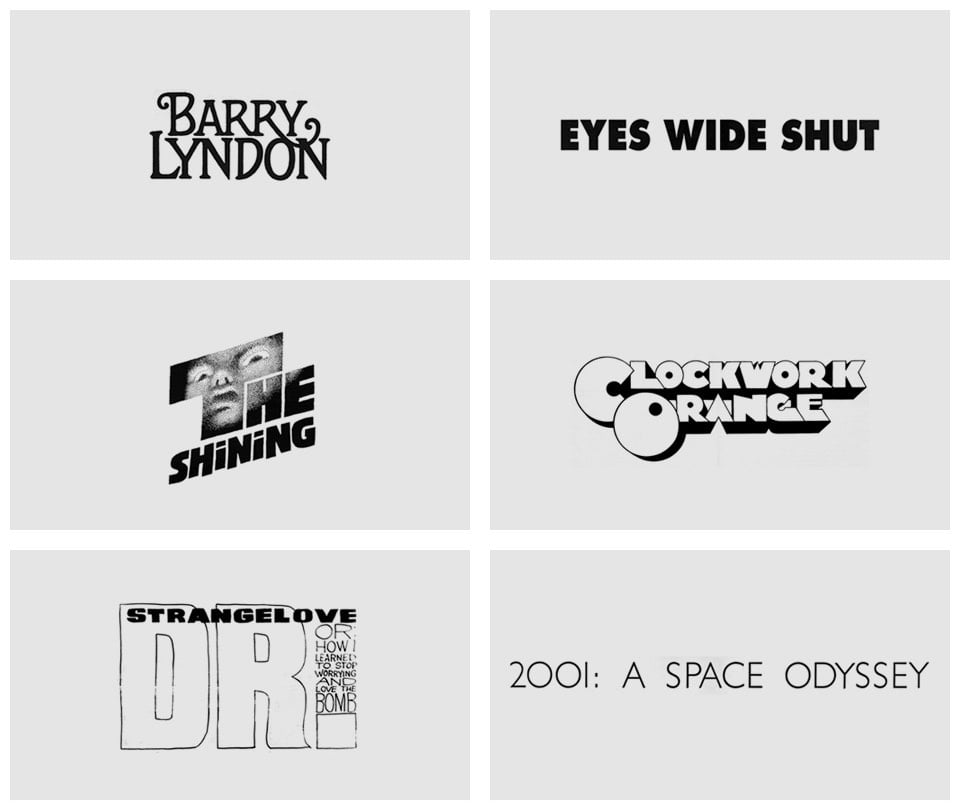
From designer Christian Annyas, an overview of the typography used in the titles and posters of Stanley Kubrick’s movies. Click on each graphic to see the poster or title sequence it was sourced from.
Shining – DJ Khaled feat. Beyonce & Jay Z
The Americans vs. The Beastie Boys
Some genius took footage from The Americans and cut it into an alternative music video for The Beastie Boys Sabotage. Compare with the real thing:
Pretty good! Plus it’s always great to hear that song. (thx, steve)
Kara Walker reimagines “Washington Crossing the Delaware”
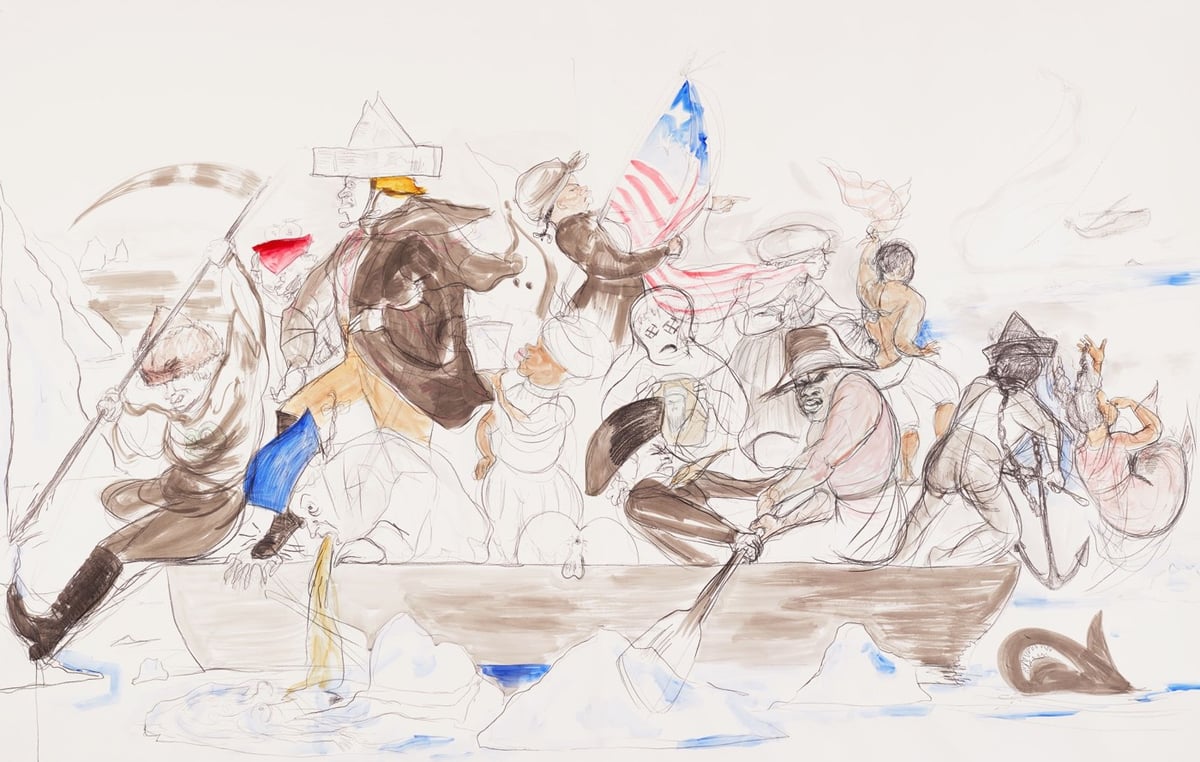
Not wanting to listen to the news on inauguration day, artist Kara Walker painted. The result is a Trumpian take on Emanuel Leutze’s famous work “Washington Crossing the Delaware”, a copy of which is on display at the Met Museum. I hope I get to see Walker’s version in a museum or gallery someday soon.
Advice on how to play a gig by Thelonious Monk
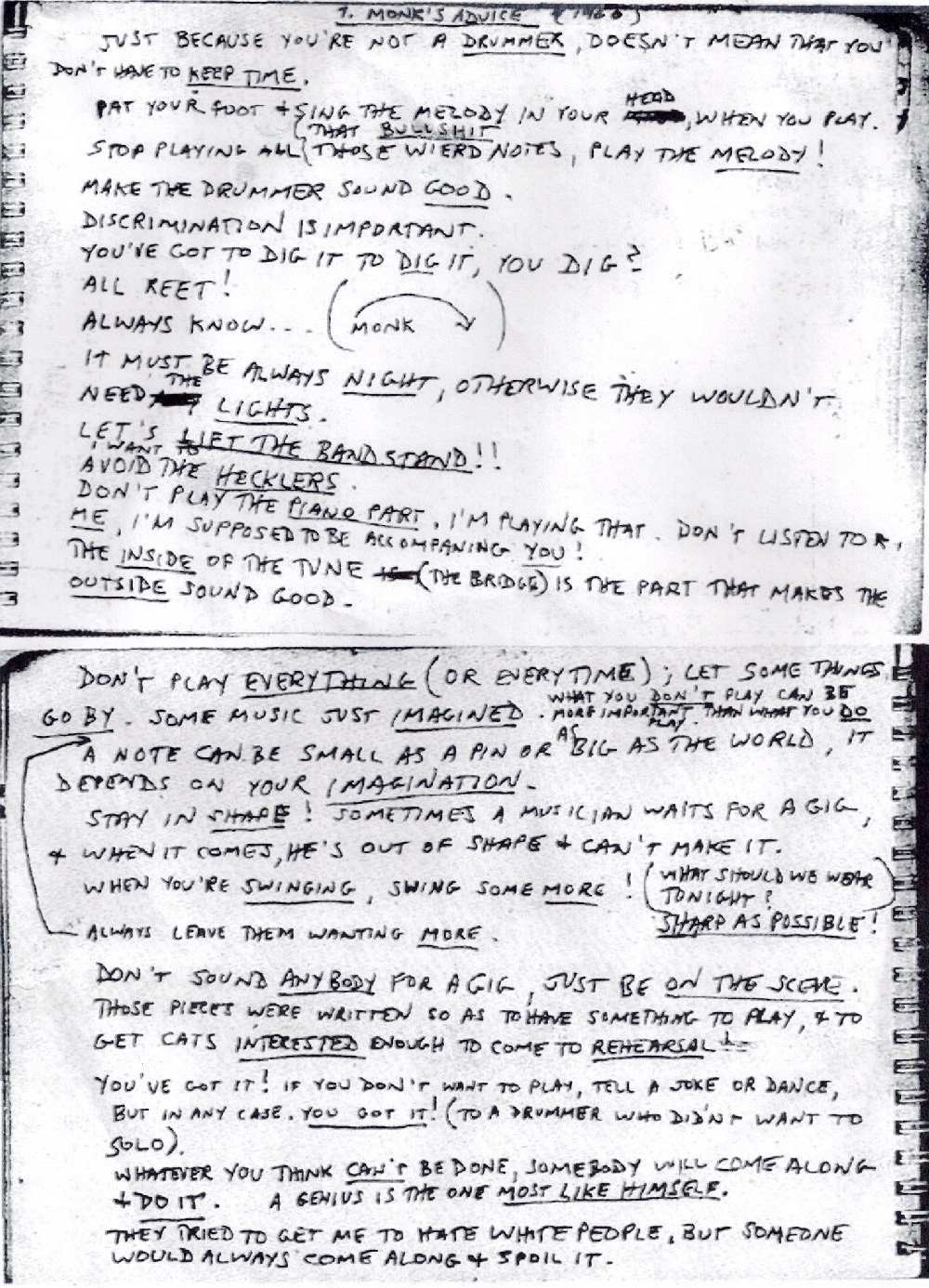
In 1960, saxophonist Steve Lacy wrote down a list of advice from jazz pianist Thelonious Monk on how to play music. Among the items on the list:
Just because you’re not a drummer, doesn’t mean you don’t have to keep time.
Don’t play the piano part, I’m playing that. Don’t listen to me. I’m supposed to be accompanying you!
Always leave them wanting more.
What should we wear tonight? Sharp as possible!
Whatever you think can’t be done, somebody will come along & do it. A genius is the one most like himself.
As is the case with most thoughtful advice, many of Monk’s points apply to things other than music. (via swiss miss)
The myth of Apple’s great design
In the Atlantic, Ian Bogost takes on the accepted view that Apple has great design, calling it “the biggest myth in technology today”.
At base, such a claim seems preposterous. In 1977, the Apple II made the microcomputer useful and affordable. In 1984, the Macintosh made the computer more usable by the everyperson thanks to the graphical user interface. In 2001, the iPod fit a music library in a pocket. In 2007, the iPhone made computing portable (and obsessive).
But if Apple designs at its best when attending closely to details like those revealed in the construction of its spaceship headquarters, then presumably the details of its products would stand out as worthy precedents. Yet, when this premise is tested, it comes up wanting. In truth, Apple’s products hide a shambles of bad design under the perfection of sleek exteriors.
While I find this piece to be hyperbolic, it hints at where Apple’s design is weakest. Apple is great at designing products but less good at designing the connections between these products and the rest of the world.1 iPhones, iPods, and iPads are great, but you have to go through iTunes to manage their contents. As Bogost notes, the power cords and chargers for their products are often bulky and awkward…you can’t even charge the newest iPhone using the newest Macbook Pro without a separate adapter. Who makes all the apps that people want to use on their iPhones to chat/connect/flirt/collaborate with their loved ones? Facebook, Snap, Google, Slack…not Apple, who initially wasn’t even going to provide a way for 3rd parties to build apps for the iPhone. Almost every attempt by Apple to build services to connect people — remember Ping?! — has failed. Even iCloud, which promised to unite all Apple devices into one fluid ecosystem, was plagued for years with reliability problems and still isn’t as good as Dropbox. How devices, apps, and people interconnect are far more important now than in 1977, 1984, and even 2007, when the iPhone was introduced, and Apple could stand to focus more of their design energy on that experience.
Another way of saying this is when it comes to design trade-offs, Apple prioritizes the integrity of the device over other considerations.↩
A reading list on fascism
Voracious reader Tyler Cowen has been reading about fascism recently and shares his thoughts on some specific books. It seems as though A History of Fascism, 1914-1945 and The Anatomy of Fascism are the two to start with.
Stanley G. Payne, A History of Fascism 1914-1945. One of the classics, readable and comprehensive and one of the best places to start. One thing I learned from this pile of books is how hard some of those leaders worked to have the mid-level bureaucracy on their side. The centralization often occurred at higher levels, for instance Mussolini had 72 cabinet meetings in 1933, but only 4 in 1936. The Italian Fascist party, by the way, was disproportionately Jewish, at least pre-1938.
Cowen’s conclusion after his reading? The US is not headed toward fascism:
Overall I did not conclude that we Americans are careening toward fascist outcomes. I do not think that notion is well-suited to the great complexity of contemporary bureaucracy, nor to our more feminized and also older societies. Furthermore, in America democracy has taken much deeper roots and the system of checks and balances, whatever its flaws, has stood for a few hundred years, contra either Italy or Germany in their fascist phases.
Looking over Umberto Eco’s 14 Features of Eternal Fascism, I might disagree with that. So far, the Trump administration has been working quickly to consolidate its power and the Republican-majority Congress has shown little interest in stopping them — e.g. the so-called confirmation hearings are little more than formalities when Republicans are voting as a bloc in most cases. The judicial branch has been more attentive thus far in making sure the Republicans are operating within the law (e.g. the rulings against Trump’s travel ban and the NC governor’s limitation of powers), providing the essential “checks and balances” Cowen speaks of. But the law…well, let’s just say that plenty of bad and immoral things are legal, particularly when powerful people and the governmental bodies responsible for making laws are concerned, and much depends on the intelligence and resourcefulness of the lawyers and political viewpoints of the judges involved. All it would take is a little more thoughtfulness1 on the part of Trump’s team in writing his executive orders and they can probably get much of what they want legally.
Anyway, on a broader authoritarian note, Brendan Nyham of Dartmouth College has compiled a reading list for understanding the authoritarian turn in US politics.
I know, I know. LOL. Trump has been guided by many abilities in his life, but thought and thoughtfulness have never been among them.↩
Black Parents Talk to Their Kids About the Police
Not going to say much about this one. Just watch it…especially if somehow, as a curious, thoughtful person who reads this site regularly, you are unaware of how many in the Black community feel about the police and that they have conversations like this with their children about those who are supposed to protect and serve people.
Map showing the homeland of every character in Homer’s Iliad
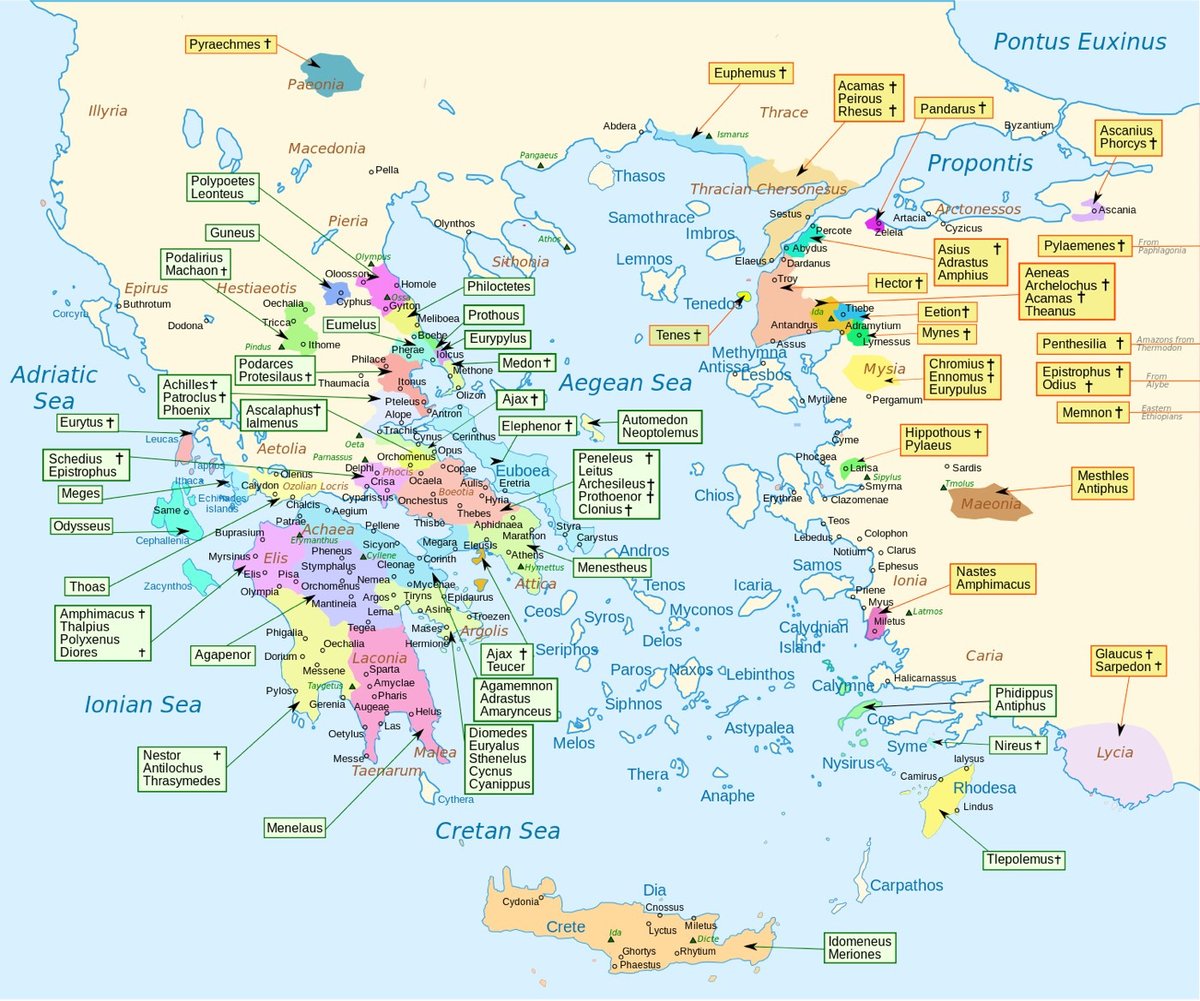
This is a map showing where all of the characters originated in Homer’s epic poem The Iliad. I know Greece is small by today’s standards, but it was surprising to me how geographically widespread the hometowns of the characters were. The Iliad is set sometime in the 11th or 12th century BC, about 400 years before Homer lived. I wonder if that level of mobility was accurate for the time or if Homer simply populated his poem with folks from all over Greece as a way of making listeners from many areas feel connected to the story — sort of the “hello, Cleveland!” of its time. (thx, adriana)

Update: I’ve gotten lots of feedback saying that not every character is represented in this map (particularly the women) and that some of the locations and hometowns are incorrect. Seems like Wikipedia might need to take a second look at it.
Update: The map was made using the Catalogue of Ships, a list of Achaean ships that sailed to Troy, and the Trojan Catalogue, a list of battle contingents that fought for Troy. That’s why it’s incomplete. An excerpt:
Now will I tell the captains of the ships and the ships in their order. Of the Boeotians Peneleos and Leïtus were captains, and Arcesilaus and Prothoënor and Clonius; these were they that dwelt in Hyria and rocky Aulis and Schoenus and Scolus and Eteonus with its many ridges, Thespeia, Graea, and spacious Mycalessus; and that dwelt about Harma and Eilesium and Erythrae; and that held Eleon and Hyle and Peteon, Ocalea and Medeon, the well-built citadel, Copae, Eutresis, and Thisbe, the haunt of doves; that dwelt in Coroneia and grassy Haliartus, and that held Plataea and dwelt in Glisas; that held lower Thebe, the well-built citadel, and holy Onchestus, the bright grove of Poseidon; and that held Arne, rich in vines, and Mideia and sacred Nisa and Anthedon on the seaboard.
(via @po8crg)
A visit to a French butter factory
In a bonus from the food series The Mind of a Chef, LA chef Ludo Lefebvre visits a butter factory where they make customized butter for restaurants.
So when we visited the Jean-Yves Bordier Butter factory in the Brittany region of France and had chef Ludo Lefebvre help in the process, it was nothing but pure amazement in his eyes. Le Beurre Bordier customizes it’s butter to the specifications of the chefs they send it to.
The video is subtitled and they go really quick, but I love the look on Lefebvre’s face after he runs his thumb through the finished butter: pure childlike wonder. The full episode featuring Lefebvre is available on PBS’s website (likely for US viewers only). This clip pairs well with this video on how to make croissants. (via the excellent the kid should see this)
This is weak sauce. Speech is protected from government censorship, it has nothing to do w/ hosting online stores.
The evolution of Keanu Reeves
I really like Keanu Reeves. He’s one of my favorite actors and seems like a genuinely nice person who has dealt well with his stardom. But after watching this collection of clips from every single movie he’s ever been in, I can’t tell if Reeves is actually a good actor or not. He definitely gets better as his career progresses, but many scenes where emotion or nuance are called for are just…oof. It’s like he’s reading the dictionary sometimes. But I still like him! Why is that?
See also: Danny Bowes believes Reeves belongs on the Mount Rushmore of Hollywood Action Stars along with John Wayne, Tom Cruise, and Harrison Ford.
Update: From Peter Suderman, Why Keanu Reeves is a perfect action star:
This may come off hyperbolic, or flat-out inaccurate, to those who don’t see Reeves as a great screen actor. And granted, his performance style doesn’t capture the tiny nuances of human reactions that are usually associated with great acting; he’s often characterized as a big-screen blank, and that’s not an entirely faulty statement.
But while it’s not wrong to label Reeves a blank, it’s also not enough. For nearly three decades, Reeves has proven himself one of Hollywood’s most durable and entertaining action stars, and the John Wick films show why: His total physical commitment to his action roles makes him a perfect avatar for the visions of ambitious action directors. At his very best, he becomes inseparable from the cinematic visions he embodies.
Socials & More