



A Crack in an Antarctic Ice Shelf Grew 17 Miles in the Last Two Months

Advertise here with Carbon Ads
This site is made possible by member support. 💞
Big thanks to Arcustech for hosting the site and offering amazing tech support.
When you buy through links on kottke.org, I may earn an affiliate commission. Thanks for supporting the site!
kottke.org. home of fine hypertext products since 1998.
Beloved by 86.47% of the web.
Entries for February 2017
W.E.B. Du Bois’ hand-drawn infographics from “The Exhibit of American Negroes”
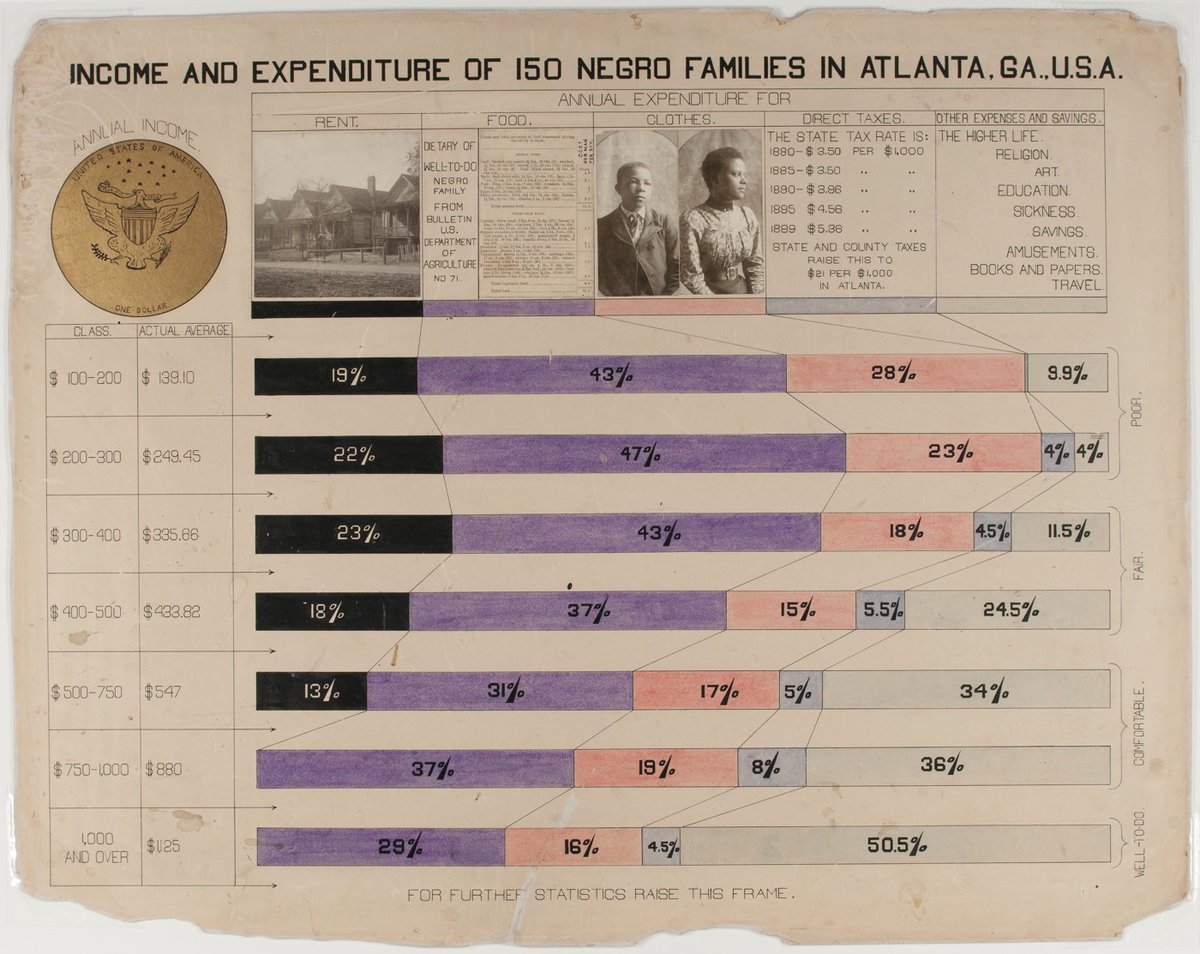
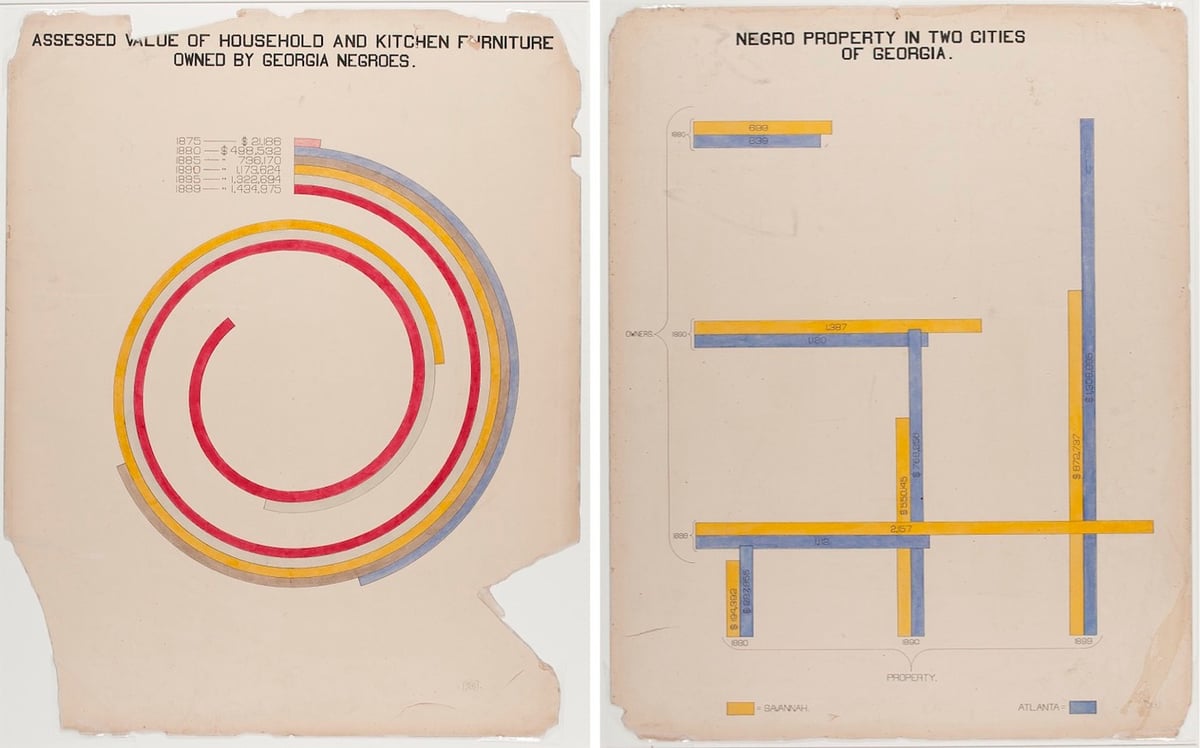
W.E.B. Du Bois was an American author, sociologist, historian, and activist. Apparently Du Bois was also a designer and design director of some talent as these hand-drawn infographics show.
In addition to an extensive collection of photographs, four volumes containing 400 official patents by African Americans, more than 200 books penned by African-American authors, various maps, and a statuette of Frederick Douglass, the exhibition featured a total of fifty-eight stunning hand-drawn charts (a selection of which we present below). Created by Du Bois and his students at Atlanta, the charts, many of which focus on economic life in Georgia, managed to condense an enormous amount of data into a set of aesthetically daring and easily digestible visualisations. As Alison Meier notes in Hyperallergic, “they’re strikingly vibrant and modern, almost anticipating the crossing lines of Piet Mondrian or the intersecting shapes of Wassily Kandinsky”.
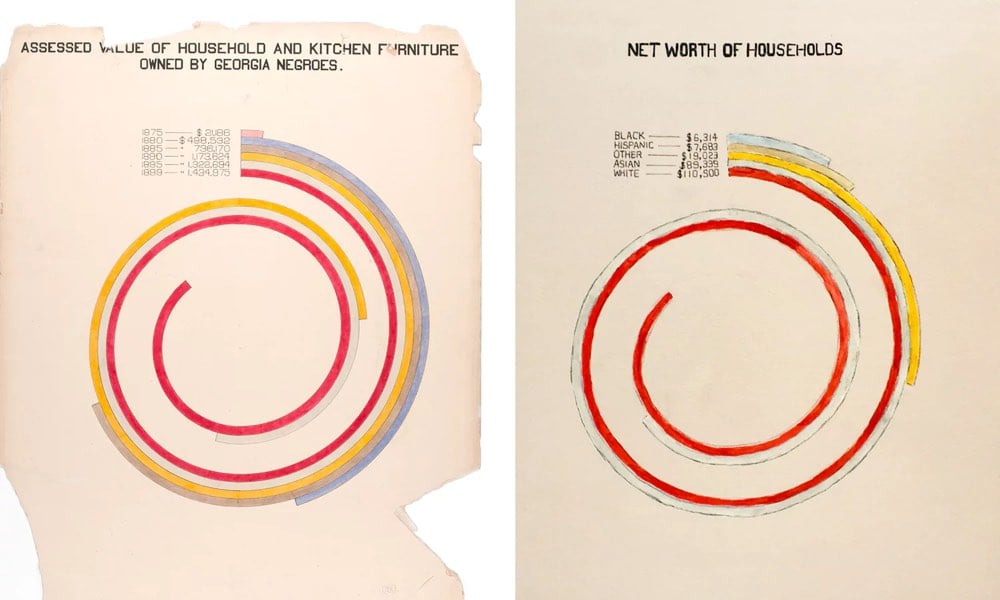
Update: Oh, this is great: Mona Chalabi has updated Du Bois’ charts with current data.
Wealth. If I had stayed close to the original chart, the updated version would have shown that in 2015, African American households in Georgia had a median income of about $36,655, which would fail to capture the story of inflation (net asset numbers aren’t published as cumulative for one race). Instead, I wanted to see how wealth varies by race in America today.
The story is bleak. I hesitated to use the word “worth”, but it’s the language used by the Census Bureau when they’re collecting this data and, since money determines so much of an individual’s life, the word seems relevant. For every dollar a black household in America has in net assets, a white household has 16.5 more.
The Devil Went Down To Georgia, washing machine edition
Aaron McAvoy’s washing machine makes a banging noise while washing clothes so he played The Devil Went Down to Georgia in time with the banging. This is the most perfect little internet entertainment…I actually started crying I was laughing so hard. A much needed respite from the world. See also the washing machine edition of Journey’s Don’t Stop Believin’ and a tribute to George Michael. (via @aaroncoleman0)
Update: McAvoy and his washing machine are back with this cover of AC/DC’s Thunderstruck.
As he says, don’t miss the “guest appearance by my white trash dryer”. See also Thunderstruck on the bagpipes (which is really one of my favorite online things of all time for some reason).
A VHS-ripped video shows how the internet/web looked in 1996
Someone located a VHS copy of an hour-long program from 1996 called Discovering the Internet and ripped it to YouTube. Total nostalgia bomb for me…even at 28.8K modem speeds, I probably spent 12 hours a day online back then, wrestling with HTML, Photoshop, frames, and JavaScript.
In this tutorial, we’ll take a look at the differences between The Internet and The World Wide Web, the differences between commercial OnLine Services such as the Microsoft Network, Prodigy, or America Online and the Internet, how to get connected to the Web, how to use something called a Web browser to navigate the Web, what a Web Page is, and how to search, locate, and download all types of files, from information files to video and audio files.
It’s worth skipping ahead to 17:30 to hear how the host pronounces “URL”.
See also a brief clip of Blogger/Twitter/Medium co-founder Evan Williams explaining the Internet in the mid-90s.
Look at that kid! He just knew the Internet was going to be a big deal, and boy was he right. (via laughing squid)
LVMH (Louis Vuitton’s parent company) may have just bought streetwear brand Supreme for $500 million
Meet America’s Oldest Living Veteran
Richard Overton fought in the South Pacific in World War II, is 109 years old, still drives, sometimes drinks whiskey with breakfast, smokes 12 cigars a day (but doesn’t inhale), and still lives in the house he built himself in 1945. In this video from National Geographic, Overton talks about his military service, his faith, his long life, and soup. Overton’s short summary of World War II:
It wasn’t good, but we had to go.
I don’t really care to live to 100, but if I had Overton’s spirit and attitude, perhaps I’d consider it.
Update: Ryan Holiday recently visited with Overton and learned a thing or two about life.
The most animated Richard ever got was when he told me a story about the enormous pecan tree in his front yard. It seemed like an ordinary tree to me, until he told me his dog planted it seventy years ago. They had a pecan tree in the back, and the dog would grab the nuts and bury them in the front yard. With glee, Richard told me how eventually the tree grew and now it’s so big it’s nearly pushing up the foundation of his house. He loved the absurdity of it — a dog planting a tree! He was laughing at it still, seven decades later.
And then there’s this, about another instance of The Great Span:
It’s fascinating to think that when Richard was born Theodore Roosevelt was president. Overton is the oldest living American veteran now, but when he was born, Henry L. Riggs was still alive. Riggs was a veteran of the Black Hawk War (1832) and he was born in 1812…and Conrad Heyer, the Revolutionary War veteran and the oldest and earliest person to be photographed (born in 1749) was still alive when Riggs was born. Three overlapping lives, that’s all it took to get back to before even the idea of founding the United States. Richard’s brother fought in the first World War. He told me he remembered seeing Civil War veterans around when he was a kid. Not many, but they were there. It was Texas — those men fought to keep his mother in slavery. How long ago all that horribleness seems. How recent it is at the same time.
Update: Overton died last week at the age of 112.
Maybe there’s more that brings us together than you think
This lovely video from a television station in Denmark highlights the similarities we all share across seemingly impassable social, economic, racial, and religious boundaries.
It’s easy to put people in boxes. There’s us and there’s them. The high-earners and those just getting by. Those we trust and those we try to avoid. There’s the new Danes and those who’ve always been here. The people from the countryside and those who’ve never seen a cow. The religious and the self-confident. There are those we share something with and those we don’t share anything with.
And then suddenly, there’s us. We who believe in life after death, we who’ve seen UFOs, and all of us who love to dance. We who’ve been bullied and we who’ve bullied others.
Last week I started reading The Undoing Project, Michael Lewis’s book about the friendship and collaboration of psychologists Daniel Kahneman and Amos Tversky. This passage on Tversky’s work seems relevant to this video.
From Amos’s theory about the way people made judgments of similarity spilled all sorts of interesting insights. If the mind, when it compares two things, essentially counts up the features it notices in each of them, it might also judge those things to be at once more similar and more dissimilar to each other than some other pair of things. They might have both a lot in common and a lot not in common. Love and hate, and funny and sad, and serious and silly: Suddenly they could be seen — as they feel — as having more fluid relationships to each other. They weren’t simply opposites on a fixed mental continuum; they could be thought of as similar in some of their features and different in others. Amos’s theory also offered a fresh view into what might be happening when people violated transitivity and thus made seemingly irrational choices.
When people picked coffee over tea, and tea over hot chocolate, and then turned around and picked hot chocolate over coffee — they weren’t comparing two drinks in some holistic manner. Hot drinks didn’t exist as points on some mental map at fixed distances from some ideal. They were collections of features. Those features might become more or less noticeable; their prominence in the mind depended on the context in which they were perceived. And the choice created its own context: Different features might assume greater prominence in the mind when the coffee was being compared to tea (caffeine) than when it was being compared to hot chocolate (sugar). And what was true of drinks might also be true of people, and ideas, and emotions.
The idea was interesting: When people make decisions, they are also making judgments about similarity, between some object in the real world and what they ideally want. They make these judgments by, in effect, counting up the features they notice. And as the noticeability of features can be manipulated by the way they are highlighted, the sense of how similar two things are might also be manipulated. For instance, if you wanted two people to think of themselves as more similar to each other than they otherwise might, you might put them in a context that stressed the features they shared. Two American college students in the United States might look at each other and see a total stranger; the same two college students on their junior year abroad in Togo might find that they are surprisingly similar: They’re both Americans!
By changing the context in which two things are compared, you submerge certain features and force others to the surface. “It is generally assumed that classifications are determined by similarities among the objects,” wrote Amos, before offering up an opposing view: that “the similarity of objects is modified by the manner in which they are classified. Thus, similarity has two faces: causal and derivative. It serves as a basis for the classification of objects, but is also influenced by the adopted classification.” A banana and an apple seem more similar than they otherwise would because we’ve agreed to call them both fruit. Things are grouped together for a reason, but, once they are grouped, their grouping causes them to seem more like each other than they otherwise would. That is, the mere act of classification reinforces stereotypes. If you want to weaken some stereotype, eliminate the classification.
That’s what this video did so effectively…it switched up the contexts. Rabid soccer fans became dancers, bullies became lonely people, people of different faiths were united by their believe in an afterlife. An exercise for investors and entrepreneurs building media companies and social networks (as well as people running small independent sites….I’m staring hard at myself in the mirror here): how can you build tools and platforms that give people more ways to connect to each other, to switch up the contexts in which people are able to group themselves?
Stagehand is a new iOS game; they call it a “reverse platformer”. I have played this, it is fun & clever (& hard).
Trailer for the The Americans season five
The official trailer for season five of The Americans is out and oooooooooh boy! I’m currently bingeing on The Night Manager and I love me some Halt and Catch Fire, but The Americans is my favorite pure-drama show1 right now. The actress who plays Paige is great and it looks like she’s going to be more involved in the plot than ever:
Look at her! Learning how to fight and reading Karl Marx! Oh, I can’t wait until March 7th! If you haven’t been following the show, all four of the previous seasons are available on Amazon Prime. I might have to rewatch!
Transparent is still my overall favorite show…but who knows how you’re supposed to classify it. Sitcom drama?↩
America is confused about healthcare coverage
According to a recent poll, over a third of those polled did not know that Obamacare and the Affordable Care Act were the same thing.
In the survey, 35 percent of respondents said either they thought Obamacare and the Affordable Care Act were different policies (17 percent) or didn’t know if they were the same or different (18 percent). This confusion was more pronounced among people 18 to 29 and those who earn less than $50,000 — two groups that could be significantly affected by repeal.
And that’s perhaps not even the worse part:
For instance, only 61 percent of adults knew that many people would lose coverage through Medicaid or subsidies for private health insurance if the A.C.A. were repealed and no replacement enacted. In contrast, approximately one in six Americans, or 16 percent, said that “coverage through Medicaid and subsidies that help people buy private health insurance would not be affected” by repeal, and 23 percent did not know.
I’ve never liked the Obamacare moniker, but clearly that’s only part of the problem.
These teens snuck into Super Bowl LI using a ladder. Nice “security” you’ve got there.
The Senate stops Elizabeth Warren from reading a letter from Coretta Scott King
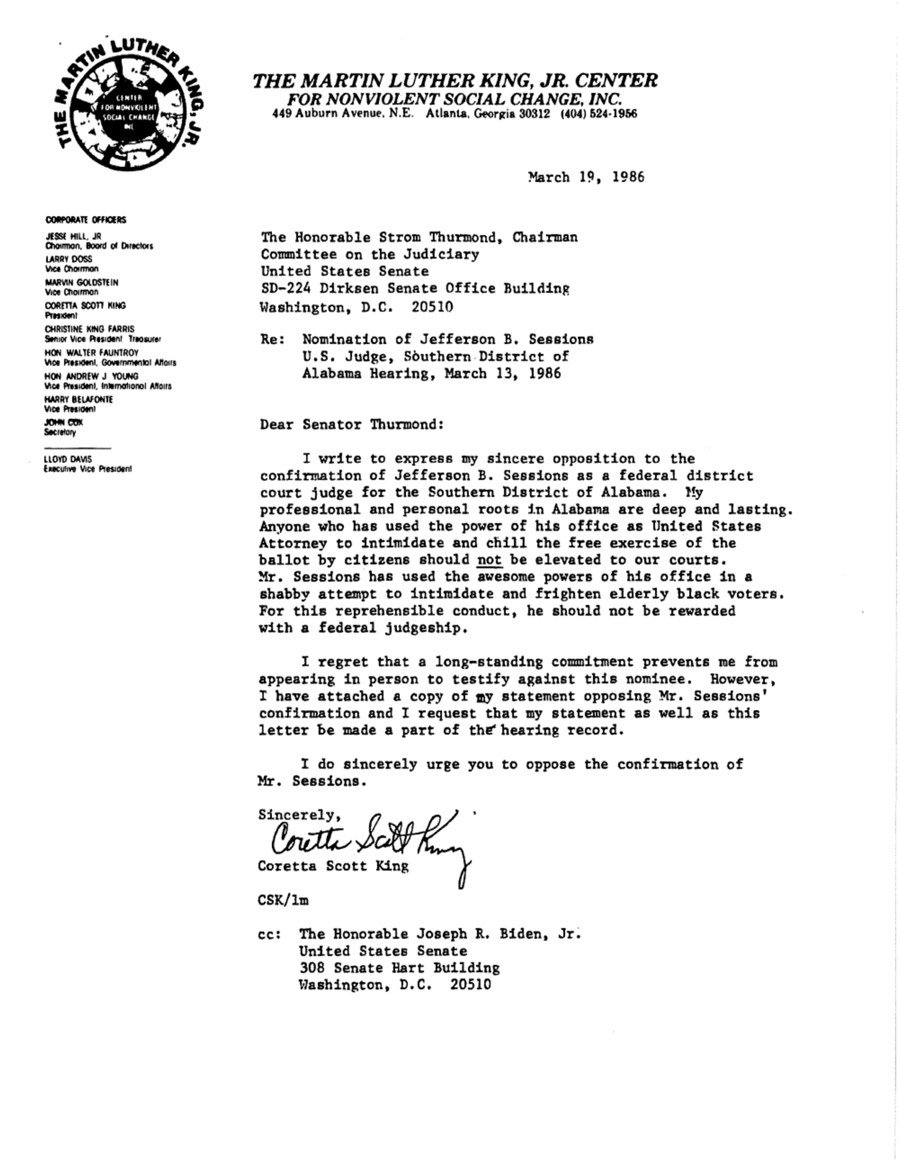
Last night, during the Senate confirmation hearing of Senator Jefferson Beauregard “Jeff” Sessions III1 for Attorney General, Senator Elizabeth Warren attempted to read a letter that Coretta Scott King had written to the Senate Judiciary Committee in 1986 opposing Sessions’ nomination for a federal judgeship (which he did not get).
The first page of the letter appears above and the entire contents may be read here. King pretty plainly states that Sessions abused his position in an attempt to disenfranchise black voters:
Mr. Sessions has used the awesome power of his office to chill the free exercise of the vote by black citizens in the district he now seeks to serve as a federal judge.
Under Senate Rule XIX and after two votes by the full Senate, Warren was barred from speaking and finishing the letter.
When Warren first spoke against Sessions Tuesday night, Sen. Steve Daines, a Republican from Montana, warned her that she was breaking the rules. When she continued anyway, Majority Leader Mitch McConnell retaliated by finding her in violation of Senate Rule XIX — which prevents any senator from using “any form of words [to] impute to another Senator… any conduct or motive unworthy or unbecoming a Senator.”
Warren later read the letter outside of the Senate chambers. How the Senate is supposed to debate the appointment of a Cabinet member without being able to criticize the actions, words, and beliefs of that candidate is left as an exercise to the reader. (Ok, I’ll answer anyway: it’s not supposed to debate. That’s the entire point of the Republicans’ actions w/r/t Trump’s political nominees thus far.)
King’s letter, which Buzzfeed called “a key part of the case against Sessions [in 1986]” was only published earlier this week in part because Judiciary Committee Chairman Strom Thurmond never officially entered it into the congressional record. Thurmond, you may remember, vehemently opposed the civil rights reforms of the 50s and 60s, even going so far as filibustering the Civil Rights Act of 1957 for more than 24 hours and switching political parties because of the Democrats’ support of the 1964 Civil Rights Act.
And Senate Rule XIX? Cornell Law School professor James Grimmelmann notes the precedent:
Let’s be clear on the precedent here: it’s the 1836-44 gag rule that forbade any consideration of abolition in the House.
Racist southern representatives were so frustrated by abolitionist petitions to Congress, that they adopted a series of rules.
All abolitionist petitions would immediately be tabled, and any attempt to introduce them would be prohibited.
From pro-slavery members of the House to Davis to Beauregard to Thurmond to Trump (and Bannon) to Sessions to McConnell (and the nearly all-white Republican majority). Paraphrasing Stephen Hawking, it’s white supremacy all the way down. Gosh, if you’re a black person in America, you might even think the system is tilted against you!
P.S. I like this part of Senate Rule XIX, right at the bottom:
8. Former Presidents of the United States shall be entitled to address the Senate upon appropriate notice to the Presiding Officer who shall thereupon make the necessary arrangements.
I’m not sure what it would accomplish, but seeing a former President address this Senate, after an appropriate period spent kiteboarding, would be pretty fun to watch.
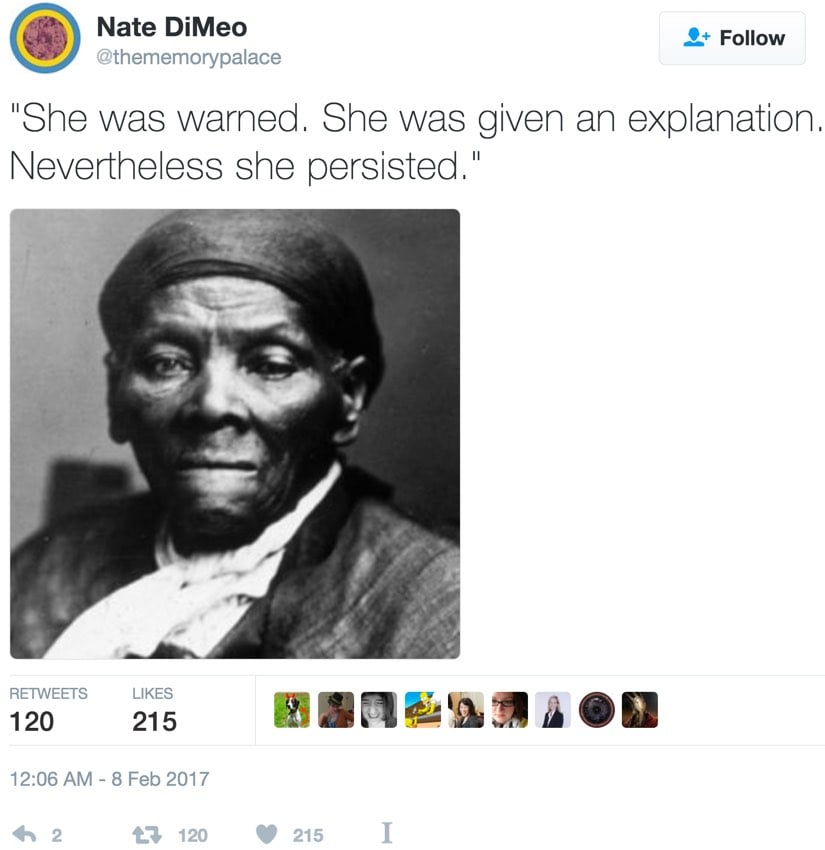
P.P.S. In silencing Warren, McConnell said, “She was warned. She was given an explanation. Nevertheless, she persisted.” Not a bad explanation of the feminist movement in America there, Mitch. Folks on Twitter are having fun with the #shepersisted hashtag.
Update: While the precedent for Senate Rule XIX dates back to the abolition debates in the 1830s and 1840s, the actual rule was made after a fight broke out in the Senate in 1902. From a book called The American Senate: An Insider’s Story:
South Carolina’s “Pitchfork Ben” Tillman accused his South Carolina colleague, John McLaurin, of selling his vote for federal patronage. McLaurin called Tillman a malicious liar. Tillman lunged at him, striking him above the left eye. McLaurin hit Tillman back with an upper-cut to the nose.
Given the history of this rule and how it was recently applied, you will perhaps not be surprised to learn that Tillman was an outspoken advocate of lynching, once remarking in a speech:
“[We] agreed on on the policy of terrorizing the Negroes at the first opportunity by letting them provoke trouble and then having the whites demonstrate their superiority by killing as many of them as was justifiable.” (Tillman boasted during the same speech that his pistol had been used to execute seven black men in 1876.)
So we can squeeze Tillman in-between Beauregard and Thurmond in the abbreviated narrative of how it came to be that a white majority Senate silenced a white woman for reading a letter written by a black woman.
Let’s look at his name for a second. Jeff Sessions was named after his father and grandfather, the latter of whom was born in Alabama in mid-April 1861, just a month after P.G.T. Beauregard became the first general of the Confederacy and two months after Jefferson Davis was inaugurated as president of the Confederacy. The name that Jeff Sessions’ great-grandparents gave their son could hardly have been an accident and indeed the family was so proud of this Confederate name that they used it twice more — in 1913, when Jeff’s father was born, and in 1946, when Jeff was born.↩
On Thursday, areas near the North Pole are predicted to be ***50 to 60 degrees warmer than normal***
The Relaxing Sounds of an Arctic Icebreaker
Need to sleep, focus on work, get away from the news, meditate, or just tickle your ASMR receptors? Try 10 hours of ambient noise from a Norwegian icebreaker idling in the frozen Arctic.
10 hours video of Arctic ambience with frozen ocean, ice cracking, snow falling, icebreaker idling and distant howling wind sound. Natural white noise sounds generated by the wind and snow falling, combined with deep low frequencies with delta waves from the powerful icebreaker idling engines, recorded at 96 kHz — 24 bit and designed for relaxation, meditation, study and sleep.
That is some “Calgon take me away”-level shit. See also the most relaxing song in the world. (via bb)
The five simple things to remember when considering Trump’s motivations
Josh Marshall from Talking Points Memo urges us that when it comes to figuring out what Donald Trump’s up to, we should keep it simple. The media has covered Trump for more than 30 years, he appeared weekly on television for several years, and the coverage of his campaign over the past two years was unprecedented. That, says Marshall, means that we know Trump and his motivations quite well at this point and offers a list of five things we should keep in mind:
1. Trump is a Damaged Personality
2. Trump is a Great Communicator
3. Trump’s Hold on His Base Is Grievance
4. Trump is Possible Because of Partisan Polarization
5. Trump is Surrounded By Extremists and Desperados
Trump is an impulsive narcissist who is easily bored and driven mainly by the desire to chalk up ‘wins’ which drive the affirmation and praise which are his chief need and drive. He needs to dominate everyone around him and is profoundly susceptible to ego injuries tied to not ‘winning’, not being the best, not being sufficiently praised and acclaimed, etc. All of this drives a confrontational style and high levels of organizational chaos and drama. This need for praise and affirmation and a lack of patience for understanding the basic details of governing are a volatile and dangerous mix. They catalyze and intensify each other. Perhaps most importantly, the drive to be the best and right drives promises, claims and policy pronouncements which may contradict his already existing positions or be impossible to fulfill.
Marshall also calls out something I’ve been thinking about recently, the Make America Great Again branding:
‘Make America Great Again’ may be awful and retrograde in all its various meanings. But it captured in myriad ways almost every demand, fear and grievance that motivated the Americans who eventually became the Trump base. It is almost certainly the case that MAGA is entirely Trump’s invention, not the work of any consultant or media specialist but from Trump himself. The Trump Trucker baseball cap, a physical manifestation of Trumpite branding, is similarly ingenious.
As much as I came to admire Pentagram’s work on Hillary Clinton’s campaign branding and loved the Obama campaign’s branding (complete with beautiful typefaces from Hoefler and Frere-Jones), I think the MAGA design easily beats them both. Marshall nailed it…it was exactly right for who it was designed to appeal to. It’s perhaps unlikely to happen, but the Make America Great Again hat should be added to the permanent collections of design museums as an exemplary example of branding, right alongside Got Milk?, Think Different, and Just Do It. (Also, you know who else came up with an extraordinarily effective design for his fascist authoritarian movement?)
The art (and commerce) of Minecraft
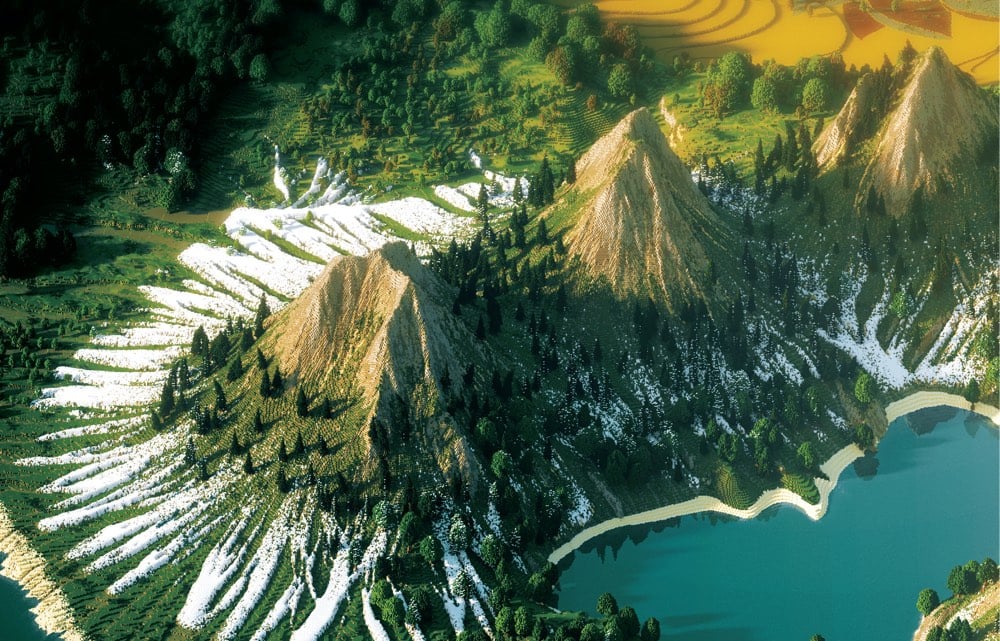
Since its initial release in 2009, Minecraft has matured to the point of being a platform for people who want to make art and also for people who want to make money. Phil Edwards of Vox highlights some of the beautiful structures being created by Minecraft players (some of which are collected in this coffee table book called Beautiful Minecraft) and the challenges faced by creators trying to make money within a game owned by a large company.
The creativity “Creative Mode” enables is obvious in the work that talented designers produce. Sometimes Minecraft artists will create interactive worlds that replicate historic events; other times, Minecraft’s many cubes coalesce into a sculptural image, the same way pointillism’s dots disappear to form a picture. These images and worlds can be eerie, magical, and surprisingly beautiful.
But perhaps most surprising of all, Minecraft worlds can also be a business. Companies like Blockworks make maps for private Minecraft servers (computer networks that host Minecraft games), and they also occasionally design maps in collaboration with institutions and companies like Minecraft owner Microsoft.
BlockWorks — company tagline: “creative Minecraft solutions” — has done some really fantastic designs for themselves and their clients.

The time crystals concept is now reality

In 2012, physicist Frank Wilczek speculated that it would be possible to make a crystal whose lattice repeats in four dimensions, not just three.
Wilczek thought it might be possible to create a similar crystal-like structure in time, which is treated as a fourth dimension under relativity. Instead of regularly repeating rows of atoms, a time crystal would exhibit regularly repeating motion.
Many physicists were sceptical, arguing that a time crystal whose atoms could loop forever, with no need for extra energy, would be tantamount to a perpetual motion machine — forbidden by the laws of physics.
Now, a team at Berkeley have succeeded in making time crystals, publishing a method that two other teams have already successfully followed.
For Yao’s time crystal, an external force — like the pulse of a laser — flips the magnetic spin of one ion in a crystal, which then flips the spin of the next, and so forth, setting the system into a repeating pattern of periodic motion.
There are two critical factors. First, after the initial driver, it must be a closed system, unable to interact with and lose energy to the environment. Second, interactions between quantum particles are the driving force behind the time crystal’s stability. “It’s an emergent phenomenon,” says Yao. “It requires many particles and many spins to talk to each other and collectively synchronise.”
How Scientology works
Using PT Anderson’s 2012 film The Master as a jumping off point, Evan Puschak discusses how Scientology’s audit process works. You can take the Oxford Capacity Analysis test he mentions right here.
Brahms vs. Radiohead
Steve Hackman, aka Stereo Hideout, composes, arranges, and conducts mashups of orchestral music and pop music. Not just mixes on Soundcloud, mind you, but entirely new compositions that are played by actual orchestras. The video embedded above is Brahms Symphony No. 1 mixed with Radiohead’s OK Computer but he’s also done a few others that are available on YouTube: Copland vs Bon Iver, Beethoven vs Coldplay, and Bartok vs Bjork. Hackman’s next project in this vein? Tchaikovsky vs Drake, which he’s premiering with the Pittsburgh Symphony in March. (thx, spencer)
Update: Here’s the Tchaikovsky vs Drake performance:
An amazing indoor skydiving freestyle routine
The 2017 Wind Games were recently held in Spain and featured skydivers from all over the world competing in a number of indoor skydiving1 events. Maja Kuczynska competed in the freestyle category and her routine/dance/performance was arresting.
My mind broke a little watching this. People are not supposed to move like this, like superheroes…it looks like not particularly well done special effects. At several points, the way she moves reminded me of Saruman toying with Gandalf before flinging him to the top of Orthanc in the Fellowship of the Ring.
Here’s her performance from another angle. Wow. Just wow. Kuczynska finished third in the event while Kyra Poh took first…here’s Poh’s winning routine.
Indoor skydiving is accomplished through the use of a vertical wind tunnel which simulates an endless freefall.↩
MoMA quickly hangs art from Trump travel ban countries
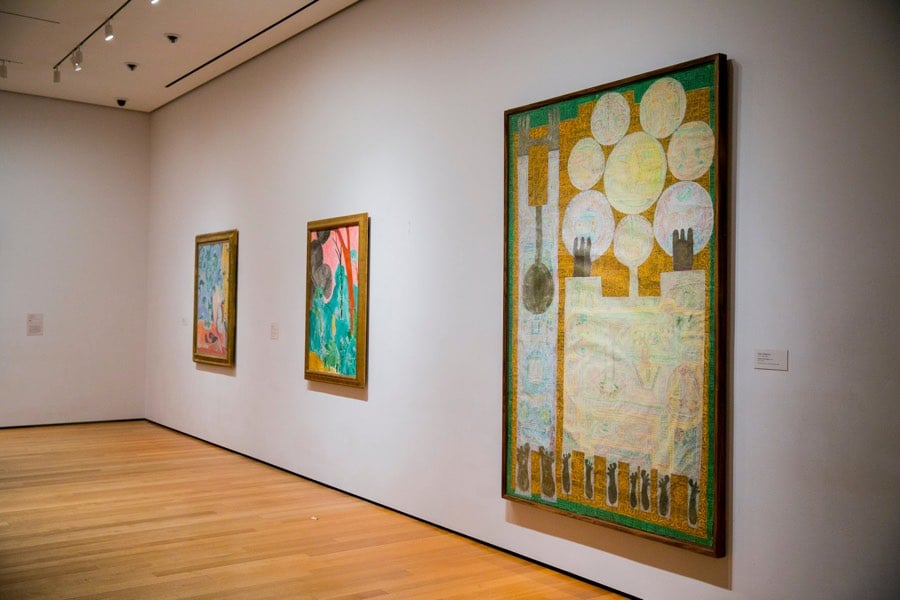
In response to the Trump administration’s monumentally cruel immigrant travel ban, the Museum of Modern Art in NYC has retooled its galleries to hang art by artists from countries affected by the ban, noting that if those artists are currently out of the country, they wouldn’t even be able to come to see their works in one of the world’s best art museums.
In one of the strongest protests yet by a major cultural institution, the museum has reconfigured its fifth-floor permanent-collection galleries — interrupting its narrative of Western Modernism, from Cezanne through World War II — to showcase contemporary art from Iran, Iraq and Sudan, whose citizens are subject to the ban. A Picasso came down. Matisse, down. Ensor, Boccioni, Picabia, Burri: They made way for artists who, if they are alive and abroad, cannot see their work in the museum’s most august galleries. (A work from a Syrian artist has been added to the film program. The other affected countries are Somalia, Yemen and Libya.)
The works will be up for several months, and alongside each painting, sculpture, or photograph is a text that makes no bones about why it has suddenly surfaced: “This work is by an artist from a nation whose citizens are being denied entry into the United States, according to a presidential executive order issued on January 27, 2017. This is one of several such artworks from the Museum’s collection installed throughout the fifth-floor galleries to affirm the ideals of welcome and freedom as vital to this Museum, as they are to the United States.”
The travel ban is currently not being enforced due to a temporary restraining order…hopefully that will hold up indefinitely.
Pretty good take on the Super Bowl. While the Falcons sprinted to an early lead, the Pats won the marathon.
Thank you, Kottke members and readers
That wraps up my week and a day on Kottke.org. I want to thank Jason for letting me sit in his imaginary chair, and I especially want to thank Kottke readers and site members for letting me think my way through a weird-ass, anxiety-inducing time in all of our lives.
If you’re not a member of kottke.org, please consider it: Jason’s work on this site is extraordinary, and still too unsung. Among other things, your support helps him give work to folks like me to keep this place running when he’s not around.
Jason should be back on Monday. Before I check out, I want to tease you with a short list of stories drafted but not published this week. Just imagine what could have been.
- Companies and their avatars (why we give Tesla’s Elon Musk crap, but not Marvel’s Ike Perlmutter)
- The experience of time in Hell (and why does it feel like we’re all there already)
- Eli Whitney was not black, but lots of people think so (lots of other people got here first, look it up)
- “I Am Not Your Negro”: A Review (I had to cancel plans to see it this afternoon)
- The Seven NBA All-Stars I Would Not Be Willing To Street Fight, and Why (sometimes fanfic just gets out of hand)
Always a pleasure to write for the best blog in the world.
Authoritarian structures and the open web
Jesse Kriss wonders whether we’ve been acclimating ourselves to a more authoritarian system for some time, not just through politics, but in our technical and commercial choices. Like, say, whichever social network you might have used to route to this story right now.
We live with our technological and political systems. They are part of the fabric and substance of our everyday existence. That is significant, but it also goes deeper: their embedded values and philosophies are inescapable.
The systems we use everyday can have insidious effects: we internalize them, and they constrain our imaginations. When everything around us mirrors the same structural properties, those positions and impositions become invisible to us-we don’t even realize that they’re there, or that it could be any other way.
This isn’t to say that big systems have to be evil-far from it-but when everything is this way, our democracy, our agency, our freedom, and our imagination are all at risk.
This is by way of introducing a now two-weeks-old open-source project called Altcloud, described as “a web server with some niceties build in so that you can create real applications without any backend code or external services.” It’s probably beyond my talents, but I imagine more than a few Kottke readers could build some cool things with something like that.
Yesterday, I was talking with my friend Audrey Watters, a technology journalist, historian, and education activist. For years, Audrey’s been critical of education technology companies — their data and privacy practices, their close ties to the military and prison-industrial complexes, their historical myopia, and their ideologies about what learning is and what (and who) it is for. And basically, what she’s always done is to try to articulate an antifascist alternative to education technology, knowing that the roots of what we do now lies in the command-and-control models we borrowed from Nazi Germany, American slavery (and the systems that succeeded it), and the most exploitative and totalitarian sides of good old-fashioned liberal capitalism.
In a talk titled “Ed-Tech in a Time of Trump,” she writes:
I’m concerned, in no small part, because students are often unaware of the amount of data that schools and the software companies they contract with know about them. I’m concerned because students are compelled to use software in educational settings. You can’t opt out of the learning management system. You can’t opt out of the student information system. You can’t opt out of required digital textbooks or digital assignments or digital assessments. You can’t opt out of the billing system or the financial aid system. You can’t opt of having your cafeteria purchases, Internet usage, dorm room access, fitness center habits tracked. Your data as a student is scattered across multiple applications and multiple databases, most of which I’d wager are not owned or managed by the school itself but rather outsourced to a third-party provider.
School software (and I’m including K-12 software here alongside higher ed) knows your name, your birth date, your mailing address, your home address, your race or ethnicity, your gender (I should note here that many education technologies still require “male” or “female” and do not allow for alternate gender expressions). It knows your marital status. It knows your student identification number (it might know your Social Security Number). It has a photo of you, so it knows your face. It knows the town and state in which you were born. Your immigration status. Your first language and whether or not that first language is English. It knows your parents’ language at home. It knows your income status - that is, at the K-12 level, if you quality for a free or reduced lunch and at the higher ed level, if you qualify for a Pell Grant. It knows if you are the member of a military family. It knows if you have any special education needs. It knows if you were identified as “gifted and talented.” It knows if you graduated high school or passed a high school equivalency exam. It knows your attendance history - how often you miss class as well as which schools you’ve previously attended. It knows your behavioral history. It knows your criminal history. It knows your participation in sports or other extracurricular activities. It knows your grade level. It knows your major. It knows the courses you’ve taken and the grades you’ve earned. It knows your standardized test scores.
This has always been a problem, but now it’s a problem with a different kind of relevance and a different range of endgames. Data can be destroyed, which hurts us one way, or it can be operationalized and abused, which hurts us in another. Data can also make us complicit, by limiting our range of expectations, encouraging us to accept compromised outcomes and successes and not question too closely what forces are moving behind the scenes. Trust given is not easily revoked; and trust abused is not easily regained.
“I Work From Home” by @cnissan for @NewYorker — your mileage may very, but I badly needed this today
Stevie Wonder and the radical politics of love
You never really need a good reason to listen to Stevie Wonder. But his peak run of albums in the 1970s are particularly welcome today. The songs are beautiful, they’re familiar, and they’re varied. They engage melancholy without being defeated by sadness; they engage anger without being defeated by despair. Stevie Wonder is invincible.
He’s also probably underrecognized as a political songwriter. Marvin Gaye, Curtis Mayfield, James Brown, Sly Stone, or even George Clinton are probably much better known for their politics and political anthems. Stevie, the balladeer, is just as fierce, but sly, emotional, and psychologically devastating.
Here are three songs, from three albums recorded in three consecutive years, all from the Nixon era. Each year, the lyrics get more pointed, more obvious in their contempt. But it’s a contempt mingled with understanding, and grounded in a deep, deep love for the people most affected by political failure.
On August 7, 1974, Stevie released “You Haven’t Done Nothin’” as a single, with the two-year-old “Big Brother” as a B-side. (MESSAGE!) Two days later, Nixon resigned.1 By November, the song was a Billboard number one.
And that’s why you don’t mess with Stevie Wonder.
(There was even a Trump-themed remix of “You Haven’t Done Nothin’” that came out last year, but I’m not really a fan. I’d rather listen to Stevie sing with the Jackson 5 than hear his music all mixed up with Trump quotes.)
The next album that would come in the sequence is Songs In the Key of Life. Out of all of Stevie’s albums, this is the hardest for me to listen to right now. It touches too many personal memories, hopes and fears and dreams.
Songs in the Key of Life tries to reconcile the reality of the post-Nixon era — the pain that even though the enemy is gone, the work is not done and the world has not been transformed — with an inclusive hope that it one day will be, and that faith, hope, and love are still possible.
It’s what makes the album such a magnificent achievement. But I’m not there. I don’t know when I will be. So for now I’m keeping Songs In the Key of Life on the shelf. An unopened bottle of champagne for a day I may never see. But I’d like to.
Nixon had more material problems right then than Stevie, but still, that’s good timing.↩
Fear, American Style
Corey Robin is a political scientist whose expertise is the history of conservative movements and the politics of fear. Sounds like the perfect person to predict whether reactionary strongmen are about to swoop in and destroy the democratic institutions we’ve all enjoyed, right?
It’s a little more complicated. We are more complicated.
The worst, most terrible things that the United States has done have almost never happened through an assault on American institutions; they’ve always happened through American institutions and practices. These are the elements of the American polity that have offered especially potent tools and instruments of intimidation and coercion: federalism, the separation of powers, social pluralism, and the rule of law. All the elements of the American experience that liberals and conservatives have so cherished as bulwarks of American freedom have also been sources and instruments of political fear. In all the cases I looked at, coercion, intimidation, repression, and violence were leveraged through these mechanisms, not in spite of them.
Genocide, slavery, Jim Crow, imperialism, internment camps, crushing unions, mass surveillance, torture, lynching, indefinite detention, extrajudicial murder, and on, and on — Americans have inflicted all of this on other Americans and on the rest of the world, not in the distant past, not as an original sin, but right up to the present day.
Which is not so unusual, for great powers of the world, or even most of the smaller ones. What is exceptional about America, if anything, is we have done all of this without once needing a strongman to do it. As Robin says, it’s been done “through lawyers, genteel men of the Senate with their august traditions and practices, and the Supreme Court.”
This is why people like SCOTUS nominee Neil Gorsuch seem almost comforting next to Trump and his inner circle. They seem so familiar.
This is what the “resilience of American institutions” means.
When it comes to the most terrible kinds of repression and violence, Fear, American Style has worked because it has given so many players a piece of the pie.
The truth of the matter is that Trump and Bannon could get most if not all of what they want—in terms of the revanchism of race, gender, and class, the white Christian nation that they seem to wish for—without strongman politics. American institutions offer more than enough resources for revanchism. That they seem not to know this—that they are willing to make opponents of the military and the security establishment, that they are willing to arouse into opposition and conjure enemies out of potential friends—may be their biggest weakness of all. Or, if they do know this, but seek strongman politics anyway, perhaps because it is a surplus, then they’re willing to put strongman politics above and beyond the project of social revanchism that their base seeks. Which may be their other biggest weakness of all.
In my experience with abusers — and the best working explanation I have found for most of Trump’s behavior is not any exotic psychological disorder or espionage-related intrigue, but that he is a self-confessed, well-documented serial abuser — getting what they want is secondary. The abuse itself, the bullying exercise of power, the maintenance of dominance, is the point. Which is the other way in which all of this feels way too familiar.
Making Television’s Marquee Moon, 40 Years Later
To celebrate Marquee Moon’s 40th (!) anniversary, Damien Love has posted an extended interview with guitarist Richard Lloyd. Lloyd describes meeting Richard Hell (then Richard Meyers) and Tom Verlaine (then Tom Miller), forming a band, making some singles, Hell leaving to form the Voidoids, and then recording what would slowwwwly turn out to be one of the greatest albums ever.
Tom and I, our guitars meshed together immediately. I had studied a kind of classic rock guitar, where you do whole step bends, half step bends. When I was a teenager, I had a friend who knew Jimi Hendrix, and Jimi gave this guy lessons, who passed them on to me, and I met Hendrix and watched him play, so that’s where I was coming from.
Tom played with a completely different style. He used the classical vibrato. It’s technical to describe, but it’s like on a violin: you move your wrist back and forth, the finger doesn’t move, but the pitch goes up and down. I don’t know where he got it. It was more like a sitar player, but that was Tom’s style, this magnificent classical vibrato. He’d never do whole step bends, always micro-bends. But our two styles just suited each other beautifully. Between the two of us, we had all the different guitar aspects you could want. I was playing much more classical rock, Tom was playing his odd, in-between thing. But if Tom would show me something, I could play it.
The next thing was convincing Richard Hell to play bass. Tom couldn’t do it. Richie said, “I’m not a musician. I can’t do it.” When Tom wasn’t around, I asked him what the problem was. He said, “Listen. Playing with Tom is like going to the dentist. Except you’d rather go to the dentist.”
Like a lot of kids with a lot of cult rock bands, I didn’t hear about Television until I went to college. I really liked Talking Heads, and in the liner notes of their greatest hits comp Sand in the Vaseline, David Byrne says that when their band first got together, they sounded a lot like “early Television.” I was intrigued.
Then VH1 (this being the glory days of VH1) put out a “100 Greatest Albums” special and threw in Marquee Moon at #83. They showed clips of the band and their songs, and people I knew like Sonic Youth and Henry Rollins talking about how beautiful and influential it was.
It didn’t sound like anything else on that list, besides maybe The Velvet Underground & Nico. (At the time, I thought VU was a totally obscure band that I was a genius for discovering and liking.) It still doesn’t. It didn’t sound like the other punk albums, and the only other indie rock album that made the cut was The Replacements’ Let It Be, which has a totally different vibe. It was this little constellation of Gen X diamonds hidden in a list otherwise dominated by aging boomers and young pop-worshippers, with a few undeniable golden age hip-hop albums thrown in to mix it up.
I think I went out and bought Marquee Moon, Van Morrison’s Astral Weeks, Liz Phair’s Exile In Guyville, and Iggy & The Stooges’ Raw Power the next day. Television helped get me to Big Star, The New York Dolls, My Bloody Valentine, and the hundred other record-store guitar bands that made me a sweetly happy, insufferable, twentysomething cliché, now fully prepared to crap all over VH1’s or any other list of 100 Greatest Albums.
But while my pleasure in debating greatest-ever lists has faded, as has my joy in digging through album crates and filesharing sites to find new bands everyone else has already heard of, my love and appreciation for Marquee Moon remains pretty much the same.
Great sound, great songs, great gossipy soap-opera stories — what else could you want?
Woody Guthrie and the Family Trump
More than a year ago, before the Iowa caucuses, the story of folk singer/songwriter/activist Woody Guthrie’s hatred for his landlord, Fred Trump (father of Donald) started to circulate. (I believe the first piece was this nicely done essay at The Conversation, by Will Kaufman.)
The story goes like this: Between 1950 and 1952, Guthrie lived in a Federal Housing Administration-funded low-income apartment building in Brooklyn’s Coney Island built by Fred Trump. But Trump (who already had a history of bigotry, including an arrest at a Klan parade that turned into a riot in 1927), quickly worked to segregate even his federal developments, prohibiting black tenants from renting in majority-white complexes or neighborhoods.
Guthrie moved out of the Trump building when his two-year-lease was up, but wrote a song about it called “Old Man Trump”:
I suppose that Old Man Trump knows just how much racial hate
He stirred up in that bloodpot of human hearts
When he drawed that color line
Here at his Beach Haven family projectBeach Haven ain’t my home!
No, I just can’t pay this rent!
My money’s down the drain,
And my soul is badly bent!
Beach Haven is Trump’s Tower
Where no black folks come to roam,
No, no, Old Man Trump!
Old Beach Haven ain’t my home!
And in fact, Donald and his father Fred would eventually be sued for housing discrimination under the Fair Housing Act of 1968; this was 1973, and was the first time Donald Trump ever appeared in the New York Times (“Major Landlord Accused of Antiblack Bias in City”). They settled the lawsuit in 1975.
But that’s not the end of the story. The present-day Trump slogan “America First” is a direct callback to the America First Committee, an isolationist antiwar group that formed after the outbreak of World War 2 in Europe. It included pacifists and farmers and students and socialists and businessmen and a lot of wealthy, anti-Semitic, pro-German, pro-fascist Americans, notably its main spokesman Charles Lindbergh.
As it happens, one of Woody Guthrie’s best protest songs, “Lindbergh” (or “Mister Charlie Lindbergh”) is about America First. It criticizes Lindbergh and the group, but also the devil’s bargain socialist and other workers’ groups across the midwest had made in partnering up with pro-Nazi capitalists:
Hitler said to Lindy: “Stall ‘em all you can,
Gonna bomb Pearl Harbor with the help of old Japan.”
In Washington, Washington.Then on a December mornin’, the bombs come from Japan,
Wake Island and Pearl Harbor, kill fifteen hundred men.
In Washington, WashingtonNow Lindy tried to join the army, but they wouldn’t let him in,
Afraid he’d sell to Hitler a few more million men.
In Washington, WashingtonSo I’m a-gonna tell you people, if Hitler’s gonna be beat,
The common workin’ people has got to take the seat
In Washington, Washington.And I’m gonna tell you workers, ‘fore you cash in your checks:
They say “America First,” but they mean “America Next!”
In Washington, Washington.
Easy enough to remember.
Black brilliance on the Appalachian trail
Rahawa Haile is an Eritrean-American writer who spent most of 2016 as one of a very small number of black women hiking the Appalachian trail. Trail hikers are thought to be between 66 and 75 percent male, and overwhelmingly white; there’s also a long history of formal and informal racial exclusion in national parks, wilderness areas, and other outdoor spaces, through statute, violence, and “soft” racism. And in Appalachia, many of the small towns along the trail where hikers stop to get food, mail, clean clothes, and other supplies are often unwelcome or hostile to black people.
Haile brought, photographed, and left behind books by black writers at points along the trail. She explains why in an interview with Atlas Obscura’s Sarah Laskow:
In 2015, I started a Twitter project called Short Story of the Day. This was a way to say, “This is the extent that I can participate in literature at this moment.” Diversity matters to me. Many of the most celebrated short story collections are by white men, so on Twitter I published one short story a day by underrepresented groups.
When I thought about 2016—how can I participate in literature this year?—I thought, I want to bring these books places no one likely has. I want to document where black brilliance belongs. There’s so much talk about where the black body belongs. Most of my hike was saying, this is a black body, and it belongs everywhere. These books were a way of me saying, black intellect belongs here, too. I was hoping that by carrying these books and taking them to these incredible vistas, fellow people of color might say, “If those books can go there, so can I.”
In an essay for BuzzFeed, Haile lists a remarkable catalogue of the weights she carried on the trip. (Hiking, as I learned this year from Rahawa, is in large part about managing weight):
Pack: 40 ounces. Tent: 26. A pound to “love myself when I am laughing…and then again when I am looking mean and impressive.” Seven ounces of James Baldwin. Thirteen of Octavia Butler. Nine violent ounces of home, the from-from, “originally, I mean.” 7,628 feet: the elevation of Asmara, Eritrea. Rain jacket: 5.5 ounces. Options for ZZ Packer. Blues for Toni Morrison. Dragons for Langston Hughes. A river for Jamaica Kincaid. Nine ounces, eight ounces, ten ounces, six. Fifteen: the number of years I spent watching my African grandmother die in the flatness of Florida. Gloves: 1.3 ounces. Warsan Shire: 2.4. Keys to a place I call home: none. Colson Whitehead: 1 pound. Assets: zero. Resting mass of light: none. Headlamp: 3.9 ounces. Their names: endless. Trayvon, Renisha, Sandra, Tamir. Spork: 0.6 ounces. Water filter: 3 ounces. Down jacket: seven ounces. Fuel canister: four. Current atmospheric carbon dioxide levels: greater than 400 ppm. Average elevation above sea level in Miami: six feet. Therapists I can no longer afford: one. Kiese Laymon: 9.6 ounces. Amiri Baraka: 1.4 pounds. The amount black women earn for every white male dollar: 63 cents. Bandana: 1.12 ounces. Pack towel: 0.5 ounces. The number of times I’ve told myself to put a gun to my head between 2013 and 2016: 8,000-10,000. Bear bagging kit: 3 ounces. Aracelis Girmay: 6.4 ounces. Roxane Gay: 4.8. Emergency whistle: 0.14, orange, should I find myself in the midst of hunting season.
The trail, she writes, is “considered a great equalizer in most other respects” — everyone alike has to deal with rattlesnakes, rainstorms, and sore feet. “A thing I found myself repeatedly explaining to hikers who asked about my books and my experience,” she adds, “wasn’t that I feared them, but that there was no such thing as freedom from vulnerability for me anywhere in this land. That I might be tolerated in trail towns that didn’t expect to see a black hiker, but I’d rarely if ever feel at ease.” Nobody else walking the trail would have to carry the same weight.
Best of Kottke: Groundhog Day Liveblog
It’s Groundhog Day — again. Once a year, our nation turns its eyes to an offbeat existential romantic comedy that thoroughly outperforms its sharpie-on-an-index-card premise, thanks to a brilliant collection of character actors, a thoroughly memorizable script, and the then-underrated, now-maybe-a-smidge-overrated acting talents of Bill Murray.
Four years ago, Jason hosted a 20th anniversary Groundhog Day liveblog with three of his regular guest editors: me, Sarah Pavis, and Aaron Cohen. It was a lot of fun. (I talked too much.)
Some of the questions we considered:
- Is Groundhog Day a time-travel movie?
- If you were recasting it, who would you pick?
- Does Phil’s behavior mid-movie predict creepy pick-up-artist culture?
- Does the time loop stop because Rita falls in love with Phil, or because Phil finally manages to live one day sincerely?
- Wouldn’t it be better to predict the weather by doing the opposite of what the groundhog indicates?
The answer to that last question is almost definitely yes.
Socials & More