




This site is made possible by member support. 💞
Big thanks to Arcustech for hosting the site and offering amazing tech support.
When you buy through links on kottke.org, I may earn an affiliate commission. Thanks for supporting the site!
kottke.org. home of fine hypertext products since 1998.
Beloved by 86.47% of the web.
Entries for August 2016
Teaser trailer for Christopher Nolan’s new film, Dunkirk
Christopher Nolan’s next film is a WWII action/thriller about the evacuation of Allied troops from Dunkirk, France in 1940. The film comes out in July 2017 and if that last scene in the teaser trailer is any indication of the overall film, I will be there.
Update: The first full trailer has dropped. Yeah, this looks good.
Side-by-side comparison of Wes Anderson films and their influences
A visual comparison of Wes Anderson’s movies with some of the films that influenced him, including The 400 Blows, The Graduate, The French Connection, Star Wars, and Last of the Mohicans. (thx, luis)
Update: Here’s another short video from Candice Drouet that shows more of Anderson’s references, with almost none repeated from the video above by Luís Azevedo.
Drouet used “references claimed by Anderson himself” while Azevedo’s pulled its references from Matt Zoller Seitz’s work, most notably from The Wes Anderson Collection. Azevedo explains some of the connections made in his video.
Wes Anderson saw Truffaut’s “The 400 Blows” on Beta tape at when he was 17 or 18. When discussing his love for Truffaut with Matt Zoller Seitz, Anderson said that movie “made a huge, rock band-type impression on me when I saw it. It’s one of those films where you say, ‘not only did I just enjoy this experience, now I think I would like to model my future on this somehow.’”
He also felt a unique voice from “The 400 Blows”: “There’s one name you can put to on the whole thing.”
This spinning windmill on fire is beautiful
Sometimes nature and technology combine to create something beautiful. Before it terribly explodes, that is.
Werner Herzog is saying things about the world
Lo and Behold, a documentary about technology and the internet directed by Werner Herzog is coming out soon and so Herzog is doing some interviews and such about the film and dozens of other topics. With Paul Holdengraber, Herzog talks about North Korea and volcanoes:
The North Koreans apparently had seen quite a few of my films. I established a trust with them. It’s very strange because you’re accompanied by people who would look after what you were doing, who would politely tell you you cannot film this, or cannot film that, and at one point I filmed something which I was not allowed to do, so I wanted to have it edited or deleted. But since they are filming in 4K or 5K or so, very complicated data management, we were unable to delete it, and they wanted to take the entire memory hard drive. And I said, “But it contains two days worth of shooting, that would be terrible.” So I said, “You know what, I can guarantee to you that I’m not going to use this material.” And they said, “Guarantee, what do you mean by that?” I said, “Just look me in the eye, what I offer is my honor, my face, and my handshake.” And they said “ok” and they trusted me. And of course I’m not going to use this moment of filming that I was not supposed to film.
Herzog talked about Pokemon Go and film school with Emily Yoshida:
Q: You might be able to catch some. It’s all completely virtual. It’s very simple, but it’s also an overlay of physically based information that now exists on top of the real world.
A: When two persons in search of a pokemon clash at the corner of Sunset and San Vicente is there violence? Is there murder?
Q: They do fight, virtually.
A: Physically, do they fight?
Q: No-
A: Do they bite each other’s hands? Do they punch each other?
Jason Tanz spoke with Herzog for his profile on the director and his new film:
Herzog grins as he takes a seat in a conference room at UCLA, which has been set up for an event later this evening. His eyes droop, but his skin is remarkably smooth, like the surface of a slightly underinflated balloon. And then there’s that voice-silky, portentous-you can imagine it coming out of a GPS system giving driving directions to Valhalla. “I like to look back at the evolution of modern human beings,” he says of his interest in the Internet. “Using fire or electricity was an enormous step for civilization, and this is one of those. And I think the poet must not avert his eyes.”
What is interesting about Lo and Behold is that it’s technically branded content. No, really:
It’s a bonafide film that premiered at Sundance in January and has been generating lots of buzz heading toward its wider release. It also happens to be one giant ad, half in disguise, for POD New York client Netscout. The whole thing started out as an agency idea to produce short videos about the internet as part of a online Netscout campaign. But after they roped in Herzog, the vision for the project soon changed-for the better.
“I come from a digital background, and I’ve talked about the internet for my entire career. My first job was as the internet guy at DDB in Brazil,” Pereira said. “When we hired Werner to do content about the internet, I felt like, OK, I know it’s going to be awesome, but I’m pretty sure I know what I’m going to see. But actually, it’s mind-blowing. We gave him the beginning of the idea and told him, ‘This is where it starts.’ He took it from there and owned it. It’s a mind-blowing documentary.”
I saw the film last week,1 and from what I remember, there’s nothing about Netscout in the film. They financed the film but according to Tanz, Herzog had final cut:
Herzog retained final cut while granting McNiel veto power, a privilege McNiel used only once, to excise some of the more horrifying troll comments, a decision Herzog now says he agrees with.
See also 24 pieces of life advice from Werner Herzog.
It was interesting in spots, but I felt like splitting the narrative into 10 parts was not the right way to go. I would guess, however, the less you know about the technical aspects of technology, the more interesting Lo and Behold will be to you.↩
Brand New Subway
entry for Robert Moses game design contest is done! https://t.co/j75hsCrjV6 — a quick gameplay video: pic.twitter.com/ZIE3C6Kd6M
— Jason Wright (@jsnwr) July 30, 2016
Whoa, this is the coolest! Jason Wright’s Brand New Subway allows players to alter the NYC subway system as they see fit. You can start with existing maps and the choices you make affect ridership and the price of a Metrocard.
Players can choose to start from scratch or one of several NYC subway maps (including present-day, maps dating back to the early 1900s, or maps from the future). They can build new stations and lines to expand the system to new areas, or tear it down and redesign the whole thing. The game intends to evoke an imaginative spirit, to empower people to envision transportation according to their needs and desires, and to arouse the fun of tinkering with maps.
This project is an entry in The Power Broker Game Design Competition, the goal of which is to adapt Robert Caro’s The Power Broker into a playable experience. Wright explains how his game hits the mark:
Bottom-up vs. top-down design. Moses was infamous for his top-down approach to urban planning. He held “the public” as a concept in high regard while simultaneously showing contempt for the individuals who made up that public, in the form of arrogance, spitefulness, and an utter lack of concern for the millions displaced for his expressways and parks. Later on in his career, as the span of his projects increased, Moses would make monumentally important decisions about the fate of a neighborhood without once setting foot there. He was known for building 13 bridges and hundreds of miles of parkways despite never driving a car.
Although Brand New Subway might appeal to someone who enjoyed SimCity but who has never set foot in New York City, it’s targeted primarily at those who actually ride the subway and who might feel invested in what they design. In that regard, it inverts Moses’ paradigm by encouraging players to improve on transportation in their own neighborhoods and in ways to which they have a personal connection.
I reeeeeeally didn’t want to spend the rest of my day playing with this, but that super express train from Manhattan to JFK isn’t going to build itself! (via @byroncheng)
I’ve been thinking a lot about this. My feeling: if Trump loses (even big), he won’t concede. What happens then?
Wonderland: How Play Made the Modern World
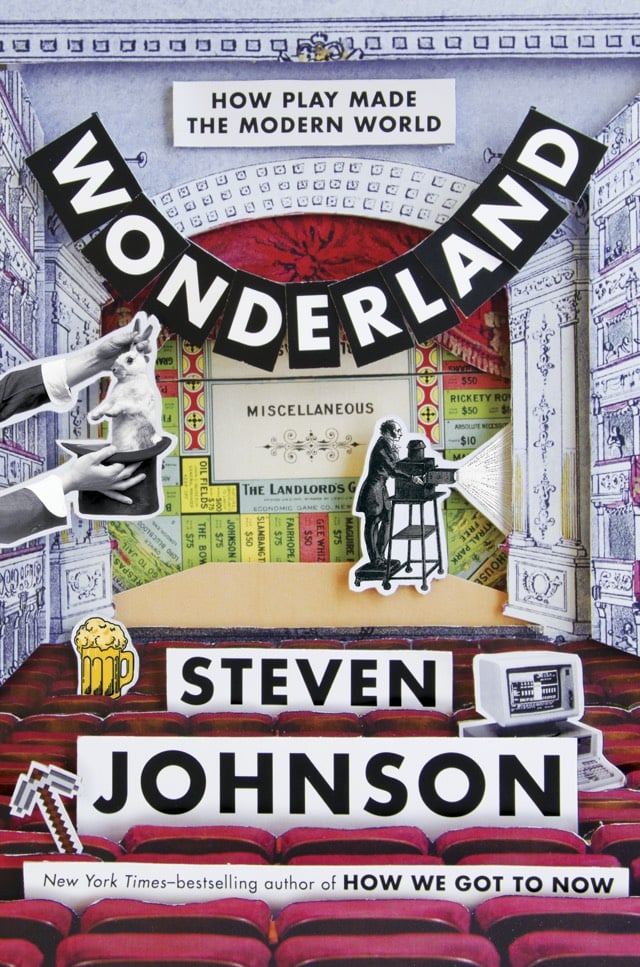
Steven Johnson’s new book, Wonderland: How Play Made the Modern World, will be out in November. In it, he describes how novelties and games have been responsible for scientific innovation and technological change for hundreds of years.
This lushly illustrated history of popular entertainment takes a long-zoom approach, contending that the pursuit of novelty and wonder is a powerful driver of world-shaping technological change. Steven Johnson argues that, throughout history, the cutting edge of innovation lies wherever people are working the hardest to keep themselves and others amused.
Johnson’s storytelling is just as delightful as the inventions he describes, full of surprising stops along the journey from simple concepts to complex modern systems. He introduces us to the colorful innovators of leisure: the explorers, proprietors, showmen, and artists who changed the trajectory of history with their luxurious wares, exotic meals, taverns, gambling tables, and magic shows.
Here’s Johnson’s introduction on How We Get To Next.
They all revolve around the creative power of play: ideas and innovations that initially came into the world because people were trying to come up with fresh ways to trigger the feeling of delight or surprise, by making new sounds with a musical instrument, or devising clever games of chance, or projecting fanciful images on a screen. And here’s the fascinating bit: Those amusements, as trivial as they seemed at the time, ended up setting in motion momentous changes in science, technology, politics, and society.
[Ok, riff mode engaged…I have no idea if Johnson talks about learning while playing in his book, but I’ve been thinking about this quite a lot lately so…ready or not, here I come.] Being the parent of young children, you hear a lot about the power of play. I’ve never been a fan of a lot of screen time for kids, but lately I’ve been letting them play more apps on the iPad and also Mario Kart 8 on the Wii U. I’ve even come to think of their Kart playing as educational as well as entertaining. Watching them level up in the game has been fascinating to watch — Minna (my almost 7-year-old) has gone from not even being able to steer the kart to winning Grand Prix gold cups at 50cc (and she’s a better shot with a green shell than I am) and Ollie (my 9-year-old) is improving so rapidly that with his superior neuroplasticity and desire, he’ll be beating me in just a few months.1
Ok, but what is Mario Kart really teaching them? This isn’t about preparing them for their driver’s license exam. As dumb as it sounds,2 Mario Kart is a good vehicle (har!) for learning some of life’s most essential skills. They’re learning how persistant practice leads to steady improvement (something which isn’t always readily visible with schoolwork). They’re learning how to ignore what they can’t control and focus on what they can (Minna still watches green shells after shooting them but Ollie no longer does…helloooooo Stoicism). They’re learning how to lose gracefully and try again with determination. Most of all, they’re learning how to navigate an unfamiliar system. Teaching someone how to learn — knowing how to learn things is one of life’s greatest superpowers — is about exposing them to many different kinds of systems and helping them figure them out.
Update: Johnson is hosting a podcast based on the ideas in the book.
Update: Wonderland is now on sale. Johnson adapted an essay from the book on Medium called Small World After All:
The first group to build a single integrated system for global trade were the Muslim spice merchants who came to prominence in the seventh century CE. Muslim traders worked the entire length of a network that stretched from the Indonesian archipelago to Turkey and the Balkans all the way across sub-Saharan Africa. Alongside the cloves and cinnamon, they brought the Koran. In almost all the places where Muslims attempted to convert local communities through military force — Spain or India, for instance — the Islamic faith failed to take root. But the traders turned out to be much more effective emissaries for their religion. The modern world continues to be shaped by those conversions more than a millennium later. The map of the Muslim spice trade circa 900 CE corresponds almost exactly to the map of Islamic populations around the world today.
He also wrote a piece adapted from the book for the NY Times Magazine:
By the dawn of the 20th century, almost every species in the 19th-century genus of illusion was wiped off the map by a new form of “natural magic”: the cinema. The stereoscope, too, withered in the public imagination. (It lingered on as a child’s toy in the 20th century through the cheap plastic View-Master devices many of us enjoyed in grade school.) But then something strange happened: After a century of irrelevance, Brewster’s idea — putting stereoscopic goggles over your eyes to fool your mind into thinking you are gazing out on a three-dimensional world — turned out to have a second life.
Ok, maybe in a year or two. Old Man Kottke is pretty good at Kart and has a few tricks left up his sleeve. Wisdom and experience can often be more than a match for youthful brilliance. ↩
It’s a bummer to have to caveat this. Even in the age of Minecraft, video games aren’t often thought of as learning opportunities. Very few in the US would bat an eyelash if I were talking about basketball or Little League. ↩
Humpback whales: the Guardian Angels of the sea
There is evidence that humpback whales deliberately disrupt killer whale hunts, saving other animals from being killed by them.
Marine ecologist Robert Pitman observed a particularly dramatic example of this behavior back in 2009, while observing a pod of killer whales hunting a Weddell seal trapped on an ice floe off Antarctica. The orcas were able to successfully knock the seal off the ice, and just as they were closing in for the kill, a magnificent humpback whale suddenly rose up out of the water beneath the seal.
This was no mere accident. In order to better protect the seal, the whale placed it safely on its upturned belly to keep it out of the water. As the seal slipped down the whale’s side, the humpback appeared to use its flippers to carefully help the seal back aboard. Finally, when the coast was clear, the seal was able to safely swim off to another, more secure ice floe.
Pitman has collected 115 incidents of humpbacks messing with orca hunts. (via @unlikelywords)
The American mall is dying. But high-end malls (called plazas, centers, shops…anything but “malls”) are thriving.
An archive of Nintendo Power magazine
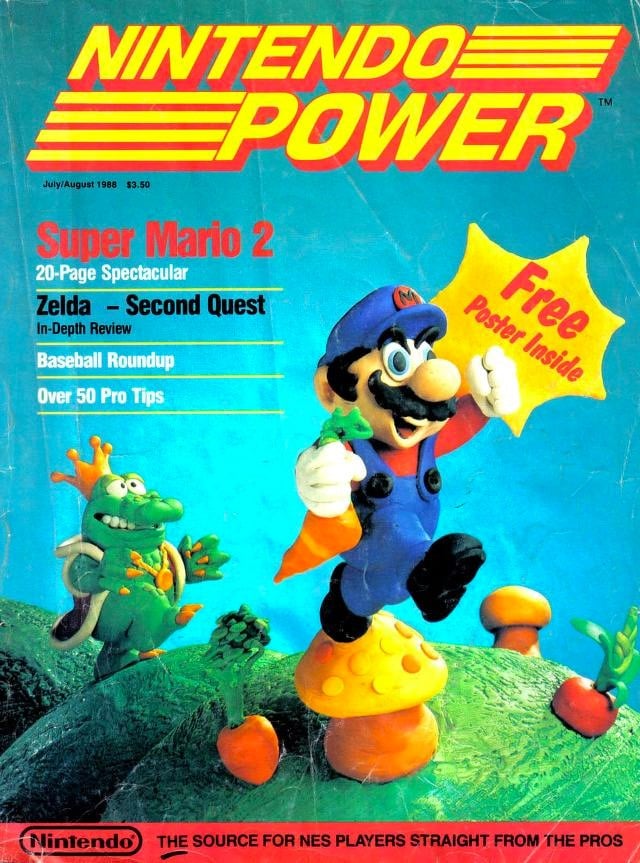
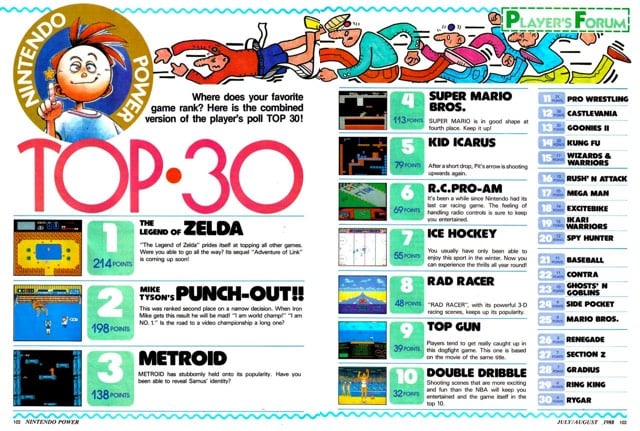
The Internet Archive has collected the first dozen years’ worth of Nintendo Power magazines. I was a subscriber to Nintendo Power for the first couple years, having previously received the Nintendo Fun Club Newsletter. The first issue contained an extensive guide to Super Mario Bros 2, teased a game called Lee Trevino’s Fighting Golf, and the Legend of Zelda was ranked the #1 game, ahead of Mike Tyson’s Punch-Out, Metroid, Super Mario Bros, and Kid Icarus.
The July 1991 issue shows how good Apple co-founder Steve Wozniak was at Game Boy Tetris:
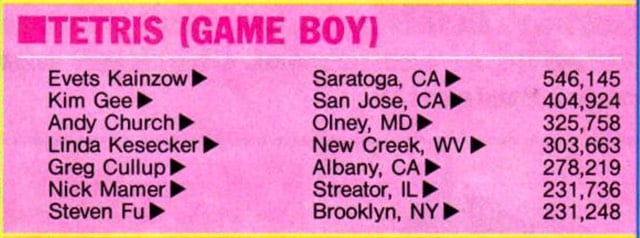
“Evets Kainzow” is “Steve Wozniak” spelled backwards.
Update: Foursquare founder Dennis Crowley made his way into the high score list in the magazine twice in 1990; once for Strider and again for Ninja Gaiden II (alongside Steve Wozniak’s massive GB Tetris score).
New Yorker cartoons on Instagram
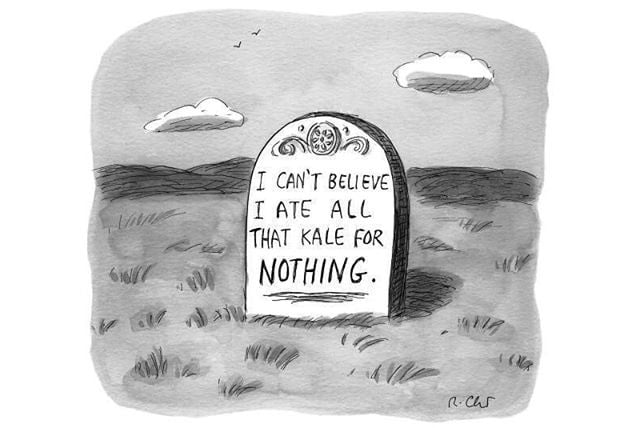
The New Yorker is posting some of their iconic cartoons on a dedicated Instagram account. Instant follow.
RIP Seymour Papert
Seymour Papert, a giant in the worlds of computing and education, died on Sunday aged 88.
Dr. Papert, who was born in South Africa, was one of the leading educational theorists of the last half-century and a co-director of the renowned Artificial Intelligence Laboratory at the Massachusetts Institute of Technology. In some circles he was considered the world’s foremost expert on how technology can provide new ways for children to learn.
In the pencil-and-paper world of the 1960s classroom, Dr. Papert envisioned a computing device on every desk and an internetlike environment in which vast amounts of printed material would be available to children. He put his ideas into practice, creating in the late ’60s a computer programming language, called Logo, to teach children how to use computers.
I missed out on using Logo as a kid, but I know many people for whom Logo was their introduction to computers and programming. The MIT Media Lab has a short remembrance of Papert as well.
The uncelebrated typographers of the road
A lovely short video profile of Thomas Lilley, who is a roadliner in Glasgow. A roadliner is a person who paints the words and marks on roads with molten thermoplastic. Lilley does it quickly, freehand, and beautifully. The design firm who did the video above commissioned Lilley’s crew to make a custom typeface for them and their new logo.
See also The art of street typography. (via @mathowie)
Radiohead plays Let Down for the first time in 10 years
Until their first show at Madison Square Garden in NYC last week, Radiohead hadn’t played Let Down off of OK Computer in concert since 2006. I was lucky enough to be in attendance and some collective shit was lost over this, I tell you what. They’ve since played it at all three of their subsequent shows. (They’ve also played Creep twice in the past week, which is also rare.)
Here’s the full set list from that night, which is mainly just for me in 28 years when this is the last remaining page on the internet with this info.
Burn the Witch
Daydreaming
Decks Dark
Desert Island Disk
Ful Stop
Lotus Flower
The National Anthem
15 Step
No Surprises
Tinker Tailor Soldier Sailor Rich Man Poor Man Beggar Man Thief
Separator
Planet Telex
The Numbers
2 + 2 = 5
Everything in Its Right Place
Myxomatosis
Idioteque
Encore:
Let Down
Present Tense
Paranoid Android
Nude
Bodysnatchers
Encore 2:
Bloom
Street Spirit (Fade Out)
Update: Here’s a video from when they played it in 2006 in Wolverhampton:
(via @jamsandwich)
The saddest Kickstarter projects on Earth
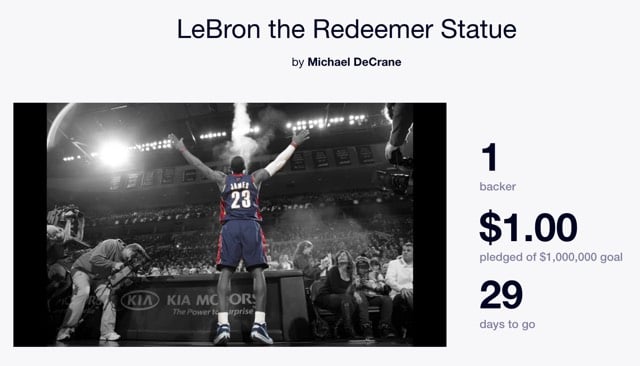
With Kickstarter’s advanced search capability, you can see a list of projects on the site with the goal of raising more than $1 million but with less than $1,000 in pledges. A sampling of recent projects from the list:
Secure Spent Fuel Rods Now ($30,000,000 goal). Needs the funds to produce and air TV commercials about the need to secure spent fuel rods from nuclear reactors.
LeBron the Redeemer Statue ($1,000,000 goal). This is my favorite: this project aims to construct a statue of LeBron James in the style of the Christ the Redeemer statue in Rio de Janeiro. I think we should actually be backing this.
The Exodus, one Ark or many ($100,000,000 goal). To buy used cruise ships to form permanent sustainable societies at sea. “Pirates” is listed as one of the project’s potential risks.
Breakfast 24/7 ($1,000,000). For building a chain of restaurants that will serve and deliver breakfast 24 hours a day, 7 days a week, 360 days a year.
I know that headline is a little harsh; many of these projects are good ideas that perhaps need more reasonable budgets and goals or might be better realized through non-crowdfunding avenues. Keep on reaching for the stars, kids!
Permafrost thawing in Russia has led to an anthrax outbreak
A Siberian heatwave has led to permafrost thaws that have released long-dormant anthrax bacteria, resulting in the hospitalization of 13 people and the death of over 1500 reindeer.
Citing earlier work from 2007, they estimated anthrax spores remain viable in the permafrost for 105 years. Buried deeper, the bacteria may be able to hibernate for even longer. At the same time, where meteorological data were available they indicate temperatures in Yakutia are increasing.
“As a consequence of permafrost melting, the vectors of deadly infections of the 18th and 19th centuries may come back,” the scientists warned, “especially near the cemeteries where the victims of these infections were buried.” Cattle grave sites should be monitored, they concluded, and “public health authorities should maintain permanent alertness.”
Another one of those delightful little climate change gotchas, like the near-death of the Great Barrier Reef.
Update: Eric Holthaus talked to some experts and climatologists and yes, pathogens released by warming are something we were warned about and we need to be concerned about it.
Romanovsky says the possibility that additional pathogens may be released from the permafrost, if that is indeed the source, makes it even more important to study this specific outbreak closely. Once in the water supply, in theory, a future pathogen could spread outside the local area, carried by people or by migrating birds or animals.
Though the current outbreak is happening during an unusual period of extreme warmth, Romanovsky says that, “if it gets warmer in the future, and it seems like it will, the thawing permafrost could be massive.” A further degradation of the permafrost would allow more opportunity for the emergence of sequestered microbes.
Amazon’s store for Kickstarter products

Amazon has built a store specifically for products that started out on Kickstarter. What a great idea. Here is Kickstarter’s post about the initiative.
Getting a creative idea off the ground is often just the first step. Amazon Launchpad is a chance for creators to be discovered by new audiences, and to serve those audiences well by using Amazon’s retail expertise and infrastructure. The program offers custom product pages, comprehensive marketing support, and access to Amazon’s global fulfillment network.
A quick look through the store yielded some products that I’ve backed or featured on kottke.org: Electric Objects Digital Art Display, The Internet’s Own Boy, Richard Renaldi’s Touching Strangers, and Hello Ruby: Adventures in Coding.
Israel achieves breakthroughs in freshwater making tech
In the biggest water miracle since Christ walked on the Sea of Galilee,1 Israel has turned certain drought into a surplus of water. Conservation helped — low-flow shower heads, recycling waste water for crop irrigation — but much of the gain came from vastly improved desalinization techniques, which they hope can spread across the region and the world.
We are standing above the new Sorek desalination plant, the largest reverse-osmosis desal facility in the world, and we are staring at Israel’s salvation. Just a few years ago, in the depths of its worst drought in at least 900 years, Israel was running out of water. Now it has a surplus. That remarkable turnaround was accomplished through national campaigns to conserve and reuse Israel’s meager water resources, but the biggest impact came from a new wave of desalination plants.
Perhaps the world won’t end in water wars after all.
Update: Of course, technological advances can affect politics in many ways. Instead of sharing the tech, Israel can use their water advantage to put political pressure on their neighbors, as when Israel cut water supplies to the West Bank earlier this year during Ramadan.
Even without politics, desalinization is problematic…there’s the small matter of where to put all that salt:
Brine disposal is a big problem in much of the Middle East. The gulf, along with the Red and Mediterranean seas, are turning saltier because of desalination by-products — and the region is the epicenter of desalination worldwide, with the United Arab Emirates, Saudi Arabia, Kuwait, Qatar, Bahrain and Oman making up 45 percent of global desalination capacity. This brine is typically twice as salty as seawater, and advanced desalination plants still produce approximately two cubic meters of waste brine for every one cubic meter of clean water.
(thx, jennifer & nathan)
[That’s your lede? Ok, I quit. -ed]↩
Christoph Niemann, Words
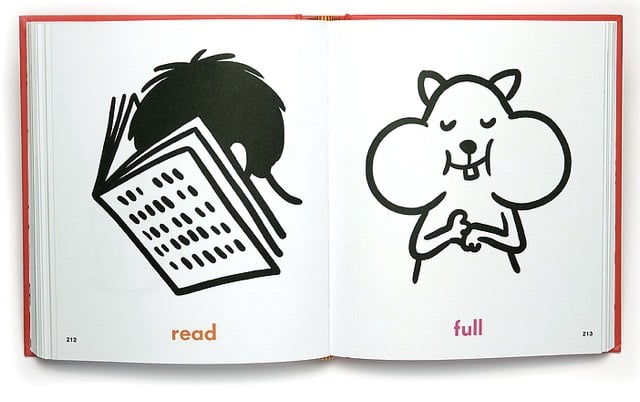
Ace illustrator Christoph Niemann has a new book coming out called Words, an illustrated compilation of 300+ sight words
What can you do with a word? Read it, spell it, say it, picture it, understand it, make a sentence with it, tell a story with it, share it with a friend. Everything starts with a love of words! More than 300 words inspired by Dr. Edward Fry’s list of sight words are paired with striking and playful illustrations by internationally renowned designer and artist Christoph Niemann to deepen understanding, to enrich, and to enlighten those learning to read and write English, whether they be children or adults.
Primitive technology: making a forge blower
The guy behind Primitive Technology (aka my favorite YouTube channel) is back with a video on how to build a forge blower, a device for fanning a fire to make it hotter.
This device produces a blast of air with each stroke of the bow regardless of whether it is pushed or pulled. The bow makes it possible to operate the blower without using a complicated belt and wheel assembly used in traditional forge blowers. There is a brief pause at the end of each stroke where the fan stops to rotate in the other direction, but this is effectively no different to the intermittent blast of a double acting bellows of Europe or box bellows of Asia. The materials used (wood, bark, bark fibre and clay) are readily available on most continents. No leather, valves or precisely fitted piston gaskets are required as with other types of bellows.
The way he shoots & edits these videos is so good…packing, what, dozens or even hundreds of years of technological evolution into a minute or two of wordless video.
Socials & More