kottke.org posts about video
8K resolution. Time lapse. 360º view. Aurora borealis. Lunar eclipse. I’m not really sure how you could pack much more into this video. Probably best experienced with some sort of VR rig, but for those of us without access to such a thing, watching it several times on a large screen while dragging the view around is a more than adequate substitute. If seeing the aurora borealis in person wasn’t already on your bucket list, it is now. Dang. (via the kid should see this)
In the latest installment of Nerdwriter, Evan Puschak explains why Francisco Goya’s painting Saturn Devouring His Son is so disturbing, not only from the standpoint of the subject matter but also the circumstances surrounding its creation.
I am especially fond of Art History Nerdwriter because the first video of his I ever watched was on Jacques-Louis David’s The Death of Socrates. I’ve been a fan ever since.
Check out these army ants building an ant bridge across a gap that suddenly widens:
Army ants have tiny brains and no one’s in charge. So how do they organize themselves into building bridges? They rely on their strength in numbers and simple rules.
To see how this unfolds, take the perspective of an ant on the march. When it comes to a gap in its path, it slows down. The rest of the colony, still barreling along at 12 centimeters per second, comes trampling over its back. At this point, two simple rules kick in.
The first tells the ant that when it feels other ants walking on its back, it should freeze. “As long as someone walks over you, you stay put,” Garnier said.
This same process repeats in the other ants: They step over the first ant, but — uh-oh — the gap is still there, so the next ant in line slows, gets trampled and freezes in place. In this way, the ants build a bridge long enough to span whatever gap is in front of them. The trailing ants in the colony then walk over it.
See also How many stupid things become smart together.
(via fairly interesting)
In his short film Dance Dance, director Thomas Blanchard represents all four seasons by showing flowers blooming, submerged in water that freezes over, burning, and shrouded in clouds of colorful inks. I could have watched the flowers freezing over part for many more minutes. (via colossal)
The original Wreck-It Ralph came out in 2012 and was the first inkling of Disney Animation’s revival that has continued with Frozen, Zootopia, and Moana. In Wreck-It Ralph 2 (which is properly titled “Ralph Breaks the Internet: Wreck-It Ralph 2”), the arcade gets an upgrade in the form of a modem, which gives Ralph and his pals access to the internet. And if you watch the trailer, the movie’s view of the internet is pretty dystopian (but sadly not all that inaccurate). They’re dumped into a a massive shopping mall where they’re constantly interrupted by the IRL equivalent of the chumbox, attend an eBay auction for bad cat-related art, and digitally overfeed a video game bunny until it explodes, perhaps a sly metaphor for how relying on digital treats such as likes or retweets for self-esteem is problematic.
But the movie looks fun! I guess? Like the internet! The internet is fun! I guess? Right? Hello…
Update: The full trailer:
Jason Rohrer, one of the most well-regarded indie video game makers out there (he made Passage, which is incredibly poignant for a video game that lasts only 5 minutes), has just released his latest game, One Hour One Life. Rohrer bills the game as “a multiplayer survival game of parenting and civilization building”. Here’s the trailer:
This game is about playing one small part in a much larger story. You only live an hour, but time and space in this game is infinite. You can only do so much in one lifetime, but the tech tree in this game will take hundreds of generations to fully explore. This game is also about family trees. Having a mother who takes care of you as a baby, and hopefully taking care of a baby yourself later in life. And your mother is another player. And your baby is another player. Building something to use in your lifetime, but inevitably realizing that, in the end, what you build is not for YOU, but for your children and all the countless others that will come after you. Proudly using your grandfather’s ax, and then passing it on to your own grandchild as the end of your life nears.
And looking at each life as a unique story. I was this kid born in this situation, but I eventually grew up. I built a bakery near the wheat fields. Over time, I watched my grandparents and parents grow old and die. I had some kids of my own along the way, but they are grown now… and look at my character now! She’s an old woman. What a life passed by in this little hour of mine. After I die, this life will be over and gone forever. I can be born again, but I can never live this unique story again. Everything’s changing. I’ll be born as a different person in a different place and different time, with another unique story to experience in the next hour…
That sounds kind of amazing, like a cross between Passage and something like Spore or Everything. And dare I say it’s a little Game Neverending-ish as well?
And check out the “thinking behind One Hour One Life” section at the bottom of the home page. It includes links to videos on the meaning of human life, Milton Friedman’s views on market capitalism (a riff on I, Pencil), and the Primitive Technology guy. (via andy)
This short film from 1968, set to Classical Gas, shows 3000 years of fine art in just three minutes. As the final frame of the film says:
You have just had all of the Great Art of the World indelibly etched in your brain. You are now cultured.
As mesmerizing as the film is, especially for 1968, the backstory is perhaps even more interesting. Mason Williams, who wrote and recorded Classical Gas, saw this film by UCLA film student Dan McLaughlin and arranged, with McLaughlin’s permission, to have the original soundtrack replaced with his song and to have it aired on The Smothers Brothers Comedy Hour on CBS, then the number one show on TV in America.
The impact of the film on television opened the door to realizations that the viewer’s mind could absorb this intense level of visual input. It was a double shot of a hundred proof music and video that polished the history of art off in three minutes! It was also the beginning of the fast images concept now called kinestasis (a rapidly-moving montage technique set to music) that has over the years been exploited so effectively by television commercials, documentaries, etc.
Curiously, a similarly produced film called American Time Capsule also aired on The Smothers Brothers Comedy Hour that year. Directed by Chuck Braverman, it showed 200 years of American history in less than 3 minutes:
McLaughlin’s film was produced and aired first (he made it in 1967) and was the inspiration for Braverman’s film (see the relevant snippets from David Sohn’s Film: the Creative Eye) but Braverman made a career out of the technique.
I was actually working in the same building as [Tommy Smothers], at CBS as an assistant — really as a messenger — trying to get into the cameraman’s union in the news department. They literally made the Comedy Hour just upstairs. I called, made a meeting, and Tommy looked at my other work and we discussed doing a film on the history of the United States — American Time Capsule. I made it and it aired on the weekend before the November ‘68 election and it was a huge hit. It catapulted me into a career. Not only did it appear on the Smothers’ Brothers Show, which was huge, but it appeared on The Tonight Show within a few weeks and then 60 Minutes picked it up. So I got a reputation right away for being the king of the fast-cut montage. I ended up doing dozens of commercials and lots of title sequences.
My favorite use of the technique is in the trailer for A Clockwork Orange:1
But anyway, getting back to Mason Williams and Classical Gas, after the success of the 3000 years of art video, he wrote a sketch about video jockeys playing music videos on TV:
As a result of the response to the CLASSICAL GAS music video, in September of 1968 I wrote up a piece for The Smothers Brothers Comedy Hour, projecting the idea that someday VJ’s would be playing hit tapes on TV, (as well as DJ’s hit records on radio), a prophesy of what was, 13 years later, to become MTV.
All this film and media history, just barely surviving in YouTube videos, video descriptions, partial scans of out-of-print books, and interviews & obituaries scattered willy-nilly all over the we, what a mess. What a fascinating mess. (via open culture)
In a new video for Vox, Phil Edwards talks about one of my favorite low-tech technologies: dazzle camouflage. Instead of trying to hide warships with paint the color of the ever-changing sky or sea, dazzle camouflage aimed to confuse the enemy by disguising the silhouettes and headings of ships.
World War I ships faced a unique problem. The u-boat was a new threat at the time, and its torpedoes were deadly. That led artist Norman Wilkinson to come up with dazzle camouflage (sometimes called “razzle dazzle camouflage”). The idea was to confuse u-boats about a ship’s course, rather than try to conceal its presence. In doing so, dazzle camouflage could keep torpedoes from hitting the boat — and that and other strategies proved a boon in World War I.
More recently, this strategy has been used on people’s faces to thwart facial recognition and on Cristiano Ronaldo’s football cleats to confuse opponents as which way he’s moving his feet.
What if World 1-1 in Super Mario Bros was made entirely of Jello? It would look a little something like this:
That’s from Stefan Hedman’s Jelly Mario, a playable demo of Super Mario with really elastic in-game physics (up arrow to jump, left and right to move). It’s not exactly compelling gameplay, but it is super fun to pilot a drunken Mario around to off-kilter SMB theme music. (via prosthetic knowledge)
Update: Since posting this, the rest of World 1-1 has been added as well as the first part of World 1-2.
Coming to HBO in May is an adaptation of Ray Bradbury’s novel, Fahrenheit 451. It stars Michael B. Jordan and Michael Shannon.
In a future where the media is an opiate, history is rewritten and “firemen” burn books, Jordan plays Guy Montag, a young fireman who struggles with his role as law enforcer and with his “mentor”, played by Shannon.
The book, which got its title from “the temperature at which book paper catches fire, and burns”, begins like so:
It was a pleasure to burn.
It was a special pleasure to see things eaten, to see things blackened and changed. With the brass nozzle in his fists, with this great python spitting its venomous kerosene upon the world, the blood pounded in his head, and his hands were the hands of some amazing conductor playing all the symphonies of blazing and burning to bring down the tatters and charcoal ruins of history. With his symbolic helmet numbered 451 on his stolid head, and his eyes all orange flame with the thought of what came next, he flicked the igniter and the house jumped up in a gorging fire that burned the evening sky red and yellow and black. He strode in a swarm of fireflies. He wanted above all, like the old joke, to shove a marshmallow on a stick in the furnace, while the flapping pigeon-winged books died on the porch and lawn of the house. While the books went up in sparkling whirls and blew away on a wind turned dark with burning.
The previous film adaptation was by Francois Truffaut in 1966, who cast Julie Christie in two of the main roles. It was Truffaut’s only English-language film and the first one in color.
In a new video series for Vox, Christophe Haubursin talks to Tristan Harris, a former Design Ethicist at Google, about how our phones and apps are designed to be addictive and some strategies for breaking their hold on us:
1. Turn off all non-human notifications.
2. Change your screen to grayscale.
3. Restrict your home screen to everyday tools.
Ezra Klein recently did an interview with Harris that includes more of his views on the ethics of technology, phones, and social media.
Silicon Valley is reckoning with having had a bad philosophical operating system. People in tech will say, “You told me, when I asked you what you wanted, that you wanted to go to the gym. That’s what you said. But then I handed you a box of doughnuts and you went for the doughnuts, so that must be what you really wanted.” The Facebook folks, that’s literally what they think. We offer people this other stuff, but then they always go for the outrage, or the autoplaying video, and that must be people’s most true preference.
From Dustin Cohen, a short film of Phillip Giambri performing his spoken word poem The Boho’s Lament about the changing character of New York City.
Wait a minute. Weren’t we all part of that retched refuse? Weren’t we the outcasts, the freaks, the faggots, the tattooed rockers, weirdos, nerds, and techno geeks from all those puckered-ass towns in the middle of America? When we were ridiculed, bullied, and beat up, we came down here to the Village, immigrants from that other America seeking refuge, freedom to let out the crazy creative shit inside.
Did you watch the teaser trailer for Solo: A Star Wars Story or the recent trailer for Marvel’s Ant-Man and the Wasp? Here they are if you need a refresher:
In both clips, you’ll notice how the sounds of the action — phaser blasts, switch flicks, explosions, engine revs, gun shots, tires squealing — are synched to the music…and in some cases, make music of their own. This is most apparent in the Ant-Man trailer starting at around 0:45.
Pacing in-movie sound effects to sound musical isn’t exactly new (martial arts flicks come to mind, as do the rapid-fire cuts from Requiem for a Dream), but these recent uses of the technique in these trailers have to be influenced by Baby Driver, Edgar Wright’s 2017 “action musical”. Just about every action in the movie is timed to the soundtrack. Take a look, or rather, take a listen at the gunfight that starts at around 1:20 in this clip:
What’s particularly interesting about the use of this technique in the Ant-Man trailer is that Wright was replaced as the director of the first Ant-Man movie (which he refuses to watch), which freed him up to direct Baby Driver. I wonder if the trailer’s sound design is a subtle fuck you to Wright on behalf of Marvel/Disney, a sly homage by the person who cut the trailer together, or just the unwitting borrowing of an ear-catching technique?
I’d expect to see more usage of this technique as the summer action movie trailer season heats up. Has anyone noticed any other recent uses?
Update: Here are several more trailers that use this effect, although none of them quite to extent of Ant-Man or Baby Driver: Mad Max: Fury Road, Creed, Deadpool, an upcoming Mission Impossible movie (as well as an older one), Suicide Squad, The Punisher, and even the Coen’s A Serious Man.
That’s four Marvel trailers that do it. I wonder if Wright drew inspiration from them instead of the other way around? (via @opeyre, @celiacunningham, @vlavallee, trailer town, @paulstachniak)
This animation shows how humans have spread and organized themselves across the Earth over the past 200,000 years. The time lapse starts with the migration of homo sapiens out of sub-Saharan Africa 200,000 years ago, with a few thousand years passing every second. As the agricultural revolution gets underway and the pace of civilization quickens, the animation slows down to hundreds of years per second and eventually, as it nears modern times, 1-2 years per second.
See also time lapse animations of the history of Europe from the fall of Rome to modern times and human population through time. (via open culture)
Jorge Luengo Ruiz put together a supercut of scenes from Steven Spielberg movies where the director uses lighting to create high-contrast scenes.
Typically, Spielberg uses brightly lit backgrounds with silhouetted figures in the foreground…think Elliot riding his bike in front of a full moon in ET or Indiana Jones in any number of scenes.
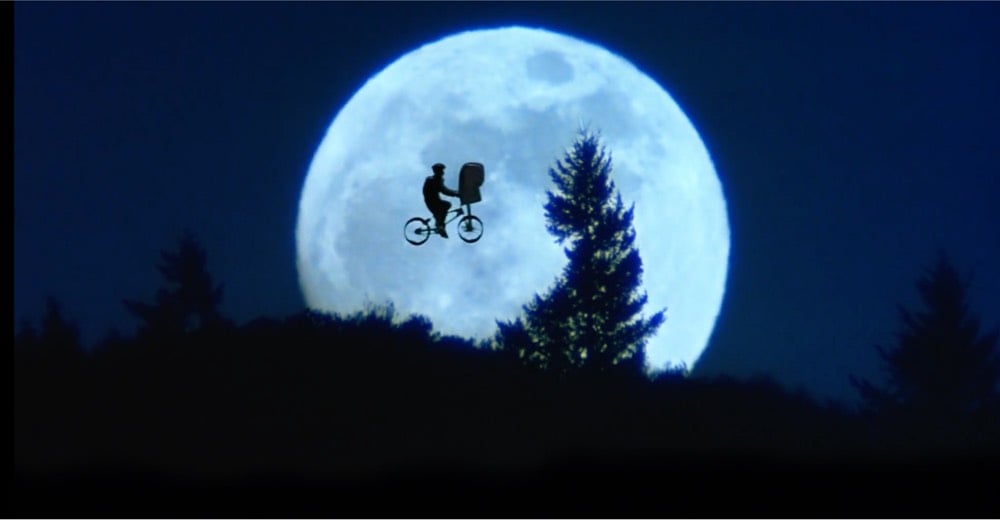
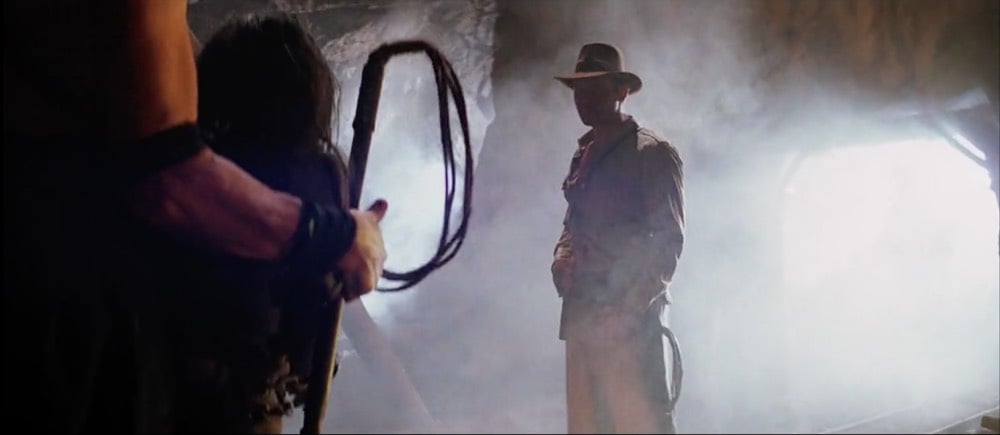
Spielberg himself called it “God Lights”.
I’ve always loved what I call “God Lights,” shafts coming out of the sky, or out of a spaceship, or coming through a doorway.
Pairs well with The Spielberg Face.
Newer posts
Older posts






Socials & More