kottke.org posts about video games
Someone spent hours making a playable version of Super Mario Bros in Excel. See also the Excel spreadsheet artist. (via digg)
Update: Two corrections. The spreadsheet program is actually OpenOffice, not Excel. (Excel is almost a genericized trademark at this point.) And the in-spreadsheet game isn’t actually playable…this is a stop motion video of still frames.
I don’t have a PS4 or Windows machine, so I can’t play No Man’s Sky (which seems to deliver on the long-ago promise of Will Wright’s Spore), but through the magic1 of Spotify, I was listening to the soundtrack this morning.
Other video game soundtracks I enjoy include Monument Valley and FTL.
Update: See also Robin Sloan on the appeal of No Man’s Sky and how it is like reading.
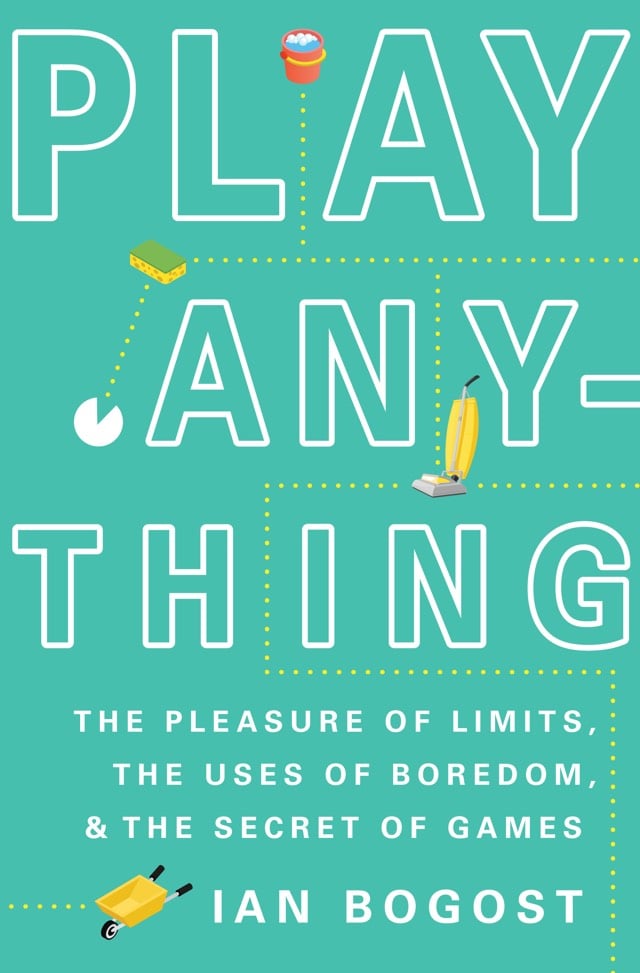
Play Anything is a forthcoming book by game designer and philosopher Ian Bogost. The subtitle — The Pleasure of Limits, the Uses of Boredom, and the Secret of Games — provides a clue as to what it’s about. Here’s more from the book’s description:
Play is what happens when we accept these limitations, narrow our focus, and, consequently, have fun. Which is also how to live a good life. Manipulating a soccer ball into a goal is no different than treating ordinary circumstances — like grocery shopping, lawn mowing, and making PowerPoints — as sources for meaning and joy. We can “play anything” by filling our days with attention and discipline, devotion and love for the world as it really is, beyond our desires and fears.
Reading this little blurb, I immediately thought of two things:
1. One thing you hear from pediatricians and early childhood educators is: set limits. Children thrive on boundaries. There’s a certain sort of person for whom this appeals to their authoritarian nature, which is not the intended message. Then there are those who can’t abide by the thought of limiting their children in any way. But perhaps, per Bogost, the boundaries parents set for their children can be thought of as a series of games designed to keep their lives interesting and meaningful.1
2. This recent post about turning anxiety into excitement. Shifting from finding life’s limitations annoying to thinking of them as playable moments seems similar. Problems become opportunities, etc.
3. Ok, three things. I once wrote a post about bagging groceries and mowing the lawn as games.
Two chores I find extremely satisfying are bagging groceries and (especially) mowing the lawn. Getting all those different types of products — with their various shapes, sizes, weights, levels of fragility, temperatures — quickly into the least possible number of bags…quite pleasurable. Reminds me a little of Tetris. And mowing the lawn…making all the grass the same height, surrounding the remaining uncut lawn with concentric rectangles of freshly mowed grass.
What I’m saying is, I’m looking forward to reading this book. See also Steven Johnson’s forthcoming book, Wonderland: How Play Made the Modern World.
Whoa, this is the coolest! Jason Wright’s Brand New Subway allows players to alter the NYC subway system as they see fit. You can start with existing maps and the choices you make affect ridership and the price of a Metrocard.
Players can choose to start from scratch or one of several NYC subway maps (including present-day, maps dating back to the early 1900s, or maps from the future). They can build new stations and lines to expand the system to new areas, or tear it down and redesign the whole thing. The game intends to evoke an imaginative spirit, to empower people to envision transportation according to their needs and desires, and to arouse the fun of tinkering with maps.
This project is an entry in The Power Broker Game Design Competition, the goal of which is to adapt Robert Caro’s The Power Broker into a playable experience. Wright explains how his game hits the mark:
Bottom-up vs. top-down design. Moses was infamous for his top-down approach to urban planning. He held “the public” as a concept in high regard while simultaneously showing contempt for the individuals who made up that public, in the form of arrogance, spitefulness, and an utter lack of concern for the millions displaced for his expressways and parks. Later on in his career, as the span of his projects increased, Moses would make monumentally important decisions about the fate of a neighborhood without once setting foot there. He was known for building 13 bridges and hundreds of miles of parkways despite never driving a car.
Although Brand New Subway might appeal to someone who enjoyed SimCity but who has never set foot in New York City, it’s targeted primarily at those who actually ride the subway and who might feel invested in what they design. In that regard, it inverts Moses’ paradigm by encouraging players to improve on transportation in their own neighborhoods and in ways to which they have a personal connection.
I reeeeeeally didn’t want to spend the rest of my day playing with this, but that super express train from Manhattan to JFK isn’t going to build itself! (via @byroncheng)
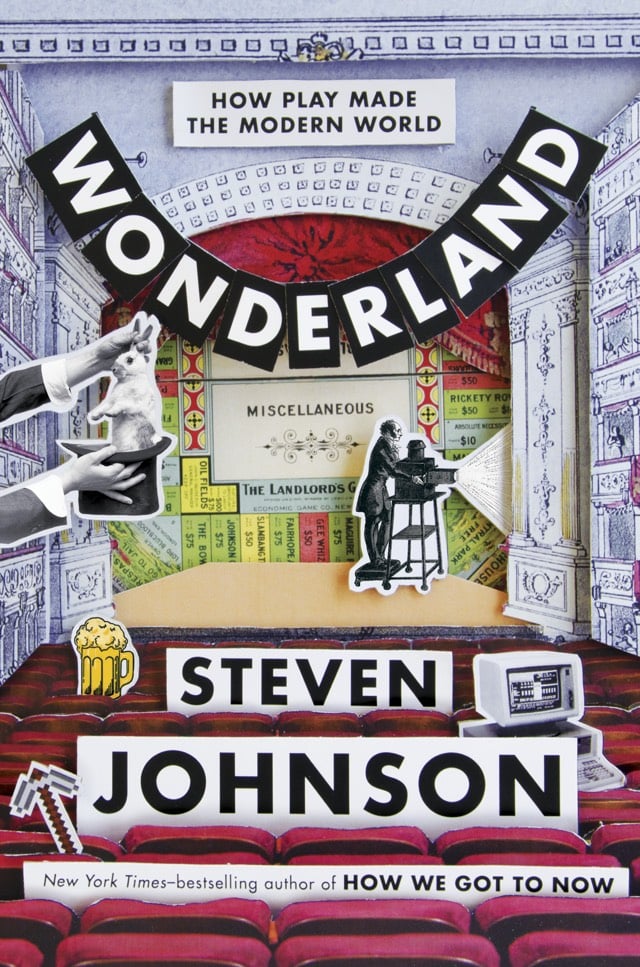
Steven Johnson’s new book, Wonderland: How Play Made the Modern World, will be out in November. In it, he describes how novelties and games have been responsible for scientific innovation and technological change for hundreds of years.
This lushly illustrated history of popular entertainment takes a long-zoom approach, contending that the pursuit of novelty and wonder is a powerful driver of world-shaping technological change. Steven Johnson argues that, throughout history, the cutting edge of innovation lies wherever people are working the hardest to keep themselves and others amused.
Johnson’s storytelling is just as delightful as the inventions he describes, full of surprising stops along the journey from simple concepts to complex modern systems. He introduces us to the colorful innovators of leisure: the explorers, proprietors, showmen, and artists who changed the trajectory of history with their luxurious wares, exotic meals, taverns, gambling tables, and magic shows.
Here’s Johnson’s introduction on How We Get To Next.
They all revolve around the creative power of play: ideas and innovations that initially came into the world because people were trying to come up with fresh ways to trigger the feeling of delight or surprise, by making new sounds with a musical instrument, or devising clever games of chance, or projecting fanciful images on a screen. And here’s the fascinating bit: Those amusements, as trivial as they seemed at the time, ended up setting in motion momentous changes in science, technology, politics, and society.
[Ok, riff mode engaged…I have no idea if Johnson talks about learning while playing in his book, but I’ve been thinking about this quite a lot lately so…ready or not, here I come.] Being the parent of young children, you hear a lot about the power of play. I’ve never been a fan of a lot of screen time for kids, but lately I’ve been letting them play more apps on the iPad and also Mario Kart 8 on the Wii U. I’ve even come to think of their Kart playing as educational as well as entertaining. Watching them level up in the game has been fascinating to watch — Minna (my almost 7-year-old) has gone from not even being able to steer the kart to winning Grand Prix gold cups at 50cc (and she’s a better shot with a green shell than I am) and Ollie (my 9-year-old) is improving so rapidly that with his superior neuroplasticity and desire, he’ll be beating me in just a few months.1
Ok, but what is Mario Kart really teaching them? This isn’t about preparing them for their driver’s license exam. As dumb as it sounds,2 Mario Kart is a good vehicle (har!) for learning some of life’s most essential skills. They’re learning how persistant practice leads to steady improvement (something which isn’t always readily visible with schoolwork). They’re learning how to ignore what they can’t control and focus on what they can (Minna still watches green shells after shooting them but Ollie no longer does…helloooooo Stoicism). They’re learning how to lose gracefully and try again with determination. Most of all, they’re learning how to navigate an unfamiliar system. Teaching someone how to learn — knowing how to learn things is one of life’s greatest superpowers — is about exposing them to many different kinds of systems and helping them figure them out.
Update: Johnson is hosting a podcast based on the ideas in the book.
Update: Wonderland is now on sale. Johnson adapted an essay from the book on Medium called Small World After All:
The first group to build a single integrated system for global trade were the Muslim spice merchants who came to prominence in the seventh century CE. Muslim traders worked the entire length of a network that stretched from the Indonesian archipelago to Turkey and the Balkans all the way across sub-Saharan Africa. Alongside the cloves and cinnamon, they brought the Koran. In almost all the places where Muslims attempted to convert local communities through military force — Spain or India, for instance — the Islamic faith failed to take root. But the traders turned out to be much more effective emissaries for their religion. The modern world continues to be shaped by those conversions more than a millennium later. The map of the Muslim spice trade circa 900 CE corresponds almost exactly to the map of Islamic populations around the world today.
He also wrote a piece adapted from the book for the NY Times Magazine:
By the dawn of the 20th century, almost every species in the 19th-century genus of illusion was wiped off the map by a new form of “natural magic”: the cinema. The stereoscope, too, withered in the public imagination. (It lingered on as a child’s toy in the 20th century through the cheap plastic View-Master devices many of us enjoyed in grade school.) But then something strange happened: After a century of irrelevance, Brewster’s idea — putting stereoscopic goggles over your eyes to fool your mind into thinking you are gazing out on a three-dimensional world — turned out to have a second life.
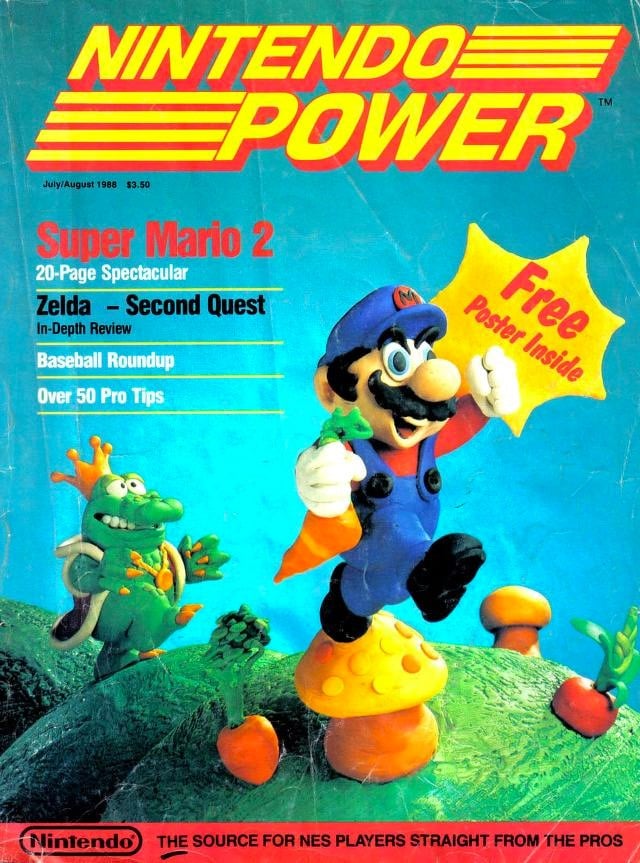
The Internet Archive has collected the first dozen years’ worth of Nintendo Power magazines. I was a subscriber to Nintendo Power for the first couple years, having previously received the Nintendo Fun Club Newsletter. The first issue contained an extensive guide to Super Mario Bros 2, teased a game called Lee Trevino’s Fighting Golf, and the Legend of Zelda was ranked the #1 game, ahead of Mike Tyson’s Punch-Out, Metroid, Super Mario Bros, and Kid Icarus.

The July 1991 issue shows how good Apple co-founder Steve Wozniak was at Game Boy Tetris:
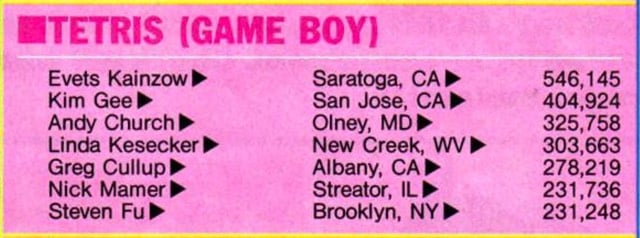
“Evets Kainzow” is “Steve Wozniak” spelled backwards.
Update: Foursquare founder Dennis Crowley made his way into the high score list in the magazine twice in 1990; once for Strider and again for Ninja Gaiden II (alongside Steve Wozniak’s massive GB Tetris score).
Will I ever get tired of this trope? Apple should make David Attenborough the Siri voice…I would immediately start using it more.
From stop motion video wizard PES, the death scenes from five classic video games like Centipede and Asteroids recreated in stop motion using everyday objects like cupcakes, pizza, watches, and croquet balls.
In a short video, Joss Fong and Dion Lee of Vox explore how free mobile games are engineered to make money using behavioral psychology.
By collecting troves of data on how users play their games, developers have mastered the science of applied addiction. And with the rise of “freemium” games that rely on micro-transactions, they have good reason to deploy the tools of behavioral psychology to inspire purchases.
Back in 2013, Ramin Shokrizade explained The Top F2P Monetization Tricks:
To maximize the efficacy of a coercive monetization model, you must use a premium currency, ideally with the ability to purchase said currency in-app. Making the consumer exit the game to make a purchase gives the target’s brain more time to figure out what you are up to, lowering your chances of a sale. If you can set up your game to allow “one button conversion”, such as in many iOS games, then obviously this is ideal. The same effect is seen in real world retail stores where people buying goods with cash tend to spend less than those buying with credit cards, due to the layering effect.
Purchasing in-app premium currency also allows the use of discounting, such that premium currency can be sold for less per unit if it is purchased in bulk. Thus a user that is capable of doing basic math (handled in a different part of the brain that develops earlier) can feel the urge to “save money” by buying more. The younger the consumer, the more effective this technique is, assuming they are able to do the math. Thus you want to make the numbers on the purchase options very simple, and you can also put banners on bigger purchases telling the user how much more they will “save” on big purchases to assist very young or otherwise math-impaired customers.
Having the user see their amount of premium currency in the interface is also much less anxiety generating, compared to seeing a real money balance. If real money was used (no successful game developer does this) then the consumer would see their money going down as they play and become apprehensive. This gives the consumer more opportunities to think and will reduce revenues.
Mike Rose also discussed the psychological aspect of freemium games in Chasing the Whale: Examining the ethics of free-to-play games:
On the topic of in-app purchases, Griffiths says, “The introduction of in-game virtual goods and accessories (that people pay real money for) was a psychological masterstroke.”
“It becomes more akin to gambling, as social gamers know that they are spending money as they play with little or no financial return,” he continues. “The one question I am constantly asked is why people pay real money for virtual items in games like FarmVille. As someone who has studied slot machine players for over 25 years, the similarities are striking.”
Griffiths argues that the real difference between pure gambling games and some free-to-play games is the fact that gambling games allow you to win your money back, adding an extra dimension that can potentially drive revenues even further.
Update: In 2009, Chris Anderson wrote a book called Free: The Future of a Radical Price in which he argued that freemium was going to be an important business model.
The online economy offers challenges to traditional businesses as well as incredible opportunities. Chris Anderson makes the compelling case that in many instances businesses can succeed best by giving away more than they charge for. Known as “Freemium,” this combination of free and paid is emerging as one of the most powerful digital business models. In Free, Chris Anderson explores this radical idea for the new global economy and demonstrates how it can be harnessed for the benefit of consumers and businesses alike. In the twenty-first century, Free is more than just a promotional gimmick: It’s a business strategy that is essential to a company’s successful future.

In November, Nintendo is coming out with a mini NES gaming system that includes 30 games and a classic controller. Among the games are Legend of Zelda, Dr. Mario, Bubble Bobble, all three Super Mario Bros., Excitebike, Castlevania, and Metroid. It hooks to your TV with HDMI and will cost $60.1
There’s is no way I am not getting one of these. There’s no way to buy online yet, but keep your eye on this Amazon search and I imagine it’ll show up sometime soon.
Update: Amazon says the NES Classic will go on sale on November 11 at 5pm ET. One-click ordering will be disabled, so make sure your current CC and address are in there and practice that checkout routine. Quantities will be extremely limited, so you best act quickly.

One of my all-time favorite iOS games1 receives a big update today. Alto’s Adventure has added two new modes, an endless relaxing Zen Mode and a Photo Mode for sharing your favorite moments.
Zen Mode is a new way to experience the game. We’ve stripped away many things from hillside; no scores, no coins, no powerups, and distilled the game down to its purest elements. There’s no on-screen UI competing for your attention — it’s just you and the endless mountain.
The developers were persuaded to add this mode because of letters from fans who liked the relaxing aspect of the game. An excerpt from one such letter:
I play games as a way to calm me down when I’m feeling anxious or down. But it’s been difficult to find games at the moment that don’t feel aggressive and violent (not that I’m against dealing out justice as Batman or taking out bad guys as Nathan Drake, they are good fun!)
Your game offers something different. Alto’s Adventure doesn’t make me more stressed than I already am. Skiing down a mountain is calming (especially helped by the music, props to your music maker!). It makes me feel as if I’m progressing and being productive without the frustrations of getting to that next level in narrative games or other mobile games.
I’ve played Alto’s Adventure a lot over the past year and a half. Like very a lot. At first, I played because the game was fun and I wanted to beat it. But eventually, I started playing the game when I was stressed or anxious.1 It became a form of meditation for me; playing cleared my mind and refocused my attention on the present. Even the seemingly stressful elements in the game became calming. The Elders, who spring up to give chase every few minutes, I don’t even notice anymore…which has become a metaphorical reminder for me to focus on my actions and what I can control and not worry about outside influences I can’t control.
So thanks to Snowman for building such a great game…I truly don’t know what I would have done without it.
Update: From Sherry Turkle’s 1984 book The Second Self, a video gamer talking about how playing games make him feel:
Well, it’s almost, at the risk of sounding, uh, ridiculous, if you will, it’s almost a Zen type of thing… where I can direct myself totally and not feel directed at all. You’re totally absorbed and it is all happening there. You know what you are supposed to do. There’s not external confusion, there’s no conflicting goals, there’s none of the complexities that the rest of the world is filled with. It’s so simple. You either get through this little maze so that the creature doesn’t swallow you up or you don’t. And if you can focus your attention on that, and if you can really learn what you are supposed to do, then you really are in relationship to the game.
And Turkle adds (emphasis mine):
When he plays video games, he experiences another kind of relaxation, the relaxation of being on the line. He feels “totally focused, totally concentrated.” And yet David, like Marty and Roger, indeed like all successful players of video games, describes the sense in which the highest degree of focus and concentration comes from a letting go of both.
I feel exactly that while playing Alto’s Adventure. Total relaxed concentration.
Also, after this post alerted Corey Glynn to the existence of a global high score list (on which he held 15th place), he went out and absolutely crushed the high score by more than 2 million points. I bow to your superior skill, sir. (via @mznewman)
Wes Copeland recently shattered the all-time record high score for Donkey Kong with 1,218,000 points. During the 3 hour and 20 minute game, he didn’t die a single time.
It’s how he took the title, though that’s so staggering. Copeland did not lose a single Mario in the game. He took his first life all the way from the first level all the way to the end, cashing in the extra lives to obliterate all comers.
“This will be my last record score,” Copeland wrote on Facebook. “I don’t believe I can put up a game any higher than this.” Copeland had set 1.2 million as his ultimate goal in Donkey Kong, and said he’d retire from competition if he could reach that.
Copeland’s effort was a nearly perfect score; though the theoretical maximum is 1,265,000 points, the randomness of each game limits the number of points available before reaching the kill screen. If you’re looking for pointers, you can watch the entire game here:
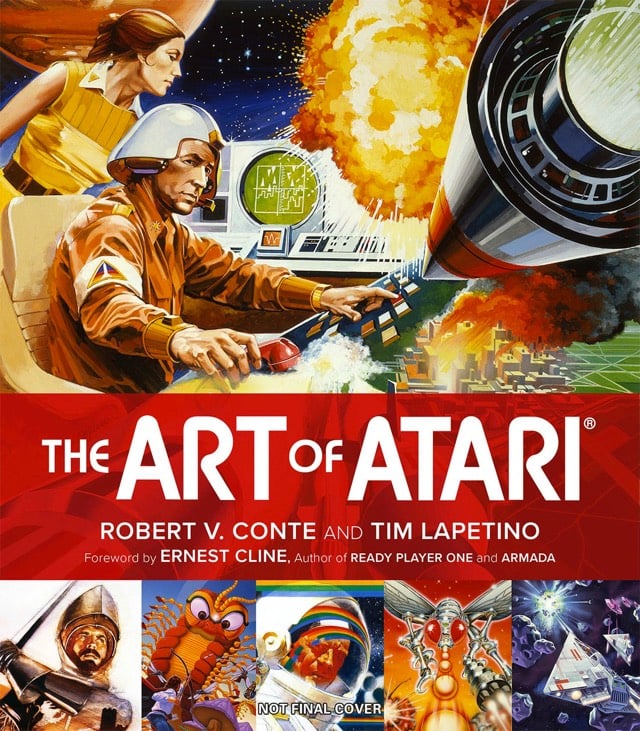
The Art of Atari showcases the design of the iconic company’s video game packaging, advertisements, catalogs, and other stuff. Judging from my reaction to just the cover, I might die of nostalgia if I were to see the inside. Might be worth the risk though.
See also season 3 of Boss Fight Books featuring books on SMB3, Mega Man 3, Katamari Damacy, and more. (via df & @robinsloan)
NES player darbian just broke his own record for the fastest time through Super Mario Bros. He completed the entire game in just 4 minutes 57.260 seconds. But the most entertaining part of the video is watching his heart rate slowly creep up from 80 bpm at the beginning to ~140 bpm in World 8-2 and spiking to 171 bpm when he beats the record. (via digg)
Update: Compare that with this insane level from Mario Maker:
(via @pieratt)

In this post about Minecraft yesterday, I wrote a footnote about educational-ish1 apps on my iPad:
On my iPad, I have a screen full of educational apps that the kids can work with pretty much anytime they want without asking.
I posted a screenshot of that page on Twitter, and I wanted to follow up with some App Store links as well as some links to other apps that people tweeted back at me. (Note: my kids are 6 and 8, so YMMV.)
Minecraft Pocket Edition - Duh. It doesn’t do quite as much as the full versions available on other platforms, but they’re improving and adding stuff all the time and the touchscreen experience is great.
The Tinybop Collection - Beautiful, fun apps. The kids most often work with The Everything Machine and Simple Machines.
Mate in 1 - A game that challenges you to find the checkmate using just one move. Ollie takes chess after school once a week, so I downloaded this for when he wants some extra practice during the week. See also Mate in 2.
Monument Valley - This is a straight-up game, but it’s so well-made (I love the soundtrack) and the logic puzzles are genuinely challenging that I’m happy to let them work with this one. Ollie has made it all the way through while Minna is still on level 9. Gonna get the Forgotten Shores IAP too.
The Numberlys - This one has ceased to be educational for my kids, but it’s great for the younger set.
Crazy Gears - 99 levels of mechanical puzzles involving gears.
Hopscotch - Use an intuitive drag-and-drop interface to build games. It includes many video tutorials for learning how everything works.
And here are a few recommendations from others that I am eager to try out:
Quick Math Pack - Four math apps, including multiplication, fractions, and telling time. See also Prodigy Math Game, The Counting Kingdom, the DragonBox apps.
Barefoot World Atlas - An annotated world atlas. This looks great…downloading now.
Epic! - A eBook library for kids 12 and under with 10,000 titles. A couple of very strong recommendations from people for this.
Brain It On - Draw shapes to solve challenging physics puzzles. See also LiquidSketch.
Endless Reader - For beginning readers. The same company, Originator Inc., has many other apps as well.
Professor Astro Cat’s Solar System - Learn about the solar system with a cat and mouse as tour guides.
Deep Green - Top-notch chess game.
Lots of good stuff there…I’ve downloaded a few already. I really really wish the App Store had a try-before-you buy policy. I have no idea which of these apps the kids will actually like/play and it would be nice not to have to spend $50 to find out. Anyway, thanks to everyone who shared their favorites. Let me know if I’ve missed anything great!
Newer posts
Older posts





Socials & More