kottke.org posts about remix
Writer and comedian Zach Mander took quotes from Karl Marx and paired them with illustrations from books by Richard Scarry like What Do People Do All Day? and Cars and Trucks and Things That Go.
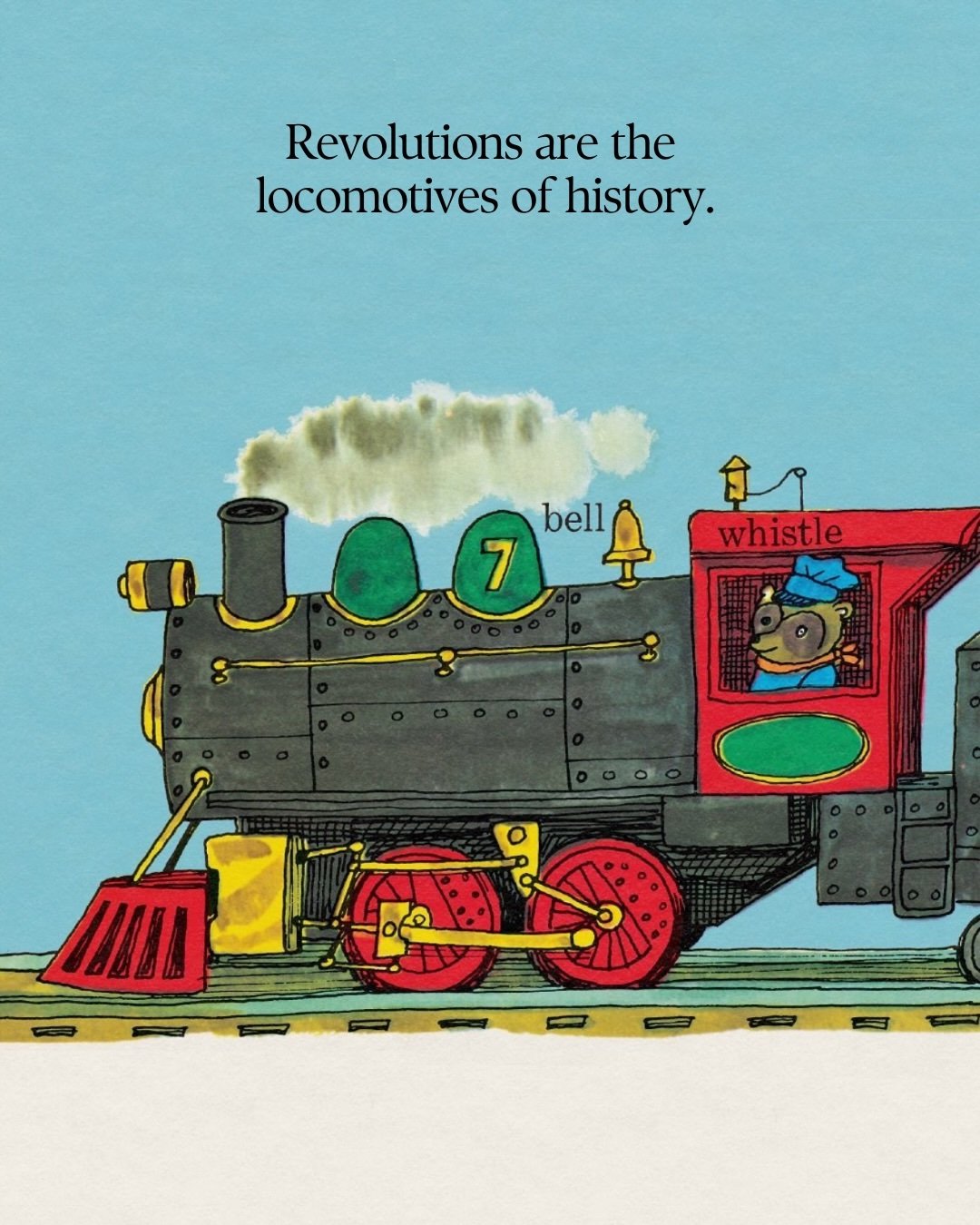
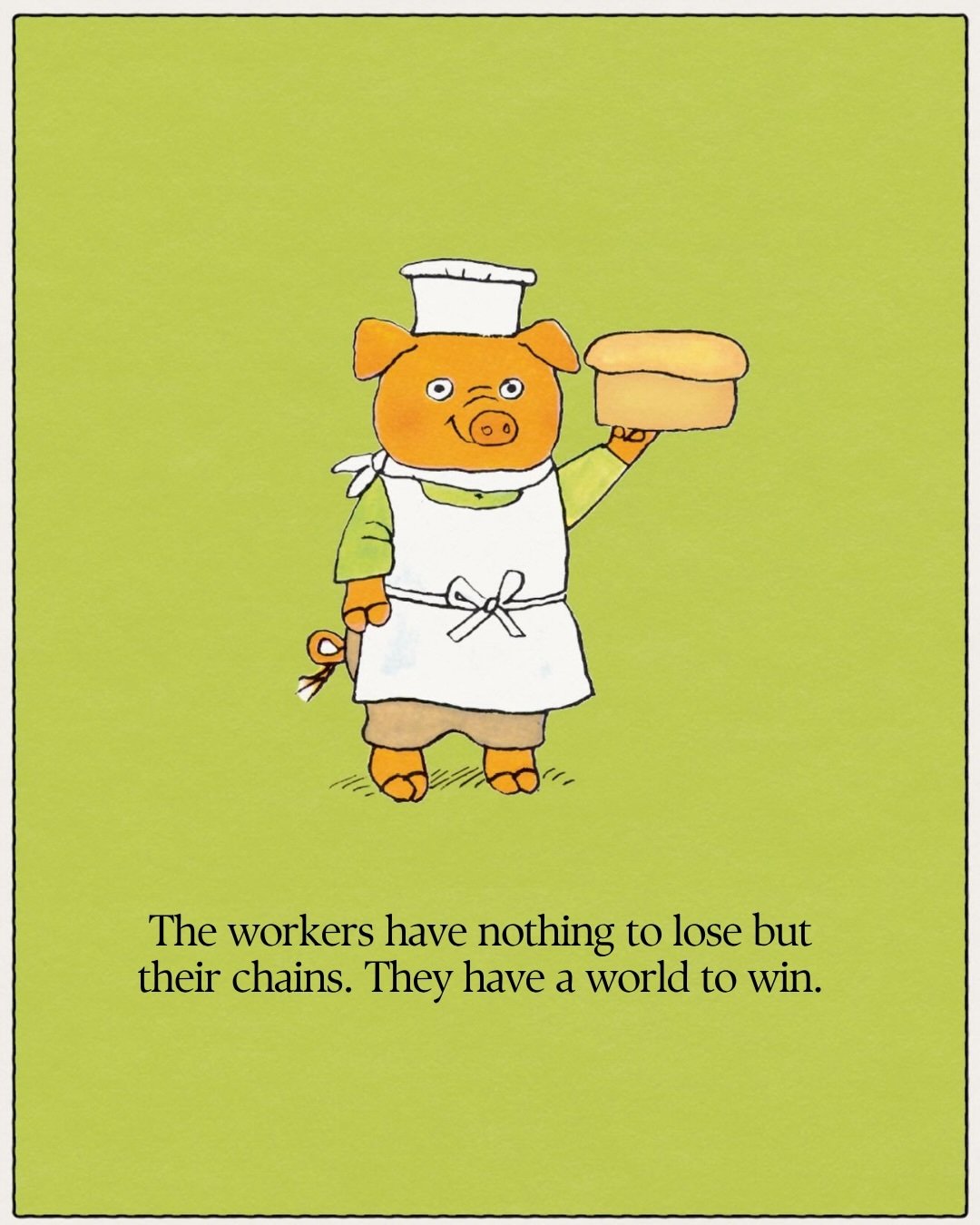
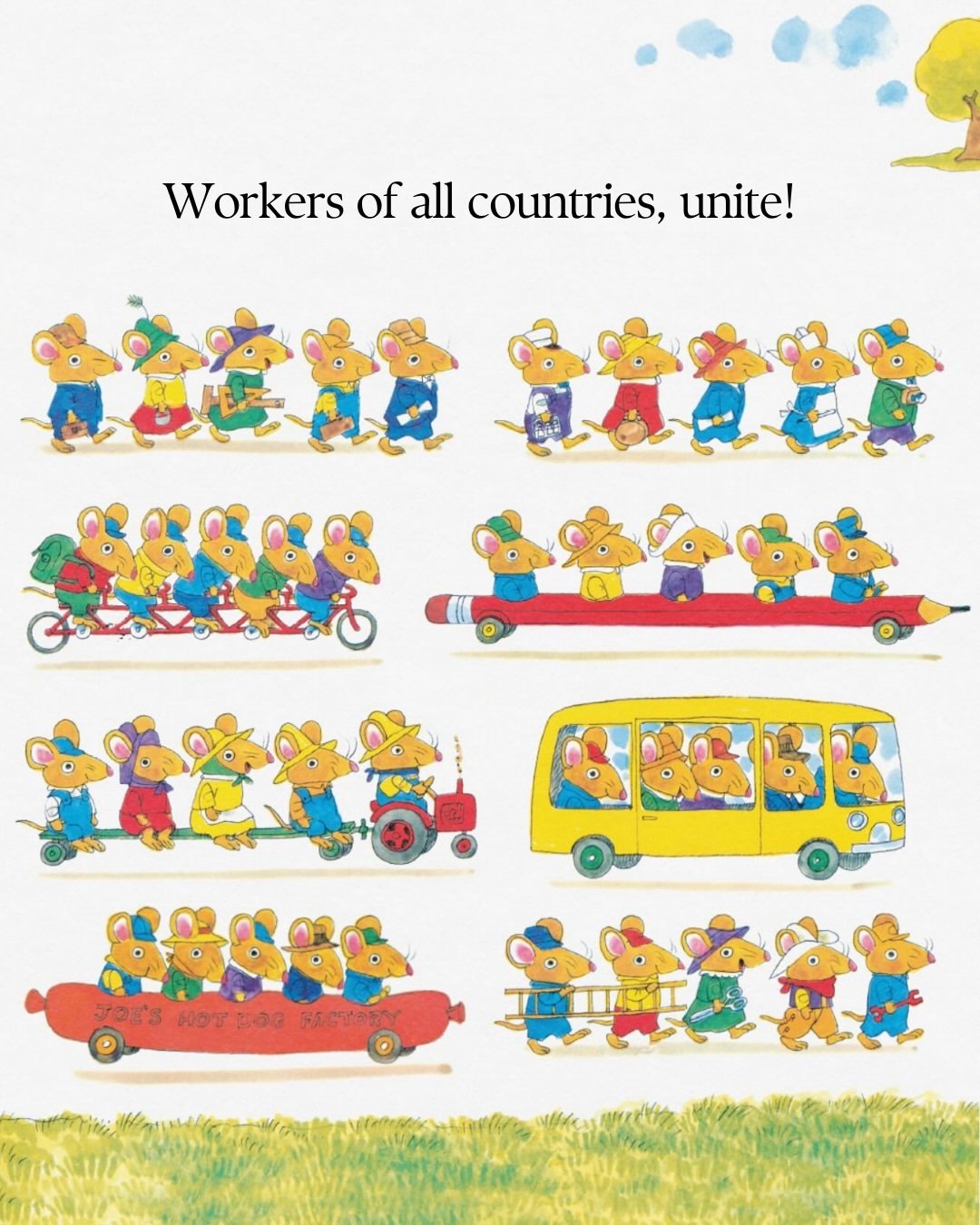
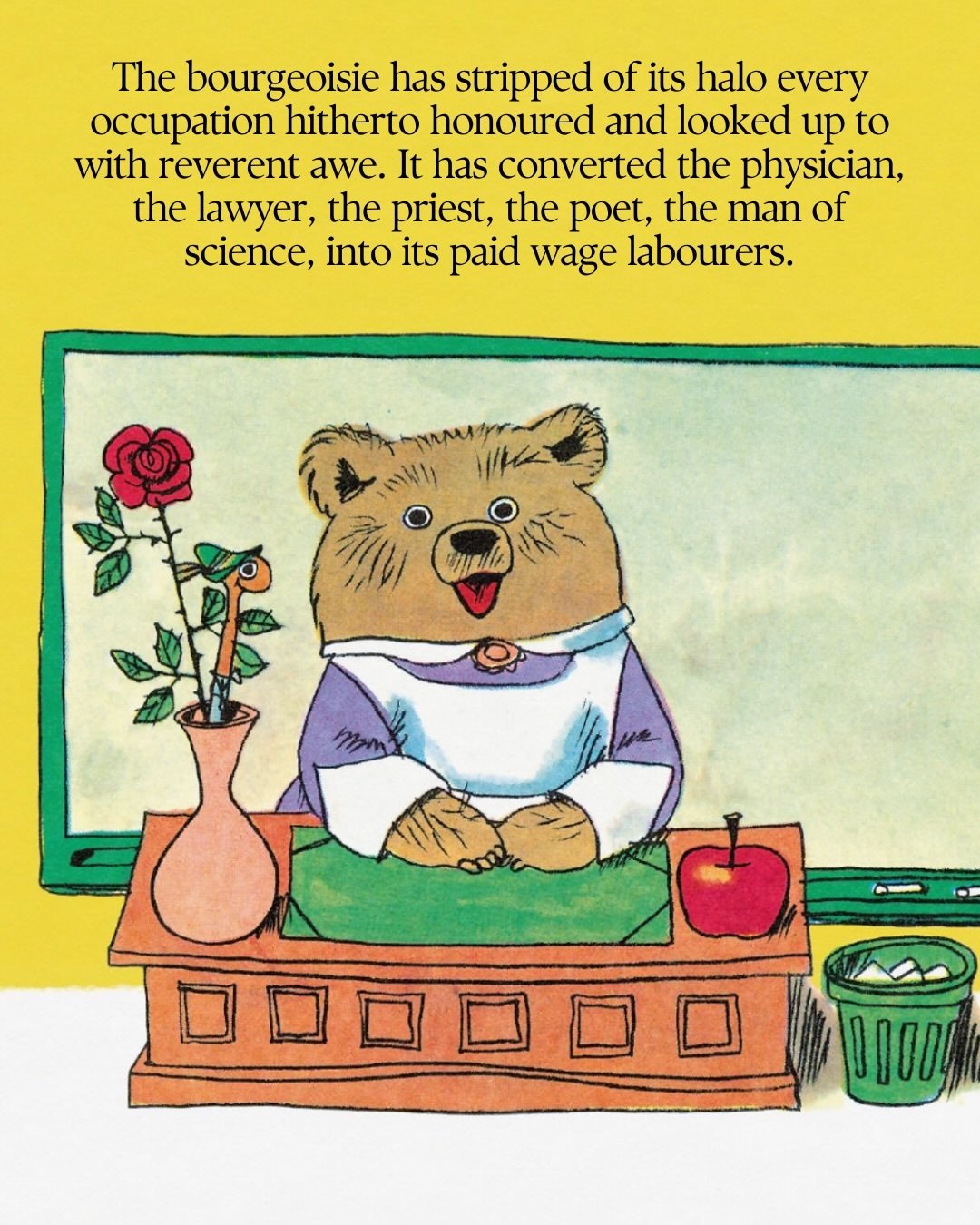
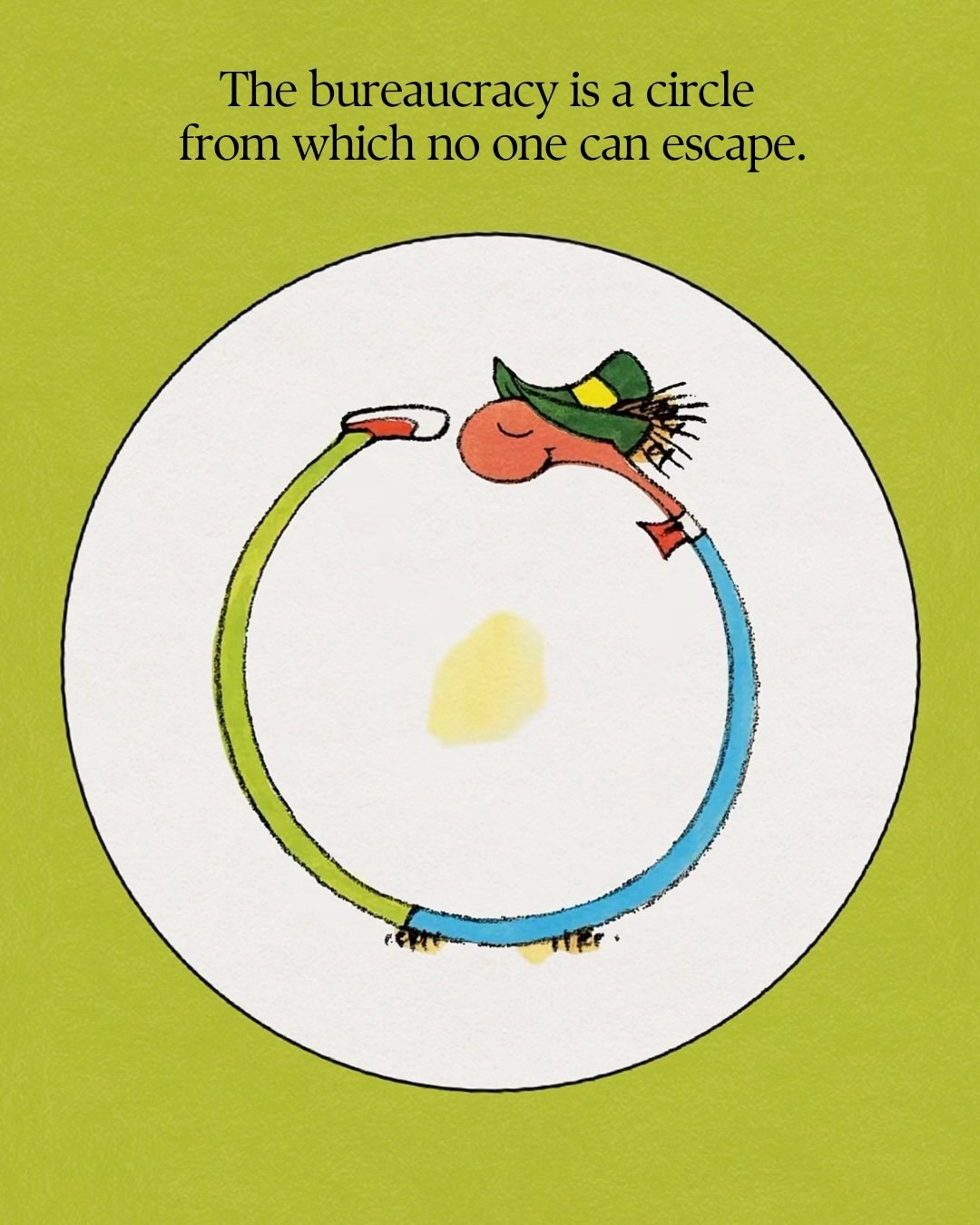
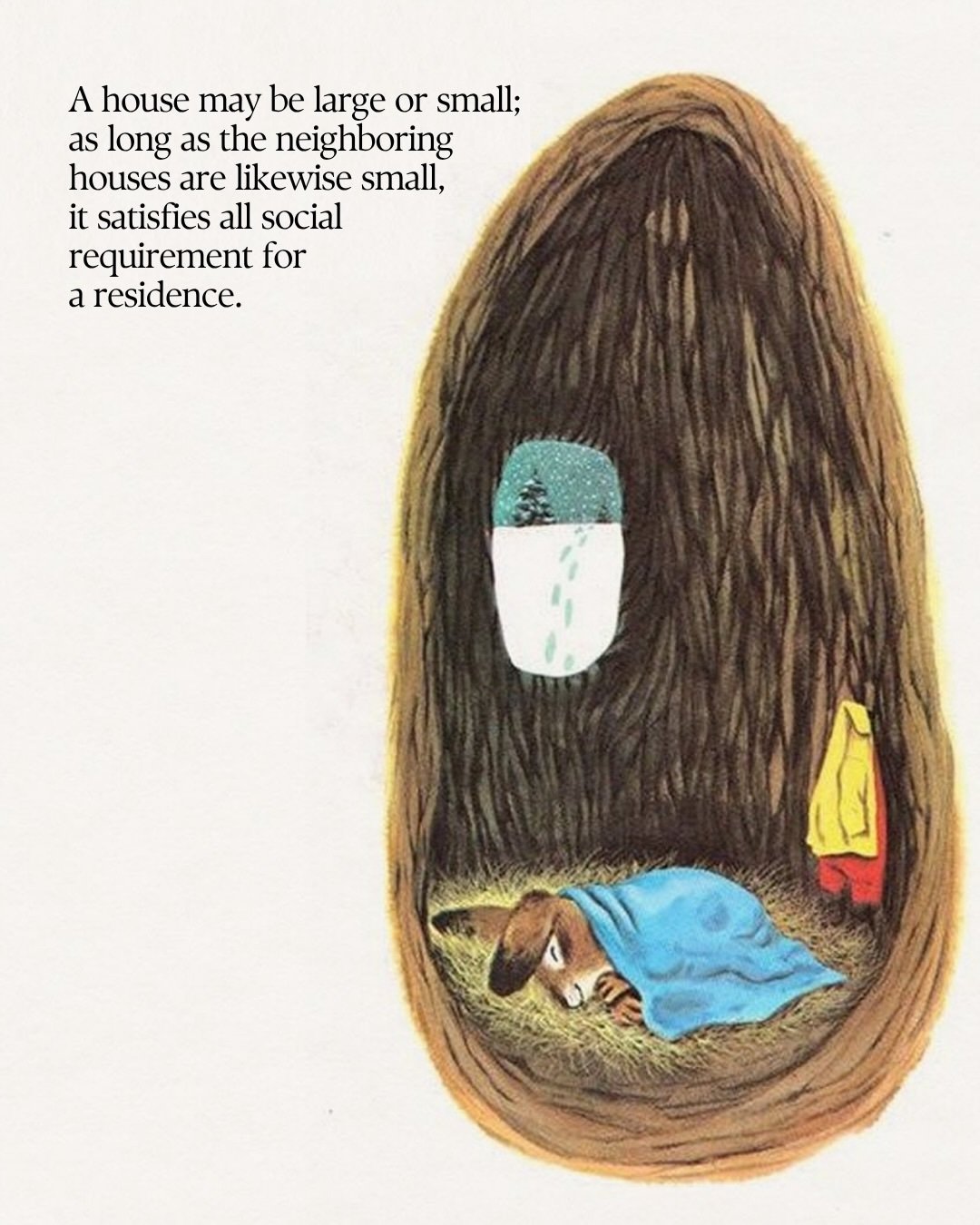
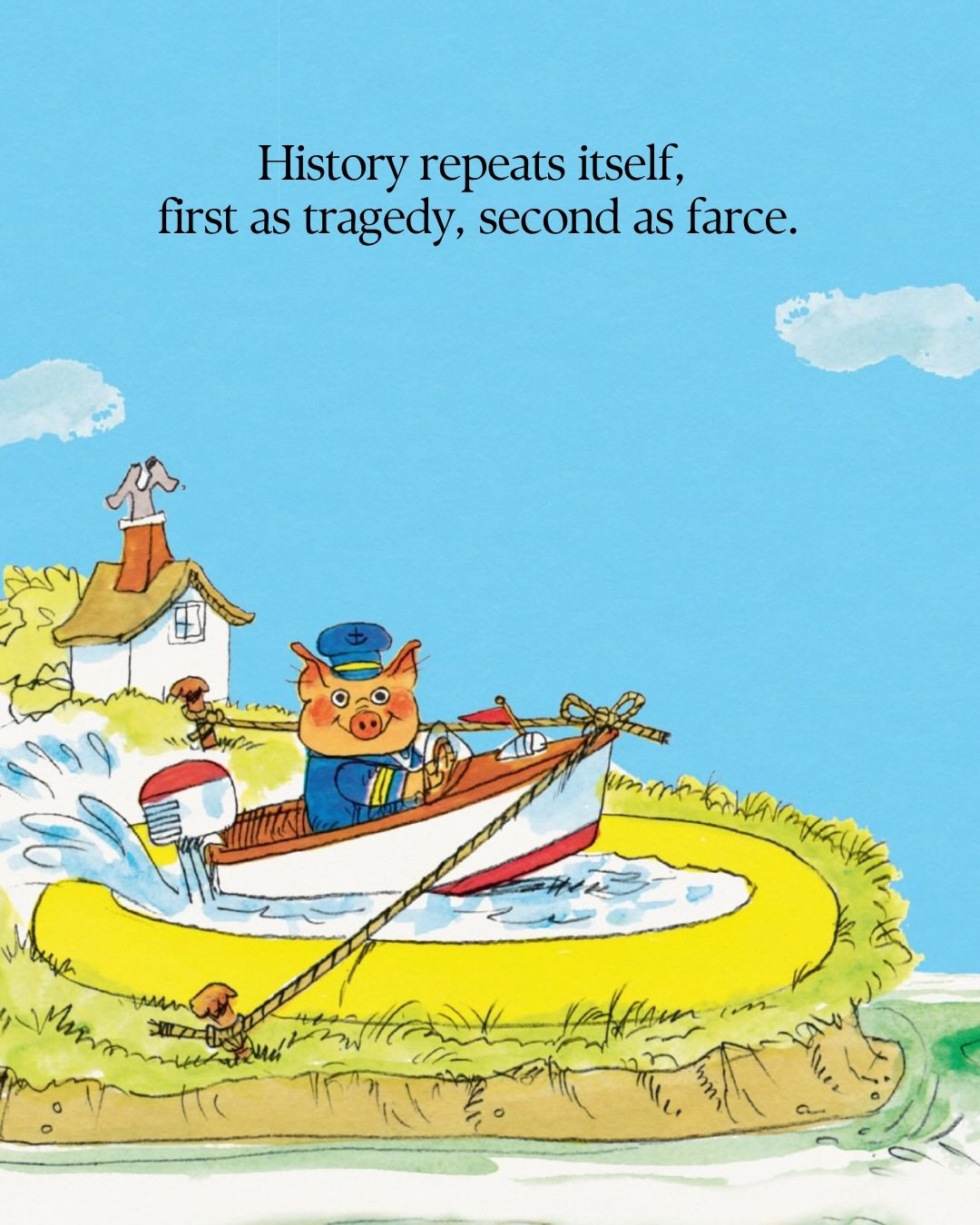
See also Mamdani’s Richard Scarry socialism.
When someone says “German techno group”, you probably have a pretty good picture in your mind. MEUTE, on the other hand, is an 11-piece techno marching band that plays electronic music with acoustic instruments: tubas, trombones, drums kits, etc. Reset (above) is a single from their new album, KOSMOS. I love this.
Somehow I’d never heard of this before: NPR produced and aired1 radio dramatizations of the films in the original Star Wars trilogy. The first program was particularly popular, garnering NPR hundreds of thousands of new listeners. The original versions are available in full on The Internet Archive:
Or get all three parts ripped from the CD.
All three programs contain elements of John Williams’ original soundtrack. Mark Hamill and Anthony Daniels reprised their movie roles for the first two radio programs2 and some other bold-faced names made appearances throughout: Billy Dee Williams as Lando Calrissian, John Lithgow as Yoda (??), Ed Begley Jr. as Boba Fett (???), David Alan Grier as a nameless X-wing fighter pilot, and Nia Vardalos.
The radio programs were based on the original film scripts with some added scenes; from Open Culture:
With science-fiction novelist Brian Daley brought on to add or restore scenes to the script of the original dialogue-light feature film, the story stretches out to thirteen episodes for a total runtime of six hours. The series thus stands as an early example of the expansion of the Star Wars universe that, in all kinds of media, has continued apace ever since.
And from Wikipedia:
Daley adapted the script partly using material from earlier drafts of Lucas’s scripts, and restored several scenes cut from the final edit of the film, as well as adding original new scenes created specially for the audio version. The narrative of the first two episodes takes place entirely before the opening scene of the 1977 film, and expands the background to events leading up to the capture of the Tantive IV spacecraft above the planet Tatooine. Episode 1, largely based on cut scenes from the original, explores the life of Luke Skywalker on Tatooine. During the story, Luke’s skyhopper (a vehicle seen in the background in Luke’s garage during the film) is damaged during a desert race; Luke sees the distant Star Destroyer battle in the sky; and he is reunited with his childhood friend, Biggs Darklighter. Episode 2, made up of material written entirely by Daley, provides backstory to Princess Leia’s acquisition of the Death Star plans from agents of the Rebel Alliance on the planet Toprawa. In scenes set on the planet Alderaan, Leia discusses the plans with her father, Prestor Organa, and determines to go in search of Obi-Wan Kenobi.
There are recut fan versions of the three programs as well, including Nigel’s Edits (Hope, Empire, Jedi); he added some of Ben Burtt’s sound effects into the mix:
These versions, boldly called The Definitive Editions (Hope, Empire, Jedi), include opening scrolls and images taken from Star Wars comic books and trading cards:
Yes, that’s a script turned into a movie turned into an audio drama turned into a, uh, quasi-cinematic Powerpoint? (via open culture)
For more than a year, marshalled by animator Andy Bailey, more than 1000 artists collaborated to create a hand-drawn, shot-for-shot, animated, flipbook version of Peter Jackson’s The Lord of the Rings: The Fellowship of the Ring. The entire three hours. 120,000 individually drawn pages. A couple of months ago, they released the first 11 minutes:
It’s pretty amazing. It doesn’t include the audio or music from the movie, but I bet you could mute the sound on this and simultaneously play the actual movie for the sound. Here’s an earlier sneak peek at some of the scenes:
This artist wrote about their participation in the project; they contributed 108 drawings that amounted to roughly 10 seconds of animation (and took 30-40 hours to do):
The first clip I claimed was a pretty iconic scene from the beginning of the movie. I chose to render it in pencil as it’s night time and I felt black and white would be more dramatic. As I worked through the frames, I did worry that the subtle variances in shading would make the clip look disjointed, but I think it adds a cool movement to the scene. There is that rough, quirky imperfection to hand drawing. You can see the final result with comparison below (digitized and compiled by Andy).
Here’s a clip of that scene:
I can’t wait to see the finished product — I hope they’re able to release it online.
By taking a camera, pointing it out the window of a train, and keeping track of how fast the train is moving, you can create very wide panoramic scans of the scenery.

It’s a little more complicated than that — all the details are here — but you’re essentially using the train (or ferry) as a massive flatbed scanner.
I knew from the start that I’d need to measure the speed somehow, but I was naïvely hoping that I wouldn’t need to measure it that well and could simply fudge it. This image, however, shows that even small variations of speed matter. This was my first glimpse into how much of a pain dealing with speed would turn out to be.
I love little hacky projects like these.
Do you remember the video I posted last summer of YouTuber Benn Jordan where he “uploaded a picture of a bird to a bird and then downloaded the bird picture from the bird”? So cool. Jordan is back with more data encoding tricks in his latest video, There Are Files Stored in This Video (or: How To Hide Shit In Media).
Here’s his intro, which sounds completely bonkers but he demonstrates everything he says he’s going to:
This video is a very deep dive on all of the different ways that you can covertly send and receive data. I’m going to show you how to secretly store encrypted files in music that sounds completely normal to the human ear. I even made a little web app where somebody could paste a link to a Spotify song and it unlocks a completely secret separate audio stream. I’m going to show you how you can send and receive encrypted messages via ultrasound with no cell service or Wi-Fi required by turning your phone into a modem. We’re going to be exploiting Meta’s copyright protection to store ebooks inside Instagram videos. And I’m going to show you how I stored, hosted, and shared malware inside of a harmless Facebook photo of my [dog].
This is a pretty dense video and, I’m going to be honest, some of it went right over my head. But it is also genuinely mind-blowing and makes me want to watch a Sneakers-esque hackers movie where the characters do things like:
So if you ever want to send someone a selfie over PA system in a place with no Wi-Fi or cell service, I guess we’ve made that possible today.
If you want to play around with any of the stuff in the video, Jordan coded a bunch of demos and tools and put them up on his website.
I also ran across this recently: a system that can transfer data at 190 KB/s between two phones by pointing the camera of one phone at a QR video.
I’m currently doing the thing I do after seeing a movie (The Odyssey) I really enjoyed or found interesting: digging into related media. Yesterday I had an hour in the car, so I listened to this episode of The Daily podcast with Madeline Miller and Emily Wilson.
I think it’s quite odd to think that one book or one translation erases the others. I mean, if people prefer some other translation or if people want to read the Greek, I would love for them to do that. I think it’s great. I have no desire to legislate about which versions of “The Odyssey,” or of any ancient text, people want to engage with. So I think there’s something quite strange about the idea that the canon doesn’t have room for many, many different interpretations, translations, engagements, reinventions.
I’ve also flagged this New York Review of Books podcast with Daniel Mendelsohn, another NYT podcast with Madeline Miller, and this WNYC podcast with Emily Wilson for future listening.
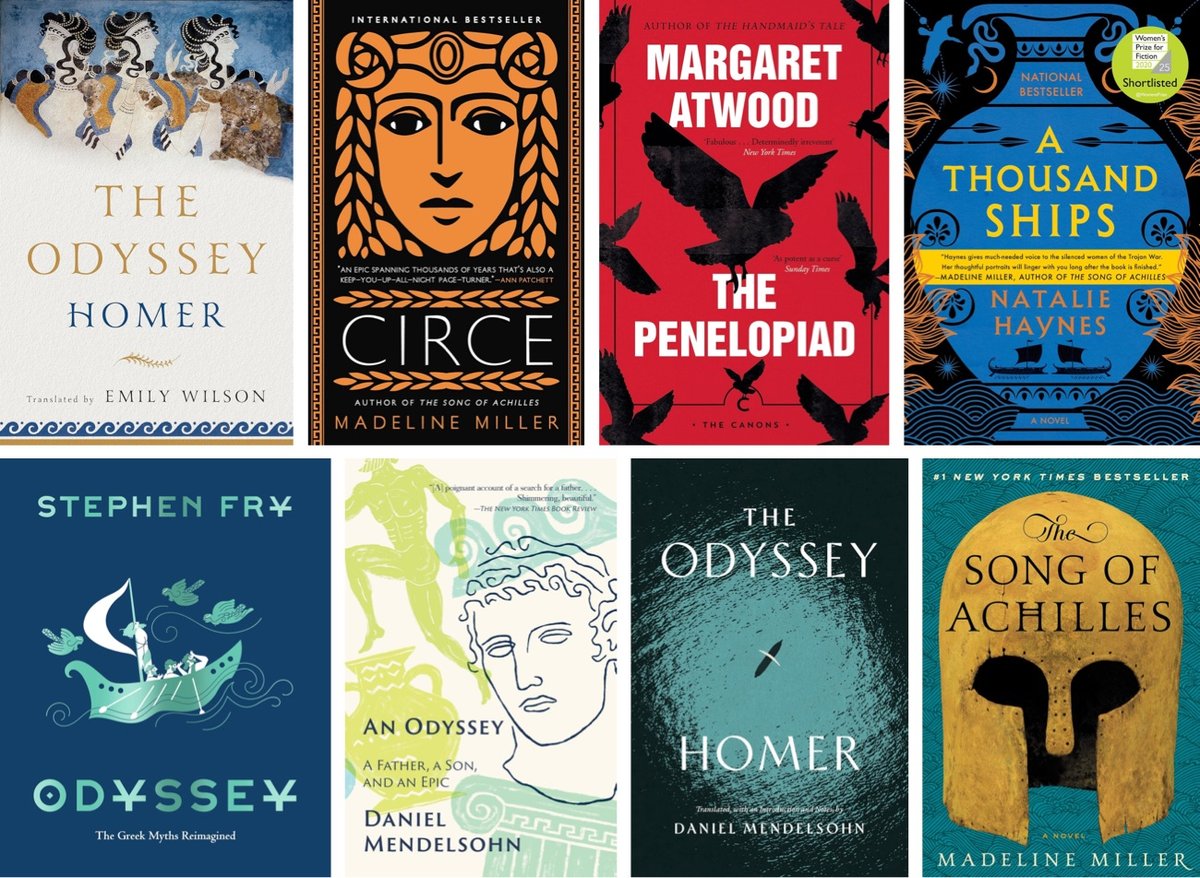
As for reading, Wilson and Mendelsohn both did contemporary translations of The Odyssey within the past few years: The Odyssey translated by Emily Wilson (I loved this, read it aloud to my kids) and The Odyssey translated by Daniel Mendelsohn. Actor Stephen Fry recently did a more approachable reimagining of The Odyssey. The Odyssey: A Graphic Novel by Gareth Hinds is even more accessible, especially for younger readers.
Miller is the author of two great novels based on the Iliad and the Odyssey: Circe (my personal favorite of the two…I love this book and tell everyone to read it)1 and The Song of Achilles.
Other novels based on Homer’s works: The Penelopiad by Margaret Atwood and A Thousand Ships by Natalie Haynes.
Mendelsohn also wrote An Odyssey: A Father, A Son, and an Epic back in 2018; it sounds really interesting:
When eighty-one-year-old Jay Mendelsohn decides to enroll in the undergraduate Odyssey seminar his son teaches at Bard College, the two find themselves on an adventure as profoundly emotional as it is intellectual. For Jay, a retired research scientist who sees the world through a mathematician’s unforgiving eyes, this return to the classroom is his “one last chance” to learn the great literature he’d neglected in his youth—and, even more, a final opportunity to more fully understand his son, a writer and classicist.
Do you have any recommendations for podcasts or favorite Odyssey translations/retellings?
Martin Timko (aka matogolf) cut this video of the best musical moments from Hans Zimmer & Friends: Diamond in the Desert. He plays a number of pieces from various soundtracks, including Dunkirk, Gladiator, Interstellar, Dune, and The Dark Knight. Great to hear live performances of these iconic pieces.
As the World Cup gets underway here in the Americas, here’s a look back at a football battle for the ages: Germany vs. Greece in The Philosophers’ Football Match. Germany’s lineup included Nietzsche , Kant, Hegel, Wittgenstein, and Marx while the likes of Plato, Socrates, Sophocles, and Archimedes took the field for Greece.
Hegel is arguing that reality is merely an a priori adjunct of non-naturalistic ethics, Kant — via the categorical imperative — is holding that ontologically, it exists only in the imagination, and Marx is claiming it was offside.
(thx, meg)
In this modified scene from Breaking Bad, Walter White’s hat grows in proportion to his ego. YT commenter: “He was just brimming with confidence.” Could be time for a BB rewatch. (via @ernie.tedium.co)
Watch and listen to bardcore trio Courseval play a cover version of Daft Punk’s Veridis Quo, a track from Discovery. This is lovely. And a banger.
Courseval have covered other popular music in medieval style, including Rihanna’s Umbrella, Take On Me by A-Ha, Bad Romance by Lady Gaga, and Gloria Gaynor’s I Will Survive.
The original Star Wars movie was a mashup. George Lucas and his collaborators pulled from everywhere: westerns, samurai movies, Flash Gordon, and a 1955 war film called The Dam Busters. This video shows just how closely the attack on the Death Star mirrors a scene from The Dam Busters of a group of bombers attacking a dam. The dialogue is identical in places. From the Dam Busters Wikipedia page:
Director George Lucas hired Gilbert Taylor, responsible for special effects photography on The Dam Busters, to be the director of photography for the film Star Wars. The attack on the Death Star in the climax of Star Wars is a deliberate and acknowledged homage to the climactic sequence of The Dam Busters. In the former film, rebel pilots have to fly through a trench while evading enemy fire and fire a proton torpedo at a precise distance from the target to destroy the entire base with a single explosion; if one run fails, another run must be made by a different pilot. In addition to the similarity of the scenes, some of the dialogue is nearly identical. Star Wars also ends with an Elgarian march, like The Dam Busters.
You can also watch Star Wars footage with Dam Busters audio and Dam Busters footage with Star Wars audio to see just how closely the two scenes match.
Given modern IP concerns and stakes, it’s difficult to envision this type of homage working today. Star Wars came out just 22 years after The Dam Busters, which is a beloved & acclaimed movie in Britain…it’s not obscure. Imagine a movie released in 2026 by a young Academy Award-nominated director that lifts a scene wholesale from a 2004 film like The Notebook, The Incredibles, Eternal Sunshine of the Spotless Mind, or Million Dollar Baby — it just wouldn’t happen without a lot of lawyerly conversation. I mean, maybe Lucas had those convos with The Dam Busters filmmakers… 🤷♂️
David Kaylor is re-editing Rogue One into what he calls “The Andor Cut”; the trailer seems pretty compelling and well-done. He says this is Rogue One if it was produced after Andor:
The original version is the events of Rogue One as seen through Jyn’s perspective, and this is through Cassian’s.
The remixed Rogue One will be out on May 25, available in 4K with 5.1 surround sound. Kaylor has previously produced cuts of all three original trilogy Star Wars movies, Star Wars: Episode III - The Siege of Mandalore & Revenge of the Sith (a combo of the third prequel and part of the 7th season of Clone Wars), and Star Trek: Picard: The Last Generation (a recut of Star Trek: Picard’s 3rd season).
This edit is not to be confused with Andor: The Rogue One Arc, which recuts Rogue One into an Andor-like three-episode arc, leaning heavily on Andor’s soundtrack to set the mood.
This edit is kind of an expression of that with a movie I generally really liked - moving its energy from emulating the jaunty, swashbuckling OT, to more in line with its prequel show’s feel.
Up front, I don’t actually think this elevates or changes Rogue One in any meaningful way. The movie is still the movie, still fast paced and action oriented, particularly compared to Andor’s fiercer, slower, and paranoid ethos. But I do think the elements Andor is rooted in become far more apparent foregrounded to this soundtrack. Where the movie somewhat failed to recapture the energy and excitement of traditional Star Wars (and not for lack of Giacchino effort), the places where it takes itself seriously should now feel less dissonant in a [tonal] context that seriously considers them.
I’ve watched The Rogue One Arc and am looking forward to comparing it to The Andor Cut. And I’ve been seriously contemplating yet another rewatch of the TV series.
From a livestream recorded many years ago, this is Radiohead covering Joy Division’s Ceremony. The song was originally written by Joy Division but the version most people know is New Order’s — it was their first single. From Wikipedia:
“Ceremony” was one of the last Joy Division songs to be composed, with lyrics written by Ian Curtis. According to guitarist Bernard Sumner, the group wrote the song a few weeks before Ian Curtis died “to try and heal him through music” and keep him “involved in the band and involved in music and remind him of what … a great future he had”. Sumner concluded, “Unfortunately, it didn’t work”.
Just three versions of Joy Division performing the song exist, including one on the group’s compilation album Still.
This has been out in the world for a while, but I just ran across it the other day: Bloody Murder is an unreleased track recorded during the studio sessions for Good Kid, M.A.A.D City. It samples Radiohead’s Everything In Its Right Place and it’s gooood. Available on YouTube and Soundcloud.
See also Dwells’ mashup of Everything In Its Right Place and N95.
Older posts



Socials & More