kottke.org posts about movies
Vsevolod Pudovkin was a Soviet film director who developed influential theories of film editing. In this 12-minute video, Evan Richards uses clips from films like 2001, Lawrence of Arabia, and The Godfather to illustrate Pudovkin’s editing techniques.
Pudovkin’s book, Film Technique and Film Acting, which is available to read for free online. Stanley Kubrick was a fan:
The most instructive book on film aesthetics I came across was Pudovkin’s Film Technique, which simply explained that editing was the aspect of film art form which was completely unique, and which separated it from all other art forms. The ability to show a simple action like a man cutting wheat from a number of angles in a brief moment, to be able to see it in a special way not possible except through film — that this is what it was all about. This is obvious, of course, but it’s so important it cannot be too strongly stressed. Pudovkin gives many clear examples of how good film editing enhances a scene, and I would recommend his book to anyone seriously interested in film technique.
Matt Zoller Seitz is doing a video essay series based on his new book, The Wes Anderson Collection. The first two installments, on Bottle Rocket and Rushmore, are already up:
I love what he says about Rushmore:
There are few perfect movies. This is one of them.
The book and video essays came about because Anderson saw Seitz’s earlier video essay series, The Substance of Style, an examination of Anderson’s stylistic influences. Great resource for fans of Anderson and film.
The first trailer for Wes Anderson’s new movie. This looks great!
Kumar Pallana, one of Wes Anderson’s cast of regulars, has died at age 94. Pallana appears as Kumar in Bottle Rocket, Mr. Littlejeans in Rushmore, and as Pagoda in The Royal Tenenbaums.
Pallana led a massively interesting life before hitting the big screen at nearly 80. Born in colonial India, he lived all around the world, and first made a name for himself as an entertainer in America in the 1950s. Back then he was known as Kumar Of India, and his specialty was spinning plates-he even appeared on Captain Kangaroo in 1961. (Other feats included magic, balancing, swordplay, and juggling-you can see him do a handstand in The Royal Tenenbaums.)
Out today is The Wes Anderson Collection (at Amazon), a coffee-table book about Wes Anderson’s career.
The Wes Anderson Collection is the first in-depth overview of Anderson’s filmography, guiding readers through his life and career. Previously unpublished photos, artwork, and ephemera complement a book-length conversation between Anderson and award-winning critic Matt Zoller Seitz. The interview and images are woven together in a meticulously designed book that captures the spirit of his films: melancholy and playful, wise and childish — and thoroughly original.
Vulture has an excerpt of the chapter on The Royal Tenenbaums.
Q: Gene Hackman - it was always your dream for him to play Royal?
A: It was written for him against his wishes.
Q: I’m gathering he was not an easy person to get.
A: He was difficult to get.
Q: What were his hesitations? Did he ever tell you?
A: Yeah: no money. He’s been doing movies for a long time, and he didn’t want to work sixty days on a movie. I don’t know the last time he had done a movie where he had to be there for the whole movie and the money was not good. There was no money. There were too many movie stars, and there was no way to pay. You can’t pay a million dollars to each actor if you’ve got nine movie stars or whatever it is - that’s half the budget of the movie. I mean, nobody’s going to fund it anymore, so that means it’s scale.
That’s right, Gene Hackman (and probably the rest of them as well) worked for scale on The Royal Tenenbaums.
Anderson also talks about the scene in The Darjeeling Limited where they show everyone on the train:
Q: When you turn to reveal the tiger, what is that, the other side of the train?
A: No, it’s all one car. We gutted a car, and that is a fake forest that we built on the train, and it is a Jim Henson creature on our train car. The whole thing is one take, and I think because we did it that way, while we were doing it, we did feel this electricity, you know? There’s tension in it because it’s all real. Fake but real. I mean, that was the idea. The emotion of it, well — there’s nothing really happening in the scene, you know? They just kind of sit there, but it was a real thing that was happening. But I did at the time have this feeling like “I don’t know.”
Even if it’s fake, it’s real.
Smithsonian Mag goes way back to explain why we eat popcorn at the movies.
About 8,000 years ago, maize was cultivated from teosinte, a wild grass that doesn’t look much like the modern corn we know today. Popcorn — a name mostly associated with puffed kernels of corn — is actually a strain of corn, characterized by especially starchy kernels with hard kernel walls, which help internal pressure build when placed over heat. It was one of the first variations of maize cultivated in Central America. “Popcorn went north and it went south, but as far as I can see, it really only survived in South America,” says Andrew Smith, author of Popped Culture: A Social History of Popcorn. Eventually, trade and commerce brought the unique kernels northward. “Most likely, North American whalers went to Chile, found varieties of popcorn, picked them up and thought that they were cute, and brought them back to New England in the early 19th century,” Smith explains.
Terminus is a 1961 documentary depicting a day in the life of London’s Waterloo Station.
The film was directed by John Schlesinger (Midnight Cowboy) and won several awards when it was released. (thx, nick)
The first full trailer for the second Hobbit movie is out. The movie is out in December and was shot at 48fps like the first one.
Cumberbatch! (via devour)
Disney and JJ Abrams are rebooting the Star Wars franchise. This two-minute video outlines four simple rules that could make Star Wars great again.
The rules are:
1. The setting is the frontier.
2. The future is old.
3. The Force is mysterious.
4. Star Wars isn’t cute.
Because I like and respect Jason Kottke, I’m taking this opportunity to express a contrary viewpoint on a documentary he reviewed not two days ago, Rodney Ascher’s “Room 237”.
Before I forget, happy birthday, Jason.
Now, what I suspect has happened here is that both he and our friend John Gruber, whose tweet spurred Jason’s post, sort of missed the point. Which is that the film’s ambition was not to cast light on the conspiracy theories around their beloved Kubrick film (“The Shining”, in case you’re coming to this late), it was not to document further context around the film or to disclose any of its master filmmaker’s process or intentions, but rather to paint an artful picture—a media collage if you will-of obsession, and mania.
But “Room 237” isn’t about “The Shining” or about Kubrick, it’s about a small assortment of unrelated film scholars(?) who have selected “The Shining” as their thing. It’s about the degree of their obsessions, the intricacies of their fixations.
Or rather, it’s not about the people, it’s about the infatuation. Watching the film, you’ll notice fairly quickly that the filmmakers have made the unique and brilliant choice to never show the theorists’ faces on-camera. All we know of them is their voices and their theories. This was at once a respectful and calculated choice. Respectful in that it protects the interviewees from some of the involuntary judgments we the audience will tend to make when given the benefit of someone’s physical appearance. And calculated in that presenting the subjects in audio only frees the viewer from the distraction of a fully fleshed-out human connection. Sure, we can extrapolate character and make judgments based on vocal tone and demographic (not to mention the content of the speech). But the main focus is on the visualizations themselves, which are nightmarishly brilliant.
What we have in the supporting media is a mashup of Kubrickian archive, bizarro warpy analog synth music, some digital wizardy, and old dollar-bin stock footage, all coming together to form a spooky dream fort — a haunted factory built of unfamiliar nostalgia.
You know that psychological effect that has no name, when you used to find an old VHS tape in the back of the cabinet, one that your family would use to record TV shows a decade before, and you’d play it, only to find that the commercials were still intact? Remember that creepy, kind of gross but comfortable remembrance? That’s what “Room 237” has in spades.
I have a unique (or at least memorable) story of my first viewing of “The Shining”. Short version: impacted largely by the medium through which I viewed it, the movie scared the living piss out of me. But I’m willing to put a stake in the ground and say that as scary as “The Shining” is to me, “Room 237” is even scarier. Not because I believe any of the conspiracy theories to be true, but because our minds are capable of manufacturing them.
The documentary Room 237 doesn’t sound like it’s about any of the things I like about Stanley Kubrick’s films, especially The Shining. But Stephen King reminds us that he doesn’t like The Shining either, and for better reasons than novelists usually give when talking about movies based on their books:
Shelley Duvall as Wendy is really one of the most misogynistic characters ever put on film, she’s basically just there to scream and be stupid and that’s not the woman that I wrote about.
Wendy’s best moments in the film are when she’s not that thing, but yeah, she’s mostly that thing.
But at the same time King is bothered by one of the things that is actually super-distinctive and weirdly compelling about Kubrick, fucked up as that dude clearly was:
I’m not a cold guy. I think one of the things people relate to in my books is this warmth, there’s a reaching out and saying to the reader, “I want you to be a part of this.” With Kubrick’s The Shining I felt that it was very cold, very “We’re looking at these people, but they’re like ants in an anthill, aren’t they doing interesting things, these little insects.”
So wait, why is Stephen King talking about The Shining? Because he has a sequel to the book, just out today, called Doctor Sleep. It’s about Daniel Torrance, the little boy from the novel. It follows him through his childhood, and now he’s all grown up.
Haunted by the inhabitants of the Overlook Hotel where he spent one horrific childhood year, Dan has been drifting for decades, desperate to shed his father’s legacy of despair, alcoholism, and violence. Finally, he settles in a New Hampshire town, an AA community that sustains him, and a job at a nursing home where his remnant “shining” power provides the crucial final comfort to the dying. Aided by a prescient cat, he becomes “Doctor Sleep.”
“Aided by a prescient cat”! Oh, whoever at Studio Ghibli becomes the anointed heir of Hayao Miyazaki, please give us a warm, weird, spooky film version of this. This book trailer isn’t doing it for me.
King’s BBC interview is better. Besides Kubrick’s movie, he talks about how The Shining was in retrospect a way for him to autobiographically work through his own drinking problems and resentment for literary fiction.
John Gruber’s tweet last night reminded me I’d never written up a review for Room 237, the documentary about Stanley Kubrick’s The Shining. Gruber writes:
Broke down and watched “Room 237”. It was bad. Really bad. Boring bad. Crazy people.
Just watch “The Shining” again instead.
I agree. I watched it earlier this year and disliked the film so much, I didn’t even finish it, which is rare for me. As I hinted at on Twitter, I’m exposed to enough anti-vaccine, anti-evolution, anti-anthropogenic climate change, anti-science, and religious fundamentalist “theories” in my day-to-day reading that are genuinely harmful to humanity that an examination of how the minds of conspiracy theory crackpots take the smallest little details and weave them into fantastical stories that make no sense is not how I want to spend my time.
As if to underscore my dislike of the film, the following arrived in my inbox shortly after I watched it.
To: Jason Kottke <[email protected]>
Prospective Story: Re: Stanley Kubrick’s “The Shining”
i’m not good at salesmanship so i’ll get right to the point. i’ve solved the mystery of room 237 in stanley kubrick’s ‘the shining’ i’m shopping this information to various media sources. here’s the deal:
*** the price is $13,000.00
*** i’m aware of the documentaries, the scholarly analyses and the terrabytes of web space dedicated to the topic
*** nobody has gottten it right
*** i guarantee satisfaction
*** there’s no risk. either you think the solution to the greatest cinematic mystery of all time is worth 13k or you don’t. all i require beforehand is a conditional agreement protecting me from ip theft
*** i remain anonymous. once the transaction is complete the information is yours. i don’t care who receives credit or what you do with it
it’s been over 30 years. this information should be public. YOU can be the first.
i look forward to your response
Putting on my tin foil hat for a minute, DONT YOU SHEEPLE UNDERSTAND WHAT THIS MEANS? That someone is watching what I’m watching! How did this person know I had just watched Room 237?! I bet it’s the NSA! Or something! They are watching for people with large audiences to plant lies about Kubrick to deflect attention away from the faked Moon landing! For some reason! THIS IS THE PROOF WEVE BEEN WAITING FOR!??
Yep: “Really bad. Boring bad. Crazy people.”
The Other F Word is a 2011 documentary about how punk rockers and other countercultural figures made the transition from anti-authoritarianism to parenthood. Features members from Devo, NOFX, Black Flag, Rancid, and also pro skater Tony Hawk. Here’s the trailer:
To be sure, watching foul-mouthed, colorfully inked musicians attempt to fit themselves into Ward Cleaver’s smoking jacket provides for some consistently hilarious situational comedy, but the film’s deeper delving into a whole generation of artists clumsily making amends for their own absentee parents could strike a resonant note with anyone (punk or not) who’s stumbled headfirst into family life.
Available to rent/buy on iTunes and on Amazon.
(via @claytoncubitt)
The Art of the Title chats with the excellent Jessica Hische about the lettering and type design she did for Wes Anderson’s Moonrise Kingdom.
To me, that was really fun because if you think about New England in the ’60s… it’s not like most places would be staying on top of the most current trends in type, using typefaces that were released that very year. So, using something from the ’40s made sense to me. If you think about a small, conservative New England town, lord knows all the printers and designers in town are probably still using type from years ago. I think when people think about historical type references, they often don’t think about that. You should be reaching from that time period to 15 - 20 years earlier and then you’ll be getting stuff that’s quote-unquote “current.”
And she’s releasing the typeface commercially so everyone can use it! Yay!
I love this theory from Jon Negroni that all of the Pixar movies take place in the same universe and are all connected.
Centuries later, the animals from Brave that have been experimented on by the witch have interbred, creating a large-scale population of animals slowly gaining personification and intelligence on their own.
There are two progressions: the progression of the animals and the progression of artificial intelligence. The events of the following movies set up a power struggle between humans, animals, and machines.
The stage for all-out war in regards to animals is set by Ratatouille, Finding Nemo, and Up, in that order. Notice I left out A Bug’s Life, but I’ll explain why later.
For the reading-averse, there’s a condensed timeline version. (via slate)
Update: And for the very reading-averse, here’s a video explanation:
Tim Pietrusky made an HTML/CSS version of the opening text crawl from Star Wars.
Well, sort of. Rowling is writing a screenplay for Warner Bros. based on a Hogwart’s textbook called Fantastic Beasts and Where to Find Them.
Although it will be set in the worldwide community of witches and wizards where I was so happy for seventeen years, ‘Fantastic Beasts and Where to Find Them’ is neither a prequel nor a sequel to the Harry Potter series, but an extension of the wizarding world. The laws and customs of the hidden magical society will be familiar to anyone who has read the Harry Potter books or seen the films, but Newt’s story will start in New York, seventy years before Harry’s gets underway.
If you’ve watched a movie in the past 20 years, chances are you’ve seen the animation featuring the Pixar logo and Luxo Jr., the company’s mascot. Luxo hops in, squashes the I, and takes its place; here’s what it looks like:
According to the Pixar wiki, there have been several variations of the logo, including the one where Wall-E comes out to fix Luxo Jr’s busted lightbulb:
Others include 20th and 25th anniversary versions, a 3D version that premiered with UP, and versions from Cars 2 and Finding Nemo that incorporate story elements into the logo.
This particular logo debuted with Toy Story in 1995. For the short films Pixar produced before that, they used variations on the not-very-exciting theme of circular indent in beveled square, a shape borrowed from the look of their Image Computer:
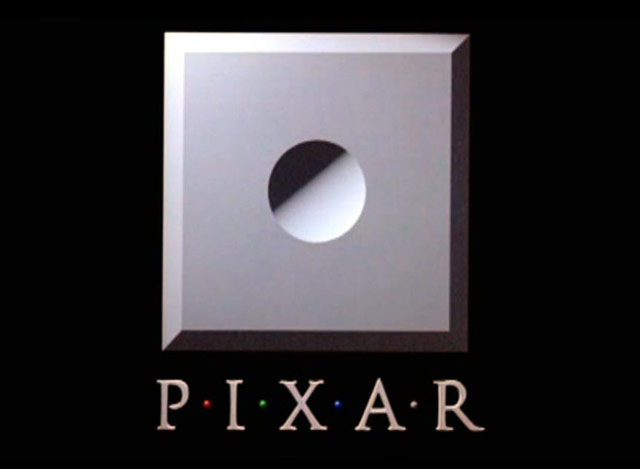
Many of the logo animation variations, including the pre-Luxo Jr. versions, can be seen in this video:
Animator Hayao Miyazaki is retiring from making feature length films. At a press conference in Tokyo, he discussed why.
The director spoke about how his eye sight was getting worse, making it hard for him to create his animation. He also said how each year, he is leaving his desk earlier and earlier.
A reporter noted that Miyazaki’s official retirement statement stated that he was retiring from making feature films. “As long as I can drive,” Miyazaki replied, “I will be going to the studio every day. But if there’s thing I want to do, then I will.”
This year’s The Wind Rises will be his last feature film. My Neighbor Totoro, Princess Mononoke, Spirited Away, Ponyo, and many more…that’s quite a body of work.
Vice has a sneak peak at Errol Morris’ new documentary on Donald Rumsfeld, in what looks like a sequel of sorts to The Fog of War.
Morris has Rumsfeld perform and explain his “snowflakes,” the enormous archive of memos he wrote across almost 50 years in Congress, the White House, in business, and twice at the Pentagon. The memos provide a window into history — not as it actually happened, but as Rumsfeld wants us to see it.
Jesus, that little smile at the end. The Daily Beast has an interview with Morris about the film.
THE DAILY BEAST: How the hell did you get Rumsfeld to agree to do this? Were you chasing him down?
ERROL MORRIS: No, not at all. I wrote him a letter, enclosed a copy of The Fog of War, heard back from him very quickly, went to Washington, and spent a good part of the day with him. We started it under the premise that he would do two days of interviews, I would edit it, and if he liked it, we’d sign a contract and continue. If he didn’t, I’d put the footage in a closet and it would never see the light of day.
The name of the film, The Unknown Known, is a reference to a statement Rumsfeld made at a press briefing about WMDs, terrorism, and Iraq:
There are known knowns; there are things we know that we know. There are known unknowns; that is to say, there are things that we now know we don’t know. But there are also unknown unknowns — there are things we do not know we don’t know.
Empire asked a group of visual effects specialists about their favorite special effect movie moments…here’s what they had to say. Tim Webber (The Dark Knight, Gravity, Children of Men) picked the warehouse scene from Raiders of the Lost Ark:
I love Davy Jones in Pirates Of The Caribbean: Dead Man’s Chest and the T-1000 walking out of the flames in Terminator 2, but my pick is the warehouse scene at the end of Raiders Of The Lost Ark. It’s just a simple matte painting, not a very complicated visual effects shot, but it was done brilliantly. A lot of the visual effects from that period look terrible now — there are lines around things or you can see the joins on matte paintings, but that one was immaculate. I was pretty young when I watched it, but I was so impressed by the way it slowly revealed the size of the place. It’s not your big, crash-bang-wallop modern visual effects shot but it has real dramatic effect.
Josh Gondelman wants to make love to you like in the movies.
Everything that happens will be sexy. There won’t be any gross sounds or sights. Just like in the movies, our sex will be tasteless and odorless. I will not kiss your neck and get a mouthful of perfume and then you’re like what’s wrong and I’ll be like nothing and you’ll get all distant and I’ll be like sorry it’s the taste of your perfume, and you’ll be sad because you only wore it because I said I liked it one time and then all of a sudden you’re not in the mood and I think about sneaking off to the bathroom to furtively masturbate but I don’t and I just hold you limply until you fall asleep then I check Twitter for like an hour. That doesn’t happen.
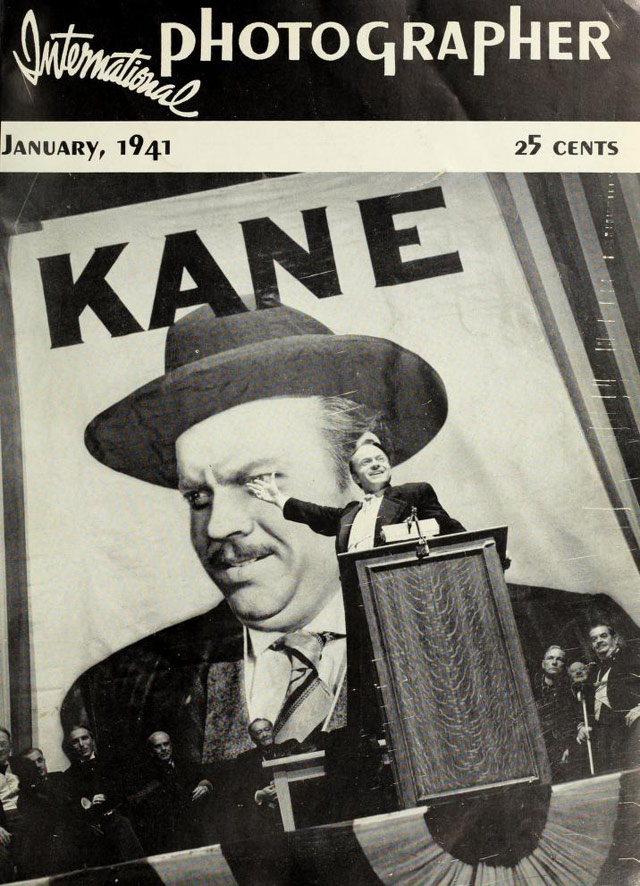
Lantern is a search engine for the books, periodicals, and catalogs contained in the Media History Digital Library. If you are a fan or student of pre-1970s American film and broadcasting, this looks like a goldmine. Here are some of the periodical titles and the years available:
Variety 1905-1926
Photoplay 1914-1943
Movie Classic 1931-1937
Home Movies and Home Talkies 1932-1934
Talking Machine World 1921-1928
(via candler blog)
Here’s the trailer for Visitors, a new film from Koyaanisqatsi collaborators Godfrey Reggio and Philip Glass. Most of the trailer consists of a single two-minute shot.
That shot reminds me of many things: Andy Warhol, long photos, James Nares’ Street, and Robbie Cooper’s work depicting kids playing video games.
Also interesting is that Visitors is comprised of only 74 shots, which with a runtime of 87 minutes means the average shot lasts over a minute. According to a recent investigation by Adam Jameson, an ASL (average shot length) of more than a minute is unusual in contemporary film. Inception, for instance, has a ASL of just 3.1 seconds and even a film like Drive, with many long shots, has an ASL of 7 seconds. But as Jameson notes, Alfonso Cuarón’s upcoming Gravity contains only 156 shots, including a 17-minute-long shot that opens the film. But the Hollywood master of long-running shots? Hitchcock, I presume:
1. Rope (1948, Alfred Hitchcock), ASL = 433.9 [seconds]
OK, this isn’t a recent recent film, but it has to be noted, as it’s most likely the highest ASL in Hollywood. Hitchcock used only 10 shots in making it (the film’s Wikipedia page lists them). (As you probably know, Hitchcock designed those shots, then edited them such that the finished film appeared to be a single take.)
Spike Jonze’s new movie features Joaquin Phoenix falling in love with his computer. The trailer:
That looks really good. I didn’t care for Where the Wild Things Are but Being John Malkovich is one of my favorite movies.
Ecstasy of Order is a documentary about Tetris and the quest to find the game’s grandmasters.
Tetris. We’ve all played it, rotating the pieces (“tetrominoes”) and dropping them in the perfect place, or despairing as we discover a piece won’t fit. You may have even joked about “mastering” the game during a stint of unemployment, or as a child, before you could afford any other Game Boy cartridges. But what about the people who’ve truly mastered Tetris? Where are the Kasparovs and Fischers, the great champions who’ve dedicated their minds to solving its deepest puzzles?
One man made it his mission to find them. In an effort to legitimize Tetris as a pro sport, Tetris super-fan Robin Mihara summoned the greatest Tetris players from around the country to compete in Los Angeles at the 2010 Classic Tetris World Championship. Among them are the only players known to have reached the unthinkable perfect ‘max-out’ score on classic Nintendo Tetris: Jonas Neubauer and Harry Hong. Add in the top players for most lines, Ben Mullen and Jesse Kelkar, as well as newcomer Dana Wilcox and modern-day Tetris Grandmaster Alex Kerr, and a storm of Tetris greatness is brewing.
The film is also on Hulu (US-only) if you don’t mind commercials.
The CarsAndFilms Etsy shop sells posters featuring famous cars from films.
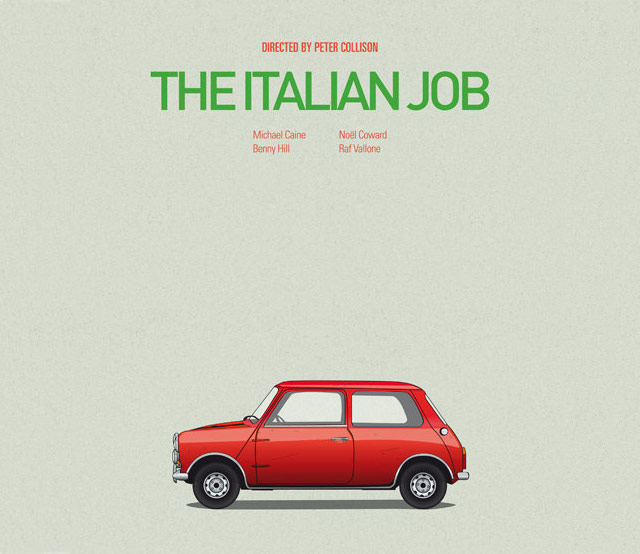
(via cup of jo)
Compiled from a bunch of different sources, here’s an attempt at an exhaustive list of movies that Stanley Kubrick liked. Among them:
Citizen Kane
The Godfather
Metropolis
One Flew Over the Cuckoo’s Nest
Harold and Maude
Close Encounters of the Third Kind
By far the weirdest entry on the list is White Men Can’t Jump. Then again, Terrence Malick loves Zoolander and David Foster Wallace once listed a Tom Clancy novel as a favorite. (via @DavidGrann)
The latest trailer for Gravity, starring Bullock and Clooney and directed by Alfonso Cuarón (who directed Children of Men).
Holy God, this looks terrifying. Can’t wait. (via ★interesting)
Published in 1927 in a publication called The Motion Picture Industry as a Basis for Bond Financing, this map shows what locations in California look like other places from around the world.
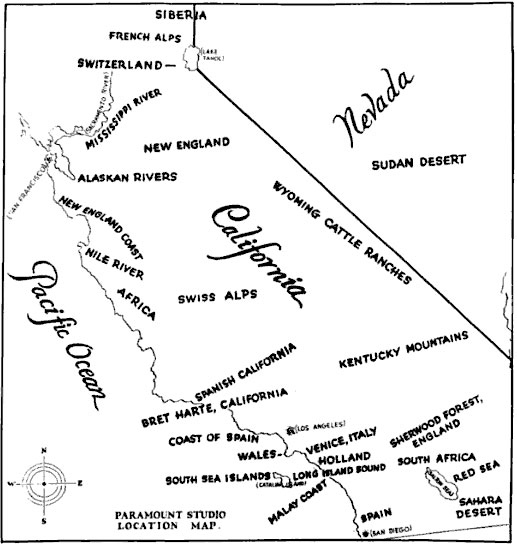
(via flickr)
Newer posts
Older posts





Socials & More