kottke.org posts about NYC
Ian Parker wrote about the NY Times’ restaurant critic Pete Wells for the New Yorker this week.
Wells is generally a well-mannered critic, if not an overly respectful one. In his first years on the job, he was sometimes faulted in the food press for being too generous in his appraisals; he had made a point of publishing fewer one-star reviews than his immediate predecessors. “No one likes one-star reviews,” Wells told me, in a conversation at his apartment, which is in a Clinton Hill brownstone. “The restaurants don’t like them, and the readers don’t like them. It’s very tricky to explain why this place is good enough to deserve a review but not quite good enough to get up to the next level.” He added, “I’m looking for places that I can be enthusiastic about. Like a golden retriever, I would like to drop a ball at the feet of the reader every week and say, ‘Here!’”
Parker covers Wells’ most notable reviews — Per Se, Fieri, Senor Frog’s, Momofuku Nishi — as well as the reactions of the restaurants to the reviews.
“I can’t ever read that review again — I’ll get so fucking angry I’ll die,” Chang said. “I made a lot of that food! I tasted it! It was delicious. And… fuck! I believe in the fucking food we make in that restaurant, I believe it to be really delicious, I believe it to be innovative, in a non-masturbatory way.”
I love David Chang. Never change. But back to Wells, I had a conversation last night with a friend who worked in a restaurant that Wells reviewed and he said that Wells is perhaps not physically suited for undercover restaurant dining — “he’s an odd looking dude” was the quote. And I have another friend in the restaurant industry who, after living in Clinton Hill for a few months, told me, “I think Pete Wells is my backyard neighbor.” Several months later: “Yeah, Pete Wells definitely lives behind me.” We joked about Wells talking over the fence in the style of Wilson, the neighbor in Home Improvement whose face is always partially hidden.
Opened in 1995 on St. Marks in the East Village, the @ Cafe was one of the first (and coolest) internet cafes in the US.1 They had a bunch of computers, a T1 line (at $9000/mo!), a hip menu including alcoholic beverages, and no idea what they were doing. They didn’t plan for ventilation for all the hardware, so they cooled the server room with a garbage can full of ice!
And I was glad to hear the CU-SeeMe shout out at the very end of the video. I think about that app every time I hear about something “new” like Facebook Live, Periscope, or Snapchat. Talk about being ahead of its time…CU-SeeMe was video chat that predated the popularity of the web.
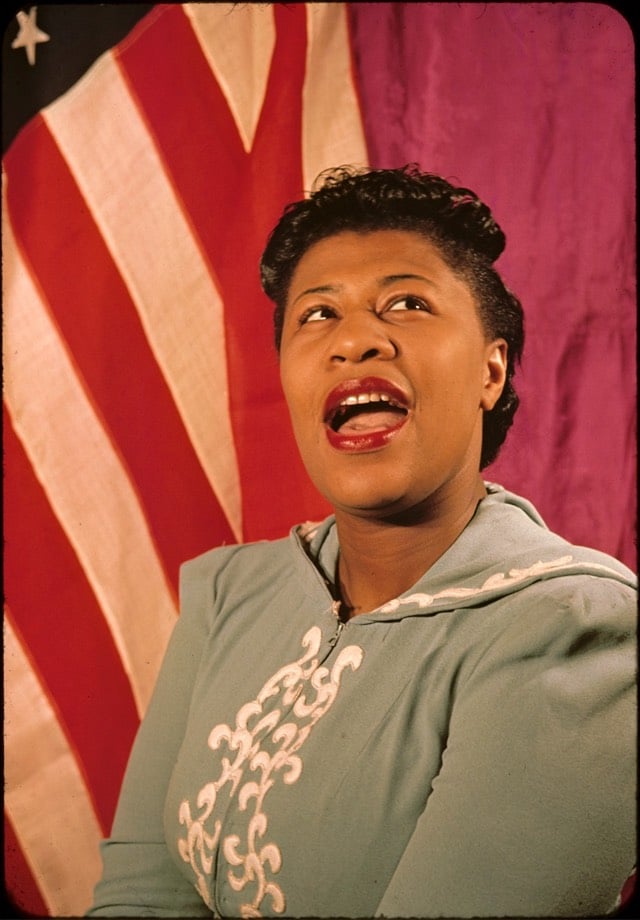

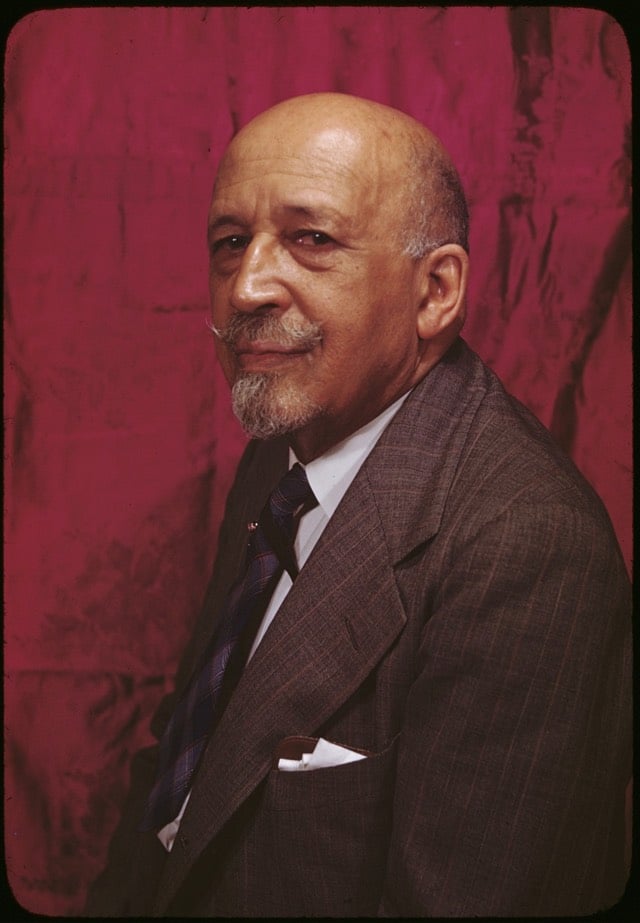
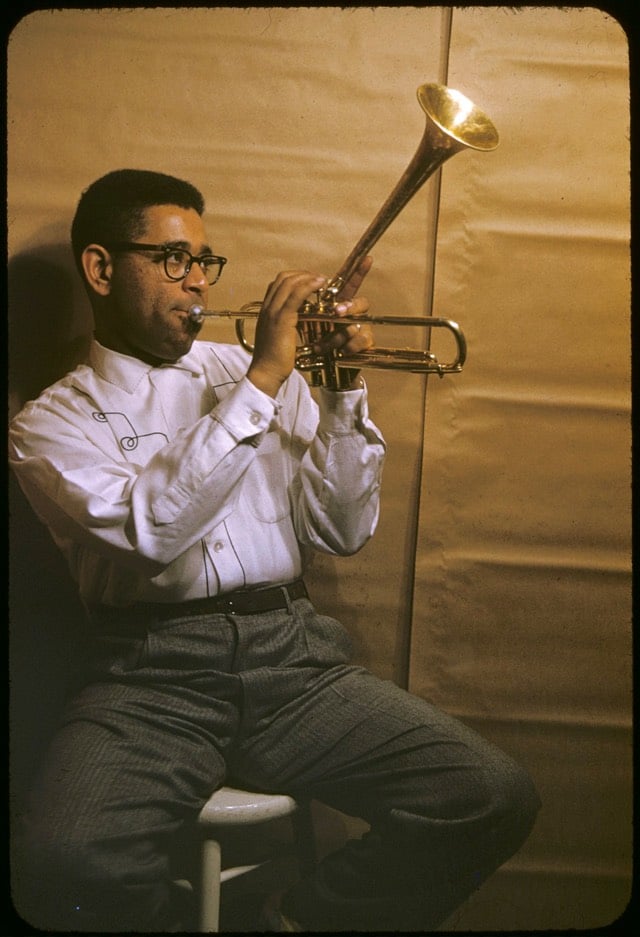
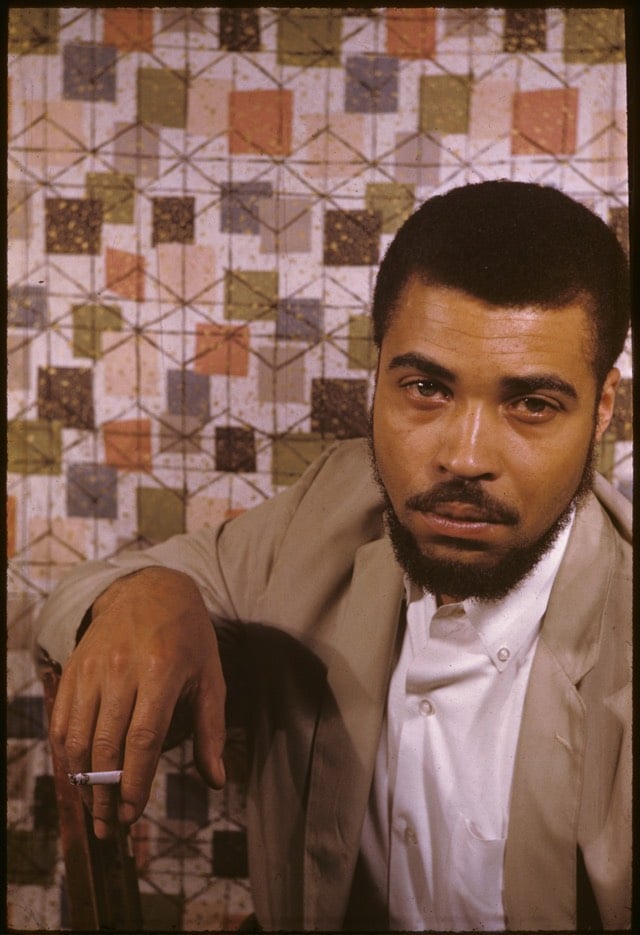
Carl Van Vechten moved to New York in the early 20th century and became “violently interested in Negroes”. As part of that interest, Van Vechten got to know many of the leading black figures in the city and photographed them, first in black & white but later in vibrant Kodachrome. Almost 2000 of his color photos are available at Yale’s Beinecke Library (direct search). Pictured above are Van Vechten’s photos of Ella Fitzgerald, Eartha Kitt, W.E.B. DuBois, Dizzy Gillespie, and a young James Earl Jones. (via the new yorker)
When he was asked to design a new outpost of iconic NYC hot dog joint Papaya King in the East Village, Andrew Bernheimer went around to several other establishments in the city built to serve food quickly — Chipotle, Russ & Daughters, Katz’s, Shake Shack, Gray’s Papaya — and looked at their floor plans and flow of customers through their spaces. Mark Lamster talked to Bernheimer about the survey.
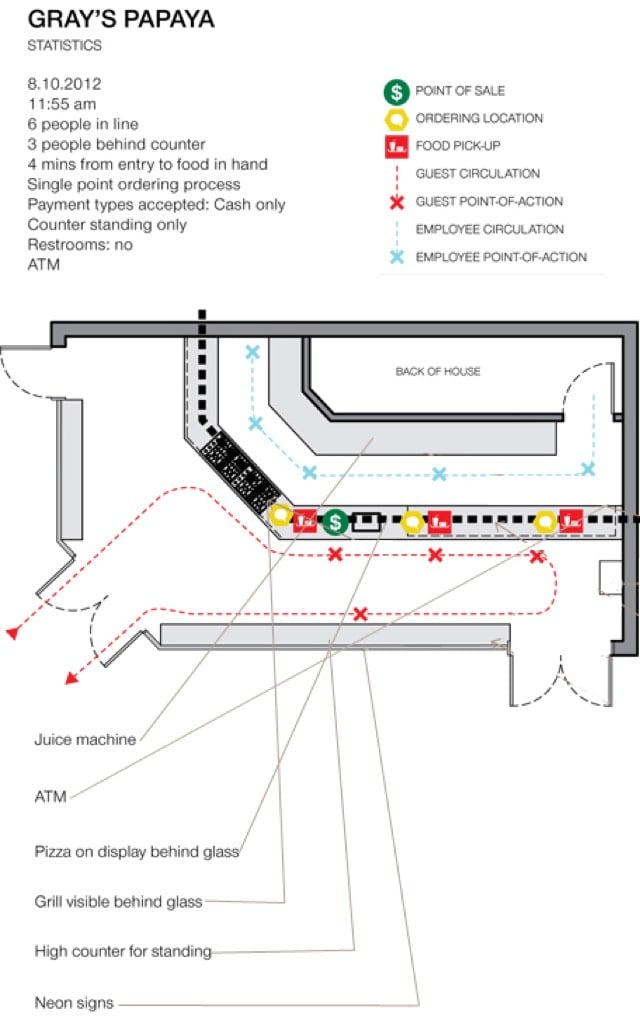
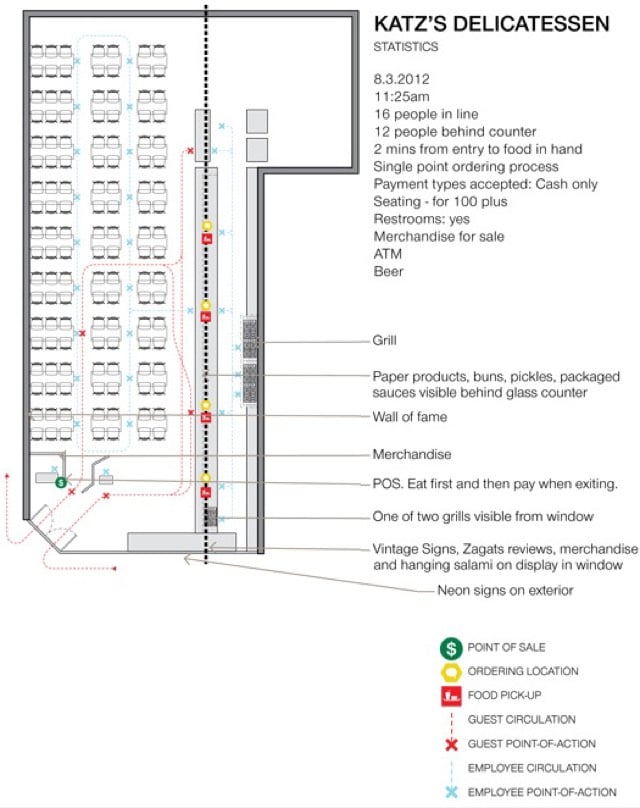
ML: I think at fast food joints we’re conscious that we’re in a very controlled environment, but perhaps don’t realize (because we are in a rush), just how manipulative that space can be. How did you see this playing out in the places you looked at?
AB: It ranged. Artisanal places (like Russ & Daughters) don’t feel manipulative in an insidious way at all (other than showing off some great food and triggering all sorts of synaptic response), while others do (Five Guys and their peanuts, a pretty nasty and obvious trigger to go order soda or spend money on WATER). We didn’t just look at fast food joints, but also icons of New York (R&D, Katz’s) that do try to serve people quickly but I don’t think qualify as “fast food joints.” In these cases the manipulation is either entirely subliminal and beyond recognition, or it has been rendered unnecessary because a place has become iconic, the domain of the “regular.”
Speaking as a customer, places like Katz’s and Russ & Daughters always felt like a total mess to me. Katz’s in particular is the worst: the whole thing with the tickets, paying on the way out, the complete lack of a single line, separate ordering locations for different types of food, etc.
That Gray’s Papaya that used to be on the corner of 8th St and 6th Ave, however, was fantastic. It had the huge benefit of being situated on the corner, but when you walked in, there was the food being cooked right in front of you. It was obvious where the line was and what direction it was moving. And after getting your food, you could exit immediately out the “back” door or circle back against the line to find a counter spot to quickly eat your meal.
On a recent episode of the Serious Eats podcast Special Sauce, Ed Levine talks to Danny Meyer about the origins of the Shake Shack.
Did Meyer have any idea that that hot dog cart would eventually become the massive sensation it is today? Not at all. It was a happy accident, born of his love of burgers, Chicago hot dogs, and the custard that’s still served at Ted Drewes in his native St. Louis.
Martin Pedersen recently reread Jane Jacobs’ The Death and Life of Great American Cities and came away with ten lessons.
3. Jacobs was remarkably prescient on gentrification.
She didn’t invent the term or even use it. But she observed (and I don’t know how, since most cities were in decline at the time) that lively diverse neighborhoods are always at risk for becoming victims of their own success, because newcomers invariably alter the characteristics that made these neighborhoods appealing to them in the first place. Today this seems obvious and self-evident, but that’s largely because of Jane Jacobs.
Yeah, it’s time for a reread…it’s been more than 12 years for me. (via @michaelbierut)
Whoa, this is the coolest! Jason Wright’s Brand New Subway allows players to alter the NYC subway system as they see fit. You can start with existing maps and the choices you make affect ridership and the price of a Metrocard.
Players can choose to start from scratch or one of several NYC subway maps (including present-day, maps dating back to the early 1900s, or maps from the future). They can build new stations and lines to expand the system to new areas, or tear it down and redesign the whole thing. The game intends to evoke an imaginative spirit, to empower people to envision transportation according to their needs and desires, and to arouse the fun of tinkering with maps.
This project is an entry in The Power Broker Game Design Competition, the goal of which is to adapt Robert Caro’s The Power Broker into a playable experience. Wright explains how his game hits the mark:
Bottom-up vs. top-down design. Moses was infamous for his top-down approach to urban planning. He held “the public” as a concept in high regard while simultaneously showing contempt for the individuals who made up that public, in the form of arrogance, spitefulness, and an utter lack of concern for the millions displaced for his expressways and parks. Later on in his career, as the span of his projects increased, Moses would make monumentally important decisions about the fate of a neighborhood without once setting foot there. He was known for building 13 bridges and hundreds of miles of parkways despite never driving a car.
Although Brand New Subway might appeal to someone who enjoyed SimCity but who has never set foot in New York City, it’s targeted primarily at those who actually ride the subway and who might feel invested in what they design. In that regard, it inverts Moses’ paradigm by encouraging players to improve on transportation in their own neighborhoods and in ways to which they have a personal connection.
I reeeeeeally didn’t want to spend the rest of my day playing with this, but that super express train from Manhattan to JFK isn’t going to build itself! (via @byroncheng)
Until their first show at Madison Square Garden in NYC last week, Radiohead hadn’t played Let Down off of OK Computer in concert since 2006. I was lucky enough to be in attendance and some collective shit was lost over this, I tell you what. They’ve since played it at all three of their subsequent shows. (They’ve also played Creep twice in the past week, which is also rare.)
Here’s the full set list from that night, which is mainly just for me in 28 years when this is the last remaining page on the internet with this info.
Burn the Witch
Daydreaming
Decks Dark
Desert Island Disk
Ful Stop
Lotus Flower
The National Anthem
15 Step
No Surprises
Tinker Tailor Soldier Sailor Rich Man Poor Man Beggar Man Thief
Separator
Planet Telex
The Numbers
2 + 2 = 5
Everything in Its Right Place
Myxomatosis
Idioteque
Encore:
Let Down
Present Tense
Paranoid Android
Nude
Bodysnatchers
Encore 2:
Bloom
Street Spirit (Fade Out)
Update: Here’s a video from when they played it in 2006 in Wolverhampton:
(via @jamsandwich)
Chef and Momofuku founder David Chang spends a lot of time thinking about food and he’s arrived at what he calls the Unified Theory of Deliciousness.
My first breakthrough on this idea was with salt. It’s the most basic ingredient, but it can also be hellishly complex. A chef can go crazy figuring out how much salt to add to a dish. But I believe there is an objectively correct amount of salt, and it is rooted in a counterintuitive idea. Normally we think of a balanced dish as being neither too salty nor undersalted. I think that’s wrong. When a dish is perfectly seasoned, it will taste simultaneously like it has too much salt and too little salt. It is fully committed to being both at the same time.
I’m not sure his observations are exactly unified, but they are interesting and also why I enjoy eating at his restaurants so much. A meal I had at Ssam Bar shortly after they switched away from the initial Korean burritos menu is in my top 5 meals of all time and a pair of dishes at Ko (both somehow simultaneously familiar and new) are among the most delicious things I’ve ever eaten.


Stacey Baker, who is a photo editor at the NY Times, spends some of her leisure time photographing the legs of women on the streets of NYC. Her Instagram account has 78K+ followers and now she’s turned the project into a book: New York Legs.

Great cover.
Casimir Nozkowski grew up in a building at 70 Hester Street on the Lower East Side of Manhattan. Before his parents occupied it in the late 1960s, the building had been a synagogue, a Prohibition-era distillery, and a raincoat factory. Before they moved out in 2012, Nozkowski “filmed the hell out of it” and made a short documentary about his childhood home.
My documentary is about my childhood home and how much of the past you could still see in it when we left. It’s about the development of a neighborhood a lot of lives have passed through and whether you can protect that legacy while still making room for new lives and new memories. In making my movie, I tried to follow some advice my mom gave me: “Don’t make a movie about moving out. Make it about how great it was to live here.” I like that sentiment but I couldn’t help wondering what was going to happen next to the old building I grew up in.
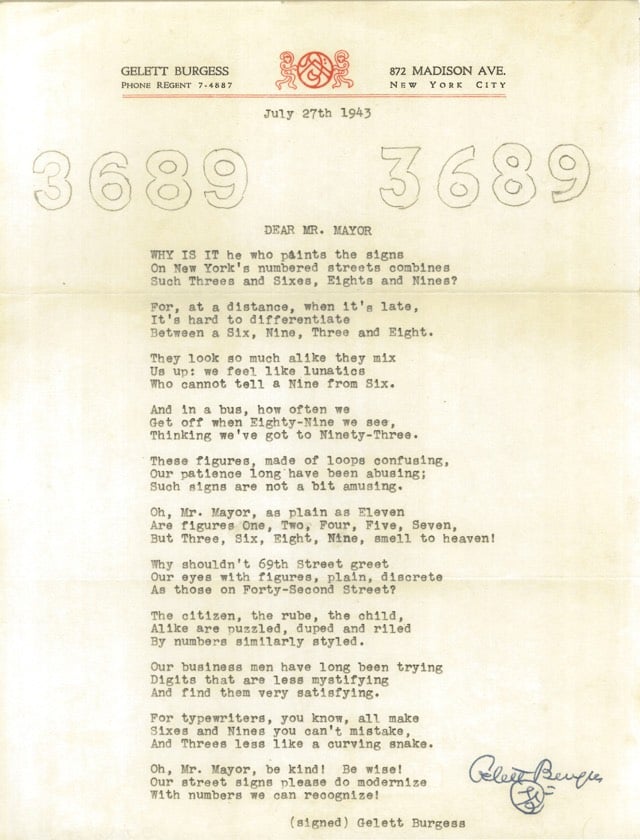
In 1943, artist and poet Gelett Burgess wrote a poem to New York Mayor Fiorello La Guardia complaining of the poor typography on some of the city’s street signs. La Guardia wrote back, also in verse. (via @john_overholt)

Sad news from the NY Times: legendary street fashion photographer Bill Cunningham has died today at the age of 87.
In his nearly 40 years working for The Times, Mr. Cunningham operated both as a dedicated chronicler of fashion and as an unlikely cultural anthropologist, one who used the changing dress habits of the people he photographed to chart the broader shift away from formality and toward something more diffuse and individualistic.
At the Pierre hotel on the East Side of Manhattan, he pointed his camera at tweed-wearing blue-blood New Yorkers with names like Rockefeller and Vanderbilt. Downtown, by the piers, he clicked away at crop-top wearing Voguers. Up in Harlem, he jumped off his bicycle — he rode more than 30 over the years, replacing one after another as they were wrecked or stolen — for B-boys in low-slung jeans.
I saw Cunningham out on the streets of NYC twice and both times chills ran up my back watching a master at work. Unless Cunningham had something in the can before he died, it looks as though the last of his On the Street features is about black and white fashion. Tonight might be a good time to watch the documentary Bill Cunningham New York — it’s available on Amazon (free with Prime).
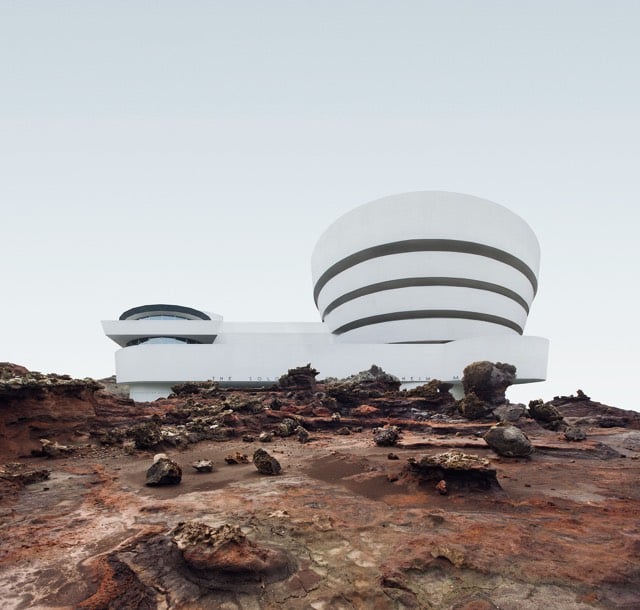
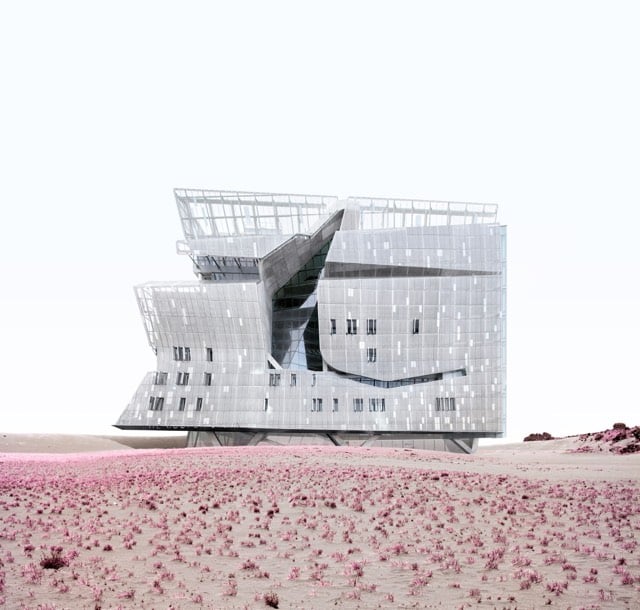
The Misplaced Series removes notable New York buildings from their surroundings and “misplaces” them in desolate landscapes around the world. Concrete behemoths and steel-and-glass towers rise from sand dunes and rocky cliffs, inviting viewers to see them as if for the first time. Out of context, architectural forms become more pronounced and easily understood.
See all 10 buildings in their new surroundings at Misplaced New York.
NYC water tastes amazing. Better than bottled. Where does the city get such great water from?
The Catskill/Delaware watershed, which extends 125 miles northwest of the city, provides more than 90 percent of the city’s supply. The rest comes from the Croton watershed.

It can take 12 weeks to a year for water to wind its way to the city from the streams, tunnels, dams and reservoirs in the Catskills. All of it is delivered to the city by gravity alone.
“Gravity’s an important friend of ours,” said Mr. Rush, the deputy commissioner, explaining that it “works nonstop” and is “energy efficient.”
Whoa, I had no idea the aqueduct tunneled 1000 feet under the Hudson River. Water systems have been in the news lately, both in Flint, MI and here in NYC, where Mayor de Blasio postponed work on Water Tunnel #3 and then, a day later, responding to public concern over the postponement, announced that he was going to accelerate the work on Tunnel #3.
See also David Grann’s classic 2003 New Yorker piece about the NYC water system, City of Water.
The author accompanied a group of sandhogs and nine cases of dynamite six hundred feet down a shaft leading to a segment of the tunnel that lies below Tenth Ave. and 13th St. New York’s invisible underground empire goes as deep as the Chrysler building is high. Tunnel No. 3 has been under construction since 1969; it will extend sixty miles, from the reservoir in Yonkers to the end of Manhattan, with various redundant loops.
Newer posts
Older posts





Socials & More