



A recently unearthed conversation with Anthony Bourdain from 2005. “We discuss Tony’s preferred sucker-punch etiquette, his loyalty to cigarettes & the Chateau Marmont, ayahuasca in Peru, and the talk show he dreamed up with Christopher Walken in mind.”

Advertise here with Carbon Ads
This site is made possible by member support. 💞
Big thanks to Arcustech for hosting the site and offering amazing tech support.
When you buy through links on kottke.org, I may earn an affiliate commission. Thanks for supporting the site!
kottke.org. home of fine hypertext products since 1998.
Beloved by 86.47% of the web.
Entries for August 2026

Supersonic Trebuchet
Ok so when you woke up this morning, you probably didn’t expect to watch a 20-minute video about a trebuchet — but to be fair, I didn’t either. But Tom Stanton’s build of a fully mechanical trebuchet that propels a tiny plastic pellet faster than the speed of sound (complete with tiny sonic boom) is genuinely fascinating to watch.
He starts with a basic plan, but as he builds & tests, there are all sorts of problems (weight, strength) that he needs to overcome. The final product is impressive, but it’s the process that’s most interesting to me. What a gift these sorts of videos are…you could sometimes find process-heavy shows on PBS (like How to Create a Junk Food) when I was a kid, but if I’d had access to stuff like the supersonic trebuchet video (and all those Lego engineering videos), I’d have probably wanted to grow up to be an engineer.
Craig Mod wrote about his recent adventures using LLMs: A Swarm of Blood Robots. “I now have a comprehensive family tree, naming the very boats my Italian and Polish ancestors came over on in the late 1800s, the villages a few came from…”
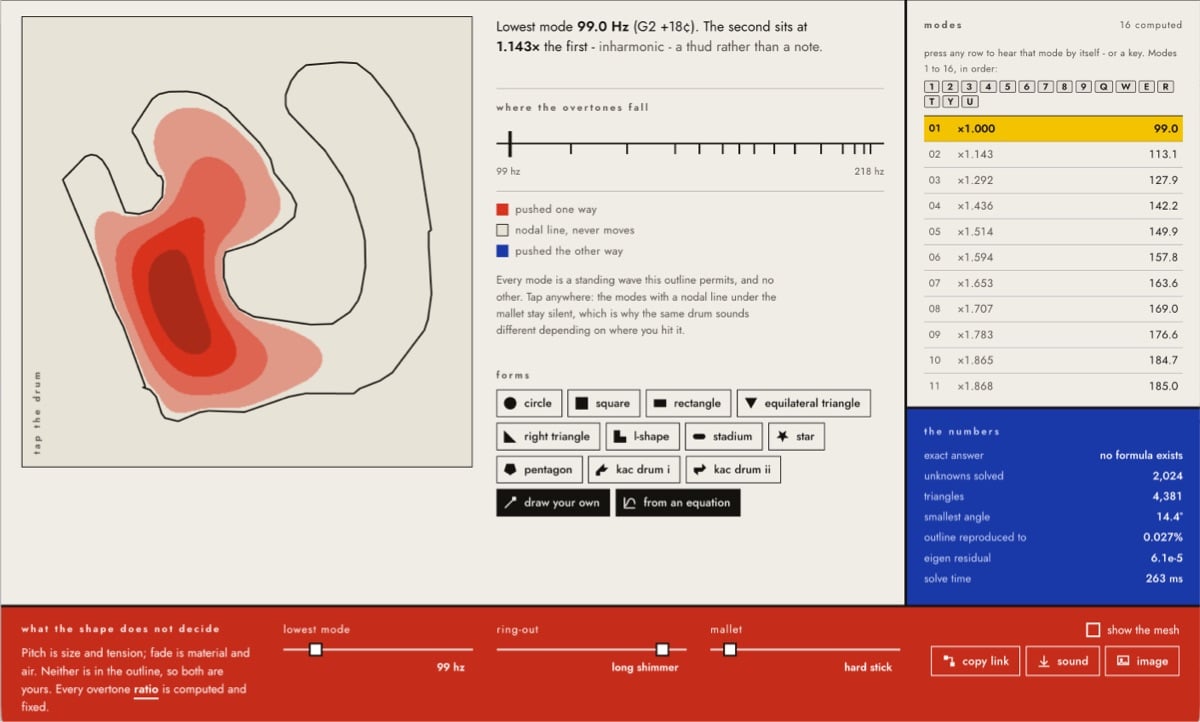
“Draw any shape and hear it as a drum.” Eigendrum: a drum simulator where you can change the shape of the drum to see how it affects the sound it makes.
G.P.S. and the Lost Art of Getting Lost. “G.P.S. has also led us to outsource existential skills: locating yourself in space, parsing out your surroundings, staying calm when you don’t know where you are. Do we lose something when we no longer get lost?”
Some of the most storied problems in mathematics, those posed by Paul Erdős, are being solved by LLMs.

The Art of the Copyist
Lovely short video about artist Jas Knight, who is a participant in the Met Museum’s Copyist Program:
The Copyist Program offers time and space for artists to develop their own interpretation of an artwork through intimate study in the Museum’s galleries. Copyists have created reinterpretations of original artworks in The Met collection since 1872.
Here’s Knight from the video, in which he is copying Diego Velázquez’s Juan de Pareja:
Almost every artist was a copyist up until the 20th century because as a painter you would go through certain exercises to learn how to paint. You haven’t begun to see a painting until you’ve copied it.
And I especially liked this bit:
Velázquez’s brain is on that canvas. So we’re encountering a person’s brain that doesn’t exist anymore when we’re looking at a painting by them. I’m literally interacting with Velázquez.
In a piece about Harold Fisk’s Mississippi meander maps, I wrote about art as a time machine:
It takes some imagination, but standing before a painting by Hilma af Klint, a sculpture by Bernini, or a cave painting in Chauvet, France draws you back in time in a powerful way: you know you’re standing precisely where those artists stood hundreds or even thousands of years ago, laying paint to surface or chisel to stone. Even experiencing art through prints or photographs leads the mind to consider all the cultural, political, technological, and economic things that were happening when the work was produced. Art is a doorway to past worlds.
You can see Knight’s copy of Velázquez’s Juan de Pareja and compare it with the original. (via the kid should see this)
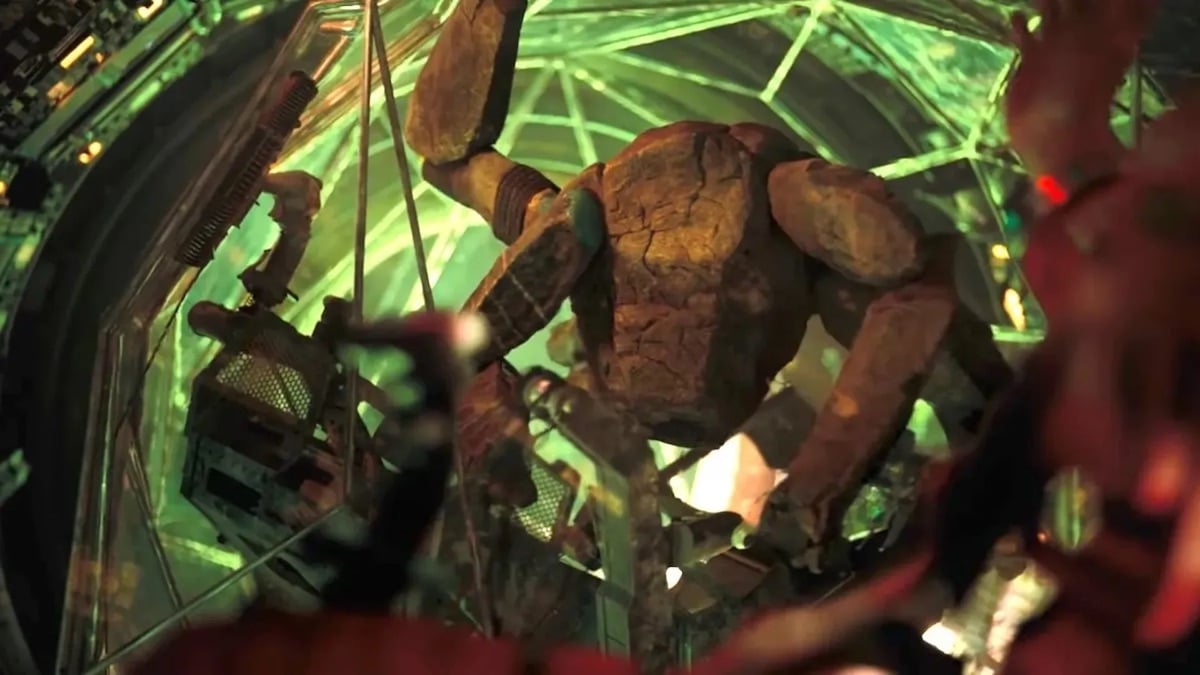
Here’s how Rocky’s musical language from the Project Hail Mary movie was created. The filmmakers didn’t “want it to feel like a human language because he’s supposed to be really more musically communicating”.
I’m Done Using AI. “It made me lazy. It made me stop caring. It made me a worse programmer. It made me depressed. Because I stopped doing the hard work, I stopped learning, I stopped growing, I stopped being the one making the software.”
Why weren’t bicycles invented sooner? “Why was no one…even considering the question of human-powered vehicles until the 1400s? Why weren’t there bicycle mechanics in the 1300s, when there were clockmakers, or at least by the 1500s, when we had watches?”

Death Cab for Cutie’s Tiny Desk Concert
Death Cab for Cutie rolled into the NPR offices for a Tiny Desk Concert, which featured two new songs from their current album and some oldies: Title and Registration and Soul Meets Body. Gibbard noted:
I’m starting to realize that some of our earlier records came out a similar distance away from, like, the Beatles records when I was a kid.
This is Death Cab’s second Tiny Desk…here’s the first one from 2015:
I took this as an opportunity to listen to my favorite Death Cab song, Transatlanticism. And when are we getting a Postal Sevice Tiny Desk? Come on, we’ve been good! We need this!
Temperature Zero for Culture: Why Everything Is Starting to Look the Same. “A recommender that’s a mediocre predictor of what you’d love in a rich, diverse world becomes an excellent predictor of what you’ll click in the impoverished one it creates.”

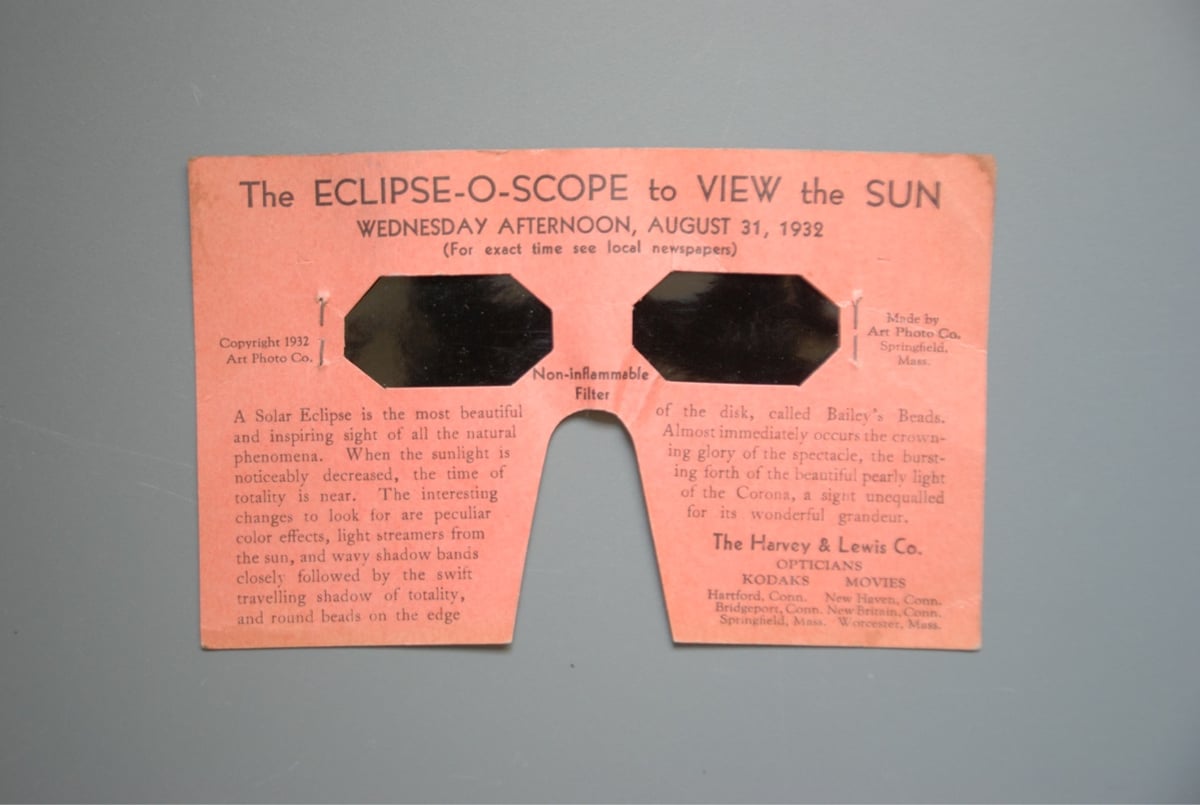
A Collection of Eclipse Glasses (1793-2019)
Oh wow, Williams College’s Hopkins Observatory has a huge collection of eclipse glasses & viewers (and other eclipse ephemera), some of them dating back to 1793. Here are a few of my favorites:
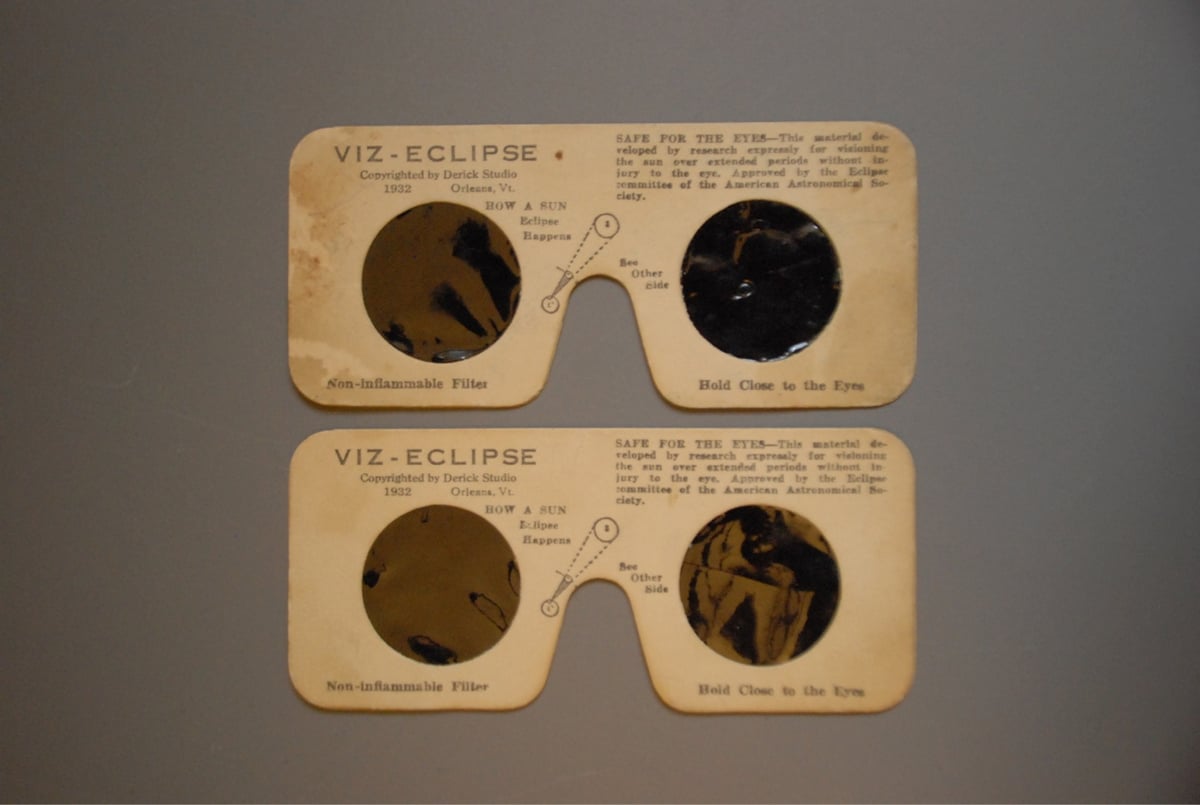
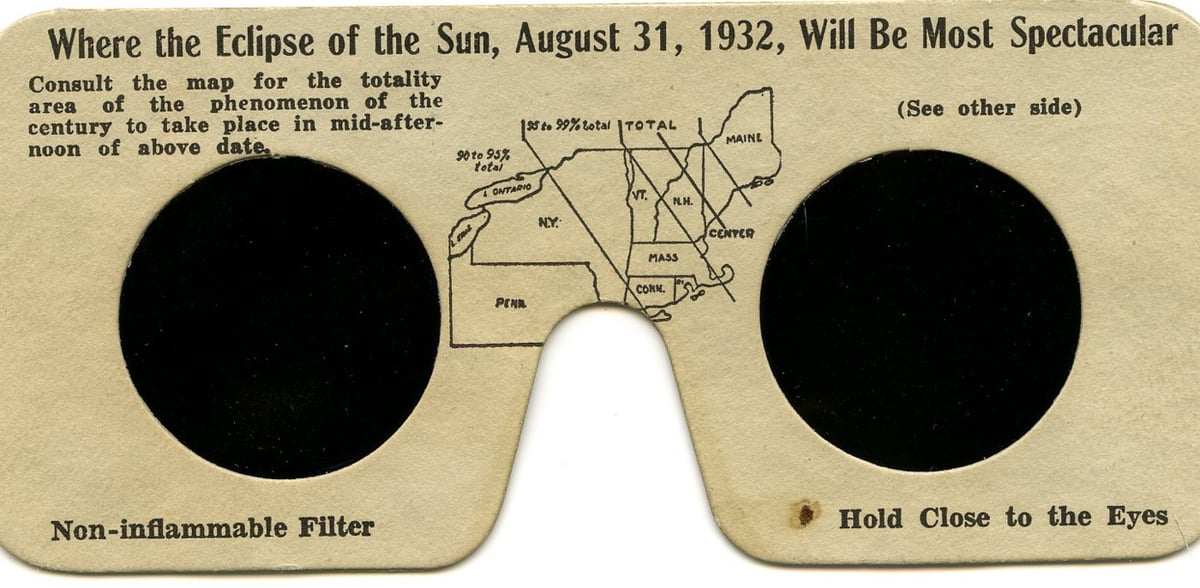

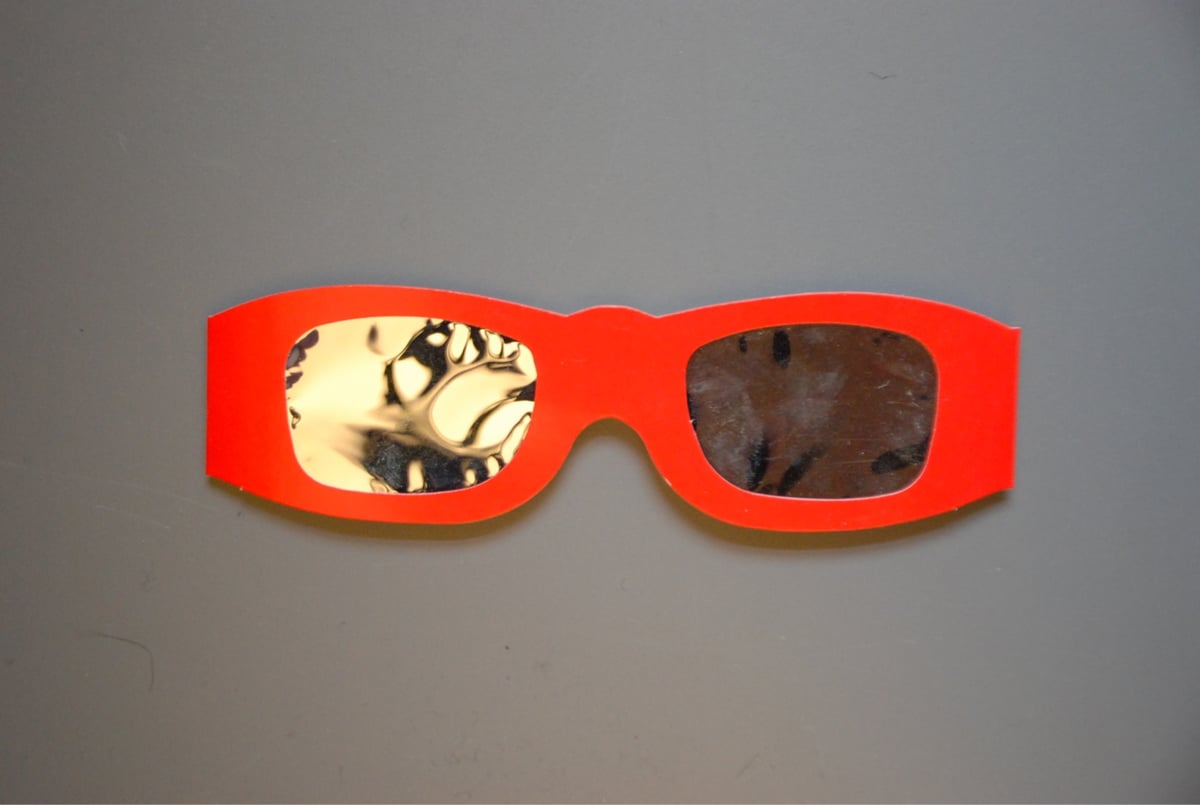
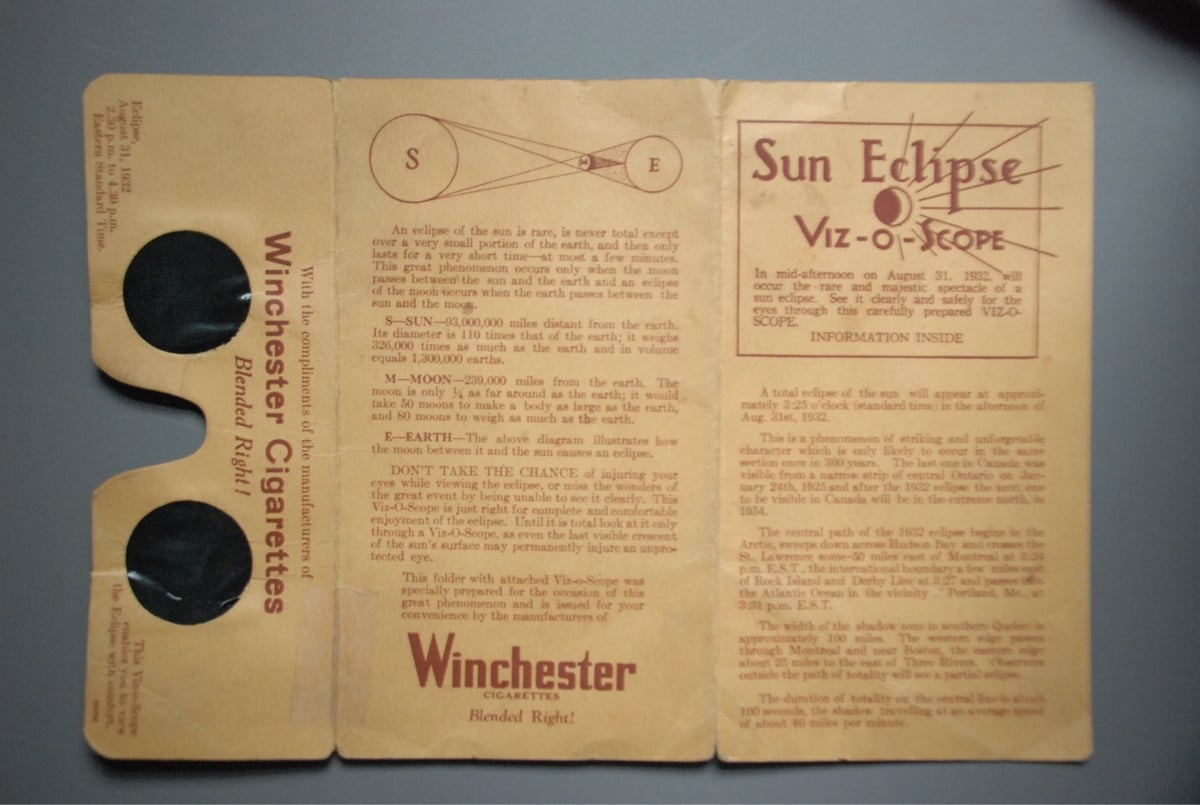



(via present & correct)
Stories that the authors of the Bible borrowed from other cultures and religions, including the flood myth, the Garden of Eden, etc. I learned about these in a religion & mythology class in college, which cemented my atheism.

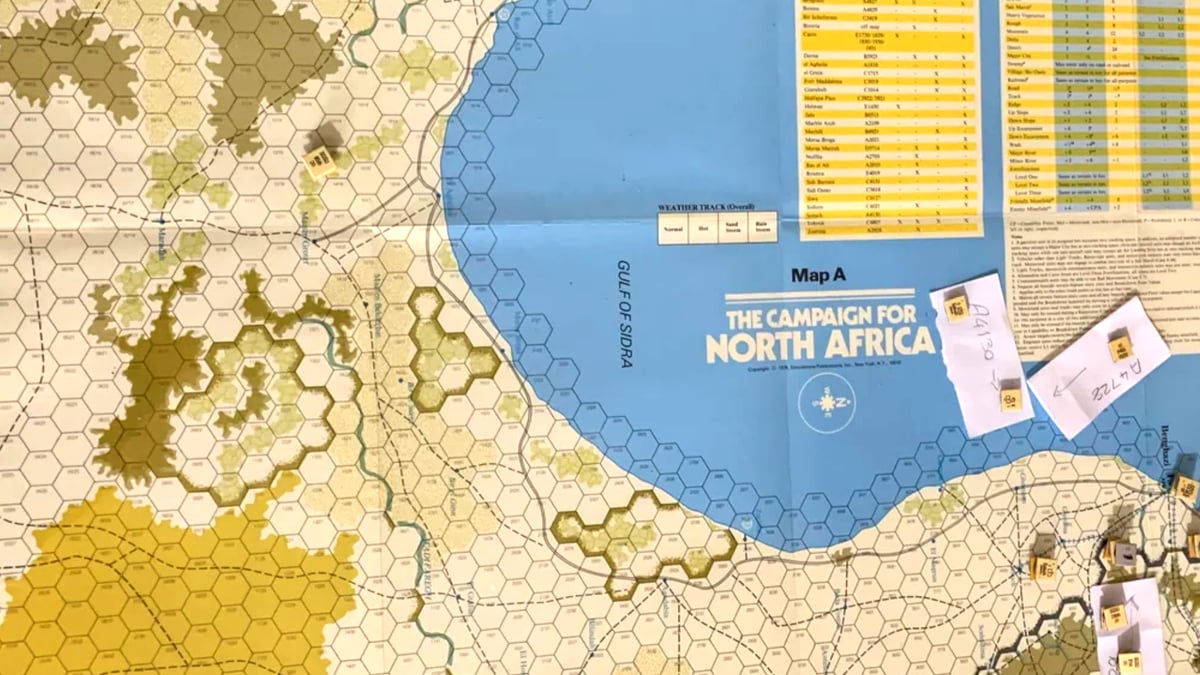
“Widely regarded as the most complicated board game ever made, The Campaign for North Africa tries to simulate WW2’s North African theater in as granular fashion as possible…” 1500 hours to finish the game — that’s 1h20m every day for 3 years.

Good sentence: “The market’s most lavish rewards do not go to its most productive participants, but rather, to those participants who have the good fortune to emerge from the luckiest of orifices.”
“Your brain is a gambling addict that bets on reality. It doesn’t wait for information. It guesses what should happen and adjusts when surprised. Most bets win. But when they don’t, you run into walls.”
I’ve felt this for years (blogs have global context): “The uni-context is a scenario in which the ways you should act become the same across all different contexts. There’s just one set of norms you should follow all times, irrespective of context.”

“An Absolute Climate Catastrophe”
British climate scientist Kevin Anderson (from a 2024 video):
So there is lots that you will hear — lots of rhetoric, lots of good words, lots of optimism about the future. But given we’ve known about this subject and apparently been working on it for 30 years, the trend line tells us that we are heading towards three to four degrees centigrade of warming across this century: an absolute climate catastrophe, a catastrophe for all species including our own. And so that’s the direction of travel. Now, that direction of travel does not have to continue, but the current trend line tells us that all we are doing so far is giving rhetoric and optimism and greenwash, and not driving the levels of change that are necessary to stay within the 1.5-to-2-degree framing of the Paris Agreement.
And:
And I have to be honest and say that my judgment, my best guess as someone who’s worked on this for years, is that we are going to fail. We’re going to go to three or four degrees centigrade of warming, and we’re going to put up with — well, we won’t put up with — we’ll have to live through, or die from, all of the repercussions that that will have. That is a terrible prospect, and one that I think we have to try everything we can to avoid.
But the message of hope, if there’s any thread of hope in this, is that it is a choice to fail. We have so far repeatedly — I’m going to say “we”; what I mean is effectively our leaders, politically, academically, in the journalistic community, across the board, those people that are framing this debate — have chosen actively to fail for three decades. And when they have breakfast with their own children, I hope they are thinking about what they have deliberately, what we have deliberately, imposed upon their future.
“Since 1974, vaccination has averted 154 million deaths, including 146 million among children younger than 5 years… For every death averted, 66 years of full health were gained on average, translating to 10.2 billion years of full health gained.”

“Taxi and ambulance drivers are less likely than workers in almost any other job to die of Alzheimer’s disease.” The key difference: “the constant work of locating yourself in space, tracking a destination and updating a mental map as conditions change.”

Stories of “people finding weird, wild and defiant ways to avoid using AI in their professional lives”. Like: “I keep a to-do list in a paper notebook, but my boss believes I have an AI task-keeping assistant via Claude.”

Crocs Has a Trick for Dodging Taxes: a Tiny Office in Malta. “Come tax season, the Broomfield, Colo., company has claimed that all its global profits were actually earned in this two-person office.” The US is not a serious country.

The Doulas Who Help Us Die. “Instead of assisting in the birthing room or the nursery, end-of-life doulas could keep vigil over people during their last hours, providing comfort and companionship and helping a family find peace.”

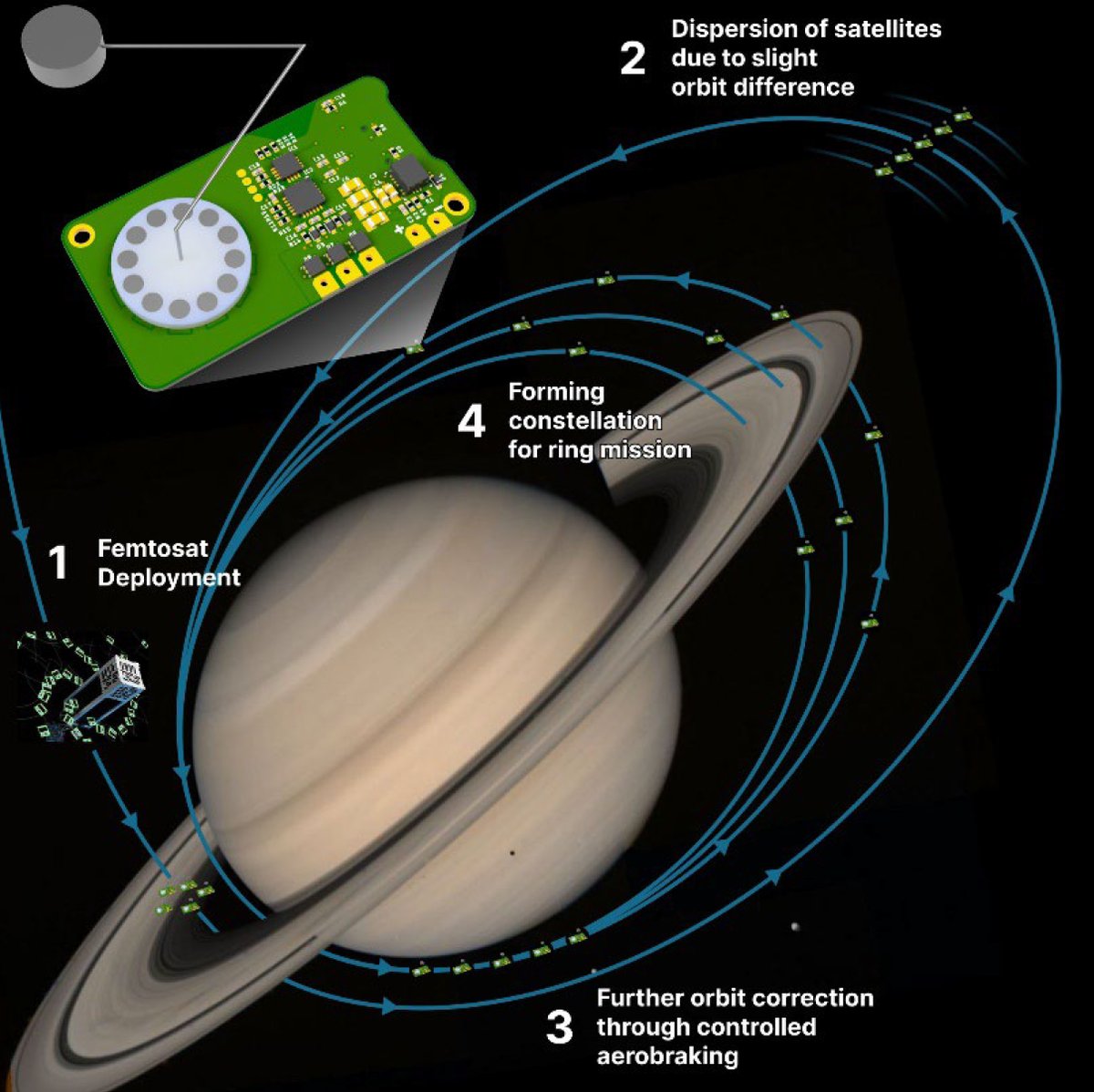
NASA has provided some early-stage funding to explore the idea of releasing a swarm of tiny probes (weighing only a few grams each) into Saturn’s rings to study them up close.
Tron: Legacy (Recording Sessions) by Daft Punk
So, I’m not exactly sure what this is, but what it appears to be is a fan-assembled album of the recording sessions for Tron: Legacy by Daft Punk & Joseph Trapanese. 67 tracks in this YouTube playlist and 61 tracks from the Internet Archive (not sure of the overlap here…) Some of it sounds just like the 31 tracks from the “Complete Edition” of the soundtrack, some of it is alternate studio takes, and some of it is probably just random bits and bobs from the movie that didn’t make it onto the soundtrack.
Anyway, if you love this album as much as I do, I’ll leave you to explore.
Subaru Socialists and the Great Disappointed. “A whole lot of people under the age of 45 no longer believe that indicators such as wages, unemployment, or the number of college degrees that are handed out…have much to do with a healthy economy.”

If You Haven’t Recently Used Claude Code, You Might Not Understand Where AI Is At. “There’s a huge gulf between a chatbot that’s just putting text into your brain and an agent that uses code to interact with an external environment.”
Socialists Are Winning Because They Listen to People (and don’t just treat them like ATMs). “The best of them are running campaigns that acknowledge that to win, Democrats are going to have to organize voters — not just fund-raise off them.”

Thing that I am now invested in: this woman has spent 30 weeks secretly training to beat her brother (a former competitive player) at Dance Dance Revolution. The showdown is today…
The video rental store as “third place”. “Decades before recommendation algorithms, video stores served as social hubs where conversation and camaraderie became a form of taste-making.”

The End of Google Search. The internet giant is “changing the formula” of its products and media folks are beginning to assume that there will be no search traffic in the future…and fretting about their survival.
Media Matters: “ABC, CBS, and NBC aired a combined 194 segments about the three major heat events” that hit the US this summer and not a single one of them mentioned climate change. Not one!

Fun little review by Marcin Wichary of a 1984 flying video game called Sopwith, which was never supposed to be released to the public (an event that the game’s creator didn’t learn about until years later).

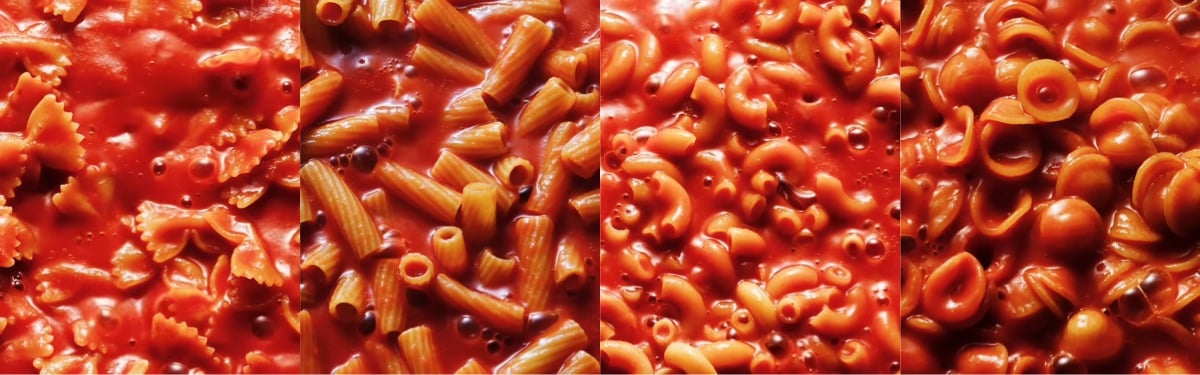
I love this little video of burbling pasta sauces (sound on). Wish there was a 10-hour YT version for work background noise…
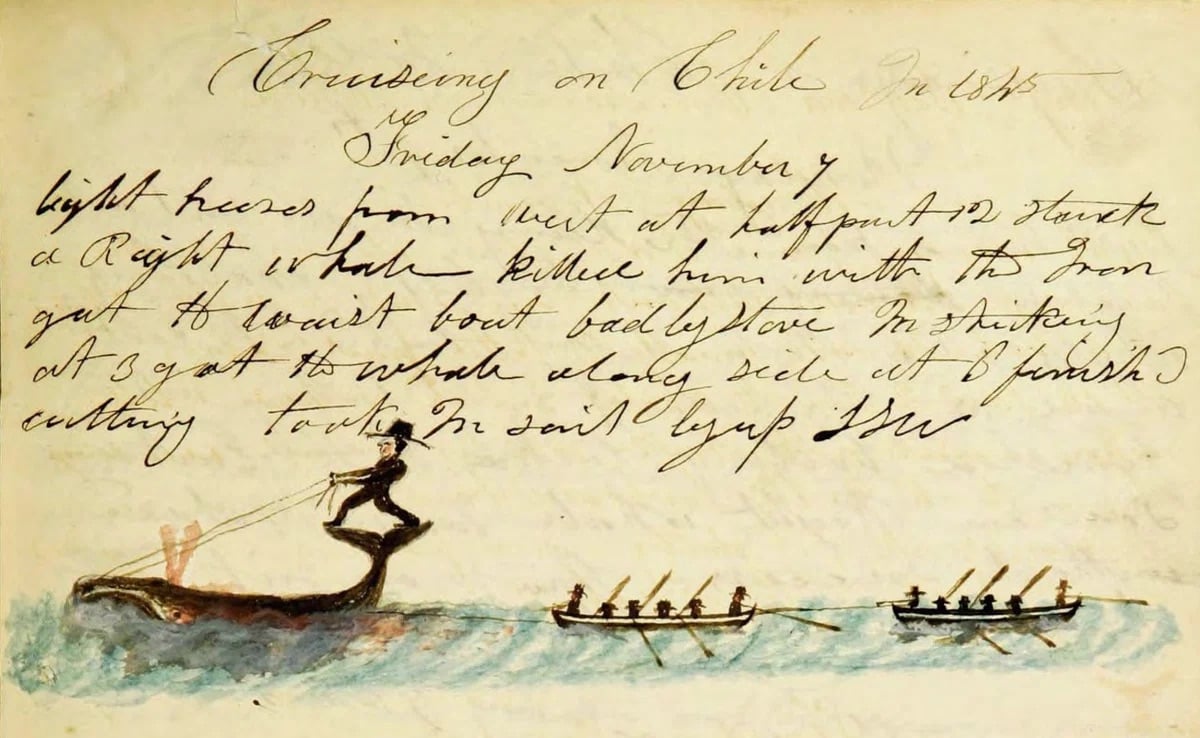
I’d Be Lead Harpooner on the Pequod If It Wasn’t for These DEI Hires. “I’m just telling you that it’s getting hard out there for us blue-collar Nantucket lads when all the ships’ owners are catching the Abolitionist Mind Virus.”
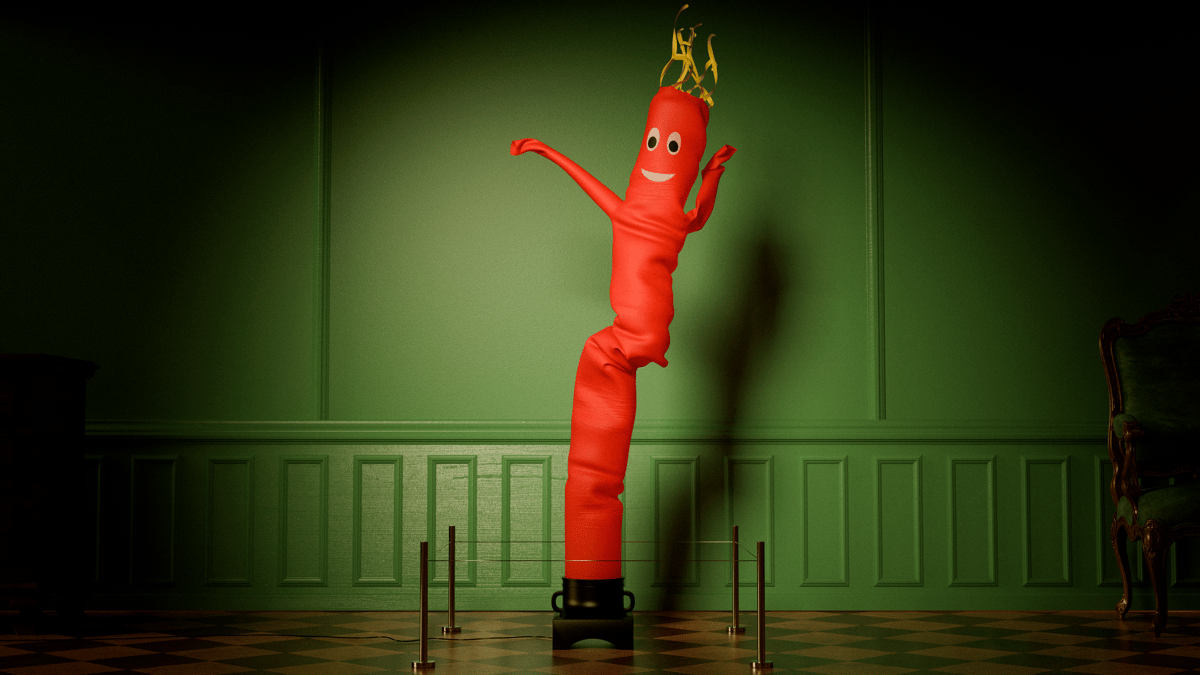
25 things that explain America, including personal injury lawyer advertisements, Crest Whitestrips, Costco rotisserie chicken, and the Pizza Hut lamp. “The T-shirt cannon merges three American obsessions: guns, sports and freebie giveaways.”
How Does an Enigma Machine Work?
This is a completely fantastic look at how the Enigma Machine works. Jared Owen constructed a 3D model of the German cipher device and clearly walks the viewer through how the electricity flows through the machine to scramble and unscramble secret messages.
When electricity travels through one rotor it changes the letter once. But remember, we have three of these rotors and they each have different wirings on the inside. When electricity travels through all three of them it changes the letter three times.
Then at the end, we have the reflector. This also has 26 metal contacts. Inside is more wiring that connects the letters in pairs. So it goes in as one letter and then comes out as another letter.
To the right of here is the input wheel. It has 26 wires that go in and connects to the 26 metal contacts.
Let’s put this all together. Electricity flows through one of the 26 wires, let’s say the wire for the letter Y. Then it gets changed to a different letter at all three rotors. Then it hits the reflector, which again, changes the letter. And then it goes back through the rotors again which changes the letter three more times. And it comes back out on a wire that represents a completely different letter. And if you were counting, this means the letter was changed seven times.
Seriously, this is one of the best explanations I’ve ever seen of anything on YouTube — by the end of it, I was pretty sure I could now build an Enigma Machine if I needed to. (via benn jordan)
How Wildfire Smoke Is Reshaping Childhood. “Repeated smoke events are changing children’s daily routines, limiting opportunities for outdoor play and social interaction and reshaping how many families experience summer.”

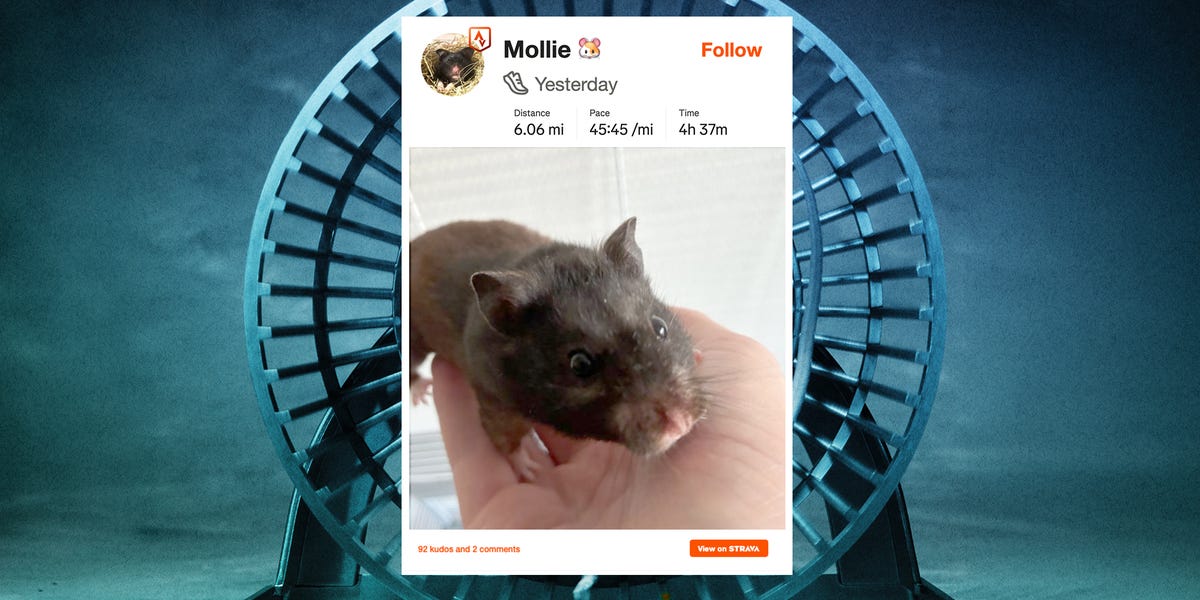
This guy hooked his hamster’s wheel up to Strava — Mollie is logging 5-6 miles per day.
Astronomers have measured the size of the largest galaxy: it’s 1.7 million light years across (17x the diameter of the Milky Way) and contains ~3.4 trillion solar masses in stars.

“In this video, I’ll take you from farm to factory to show you how chocolate is made, and at the end, we’ll use all the chocolate you’ll see in this video to attempt the Guinness World Record for the world’s largest chocolate bar.”

The Computer That Helped Win World War II. “…it is not possible to give an adequate idea of the fascination of a Colossus at work: its sheer bulk and apparent complexity; the fantastic speed of thin paper tape round the glittering pulleys…”

How to Store Ebooks in Instagram Reels and Other Covert Data Storage Tricks
Do you remember the video I posted last summer of YouTuber Benn Jordan where he “uploaded a picture of a bird to a bird and then downloaded the bird picture from the bird”? So cool. Jordan is back with more data encoding tricks in his latest video, There Are Files Stored in This Video (or: How To Hide Shit In Media).
Here’s his intro, which sounds completely bonkers but he demonstrates everything he says he’s going to:
This video is a very deep dive on all of the different ways that you can covertly send and receive data. I’m going to show you how to secretly store encrypted files in music that sounds completely normal to the human ear. I even made a little web app where somebody could paste a link to a Spotify song and it unlocks a completely secret separate audio stream. I’m going to show you how you can send and receive encrypted messages via ultrasound with no cell service or Wi-Fi required by turning your phone into a modem. We’re going to be exploiting Meta’s copyright protection to store ebooks inside Instagram videos. And I’m going to show you how I stored, hosted, and shared malware inside of a harmless Facebook photo of my [dog].
This is a pretty dense video and, I’m going to be honest, some of it went right over my head. But it is also genuinely mind-blowing and makes me want to watch a Sneakers-esque hackers movie where the characters do things like:
So if you ever want to send someone a selfie over PA system in a place with no Wi-Fi or cell service, I guess we’ve made that possible today.
If you want to play around with any of the stuff in the video, Jordan coded a bunch of demos and tools and put them up on his website.
I also ran across this recently: a system that can transfer data at 190 KB/s between two phones by pointing the camera of one phone at a QR video.
Lidar and other discoveries continue to show that the Amazon rainforest was home to a “sprawling ancient civilization much bigger than researchers expected” (possibly up to 3 million people around 100-300 CE).

Heading On Out…
Hey folks. I just wanted to hop in here quickly to let a cat out of a bag: I am in the midst of moving. Not going to get into the wheres, whys, and hows right now; there’s a bigger post coming at some point about all of that. I’m excited and anxious about the transition (it’s a pretty big one), but it’s been taking up a lot of time, energy, and bandwidth that I would usually be putting into KDO.
The move is happening in early Sept, and I’m probably going to be taking some time off between now and then (timing tbd) to get everything packed & organized, spend time with family & friends before I go, and generally not run myself completely into the ground. Thanks for your patience & understanding; I’m excited to get back to focusing on the site in mid-Sept. ✌️
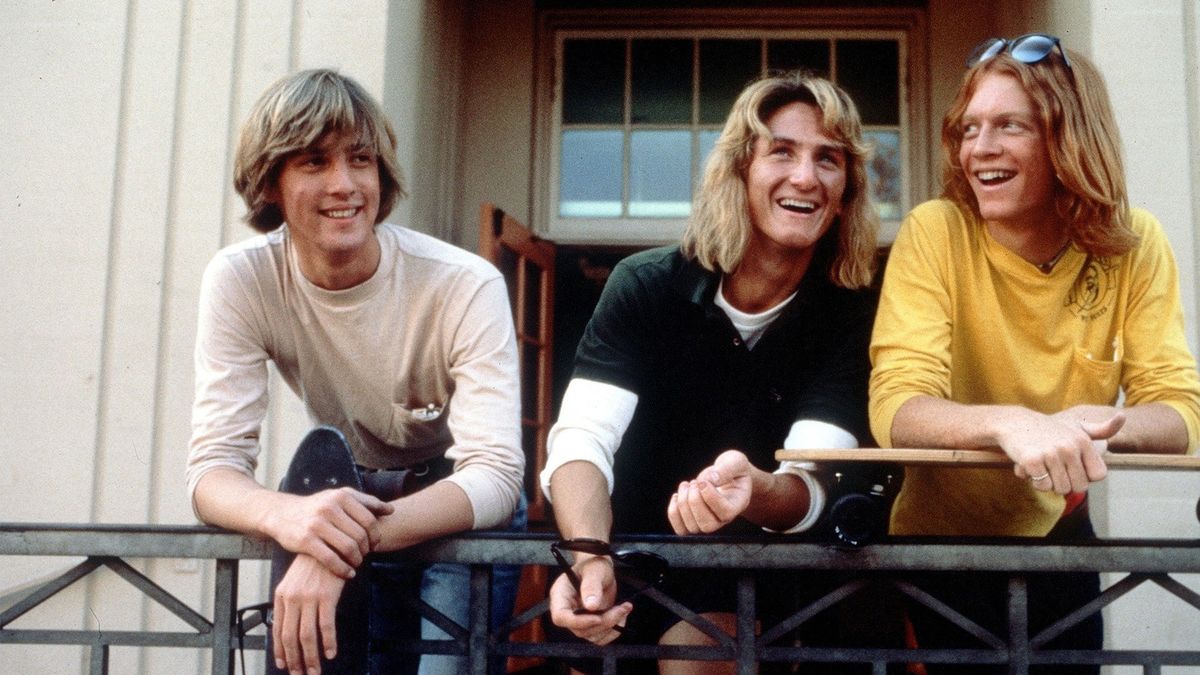
This is an old list but still interesting: the 12 most linguistically influential American movies since 1980. If you were compiling a list of linguistically influential movies since 2000, what would be on it?
Tressie McMillan Cottom’s reading list for fighting back against Big Tech. “Put simply, there is too much money, some of it too untraceable, giving a small group of unelected people too much power over the people.”

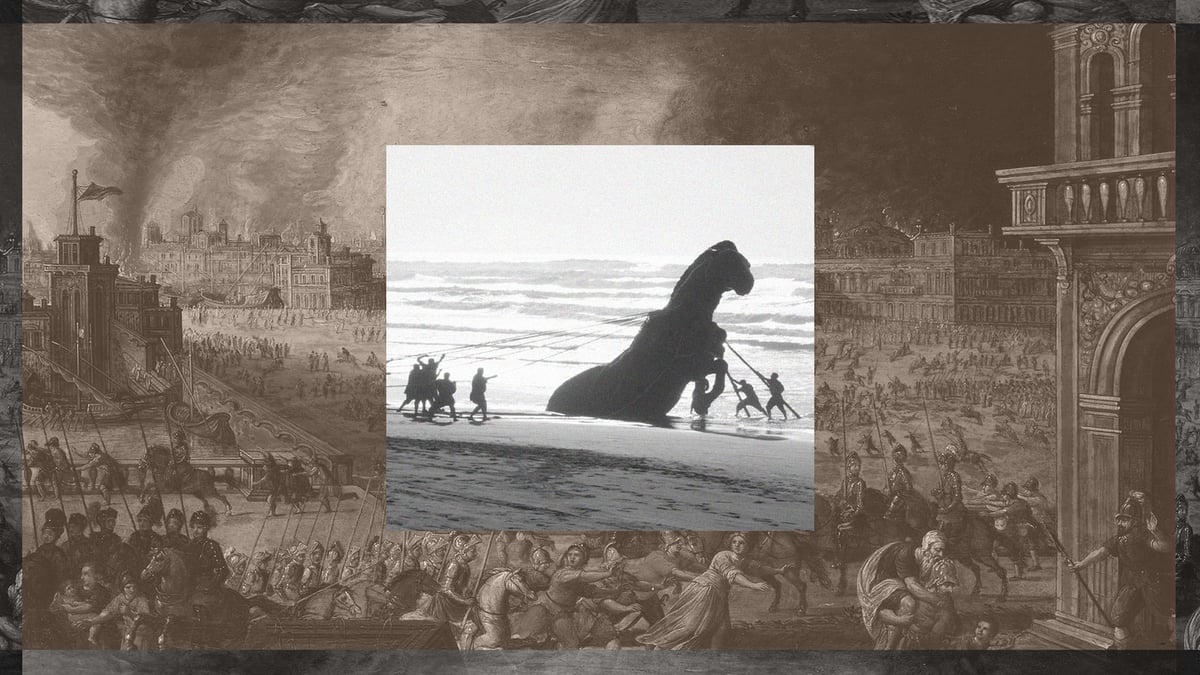
Emily Wilson takes another crack at a critique of Nolan’s “visually stunning, emotionally empty” Odyssey. “Verbally, we are told that people matter; visually, we are shown that they do not.”
Socials & More