



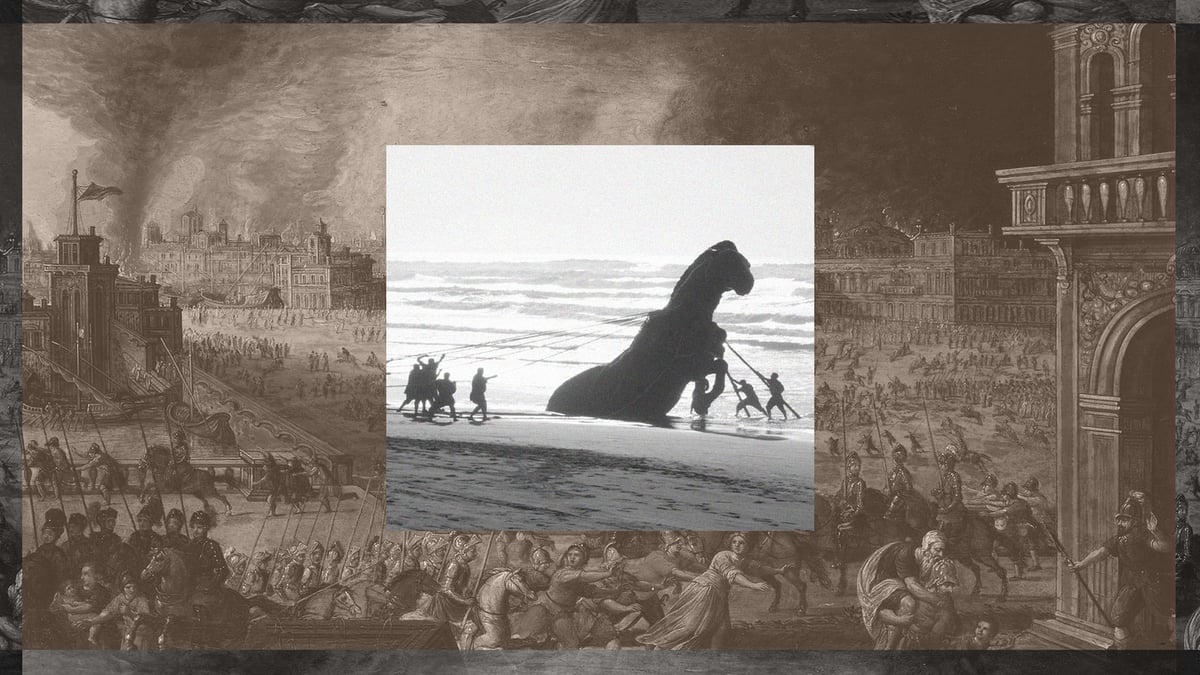
Emily Wilson takes another crack at a critique of Nolan’s “visually stunning, emotionally empty” Odyssey. “Verbally, we are told that people matter; visually, we are shown that they do not.”

Advertise here with Carbon Ads
This site is made possible by member support. 💞
Big thanks to Arcustech for hosting the site and offering amazing tech support.
When you buy through links on kottke.org, I may earn an affiliate commission. Thanks for supporting the site!
kottke.org. home of fine hypertext products since 1998.
Beloved by 86.47% of the web.
Comments 7
thread
latest
popular
I agree with a lot of this (though I disagree that Nolan is giving us "massacres" purely as "spectacle"). I enjoyed the movie and was legitimately moved by certain parts of it but felt the incoherence that Wilson describes, most acutely in Odysseus's return to Ithaca and his uncomplicated relationship to vengeance. His remorse feels narrow, to use Wilson's word. I don't think Nolan would've gotten away without a climactic battle between Odysseus and the suitors, but it would have felt more coherent if Odysseus would have at least expressed a sense of grief or troubled resignation at the necessity for more bloodshed, or concern for what his son was about to witness and the message he might take away from it. In general, revenge narratives are the quickest way to lose me these days. The Revenant, Wind River, Out of the Furnace - there was a rash of films in the mid-2010s in which the ending scene was just one person killing another, usually amid a cold, impartial wilderness, in what was meant to be a cathartic act. It's tiresome. I wish Christopher Nolan would have been more inventive with this part of the story as he was with so many others.
And Nolan left out the gnarliest act of "revenge" in the real Homeric version: Odysseus kills all the serving girls in his palace (hangs them) because they flirted and cavorted with the suitors. Not that Odysseus bothered to find out if those girls were coerced... either way, they had to die!
And another thing from the real Odyssey that gets left out, in the very end, the parents of the suitors (other nobles in Ithaca) come to Odysseus and call him out for what he did to their sons. It is really a powerful scene where he is help accountable for his murderous ways.
I'm particularly loving people's suggestions for other Odyssey-esque journeys and Odysseus-like characters in media: in this piece Wilson offers up the Die Hard movies ("action-packed tales of one man’s dangerous journey back to his wife") and Timoni West relates Odysseus to Ferris Bueller:
A reply to West's post suggests James Bond(s):
Although I am not a big fan of Nolan, or of this film, I think she is being a little unfair. In particular if you're going to make a movie on this kind of scale then if it's not full of scenes that appeal to a very wide audience it's quite likely to be the last such movie you make. And, especially because sex scenes are not really allowed, that does mean battle scenes, huge dramatic landscapes, fire, and so on. That's what big-budget movies do, and what they have always done.
I need to watch Oppenheimer again (actually, I'd like not to if I can avoid it), but if my memory is right it's the odd one out: lots of scenes of men in rooms, not many of explosions (although, obviously, some quite big ones). I believe it made a lot less in its opening weekend than this movie.
The counter-argument would be, well, Nolan should have made a smaller, more human movie. He should, although perhaps he can't: I'd rather have seen such a movie, but then I don't like huge films. But given the parameters of this movie it was always going to be at least a bit like this.
A second question is: could it have been more human even while having this kind of scale? I think may be: there are other huge-scale movies which are more human. To pick two current/near-current examples, both Supergirl and the current Spiderman movie are more human. I'm not claiming they're deep studies of human nature: they're just more human than this movie. But I think Nolan is too limited a film-maker for that: he does what he does. So, perhaps I agree with her after all.
On the third hand: this movie will lead a lot people to actually read (translations of) the poem: that's kind of enough?
Just a note that I think Oppenheimer launched the same weekend as Barbie which impacted sales. And agreed, I feel like this was a bit of a gateway drug into the world of Homer which is a good thing
Seems most people pick up on the reflection of America in terms of the wars fought or the potential collapse of the nation, but not sure if I’ve seen any comments on the story about winning a war and expecting a great celebration and welcome home only to receive betrayal.
I wonder if this is more about America fighting the Western world’s wars for us non-Americans, only for us to thank you with contempt, disgust or cynicism — or maybe it's more of a personal reflection on pride. When we achieve great things personally, we expect those around us to cheer us on, but instead, people often try to cut us down through tall poppy syndrome or jealousy.
I read this thread a few days ago and held off on Wilson's second review until I'd seen the film. Having now done both: I was extremely moved by it. The scene where Odysseus lays down on the raft, stops fighting, and lets the wind and current take him hit me like a ton of bricks. For that reason alone I can't call the film emotionally void, though I can hold space for anyone who shares Prof Wilson's view.
What I'm struggling with is how personal Wilson's writing about the film has started to feel. Many of her points are well argued, but they keep getting shaded by what reads like ad hominem. What's her actual beef with Nolan?
If you feel like this comment goes against the grain of the community guidelines or is otherwise inappropriate, please let me know and I will take a look at it.
In order to comment or fave, you need to be a kottke.org member. Check out your membership options.
Note: If you are a member and tried to log in, it didn't work, and now you're stuck in a neverending login loop of death, try disabling any ad blockers or extensions. Or try logging out and then back in. Still having trouble? Email me!