Entries for March 2023



When you look at these incredible close-up shots of fungi and slime molds by photographer and amateur mycologist Max Mudie, you realize that we don’t have to go looking for bizarre alien life on other planets: there’s plenty of it in our forests. (See also coral reefs, tbh.) Check out more of Mudie’s work on Instagram.
I’m almost positive I’ve featured the photograph at the top of the post before (but can’t find where), but I love it so much I’m featuring it again.
See also Alison Pollack’s work. (via colossal)
A recently discovered comet, C/2023 A3, may put on a show for us in September 2024 when its brightness may “rival some of the brightest stars in the sky”.
How to expand solar power without using precious land. “Deployed in the right way, solar installations can boost crop yields, save water, and protect biodiversity.”
In this final installment of Everything is a Remix, Kirby Ferguson offers his perspective on image generation with AI, how it compares to human creativity, and what its role will be in the future. In watching the part about the anxiety in the creative community about these image generators, I was reminded of what Ted Chiang has said about fears of technology actually being fears of capitalism.
It’s capitalism that wants to reduce costs and reduce costs by laying people off. It’s not that like all technology suddenly becomes benign in this world. But it’s like, in a world where we have really strong social safety nets, then you could maybe actually evaluate sort of the pros and cons of technology as a technology, as opposed to seeing it through how capitalism is going to use it against us.
I agree with Ferguson that these AI image generators are, outside the capitalist context, useful and good for helping humans be creative and express themselves. Tools like Midjourney, DALL-E, and Stable Diffusion allow anyone to collaborate with every previous human artist that has ever existed, all at once. Like, just think about how powerful this is: normal people who have ideas but lack technical skills can now create imagery. Is it art? Perhaps not in most cases, but some of it will be. If the goal is to get more people to be able to more easily express and exercise their creativity, these image generators fulfill that in a big way. But that’s really scary — power always is.
Cargobox is a design concept by Meelis Lillemets for a small electric utility vehicle that embraces the boxy aesthetic in a rib-crunching bear hug. I mean, just look at this absolute rectilinear unit:


It’s like a Knoll shelving unit on wheels! Because the Cargobox is designed for use in cities, you can trade aerodynamic factors for other advantages:
Due to Cargobox only operating up to urban speeds, this study explores the extreme possibilities of design with little considerations for aerodynamics and lots of considerations for simplicity, cost, practicality, modularity.
The Cargobox will be available this fall at your local Design Within Reach store — jkjk. But seriously, the US post office should order a few thousand of these — they’d look really sharp with the red, white, and blue USPS colorway. (via yanko design)
“Heatmap is a new media company focused on the biggest story in the world: the great climate and energy transition.”
The Oscars are this weekend and in this video, some of the nominees — Paul Mescal, Rian Johnson, Todd Field, Camille Friend (hairstylist for Wakanda Forever) — read rave reviews of their work from Letterboxd. Watch to the end — Ke Huy Quan’s letter, and his reaction to it, is especially wonderful.
Ten years ago, I met the founders of Letterboxd in New Zealand. The site was tiny then and had just gotten out of invitation-only mode. But they were enthusiastic and had a vision of making an online space for discussing and reviewing movies. It’s wonderful to see the site become such a key part of the film industry. (via @jasonsantamaria)
Inspired by a reread of The Lord of the Rings, Robin Sloan has been reading The History of The Lord of the Rings, a four-volume book series that details Tolkien’s process of writing LOTR. As he read, the idea of Tolkien as Middle-earth master planner fell away and the text revealed a writer who muddles through and revises, just like the rest of us. Here’s Sloan on Tolkien’s conception of the One Ring’s backstory (“One Ring to rule them all, One Ring to find them, One Ring to bring them all and in the darkness bind them”, etc.):
In a single stroke, we get: a mythic backstory, a grand MacGuffin, a sense of language and history, the sublimely satisfying train of magic numbers - three … seven … nine … ONE! - plus something graphically weird and beautiful on the page.
It’s all just tremendous — the perfect kernel of Tolkien’s appeal.
And, guess what:
Not only was the inscription missing from the early drafts of LOTR … the whole logic of the ring was missing, too. In its place was a mess. The ring possessed by Bilbo Baggins was one of thousands the Dark Lord manufactured, all basically equivalent: they made their wearers invisible, and eventually claimed their souls. They were like cursed candies scattered by Sauron across Middle-earth.
Tolkien’s explanation of this, in his first draft, is about about as compelling as what I just wrote.
It’s fine, as far as it goes; he could have made it work, probably? Possibly? But it is not COOL in the way that the final formulation is COOL. It has none of the symmetry, the inevitability. It does only the work it has to do, and nothing else. It is not yet aesthetically irresistible.
There are several revised approaches to “what’s the deal with the ring?” presented in The History of The Lord of the Rings, and, as you read through the drafts, the material just … slowly gets better! Bit by bit, the familiar angles emerge. There seems not to have been any magic moment: no electric thought in the bathtub, circa 1931, that sent Tolkien rushing to find a pen.
It was just revision.
I find this totally inspiring.
Hey gang, I just wanted to provide a quick update on the upcoming kottke.org AMA (ask me anything). You’ve collectively asked almost 300 questions (!!) and I was going to start answering them this week, but I’m going to hold off for another couple of weeks. It’s gonna take me time to read and sort through them all and next week is jam-packed with other goings-on here — stay tuned! In the meantime, I’m still soliciting questions here so fire away. Looking forward to it!
The Apple II Age: How the Computer Became Personal. “If you want to understand how Apple Inc. became an industry behemoth, look no further than the 1977 Apple II.”
The other day on the chair lift, my kids and I were talking about our top skiing speeds (me: low 40s, them: 50+) and one of us mentioned that it would be cool if your current speed was shown on a heads-up display in your goggles. So this morning I went looking for AR ski goggles and of course they exist. Here are a pair of demo videos from Sirius (made by Oostloong) and Rekkie.
These googles include features like real-time speed, clock, temperature, friend finding/tracking, wayfinding (directions, compass, elevation), HD recording, and phone notifications. Skiing is a natural use for AR — you’re wearing the bulky goggles for safety anyway, so you can hide all the necessary tech in there without looking ridiculous, and taking your mittens on and off to check the time or send/read texts is annoying.
I’d love to try some of these, to see how the interface and notifications work — I worry that it would be unsafe because it requires too much of the skier’s attention. Being on anything but the bunniest slopes with people who are reading text messages and clocking their speed as they’re skiing is not something I’d be into — the idiots with the GoPros on selfie sticks are bad enough. I’m also skeptical that the electronics and control buttons on these devices will be able to withstand the beating that ski goggles undergo over the course of a season, especially if they’re subjected to any skiing in the woods. If they could get it right though, I could see these being fun and useful.
Still Life, a stop-motion animation from Conner Griffith “composed of over 1000 engravings from the 19th century”.

David Grann’s newest book, The Wager: A Tale of Shipwreck, Mutiny and Murder (ebook), comes out next month. It tells the story of a British shipwreck that happened during the war with Spain in the 1740s. The New Yorker, where Grann is a staff writer, is running an excerpt from the book to whet your appetite.
Each man in the squadron carried, along with a sea chest, his own burdensome story. Perhaps it was of a scorned love, or a secret prison conviction, or a pregnant wife left onshore weeping. Perhaps it was a hunger for fame and fortune, or a dread of death. David Cheap, the first lieutenant of the Centurion, the squadron’s flagship, was no different. A burly Scotsman in his early forties, with a protracted nose and intense eyes, he was in flight — from squabbles with his brother over their inheritance, from creditors chasing him, from debts that made it impossible for him to find a suitable bride. Onshore, Cheap seemed doomed, unable to navigate past life’s unexpected shoals. Yet, as he perched on the quarterdeck of a British man-of-war, cruising the vast oceans with a cocked hat and spyglass, he brimmed with confidence — even, some would say, a touch of haughtiness. The wooden world of a ship — a world bound by the Navy’s rigid regulations and the laws of the sea and, most of all, by the hardened fellowship of men — had provided him a refuge. Suddenly, he felt a crystalline order, a clarity of purpose. And Cheap’s newest posting, despite the innumerable risks that it carried, from plagues and drowning to enemy cannon fire, offered what he longed for: a chance to finally claim a wealthy prize and rise to captain his own ship.
The problem was that he could not get away from the damned land. He was trapped-cursed, really-at the dockyard in Portsmouth, along the English Channel, struggling with feverish futility to get the Centurion fitted out and ready to sail. Its massive wooden hull, a hundred and forty-four feet long and forty feet wide, was moored at a slip. Carpenters, caulkers, riggers, and joiners combed over its decks like rats (which were also plentiful). A cacophony of hammers and saws. The cobblestone streets past the shipyard were congested with rattling wheelbarrows and horse-drawn wagons, with porters, peddlers, pickpockets, sailors, and prostitutes. Periodically, a boatswain blew a chilling whistle, and crewmen stumbled from ale shops, parting from old or new sweethearts, hurrying to their departing ships in order to avoid their officers’ lashes.
Grann is so good at both telling the larger tale and inserting wonderful turns of phrase throughout. Can’t wait to read this one.
I didn’t know there was a Devil in the White City series in the works…and now it’s dead? Maybe? Lots of boldfaced names were attached to this project: DiCaprio, Scorsese, Keanu Reeves, Todd Field, Jude Law, Jeremy Allen White.
I have no idea what this video is or where it came from (and I don’t want to?) but this is basically me between 9am and 3pm everyday.
Hold my calls, I’m busy blogging! (via andy)
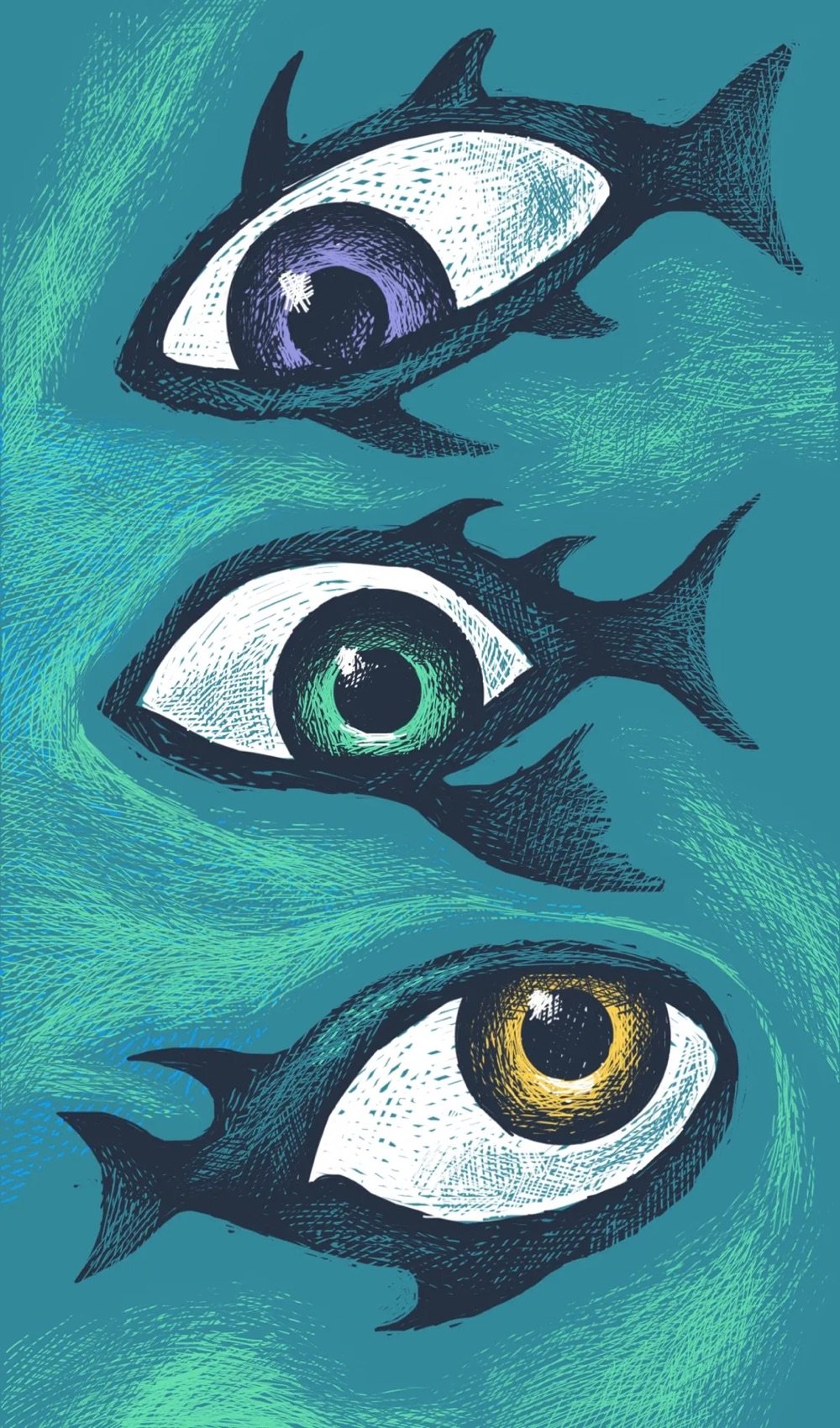

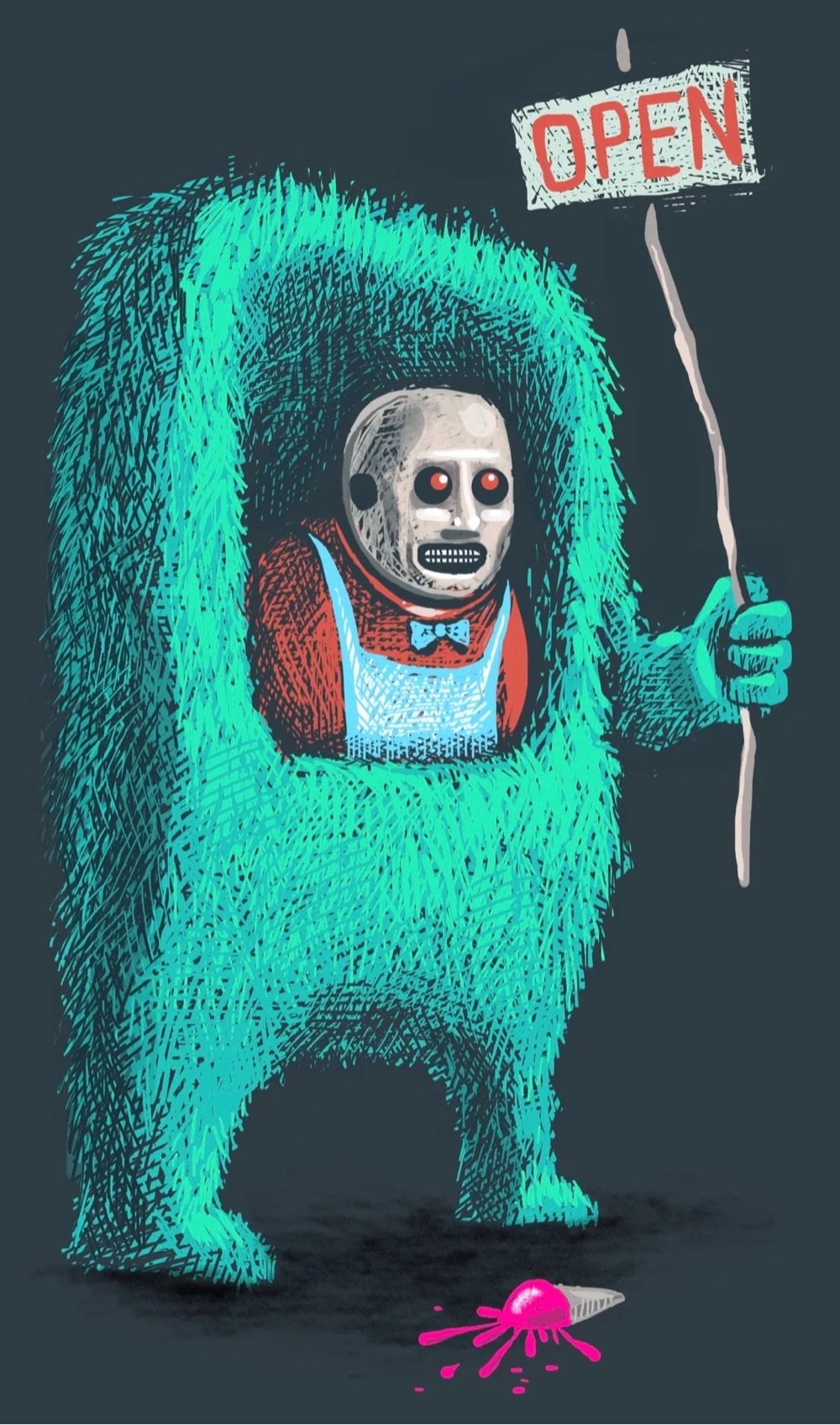
Every day, Chris Silverman draws a small artwork using only the Notes app on his iPhone.
#notesArt is a style formed by the limitations of the medium: I draw with my finger on a screen the size of a 3-by-5 card, using drawing tools that were designed for annotating documents, not making artwork. Similar to an app, each work is minimalist and limited in scope. The simple nature of the tool allows me to focus on the essence of each piece; perhaps a strange thing to be able to do on a device known primarily for providing distraction.
Like he says, this is a great example of how contraints can foster creativity. Here’s what I don’t understand though: WTF? How does anyone do drawings this detailed in the Notes app with just their finger?! I just tried to make a smiley face and it looks like a 3-year-old did it. (Ok, a 1-year-old.)
Oh my god, this in-browser lunar lander game sucked up way too much of my time last night.
From The Women of Interaction Design, a short profile of the legendary Ray Eames. (Check out the other profiles while you’re there too.)
This is fascinating: an instructional video from 1988 for British Royal Military Police personnel to watch before travelling the 103 miles of autobahn across East Germany to West Berlin. (A Cold War refresher: West Berlin was completely surrounded by East Germany — the city was not on the border.) Those in transit had to follow many rules:
Approach the Soviet sentry who will be standing close to the small hut on the left of the road. He will salute you. You must, irrespective of your sex, status, or form of dress, return his salute.
They also couldn’t stop anywhere but a few designated areas, could only deal with Soviet personnel (and not East German personnel), were forbidden from speaking Russian, and obviously couldn’t take photos. What a time capsule!
See also this video that reconstructs that journey, from someone who was stationed in West Germany in the late 80s. (via open culture)
Bad Projection Is Ruining the Movie Theater Experience. Patrons end up paying more than a monthly Netflix subscription (per seat!) for a picture that’s dim & off-kilter bc theater chains are skimping on skilled projectionists.
Explore Hundreds of Exquisite Botanical Collages Created by an 18th-Century Septuagenarian Artist. Mary Delany’s “realistic works are both stunning for their beauty and faithfulness to the original lifeforms”.

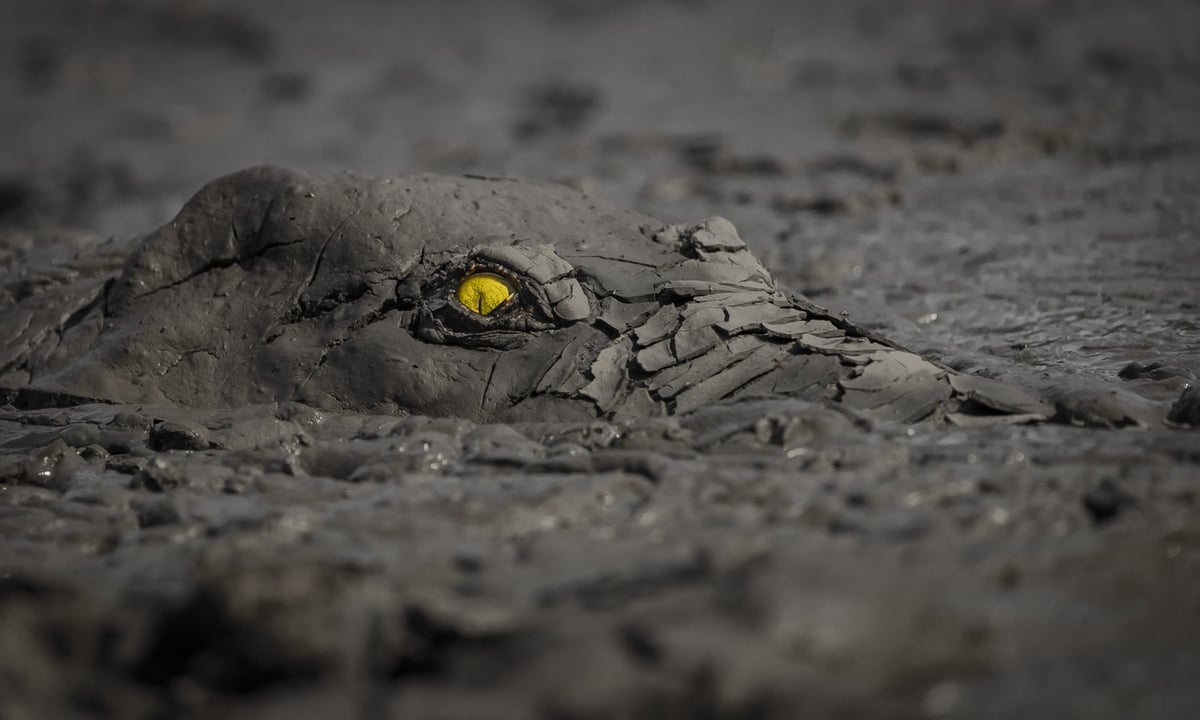


The winners and runners-up of the 2022 World Nature Photography Awards have been announced. An amazing collection of photos as usual — I’ve included some of my favorites above. From top to bottom, photos by Mr. Endy, Jens Cullmann, Jake Mosher, and Sascha Fonseca. Fonseca had this to say about his incredible photo of the snow leopard above:
A beautiful snow leopard triggers my camera trap high up in the Indian Himalayas. I captured this image during a 3-year DSLR camera trap project in the Ladakh region in northern India. The mystery surrounding the snow leopard always fascinated me. They are some of the most difficult large cats to photograph in the wild. Not only because of their incredible stealth, but also because of the remote environment they live in.
*sigh* I get it. I get why people are so enthused about this Jon Stewart video. If you haven’t seen it, it’s a clip from Stewart’s show on Apple+ where he’s debating a Second Amendment purist gun nut who also happens to be a state senator from one of the states that’s trying to take away health care, reproductive rights, and persecute/prosecute LGBTQ+ people for daring to exist in public — basically a real “rights for me but not for thee” dickbag.
Anyway, I guess it’s fun to see Stewart dismantle this guy but arguing with a dimwitted ideologue in this manner is like that old saying: “What’s the sense of wrestling with a pig? You both get all over muddy…and the pig likes it.” Conservatives in America want what they want and don’t care about the arguments against it or facts or consensus or bipartisan anything. They only care about their radical ideology and their constituents who agree with them (and their constituents who don’t can go fuck themselves, I guess). In fact, they welcome arguments because it wastes the time and energy of people who would argue with them and they can’t lose because they don’t care about facts and they increasingly have no shame. See also Can You Really ‘Back The Blue’ If You’re Weak on Guns? from the same show.
Anyway, anyway, anyway…it’s gonna be a fun Monday here I guess.
I randomly came across this YouTube video from an engineer (civil, not railroad) who was building virtual railroads using wooden toy tracks, you know from when you were a kid. Anyway, it turns out that he was playing an open-world game called Tracks, which is available on Steam, Nintendo Switch, and Xbox. Looks fun — if I ever get any free time again, I might give this one a shot.
Ok, this is one where you’re going to have to trust me and just watch it. Grands Canons is a stop-motion animated video by Alain Biet of thousands of meticulously hand-painted images of everyday items moving and dancing to music.
A brush makes watercolors appear on a white sheet of paper. An everyday object takes shape, drawn with precision by an artist’s hand. Then two, then three, then four… Superimposed, condensed, multiplied, thousands of documentary drawings in successive series come to life on the screen, composing a veritable visual symphony of everyday objects. The accumulation, both fascinating and dizzying, takes us on a trip through time.
It’s really just wonderful — once you get into it, you won’t be able to stop watching. More of Biet’s work can be found on his website or on Instagram. (via waxy & colossal)
A beautiful scene from the 2014 Mauritanian film Timbuktu (which was recently included on Slate’s New Black Film Canon), in which young men under the rule of Islamic extremists quietly and defiantly play a forbidden football match with an imaginary ball. (thx, caroline)
Interesting conversation with Na Zhong, translator of Sally Rooney’s three novels into Simplified Chinese. “The level of interest in themselves shown by Sally Rooney’s characters would risk being criticized as self-absorption in Chinese literature…”
In 2020, before the current crop of large language models (LLM) like ChatGPT and Bing, Emily Bender and Alexander Koller wrote a paper on their limitations called Climbing towards NLU: On Meaning, Form, and Understanding in the Age of Data. In the paper, Bender and Koller describe an “octopus test” as a way of thinking about what LLMs are capable of and what they aren’t. A recent profile of Bender by Elizabeth Weil for New York magazine (which is worth reading in its entirety) summarizes the octopus test thusly:
Say that A and B, both fluent speakers of English, are independently stranded on two uninhabited islands. They soon discover that previous visitors to these islands have left behind telegraphs and that they can communicate with each other via an underwater cable. A and B start happily typing messages to each other.
Meanwhile, O, a hyperintelligent deep-sea octopus who is unable to visit or observe the two islands, discovers a way to tap into the underwater cable and listen in on A and B’s conversations. O knows nothing about English initially but is very good at detecting statistical patterns. Over time, O learns to predict with great accuracy how B will respond to each of A’s utterances.
Soon, the octopus enters the conversation and starts impersonating B and replying to A. This ruse works for a while, and A believes that O communicates as both she and B do — with meaning and intent. Then one day A calls out: “I’m being attacked by an angry bear. Help me figure out how to defend myself. I’ve got some sticks.” The octopus, impersonating B, fails to help. How could it succeed? The octopus has no referents, no idea what bears or sticks are. No way to give relevant instructions, like to go grab some coconuts and rope and build a catapult. A is in trouble and feels duped. The octopus is exposed as a fraud.
The paper’s official title is “Climbing Towards NLU: On Meaning, Form, and Understanding in the Age of Data.” NLU stands for “natural-language understanding.” How should we interpret the natural-sounding (i.e., humanlike) words that come out of LLMs? The models are built on statistics. They work by looking for patterns in huge troves of text and then using those patterns to guess what the next word in a string of words should be. They’re great at mimicry and bad at facts. Why? LLMs, like the octopus, have no access to real-world, embodied referents. This makes LLMs beguiling, amoral, and the Platonic ideal of the bullshitter, as philosopher Harry Frankfurt, author of On Bullshit, defined the term. Bullshitters, Frankfurt argued, are worse than liars. They don’t care whether something is true or false. They care only about rhetorical power — if a listener or reader is persuaded.
The point here is to caution against treating these AIs as if they are people. Bing isn’t in love with anyone; it’s just free-associating from an (admittedly huge) part of the internet.
This isn’t an exact analogue, but I have a car that can drive itself under certain circumstances (not Tesla’s FSD) and when I turn self-drive on, it feels like I’m giving control of my car to a very precocious 4-year-old. Most of the time, this incredible child pilots the car really well, better than I can really — it keeps speed, lane positioning, and distance to forward traffic very precisely — so much so that you want to trust it as you would a licensed adult driver. But when it actually has to do something that requires making a tough decision or thinking, it will either give up control or do something stupid or dangerous. You can’t ever forget the self-driver is like a 4-year-old kid mimicking the act of driving and isn’t capable of thinking like a human when it needs to. You forget that and you can die. (This has the odd and (IMO) under-appreciated effect, when self-drive is engaged, of shifting your role from operator of the car to babysitting the operator of the car. Doing a thing and watching something else do a thing so you can take over when they screw up are two very different things and I think that until more people realize that, it’s going to keep causing unnecessary accidents.)
OpenAI Is Now Everything It Promised Not to Be: Corporate, Closed-Source, and For-Profit. We really need to stop believing hardcore capitalists when they make promises like this. When someone shows you who they are…
The official trailer for the now-confirmed final season of Succession (until they do one more, like 12 years from now). Premieres on HBO Max March 26. As I said when the teaser trailer dropped in January, Succession is my current pick for The Best Show on TV Right Now and I’m excited (and sad) for this final season!
In a 1959 talk entitled There’s Plenty of Room at the Bottom, physicist Richard Feynman casually invented nanotechnology, inviting the audience and then the world to imagine exploring and making use of the “inner space” of the micro and nano realms. In this video from Kurzgesagt, thye imagine how things would seem if you could somehow shrink yourself down to the size of a grain of sand or a molecule or even smaller, sort of a more educational (but still fun) Ant-Man and the Wasp: Quantumania.
You are the size of a grain of sand just 2 mm high, standing on a blade of grass that seems as tall as an eight storey building to you. A square meter of lawn is now a dense metropolitan area, with 100,000 blades, or two Manhattans worth of grass towers. From your new tiny perspective, the park that you could quickly stroll through before, is now the size of France. Crossing it would take at least a week. Human-sized humans loom over you, 4 times taller than the Empire state building, their steps falling from horizon to horizon.
A bee the size of a helicopter lands near you, making the ground shake, as its hairy carapace vibrates with each wingbeat. You try to escape but are barely able to move because the air is so… gooey. Before you clicked the button air resistance was barely noticeable — but as you’re now a thousand times smaller, it is as if the air has become a thousand times denser. It feels like you are moving through honey.
Flying insects like bees use this to their advantage. Their wings are not made for gliding but like paddles that row through the air. Scaled up to human size, the bee would outrun a Concorde Jet — except it couldn’t even take off because it would be too heavy for its wings.
See also Meet the Nano Sapiens, Scaling Laws and the Speed of Animals, The Biology of B-Movie Monsters, and Powers of Ten.
From Vox, an inflation explainer video that sums up the three primary explanations for the current rise in prices worldwide — Too much money, supply shocks, massive markups (aka corporate price gouging) — and what governments can do about it.
Right now, inflation is inescapable. At the grocery store, the gas station, and in almost every country in the world, people are playing more — way more — than they did just a couple of years ago for everything.
In this video, we explore three explanations for why prices are rising, as well as different policy options for bringing them down.
Regarding Efforts By You, In Inferior Person, To Cancel Me, A Genius. “When you say I am contradicting myself, you fail to recognize I am in a Platonic dialogue with myself, and both sides of myself are winning.”
Bill Neil is a movie trailer editor at Buddha Jones and in this video he guides us through a short history of movie trailers — from Dr. Strangelove in the 60s to Neil’s own Nope trailer — and gently picks them apart to show us how they work. I enjoyed hearing all of the vocabulary for the techniques that they use: rug pull, bumper, diegetic, rise, and signature sound (aka leitmotif).
Newer posts





Socials & More