



Oooh, 20x200 is selling prints of a 1907 painting by Hilma af Klint

Advertise here with Carbon Ads
This site is made possible by member support. 💞
Big thanks to Arcustech for hosting the site and offering amazing tech support.
When you buy through links on kottke.org, I may earn an affiliate commission. Thanks for supporting the site!
kottke.org. home of fine hypertext products since 1998.
Beloved by 86.47% of the web.
Entries for March 2019
A Fan-Made Trailer for The Fresh Prince of Bel-Air, 2019 Edition
This trailer made by cinematographer and director Morgan Cooper imagines a contemporary reboot of The Fresh Prince of Bel-Air that’s a little darker and grittier than the original. I dunno about you, but that’s one of the best fan-made trailers I’ve ever seen. I say give Cooper the show and let him run with it.
Tetanus Has Nothing To Do With Rust
Tetanus, popularly called “lockjaw,” is a serious illness, fatal in 10 percent of cases in North America and a larger percentage elsewhere. But despite the popular perception of its association with cutting oneself on a rusty nail, the disease has nothing to do with iron oxide, or rust:
Rather, tetanus is a product of the bacteria Clostridium tetani, which is in dirt, dust, and feces—in other words, everywhere. It can enter your body through puncture wounds, yes, but also through superficial cuts, bug bites, surgical procedures, and any other rupture to your skin. It can come from stepping on a rusty nail, or tending the soil in your garden. That’s why it’s so essential to track your booster shots: You need one every decade, not just when you rip your palm open on a rusty chain link fence. Waiting for a classic tetanus injury won’t work when anything could, in theory, be a tetanus injury.
If the bacteria enter your body and you aren’t up-to-date on your vaccinations, the tiny invaders begin to multiply rapidly. This incubation period, which lasts between three and 21 days, according to the CDC, is symptom free. But as the bacteria begin to die inside you, they form a neurotoxin that attacks the nervous system. Specifically, it inhibits the chemical GABA, which regulates muscle contractions. The result is a body-wide state of tension, from lockjaw in your face to uncontrollable arching spasms in your back to permanently-curled toes.
Luckily, here as elsewhere, tetanus vaccines (a series of three shots and a booster every ten years) work. Get those shots up to date and mind those cuts, no matter where they came from.
What Counts As Evidence in Mathematics?
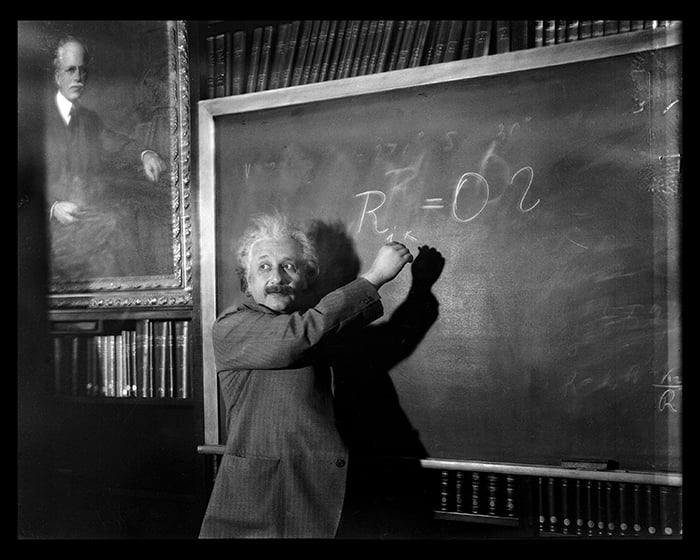
The ultimate form of argument, and for some, the most absolute form of truth, is mathematical proof. But short of a conclusive proof of a theorem, mathematicians also consider evidence that might 1) disprove a thesis or 2) suggest its possible truth or even avenues for proving that it’s true. But in a not-quite-empirical field, what the heck counts as evidence?
The twin primes conjecture is one example where evidence, as much as proof, guides our mathematical thinking. Twin primes are pairs of prime numbers that differ by 2 — for example, 3 and 5, 11 and 13, and 101 and 103 are all twin prime pairs. The twin primes conjecture hypothesizes that there is no largest pair of twin primes, that the pairs keep appearing as we make our way toward infinity on the number line.
The twin primes conjecture is not the Twin Primes Theorem, because, despite being one of the most famous problems in number theory, no one has been able to prove it. Yet almost everyone believes it is true, because there is lots of evidence that supports it.
For example, as we search for large primes, we continue to find extremely large twin prime pairs. The largest currently known pair of twin primes have nearly 400,000 digits each. And results similar to the twin primes conjecture have been proved. In 2013, Yitang Zhang shocked the mathematical world by proving that there are infinitely many prime number pairs that differ by 70 million or less. Thanks to a subsequent public “Polymath” project, we now know that there are infinitely many pairs of primes that differ by no more than 246. We still haven’t proved that there are infinitely many pairs of primes that differ by 2 — the twin primes conjecture — but 2 is a lot closer to 246 than it is to infinity.
This starts to get really complicated once you leave the relatively straightforward arithmetical world of prime numbers behind, with its clearly empirical pairs and approximating conjectures, and start working with computer models that generate arbitrarily large numbers of mathematical statements, all of which can be counted as evidence.
Patrick Hanner, the author of this article, gives what seems like a simple example: are all lines parallel or intersecting? Then he shows how the models one can use to answer this question vary wildly based on their initial assumptions, in this case, whether one is considering lines in a single geometric plane or lines in an n-dimensional geometric space. As always in mathematics, it comes back to one’s initial set of assumptions; you can “prove” (i.e., provide large quantities of evidence for) a statement with one set of rules, but that set of rules is not the universe.
This Photo of Farmers Contains No Farmers
This is a photo taken in Germany in 1914 by August Sander:
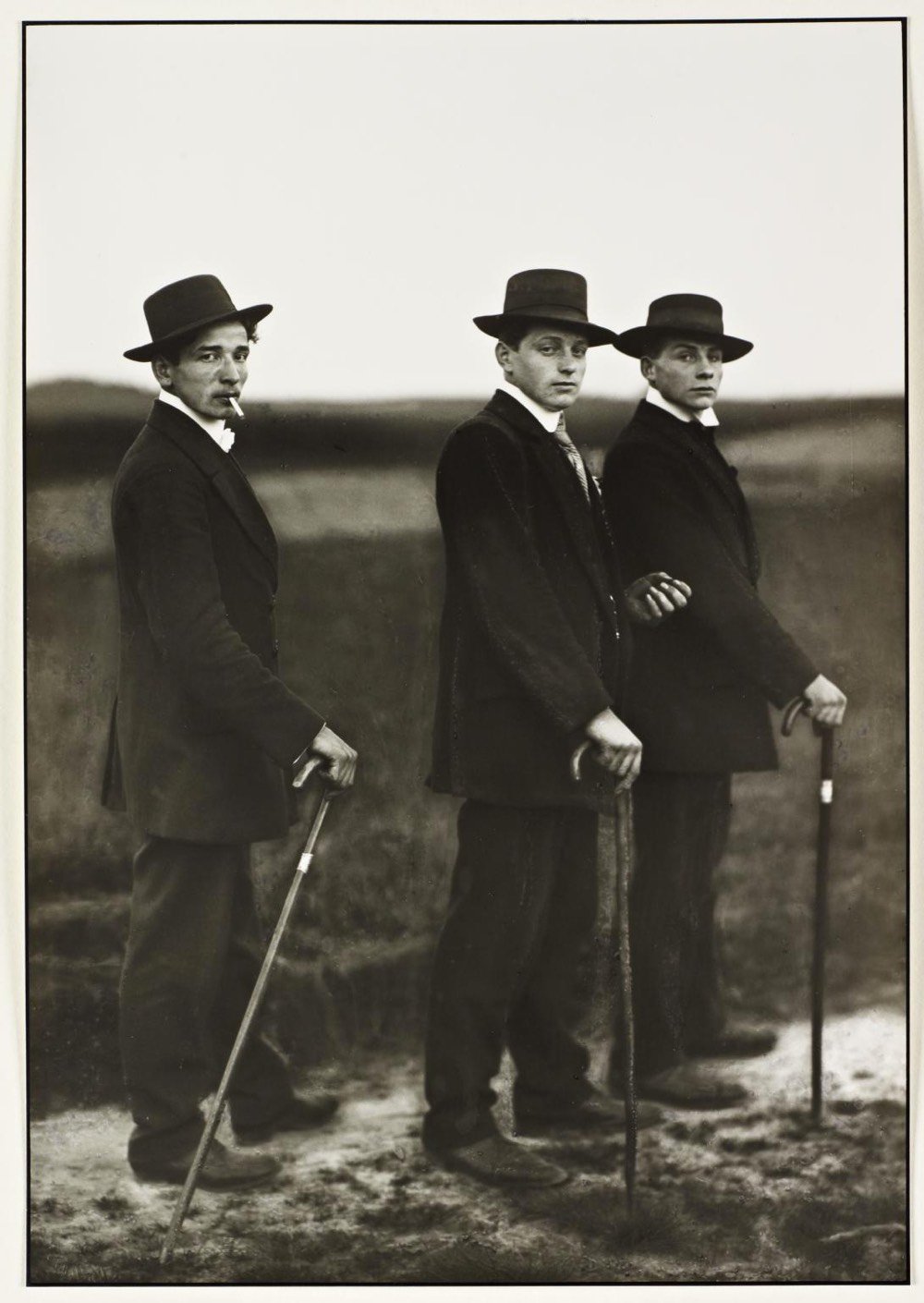
It’s called Young Farmers and it depicts three young men on their way to a dance in rural Germany. But as John Green explains in this video, there is so much more going on with this photo.
From The Tate, which has a print of Young Farmers in its collection:
The Marxist art critic John Berger famously analysed the photograph in his influential essay ‘The Suit and the Photograph’ (1980) writing: ‘The date is 1914. The three young men belong, at the very most, to the second generation who ever wore such suits in the European countryside. Twenty or 30 years earlier, such clothes did not exist at a price which peasants could afford.’ (Berger 1980, p.30.) Berger suggests that these mass market suits, emulating the higher quality attire of the bourgeois urban class, draws attention to, rather than disguises, their ‘social caste’, and not in a particularly flattering sense. In his essay, Berger considers that the three young men are of a social group not beyond the reach of aspirational advertising campaigns and travelling salesmen, and in a state of awkward transition, succumbing to a new ‘cultural hegemony’. The posturing of these three rural ‘lads’, perhaps on their way to a dance, confounds and subverts expectations of the peasant ‘type’, especially in that they smoke cigarettes. Peasants were traditionally depicted smoking a pipe handcrafted from wood, and which like the wooden canes that appear frequently in Sander’s volume of photographs devoted to peasants and farmers, including this one, connoted an organic connection to the native soil as well as a certain time-honoured wisdom. By contrast, the mass-manufactured cigarette was often seen at the time as an urban symbol of social dissolution.
However, Green also cautions that there’s only so much you can infer about people from a photograph (given, for example, that the three men weren’t actually farmers).
This video is from a new-to-me channel called The Art Assignment, which is about art and art history. Subscribed!
Quid Pro Quo: The Three-Act Structure of a Thrilling Scene from The Silence of the Lambs
Jonathan Demme’s The Silence of the Lambs is one of the finest psychological thrillers ever made. In the episode of the always-illuminating Lessons from the Screenplay, the team analyzes a scene from the film with Hannibal Lecter and Clarice Starling that demonstrates how effective scenes follow the same three act structure as entire movies/books/stories do.
The Lessons team also did a podcast episode about the differences between the screenplay for the film and the book that inspired it.
Creatures of Habit
Ron and Diana Watson have been eating dinner at the same restaurant in Wichita 6 nights a week for 15 years. It’s their only meal of the day and they skip the bread because Ron was gaining too much weight from the complimentary dinner rolls.
The ritual is all part of the order Ron Watson likes in his life. A Vietnam veteran, he dines only in restaurants that offer military discounts, and Texas Roadhouse gives vets 10 percent off. He still has some PTSD, he said, and he feels comfortable at table 412, which is a booth at the bar that gives him a good view of the door and everyone coming and going.
The couple also are regular enough customers that they know how to make the most of their money at Texas Roadhouse. Every Sunday through Wednesday, they arrive between 3 and 3:15 p.m. to take advantage of the restaurant’s early bird special, which is available from 3 to 5 p.m. Mondays through Thursdays and offers a full meal for $9.49.
I’m fascinated by people for whom routine is so important. I definitely have those tendencies; I watch favorite shows and movies repeatedly, wear pretty much the same outfit daily, return to familiar vacation destinations, and order the same dishes at the same restaurants again and again. So much of what I do for kottke.org focuses on finding the new — ideas, people, art, discoveries, culture — that it’s comforting to have parts of my life that aren’t relentlessly novel. But I also make ample time for new experiences that bring happiness & fulfillment into my life…and the rest I put on cruise control. (via tmn)
Update: From The Atlantic, The People Who Eat the Same Meal Every Day.
Many of the people I talked with emphasized the stress-reducing benefits of eating the same thing each day. Amanda Respers, a 32-year-old software developer in Newport News, Virginia, once ate a variation on the same home-brought salad (a lettuce, a protein, and a dressing) at work for about a year. She liked the simplicity of the formula, but the streak ended when she and her now-husband, who has more of an appetite for variety, moved in together six years ago. Would she still be eating the salad every day if she hadn’t met him? “Oh heck yeah,” she told me. “It would’ve saved so much time.”
The official trailer for Avengers: Endgame. I am irrationally excited about this movie.
Emma Haruka Iwao used cloud computing to smash the world record for calculating the most digits of pi: about 31.4 trillion decimal places. The old record was about 22.5 trillion.
Pi, the Infinite Doorway to Calculus
Happy Pi Day! In celebration of this gloriously nerdy event, mathematician Steven Strogatz wrote about how pi was humanity’s first glimpse of the power of calculus and an early effort to come to grips with the idea of infinity.
As a ratio, pi has been around since Babylonian times, but it was the Greek geometer Archimedes, some 2,300 years ago, who first showed how to rigorously estimate the value of pi. Among mathematicians of his time, the concept of infinity was taboo; Aristotle had tried to banish it for being too paradoxical and logically treacherous. In Archimedes’s hands, however, infinity became a mathematical workhorse.
He used it to discover the area of a circle, the volume of a sphere and many other properties of curved shapes that had stumped the finest mathematicians before him. In each case, he approximated a curved shape by using a large number of tiny straight lines or flat polygons. The resulting approximations were gemlike, faceted objects that yielded fantastic insights into the original shapes, especially when he imagined using infinitely many, infinitesimally small facets in the process.
Here’s a video that runs through Archimedes’ method for calculating pi:
Strogatz’s piece is an excerpt from his forthcoming book, Infinite Powers: How Calculus Reveals the Secrets of the Universe.
The Most Influential Academic Books in the Last 20 Years
The Chronicle of Higher Education has assembled The New Canon, a list of the most influential books written by academics in the past 20 years or so. The books were chosen by a panel that included sociologist Eric Klinenberg, classics professor Johanna Hanink, and professor of business Sheena Iyengar.
Their picks included Steven Pinker’s The Better Angels of Our Nature: Why Violence Has Declined:
It was a best seller, discussed and praised and criticized by both scholars and public intellectuals. Better Angels defends, at great length, a controversial claim, which is that violence is declining, both in the short run and the long run — and so, in a very important way, the world is getting better. Pinker is far from the first to make this argument, but he presents the most persuasive case. Better Angels also explores, at equally great length, psychological and social theories for why this is so, and illustrates that an evolutionary-psychology approach to the mind can give us considerable insight into how societies change over time.
The New Jim Crow: Mass Incarceration in the Age of Colorblindness by Michelle Alexander:
Michelle Alexander, a legal scholar, activist, and now a columnist for The New York Times, argues that the “war on drugs,” beginning with the Nixon administration and flourishing under Reagan, Bush, and Clinton, shifted antipoverty resources into an infinite war on crime that disproportionately targets black communities and robs the majority of black men in urban areas of their full citizenship. Fusing legal studies and history, Alexander demonstrates how America’s prison-industrial complex is the latest chapter in the nation’s tragic racial history. Her thesis not only touched scholars but also transformed the public’s understanding of structural racism in the American justice system.
Paying for the Party: How College Maintains Inequality by Elizabeth Armstrong & Laura Hamilton is a timely choice given the unfolding college admissions investigation by the FBI:
The book is an ethnographic account of the lives of first-year women college students living on a “party floor” at a selective public university they call Midwest U. Varied in their social-class backgrounds, the students have profoundly different pathways through college. Poor and working-class young women face formidable obstacles to completing their degrees, while the children of upper middle class professionals pursue meaningful majors and vocations. At the same time, the daughters of the wealthiest, socialite families join sororities, and party their way through easy majors, graduation, and, beyond that, socially connected jobs.
If this were a book about no more than individual-level educational inequalities, the story might end there. But this is not that book. Instead, the authors use a cultural and organizational lens to show how the university itself is complicit in shaping students’ academic pursuits, social lives, and job opportunities in socially patterned ways.
Robert Putnam’s Bowling Alone: The Collapse and Revival of American Community:
Americans participate less in group activities that entail coordination and cooperation toward a common purpose. Instead they engage more in activities that take place less regularly, in smaller groups or in isolation. They are less likely to play sports on teams, more likely to watch sports or to exercise at home. The book identifies trends that scholars and journalists continue to analyze and dissect 18 years later, culminating in the recent avalanche of books and essays describing how handheld devices now contribute to the breakdown of community.
Bowling Alone inspired my pal Scott Heiferman to start Meetup.
Bauhaus-Style Logos of Famous Brands

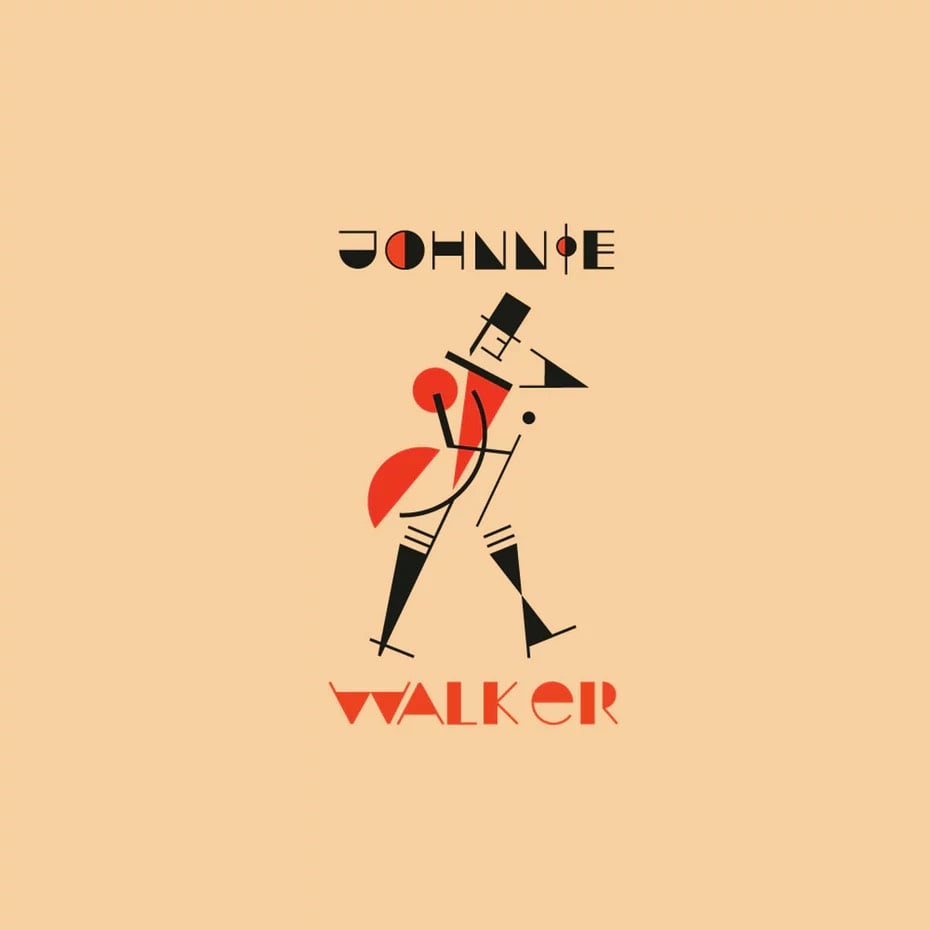

To commemorate the 100-year anniversary of the founding of the Bauhaus design movement, 99designs challenged their community of designers to reimagine the logos of famous brands in a Bauhaus style. (via moss & fog)
A Last Lesson: Buddhist Teacher Thich Nhat Hanh’s Return Home To Vietnam
Thich Nhat Hanh became a Buddhist monk in Vietnam in 1942 and became known over the next few decades as a teacher and peace activist during the Vietnam War, at one point urging Martin Luther King Jr. to publicly denounce the war. For his activism, Nhat Hanh was denied entry back into Vietnam for nearly 40 years.

Now 92 years old, world-renowned as a spiritual leader, and ailing from the aftermath of a stroke he suffered in 2014, Nhat Hanh has returned to his original temple in Vietnam to live out his final days.
The monk’s return to Vietnam to end his life can thus be seen as a message to his disciples. “Thay’s intention is to teach [the idea of] roots and for his students to learn they have roots in Vietnam,” says Thich Chan Phap An, the head of Nhat Hanh’s European Institute of Applied Buddhism. “Spiritually, it’s a very important decision.”
Vox’s Eliza Barclay interviewed Phap Dung, one of Nhat Hanh’s senior disciples, and asked him what his teacher might be trying to say by returning to Vietnam.
He’s definitely coming back to his roots.
He has come back to the place where he grew up as a monk. The message is to remember we don’t come from nowhere. We have roots. We have ancestors. We are part of a lineage or stream.
It’s a beautiful message, to see ourselves as a stream, as a lineage, and it is the deepest teaching in Buddhism: non-self. We are empty of a separate self, and yet at the same time, we are full of our ancestors.
He has emphasized this Vietnamese tradition of ancestral worship as a practice in our community. Worship here means to remember. For him to return to Vietnam is to point out that we are a stream that runs way back to the time of the Buddha in India, beyond even Vietnam and China.
Hiking Interactions
Comedian Miel Bredouw packed every single type of interaction you’re ever going to have with another human being on a hiking trail into a video less than 40 seconds long. As a semi-frequent Vermont hiker (including this recent winter hike), I can vouch for every single one of these. They’re all here: the friendly dog greeting, the sing-song “hello”, the running “excuse me”, and the classic “hey how ya doin?” My go-to is usually the panting “hey”.
Upcoming book of playful and funny charts from @TheRialMichelle: Am I Overthinking This?: Over-Answering Life’s Questions In 101 Charts
Float
Float is a feature-length documentary film directed by Phil Kibbe about “the ultra-competitive sport of elite, stunningly-designed indoor model airplanes”. The main action of the film takes place at the F1D World Championships in Romania, where competitors from all over the world build delicately beautiful rubber-band-powered airplanes and compete to keep them afloat the longest.
After devoting years of time into construction and practice for no material reward, glory becomes their primary incentive. Like any competition, cheating and controversy are an integral part of the sport. FLOAT follows the tumultuous journey of Brett Sanborn and Yuan Kang Lee, two American competitors as they prepare for and compete at the World Championships.
“Designing, building, and flying the planes is truly an experience that requires patience and zen-like focus,” says Ben Saks, producer and subject in the film.
Float began as a Kickstarter project back in 2012…congrats to the team for their patience in getting it finished.
Archaeologists Discover Mayan Chamber Untouched for 1000 Years
While exploring the ground underneath the ancient Mayan city of Chichén Itzá in Mexico, archaeologists found a ritual chamber stuffed with artifacts untouched for more than 1000 years.

De Anda recalls pulling himself on his stomach through the tight tunnels of Balamku for hours before his headlamp illuminated something entirely unexpected: A cascade of offerings left by the ancient residents of Chichén Itzá, so perfectly preserved and untouched that stalagmites had formed around the incense burners, vases, decorated plates, and other objects in the cavern.
“I couldn’t speak, I started to cry. I’ve analyzed human remains in [Chichén Itzá’s] Sacred Cenote, but nothing compares to the sensation I had entering, alone, for the first time in that cave,” says de Anda, who is an investigator with INAH and director of the Great Maya Aquifer Project, which seeks to explore, understand, and protect the aquifer of Mexico’s Yucatan Peninsula.
“You almost feel the presence of the Maya who deposited these things in there,” he adds.
Oddly, the cave was explored by an archaeologist back in 1966, but he ordered the entrance sealed up and the chamber and the objects contained within were forgotten until now.
Pegasus by Jean-Michel Basquiat, “the Most Beautiful Drawing Ever”
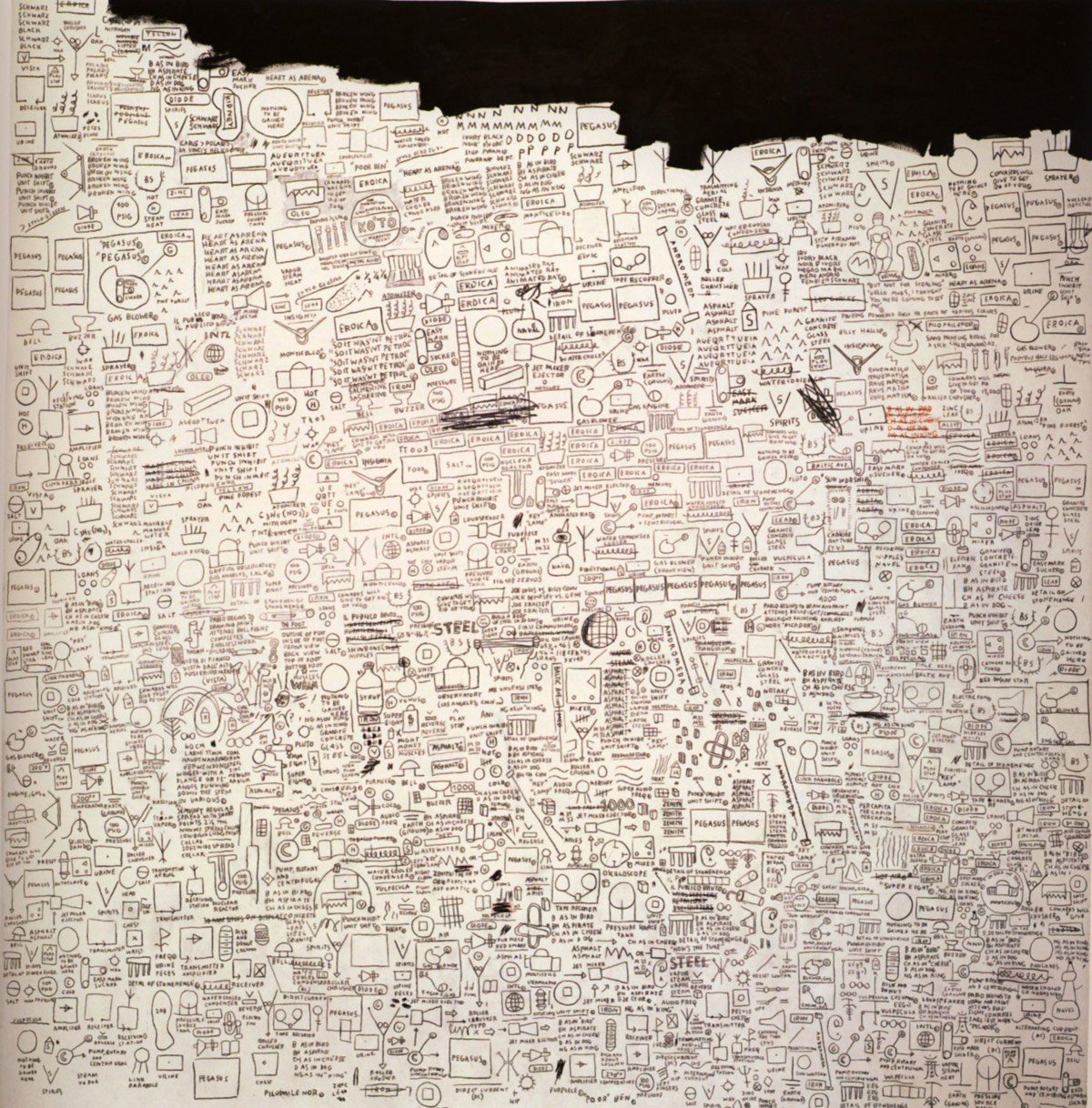
The drawing above is Pegasus by Jean-Michel Basquiat. His first art dealer, Annina Nosei, once called it “the most beautiful drawing ever”. I am not going to disagree with her. I’ve only seen Basquiat’s work sporadically, mostly single paintings included in larger exhibitions with Warhols and Harings, but when I saw Pegasus in this short video about the artist’s life & work, it grabbed me, an instant favorite.
The drawing is held in a private collection, but I hope I get to see it in person someday. For more on Basquiat, check out the 2009 documentary Jean-Michel Basquiat: The Radiant Child.
Photos of the Women Clearing One of the Largest Minefields in the World


Photographer Allison Joyce has been in Sri Lanka photographing the women clearing one of the biggest minefields in the world. The mines were left over from the Sri Lankan civil war and the women are employed by NGO HALO Trust.
Landmines were used in vast quantities by both sides at different stages of the fighting in the north. From 2010 to 2012, HALO deminers removed over 30,000 mines a year. By 2014 the total had fallen to 16,000 annually, but those remaining threaten the most economically vulnerable people in the country. Mines present an obstacle to the safe return of internally displaced people (IDPs) and prevent access to paddy fields, fishing jetties and grazing land affecting the lives and livelihoods of thousands of people.
HALO remains the largest international mine action operator in the country. Our 830 staff, including a large proportion of former IDPs, work in the Jaffna, Kilinochchi and Mullaitivu districts. Fifty percent of our deminers are women, many of them war widows with children to support.
In Focus and The Guardian have photo essays about the women and their work.
13 Reasons We Type in Lowercase. Fun fact: the first year or two of @kottke posts were entirely in lowercase (for intimacy/casualness reasons).
Learned about swerve skiing this weekend. It involves wearing track pants, doing unconventional tricks, and a ton of athleticism.
How to Play Pac-Man
The highest score a player can get in Pac-Man is 3,333,360. In a fascinating recent article on the game, Cat DeSpira doesn’t tell us how to play the digital game on the screen but instead shows how people interact with the physical artifact of the cabinet while playing Pac-Man. Specifically, she notes that the particular pattern of wear on the sides of Pac-Man machines arises from the nature of the game.
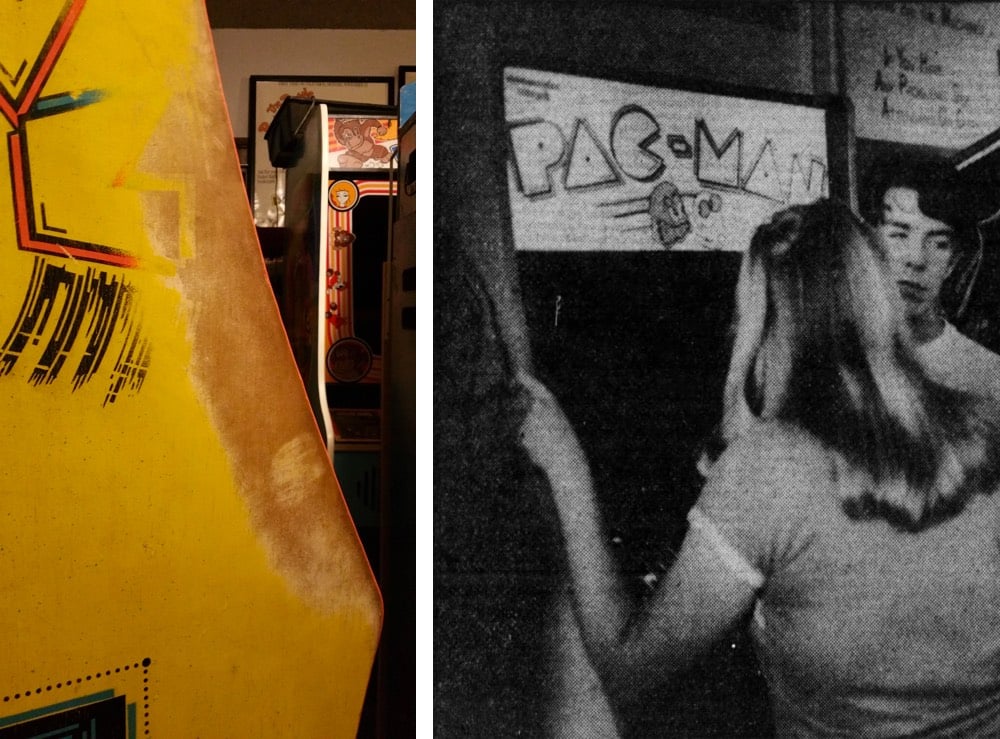
Pac-Man is more of a driving game than a maze game. As you’re playing, you’re jamming that joystick left and right, up and down, movements that shifts your right shoulder forward and back, rocking your body side to side. When the going gets tough, and the ghosts start closing in, all of this rocking motion compels you to lean into the game and, whether you realize you’re doing it or not, you’re going to grab onto the game. You actually need to get a grip…on something. You’re either going to lean hard against your left palm as it rests on the control panel which isn’t comfortable for very long or, like most people, you’re going to grab the side of the game and hold on tight. You have to or you’ll lose your balance. You can’t take the sharp corners smoothly and quickly without doing this, ether. You need the extra stabilization to move Pac-Man around the corners accurately.
Many owners have “restored” the worn sides of their games so they look like new, but DeSpira argues that covers up a vital aspect of gaming history:
Pac-Man’s worn left-side is part of the game’s provenance. It’s unique only to Pac-Man games, including Ms. Pac-Man. It’s evidence left by “Pac-Mania” and also evidence of how the game was really played. It’s a time signature left by a generation of the first gamers. It’s history that should be preserved intact. It tells a story that we’ll never see written again.
Why anyone would want to destroy something that reflects a cultural phenomenon in gaming boggles my mind. It’s confusing even more to me that people can’t see it, can’t see the worn side of the game and know exactly what put it there and find it beautiful — hands. Thousands of human hands. Millions, even. Hands of many colors, many sizes; white collar hands, blue collar hands, no-collar hands. Hands that put a quarter in a machine that was attacked by the press as being “addicting” and “unhealthy”. Ordinances were passed that helped kill the video craze off early because of Pac-man, because a generation of newly risen gamers couldn’t keep their hands off it and, in a free country, shouldn’t have been expected to anyway. That scar was put there by an act of defiance.
(thx, s. ben)
The Unintended Benefits Of Vaccines. As demonstrated by a recent study, they often protect against illnesses and diseases other than their target disease.
The Robots Are Coming for Our Jobs (Thank God)
At SXSW, Congresswoman Alexandria Ocasio-Cortez was asked by an audience member about the economic challenge of a significant percentage of our labor force being replaced by automation. She responded, in part, by suggesting we decouple the idea of employment with being able to remain alive:
We should not be haunted by the specter of being automated out of work. We should not feel nervous about the toll booth collector not having to collect tolls anymore. We should be excited by that. But the reason we’re not excited by it is because we live in a society where if you don’t have a job, you are left to die. And that is, at its core, our problem.
Then she went on to say:
We should be excited about automation, because what it could potentially mean is more time educating ourselves, more time creating art, more time investing in and investigating the sciences, more time focused on invention, more time going to space, more time enjoying the world that we live in. Because not all creativity needs to be bonded by wage.
Her full answer, including a bit about “automated inequality”, is worth worth watching in full, starting at ~55:15:
In a 1970 article in New York magazine, the architect and futurist Buckminster Fuller wrote about the collision of technology and “this nonsense of earning a living”:
We must do away with the absolutely specious notion that everybody has to earn a living. It is a fact today that one in ten thousand of us can make a technological breakthrough capable of supporting all the rest. The youth of today are absolutely right in recognizing this nonsense of earning a living. We keep inventing jobs because of this false idea that everybody has to be employed at some kind of drudgery because, according to Malthusian-Darwinian theory, he must justify his right to exist. So we have inspectors of inspectors and people making instruments for inspectors to inspect inspectors. The true business of people should be to go back to school and think about whatever it was they were thinking about before somebody came along and told them they had to earn a living.
(thx to @claytoncubitt for the AOC-Fuller connection)
Hilarious video about all of the sequels to Tetris, including Hatris and a game called Faces… Tris III (not making this up).
A Day in the Life at a Bell Labs Datacenter in the Late 60s
Larry Luckham was a manager at a Bell Labs data center in Oakland in the late 60s and early 70s. One day, he captured daily life at the company with his camera.


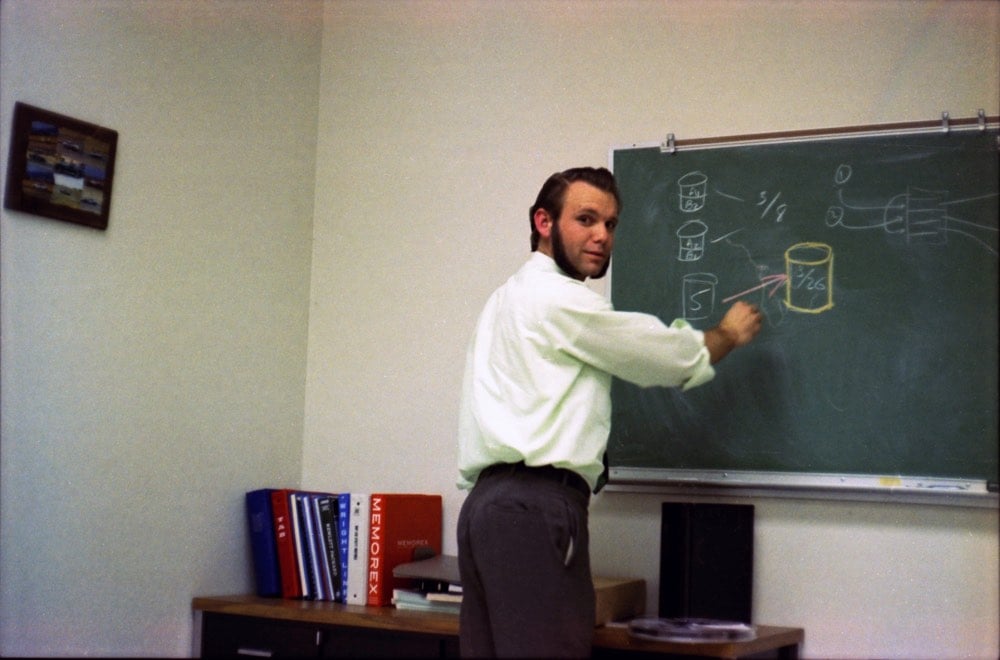
Note how many of his coworkers were women, including women of color. From The Secret History of Women in Coding:
A good programmer was concise and elegant and never wasted a word. They were poets of bits. “It was like working logic puzzles — big, complicated logic puzzles,” Wilkes says. “I still have a very picky, precise mind, to a fault. I notice pictures that are crooked on the wall.”
What sort of person possesses that kind of mentality? Back then, it was assumed to be women. They had already played a foundational role in the prehistory of computing: During World War II, women operated some of the first computational machines used for code-breaking at Bletchley Park in Britain. In the United States, by 1960, according to government statistics, more than one in four programmers were women. At M.I.T.’s Lincoln Labs in the 1960s, where Wilkes worked, she recalls that most of those the government categorized as “career programmers” were female. It wasn’t high-status work — yet.
This portmanteau generator is a pun-lover’s paradise. Lexiconoisseurs will be able to gramurder folks with cleverbs & wittyoms.
Tiny Private Mind-Motions
Prompted by a line from a poem by Tracy K. Smith, Sam Anderson writes about the thoughts that come unbidden to our minds during the course of our day.
Every morning, when I screw the lid onto my steaming thermos of coffee, I think to myself, automatically, the phrase “heat capture.” I have no idea why. I’ve never used that phrase in any other context in my life. And yet I couldn’t stop it if I tried. After years of this, I finally mentioned it to my wife, who revealed a similar habit: Every night, when she shuts the bedroom blinds, she thinks to herself the ridiculous words, “Sleep Chamber: Complete.” She said she kind of hates it because it makes her feel as if she’s living in an episode of “Star Trek,” but she has no choice.
Anderson calls these involuntary thoughts “tiny, private mind-motions”. I have a bunch of these — saying “hey” to the tiny pareidolia faces hidden in my bathroom’s wood paneling, recasting the word “debris” as “derbis” — but the one I’ve been noticing the most lately is nearly every time I run across a two-syllable word or phrase, my brain responds with the Batman jingle.
Na na na na na na na na na na na na snack bags!
Na na na na na na na na na na na na passport!
Na na na na na na na na na na na na Meek Mill!
Na na na na na na na na na na na na sport mode!
Na na na na na na na na na na na na Kottke!
(via na na na na na na na na na na na na craig mod)
My Favorite Secret Social Network

If, for some reason, you join Peach, and you find my handle there, and you add me as a friend — maybe we’re IRL friends, or friends from other social network, or we used to work together, or you know me from here or someplace else — don’t be surprised if I don’t reciprocate your friendship right away.
Being Peach friends is a very special thing, and it doesn’t map neatly onto other kinds of friendship, digital or otherwise. The only way to know if someone is a good Peach friend is if they’ve been a good friend on Peach, which above all means one is supportive, discreet, and chill. The only other way to know if someone is a good Peach friend is if they’re not one of the people you go to Peach to talk about with your discreet, supportive, supremely chill Peach friends.
Confused? Yeah, it’s confusing to me too. The best effort at sorting it out in public so far is by Navneet Alang, who in “Notes on Peach” writes about why a small handful of us love this buggy, unreliable, deeply unpopular social network so much:
Most of all, there is no central feed. Instead, you have to click on each friend’s individual profile, which, first, limits the number of people you want to have on it, and second, makes things weirdly intimate, confessional, like you’re really writing to yourself and other people just happen to read. Of the odd mix that makes up my friend list of about fifteen—a couple of IRL friends, a few pals from Twitter, and a few complete strangers in another country—most use it as a sort of ongoing diary for the things you can’t say elsewhere, a release valve from the glare of Twitter. It is the sort of app where you talk about having a headache, the fact that you’re horny, a memory you have of your father that still fucks you up, and of course, pictures of your dog, mostly to a cobbled-together group of people you’ve never even met who, for some unknown reason, have all agreed not to judge.
I am the sort of person who has posted the following tweets in public, under my government name:
Writing is like sex because there are so many different ways to do it for the wrong reasons and with the wrong people
— Tim Carmody (@tcarmody) August 26, 2017
Writing is like sex in that people say I’m really good at it, but eventually they all decide I’m not worth the trouble
— Tim Carmody (@tcarmody) August 26, 2017
I’m posting them here again because frankly, I don’t think they got enough attention the first time. That’s who I am and what I’m about.
I blush to think at my Peach posts ever being made public. Or even private in a different context.
That’s what Peach is for. It is a place to be real with people who’ve chosen to be real with you. It’s friendly, it’s therapeutic, it’s cathartic. It’s necessary. When it’s not around, those of us who use it go a little bit mad.
We’ve come to lean on confessing out loud. And there are no priests left who can be trusted any more. The only thing we can trust is benign neglect.
Is that the next phase of the web? The web that hardly works, where no one’s paying attention because no one really cares? (Except your friends, including strangers, who somehow care so much?)1
As Bill Callahan wrote, “Everyone’s got their own thing that they yell into a well.”
Remaking the Servant Economy
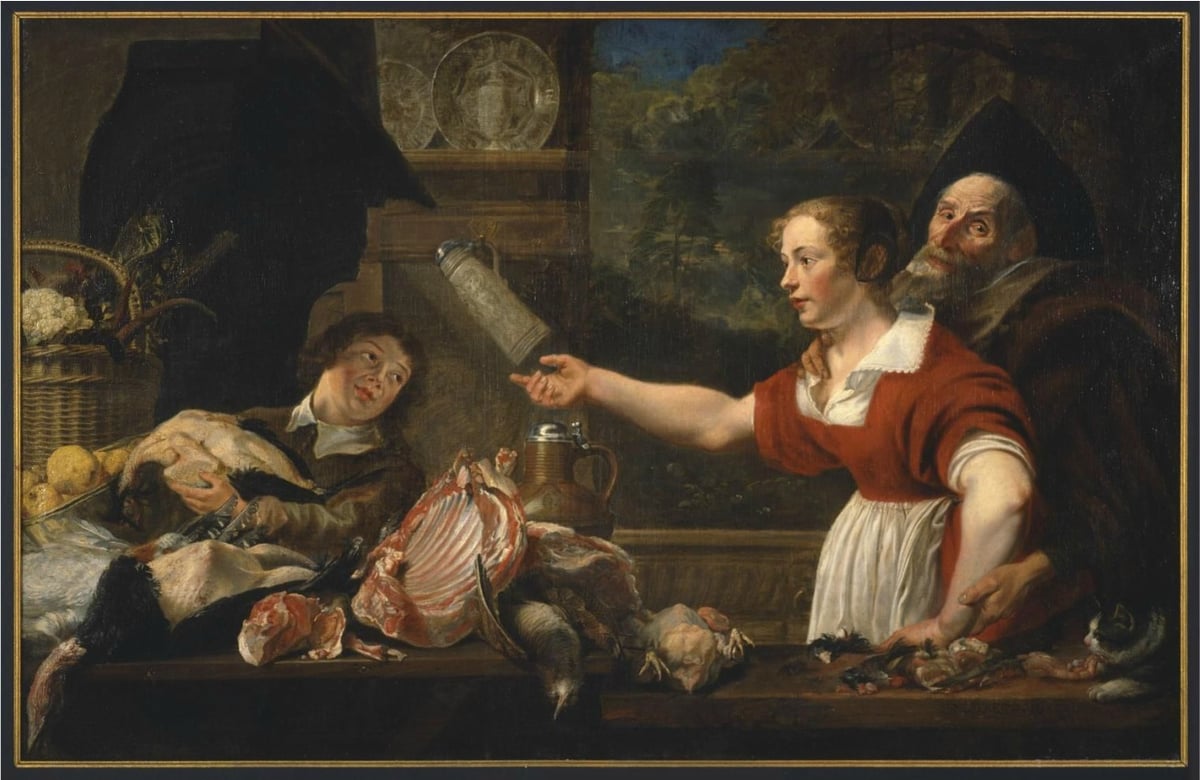
Alexis Madrigal looks at the vast body of “Uber-for-X” sharing economy companies and sees something that’s historically new, but very familiar:
The haves and the have-nots might be given new names: the demanding and the on-demand. These apps concretize the wild differences that the global economy currently assigns to the value of different kinds of labor. Some people’s time and effort are worth hundreds of times less than other people’s. The widening gap between the new American aristocracy and everyone else is what drives both the supply and demand of Uber-for-X companies.
The inequalities of capitalist economies are not exactly news. As my colleague Esther Bloom pointed out, “For centuries, a woman’s social status was clear-cut: either she had a maid or she was one.” Domestic servants—to walk the dog, do the laundry, clean the house, get groceries—were a fixture of life in America well into the 20th century. In the short-lived narrowing of economic fortunes wrapped around the Second World War that created what Americans think of as “the middle class,” servants became far less common, even as dual-income families became more the norm and the hours Americans worked lengthened.
What the combined efforts of the Uber-for-X companies created is a new form of servant, one distributed through complex markets to thousands of different people. It was Uber, after all, that launched with the idea of becoming “everyone’s private driver,” a chauffeur for all.
An unkind summary, then, of the past half decade of the consumer internet: Venture capitalists have subsidized the creation of platforms for low-paying work that deliver on-demand servant services to rich people, while subjecting all parties to increased surveillance.
What else is there to say?
The 50th edition of Noticing, the @kottke newsletter, just went out. Hot Shit Science, Ancient Wisdom, Pop Stars In New Contexts, and a little meta self-reflection to close things out; this newsletter has it all
Socials & More