



This site is made possible by member support. 💞
Big thanks to Arcustech for hosting the site and offering amazing tech support.
When you buy through links on kottke.org, I may earn an affiliate commission. Thanks for supporting the site!
kottke.org. home of fine hypertext products since 1998.
Beloved by 86.47% of the web.
Entries for September 2016
Barack Obama’s exit interview
Doris Kearns Goodwin worked in the White House for LBJ and has written extensively about US Presidents: Team of Rivals (Lincoln), The Bully Pulpit (Teddy Roosevent & Taft), and No Ordinary Time (FDR & Eleanor Roosevelt). For the November issue of Vanity Fair, she visited with Barack Obama in the White House to reflect on his progress and legacy as he approaches the end of his two terms in office. The resulting conversation is excellent.
Early in my presidency, I went to Cairo to make a speech to the Muslim world. And in the afternoon, after the speech, we took helicopters out to the pyramids. And they had emptied the pyramids for us, and we could just wander around for a couple hours [at] the pyramids and the Sphinx. And the pyramids are one of those things that live up to the hype. They’re elemental in ways that are hard to describe. And you’re going to these tombs and looking at the hieroglyphics and imagining the civilization that built these iconic images.
And I still remember it — because I hadn’t been president that long at that point — thinking to myself, There were a lot of people during the period when these pyramids were built who thought they were really important. And there was the equivalent of cable news and television and newspapers and Twitter and people anguishing over their relative popularity or position at any given time. And now it’s all just covered in dust and sand. And all that people know [today] are the pyramids.
Sometimes I carry with me that perspective, which tells me that my particular worries on any given day — how I’m doing in the polls or what somebody is saying about me … for good or for ill — isn’t particularly relevant. What is relevant is: What am I building that lasts?
I particularly enjoyed the part early on about ambition, adversity, and empathy. Oh, this short anecdote from Goodwin about LBJ is great:
L.B.J. had his amphibious car when he was president. He tricked me and took me in his car one day, and the Secret Service collaborated with him. L.B.J., behind the wheel, warned me, “Be careful, we’re going toward a lake. The brakes aren’t working.” Well, we go into the lake: the car became a boat. Then he got so mad at me because I didn’t get scared. I’d figured, He’s not going to die. And he said, “Don’t you Harvard people have enough sense to be scared?”
Has anyone in one of these interviews really pressed Obama on his drone policy? I think it’s the one big stain on his record and would love to hear his personal defense of it in length.
The 40th Anniversary Edition of the Voyager Golden Record
Just launched on Kickstarter: a gorgeous reproduction of the Golden Record that was included on the Voyager space probes when we shot them into space almost 40 years ago. The records contained images and sounds from Earth that some extraterrestrial civilization may someday view and listen to.
The Voyager Golden Record contains the story of Earth expressed in sounds, images, and science: Earth’s greatest music from myriad cultures and eras, from Bach and Beethoven to Blind Willie Johnson and Chuck Berry, Senegalese percussion to Solomon Island panpipes. Dozens of natural sounds of our planet — birds, a train, a baby’s cry — are collaged into a lovely sound poem. There are spoken greetings in 55 human languages, and one whale language, and more than one hundred images encoded in analog that depict who, and what, we are.
This is so cool. When I was doing the packages with Quarterly, one of the ideas I had on my list was to replicate the Golden Record. The production values would have been a lot more limited than this effort and the rights issue is ultimately why I never pursued it:
The overwhelming majority of the funds raised from this historic reissue will go directly to the high production costs, licensing, and royalties incurred in creating this lavish box set.
See also the Contents of the Voyager Golden Record and The sounds of Voyager’s Golden Record.
Hillary Clinton on Between Two Ferns
When you see how well it works for Donald Trump, do you ever think to yourself, “Oh, maybe I should be more racist”?
I loved this. If Galifianakis can’t get her to break, what hope does Trump have in the debates? Maybe this is part of her debate prep?
A nonfiction literary map of the United States
From Nylon, Kristin Iversen compiled her list of the best pieces of nonfiction — books, essays, memoirs — from every state in the US (plus DC and NYC). Here’s a sampling:
Alaska: Coming into the Country by John McPhee.
Connecticut: The Story of How, and Why, Martha Stewart Became the Queen of Living Well by Margaret Talbot.
Florida: The Orchid Thief by Susan Orlean. (Love this choice!)
Illinois: The Devil in the White City by Erik Larson. Strong runner-up here is the amazing The Warmth of Other Suns (which I reviewed here).
Vermont: Where the Roads Have No Name by Geoff Manaugh.
Uncanny car impressions
Daniel Jovanov does fantastic impressions of cars. In the video above, he imitates them so well that a trio of actual race car drivers are able to pick out exactly which ones he’s doing. I think he’s gotten better since his appearance on Australia’s Got Talent several years ago:
“The most powerful artwork I have ever seen”
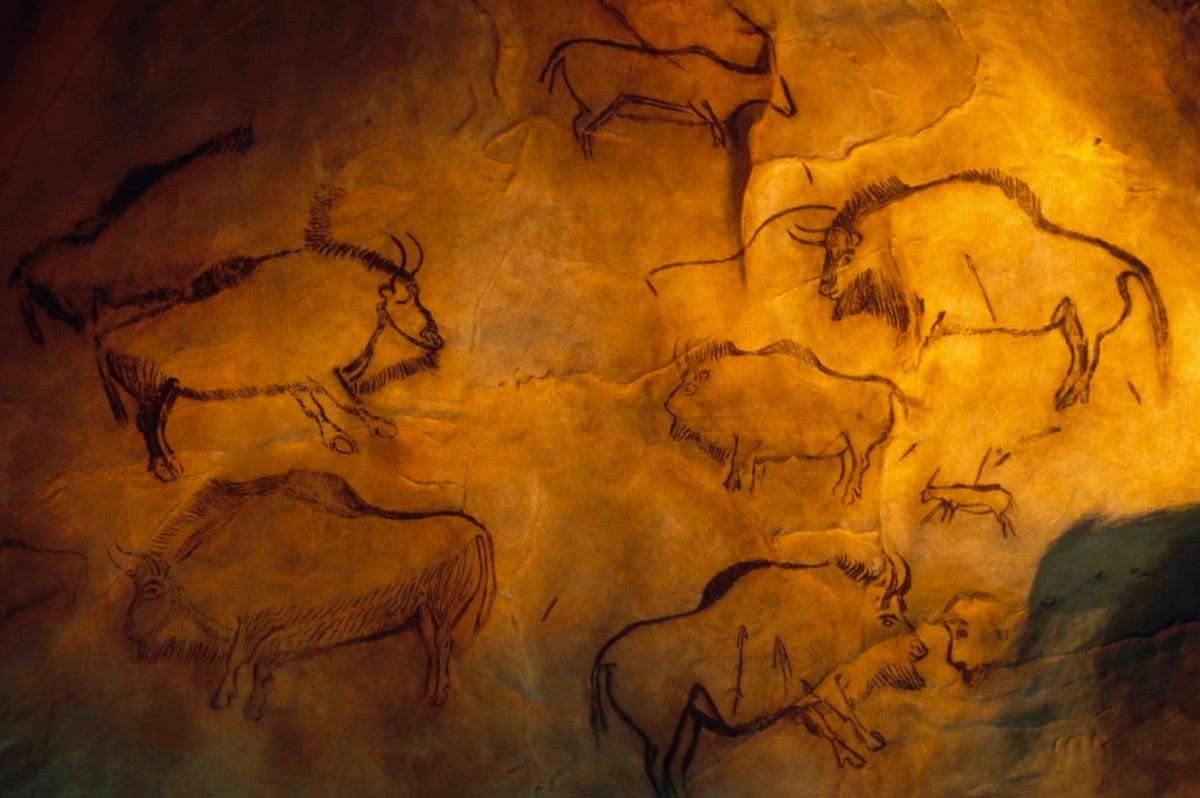
New York Magazine art critic Jerry Saltz has presumably been to most of the finest museums in the world, seen the works of the great masters, and generally spent a lifetime looking at great art. But he encountered what he calls “the most powerful artwork I have ever seen” in a French cave with drawings from about 13,000 years ago.
The idea that perspective was invented in Florence in 1414 collapsed in an instant. Here, larger mammals are in front of smaller ones who trail behind; animals at the back of packs are smaller than those in front. There’s also what’s called reverse perspective, the sort of system used in China, where closer things are rendered smaller than farther things. Elsewhere, an ibex is depicted from behind and over the shoulder — an incredibly sophisticated perspective. One horse is seen from a highly accomplished three-quarters view. Imagery seemed adjusted for curvatures and protrusions of the walls in the same ways that Renaissance frescoes adjust for distortions, distance, and odd viewing angles. I saw a bison with one horn curving up, the other curving down — either from battle or birth. Whatever the cause, this was something that had been seen and intentionally rendered.
Just penciled this in for my next trip to France, whenever that is.
Nazi rallies in Madison Square Garden in the 1930s

In the 1930s, almost a decade before the nation’s young men would be shipped overseas to combat the foul stench of Hitler wafting across Europe, official and unofficial rallies for the Nazi party were held in Madison Square Garden.
Shortly after Adolf Hitler’s appointment as Chancellor of Germany in January 1933, the Nazis consolidated control over the country. Looking to cultivate power beyond the borders of Germany, Deputy Führer Rudolf Hess charged German-American immigrant Heinz Spanknobel with forming a strong Nazi organization in the United States.
Combining two small extant groups, Spanknobel formed Friends of New Germany in July 1933. Counting both German nationals and Americans of German descent among its membership, the Friends loudly advocated for the Nazi cause, storming the offices of New York’s largest German-language paper, countering Jewish boycotts of German businesses and holding swastika-strewn rallies in black-and-white uniforms.
A later group, which only disbanded at the end of 1941, were prominently pro-American and featured iconography of George Washington as “the first Fascist”. (I would have gone for “the Founding Fascist”…catchier.)
Should we use CRISPR to engineer mosquitoes incapable of transmitting malaria?
Thousands of people die every day from malaria, a disease that is transmitted to humans solely through mosquitoes. With CRISPR, scientists can easily genetically engineer mosquitoes incapable of transmitting malaria and using a technique called gene drive, they can force that genetic change into the native mosquito population. So, should we do it?
Monty Python’s Argument Sketch performed by two vintage speech synthesizers
In a sketch from Monty Python called Argument Clinic, a character played by Michael Palin goes to a facility and pays to have an argument with John Cleese. That argument was recreated for this video using a pair of old school speech synthesizers. Palin’s part is played by the DECTalk Express (aka the voice of Stephen Hawking) and Cleese’s part is played by the Intex Talker. As you can probably hear, the Talker predates the DECTalk by a few years and is more difficult to understand. (via @303)
Passengers
You had me at Chris Pratt and J. Law in space. I hope this doesn’t suck.
Jennifer Lawrence and Chris Pratt are two passengers onboard a spaceship transporting them to a new life on another planet. The trip takes a deadly turn when their hibernation pods mysteriously wake them 90 years before they reach their destination.
On the shifting role of racism in American slavery
In a recent episode of his EconTalk podcast, host Russ Roberts talks with Michael Munger about a paper Munger co-authored about how white Southern attitudes toward slavery shifted from around 1815 to 1835. The episode is interesting throughout,1 but I want to highlight this attitude shift Munger writes about in the paper, something I was previously unaware of.
Sifting through documents from the era between the American Revolution and the Civil War, Munger and his co-author Jeffrey Grynaviski found that Southern whites believed, in the first decade or two of the 19th century, that owning slaves was evil but necessary. There was this system in place and it was bad but we’re gonna go with it because, whaddya gonna do? But in a period of about 20 years, due to a variety of factors, mostly economic, the justification for slavery shifted primarily to a racist one: that black people were inferior and needed to be cared for by whites. Southern whites came to believe, like really believe, that they were doing their slaves a favor by enslaving them and that the slaves were better off than they would be in Africa.
The way we defined it in this paper was that racism became a substitute justification for slavery. And the reason was, the original justification for slavery, which was the Roman one of wasn’t good enough. And so Southerners cast about and found basically an alternative, which was the Greek justification for slavery. And let me just say very briefly what those two are. The one justification for slavery, and it was pretty common in Rome, was that if you lost a battle and were captured, then you might either be killed or kept as a slave. And there is a mutually beneficial exchange, if you will, in the sense that you’ve already lost. So, me saying, ‘I tell you what: I won’t kill you if you will agree to act as my slave for the rest of your life. And I may free you; I may not; but that’s up to me.’ And you say, ‘Killed/be a slave: I’m going to go with the slave thing.’ But, it meant that some slaves were very excellent. And in Roman society some slaves occupied very high positions, positions of respect. It’s just that they made this promise. It was an economic institution. And that was the way that slavery had existed in Africa: if you lost a battle, then you would be captured by the other side. It was almost like indentured servitude: you could work it off.
Well, that didn’t work in the American South because they wanted to maintain slaves, to be able to identify slaves and to have a justification that would allow them to enslave the children — which the old Roman justification would never have allowed. You are not going to be a slave if you are born to a slave, because you didn’t lose in battle: you would have been free.
So, the Southerners needed a different way, so they were looking for the Aristotelian notion of slavery, which is that slaves are people who are either morally inferior or lack the judgment to make independent choices. They are like children or like horses. That means that you actually have a positive-good justification for enslaving them: if I have a thoroughbred horse or a fancy dog, it would be cruel of me to set it loose to let it run around, because it’s not capable of taking care of itself. I have obligations to take care of it. My ownership actually gives me obligations. And what’s interesting and what this paper is about is how Southerners worked that out between about 1815 and 1835, and started to understand the implications for how they had to change the economic institutions of slavery to match this new ideology that they were creating.
Yet another example of how powerful economic self-interest is in shifting moral beliefs.
Although it was uncomfortable at times listening to two privileged pro-market white guys talking about slavery, particularly in the moments where they discuss matters from the slaves’ perspectives. But in fairness, they do a good job in admitting their privilege and the awareness that their economic beliefs may not square with things like human rights and justice forms the basis of a fascinating conversation.↩
The Monty Hall Problem, explained
The Monty Hall Problem is one of those things that demonstrates just how powerful a pull common sense has on the human reasoning process. The problem itself is easily stated: there are three doors and behind one of them there is a prize and behind the other two, nothing. You choose a door in hopes of finding the prize and then one of the other two doors is opened to reveal nothing. You are offered the opportunity to switch your guess to the other door. Do you take it?
Common sense tells you that switching wouldn’t make any difference. There are two remaining doors, the prize is randomly behind one of them, why would switching yield any benefit? But as the video explains and this simulation shows, counterintuition prevails: you should switch every time.
America was introduced to the difficulty of the problem by Marilyn vos Savant in her column for Parade magazine in 1990.1 In a follow-up explanation of the question, vos Savant offered a quite simple “proof” of the always switch method (from Wikipedia). Let’s assume you pick door #1, here are the possible outcomes:
| Door 1 | Door 2 | Door 3 | Result if you stay | Result if you switch |
|---|---|---|---|---|
| Car | Goat | Goat | Wins car | Wins goat |
| Goat | Car | Goat | Wins goat | Wins car |
| Goat | Goat | Car | Wins goat | Wins car |
As you can see, staying yields success 33% of the time while if you switch, you win 2 times out of three (67%), a result verified by a properly written simulator. In his Straight Dope column, Cecil Adams explained it like so (after he had gotten it wrong in the first place):
A friend of mine did suggest another way of thinking about the problem that may help clarify things. Suppose we have the three doors again, one concealing the prize. You pick door #1. Now you’re offered this choice: open door #1, or open door #2 and door #3. In the latter case you keep the prize if it’s behind either door. You’d rather have a two-in-three shot at the prize than one-in-three, wouldn’t you? If you think about it, the original problem offers you basically the same choice. Monty is saying in effect: you can keep your one door or you can have the other two doors, one of which (a non-prize door) I’ll open for you.
See also the case of the plane and the conveyor belt (sorry not sorry, I couldn’t resist).
I was a religious reader of Parade and remember this column and the resulting furor very clearly. Re: the furor, it’s so interesting to note in hindsight (being 16 and clueless at the time) how much of the response was men who clearly were trying to put the smackdown on a prominent, intelligent woman and they just got totally owned.↩
Storm Photography by Mitch Dobrowner



Mitch Dobrowner takes wonderfully dramatic black & white photos of clouds and storms from across the plains of the central United States. Dobrowner, who lives in California, became “addicted” to photography as a teen after discovering Ansel Adams and Minor White but then gave it up to spend energy on his career and family. A few years ago, he picked his old obsession back up and these storm photos are the result. (via colossal)
Oh shit, git! What to do when you screw something up in Git.
How to make McDonald’s McRib at home

That, my friends, is a photo of Kenji López-Alt’s homemade McRib sandwich. The McDonald’s version is beloved but has been on and off the menu with maddening irregularity, so Kenji spent weeks/months creating a McRib recipe for the home cook.
The problem is that, while the McRib might be inspired by real barbecue, it’s ultimately a lie. Despite its corrugated appearance, it has little to do with actual ribs. (McDonald’s doesn’t even indicate that the product contains actual rib meat.) It’s not smoked, as one would expect of barbecue ribs. Indeed, it’s not even grilled — it’s cooked on a griddle. We can do better.
My goal? Take everything we love about the McRib sandwich and turn it up to 11, by starting from scratch with a few high-quality ingredients and a lot of good technique (including honest-to-goodness smoking). I wanted to maximize flavor and texture, unlocking the sandwich’s full potential and allowing it to evolve, Pokémon-style, into something so much better.
One of my favorite pieces of food writing from the past few years is Willy Staley’s piece on the economics of the McRib.
And for recipes for more of your favorite fast food at home, see the homemade Shack Burger, homemade McDonald’s fries, homemade Egg McMuffin, homemade Big Mac, and homemade Chick-Fil-A.
MoMA puts 1000s of historical exhibition photos online
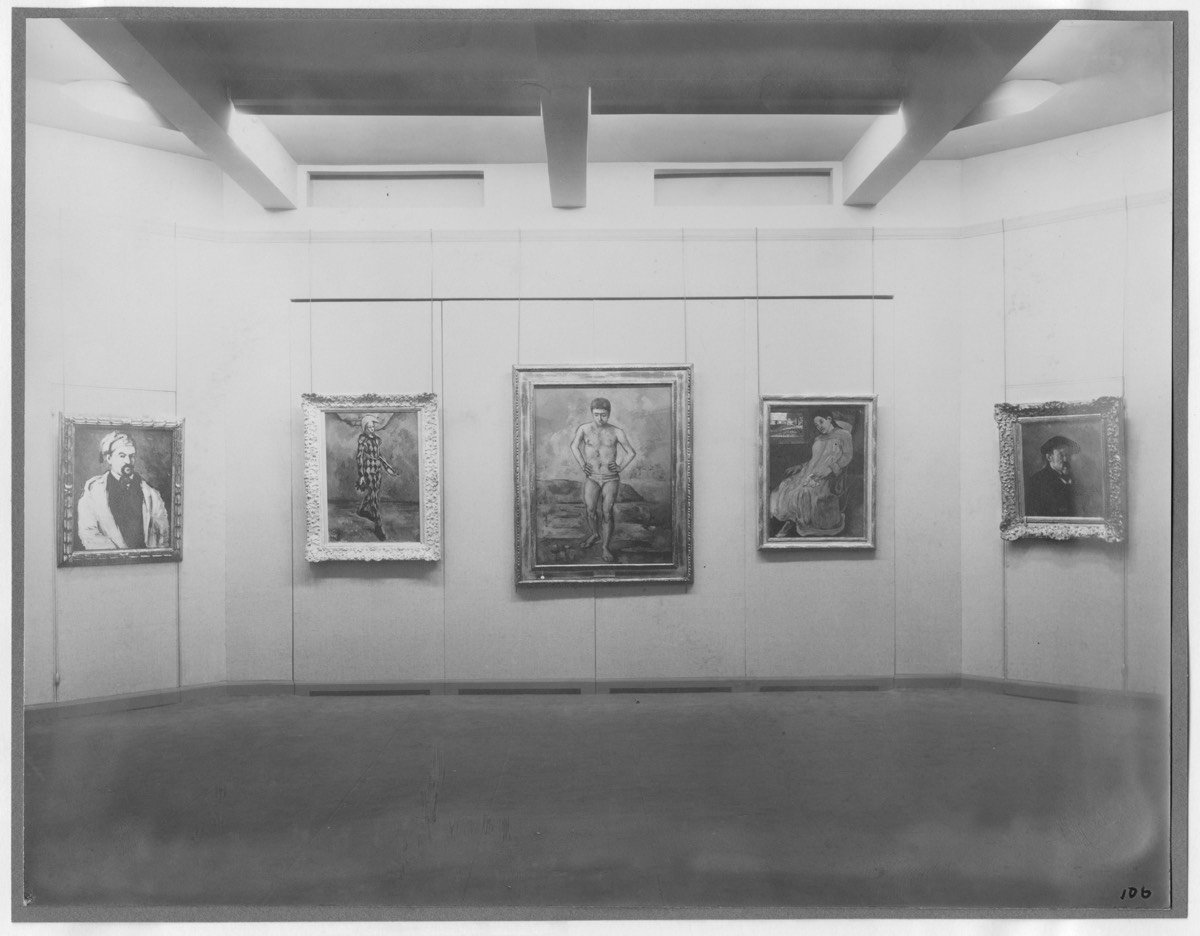
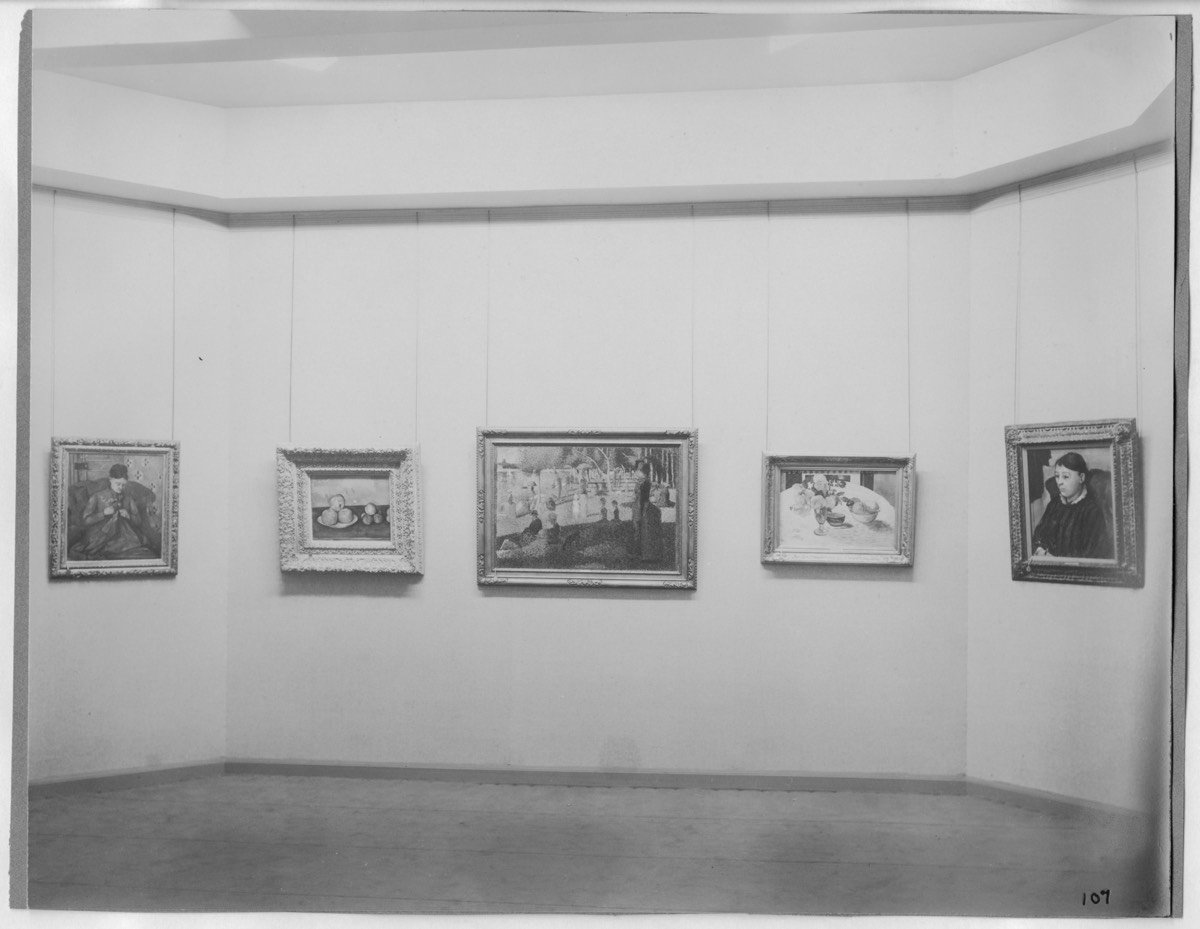
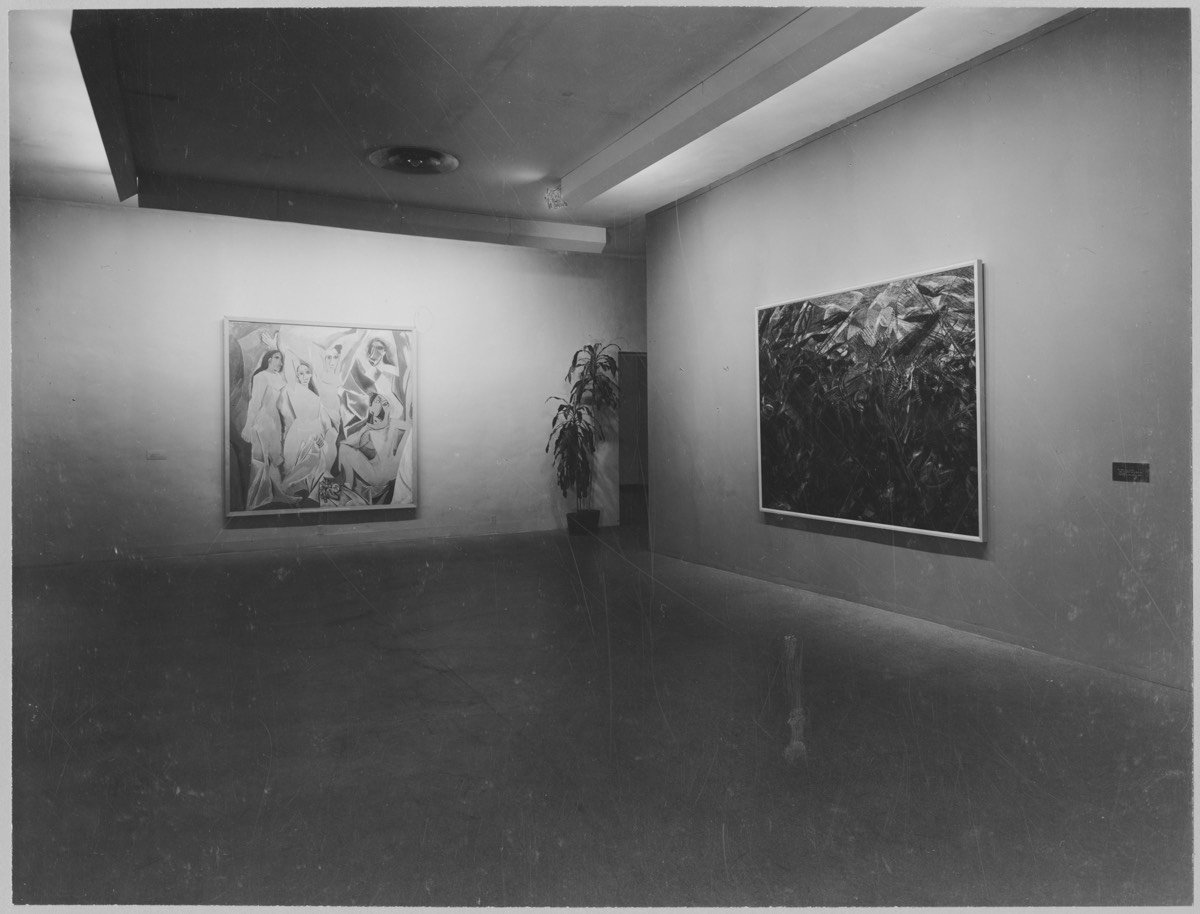
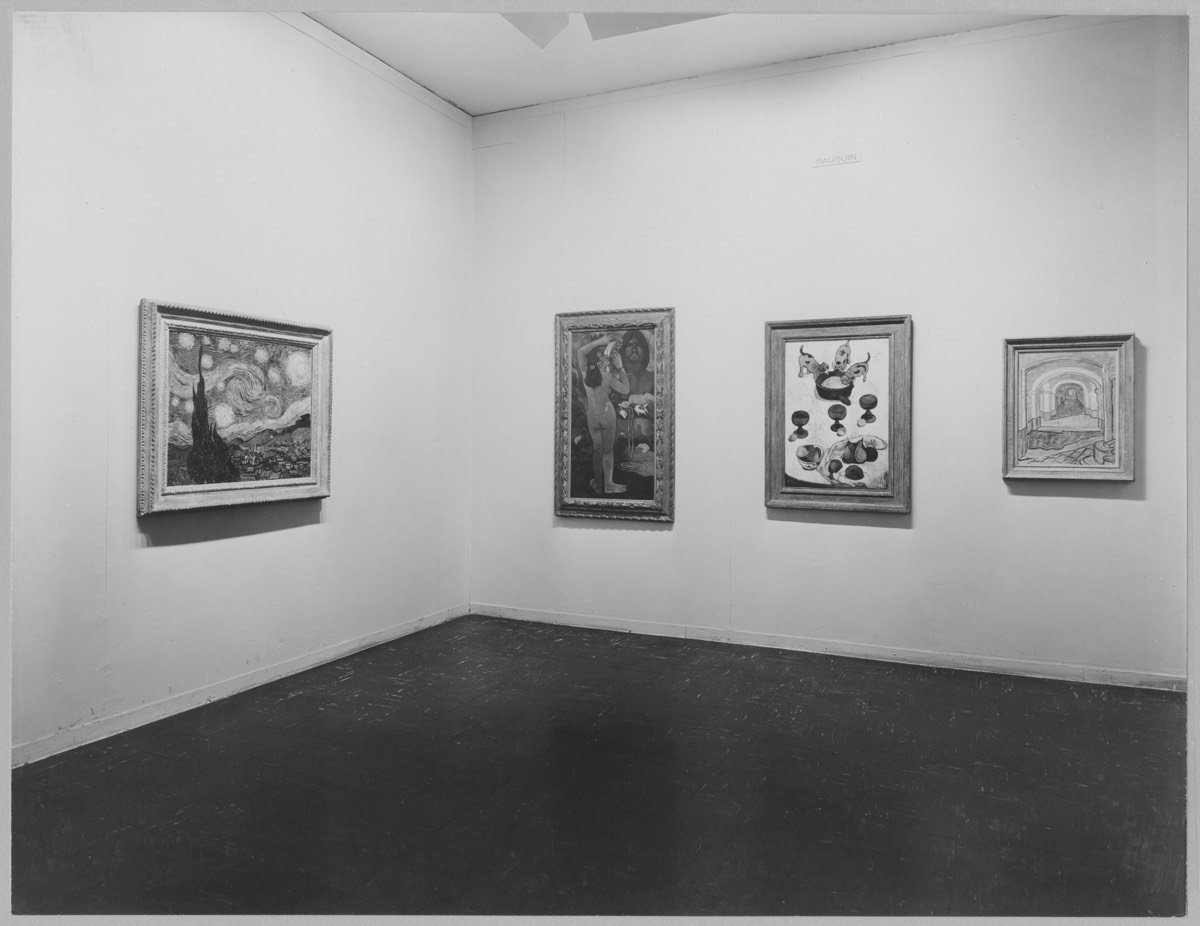
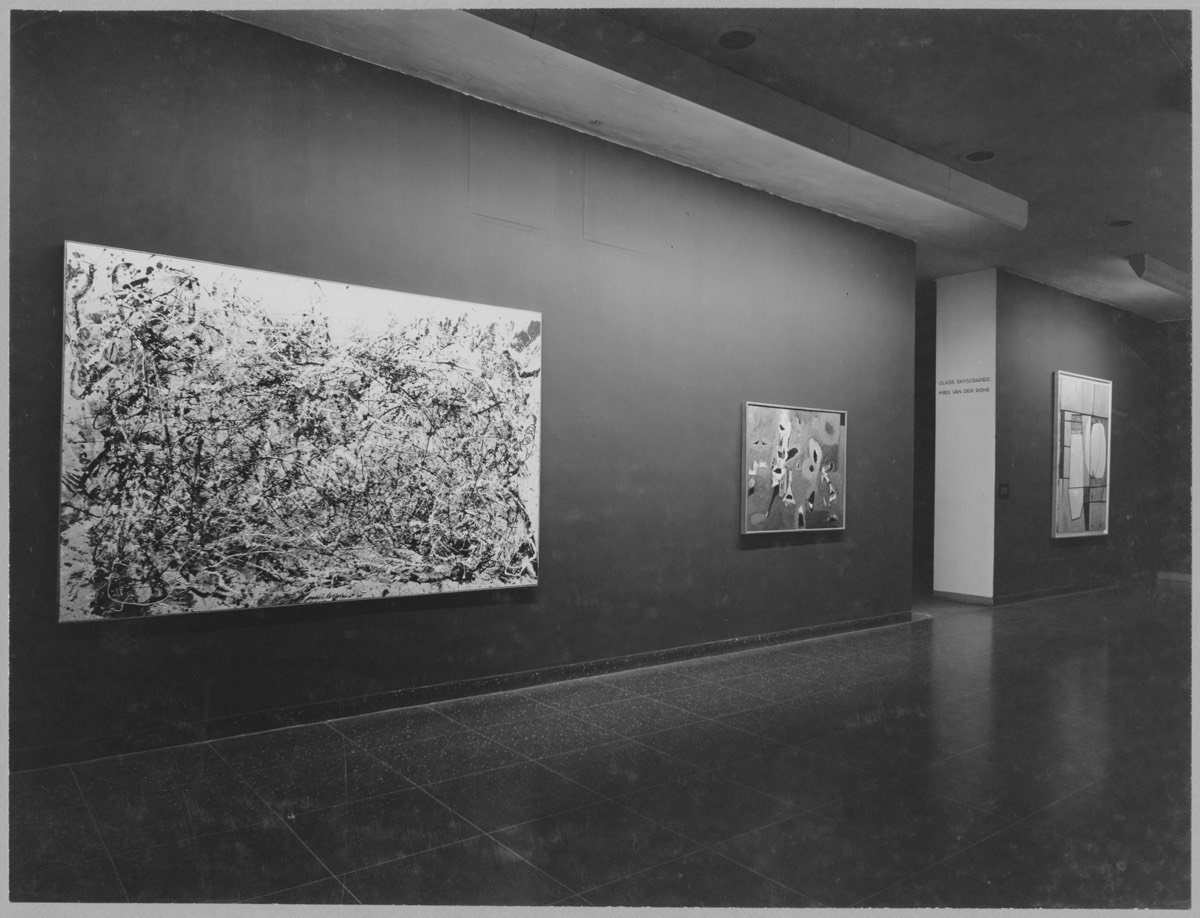
The Museum of Modern Art has started the process of putting online a massive trove of photographs of what the museum’s exhibitions looked like, extending back to their earliest big exhibition in 1929 of works by Cézanne, Gauguin, Seurat, and van Gogh. The NY Times has the story.
The digital archive project will include almost 33,000 exhibition installation photographs, most never previously available online, along with the pages of 800 out-of-print catalogs and more than 1,000 exhibition checklists, documents related to more than 3,500 exhibitions from 1929 through 1989.
Shown above are some notable works of art pictured among the first times they were displayed at the museum…the top one is from that first show in 1929. I happily spent an hour browsing through these exhibitions1 and I haven’t been gripped with this powerful of a desire to travel through time in quite some time. To be able to see that first exhibition…what a thing that would be. In part, I love going to museums for this very reason: standing in the very spot where the artist stood in making their drawing or painting is a very cheap form of time travel.
Suggested technique: search for an artist or artwork you particularly like and sort the results by “opening date, chronological” to see the first time that art or artist was displayed in the museum.↩
Tracking Homer Simpson’s jobs and salary
Vox recently took a look at every single job that Homer has ever had on The Simpsons in an attempt to see where his average salary falls on the economic spectrum in America.
Over the show’s 596-episode run, Homer has had at least 191 jobs. They’ve ranged from executive positions to service jobs, and have dotted the entire economic spectrum, from ultra-rich to the poverty line.
In the list below, we’ve compiled the real-life salaries for 100 of these jobs. Seasonal jobs (like “mall Santa”), and jobs that were virtually impossible to find salary data for (“beer smuggler”) were excluded, as were any repeats (he was an Army private twice, for instance). His full-time gig as a safety inspector is highlighted in yellow, for reference.
He gets a lot of flack, but Homer is actually the most interesting person in America by a wide margin, even though he’s not well compensated for it.
The genius of Spielberg’s Saving Private Ryan battle scene
For a recent episode of Nerdwriter, Evan Puschak takes a look at how Steven Spielberg constructed the intense opening scene of Saving Private Ryan. His decision to film the Omaha Beach landing from the perspective of a battlefield cameraman — something he cribbed from actual WWII battle footage and John Ford’s The Battle of Midway, where scenes in which on-set explosions made the film skip were kept in the finished movie — made it one of the best depictions of war ever created. I need to watch this movie again soon.
An incredible detail Puschak notes: the shot-length in that scene was surprisingly long, particularly for a battle scene. In fact, the shot length in that scene was more than double that of the entirety of 300, any Transformers movie, and Inception.
The Daily Spoon

In 2014, Stian Korntved Ruud hand-carved a different wooden spoon every single day for the entire year. Yep, 365 spoons.
The past year Stian spent most of his time exploring the unique organic qualities of wood and how adding of a function can beautifully refine a piece of wood. The project consists of 365 unique hand carved spoons made from various types of wood. One carved everyday through a year.
By repeating the production of a spoon every day for a longer period of time (365 days), the goal is to challenge and explore a spoons aesthetic and functional qualities.
(via @pieratt)
Impressive insect camouflage
Meet the lichen katydid. Hailing from the forests of Central and South America, this insect has evolved over the millennia to blend in amazingly well with the lichens that populate the forest. Video by David Weiller.
100 objects that shaped public health
From the School of Public Health at Johns Hopkins comes this list of 100 things that have “made their mark on public health”, good and bad. Here’s a sampling of the objects:
Horseshoe crab. We all owe a debt of gratitude to the helmet-shaped horseshoe crab, whose ancestors date back 450 million years. From vaccines to needles to pacemakers, any IV drug or medical equipment that will come in contact with the human body must first be safety-checked using a test that comes from a clotting compound in the crab’s blood. This compound can detect even the smallest amount of deadly bacteria and is sensitive enough to isolate a threat equivalent to the size of a grain of sand in a swimming pool.
Vaccines. Immunization is one of the most important public health achievements in human history. Vaccines helped eradicate smallpox globally and eliminate polio in the United States. The introduction of effective vaccines has also drastically reduced deaths from measles, diphtheria, rubella, pertussis (“whooping cough”) and other diseases that sickened hundreds of thousands of Americans in the early 20th century.
American Cheese. Food processing was actually developed to make food safer. Milk is pasteurized to kill harmful organisms, and canning and freezing foods such as meats, fruits and vegetables helps them last longer. But the food industry has taken processing well beyond these early origins. Often, to extend a food’s shelf life, manufacturers increase fats, sugars, and salt and add in chemical flavorings, emulsifiers, and other additives — taking foods that could have been healthy and making them much less so.
Pap smear. Since its introduction in 1955, the Pap smear has reduced death from cervical cancer by more than 60 percent. Invented by Dr. Georgios Papanikolaou, the Pap smear is a diagnostic procedure in which a health-care professional swabs a cell sample from the cervix and sends it to a lab to see if any of the cells are malignant. Before the invention of the Pap smear, cervical cancer was one of the leading causes of death for women of childbearing age in the United States. Today, it comes in at number 14 on the list of cancers found in women.
Spittoons. Spittoons were developed centuries ago as receptacles for spitting — think ashtrays for saliva. These brass or even porcelain repositories were everywhere: In homes, train stations, saloons and even the U.S. Congress. They were meant for men to dispose their chewing tobacco and the abundant phlegm that accompanied the habit. Convenience turned to concern in the late 19th century when a global tuberculosis epidemic took hold and scientists realized that spittoons might actually spread diseases. Some argued that when people spat in the general direction of a spittoon and missed the target, they caused a greater health threat than if the spittoon hadn’t been there at all.
The internet of trees: how trees talk to each other underground
In June, ecologist Suzanne Simard gave a talk at TED about her 30 years of research into how trees talk to each other. Underneath the forest floor, there is a communications network on which trees — even those from different species — trade carbon with each other, send warnings, and trade messages. Simard described one of her first experiments (from the transcript):
I pulled on my white paper suit, I put on my respirator, and then I put the plastic bags over my trees. I got my giant syringes, and I injected the bags with my tracer isotope carbon dioxide gases, first the birch. I injected carbon-14, the radioactive gas, into the bag of birch. And then for fir, I injected the stable isotope carbon-13 carbon dioxide gas. I used two isotopes, because I was wondering whether there was two-way communication going on between these species.
The idea was to use the isotopes to track whether the trees were trading carbon when some of them were shaded and less able to make their own energy.
The evidence was clear. The C-13 and C-14 was showing me that paper birch and Douglas fir were in a lively two-way conversation. It turns out at that time of the year, in the summer, that birch was sending more carbon to fir than fir was sending back to birch, especially when the fir was shaded. And then in later experiments, we found the opposite, that fir was sending more carbon to birch than birch was sending to fir, and this was because the fir was still growing while the birch was leafless. So it turns out the two species were interdependent, like yin and yang.
Fascinating. German forester Peter Wohlleben came out with a book this week called The Hidden Life of Trees: What They Feel, How They Communicate (Simard contributed a note to the book). From a Guardian review:
Trees have friends, feel loneliness, scream with pain and communicate underground via the “woodwide web”. Some act as parents and good neighbours. Others do more than just throw shade — they’re brutal bullies to rival species. The young ones take risks with their drinking and leaf-dropping then remember the hard lessons from their mistakes. It’s a hard-knock life.
The Monthly, Maclean’s, and Scribd all have excerpts of Wohlleben’s book if you’re interested.
Update: See also this episode of Radiolab, From Tree to Shining Tree. (via @Chan_ing)
The economics of running a NYC restaurant. This is bleak…NYC restos are a bubble propped up by dumb money.
The Murder of Stephen King
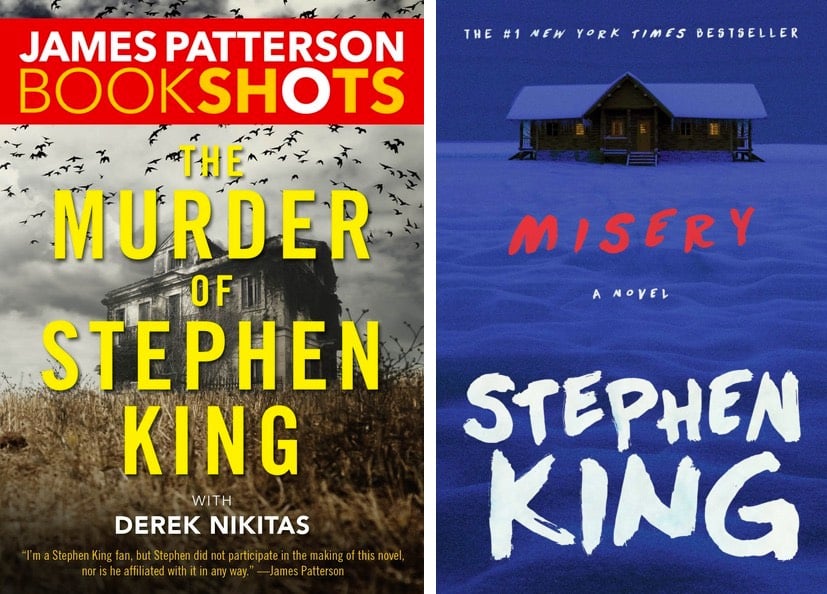
This is weird. Super-prolific author James Patterson, who has written hundreds of books and earns millions of dollars a year from royalties, has co-authored a book called The Murder of Stephen King. King is, of course, a merely prolific author who also publishes popular novels with massive appeal, including one about a writer being victimized by his biggest fan.
Stephen King is being hunted by a killer obsessed with his novels. How far will their reenactments go?
All of Stephen King’s greatest villains, rolled into one.
Stephen King is facing a nightmare. A stalker is reenacting the horrors from his novels. And he won’t stop until he kills the master of suspense himself — unless King puts him out of his Misery first.
Misery! Get it? Patterson is quoted on the front cover of the book:
I am a Stephen King fan, but Stephen did not participate in the making of this novel, nor is he affiliated with it in any way.
According to this AP story, King and Patterson do not know each other and King is not complimentary about his fellow writer’s skills.
While Patterson speaks warmly of King, King has not returned the compliments in the past. In a 2009 interview with USA Weekend, he said Patterson was “a terrible writer but he’s very successful.” Speaking to the AP, Patterson is dismissive of King’s remarks, calling them “hyperbole,” in the style of Donald Trump.
“I know I’m not a terrible writer,” Patterson says. “That’s a little over the top.”
Update: Upon reflection, Patterson has decided not to release the book.
In a statement released Thursday through Little, Brown and Company, Patterson said he didn’t want to cause King or his family “any discomfort.” The book was intended as a tribute to King, a King-like story of an obsessed fan out to get the writer. But Patterson, who co-authored the 150-page novel with Derek Nikitas, said he had learned that fans in real life had “disrupted” King’s home.
“My book is a positive portrayal of a fictional character, and, spoiler alert, the main character is not actually murdered,” he said. “Nevertheless, I do not want to cause Stephen King or his family any discomfort. Out of respect for them, I have decided not to publish ‘The Murder of Stephen King.’”
RIP, The Murder of Stephen King. (via @koaostrem)
Pardon Edward Snowden
The ACLU, Amnesty International, and Human Rights Watch are calling for the pardon of Edward Snowden. The ACLU:
The government has charged Snowden under the Espionage Act, a World War One-era law that doesn’t distinguish between selling secrets to foreign governments and giving them to journalists working in the public interest. If Snowden were to be tried under the charges he faces, any argument that his actions benefited the public would be inadmissible in court.
The Pardon Snowden campaign will work through the end of Obama’s administration to make the case that Snowden’s act of whistleblowing benefited the United States and enriched democratic debate worldwide, and we’re asking citizens to write to the president via our website.
Though some government officials claimed that irreversible harm had been done to US national security, little evidence has been aired publicly. Snowden entrusted the release of information to seasoned journalists and made them promise to inform the government and consider any claim of harm to national security in advance of publication. Adm. Michael Rogers, on taking the helm of the NSA a year into the revelations, told the New York Times he couldn’t say “the sky is falling.” Even Attorney General Eric Holder, who still advocated Snowden’s prosecution as he left office, conceded he performed “a public service.”
“Edward Snowden clearly acted in the public interest. He sparked one of the most important debates about government surveillance in decades, and brought about a global movement in defence of privacy in the digital age. Punishing him for this sends out the dangerous message that those who witness human rights violations behind closed doors should not speak out,” said Salil Shetty, Amnesty International’s Secretary General.
“It is ironic that it is Snowden who is being treated like a spy when his act of courage drew attention to the fact that the US and UK governments were illegally spying on millions of people without their consent.
“The mass surveillance exposed by Snowden impacts the human rights of people around the world. Our new campaign gives the public a chance to call for his pardon and thank him for triggering action by concerned individuals around the world to take back their privacy.”
Several prominent individuals have lent their support to the effort as well, including Steve Wozniak, Eve Ensler, Daniel Ellsberg, and Teju Cole. Bernie Sanders is also urging some form of clemency fror Snowden.
Why this push now? Obama is leaving office (typically a good time for pardons) and Oliver Stone’s Snowden is due out in theaters tomorrow. The reviews aren’t bad and Joseph Gordon-Levitt’s impersonation of Snowden is uncanny (see the trailer).
A vending machine for releasing anger

Artists Katja Kublitz and Ronnie Yarisal built Anger Release Machine, a vending machine stocked with breakable items like glass plates, porcelain statues, etc. When you put some coins in, the machine dispenses an item, sending it crashing against the bottom of the machine. Then, you feel better. I love the concept, but the implementation leaves something to be desired. Here’s a video of the machine in “action”:
(via bb)
Medieval Europe by Chris Wickham
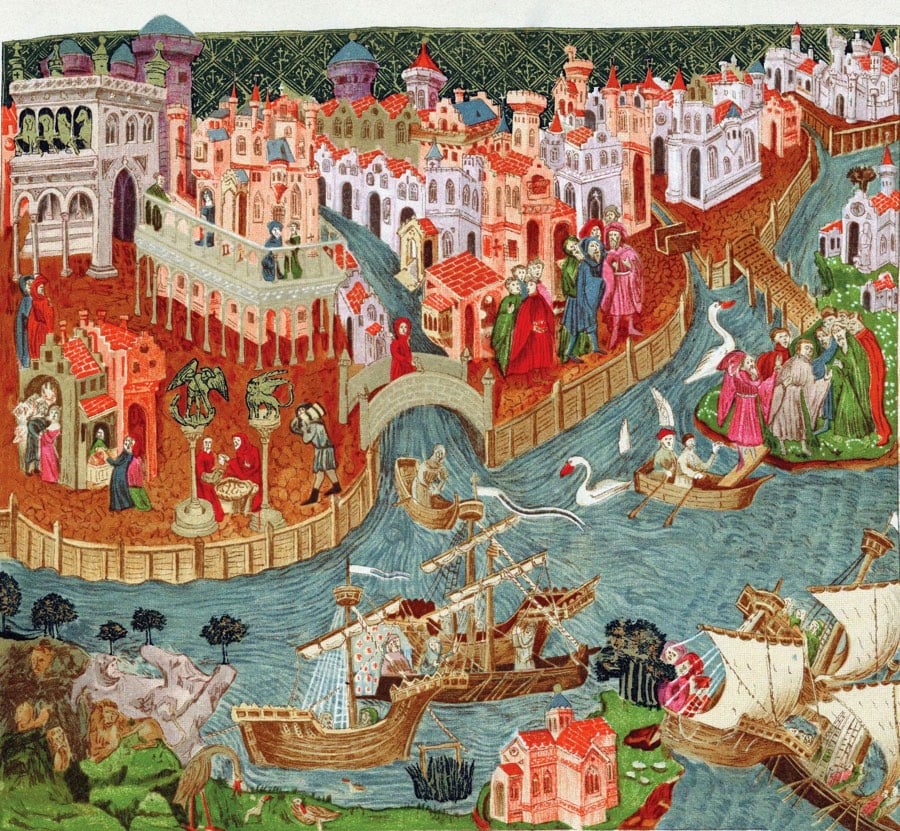
Ooh, this looks good: Medieval Europe is Oxford historian Chris Wickham’s “spirited and thought-provoking history of the vast changes that transformed Europe during the 1,000-year span of the Middle Ages”.
Tracking the entire sweep of the Middle Ages across Europe, Wickham focuses on important changes century by century, including such pivotal crises and moments as the fall of the western Roman Empire, Charlemagne’s reforms, the feudal revolution, the challenge of heresy, the destruction of the Byzantine Empire, the rebuilding of late medieval states, and the appalling devastation of the Black Death. He provides illuminating vignettes that underscore how shifting social, economic, and political circumstances affected individual lives and international events.
Here’s a short excerpt on the Yale University Press blog.
The Middle Ages get short shrift in tellings of European history (as evidenced by the term “Dark Ages”…and even “Middle” implies something moving between two better eras), but recently historians have been working on filling out the story and rehabilitating that period. I really enjoyed Wickham’s The Inheritance of Rome, so I’m looking forward to digging into this when it comes out in November.
The Auction Chant
Did you ever wonder what the auctioneer is saying when they’re trying to get people to bid on things? They talk so quickly it’s hard to tell sometimes, so Barry Baker of Ohio Real Estate Auctions slows down the action to describe exactly what auctioneers are saying.
See also one of my favorite silly things from recent months: Auctioneer beats.
2016 fall foliage map

As I remarked last year, the Smoky Mountains website has the best fall foliage map in the business. The map covers the entire US and comes with a slider that lets you check the status weekend by weekend throughout the fall. Looks like the foliage will peak near Sept 30th in VT and Oct 14th in NYC and in the Smoky Mountains.
The Illustrated Book of Poultry
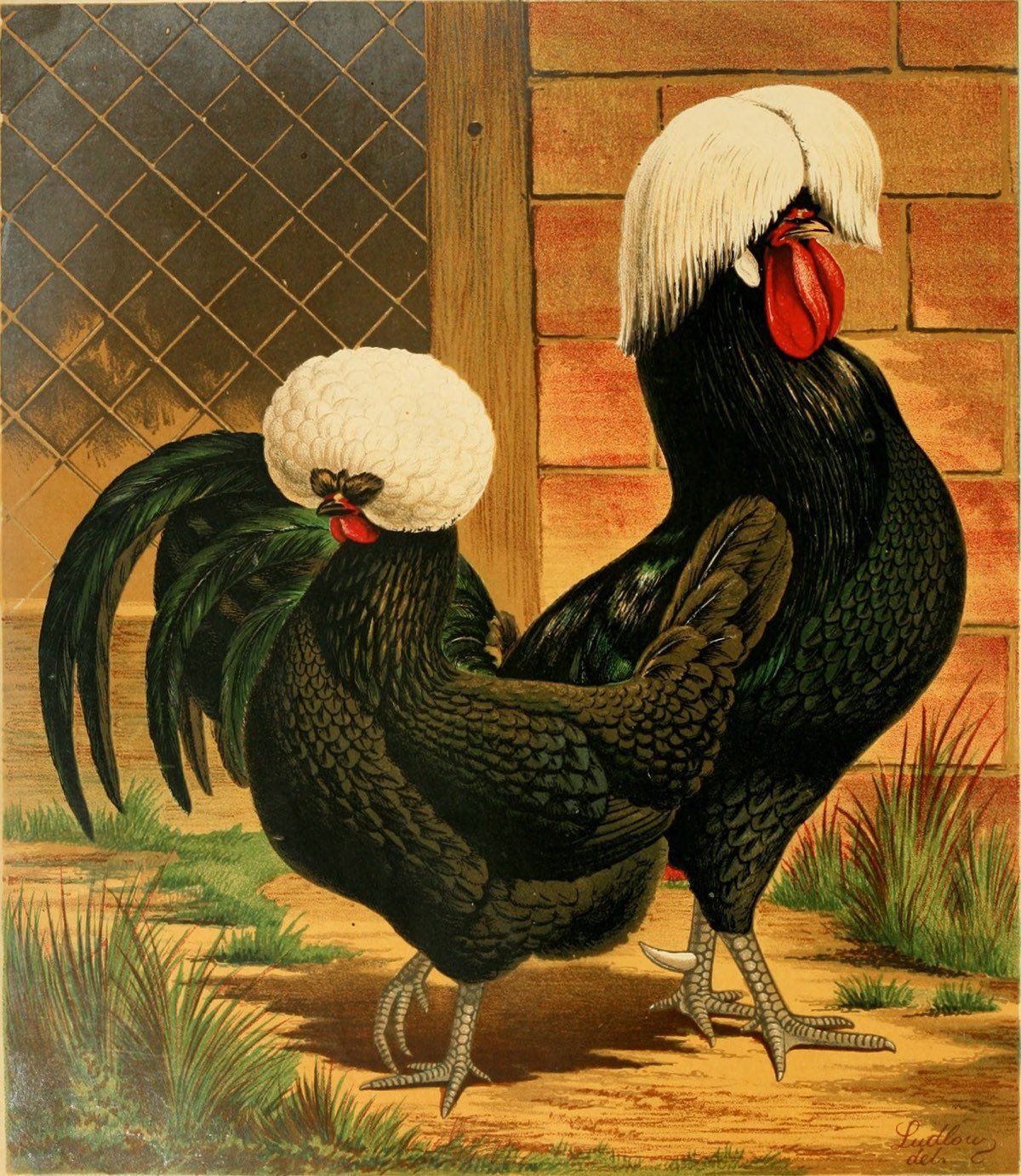
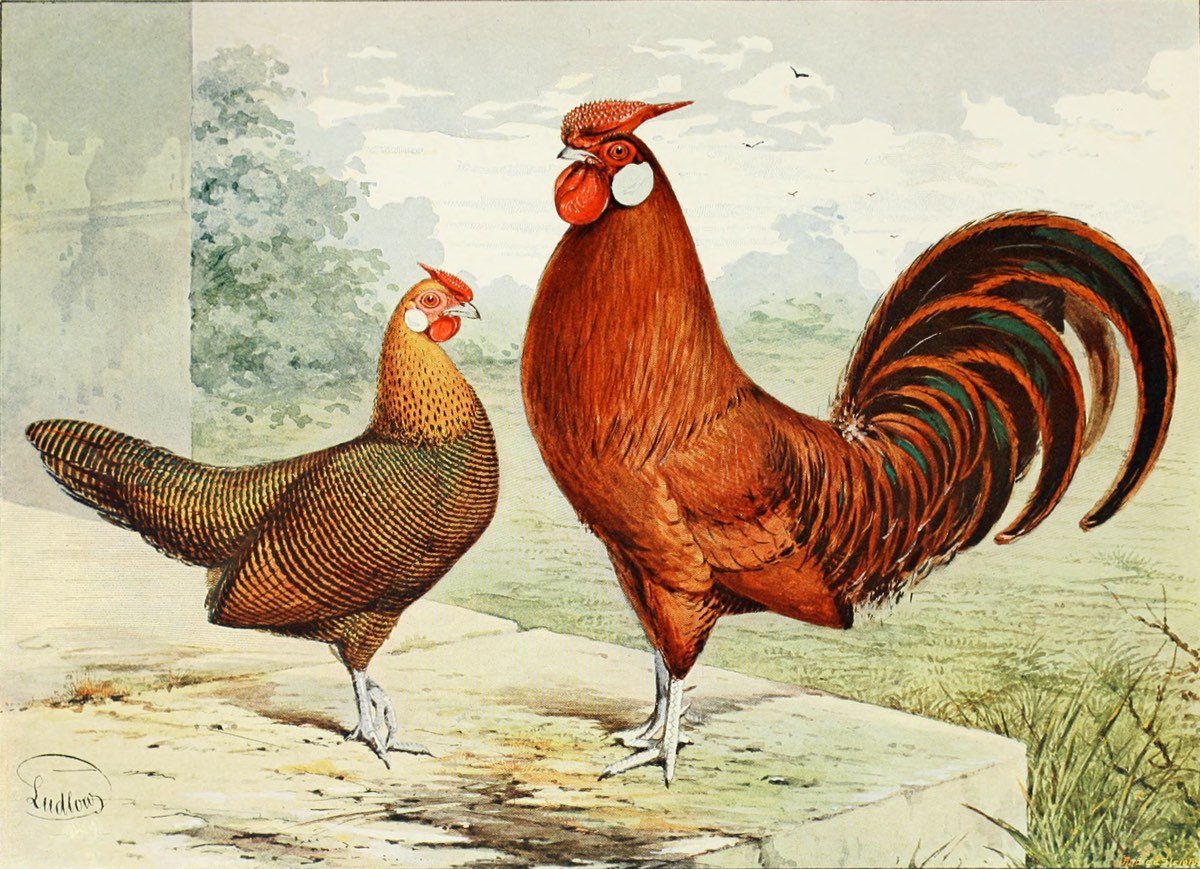
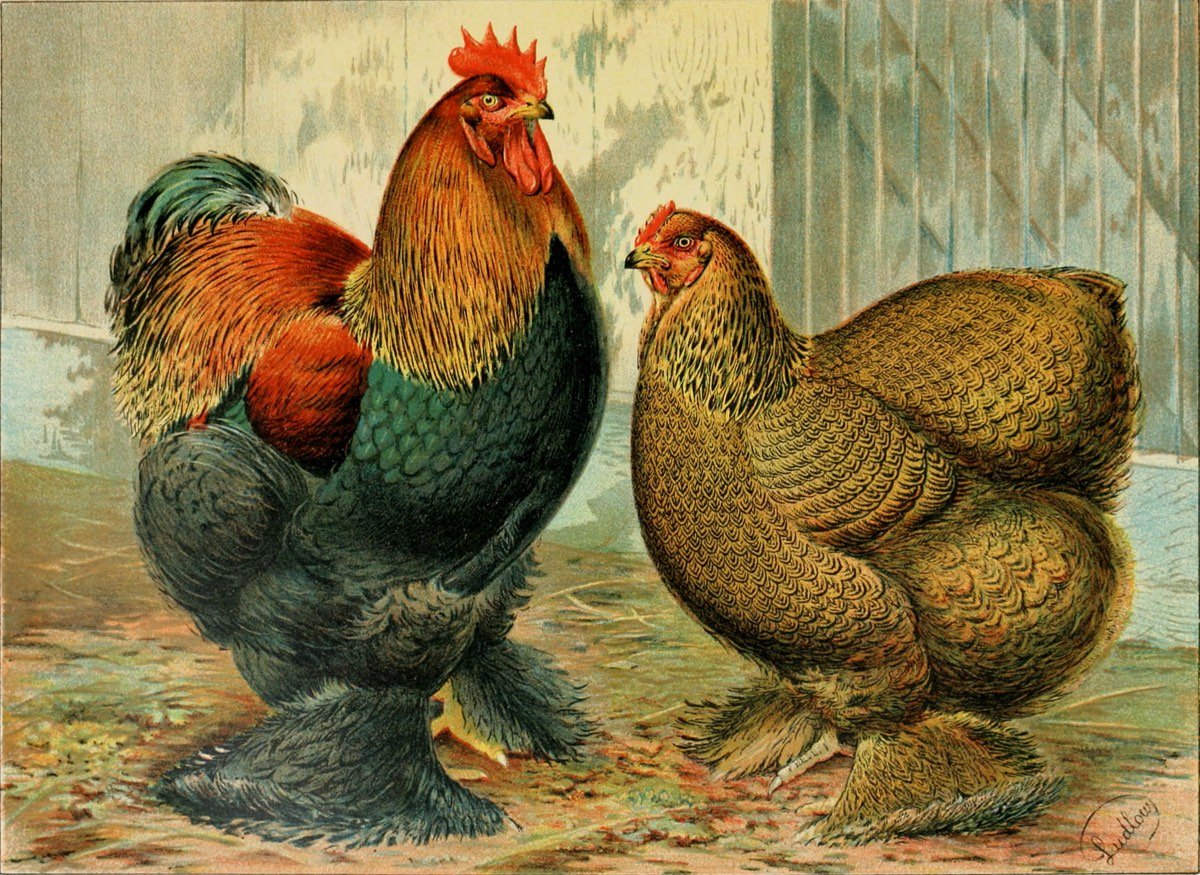
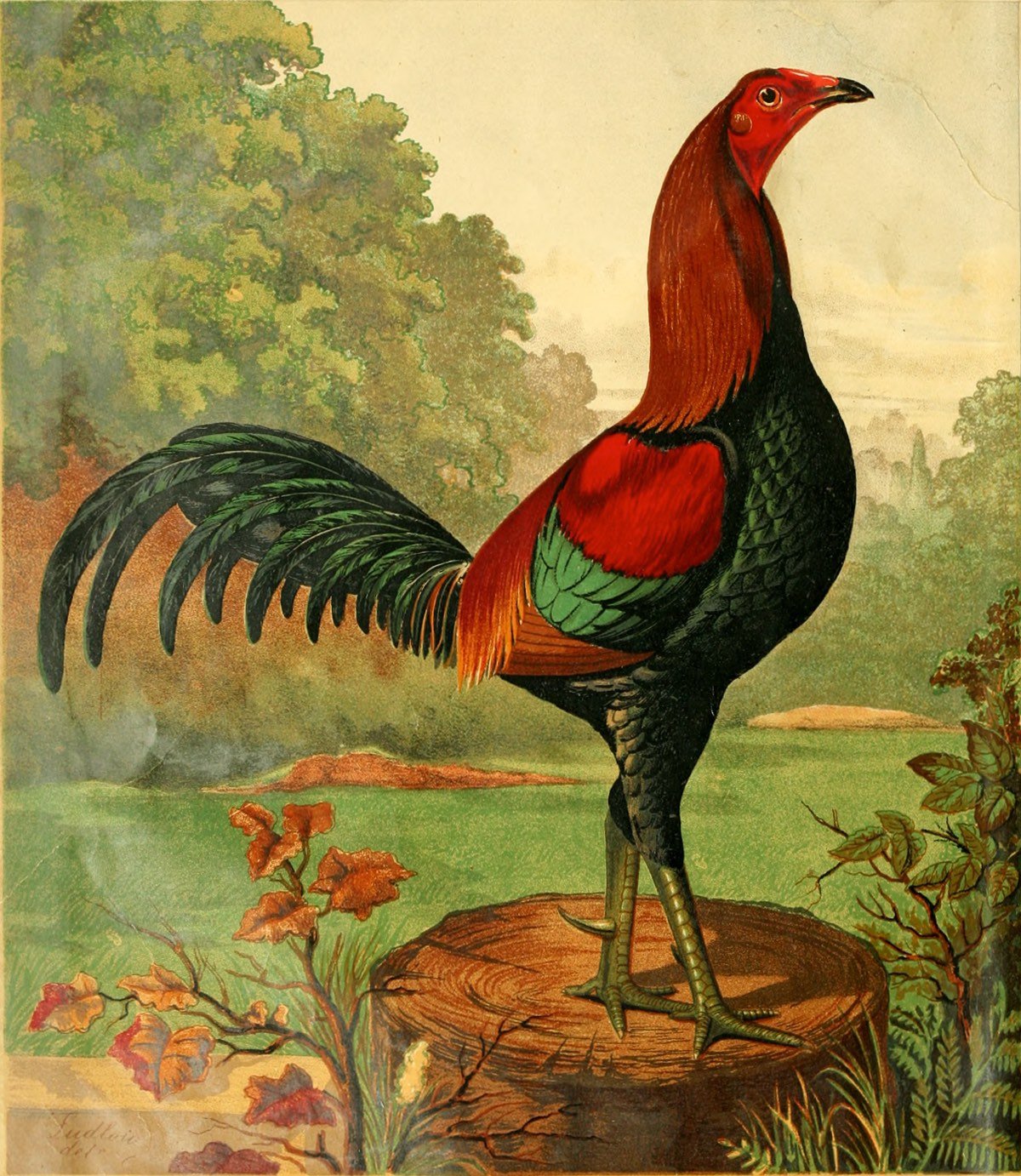
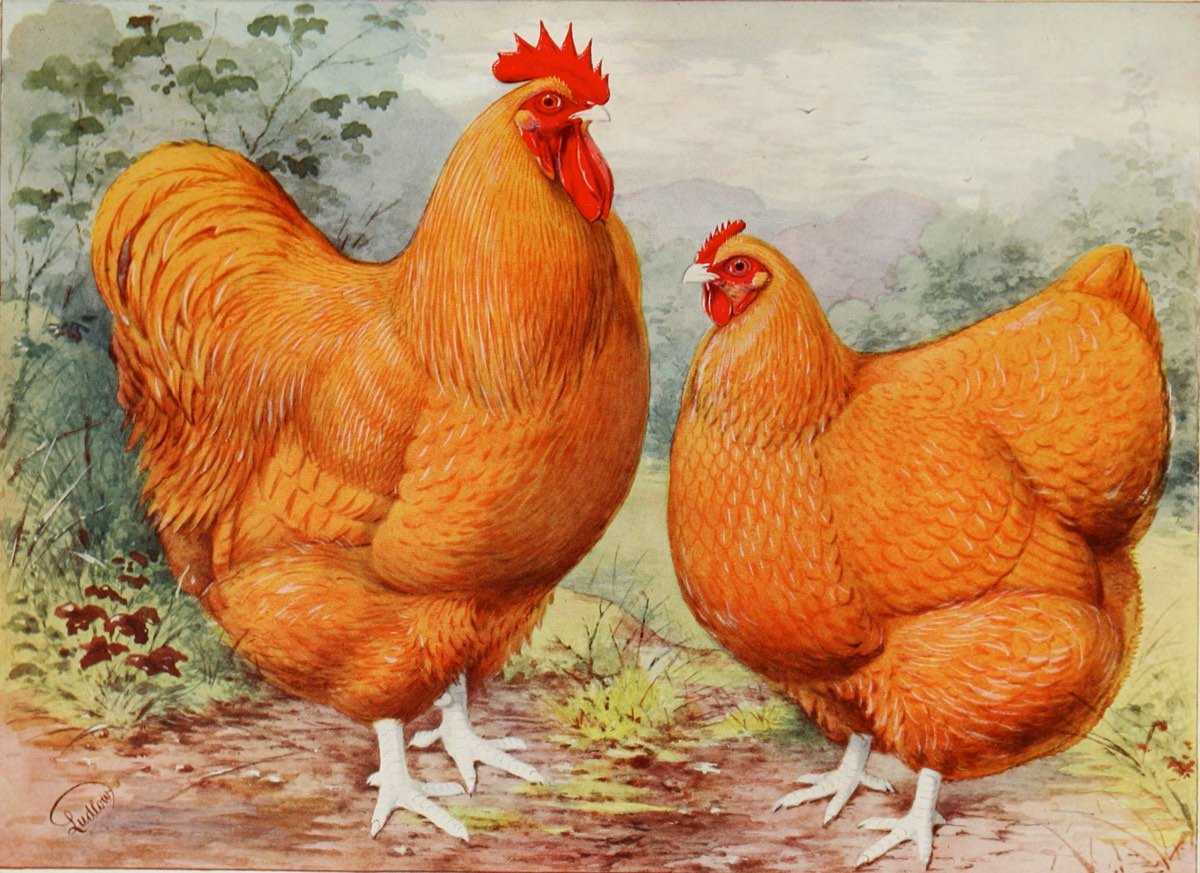
The Illustrated Book of Poultry by Lewis Wright, first published in 1870 and revised several times in the decades following, was “regarded as the most desirable of the English poultry books”. Poultry was very popular in Victorian England and the book housed a tremendous amount of practical poultry knowledge. From a Harvard Library blog post:
“Hen Fever”, as it became known during the Victorian Age, was an unprecedented obsession with owning, breeding, and showing the finest chickens in the world. The genesis of the poultry fancier owes much to Queen Victoria and her royal menagerie. In 1842, she acquired exotic chickens from China, and whatever the Queen did, the public would soon try to imitate and incorporate at home. The Illustrated London News reported “Her Majesty’s collection of fowls is very considerable, occupying half-a-dozen very extensive yards, several small fields, and numerous feeding-houses, laying-sheds, hospitals, winter courts, &c.”. From this point forward, poultry was no longer viewed as common farmyard critters, but valued and appreciated throughout the classes of Victorian Britain. The import and breeding of poultry was not just a leisurely hobby, but a profitable endeavor with sky rocketing price tags for the finest examples.
But the books also contained many wonderful illustrations of the finest examples of chickens and other poultry in the style of Audubon. The different breeds have amazing names like Buff Orpingtons, Plymouth Rocks, Dark Dorkingtons, and Gold Pencilled Hamburghs.
I pulled the images above from a 1911 edition of the book. (via @john_overholt)
Update: I removed a link to a reproduction of the book on Amazon because a reader reported that the quality was not great. (thx, alex)
The quiet empathy of Mr. Rogers lives on
Speaking of Mr. Rogers, Arielle Bernstein wrote about how the spirit of Mister Rogers’ Neighborhood lives on in contemporary advice columns like Ask Polly (now a book!), Dear Sugar, and Ask Andrew W.K.
Rogers offered something different from other TV icons — he used his show as a platform to actually give voice to children: their fears, their hopes, their pains, their purest expressions of joy. Each episode of Mister Rogers’ Neighborhood started with the same reassuring sequence showing the host entering his home, slipping on one of his famous sweaters, and changing his work shoes for comfortable sneakers. In this simple world, every question — big or small — was seen as worthy of respect; every feeling — good or bad — was viewed without judgment. Rogers answered questions in an open-hearted manner, often drawing on his own experiences and speaking directly into the camera, as if personally addressing each member of his TV audience. In one episode, he drew a picture using crayons and reflected, “I’m not very good at it. But it doesn’t matter … It feels good to have made something.” In another, the camera lingered on one of Rogers’ dead fish with the curiosity and compassion of a child, imploring viewers to look, telling them that it’s okay to cry.
Today’s advice columnists carry on this same tradition of giving their readers the space to explore emotions they might feel they have to downplay, ignore, or hide from others. At a time when millions of adults are snapping up coloring books, and essays bemoan college students for seeking “safe spaces,” it might be tempting to see the gentler column as an outgrowth of a desire to prolong childhood. But the success of these columns points instead to the very grown-up need for settings where feelings are valued, rather than dismissed, and where the primary human response is compassion, rather than anger.
Ikea is upping their design efforts (but not prices). Also: “1 in 10 Europeans is conceived in an Ikea bed”.
Socials & More