


Apple will be making their Swift programming language open source later in the year

Advertise here with Carbon Ads
This site is made possible by member support. 💞
Big thanks to Arcustech for hosting the site and offering amazing tech support.
When you buy through links on kottke.org, I may earn an affiliate commission. Thanks for supporting the site!
kottke.org. home of fine hypertext products since 1998.
Beloved by 86.47% of the web.
Entries for June 2015
The Jurassic Park dossier
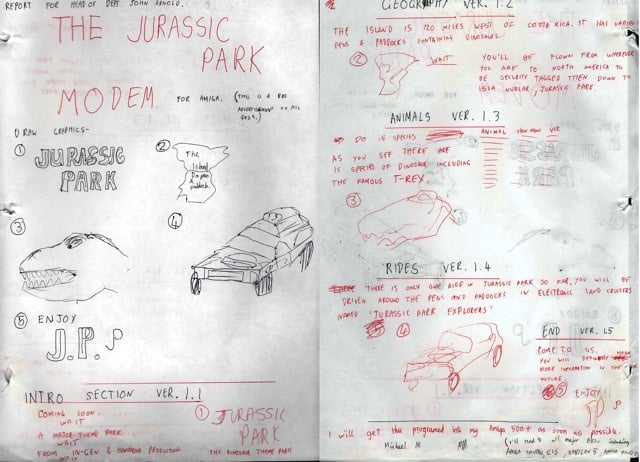
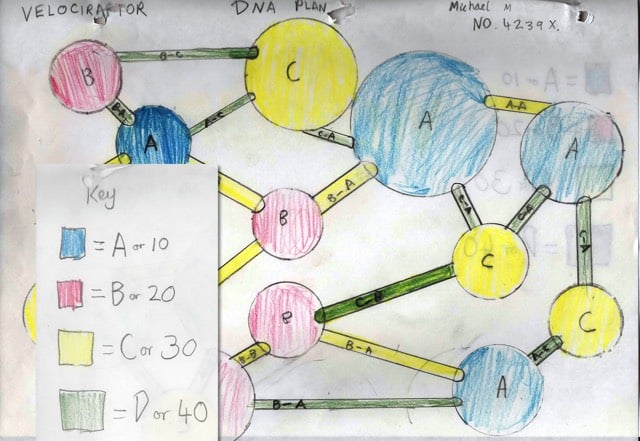
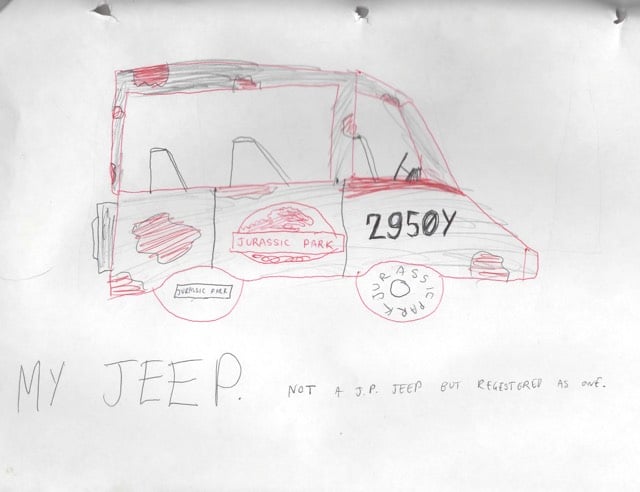
As a kid, Michael M collected a notebook full of information related to Jurassic Park, as if he worked in the computing department of InGen, the company that built the park.
The dossier is fairly thick and contains numerous completely made-up documents like dinosaur tooth records, DNA diagrams, and correspondence between myself, my imaginary colleagues and some of my friends from school whom I’d somehow managed to rope into my delusions.
Broadly, the dossier consists of the impossibly dull minutiae of park admin leading up to the events of the movie. I essentially gave myself a boring office job in my spare time outside of school. If nothing else, it’s a fascinating insight into the mind of the type of pubescent idiot who never had a sun tan.
Love this. I definitely did stuff like this when I was a kid, but not nearly as elaborate. (via @robinsloan)
The Earth Moves
Filmmaker John Walter is making a film called The Earth Moves about Einstein on the Beach, the 1976 opera composed Philip Glass and directed by Robert Wilson. Walter and his team are soliciting funds to complete the film on Kickstarter.
In 2011, the original creators of Einstein on the Beach brought the opera to life again for what will most likely be its last presentation in their lifetime. Einstein on the Beach is an opera like no other. Telling its story requires a documentary like no other.
We completed shooting and editing The Earth Moves and we are all working very hard to finish the film for upcoming film festivals this fall. Now we need your support to fulfill the costs of color correction, media licensing, and sound mixing. Time is of the essence and every contribution helps our mission to complete this film.
Any additional support beyond the goal will go towards expanding the distribution of the film through educational markets and independent theaters nationally.
Sunday Sketches
Christoph Niemann’s Sunday Sketches are typically great, but this one from last Sunday really grabbed my attention:

So good. I am also a sucker for this one:

Teen jailed in Rikers for 3 years, 2 years in solitary, never charged, dead by suicide. Kalief Browder, 1993–2015.
Bacterial handprint
Tasha Sturm, a lab technician at Cabrillo College, had her 8-year-old son put his handprint on a prepared petri dish and then incubated it for several days. This was the result:
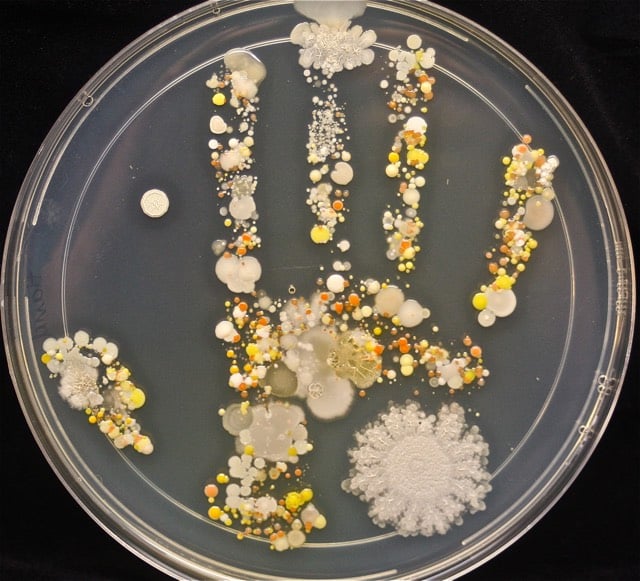
If you’ll excuse me, I have to go wash my hands about 4,000 times. Bacteria is cooooool though:

(via colossal)
Bridge of Spies
Steven Spielberg is directing Tom Hanks in Bridge of Spies, a movie about the negotiation to release U-2 pilot Francis Gary Powers from Soviet custody. Here’s the trailer:
The script was punched up by none other than the Coen brothers.
The Fallen of World War II
This is an amazing video visualization of military and civilian deaths in World War II. It’s 18 minutes long, but well worth your time.
There’s an interactive component as well, allowing you to explore the data. (via @garymross)
The Martian trailer
I have not read the book it’s based on, but the movie version of The Martian, starring Matt Damon and directed by Ridley Scott, looks quite promising:
I am going to have to science the shit out of this.
Apollo 13 with a touch of Interstellar…I can do that.
Update: A second trailer has been released:
And I have since read the book, which was good. But it will make a better movie.
Theory: the Harry Potter series is about mental illness
This is an interesting theory about the Harry Potter series: the whole thing is about a mentally ill young boy (Harry) who is institutionalized by his parents (the Dursleys) in a mental institution (Hogwarts) and the contents of the books are Harry’s fantasy.
In the Harry Potter series, his parents are famous wizards, who were famous in all the world for their unparalleled love for the boy Harry, which set the whole series in motion, killing them and leaving the boy a scarred orphan. (This is a fantasy, crafted as the direct opposite of the way in which children usually end up scarred — through abuse and neglect.)
If we interpret the story as Harry’s fantasy, then the Dursleys are Harry’s real parents, and the Potters are imaginary. The Durselys either can’t cope with the increasingly-delusional boy living with them, or perhaps they are merely abusive, and it’s the abuse that’s making him delusional. In any event, the parent-figures constantly mistreat him, favor the brother, and inflict endless cruelty and humiliation on him. One day, Harry snaps, and Dudley (who is really Harry’s brother) is severely injured, in a way requiring repeated hospital treatments. (In the delusion, Harry imagines that a pig’s tail is magically grown from Dudley’s buttocks.) As a result of this incident, Harry is taken away to a “special school.”
Apple Watch and Jerry Seinfeld are conspiring to get you healthy
Marco Arment writes about how the Activity circles on his Apple Watch have made him more active.
I’m traveling this weekend, and I’ve been doing something I’ve never done: I’ve been using the hotel’s gym. Any Apple Watch owners can probably guess why: I have a good run going on my daily Activity circles, and I want to keep it going.
Ever since getting the Apple Watch, not only have I been getting more consistent exercise, but I’m pushing myself further. I take more walks, and I walk faster and further than ever before. I’ve been walking Hops around the same streets for four years, but now I’ve been discovering new streets and paths just to extend our walking distance and try to beat my previous walks.
Reading this and looking at the chart of his completed Activity circles reminded me of Jerry Seinfeld’s productivity secret.
He told me to get a big wall calendar that has a whole year on one page and hang it on a prominent wall. The next step was to get a big red magic marker.
He said for each day that I do my task of writing, I get to put a big red X over that day. “After a few days you’ll have a chain. Just keep at it and the chain will grow longer every day. You’ll like seeing that chain, especially when you get a few weeks under your belt. Your only job next is to not break the chain.”
“Don’t break the chain,” he said again for emphasis.
Apple Watch: Don’t Break the Chain.
How to get your kids to eat everything
This advice from Amanda Hesser on how to get young kids to eat everything is 1000% solid gold:
You may wonder how we get our kids to eat kale and clams, and here is the answer: we make them (we’re warm but firm), and we don’t offer choices. Psychologists will tell you that kids respond to consistency and confidence. While I can’t say I’m great at this when it comes to bedtime, I never waver at the table. People don’t want to hear this because we live in the Age of Coddling but I strongly believe that kids need and actually crave guidance and direction, especially when they’re young. And since I also believe that we should eat the same meals as our kids — showing unity and companionship — I don’t want to eat boring food, so they’re not getting boring food.
This is exactly what we did with our kids and while it’s super difficult to be consistent and firm, especially with a picky kid, I recommend this approach wholeheartedly. My kids definitely have their preferences and would eat pizza and burgers for every meal if given the chance, but they eat a wide variety of different foods — including a lot of stuff I personally don’t care for (oysters and mussels for starters) — and are always up for trying new things. How else are they supposed to discover that they really like Sri Lankan food? (Which they do.)
Sea is for Cookie
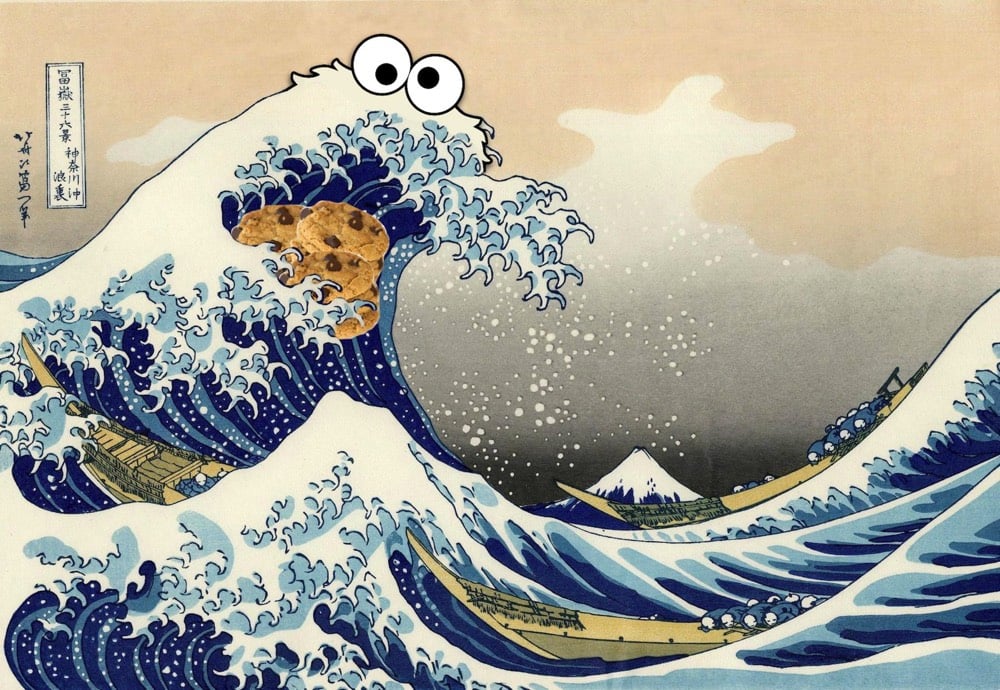
Magisterial. The Great Wave off Kanagawa by Katsushika Hokusai, modified by Reddit users Put_It_All_On_Red and photosonny. (via @craigmod)
The most cursed sports cities in the US. Cleveland is #1.
How the iPhone surprised and then crushed the Blackberry
The full story is behind a paywall,1 but the WSJ’s The Inside Story of How the iPhone Crippled BlackBerry is kind of amazing. The piece is an excerpt from Losing the Signal: The Untold Story Behind the Extraordinary Rise and Spectacular Fall of BlackBerry.
The next day Mr. Lazaridis grabbed his co-CEO Jim Balsillie at the office and pulled him in front of a computer.
“Jim, I want you to watch this,” he said, pointing to a webcast of the iPhone unveiling. “They put a full Web browser on that thing. The carriers aren’t letting us put a full browser on our products.”
Mr. Balsillie’s first thought was RIM was losing AT&T as a customer. “Apple’s got a better deal,” Mr. Balsillie said. “We were never allowed that. The U.S. market is going to be tougher.”
“These guys are really, really good,” Mr. Lazaridis replied. “This is different.”
“It’s OK — we’ll be fine,” Mr. Balsillie responded.
RIM’s chiefs didn’t give much additional thought to Apple’s iPhone for months. “It wasn’t a threat to RIM’s core business,” says Mr. Lazaridis’s top lieutenant, Larry Conlee. “It wasn’t secure. It had rapid battery drain and a lousy [digital] keyboard.”
“RIM’s chiefs didn’t give much additional thought to Apple’s iPhone for months.”
“RIM’s chiefs didn’t give much additional thought to Apple’s iPhone for months.”
“RIM’s chiefs didn’t give much additional thought to Apple’s iPhone for months.”
Oof. (via @craigmod)
You know how to circumvent the WSJ’s paywall, right? You paste the title of the piece — in this case, The Inside Story of How the iPhone Crippled BlackBerry — into Google and click on the story from the search results or in Google News. Boom, instant access.↩
The kindergarten class in the forest
Eliza Minnucci teaches a kindergarten class in Quechee, Vermont and every Monday, her students spend the entire school day outside in the forest. The results have been more than encouraging. I love this anecdote about what the forest setting can provide for students of all temperaments and abilities.
When Minnucci started this forest school experiment two years ago, she knew it would be good for the rowdy boys who clearly need to run around more than the typical school day offers.
What she didn’t expect is how good it would be for the kids who can sit still and “do” school when they’re 5 years old. She gives the example of a boy last year.
Inside the classroom, he was one of her best students. But when he got outside and kids were climbing a tree, he couldn’t get very high. “I think he was a little surprised to not be meeting his peers’ ability,” says Minnucci.
Then, partway up the tree, he fell. And got a bit scraped up. “I felt terrible,” Minnucci says. “I thought, ‘Oh this poor guy. He failed.’”
But two weeks later, when the kids were climbing the tree again, he looked over at them. “I want to try the tree,” he said.
“And he went to the tree and he got higher than he’d been before and he was beaming,” says Minnucci. “And I thought, ‘Oh, this good, this is good!’ This is a kid who may have gone so far before he met challenge that he wouldn’t have known what to do when he got there.”
Kids who are good at school need to understand there’s more to life than acing academics, says Minnucci. And students who aren’t excelling at the academic stuff need to know there’s value in the things they are good at. Doing school in the forest offers “something really important” to everyone, she says.
(via @riondotnu)
Superwolves, pizzly bears, emerging hybrid species, and climate change
Because of climate change and other activities caused by humans (invasive species, habitat loss), hybridization of species is resulting in things like super-sized coyotes, pizzly bears (grizzly/polar bear hybrids), and other animals that may not be ideally suited to survive.
Some scientists and conservationists see the coywolf as a nightmare of the Anthropocene — a poster child of mongrelization as plants and animals reshuffle in response to habitat loss, climate change and invasive species. Golden-winged warblers increasingly cross with blue-winged warblers in the U.S. Northeast and eastern Canada. Southern flying squirrels hybridize with northern flying squirrels as the southern species presses northward in Ontario. Polar bears mate with grizzlies in the Canadian Arctic along the Beaufort Sea to produce “pizzly bears.”
All of this interbreeding upsets the conventional notion of species as discrete, inviolable entities. Moreover, some scientists and conservationists warn that hybridization will degrade biodiversity as unusual species are lost to genetic homogenization.
Partly scientists fear hybrids will be less fit than organisms that have evolved in place over eons. And often that is true, but the problem solves itself over time as hybrids lose out in the competitive race for survival.
Reasons people shoot other people
From Parents Against Gun Violence, a few of the reasons people shot people in May 2015.
My fiancee and I had an argument, so I open-carried my gun to a park and shot four random people.
The bartender put Clamato in my beer when I wanted tomato juice, so I shot him and his dog.
I found suspicious calls on my boyfriend’s phone, so I shot him. He was armed at the time too.
Rather than let my ex-wife win custody, I shot my own daughter to death.
Click through for the whole depressing list and links to news articles about each incident.
Andrew Wiles though he’d proved Fermat’s Last Theorem. Then his proof fell apart.
Your iPhone is tracking you like Lester Freamon from The Wire

Since iOS 7 came out in 2013, your iPhone’s Location Services has included a little-known feature called Frequent Locations, which keeps very detailed track of every distinct location you visit. How detailed? This, precisely, was when I was in my apartment over a three-day period last month:

All told, my phone recorded all 33 different locations I’ve visited in NYC since April 15, including 84 visits to my apartment and 54 visits to my office, down to the minute and a ~130-foot radius. The feature is on by default if you’ve got Location Services switched on, so you can find your information by opening the Settings app and going to Privacy > Location Services > System Services (at the bottom) > Frequent Locations. You can also turn the feature off if you wish.
Apple says the feature is used to learn your favorite places and the data is kept only on the phone:
Your iPhone will keep track of places you have recently been, as well as how often and when you visited them, in order to learn places that are significant to you. This data is kept solely on your device and won’t be sent to Apple without your consent. It will be used to provide you with personalized services, such as predictive traffic routing.
It’s likely that Verizon, AT&T, Sprint, and the NSA (until recently) are collecting this same sort of data about you regardless of what sort of phone you use, except that these organizations do not share Apple’s public commitment to privacy. (via @dunstan)
The quiet introvert revolution
Susan Cain, author of the excellent Quiet: The Power of Introverts in a World That Can’t Stop Talking, has launched Quiet Revolution, a resource “to unlock the power of introverts for the benefit of us all”. There’s already quite a bit there…you can take a test to see if you’re an introvert, five ways to deal with an open office plan, learn how to connect with extroverts, and 15 ways you can be a better parent to your introverted kid.
Understand that your child’s temperament is due to biology. Think your child can just “get over” hating raucous birthday parties? Think again. Introverts’ and extroverts’ brains are “wired” differently, according to Dr. Marti Olsen Laney, author of The Hidden Gifts of the Introverted Child. She writes that children’s temperaments are innate (although parents play an important role in nurturing that temperament).
Introverts’ and extroverts’ brains use different neurotransmitter pathways, and introverts and extroverts use different “sides” of their nervous systems (introverts prefer the parasympathetic side, which is the “rest and digest” system as opposed to the sympathetic, which triggers the “fight, flight, or freeze” response). Furthermore, a study published in the Journal of Neuroscience found that introverts have larger, thicker gray matter in their prefrontal cortices, which is the area of the brain associated with abstract thought and decision-making. If your child tends to be more cautious and reserved than her extroverted peers, rest assured that there’s a biological reason for it.
In praise of chairs
Tony Zhou of Every Frame a Painting looks at the use of production design in movies. Specifically chairs. Chairs can tell you something about the world the film is set in, the characters who use them, or a specific situation.
Salad days: the gentrification of the self
Gen X was never supposed to get older. But a pair of recent essays by Tim Carmody and Choire Sicha show that the second third Greatest Generation is not immune to pivoting one’s emotional startup when midlife approaches. In The Iceman List, Carmody reevaluates 80s movie heroes and finds the more traditionally Reagan-esque characters might have had a point.
But today, in the 2010s, Top Gun is a treat. It’s as clean and shiny as a new dime. The cliches that later action films overloaded with world-building and backstory here present themselves unadorned, in all their purity. Cruise is just so charming, brimming with so much energy, it doesn’t matter that he doesn’t really know how to act yet. A bunch of Navy aviators singing Righteous Brothers in the bar looks like fun. Now that pilots, airmen, and aviators can serve in the US military openly without anyone asking who they sleep with, it’s super that Iceman and Slider might be gay. And guess what?
Maverick is kind of a jerk. Iceman is totally right about him. In fact, Iceman is right about almost everything. We didn’t notice this in the 1980s because everything about how the film is constructed tells us to sympathize with Maverick and hate Iceman’s guts.
My God, we’ve become Ed Rooney. We are eating it. (Well, Ferris was a dick.) Sicha started smoking as a teenager in the 80s but after quitting recently, desires to “make a senior citizen’s arrest” of his younger smoldering self, the Iceman to the Tom Cruise of his youth.
It’s like KonMari, except easy, because the only things you throw out are your cigarettes and your entire sense of self.
My friend Emily said she was happy for me, but wistful, too. The last smoker quitting seemed like another kind of gentrification. Now I’m gone, too, along with the gas stations and all the stores that aren’t 7-Eleven. But the emotional rent was just too high.
Quitting smoking is the khakis of existence. Quitting smoking is the Chipotle on St. Marks Place. I am totally not cool. I may as well be someone’s stupid Brooklyn dad. My hair is its natural color. Most days I’m just wearing whatever. I do yoga endlessly. What am I now?
I can feel this gentrification of the self coming in my life. As someone who watched TV and used the internet 23 hours out of every day for the past 30 years, I’m wary of how much screen time my kids get. All that TV in my youth probably wasn’t a good idea and the internet these days isn’t what it used to be, right? In a talk at XOXO last year, Hank Green said:
You have no obligation to your former self. He is dumber than you and doesn’t exist.
Ok! Pivot I will. Get off my lawn, younger self!
Tree of Codes contemporary ballet performance
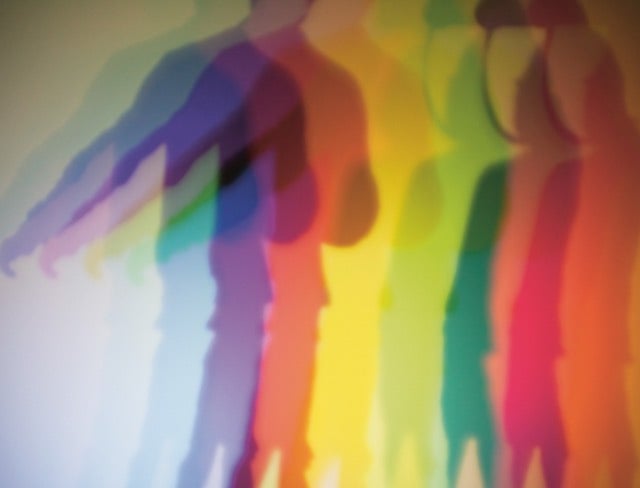
Director and choreographer Wayne McGregor, artist Olafur Eliasson, music producer Jamie XX (new album!), and dancers from the Paris Opera Ballet are collaborating on a contemporary ballet performance based on Jonathan Safran Foer’s Tree of Codes.
Award-winning choreographer Wayne McGregor’s groundbreaking practice embraces dance, science, film, music, and technology to generate intriguing, expansive works. For Tree of Codes, McGregor is collaborating with artist Olafur Eliasson and producer/composer Jamie xx to create a contemporary ballet. Eliasson’s large-scale projects, including The New York City Waterfalls and The weather project at the Tate Modern, have captured the attention of audiences worldwide. Mercury Prize-winning Jamie xx blurs the boundaries between artist and audience in sonic environments like the one he created with his band, The xx, at the Armory in 2014.
Triggered by Jonathan Safran Foer’s Tree of Codes (an artwork in the form of a book which was in turn inspired by Street of Crocodiles by Bruno Schulz), this new, evening-length work features a company of soloists and dancers from the Paris Opera Ballet and Company Wayne McGregor.
Two performances are planned so far: at the Manchester International Festival (July 2-10) and the Park Avenue Armory (Sept 14-21). (thx, michelle)
Time Travel for Financial Gain
Tyler Cowen was recently asked how he’d best use a time machine for financial gain. Here was the specific query:
Suppose you had a time machine you that you solely wanted to use for financial gain. You can bring one item from the present back to any point in the past to exchange for another item that people of that time would consider of equal value, then bring that new item back to the present. To what time period would you go, and what items would you choose to maximize your time-travel arbitrage?
Cowen notes some difficulty with an obvious approach:
The obvious answer encounters some difficulties upon reflection. Let’s say I brought gold back in time and walked into the studio of Velazquez, or some other famous painter, and tried to buy a picture for later resale in the present. At least some painters would recognize and accept the gold, and gold is highly valuable and easy enough to carry around. Some painters might want the gold weighed and assayed, but even there the deal would go fine.
The problem is establishing clear title to the painting, once you got back home. It wouldn’t turn up on any register as stolen, but still you would spend a lot of time talking to the FBI and Interpol. The IRS would want to know whether this was a long-term or short-term capital gain, and you couldn’t just cite Einstein back to them. They also would think you must have had a lot of unreported back income.
So establishing present ownership of a past item is an issue…as is authentication via carbon dating. I don’t have a specific scheme in mind, but I would think any general approach would also need to minimize the butterfly effect of your trade so that, for example, your existence in the present is not disrupted. So you can’t trade Leonardo an iPhone 6 for the Mona Lisa. But maybe you could trade $1 for a winning ticket for last week’s $300 million lottery jackpot…or would the numbers change somehow because of your visit? What if you bought 100,000 shares of Apple stock in 2003? How would that action effect the present? What is a large enough action to make you rich but with a small enough effect to keep the present otherwise unchanged? Since I didn’t see any super-compelling solutions in the comments at MR, I’m gonna open the comments here…I know someone has been thinking about this extensively or has a link to a good discussion elsewhere. Please stay on topic, mmm’kay?
The Russian trolling agency
In the NYT Magazine, Adrian Chen reports on the hoaxes that often target American communities from a nondescript office building in St. Petersburg, Russia. Meet the trolls who work at The Agency.
The Columbian Chemicals hoax was not some simple prank by a bored sadist. It was a highly coordinated disinformation campaign, involving dozens of fake accounts that posted hundreds of tweets for hours, targeting a list of figures precisely chosen to generate maximum attention.
Tarantino’s film homages
From The Flintstones to Band of Outsiders to Miller’s Crossing, here’s a look at some of the films referenced in Quentin Tarantino’s movies.
(via devour)
Gradient food photography
Britney Wright takes photos of food arranged in size and color gradients.

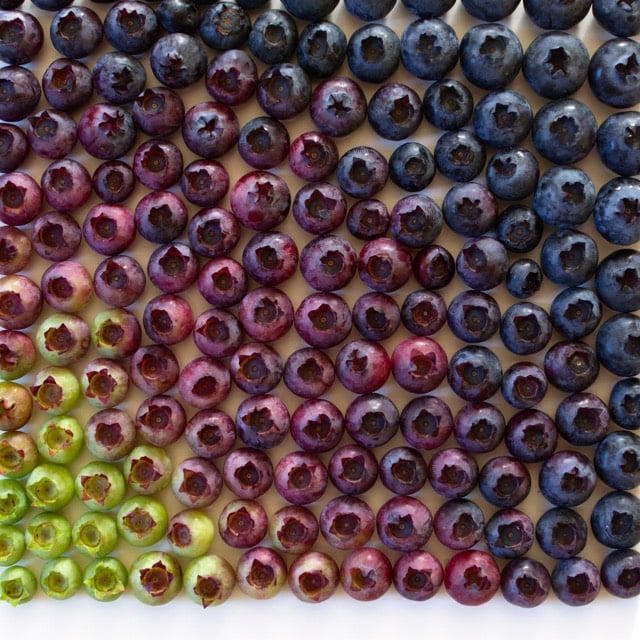

Follow Wright on Instagram and buy her prints.
The Tribe
The Tribe is set at a Ukrainian high school for the deaf. The film employs no subtitles or voiceovers; all communication is sign language and non-verbal acting. Here’s the trailer…somewhat paradoxically, you’ll want to use headphones or turn the sound up.
Winner of multiple 2014 Cannes Film Festival Awards (including the coveted Critics’ Week Grand Prix), Myroslav Slaboshpytskiy’s The Tribe is an undeniably original and intense feature debut set in the insular world of a Ukrainian high school for the deaf. The Tribe unfolds through the non-verbal acting and sign language from a cast of deaf, non-professional actors — with no need for subtitles or voice over — resulting in a unique, never-before-experienced cinematic event that engages the audience on a new sensory level.
(thx, paul)
A Soyuz spacecraft docking with the ISS
Could you imagine floating out in the vastness of space, even the relatively tiny vastness of space in low Earth orbit, in a tiny space capsule waiting to hook up to a slightly larger space station and if something goes wrong, you might die? But on the other hand, look at that incredible view! This HD video of a Soyuz capsule docking with the International Space Station gives you a small sense of how that might feel.
The docking itself takes place starting at around 17:00. The whole thing takes a bit longer than I remember from that Gravity movie. (via @badastronomer)
The Case for Andy Warhol
From Sarah Urist Green of The Art Assignment (and former curator of contemporary art at the Indianapolis Museum of Art), The Case for Andy Warhol, in which Green discusses Warhol’s importance as an artist.
Like Jay Z but far earlier, he understood that to be an artist in a market economy meant not being “a businessman” but being “a business, man”. And he turned himself into a globally recognized brand.
Socials & More