kottke.org posts about video
I love Taiwanese artist Kuang-Yu Tsui’s 1997 conceptual art piece The Welcome Rain Falling From the Sky but I couldn’t really tell you what it means. Something about the way people are bombarded with advertisements for consumer goods? I also couldn’t help but think of the iOS game co-created by Neven Mrgan, The Incident.
This is cool: Evan Puschak looks at the rush of cheapo knockoff space operas that came out in the wake of Star Wars, a once-in-a-generation film that refashioned the entire movie business. Even the names are kooky: Starcrash, War of the Planets, Battle of the Stars, The Humanoid, Message From Space, Battle Beyond the Stars, The Man Who Saved the World, Star Odyssey, and The Beast in Space — although tbh, Star Wars is a goofy name as well. Some of the movies even had lightsabers and anxious robots.
Puschak highlights Star Wars’ unique combination of realistic depictions of space with special effects (a la 2001) and an adventure story with colorful characters. He quotes Julie Turnock’s book, Plastic Reality: Special Effects, Technology, and the Emergence of 1970s Blockbuster Aesthetics, in making the case that Lucas and other filmmakers of his generation were using special effects to up the sensorial ante for moviegoers — I dug the full passage out of the book’s introduction:
Certainly what was so exhilarating to many about these films was not simply the experience of a new kind of realism. Perhaps even more important was the intensified density of effects in films of the era, which many at the time understood as a thrillingly new and vividly somatic technologized experience. This book aims to recover the excitement that not just ticket-buyers but also many academics, critics, and journalists felt upon experiencing the special effects-heavy films of the 1970s, in particular Star Wars and Close Encounters, and further grant historical dimension and context to that experience. It may be surprising for many to realize that in the 1970s George Lucas and Steven Spielberg were considered among the most interesting, ambitious, and exciting filmmakers of the era, alongside more canonized American filmmakers like Stanley Kubrick, Francis Ford Coppola, Peter Bogdanovich, and Martin Scorsese. What critics praised most often about Lucas and Spielberg as filmmakers was their grasp of specifically cinematic visual dynamics that lent their films both greater visceral and sensual engagement and an extra layer of expressive and intellectual potential. While many critics have (often rightly) condemned the aggressive, pummeling blockbuster style that has arisen in the wake of the two successes of 1977, it is incumbent upon scholars to recover the creative process that made them so stimulating and exhilarating to the likes of Pauline Kael, Stanley Kauffmann, Roger Ebert, and other prominent critics of the era, as well as so popular with audiences. A renewed interest in special effects technology by influential auteurist filmmakers certainly made this historical development possible. However, even more strongly, auteurist filmmakers went to the considerable and painstaking effort to promote and develop complex special effects technology, precisely in order to realize aesthetic filmmaking goals they designed to rouse and provoke the sensorium. They called this approach variously “visual storytelling,’ “visceral engagement,’ or “graphic dynamics.”
Moreover, so-called New Hollywood filmmakers in the 1970s reinterpreted the role of cinematic aesthetics to suggest a purposeful relation between sensual and intellectual impact. In other words, filmmakers sought to stimulate the senses. This was not to numb the viewer but to activate him or her — not unlike the notion of drug-induced mind expansion. Intensified color schemes, beams of light, fast-moving objects, and quick editing first penetrate the body and then engage the mind with the films’ ideas about technology, kineticism, power structures, liberty, etc.
I am firmly in the camp of those who enjoy filmmakers that engage the senses like this — among contemporary filmmakers, Christopher Nolan and Denis Villeneuve come to mind as continuing the legacy of Lucas et al. in this way.
For a 1992 conceptual art piece called The Hunt, Christian Jankowski survived for a week on goods he shot at the local supermarket with a bow and arrow.
To rebel against modern society, to return to nature: in pursuit of these primeval instincts, for one week, Jankowski lived off goods he hunted in the supermarket. Instead of stalking animals, he eyed and avoided the supermarket security cameras. Armed heroically with a bow and arrow, Jankowski shot down frozen chickens, butter, toilet paper, and various other essentials. His game, if edible, was not just dead, it was processed on a mass scale. Thus the reaction of the woman working the checkout counter: she remained wholly unimpressed by the trophies of his bargain hunt, which she scanned with the arrows still sticking out of them. He has to pay like everyone else.
In a recent video, Kurzgesagt explores what we know about the first human civilizations that formed some 12,000 years ago and how they led to the first cities and the invention of writing.
What we know about human history is only a fraction of the full story. Much of the rest is like dark matter, invisible to us. We can’t see it, and we can only see the effects of its presence. But thanks to new techniques for DNA sequencing, dating ancient detritus, mathematical models, and aerial and lidar archaeology, we are now able to get a faint idea of what this world might have looked and felt like.
One thing I really appreciate about Kurzgesagt is how each of their videos is accompanied by an extensive list of sources. For instance, I’m not sure I’d heard about the massive Lake Agassiz draining into the world’s oceans and disrupting the entire planet’s climate some 8200 years ago — and there are several primary sources listed for further reading. Here’s how Kurzgesagt tells it:
Around the year 3800 of the human era a sudden catastrophe happened in North America. The receding glaciers of the last ice age had created one of the largest lakes in Earth’s history, larger than the Caspian Sea today. It was held back by super massive ice sheets, which formed a gigantic dam.
Surprising no one, the dam melted and suddenly failed – the whole lake suddenly drained into the ocean. Global sea levels rose by 1-2 meters and the great conveyor belt that carried warm water northwards slowed down. Across the North Atlantic and Europe, and into the Near East, the climate turned colder and drier – in some regions by several degrees. Rain patterns shifted, summers grew longer and harsher, and a drought lasting well over a century parched the land.
And:
We know that during this time all over the world migration towards rivers and lakes sped up — bringing agriculture and technology with them. Some of the most consequential journeys led into the Nile Valley, where farming villages took root and slowly laid the ground for the rich civilization that would one day rise there.
From Wikipedia:
Lake Agassiz’s major drainage reorganization events were of such magnitudes that they significantly impacted climate, sea level, and possibly early human civilization. The lake’s enormous freshwater release into the Arctic Ocean has been postulated to have disrupted oceanic circulation and caused temporary cooling. The draining of 13,000 years ago may be the cause of the Younger Dryas stadial. Although disputed, the draining at 9,900–10,000 years ago may be the cause of the 8,200 yr climate event. A study by Turney and Brown links the 8,500-years-ago drainage to the expansion of agriculture from east to west across Europe; they suggest that this drainage may also account for various flood myths of ancient cultures, including the Biblical flood narrative.
Fascinating.

Sir Patrick Stewart, best known for his role as Captain Jean-Luc Picard on Star Trek: The Next Generation, has died at the age of 86. He passed at home in Los Angeles from Alzheimer’s disease and Lewy body dementia.
He was largely considered an unknown when the “Star Trek” offer came along. At the invitation of a friend, a university professor, Mr. Stewart had been in Los Angeles conducting master classes on Shakespeare when, one evening, he gave a lecture and performed some bits of the plays in a program that was open to the public.
A TV producer who was involved in developing a new “Star Trek” series happened to attend and soon persuaded Mr. Stewart to audition — even though, as Mr. Stewart later wrote, he knew “next to nothing” about the franchise.
Surprised to get the part — the “Star Trek” creator, Gene Roddenberry, who was overseeing the new series, had not been keen to hire him at first — Mr. Stewart expected the project to be a short-term commitment. How, he remembered thinking, could the show possibly succeed with a middle-aged pacifist captain with a French name and a British accent?
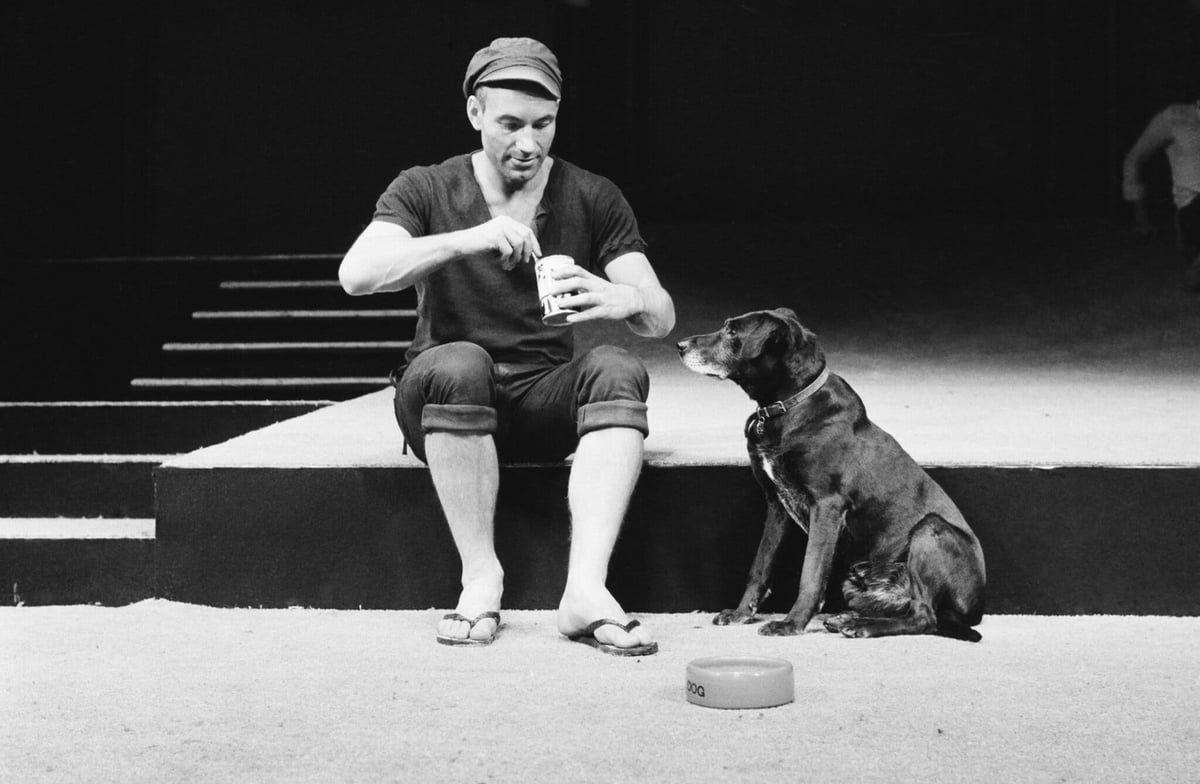
This is hard news to take, even though Stewart lived a full and fulfilling life. The Next Generation will always be my favorite Star Trek series and Picard my favorite captain. Stewart got off to a rough start on the series:
So when he was on set shooting the show’s debut season and co-stars like Jonathan Frakes, Denise Crosby and Brent Spiner would tease him or ad-lib a joke or laugh when they flubbed their lines, it would low-key infuriate him.
“I could be a severe bastard,” he writes. “My experiences at the Royal Shakespeare Company and the National Theatre had been intense and serious… On the TNG set, I grew angry with the conduct of my peers, and that’s when I called that meeting in which I lectured the cast for goofing off and responded to Denise Crosby’s, ‘We’ve got to have some fun sometimes, Patrick’ comment by saying, ‘We are not here, Denise, to have fun.’”
“In retrospect,” Stewart continues, “everyone, me included, finds this story hilarious. But in the moment, when the cast erupted in hysterics at my pompous declaration, I didn’t handle it well. I didn’t enjoy being laughed at. I stormed off the set and into my trailer, slamming the door.”
But he found his footing and eventually found meaning in the role of Picard (archive):
Q: There’s a passage where you say that, from your father, “I drew Picard’s stern, intimidating tendencies. But I like to think that my mother is in the captain too, in his moments of warmth and sensitivity.” Do you see Picard as your way of reconciling that conflict between your parents?
A: Very much so, yes. Both Star Trek and therapy have been responsible for that. Having to open the doors into my childhood in order to be an actor became utterly intriguing to me in a way that it never had been before. And I regret that when I look back on some of the roles I played, what I might have brought to them if I just released myself a little bit more.
Might watch an episode or two this evening in remembrance. If you’re not a Trek fan, you can watch Stewart play Macbeth in 2010:
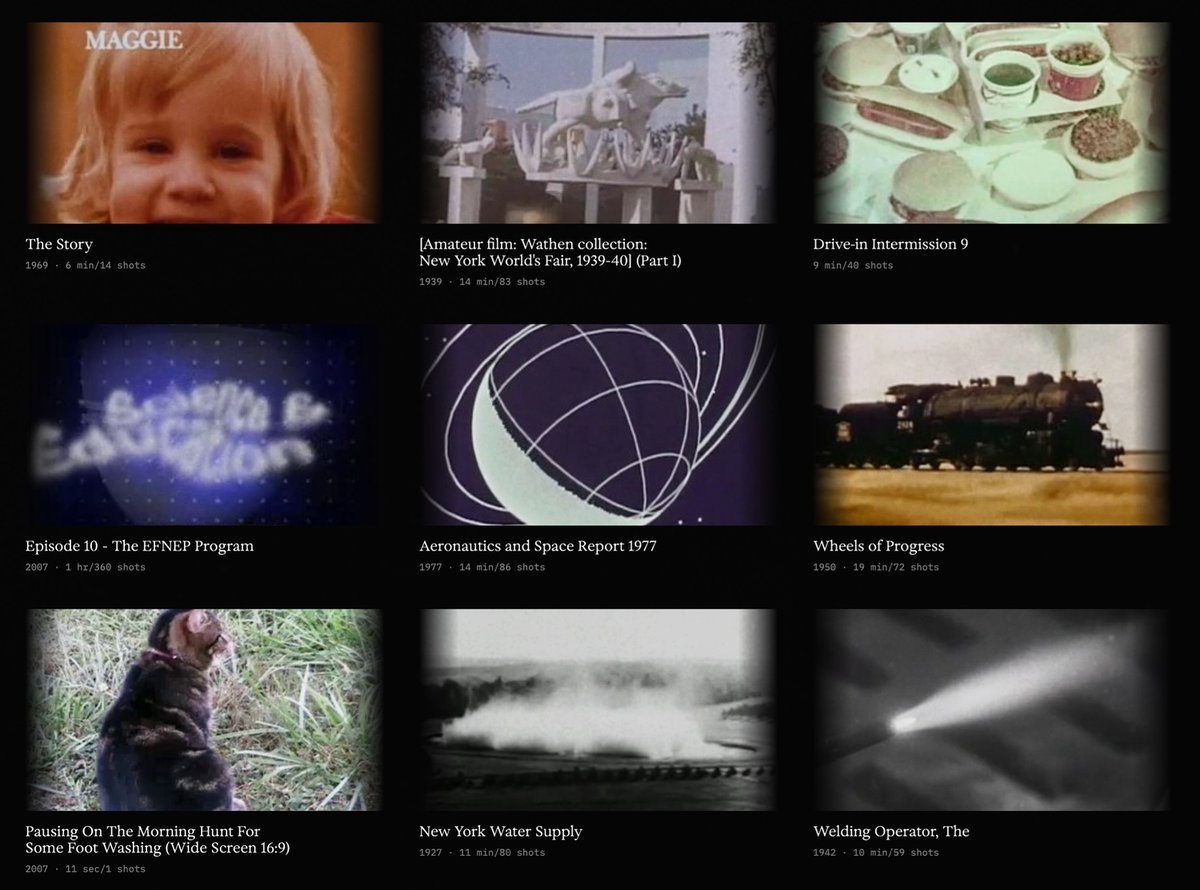
The Moving Image Archive is a collection of over 120,000 clips from almost 2300 archival films drawn from public domain collections.
The internet is full of forgotten films, and this archive is a growing library of that collection. When synthetic footage can now fabricate the past, preserving verifiable history matters more than ever before.
A few things I found while poking around:
- [Amateur film: Chicago World’s Fair] (1933). “This 1933 amateur film features Chicago’s Century of Progress World’s Fair and scenes of New York City.”
- Story of a City: New York (1946). “This 1946 film explains the historical and economic forces behind New York City’s growth into one of the world’s largest cities and its vital relationship to the rest of the United States.”
- Alice In Wonderland (1915). “This tinted, 42-minute cut of the 1915 silent fantasy film Alice in Wonderland, based on Lewis Carroll’s work, is available with a synchronized soundtrack sourced from an early vinyl recording or as a silent version.”
- Apollo 11 — 30th Anniversary (1999). “Marking the 30th anniversary of Apollo 11, the film combines mission footage with later interviews featuring Neil Armstrong, Buzz Aldrin, and Michael Collins.”
- Story of Television (1956). “Story of Television traces the development of television from early experiments in transmitting images across distance to RCA’s electronic systems, which improved picture quality and expanded broadcasting nationwide.”
- A is for Atom (1953). “This animated film explains atoms as the fundamental building blocks of matter, identifying elements by the number of protons.”
- Space Shuttle: A Remarkable Flying Machine (1981). “This 1981 NASA film documents Columbia’s maiden space shuttle mission, from its April 12 launch at Kennedy Space Center through onboard tests conducted by astronauts John Young and Robert Crippen to its successful April 14 landing on Rogers Dry Lake in California.”
I’ve been vaguely aware for awhile that researchers had traced the origins of HIV/AIDS back to Sub-Saharan Africa. But I didn’t know the whole story, which turns out to be really fascinating.
For decades, one man was blamed for bringing AIDS to America. But the “Patient Zero” story was wrong. This is the story of how genetic detective work traced HIV’s true origins — from chimpanzees in Central Africa to a global pandemic — and how science unraveled one of the biggest myths in modern medicine.
Disappointingly, they didn’t list any of their sources for the video. I poked around a little and found a book called The Origins of AIDS that a Science magazine review called:
Extensively referenced, the well-written book reads like a detective story, while at the same time providing a didactic introduction to epidemiology and evolutionary genetics. As far as the origins of AIDS are concerned, unless some completely new evidence emerges, it will be difficult to come up with a better explanation than Pepin’s.
The YouTube comments are worth a read too, filled with remarks from those who lived through the early years of the pandemic or knew someone who did (or someone who didn’t).
Had a gay uncle who lived in San Francisco in the 80s and 90s. He would get so upset when he talked about HIV/AIDS. He lost so many friends to the virus. When I went to visit him in the 2000s, we visited 27 graves over the course of a weekend and laid flowers. Rest in peace to all those young people.
I worked in blood banking at Cedars -Sinai Medical Center in Los Angeles. It was policy to freeze blood samples from patients that expired due an unknown cause. Once the HIV test was approved the samples were tested and some were reactive to it. The samples were collected over decades, going back to the 1950s.
I have family who were foreign hospital workers in the now-DRC in the 1970s, where what we call AIDS was known as the Slims because of how the patients wasted away and died. People on the ground knew there was something going around, but they didn’t have the resources to figure it out.
The Harlem Renaissance was a cultural and intellectual movement of African-American artists in the 1920s and 30s. In 1972, filmmaker William Greaves threw a party in Duke Ellington’s apartment for some surviving members of the movement and recorded the whole thing. The footage sat unused for 50 years until Greaves’ son David picked up the project. The result is the documentary film, Once Upon a Time in Harlem; here’s the trailer.
A decade after his death, genre-defying filmmaker William Greaves has one last trick up his sleeve with what he considered the most important event he captured on film: a 1972 party he engineered with the living luminaries of the Harlem Renaissance.
For four hours, this extraordinary group – many of whom had not seen each other in fifty years – reminisced, critiqued, argued, laughed and drank while wrestling with their place in a rapidly shifting cultural landscape.
Shot on 16mm film, newly restored and now directed by Greaves’ son David, this landmark film is at once a self-exploration and an inquiry into the heart of the critical mass of energy called the Harlem Renaissance.
William Greaves’ intent was not only to document these artists and intellectuals as they spoke about their lives and work but also to plumb the meaning of the extraordinary creative period in which they lived to help us better understand how culture has been passed on from one generation to another and the role that the artist plays in keeping it alive.
It looks fantastic. Once Upon a Time in Harlem currently has a 100% rating (67 reviews) on Rotten Tomatoes.
According to NASA, the Perseverance rover has driven just over 28 miles on the surface of Mars, making it the vehicle that has driven the farthest distance outside of Earth.
On Oct. 11, the rover’s odometer reached 28.10 miles (45.22 kilometers), eclipsing the record of 28.06 miles (45.16 kilometers) set by NASA’s Opportunity rover, which explored Mars from 2004 to 2018. Perseverance reached the mark on the 2,006th Martian day, or sol, of its mission, covering in five and a half years a distance that took Opportunity almost 15.
For a vehicle whose top speed is 0.1 mph and which stops all the time to do science, 28 miles is quite a distance. The route video is fun to watch…it resembles a dog’s path, sniffing out its favorite spots and doubling back along familiar routes.
BTW, the Guinness World Record for the number of miles driven by one vehicle on Earth is 3,039,122 miles. (And the guy kept driving it after the record was recorded…he reached 3,260,257 miles before he died.)
For more than a year, marshalled by animator Andy Bailey, more than 1000 artists collaborated to create a hand-drawn, shot-for-shot, animated, flipbook version of Peter Jackson’s The Lord of the Rings: The Fellowship of the Ring. The entire three hours. 120,000 individually drawn pages. A couple of months ago, they released the first 11 minutes:
It’s pretty amazing. It doesn’t include the audio or music from the movie, but I bet you could mute the sound on this and simultaneously play the actual movie for the sound. Here’s an earlier sneak peek at some of the scenes:
This artist wrote about their participation in the project; they contributed 108 drawings that amounted to roughly 10 seconds of animation (and took 30-40 hours to do):
The first clip I claimed was a pretty iconic scene from the beginning of the movie. I chose to render it in pencil as it’s night time and I felt black and white would be more dramatic. As I worked through the frames, I did worry that the subtle variances in shading would make the clip look disjointed, but I think it adds a cool movement to the scene. There is that rough, quirky imperfection to hand drawing. You can see the final result with comparison below (digitized and compiled by Andy).
Here’s a clip of that scene:
I can’t wait to see the finished product — I hope they’re able to release it online.
For CBS News in 1985, Charles Kuralt profiled bike messenger David Leopold.
I don’t go slow. I don’t stop for red lights. I go against traffic. I disobey every traffic law there is.
Great street footage of NYC from 40 years ago. You might think that Leopold ended up as a stain on the pavement. In 2010, CBS News did a follow-up on him:
See also Leopold on David Letterman from 1985.
Ambient Earth is a 7.5-hour, real-time, 4K, remastered video of the orbital view from the International Space Station. Seán Doran took almost 49,000 images from 27 time-lapse sequences captured from the ISS by astronaut Butch Wilmore, repaired, remastered, and interpolated them into this incredible video.
Perspective is lost when the world speeds by. The scale and beauty of our home planet is truly appreciated when observed on an epic 7.5 hour journey from The International Space Station. This ambitious 4k compilation, crafted through months of meticulous restoration, invites you to slow down and experience Earth in real time just as astronauts do.
The video is accompanied by ambient audio recorded on the station by Chris Hadfield. This would be great for a screensaver, but after poking around for a bit, it doesn’t seem like there’s a good way to set a YT video as a screensaver on MacOS (without downloading it or having it be a livestream).
Perfect Play ran over 300 million games of Monopoly to determine the best strategy and the most common mistakes players make.
I turned eight classic Monopoly strategies into computer players and made them play 312,898,560 games against each other. At a table of four, the best one won 43% of its games. The worst one won 3%.
The gap doesn’t come from one clever trick. It comes from four common mistakes: being picky about what you buy, saving your cash, stopping at three houses, and refusing to trade. Then I let the computer tune every habit at once, to see how far a carefully tuned player can go and which color set is really worth fighting for.
P.S. I don’t actually play Monopoly anymore — it is the world’s most maddening game (along with Sorry) and I childishly refer to it as “Monotony” — and an aside about 3 minutes into the video is why: “roughly one game in six never ends”. Exactly! And you want me to haggle? For fun? No thank you. I imagine there are folks whose idea of a good time is visiting used car dealerships for funsies when they don’t need a car, but I am not one of them.
See also How to Win at Monopoly and Piss Off Your Friends.
This workshop founded in 1882 still makes dried bonito like they did back in the Edo period.
How katsuobushi — Japanese dried bonito, said to be the world’s hardest food — is made in Nishi-Izu, Japan. Inside Kanesa Katsuobushi Shoten, a workshop founded in 1882, 5th-generation craftsman Yasuhisa Serizawa still uses the 200-year-old “tebiyama” hand-fired smoke-drying method that only a few workshops in Japan preserve. Watch fresh bonito being filleted and boiled for 90 minutes, smoke-dried more than 10 times over a hand-tended wood fire, repaired with bonito paste, fermented with koji mold and sun-dried for months — over half a year until the fish becomes as hard as wood and shines like a jewel. From fresh catch to katsuobushi.
Check out Kanesa Katsuobushi Shoten’s website for more info; here’s what they say about the tebiyama drying/smoking method (Google translation):
This method of making dried bonito flakes has been used in the Tago district of West Izu for a long time, and its history is said to date back about 300 years (to the Edo period). It involves digging a vertical hole about 2 meters deep, burning firewood (raw wood from Izu: oak, sawtooth oak, cherry, etc.) from the bottom of the hole, and smoking and drying the dried bonito flakes with the high temperature of an open flame. This method is called the Tebiyama-shiki smoking method. It is the oldest existing smoking method, and only a few bonito flake manufacturers in the country continue to use this method to make dried bonito flakes, so it is said to be a legendary method. The Tebiyama-shiki smoking method is said to produce dried bonito flakes with a rich flavor because the surface of the bonito is smoked all at once with the high temperature of an open flame, locking in the umami.
(thx, caroline)
This is really impressive: a software engineer got a Game Boy emulator running at 30 fps on a tiny e-ink screen.
If you’re familiar with e-paper, you know that they normally refresh much slower (2-3 times a second), not nearly quick enough to play even a simple video game. This guy wrote his own display driver that got the refresh rate up to 30 times per second. From the transcript of the video explaining how e-paper works and how he hacked the display to make it play games:
Unlike conventional displays like LCD or OLED, ePaper stores its image physically using charged black and white pigment particles. By changing the electric field, the display moves the pigments towards or away from the surface, which in the end gives us black- or white-looking pixel. And usually a sequence of several electrical pulses called a waveform is needed to move the pigment back and forth, before finally driving it towards the new image. This helps produce a clean result without leaving too much of the previous image behind. But this takes a lot of time.
The project is open source — you can get the plans and code on GitHub. This engineer was inspired by Wenting Zhang’s e-paper Game Boy emulator:
Zhang has also made a color e-ink display that runs at 60 fps. Very cool. (via yanko design)
Older posts





Socials & More