kottke.org posts about video
In this video, 70 people from 70 different countries from all over the world show how they count money in their respective countries. Fascinating and more than a little mesmerizing after a while. I wonder why these different techniques developed the way that they did… (via digg)
The Iceland men’s soccer team is nearly impossible not to root for in this World Cup. They are the smallest nation by population ever to qualify for a World Cup. Their coach is a dentist and still maintains his hometown dental practice. The Skol chant done by the team’s fans is a great addition to the collection of international soccer chants & songs. All great underdog stuff.
Adding to that, their goalkeeper Hannes Thor Halldórsson is a former film director who, until four years ago, pursued soccer as a second job. In anticipation for the World Cup, Halldórsson stepped back into his old job to direct a commercial for Coca-Cola featuring the Icelandic men’s national team and the Skol chant.
Pretty good for a keeper. Is this the best commercial ever made by someone who has also kept clean sheets against both Lionel Messi and Cristiano Ronaldo?
Speaking of Pangaea, this video shows how the present-day continents came to be formed from the Pangaea supercontinent about 240 million years ago, then shows what the Earth’s surface might look like 250 million years in the future, if the tectonic plates continue to move in predictable ways.
I hope this explanation is helpful. Of course all of this is scientific speculation, we will have to wait and see what happens, but this is my projection based on my understanding of the forces that drive plate motions and the history of past plate motions. Remember: “The past reveals patterns; Patterns inform process; Process permits prediction.”
Look at how quickly India slams into the Asian continent…no wonder the Himalayas are so high.1 And it’s interesting that we’re essentially bookended by two supercontinents, the ancient Pangaea and Pangaea Proxima in the future.
The Victoria and Albert Museum filmed this short four-part documentary about the Somenotsukasa Yoshioka dye workshop near Kyoto, Japan. They make dyes using only natural materials, producing vibrant colors using little-used and often long-forgotten techniques.
Sachio Yoshioka is the fifth-generation head of the Somenotsukasa Yoshioka dye workshop in Fushimi, southern Kyoto. When he succeeded to the family business in 1988, he abandoned the use of synthetic colours in favour of dyeing solely with plants and other natural materials. 30 years on, the workshop produces an extensive range of extremely beautiful colours.
Another great find from internet gem The Kid Should See This.
In September 1986, as part of a United Way fundraiser, the city of Cleveland released 1.5 million balloons simultaneously in a bid to get into the Guinness Book of World Records. As this short documentary by Nathan Truesdell shows, things didn’t really go according to plan.
Nathan Truesdell’s short documentary, Balloonfest, depicts the helium-filled spectacle using archival news footage from local television stations. When the balloons are first released, they form a mass of colorful orbs that wraps around Cleveland’s Terminal Tower, by turns resembling a meteorological phenomenon, a mushroom cloud, or a locust infestation. The image is both awe-inspiring and haunting.
The local news footage is kind of amazing. One of the news reporters inexplicably kisses a woman goodbye he’d just interviewed on-air. When the balloons are released, another commentator screams that America doesn’t have crappy ol’ Cleveland to kick around anymore because baaaallllllloooooooooooons!!
I remember seeing this stunt when I was a kid, probably on Tom Brokaw on NBC’s Nightly News broadcast. This kind of ballooning was big in the mid-80s. Right around the same time, we did a balloon release at school. Each student tied a card with their name and the school’s address on it onto a helium balloon in the hope that whoever found the balloon would write back with their location, which locations would collectively be plotted on a map for unspecified learning purposes. I never heard back about my balloon, and I don’t think anyone else did either.
Balloon messaging turns out to be a very low bandwidth communications medium — and not very good for the environment either. Sometime after Balloonfest ‘86, mass balloon releases began to be discouraged as people realized it was actually just littering on a massive scale and harmful to wildlife. Fun while it lasted though, I guess.
The makers of Country Time Lemonade are running a unique promotion this summer. If you’re the parent of a child 14 or younger who has incurred a fine for running an unlicensed lemonade stand or who has paid for a permit, Country Time will “cover your fine or permit fees up to $300”. This video explains (ok, I lol’d at “tastes like justice”):
Open to legal residents of the 50 U.S. (including D.C.), who are the parents or legal guardians of a child 14 years of age or younger operating a lemonade stand. Program ends 11:59pm ET on 8/31/18 or when $60,000 worth of offers have been awarded, whichever comes first.
In a related promotion, Domino’s Pizza is working to fix potholes in streets around the US.
I guess it’s nice of these companies to step in here, but it’s sad that America’s crumbling infrastructure and antiquated legal system have become promotional opportunities for massive multinational corporations that spend millions each year trying to avoid paying local, state, and federal taxes that might conceivably go towards fixing problems like this in a non-ad hoc way. But hey, pizza and lemonade, mmmmmm.
In mid July, HBO will premiere a 2-hour documentary about Robin Williams called, cheekily, Robin Williams: Come Inside My Mind. Here’s the trailer:
The film explores his extraordinary life and career, revealing what drove him to give voice to the characters in his mind. With previously unheard and unseen glimpses into his creative process through interviews with Williams, as well as home movies and onstage footage, this insightful tribute features in-depth interviews with those who knew and loved him, including Billy Crystal, Eric Idle, Whoopi Goldberg, David Letterman, Steve Martin, Pam Dawber and his son, Zak Williams.
From BBC Earth, the team behind Planet Earth II and Blue Planet II, a 10-hour video of soothing oceanscapes: whales swimming, jellyfish pulsing, fish swarming, sharks circling, and rays swooping.
This is super chill, but if I were an EDM DJ, I’d put this up on the screen behind me during my shows and just go nuts with the music.
See also 40+ hours of relaxing Planet Earth II sounds.
In this video, a duo using squirt boats surfs the underwater current in the New River Gorge. Squirt boats, which I just learned about, are low-volume flat kayaks optimized for performing tricks…sort of a cross between a kayak and a surfboard that you sit inside of.
When I was a kid, I devoured books like locusts ravage crops on the plains. My sister and I would go to the library, get 5 or 6 books each, and when I was done reading all of mine, I’d read hers — Little Women, Judy Blume, The Baby-Sitters Club…I was not picky. I read Roald Dahl, all the Little House books, Where the Red Fern Grows, Encyclopedia Brown, E.B. White, the Bobbsey Twins, Nancy Drew, all kinds of biographies of famous people, and almost everything else in our local library. Reading was how I learned about the world outside my tiny town. Reading was how I came to know about Robert Wadlow, the world’s tallest man.
In 1981, when I was 8 years old, our household acquired two books that I would read more than any other during my childhood: a set of World Book encyclopedias and the Guinness Book of World Records.1 The encyclopedia, a prized family possession, sat on a shelf in the living room and one of my favorite things was to grab a random volume, crack it open to a random page, and start reading. The Guinness Book of World Records, in contrast, sat on a small table in the bathroom; I read it while sitting on the toilet.
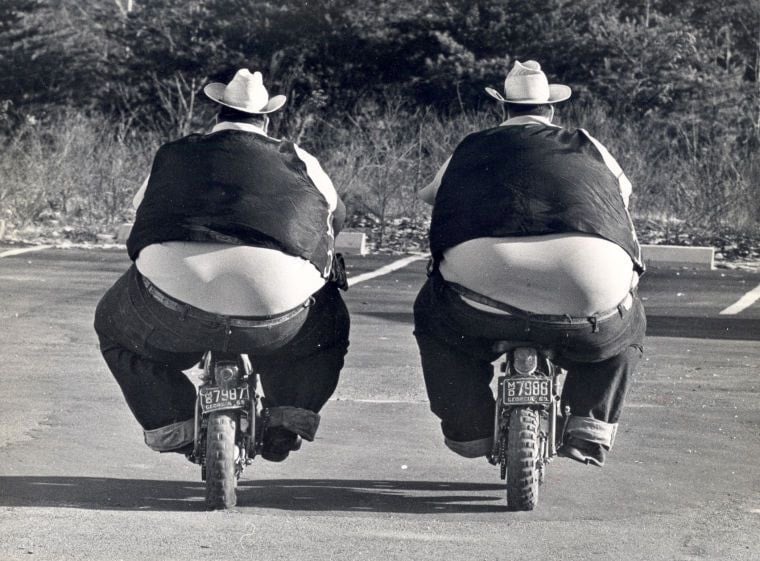
The first few pages of the book, which I am pretty sure is still sitting on that table in my dad’s bathroom, contained records related to the human body. I particularly remember reading about Robert Earl Hughes, then the world’s heaviest human, and The McGuire Twins, the world’s heaviest twins; they liked to ride motorcycles:
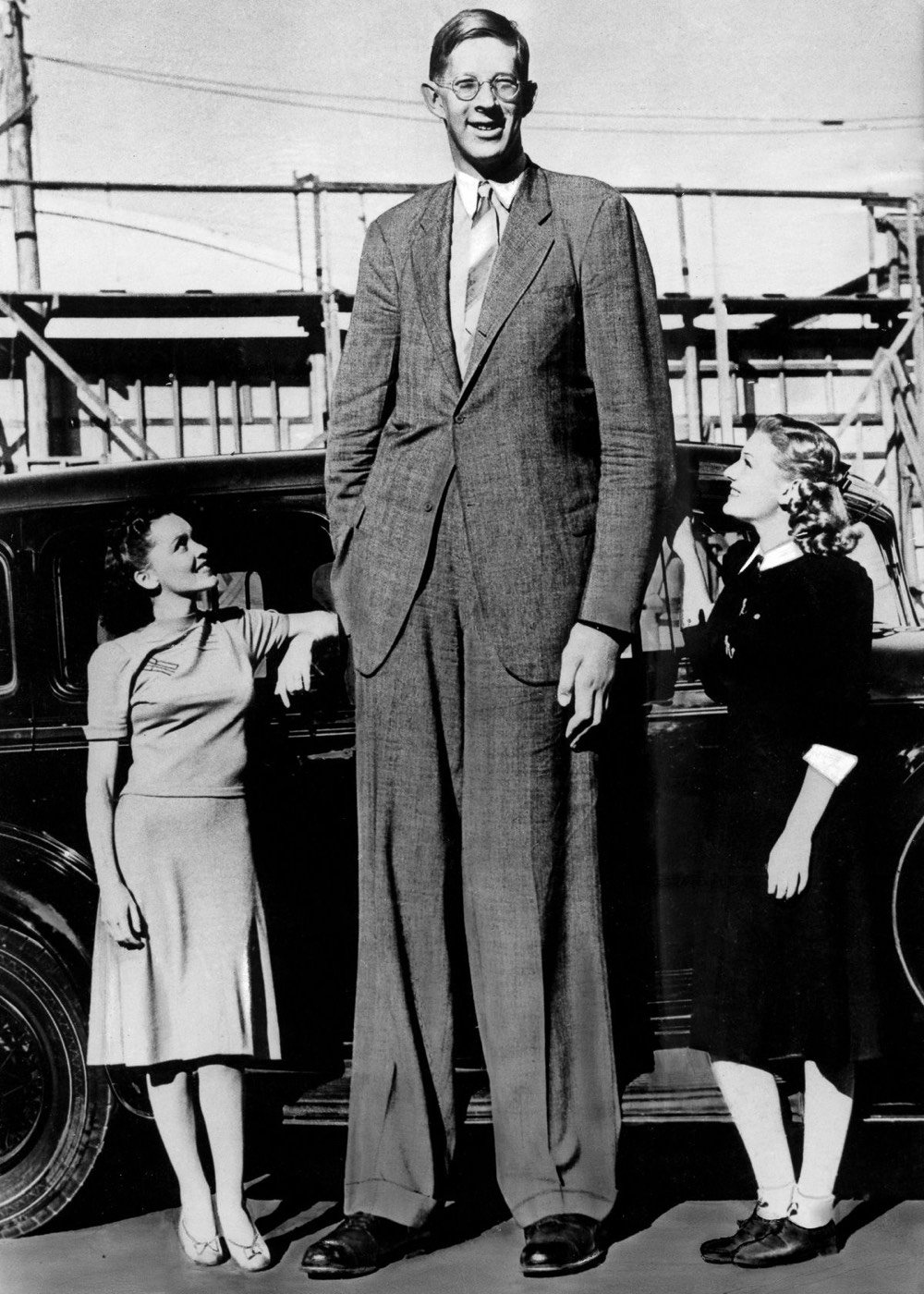
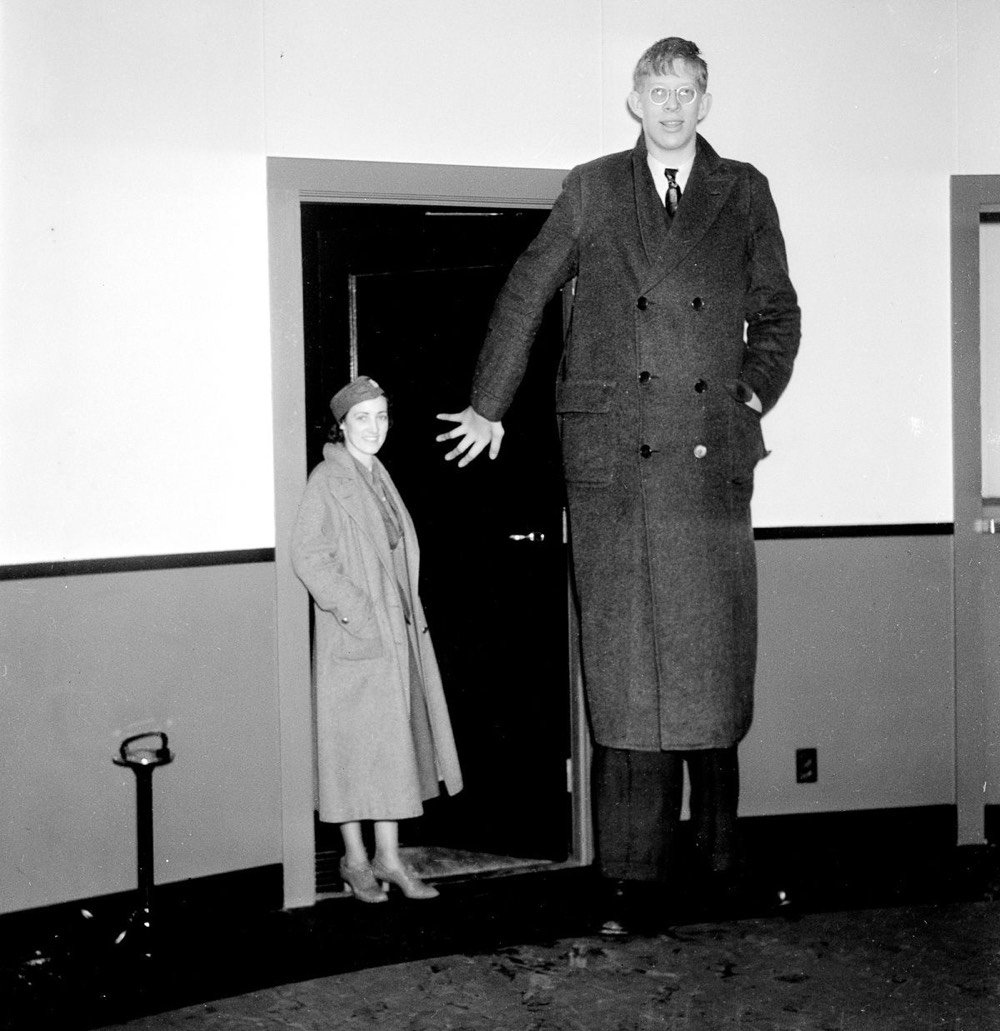
But most captivating part of that book was the section about Robert Wadlow, the world’s tallest person: 8ft 11in tall, shoe size of 37AA, wingspan of 9.5 feet, and he could carry his father up the stairs at age 9, a feat unimaginable by a scrawny Wisconsin boy of the same age. The tallest person I’d ever seen up until then was probably like 6’3” — a man almost 9 feet tall was like something out of the stories I read from the library. Who needs fiction when you’ve got facts like these?
I hadn’t thought about any of this in years until I ran across a short video of Wadlow the other day (there’s more footage here, here, and elsewhere on YouTube):
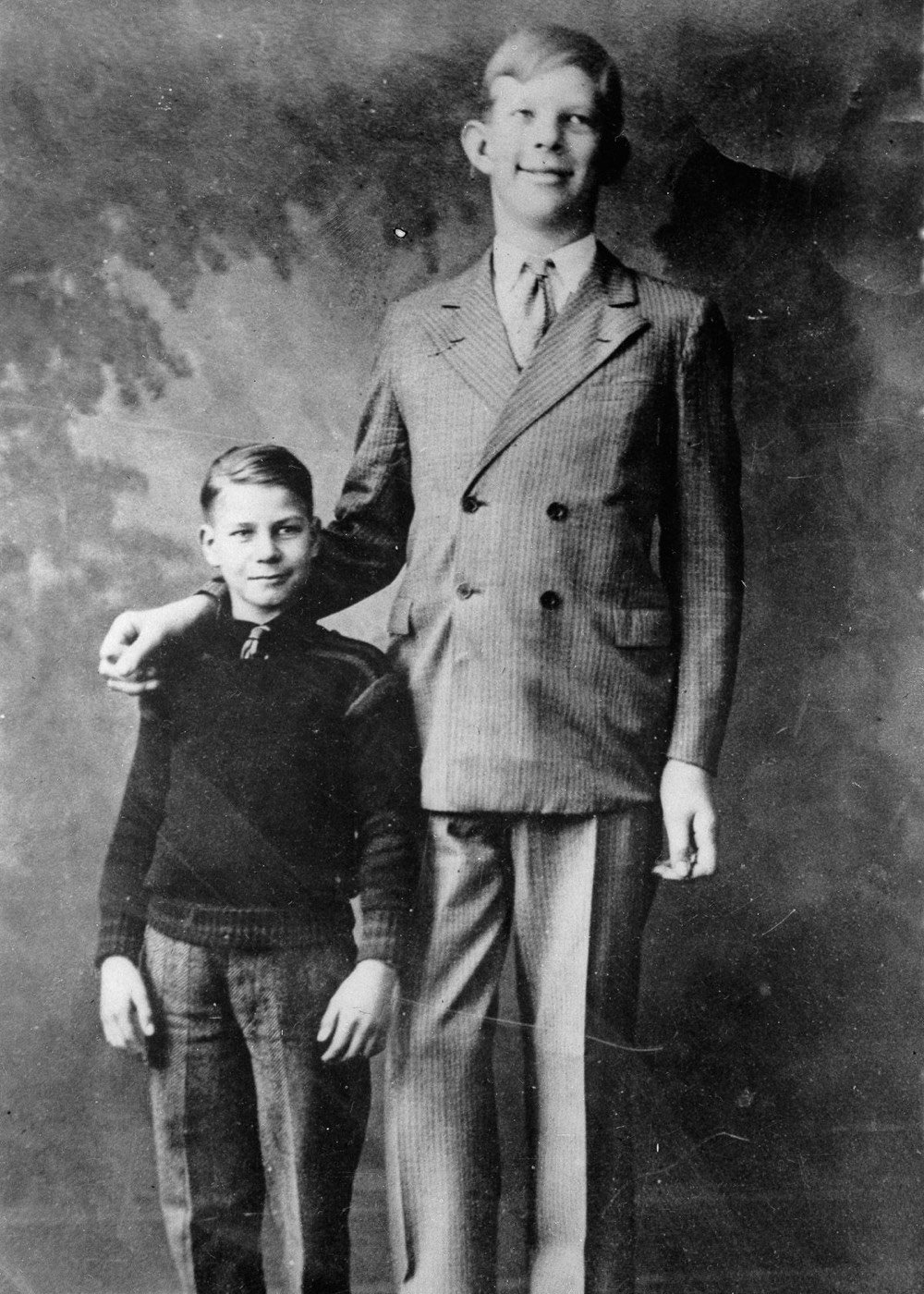
Holy shit. Suddenly this almost mythical person from my childhood is walking across my screen! Digging a little, I found the Retronaut’s collection of Wadlow photos, only a couple of which were included in my Guinness book. Here’s Wadlow at 10 years old, when he was already 6’5”:
And here are a couple more photos that show just how tall he was:
You can read more about Wadlow on Wikipedia, on Retronaut, or, yes, on the Guinness World Records site. I don’t care what anyone says…the World Wide Web is still a marvel. It brought Robert Wadlow alive for me, all these years later. What a thing.
Cameras that can take usable photos in low light conditions are very useful but very expensive. A new paper presented at this year’s IEEE Conference on Computer Vision and Pattern Recognition shows that training an AI to do image processing on low-light photos taken with a normal camera can yield amazing results. Here’s an image taken with a Sony a7S II, a really good low-light camera, and then corrected in the traditional way:

The colors are off and there’s a ton of noise. Here’s the same image, corrected by the AI program:
Pretty good, right? The effective ISO on these images has to be 1,000,000 or more. A short video shows more of their results:
It would be great to see technology like this in smartphones in a year or two.
For these two videos, FunWithGuru collected scenes from movies & TV that can trigger ASMR. He featured movies like Phantom Thread (rustling cloth) and Amelie (whispering) as well as well as calmer moments from more unlikely fare like Inglourious Basterds, Edward Scissorhands, and The Office. The clips show ASMR staples like calm talking, people quietly performing tasks, whispering, hair brushing, pouring water, and rustling paper.
In his latest video, Evan Puschak compares the action scenes from Marvel and DC superhero movies and shows how DC comes up short. Some don’t appreciate all of the humor packed into Marvel’s films, but the DC movies take themselves WAY too seriously. And don’t even get me started on Zack Snyder — outside of 300, his take on action is not good. It’s not a coincidence that Snyder didn’t direct Wonder Woman, the best of the DCEU films in terms of action (and everything else).
See also the problem with action movies today and why are action movie trailers sounding more musical lately?
Over 300 different people drew/illustrated moments from a real-life dance performance, which Kristen Lauth Shaeffer then assembled into one cool animated performance. This strongly reminds me of Oliver Laric’s clip-art animation.
One of the recurrent topics here at the ol’ dot org is paying our respects to people who are mind-bendingly good at what they do. Case in point: watch this woman turn a magic scarf into about 100 different pieces of clothing in about 90 seconds. Reader, I audibly gasped at ~0:25 when she turned a scarf into a dress in the blink of an eye.
This extraordinary garment has been compared to a Thneed, a fictional garment from Dr. Seuss’ The Lorax:
I’m being quite useful. This thing is a Thneed.
A Thneed’s a Fine-Something-That-All-People-Need!
It’s a shirt. It’s a sock. It’s a glove. It’s a hat.
But it has OTHER uses. Yes, far beyond that.
You can use it for carpets. For pillows! For sheets!
Or curtains! Or covers for bicycle seats!”
There are quite a few magic scarves available for purchase on Amazon if you want to try one out for yourself, but check those seller ratings…some of them look a little sketchy. (via @dunstan)
Newer posts
Older posts




Socials & More