kottke.org posts about video
In a nod to our nation’s recreational drug users, NASA has created this 30-minute ultra high-resolution look at our Sun, assembled from thousands of photographs taken by the Solar Dynamics Observatory, which snaps a 16-megapixel image of the Sun every few seconds. Duuuuuuuude…
Pablo Eyre took a number of movie posters featuring photography from their respective movies and replaced the photos with the actual scenes. I imagine this is what movie posters look like in Harry Potter.
(Something must be in the air lately. This video is similar to two other videos I’ve linked to recently: book covers in motion?and a comparison of movie posters and the scenes that inspired them.)
A group called Kurzgesagt, in collaboration with author Johann Hari, made this video about taking a new approach to understanding addiction. You’ve probably heard of the experiments where rats in cages were given access to drugs. The rats quickly became addicted to them and used them heavily until overdosing. But perhaps the problem is not the drugs but the cage. Later experiments showed that if rats were given plenty of alternate activities, freedom, and room to roam, they were not likely to become heavy drugs users or overdose.
Human studies are more difficult to come by, but it still appears that when available, living life, family, and friends are more addictive than heroin. And so, according to Hari, who wrote a book about all this, what we should be doing is not isolating those who become addicted to drugs, alcohol, and other things. Instead, we should build a society that reconnects people to each other so that the drugs become unnecessary.
In addition to the video and the book, there’s an interactive version of the video as well as an article by Hari on Huffington Post. (via @gavinpurcell)
Update: Hari is out with a new book on the topic, Lost Connections: Uncovering the Real Causes of Depression - and the Unexpected Solutions. There’s an excerpt in The Guardian.
I started to research my book, Lost Connections: Uncovering The Real Causes of Depression — and the Unexpected Solutions, because I was puzzled by two mysteries. Why was I still depressed when I was doing everything I had been told to do? I had identified the low serotonin in my brain, and I was boosting my serotonin levels — yet I still felt awful. But there was a deeper mystery still. Why were so many other people across the western world feeling like me? Around one in five US adults are taking at least one drug for a psychiatric problem. In Britain, antidepressant prescriptions have doubled in a decade, to the point where now one in 11 of us drug ourselves to deal with these feelings. What has been causing depression and its twin, anxiety, to spiral in this way? I began to ask myself: could it really be that in our separate heads, all of us had brain chemistries that were spontaneously malfunctioning at the same time?
Update: Kurzgesagt deleted this video from their channel. You can view the deleted video (they gave people permission to repost it) and hear why they deleted it. As for Hari’s view on addiction, neuroscientist Dean Burnett addresses the controversy in a pair of posts for The Guardian and there are others within the east reach of a quick Googling.
From Henning Lederer, a series of 55 vintage book covers gently animated. Lederer previously did an animation of Fritz Kahn’s famous poster, Der Mensch als Industriepalast.
This is a charming short film on how a Foley artist would sound design a day in an ordinary life. Running hands through spaghetti noodles stands in for hair washing, a spray bottle sounds like rustling sheets, that sort of thing.
See also this fascinating short documentary about what a Foley artist does.
Rishi Kaneria examines the use of props in movies, from the sled in Citizen Kane to the oranges in The Godfather to the cardboard box in Se7en. A transcript is available here.
When used like this props become more than just objects. They become symbols. A symbol that represents a friendship. Or a marriage. Science. Or God.
A prop can be a symbol of reality. Or Illusion. Of the future. Or the past.
And the same prop can symbolize childhood in one film…but death in another. But death can also be symbolized like this. In the Godfather, Coppola associates death with something unexpected: oranges. This isn’t the kind of thing that’s in the foreground of filmmaking. But it’s there if you’re looking for it.
From Candice Drouet, a short video with side-by-side comparisons of scenes from movies and the movie posters inspired by them.
Everyone knows that the square of the hypotenuse of a right triangle is equal to the sum of the squares of the other two sides. What this video presupposes is, fuck yeah math!
From 2007, a 30-minute documentary on the making of Stanley Kubrick’s The Shining. Includes interviews with Jack Nicholson, Steven Spielberg, and Sydney Pollack.
Did you know The Beatles have a YouTube channel? On which they have only posted three videos in the past year? Do you even know who The Beatles are? I mean, they aren’t on Spotify or any other streaming music service so maybe that won’t be an absurd question soon. After all, current and future generations will have a lot to say about the future popularity of the band and if they don’t hear the music, well…
For now, enjoy a live performance of Revolution from 1968. (Update: I have been informed by music nerds that only the vocals are live on this.)
There are a few shots in here that are generic to many movies but many others have the feel of definite homage. See also this list of similarities from a couple of years ago.
The moment when Walt spots Jesse’s escaped hostage on the road is very reminiscent of the moment when Butch sees Marcellus. The scene where Walt chooses the weapon to kill someone looks exactly like the scene where Butch wonders what to use as he comes back to rescue Marcellus. In one scene Walt is forced to visit his home and there is a great chance someone is waiting there to kill him. Sounds familiar?
The Joy of Painting, hosted by Bob Ross, ran for 11 years on public television for a total of more than 400 episodes. The very first episode ever broadcast was just uploaded to Ross’ YouTube channel.
Is this for real? 43 people simultaneously tossed coins into jars while standing 15 feet away with only a single miss? Impressive.
If it is fake, how’d they do it? CG? Coins dropped from above each jar? It seems unlikely the broken jar near the beginning of the sequence was done in CG or resulted from a coin falling from above. The coins, jars, and tossing seems real. How about 43 motion-captured green-screened robotic arms accurately tossed the coins and the actors were added in later. Or was it magic?

Matt Green plans to walk on every single street in NYC. Of an estimated 8-9000 miles of streets, trails, and paths in the city, he has already covered 7000 miles, including what looks like nearly all of Brooklyn.
I am going to walk every block of every public street in all five boroughs of New York City, excluding only the high-speed expressways and parkways that prohibit pedestrian traffic. I will also walk every bridge with pedestrian facilities, as well as many private streets, multi-use greenway paths, pedestrian paths and trails through parks and cemeteries, boardwalks, and accessible stretches of coastline.
It is my understanding that the total length of all the public streets in NYC is somewhere in excess of 6,000 miles. Add the bridges, private streets, paths, and coastline to that, as well as all the blocks I will end up covering more than once, and I expect to have walked more than 8,000 miles before I’m done.
Matt previously walked across the United States and visited every NYC subway station in one go.
William Helmreich is also attempting to walk every block in the city, and he and Green recently met to compare notes.
That video is wonderful, btw…two curious souls fully engaging with their surroundings. If you click on none of the other links in this post, you should at least watch the video. (thx, mike)
In 1997, shortly after Apple’s purchase of NeXT, Steve Jobs took the stage at Apple’s annual developer conference to answer questions from the audience for at least 50 minutes. It was a different time for sure. Apple was reeling, Jobs had just returned as an advisor and then interim CEO, his last company, NeXT, had not succeeded on its own, and the iPod & Apple Stores were years off.
When he arrived at Apple after the NeXT acquisition, Jobs moved swiftly to pare down the number of projects that the company was working on. In this first video, Jobs responds to a question about Apple killing a promising technology called OpenDoc.
Jobs talks about how “focus means saying ‘no’” and how Apple’s loss of focus has made the company less than the sum of its parts and not more. Even at this early stage in Apple’s comeback, you can see the seeds of how it was going to happen.
In the second video, a later questioner tells Jobs “it’s sad and clear that on several accounts you’ve discussed, you don’t know what you’re talking about”, asks him to comment on OpenDoc again, and also tell the audience what “he’s personally been doing for the last seven years”, a reference to his answer to the earlier question in the video above and the failure of NeXT.
Instead of laying into the guy, as a caricature of Steve Jobs might, he responds thoughtfully and almost humbly about how Apple needs to focus on its “larger, cohesive vision” of selling products to people, starting with customer experience rather than technology, and most importantly, making decisions.
Of course, in hindsight, it is obvious how overwhelmingly right Jobs was in his assertions. Since then, Apple has focused relentlessly on what worked and has succeeded brilliantly, beyond anything anyone, save perhaps Jobs, would have ever imagined. I wonder what that cheeky engineer is up to now? (via alphr)
(Also, can we talk about the patches on Jobs’ jeans? That’s not a fashion thing, right? Like, those aren’t $450 jeans made to look worn out. To me, those are obviously Steve’s favorite pair of jeans — probably Levi’s, I can’t tell for sure — patched up because he wants to keep wearing them. No one in technology has been picked apart like Steve Jobs by people looking for clues to who he was as a person and how that informed his business activities.1 Was he an asshole? Was he an artist? Was he just all smoke and mirrors? If we can stoop to the level of assessing a man’s character by the clothes he wears, it seems to me that whatever else he did, Jobs was at once pragmatic and dreamy when it came to products, to objects. What a potent combination that turned out to be.)
Update: The man who takes a swipe at Jobs in the later video was possibly identified on Quora last year by an anonymous person who said they worked on the WWDC event and spoke to the man in question.
The audience member is named Robert Hamisch. Mr. Hamisch was a consultant at a security firm in the 1990’s that did consultant services for Sun Microsystems (their billing and payroll department) for a short period of time. As far as I know, he left the company (the consulting firm, he never worked for Sun directly) and has since retired. He attended the 1997 WWDC sponsored by his security consulting firm, although never had any stake in Sun Microsystems as a whole besides general system security for their billing and payroll department. I don’t know why he specifically asked about Java, but he may have just been frustrated with Jobs and his performance as a whole.
A short web search turned up no information on Hamisch. (thx, charles)
Trailer: watched. Tickets: bought. Luke Skywalker: still missing.
In 1948, contact lenses were huge hunks of glass that don’t look at all comfortable. And the fittings started with a plaster cast of your eyeball. Ok, probably not plaster but still, ew. (via @FastidiumSum)
Lewis Bond takes a look at the work of master filmmaker Hayao Miyazaki and what sets him apart from other makers of animated movies, including his work’s realism and empathy.
From Kevin Slavin and Bunnie Huang on location in Shenzhen, China, a look at what changes when you stop designing phones for companies and start designing them for people. You end up with a variety of phones satisfying different desires, from tiny phones that double as Bluetooth earpieces to phones that look like a race car or a pack of cigarettes or a soda can to phones with built-in lamps.


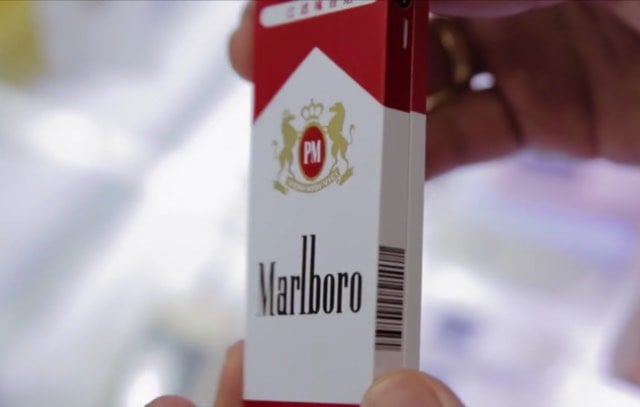
A spin around the internet reveals many more examples of these kinds of phones: flashlight phones, lighter phones, phones with up to 4 SIM slots, super-rugged phones w/ walkie talkie capability, credit card-sized phones, watch phones, and USB key phones. (via @triciawang)
From a paper presented at SIGGRAPH Asia by a group from Stanford, a system for tracking the facial expressions from one person and putting them on the face of a second person in real-time. This is crazy. (via @gavinpurcell)
With its straightforward plot and action sequences, Mad Max: Fury Road would make a pretty good 8-bit video game. (via devour)
From Adam Lisagor’s Sandwich Video comes Computer Show, a present-day send-up of a personal computing show set in 1983. The guests and their products are contemporary and real, but the hosts are stuck in 1983 and don’t really know what the web is, what Reddit is, what links are, or anything like that.
“Computer Show” is a technology talk show, set in 1983. The dawn of the personal computing revolution. Awkward hair and awkward suits. Primitive synths and crude graphics. VHS tapes. No Internet. But there’s a twist.
The guests on this show are tech luminaries — experts, founders, thinkers, entrepreneurs…from 2015. They are real, and they are really on “Computer Show” to talk about their thing. Will it go well? Can they break through to the host Gary Fabert (played by Rob Baedeker of the SF-based sketch mainstay Kasper Hauser) and his rotating cast of co-hosts, who know of neither iPhone nor website nor Twitter nor…hardly anything?
The first episode, featuring Lumi, is embedded above and here’s the second episode with Reddit cofounder Alexis Ohanian.
Hopefully they’ll get to make more.
Update: In an interview with Inc., Lisagor shares how Computer Show came about.
So it just became clear to Roxana and Tony, there was something here. Roxana had the idea to make something in this universe. To produce a show like “The Computer Chronicles”.
One day, over Slack, Roxana asked me for the contact info of a producer I know. When I asked why, she told me she had this idea, and also asked if I’d maybe be a contributor on it. When I got more info out of her (she tends to be a little private about her personal projects) and explained to me that she had this idea of a tech talk show set in the early 80’s, where the guests would interview people from modern day, I just about flipped out and lost my mind I was so excited.
Update: While we not-so-patiently await new episodes of Computer Show, at least we can buy the t-shirt.
For more than a decade, retired engineer Tom Tryniski has been digitizing old newspapers from microfilm and making their full text available and searchable online.
Tryniski’s site, which he created in his living room in upstate New York, has grown into one of the largest historic newspaper databases in the world, with 22 million newspaper pages. By contrast, the Library of Congress’ historic newspaper site, Chronicling America, has 5 million newspaper pages on its site while costing taxpayers about $3 per page. In January, visitors to Fultonhistory.com accessed just over 6 million pages while Chronicling America pulled fewer than 3 million views.
(via @ftrain)
50 unknown facts about Star Wars, many gleaned from How Star Wars Conquered the Universe. I’ve heard some of these before, but not many…the list doesn’t include low-hanging fruit like Harrison Ford’s carpentry.
Favorite facts: 1. Early on, Luke Skywalker’s nickname was “Wormy”. Wormy! 2. The actor who portrayed Vader, David Prowse, spoke his dialogue on set not knowing he would be dubbed over. Because of his West Country accent, the other cast members referred to Prowse as Darth Farmer.
Speaking of Harrison Ford’s carpentry, the new biography of Joan Didion has a good story about that time Didion and her husband John Dunne hired Ford to do some construction for them.
Off and on, for over six month, the Dunnes engaged a construction crew to expand the waterside deck, install waxed pine bookshelves, and lay terra-cotta floor tiles. The men tore out prefabricated plywood walls and pulled up “icky green” flooring. Harrison Ford headed the crew. “They were the most sophisticated people I knew,” Ford said. “I was the first thing they saw in the morning and the last thing they saw before cocktails.”
In Vegas, Dunne wrote, “[W]hat had started as a two-month job … [stretched] into its sixth month and the construction account was four thousand dollars overdrawn… I fired the contractor. ‘Jesus, man, I understand,’ he said. He was an out-of-work actor and his crew sniffed a lot of cocaine and when he left he unexpectedly gave me a soul-brother handshake, grabbing my thumb while I was left with an unimportant part of his little finger.” The next day, Dunne realized the only thing separating him and his family from the Pacific Ocean was a clear sheet of Pliofilm where the French doors were supposed to go. “I rehired the contractor,” he wrote. “‘Jesus, man, I understand,’ the contractor said.”
Much later, when Didion’s daughter was ill, Ford did the family a further service.
The following day, Didion flew from Teterboro to Los Angeles on Harrison Ford’s private plane, along with her friend Earl McGrath. Ford “happened to be in New York and heard about Q’s condition … and called to offer to take Joan,” said Sean Michael. “I find that to be a beautiful thing,” he said. “A man you hire to build cabinets, thirty years later is flying you in his private jet to your daughter’s hospital bedside.”
Jesus, man, I understand.
Update: Some of Ford’s comments from the book were taken from Carolyn Kellogg’s reporting on an awards festival.
As if to make up for her absence, a parade of stars was in attendance. Harrison Ford, who was prepared to present her the award, spoke somewhat extemporaneously instead. “I just want to tell you all how much her friendship has meant to me,” he said. Forty years ago, Didion and her husband, John Gregory Dunne, were “The most sophisticated people I knew.”
Then a carpenter, Ford was hired by Didion and Dunne to build their beach house in Malibu. “I was the first thing they saw in the morning and the last thing they saw” — he paused — “before cocktails.”
Hail, Caesar! is the name of the Coen brothers’ new movie. It stars George Clooney as a movie star (what casting!) who is kidnapped during the shooting of a epic Roman gladiator picture called Hail, Caesar! This one looks fun. And with the exception of The Big Lebowski, the Coen’s fun movies are underrated,…I quite enjoyed both Intolerable Cruelty and Burn After Reading.
The Light L16 camera looks interesting, both literally and figuratively. The L16 comes with 16 different built-in lenses, many of which fire at the same time, creating a super high-quality image at a 52-megapixel resolution.1 Having all those lenses firing at once lets you snap photos and decide on things like focal length and depth of field later.
Using a new approach to folded optics design, the Light L16 Camera packs DSLR quality into a slim and streamlined camera body. It’s like having a camera body, zoom, and 3 fast prime lenses right in your pocket. With 16 individual cameras, 10 of them firing simultaneously, the L16 captures the detail of your shot at multiple fixed focal lengths. Then the images are computationally fused to create an incredible high-quality final image with up to 52 megapixel resolution.
Would love to try this out if anyone from Light is reading.
When the Curiosity rover landed on the surface of Mars, it took high-resolution photos all the way down. Luke Fitch took those photos and stitched them together into a first-person HD video of the rover’s landing.
Update: I was wondering if someone had done a stabilized version of this video and lo:
(via @willhains)
How many videos can we watch about the films of Stanley Kubrick? If you’re anything like me, the answer is never enough. This montage hinting at connections between his films is particularly well done.
Mashups are so ubiquitous and overdone that the bar for actually watching one is pretty high. But this one, no joke, might be the best visual movie mashup I’ve ever seen. Hell’s Club is a tour de force of film editing, seamlessly combining scenes from dozens of different films — Austin Powers, Cocktail, Star Wars, Terminator, Staying Alive, Boogie Nights — into one cohesive scene. Give it 30 seconds and you’ll watch the whole thing.
Update: The sequel is just as tight. Amazing what a little color can do to trick the brain.
And here’s an interview with the creator.
That is the question that physicist Lawrence Krauss answers in his book, A Universe from Nothing. The book’s trailer provides a little more context.
Everything we see is just a 1% bit of cosmic pollution in a Universe dominated by dark matter and dark energy. You could get rid of all the things in the night sky — the stars, the galaxies, the planets, everything — and the Universe would be largely the same.
And my favorite line from the trailer:
Forget Jesus, the stars died so you could be born.
(via open culture)
Newer posts
Older posts




Socials & More