kottke.org posts about science

The scientific rumor mill is saying that astronomers in Chile have discovered an Earth-like exoplanet orbiting the star nearest Earth, Alpha Proxima, a mere 4.25 light years away. As they say, “huge if true”.
The hunt for exoplanets has been heating up in recent years. Since it began its mission in 2009, over four thousand exoplanet candidates have been discovered by the Kepler mission, several hundred of which have been confirmed to be “Earth-like” (i.e. terrestrial). And of these, some 216 planets have been shown to be both terrestrial and located within their parent star’s habitable zone (aka. “Goldilocks zone”).
But in what may prove to be the most exciting find to date, the German weekly Der Spiegel announced recently that astronomers have discovered an Earth-like planet orbiting Proxima Centauri, just 4.25 light-years away. Yes, in what is an apparent trifecta, this newly-discovered exoplanet is Earth-like, orbits within its sun’s habitable zone, and is within our reach. But is this too good to be true?
If you read the article, there’s cause for skepticism but an official announcement is coming next week so we’ll know for sure one way or the other.
The other cool thing? If there is a planet there, plans are already underway to build a project to get probes to nearby Alpha Centuri in 20 years, Project Starshot:
In the last decade and a half, rapid technological advances have opened up the possibility of light-powered space travel at a significant fraction of light speed. This involves a ground-based light beamer pushing ultra-light nanocrafts - miniature space probes attached to lightsails - to speeds of up to 100 million miles an hour. Such a system would allow a flyby mission to reach Alpha Centauri in just over 20 years from launch, and beam home images of possible planets, as well as other scientific data such as analysis of magnetic fields.
Perhaps they can redirect their target slightly?
Update: It appears as if the rumors were true. Phil Plait writing at Slate:
The planet, called Proxima Centauri b or just Proxima b (exoplanets are given their star’s name plus a lower case letter in order of discovery, starting with “b”), orbits Proxima every 11.2 days. It has a mass of no less than 1.3 times the Earth’s, so if it’s rock and metal like Earth it’s only a bit bigger. It’s a mere 7.3 million kilometers from the star-a lot closer than Earth’s distance from the Sun of 150 million kilometers!-but Proxima is so faint and cool it receives about two-thirds the amount of light and heat the Earth does. That means that it’s in Proxima’s habitable zone: It’s possible (more or less) that liquid water could exist on its surface.
That’s coooool.
Update: Project Blue wants to built a space telescope for the purpose of observing and photographing Earth-like planets around Alpha Centuri.
Project Blue is a consortium of leading space and research organizations on a mission to build and launch a small space telescope to observe planets around our nearest stellar neighbors: Alpha Centauri A and B. The goal is simple: to capture an image, visible to the human eye, of orbiting planets. Seeing a “pale blue dot” could indicate the presence of oceans or an atmosphere — the potential to support life. It would be our first view of another world like our own. With a modest budget and a planned launch by 2020, this goal is tantalizingly close.
Update: According to some recent observations, it seems likely that the Earth-like planet orbiting Proxima Centauri has been fried to a crisp many times by solar flares.
When they calculate the total energy of the big flare, it is ten times more powerful than one of the Sun’s bigger flares! That’s a lot of energy. So much, in fact, that the planet, Proxima b, would get good and fried by it. I mean crispy. The planet orbits the star much closer than Earth does the Sun, about 7 million kilometers from Proxima, so the energy from the flare would hit it a lot harder. Assuming these flares happen relatively often (a very safe bet), over the lifetime of the planet these would basically sandblast the planet, ripping the atmosphere right off the planet. They’d strip away any oceans, too, and sterilize whatever was left.
It’s hard to overstate the damage. These flares, over billions of years, are downright apocalyptic. It’s hard to imagine anything being able to survive. The planet may very well be a completely zapped airless lifeless ball of rock.
Perfect eyesight. Curing cancer. Designer babies. Super-soldiers. Because of CRISPR, genetic engineering might make tinkering with life as easy as playing with Lego.
Imagine you were alive back in the 1980’s, and were told that computers would soon take over everything — from shopping, to dating, and the stock market, that billions of people would be connected via a kind of web, that you would own a handheld device orders of magnitudes more powerful than supercomputers.
It would seem absurd, but then all of it happened. Science fiction became our reality and we don’t even think about it. We’re at a similar point today with genetic engineering. So let’s talk about it.
Relatedly, I’m finishing up Neal Stephenson’s Seveneves right now and while it starts out as space science fiction, much of the book is concerned with the sort of genetic engineering issues discussed in the video.
According to theoretical biologist Suzanne Sadedin, the biggest war in animal history (humans included) is happening right now.
Once upon a time there was a tiny brown ant who lived by a swamp at the end of the Paraná River in Argentina. Her name, Linepithema humile, literally means “humble” or “weak”. Some time during the late 1800s, an adventurous L. humile crept away from the swamp where giant river otter played and capybaras cavorted.
She stowed away on a boat that sailed to New Orleans. And she went to war.
Update: And bang, here’s the supporting science in the form of a 2010 study.
Here, we perform inter-continental behavioral analyses among supercolonies in North America, Europe, Asia, Hawaii, New Zealand and Australia and show that these far-flung supercolonies also recognize and accept each other as if members of a single, globally distributed supercolony. Furthermore, populations also possess similar genetic and chemical profiles. However, these ants do show aggression toward ants from South Africa and the smaller secondary colonies that occur in Hawaii and California. Thus, the largest and most dominant introduced populations are likely descended from the same ancestral colony and, despite having been established more than 100 years ago, have diverged very little. This apparent evolutionary stasis is surprising because, in other species, some of the most rapid rates of evolutionary change have occurred in introduced populations. Given the spatial extent of the Argentine ant society we report here, there can be little doubt that this intercontinental supercolony represents the most populous known animal society.
The “25 years and beyond” section of the Facebook product roadmap contains a single word, unlined twice in red ink: ants. Can ants be trained to look at ads though?
Update: Radiolab also did a segment on these ants. (via @minwoolee)
Update: Wow, the Argentine ant is having a bit of a moment…I didn’t expect this to be my most updated post of the week. Annalee Newitz just dropped a long article about their world domination: Meet the worst ants in the world.
UC Berkeley environmental scientist Neil Tsutsui helmed an effort to sequence the genome of L. humile, in part to find out where the invading group had originated. He and an international team of colleagues published the results of their analysis in 2011. They compared the genomes of Argentine ants in California to those of native populations, and Tsutsui told Ars that they were initially surprised by the results. “I was expecting Buenos Aires to be the source, but it was actually a city upstream called Rosario,” he said. “It turns out that in the late 19th century, when the ants were moving around, Rosario was actually a bigger shipping port than Buenos Aires. So it made more sense as a source for introduced populations.”
Genetic evidence supports the idea that the ants made their way from Port Rosario all across the globe. Subsequent sightings of the ants in the United States show that they also hitched rides on trains from New Orleans, ultimately arriving in California in 1904. Trucks probably transported them throughout the state. But how could such fragile creatures survive these journeys in giant machines and go on to found insectile empires? With their countless queens and nomadic lifestyle, they turned out to be the ultimate adapters.
Che Guevara and Lionel Messi are also from Rosario and have taken over the world in their own way. (via @tcarmody)
Antonie van Leeuwenhoek ran a draper’s shop and was a local politician in Delft, Netherlands in the mid-17th century. During this time, he developed an interest in making lenses and hit upon a technique for making lenses with extremely high magnifications for the time, 270x and perhaps even 500x normal magnification. These lenses allowed him to discover that there were tiny organisms living in his mouth.
Ed Yong, Joss Fong, and Julia Belluz discuss van Leeuwenhoek’s achievement and microorganisms in general in the video above and in an interview.
It is undeniable that antibiotics have been a tremendous health good, maybe one of the greatest health goods of all time. They have brought so many infectious diseases to heel and saved so many lives.
But it’s also clear that they have negative effects on our microbiome. So they are indiscriminate weapons. They kill the microbes that we depend upon and that are good for us as well as the ones that are causing disease and causing us harm. They’re like nukes, rather than precision weapons.
So we’re in a difficult situation now, where on the one hand we’re running out of antibiotics, and the rise of antibiotic-resistant bacteria is a huge public health threat. But at the same time we’re aware of the need to preserve the microbiome.
Yong just came out with a book on microbes called I Contain Multitudes. (Perhaps Whitman was speaking literally?)
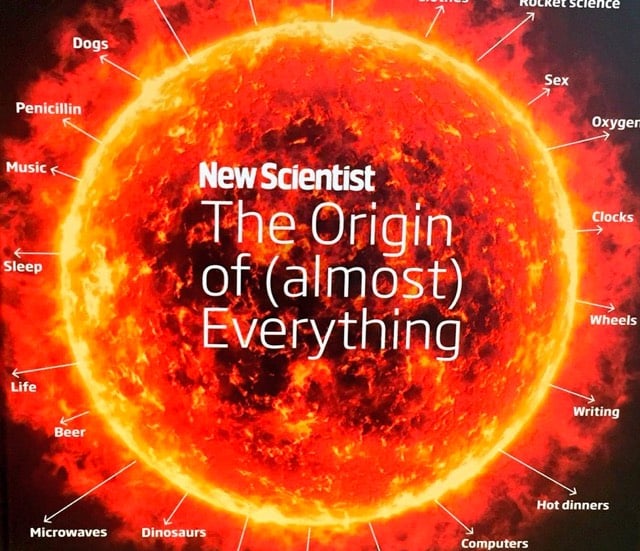
Oh, this new book from Jennifer Daniel and New Scientist looks great: The Origin of (almost) Everything.
Together they take us on a whistle-stop tour from the start of our universe (through the history of stars, galaxies, meteorites, the Moon and dark energy) to our planet (through oceans and weather to oil) and life (through dinosaurs to emotions and sex) to civilization (from cities to alcohol and cooking), knowledge (from alphabets to alchemy) ending up with technology (computers to rocket science). Witty essays explore the concepts alongside enlightening infographics that zoom from how many people have ever lived to showing you how a left-wing brain differs from a right-wing one.
And Stephen Hawking wrote the foreword. You fancy, Jennifer Daniel!
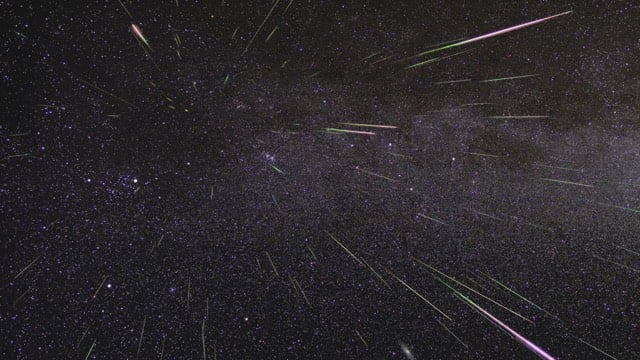
Every year, the Earth moves through the debris from the Swift-Tuttle comet, resulting in the Perseid meteor shower. This year, the Earth is predicted to move through a particularly dense part of the comet’s wake, which may mean twice the number of shooting stars during this year’s shower. Here’s how to watch:
The best way to see the Perseids is to go outside between midnight and dawn on the morning of Aug. 12. Allow about 45 minutes for your eyes to adjust to the dark. Lie on your back and look straight up. Increased activity may also be seen on Aug. 12-13.
I always find these directions confusing, so to be clear: the best viewing for the Perseids is the night of Aug 11 (Thu) into the morning of Aug 12 (Fri). Good luck!
A study undertaken by a group of German scientists suggests that the chemical makeup of the collective breath of movie audiences change in reaction to what’s happening on the screen.
Human beings continuously emit chemicals into the air by breath and through the skin. In order to determine whether these emissions vary predictably in response to audiovisual stimuli, we have continuously monitored carbon dioxide and over one hundred volatile organic compounds in a cinema. It was found that many airborne chemicals in cinema air varied distinctively and reproducibly with time for a particular film, even in different screenings to different audiences. Application of scene labels and advanced data mining methods revealed that specific film events, namely “suspense” or “comedy” caused audiences to change their emission of specific chemicals.
There is evidence that humpback whales deliberately disrupt killer whale hunts, saving other animals from being killed by them.
Marine ecologist Robert Pitman observed a particularly dramatic example of this behavior back in 2009, while observing a pod of killer whales hunting a Weddell seal trapped on an ice floe off Antarctica. The orcas were able to successfully knock the seal off the ice, and just as they were closing in for the kill, a magnificent humpback whale suddenly rose up out of the water beneath the seal.
This was no mere accident. In order to better protect the seal, the whale placed it safely on its upturned belly to keep it out of the water. As the seal slipped down the whale’s side, the humpback appeared to use its flippers to carefully help the seal back aboard. Finally, when the coast was clear, the seal was able to safely swim off to another, more secure ice floe.
Pitman has collected 115 incidents of humpbacks messing with orca hunts. (via @unlikelywords)
A Siberian heatwave has led to permafrost thaws that have released long-dormant anthrax bacteria, resulting in the hospitalization of 13 people and the death of over 1500 reindeer.
Citing earlier work from 2007, they estimated anthrax spores remain viable in the permafrost for 105 years. Buried deeper, the bacteria may be able to hibernate for even longer. At the same time, where meteorological data were available they indicate temperatures in Yakutia are increasing.
“As a consequence of permafrost melting, the vectors of deadly infections of the 18th and 19th centuries may come back,” the scientists warned, “especially near the cemeteries where the victims of these infections were buried.” Cattle grave sites should be monitored, they concluded, and “public health authorities should maintain permanent alertness.”
Another one of those delightful little climate change gotchas, like the near-death of the Great Barrier Reef.
Update: Eric Holthaus talked to some experts and climatologists and yes, pathogens released by warming are something we were warned about and we need to be concerned about it.
Romanovsky says the possibility that additional pathogens may be released from the permafrost, if that is indeed the source, makes it even more important to study this specific outbreak closely. Once in the water supply, in theory, a future pathogen could spread outside the local area, carried by people or by migrating birds or animals.
Though the current outbreak is happening during an unusual period of extreme warmth, Romanovsky says that, “if it gets warmer in the future, and it seems like it will, the thawing permafrost could be massive.” A further degradation of the permafrost would allow more opportunity for the emergence of sequestered microbes.
In the biggest water miracle since Christ walked on the Sea of Galilee,1 Israel has turned certain drought into a surplus of water. Conservation helped — low-flow shower heads, recycling waste water for crop irrigation — but much of the gain came from vastly improved desalinization techniques, which they hope can spread across the region and the world.
We are standing above the new Sorek desalination plant, the largest reverse-osmosis desal facility in the world, and we are staring at Israel’s salvation. Just a few years ago, in the depths of its worst drought in at least 900 years, Israel was running out of water. Now it has a surplus. That remarkable turnaround was accomplished through national campaigns to conserve and reuse Israel’s meager water resources, but the biggest impact came from a new wave of desalination plants.
Perhaps the world won’t end in water wars after all.
Update: Of course, technological advances can affect politics in many ways. Instead of sharing the tech, Israel can use their water advantage to put political pressure on their neighbors, as when Israel cut water supplies to the West Bank earlier this year during Ramadan.
Even without politics, desalinization is problematic…there’s the small matter of where to put all that salt:
Brine disposal is a big problem in much of the Middle East. The gulf, along with the Red and Mediterranean seas, are turning saltier because of desalination by-products — and the region is the epicenter of desalination worldwide, with the United Arab Emirates, Saudi Arabia, Kuwait, Qatar, Bahrain and Oman making up 45 percent of global desalination capacity. This brine is typically twice as salty as seawater, and advanced desalination plants still produce approximately two cubic meters of waste brine for every one cubic meter of clean water.
(thx, jennifer & nathan)
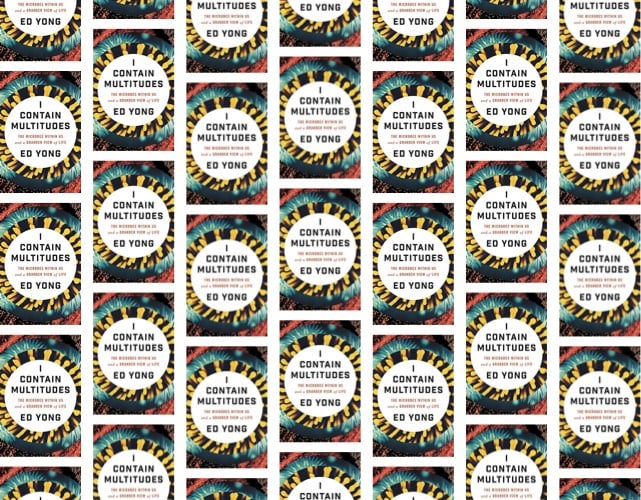
Crackerjack science writer Ed Yong is coming out with his very first book in a month’s time. It’s called I Contain Multitudes (good title!) and is about “astonishing partnerships between animals and microbes”.
Every animal, whether human, squid, or wasp, is home to millions of bacteria and other microbes. Ed Yong, whose humor is as evident as his erudition, prompts us to look at ourselves and our animal companions in a new light-less as individuals and more as the interconnected, interdependent multitudes we assuredly are.
The microbes in our bodies are part of our immune systems and protect us from disease. In the deep oceans, mysterious creatures without mouths or guts depend on microbes for all their energy. Bacteria provide squid with invisibility cloaks, help beetles to bring down forests, and allow worms to cause diseases that afflict millions of people.
I will read anything described as “like a David Attenborough series shot through a really good microscope”.
Update: Bill Gates liked I Contain Multitudes so much he sat down for a chat with Yong to discuss the particulars.
We are also utterly inseparable from them. Yong illustrates that we are at least as much microbe as human. We literally have more microbial cells living inside our bodies than human cells. And even the cells we label “human” are part microbe. With the exception of red blood cells and sperm, all our cells are powered by mitochondria, which are likely the descendants of ancient bacteria that became integrated into the type of cells that subsequently gave rise to all complex life.
While we’re on the subject, NASA announced late last week that they are extending the missions of nine spacecraft sprinkled about the solar system. Included are the New Horizon probe, which will wing off to study an object in the Kuiper Belt after doing so well with Pluto and the rover Opportunity, which was slated for a mission lasting just over 90 days but has now spent more than 12 years exploring the surface of Mars.
The Dawn mission to Ceres is another spacecraft whose duration has been extended, beating long odds. Part of the spacecraft’s functionality had not been working for some time, but was recently repaired.
It was a bit unexpected because Dawn is low on fuel. “Less than a year ago, I would have thought it was ridiculous that the spacecraft would even be operating at this point,” said Marc D. Rayman, the chief engineer for the Dawn mission.
The Dawn spacecraft was designed to use four spinning wheels to pivot in different directions. But at its previous destination, the asteroid Vesta, two of the four wheels overheated and failed. At Ceres, the wheels stayed off, and the spacecraft used its thrusters instead to pivot.
In December, Dawn reached its lowest orbit, just 240 miles above Ceres. Dr. Rayman said he and his team had expected Dawn to exhaust its remaining propellant by March.
But they spun up the wheels again. That succeeded, cutting the use of the thrusters. “It all worked out beautifully,” Dr. Rayman said. That left enough fuel to contemplate doing something more.
After a voyage from Earth lasting almost 5 years, the Juno spacecraft successfully entered Jupiter’s orbit late last night.
The engine burn was tense. 35 minutes is a long time for a spacecraft burn; after 20 minutes it had slowed Juno enough to be in orbit, but not the correct one. It had to continue for another 15 minutes to put the spacecraft on the correct orbit. It worked essentially perfectly. The burn time was off by just one second. That will have no real effect on the orbit.
The 35-minute burn slowed Juno down by more than 1200 mph.
How old are different parts of our bodies? Does anything stick around the entire time? The hair on our bodies lasts only a few years. Fingernails are fully replaced every six months. Your skin lasts 2-4 weeks. Even your blood and bones regenerate every so often. There’s at least one part of your body with lasts the whole time you’re alive, which I found somewhat surprising. See the ship of Theseus paradox.
The ship wherein Theseus and the youth of Athens returned from Crete had thirty oars, and was preserved by the Athenians down even to the time of Demetrius Phalereus, for they took away the old planks as they decayed, putting in new and stronger timber in their places, in so much that this ship became a standing example among the philosophers, for the logical question of things that grow; one side holding that the ship remained the same, and the other contending that it was not the same.
How do we know the lifespans of different cells in the body? Carbon-14 levels from nuclear testing done in the 50s and 60s.
Analysis of growth rings from pine trees in Sweden shows that the proliferation of atomic tests in the 1950s and 1960s led to an explosion in levels of atmospheric carbon 14. Now, Jonas Frisen and colleagues at the Karolinska Institute in Stockholm have taken advantage of this spike in C14 to devise a method to date the birth of human cells. Because this test can be used retrospectively, unlike many of the current methods used to detect cell proliferation, and because it does not require the ingestion of a radioactive or chemical tracer, the method can be readily applied to both in vivo and postmortem samples of human tissues.
Launched from Earth in August 2011, the Juno probe is due to arrive at Jupiter on July 4, 2016. Once there, it will circle Jupiter 37 times, observing its atmosphere and magnetic fields, before plunging into the giant planet so as not to contaminate Europa with microbes.
Juno’s principal goal is to understand the origin and evolution of Jupiter. Underneath its dense cloud cover, Jupiter safeguards secrets to the fundamental processes and conditions that governed our solar system during its formation. As our primary example of a giant planet, Jupiter can also provide critical knowledge for understanding the planetary systems being discovered around other stars.
With its suite of science instruments, Juno will investigate the existence of a solid planetary core, map Jupiter’s intense magnetic field, measure the amount of water and ammonia in the deep atmosphere, and observe the planet’s auroras.
Juno will let us take a giant step forward in our understanding of how giant planets form and the role these titans played in putting together the rest of the solar system.
Science is great. That video? Maybe not so much.
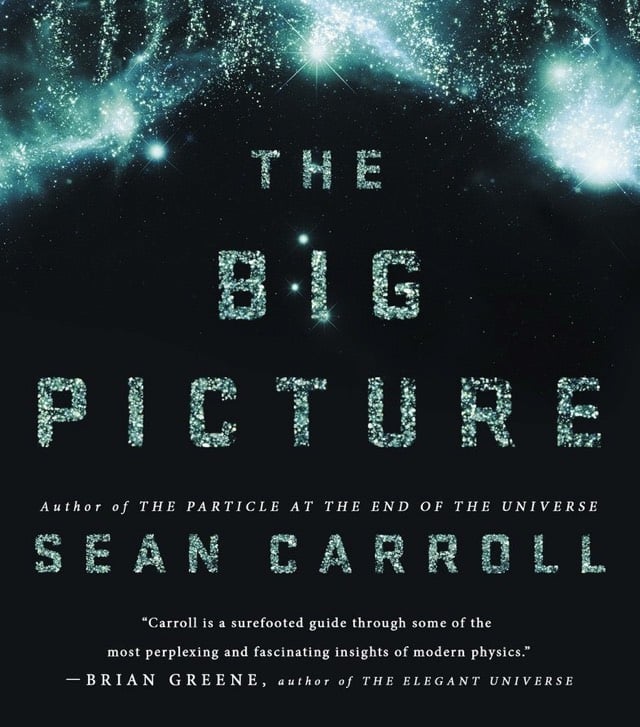
After an unbelievably stressful and busy winter/spring, I am hoping to find some time to read this summer. One of the books on my short list is Sean Carroll’s The Big Picture, one of those “everything is connected” things I love. From a post by Carroll on what the book’s about:
This book is a culmination of things I’ve been thinking about for a long time. I’ve loved physics from a young age, but I’ve also been interested in all sorts of “big” questions, from philosophy to evolution and neuroscience. And what these separate fields have in common is that they all aim to capture certain aspects of the same underlying universe. Therefore, while they are indisputably separate fields of endeavor — you don’t need to understand particle physics to be a world-class biologist — they must nevertheless be compatible with each other — if your theory of biology relies on forces that are not part of the Standard Model, it’s probably a non-starter. That’s more of a constraint than you might imagine. For example, it implies that there is no such thing as life after death. Your memories and other pieces of mental information are encoded in the arrangement of atoms in your brain, and there’s no way for that information to escape your body when you die.
Yeah, that sounds right up my alley.
Not everyone can distinguish between left and right. Besides natural affinity (or lack of it), health, drug use, other chemical changes, and stress can all cause our basic body compass to break down.
Telling left from right necessitates complex brain processes that include spatial perceptions, memory, language, and the integration of sensory information. The task is made increasingly complex when a person must identify laterality on someone else. Yoga teachers and other fitness instructors have it extra rough: While calling out to students to bend their left knee, the instructor has to raise their own right to mirror the class…
However, the field under the most pressure to avoid lateral confusion is medicine. In the dentist’s chair, there’s money wasted when hygienists x-ray the wrong tooth. It’s even worse when a left-right-disoriented dentist pulls one or more teeth from the incorrect side of the mouth. It’s even more serious in general surgery: A 2011 report estimates that there are 40 wrong-site surgeries done weekly in the U.S., and many of those involve mixing up a patient’s left and right. This is a devastating problem: If a doctor removes the healthy kidney and not the cancerous one, the results can be fatal. Wrong eye? Now we have a fully blind patient.
There’s nothing inherent about left, right, up, and down — or what are sometimes called “egocentric coordinates.” Speakers of Guugu Yimithirr in Australia famously use a coordinate system that leans much more heavily on absolute geocentric references at right angles (their equivalent of north, south, east, and west).
This plays a little easier when you’re playing off objects with fixed positions, like landmarks, or especially, the sun, than it does in big twisty-turny cities. But you could imagine in a world with ubiquitous handheld maps and compasses that a north/south/east/west orientation might make more sense.
What’s more, some of the old tech people used to train themselves to distinguish or remember left and right — miming handwriting, or wearing a wristwatch on one arm — aren’t as common or dominant as they once were. See also: distinguishing angular position by analogy with the face of an analog clock.
Either we come up with new tricks and new metaphors, or it’s conceivable that what’s seemed like an intuitive, natural way to think about the relative position of bodies in space could become a whole lot less intuitive for more and more people.
Adam Summers is a biomechanist who worked as a consultant on fish behavior and anatomy for Pixar’s Finding Nemo and its sequel, Finding Dory. How do you figure out where and how to stick to the known science (or sneak it in sideways) in a movie about talking fish? It’s not an easy question to answer.
This question is very important for the entertainment industry: does it matter whether you’re right, when you’re telling a story to entertain? Under some circumstances, I don’t think it matters. But with an animated movie about real, living systems, when you use the truth — their complexity and beauty — as a springboard for the story, you add a level of gravitas that is vitally important to creating a broad and deep appeal. A young audience is much more sophisticated than you think, and a story informed by a lot of facts alerts them to the presence of real concepts. I got an e-mail from an eight-year-old about Finding Nemo, explaining that characters could not emerge from a whale’s blowhole if they were in its mouth, because there is no link between the trachea and the oesophagus.
There are over 100 inaccuracies in Finding Nemo, but Summers says only one is a genuine error. (He doesn’t name it, but it might be Mr. Ray, who lists names of classes in his song about aquatic species.) Everything else, from the whale’s blowhole to ignoring clownfish’s ability to switch between male and female (although what if Marlin does become female, but just never spawns again?) is an intentional gloss or omission for storytelling purposes.
Or aesthetic ones. “The claspers — external, stick-like sexual organs on sharks — were cut off Bruce the great white shark,” says Summers, “not because of family values, but because he’s spherical, and when you add a bunch of sticks to spherical sharks, they look really stupid.” Noted.
Summers admits there’s also just a lot about the species in Pixar’s fish movies that nobody really knows.
They did ask me some questions about the biology of whale sharks (Rhincodon typus) that we just don’t know the answers to. It’s the largest fish in the sea, yet I think there’s just one record of a pregnant female, which revealed that they can have more than 300 pups at a time. That’s not much to know about the reproductive biology of such an iconic fish.
Tim Doucette is a legally blind astronomer. A pair of surgeries when he was younger to help improve his vision left him with a superpower: because his pupils were permanently dilated, he could see in the dark better than other people. He built an observatory and with the aid of his telescope, he can see details of far-off stars and nebula that no one else can, including UV and infrared light.
Siddhartha Mukherjee, who wrote The Emperor of All Maladies, a biography of cancer and one of my favorite recent reads, is out with a new book called The Gene: An Intimate History.
Siddhartha Mukherjee has a written a biography of the gene as deft, brilliant, and illuminating as his extraordinarily successful biography of cancer. Weaving science, social history, and personal narrative to tell us the story of one of the most important conceptual breakthroughs of modern times, Mukherjee animates the quest to understand human heredity and its surprising influence on our lives, personalities, identities, fates, and choices.
The book comes recommended by Tyler Cowen, who IIRC also recommended Emperor of All Maladies to me.
This book filled in a number of gaps in my knowledge, plus it is engaging to read. Overall it confirmed my impression of major advances in the science, but not matched by many medical products for general use.
This is on the must-read list this summer. Somehow. When I get a second.
Kurzgesagt and CGPGrey collaborated on a pair of videos about the self. The first video considers the human being as a collection of cells. How many of those cells can you take away before you stop being you? And does that question even make sense? The second video notes that if you sever the connection between the two halves of the human brain, they will each seemingly continue to operate as separate entities. But which of those entities is you? Are there two yous?
The B-2 stealth bomber has a length of 69 feet and a wingspan of 172 feet but possesses the radar profile of a large bird. How does the plane evade radar so effectively?

In the 90s, Bruniquel Cave was discovered to have a chamber containing an interesting human-built structure made from broken stalagmites. Carbon dating of a burnt bear bone within the chamber put the age of the activity at 47,600 years ago, smack dab in the Neanderthal era in that area. But recently, after a lull in research about these cave structures, analysis of uranium levels in the broken stalagmites resulted in a much older date for the construction: 176,500 years ago.
Nor is it clear how the Neanderthals made the structures. Verheyden says it couldn’t have been one lone artisan, toiling away in the dark. Most likely, there was a team, and a technically skilled one at that. They broke rocks deliberately, and arranged them precisely. They used fire, too. More than 120 fragments have red and black streaks that aren’t found elsewhere in the chamber or the cave beyond. They were the result of deliberately applied heat, at intensities strong enough to occasionally crack the rock. “The Neanderthal group responsible for these constructions had a level of social organization that was more complex than previously thought,” the team writes.
Jller is a machine that sorts stones from a specific river according to their geologic age.
The machine works with a computer vision system that processes the images of the stones and maps each of its location on the platform throughout the ordering process. The information extracted from each stone are dominant color, color composition, and histograms of structural features such as lines, layers, patterns, grain, and surface texture. This data is used to assign the stones into predefined categories.
See also the robotic pancake sorter. (via colossal)
After The Man freaked out back in the 60s, LSD and other psychedelics were banned and criminalized. But slowly, scientists are experimenting with psychedelics to treat depression, anxiety, and other ailments.
In the 1960s, a psychologist and former Harvard teacher named Timothy Leary coined the phrase ‘Turn on. Tune in. Drop out.’ The slogan was inspired by advertising jingles, but Leary wasn’t pushing a product, he was promoting a drug: LSD.
But today, scientists are studying psychedelics once again, in the latest twist in the long, strange story of LSD.
Even outside of a therapeutic setting, many people extolled the beneficial effects of psychedelics. Former Apple CEO Steve Jobs recalled in his biography by Walter Isaacson:
Taking LSD was a profound experience, one of the most important things in my life. LSD shows you that there’s another side to the coin, and you can’t remember it when it wears off, but you know it. It reinforced my sense of what was important — creating great things instead of making money, putting things back into the stream of history and of human consciousness as much as I could.
Check out the NY Times companion piece and the archival footage of LSD experiments on cats, spiders, and goats.
If you’re clever, you can take normal sand or dirt and support really heavy things with it. Near the end of this video, a small block of reinforced sand holds up a car wheel with absolutely no difficulty.
And yes, the Practical Engineering YouTube channel is a new favorite. (via digg)
Errol Morris has made a short film about the world’s remaining stocks of smallpox virus and the debate between those who want to eliminate the virus forever and those who want to keep it around.
In the story from classical Greece, Pandora was warned: Don’t open the box. She opens it anyway. The various pestilences are unleashed on the world but Hope remains at the very bottom of the box. Today there are microbiologists who want to continue to research smallpox. If they are given a free hand, what might they unleash?
There are those who insist that these residual stocks of smallpox should not be destroyed because some ruthless super-criminal or rogue government might be working on a new smallpox, even more virulent than existing strains of the virus. We may need existing stocks to produce new vaccines to counteract the new viruses. New viruses, new vaccines. New vaccines, new viruses. An escalating arms race with germs.
Keep this video in mind when you read about the latest advances with CRISPR.
A new video from Kurzgesagt explores the limits of human exploration in the Universe. How far can we venture? Are there limits? Turns out the answer is very much “yes”…with the important caveat “using our current understanding of physics”, which may someday provide a loophole (or wormhole, if you will). Chances are, humans will only be able to explore 0.00000000001% of the observable Universe.
This video is particularly interesting and packed with information, even by Kurzgesagt’s standards. The explanation of the Big Bang, inflation, dark matter, and expansion is concise and informative…the idea that the Universe is slowly erasing its own memory is fascinating.
On Last Week Tonight last night, John Oliver took the media’s often shoddy coverage of science to task. Like cherry picking the results of single studies that “prove” that chocolate prevents cancer and that sort of thing.
As a somewhat reluctant member of “the media”, I’ve been guilty of this sort of behavior to varying degrees in the past. In the last few years, I’ve been working to improve on this count — by reading studies, declining to post stuff that doesn’t make the grade, reading what other trusted media sources are saying, using softer language like “could” or “may” instead of “does”, distinguishing between correlation and causation — but I still make mistakes.
At a certain point though, you have to rely on the scientific literacy of your readers. I can’t explain the scientific process to everyone every single time. At some point, I need to assume we’re all taking the results of studies with a similarly sized grain of salt.
In the end, I love science and I want you to love it too. That’s why I often write about it, about the history of how we came to know what we know, about the limits of our knowledge, and, especially, about efforts to push beyond the boundaries of the known. There’s always the temptation to gussy science up, to fit the facts to my world view. But deep down, I know that’s unnecessary — science is awesome all by itself! — and harms the goal of increasing scientific literacy and interest. I’m gonna trying reminding myself of that more in the future.

15-year-old Canadian William Gadoury has translated his interest in the Mayan civilization into two remarkable discoveries. Gadoury noticed that the locations of the biggest Mayan cities matched the locations of the stars in Mayan constellations. Furthermore, the star charts pointed to the existence of a previously unknown city, the ruins of which have since been uncovered by satellite photography.
“I did not understand why the Maya built their cities away from rivers, on marginal lands and in the mountains,” said Gadoury. “They had to have another reason, and as they worshiped the stars, the idea came to me to verify my hypothesis. I was really surprised and excited when I realized that the most brilliant stars of the constellations matched the largest Maya cities.”
Someone start a Kickstarter campaign so that he can visit those ruins! (via @delfuego)
Update: Due to a mislabeled file on Wikipedia, I used a photo of an Aztec compass instead of a Mayan image. I have replaced with an image of the Mayan zodiac.
Also, per my post about media coverage of science yesterday, I’ll point out quickly that there’s much to be skeptical about re: this story (see this post from a Mesoamerican archaeologist). More likely than not, there’s a Mayan scholar mailing list going bananas right now…I’ll let you know if I hear anything specific.
In the meantime, this story in the Independent contains some satellite photos of the location in question. (via @gunnihinn)
Update: Vice: That 15-Year-Old Kid Probably Didn’t Discover a Hidden Mayan City.
The rectangular feature seen on satellite is likely an old corn field (it’s not the right shape to be a pyramid). There are indeed ancient Maya sites all over the place, and satellite imagery and LiDAR are being used to discover them, but this doesn’t seem to be one of those cases…
On the bright side, the “if it sounds too good to be true, it probably is” study has been successfully replicated again. Science rolls on…
Newer posts
Older posts




Socials & More