kottke.org posts about science
We’re all so goddamned tired of this fucking pandemic and so people are looking at the development and distribution of a vaccine as the thing that’s going to get us out of this (and quick). But realistically, that’s not what’s going to happen. Carl Zimmer wrote about some of the challenges with Covid-19 vaccines.
The first vaccines may provide only moderate protection, low enough to make it prudent to keep wearing a mask. By next spring or summer, there may be several of these so-so vaccines, without a clear sense of how to choose from among them. Because of this array of options, makers of a superior vaccine in early stages of development may struggle to finish clinical testing. And some vaccines may be abruptly withdrawn from the market because they turn out not to be safe.
“It has not yet dawned on hardly anybody the amount of complexity and chaos and confusion that will happen in a few short months,” said Dr. Gregory Poland, the director of the Vaccine Research Group at the Mayo Clinic.
See also Dr. Fauci’s belief that our best case scenario for returning to something close to normal life in the US is late 2021.
On Twitter, Zimmer also commented on something that I hadn’t really thought about: that all of these vaccines in development in the US are only for adults:
I wrote last month that no trials for kids had started. Update: still no US trials for kids. The goal of having shots ready for them by fall 2021 may be slipping further away.
From Zimmer’s article on the development of a kids’ vaccine:
Only if researchers discovered no serious side effects would they start testing them in children, often beginning with teenagers, then working their way down to younger ages. Vaccine developers are keenly aware that children are not simply miniature adults. Their biology is different in ways that may affect the way vaccines work. Because their airways are smaller, for example, they can be vulnerable to low levels of inflammation that might be harmless to an adult.
These trials allow vaccine developers to adjust the dose to achieve the best immune protection with the lowest risk of side effects. The doses that adults and children need are sometimes different — children get smaller doses of hepatitis B vaccines, for example, but bigger doses for pertussis.
You probably hate reading these kinds of articles; I know I do. But facing up to the reality of our situation, particularly here in the US where our political leadership has utterly failed in protecting us from this virus, is much better than burying our heads in the sand — that’s just not mentally healthy.
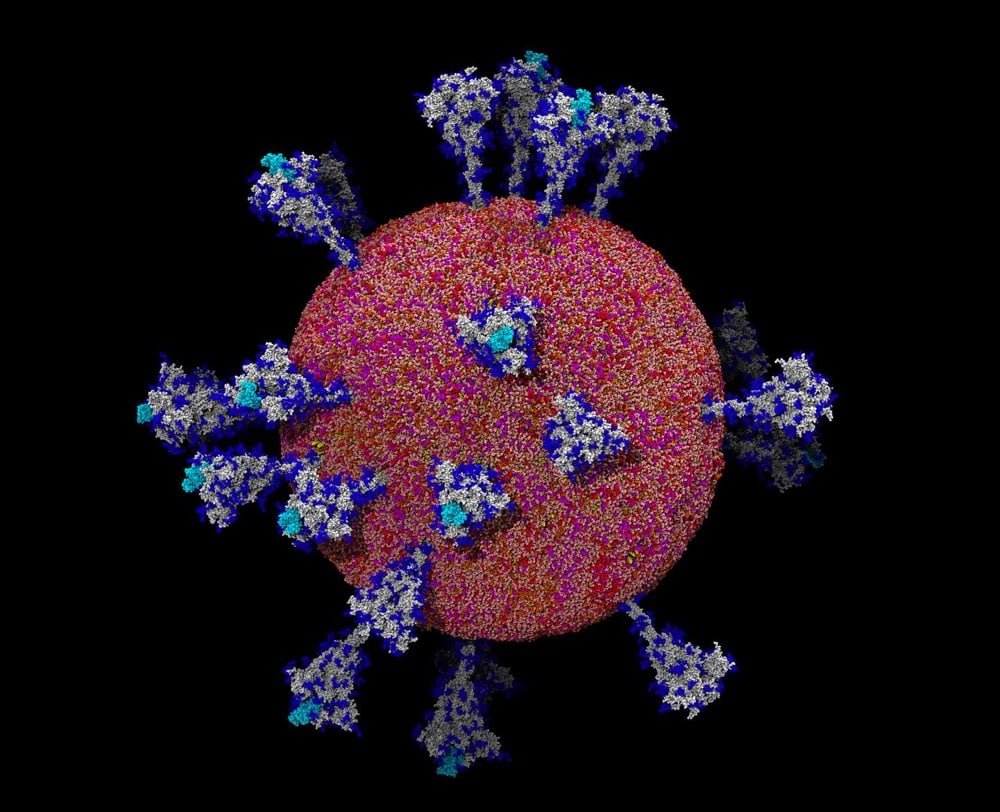
This is a great piece from Carl Zimmer about how much scientists have learned about SARS-CoV-2 through imaging, including how the virus works and prospects for treatment and a vaccine.
Thanks to the work of scientists like Dr. Li, the new coronavirus, known as SARS-CoV-2, is no longer a cipher. They have come to know it in intimate, atomic detail. They’ve discovered how it uses some of its proteins to slip into cells and how its intimately twisted genes commandeer our biochemistry. They’ve observed how some viral proteins throw wrenches into our cellular factories, while others build nurseries for making new viruses. And some researchers are using supercomputers to create complete, virtual viruses that they hope to use to understand how the real viruses have spread with such devastating ease.
I’ve been watching the lectures for MIT’s online Covid-19 class and the thing that has struck me most is just how much scientists have learned about the SARS-CoV-2 virus in such a short amount of time. To be clear, there are many things that they still do not understand about it (and viruses in general), but scientists know this thing upside down and backwards. The depth and breadth of their knowledge is so impressive and I wish more people were aware of it.
In an article that The Atlantic classifies as “politics” rather than “science” or “medicine”, Olga Khazan explores why, more than 8 months into the pandemic, Americans still have little idea about the safety of gathering with others indoors.
For months now, Americans have been told that if we want to socialize, the safest way to do it is outdoors, the better to disperse the droplets that spew from our mouths whenever we do anything but silently purchase grapefruit. But in many parts of the country, this is the last month that the weather will allow people to spend more than a few minutes outside comfortably. And next month, America will celebrate a holiday that is marked by being inside together and eating while talking loudly to old people.
In a nutshell, the lack of federal support/guidance/action is the main reason why people are still so confused about what safety measures to take to reduce their Covid risk:
Still, Ranney says, this [Covid risk] app is the kind of thing the federal government really should have developed by now. It’s odd that in a wealthy, industrialized country, a random researcher is the one designing a tool to keep citizens safe from public-health threats, using data she scraped from a newspaper.
One thing that Khazan doesn’t really get into is the whole aerosols thing, which in my mind is something that most people are still not familiar with, many local & state governments are not taking into account w/r/t recommended safety measures, and requires different risk guidance about the safety of the indoors than if we were just dealing with fomites & droplets. Again, from the excellent Time magazine piece by aerosol chemist Jose-Luis Jimenez:
When it comes to COVID-19, the evidence overwhelmingly supports aerosol transmission, and there are no strong arguments against it. For example, contact tracing has found that much COVID-19 transmission occurs in close proximity, but that many people who share the same home with an infected person do not get the disease. To understand why, it is useful to use cigarette or vaping smoke (which is also an aerosol) as an analog. Imagine sharing a home with a smoker: if you stood close to the smoker while talking, you would inhale a great deal of smoke. Replace the smoke with virus-containing aerosols, which behave very similarly, and the impact is similar: the closer you are to someone releasing virus-carrying aerosols, the more likely you are to breathe in larger amounts of virus. We know from detailed, rigorous studies that when individuals talk in close proximity, aerosols dominate transmission and droplets are nearly negligible.
If you are standing on the other side of the room, you would inhale significantly less smoke. But in a poorly ventilated room, the smoke will accumulate, and people in the room may end up inhaling a lot of smoke over time. Talking, and especially singing and shouting increase aerosol exhalation by factors of 10 and 50, respectively. Indeed, we are finding that outbreaks often occur when people gather in crowded, insufficiently ventilated indoor spaces, such as singing at karaoke parties, cheering at clubs, having conversations in bars, and exercising in gyms. Superspreading events, where one person infects many, occur almost exclusively in indoor locations and are driving the pandemic. These observations are easily explained by aerosols, and are very difficult or impossible to explain by droplets or fomites.
The science is there — it’s the lack of connection between scientists, public health experts & officials, and the government that continues to be a problem.
A few weeks ago during the Q&A session after his lecture for MIT’s online biology class about the pandemic, Dr. Anthony Fauci shared his expert opinion on when things might return to “normal” in the US. Here was my paraphrased tweet about it:
With a very effective vaccine ready in Nov/Dec, distributed widely, and if lots of people take it (i.e. the best case scenario), the earliest we could return to “normal life” in the world is the end of 2021.
At the New Yorker Festival earlier in the week, Michael Specter asked him about a return to normalcy and Fauci elaborated a bit more on this timeline (starts ~10:22 in the video).
When are we gonna get back to something that closely resembles, or is in fact, normal as we knew it?
We’re already making doses, tens and hundreds of millions of doses to be ready, first at least, in graded numbers at the end of the year in November/December. By the time we get to April, we likely will have doses to be able to vaccinate anybody who needs to be vaccinated. But logistically by the time you get everybody vaccinated, it likely will not be until the third or even the beginning of the fourth quarter of 2021.
So let’s say we get a 70% effective vaccine, which I hope we will get, but only 60% of the people get vaccinated. There are going to be a lot of vulnerable people out there, which means that the vaccine will greatly help us to pull back a bit on the restrictions that we have now to maintain good public health, but it’s not going to eliminate things like mask wearing and avoiding crowds and things like that.
So I think we can approach normality, but I don’t think we’re going to be back to normal until the end of 2021. We may do better than that; I hope so but I don’t think so.
Leaving aside what “normal” might mean and who it actually applies to,1 there’s some good news and bad news in there. The good news is, they’re already producing doses of the vaccine to be ready if and when the phase 3 trials are successful. Ramping up production before the trials conclude isn’t usually done because it’s a waste of money if the trials fail, but these vaccines are so critical to saving lives that they’re spending that money to save time. That’s great news.
The bad news is that we’re not even halfway through the pandemic in the best case scenario. We’re going to be wearing masks in public for at least another year (and probably longer than that). Large gatherings of people (especially indoors) will continue to be problematic — you know: movie theaters, concerts, clubs, bars, restaurants, schools, and churches — and folks staying within small pods of trusted folks will likely be the safest course of action.
A change in national leadership in both the executive branch and Senate could change the outlook for the better. We could get some normalcy back even without a vaccine through measures like a national mask mandate/distribution, a real national testing & tracing effort, taking aerosol transmission seriously, and easing the economic pressure to “open back up” prematurely. We’re never going to do as well as Vietnam or Taiwan, but I’d settle for Greece or Norway.
Update: In an interview posted yesterday, Johns Hopkins epidemiologist Dr. Caitlin Rivers gives her best guess at a return to normalcy:
Topol: When do you think we’ll see pre-COVID life restored?
Rivers: I wish I knew. I’m thinking toward the end of 2021. It’s really hard to say with any certainty. We should all be mentally prepared to have quite a bit ahead of us.
Back in June, in a post called Jesus Christ, Just Wear a Face Mask!, I presented a bunch of evidence and arguments for wearing face masks to prevent the spread of Covid-19. Even then it was pretty clear that masks were working. In piece published by Nature yesterday, Lynne Peeples summarizes what the data and science currently says about the effectiveness of wearing face masks. Here is her one-sentence summary:
To be clear, the science supports using masks, with recent studies suggesting that they could save lives in different ways: research shows that they cut down the chances of both transmitting and catching the coronavirus, and some studies hint that masks might reduce the severity of infection if people do contract the disease.
And importantly, even ardently pro-mask scientists agree that masks should be worn in conjunction with taking other precautions: limiting large gatherings, maintaining distance, limiting the time you spend indoors with others, etc.
Now streaming on Netflix, David Attenborough: A Life on Our Planet, a documentary about the 94-year-old broadcaster, naturalist, and international treasure.
In this unique feature documentary, titled David Attenborough: A Life On Our Planet, the celebrated naturalist reflects upon both the defining moments of his lifetime and the devastating changes he has seen. Coming to Netflix October 4 2020, the film addresses some of the biggest challenges facing life on our planet, providing a snapshot of global nature loss in a single lifetime. With it comes a powerful message of hope for future generations as Attenborough reveals the solutions to help save our planet from disaster.
In the trailer (embedded above), Attenborough says “I had the most extraordinary life. It’s only now that I appreciate how extraordinary.” In saying that, he’s speaking not only as a living legend whose long career in television and science has brought him nearly universal acclaim, but also as someone who can look back and see how recognizably and thoroughly the Earth has changed during his lifetime. The depletion of animal populations, the changing climate, the shifting habitats — he’s witnessed firsthand how much humans have fucked up the planet. We should listen to his testimony and suggestions for fixing what he calls “our greatest mistake”. I hope it’s not too late.
A recent study that looked at the brain patterns of crows when performing tasks found evidence that they “know what they know and can ponder the content of their own minds”, an attribute that was previously thought to exist only in humans and some monkeys.
The birds were aware of what they subjectively perceived, flash or no flash, correctly reporting what their sensory neurons recorded, Nieder told STAT. “I think it demonstrates convincingly that crows and probably other advanced birds have sensory awareness, in the sense that they have specific subjective experiences that they can communicate,” he said. “Besides crows, this kind of neurobiological evidence for sensory consciousness only exists in humans and macaque monkeys.”
(via kottke ride home)
In secrecy over the past several months, filmmaker Alex Gibney has been making a documentary film about the US government’s response to the Covid-19 pandemic called Totally Under Control. He and co-directors Ophelia Harutyunyan and Suzanne Hillinger interviewed “countless scientists, medical professionals, and government officials on the inside” to produce the film.
Academy Award-winning filmmaker Alex Gibney, directing with Ophelia Harutyunyan and Suzanne Hillinger, interrogates this question and its devastating implications in Totally Under Control. With damning testimony from public health officials and hard investigative reporting, Gibney exposes a system-wide collapse caused by a profound dereliction of Presidential leadership.
Gibney previously directed Enron: The Smartest Guys in the Room, Going Clear, and Zero Days (all excellent documentaries). The film comes out in theaters on October 13 and on Hulu on October 20.
A group of scientists who believe that WHO and the CDC are being too slow in acknowledging the role of aerosol transmission in spreading Covid-19 have written up a Google Doc of advice for the public: FAQs on Protecting Yourself from COVID-19 Aerosol Transmission.
The goal of these FAQs is to provide information to the general public in an efficient manner about how to prevent aerosol transmission of COVID-19, with the hope that this will allow more informed decision making by individuals or organizations. All of this information has been posted in Twitter and other forums, but can be difficult to find. Having multiple experts working together, and having the ability to update this information also improves its quality. These FAQs represent our best understanding at this time, and should always be similar or more stringent than information provided by CDC, WHO, and most regional & local health authorities. If your authority has a more stringent guideline than discussed here, follow that more stringent guideline.
The group was organized by chemist Jose-Luis Jimenez, who has been studying aerosols for 20 years. You may remember Jimenez from his excellent piece in Time magazine, where he used the analogy of smoke to explain aerosol transmission. Here’s a snippet from the FAQ, highlighting something I’ve been concerned about lately: people wearing face shields instead of masks and employees in stores not wearing masks behind plexiglass shields:
7.13. Are face shields and masks interchangeable?
No, face shields do not offer much protection against aerosols (also see this video), while masks do. Face shields are good for blocking ballistic droplets released by the wearer or that might fly into the wearer’s face when close to others. Face shields are considered a supplement to masks for partial eye protection (but less useful than closed glasses, as discussed above), but not a substitute for them.
7.14. Are plexiglass barriers helpful?
Plexiglass barriers are generally useful to avoid direct droplet infection and direct aerosol transmission whenever people are in close proximity and distance cannot be kept. Therefore, it is recommended to use them as a direct transmission suppression tool at such places, such as a supermarket checkout.
However, as aerosols follow the air movements indoors, the protective effects of the plexiglas barriers against aerosols will be limited. Plexiglas barriers alone are not a sufficient approach to protect against aerosol transmission. Their installation alone cannot protect against indoor aerosol transmission and should not be regarded as safe and sufficient protection.
MIT Technology Review’s Charlotte Jee interviewed Jimenez about the FAQ document.
We update the document all the time. We’re effectively having to be a little WHO or CDC. We’re saying the things that they should be saying. This is frustrating, but it’s the situation we find ourselves in. These organizations have been flat-out refusing to consider if aerosol transmission is important, which leaves people unprotected. So we feel it’s our duty to communicate directly with the public.
Right now, in my opinion as someone who has done a ton of reading about Covid-19, the most best accessible information on how individuals and societies can protect themselves and others during the pandemic (and why) is available in Jimenez’s Time article, Aaron Carroll’s NY Times piece about how to think about risk management, Zeynep Tufekci’s piece in the Atlantic about dispersion and superspreading, and now this Google Doc by Jimenez et al.
Zeynep Tufekci says that we are paying too much attention to the R value of SARS-CoV-2 (basically the measure of its contagiousness) and not nearly enough attention to the k value (“whether a virus spreads in a steady manner or in big bursts, whereby one person infects many, all at once”).
There are COVID-19 incidents in which a single person likely infected 80 percent or more of the people in the room in just a few hours. But, at other times, COVID-19 can be surprisingly much less contagious. Overdispersion and super-spreading of this virus is found in research across the globe. A growing number of studies estimate that a majority of infected people may not infect a single other person. A recent paper found that in Hong Kong, which had extensive testing and contact tracing, about 19 percent of cases were responsible for 80 percent of transmission, while 69 percent of cases did not infect another person. This finding is not rare: Multiple studies from the beginning have suggested that as few as 10 to 20 percent of infected people may be responsible for as much as 80 to 90 percent of transmission, and that many people barely transmit it.
We’ve known, or at least suspected, this about SARS-CoV-2 for awhile now — I linked to two articles about superspreading back in May and June — but Tufekci says we have not adjusted our thinking about what that means for prevention. We should be avoiding superspreading environments/events (“Avoid Crowding, Indoors, low Ventilation, Close proximity, long Duration, Unmasked, Talking/singing/Yelling”), doing backwards contact tracing, and rapid testing.
In an overdispersed regime, identifying transmission events (someone infected someone else) is more important than identifying infected individuals. Consider an infected person and their 20 forward contacts-people they met since they got infected. Let’s say we test 10 of them with a cheap, rapid test and get our results back in an hour or two. This isn’t a great way to determine exactly who is sick out of that 10, because our test will miss some positives, but that’s fine for our purposes. If everyone is negative, we can act as if nobody is infected, because the test is pretty good at finding negatives. However, the moment we find a few transmissions, we know we may have a super-spreader event, and we can tell all 20 people to assume they are positive and to self-isolate-if there is one or two transmissions, it’s likely there’s more exactly because of the clustering behavior. Depending on age and other factors, we can test those people individually using PCR tests, which can pinpoint who is infected, or ask them all to wait it out.
Part of the problem is that dispersion and its effects aren’t all that intuitive.
Overdispersion makes it harder for us to absorb lessons from the world because it interferes with how we ordinarily think about cause and effect. For example, it means that events that result in spreading and non-spreading of the virus are asymmetric in their ability to inform us. Take the highly publicized case in Springfield, Missouri, in which two infected hairstylists, both of whom wore masks, continued to work with clients while symptomatic. It turns out that no apparent infections were found among the 139 exposed clients (67 were directly tested; the rest did not report getting sick). While there is a lot of evidence that masks are crucial in dampening transmission, that event alone wouldn’t tell us if masks work. In contrast, studying transmission, the rarer event, can be quite informative. Had those two hairstylists transmitted the virus to large numbers of people despite everyone wearing masks, it would be important evidence that, perhaps, masks aren’t useful in preventing super-spreading.
The piece is an important read and interesting throughout: just read the whole thing.
For Kurzgesagt’s latest video, they explore the challenges the world faces in attempting to get the rate of climate change under control before it’s too late and how to get there.
Climate change is just too much. There is never any good news. Only graphs that get more and more red and angry. Almost every year breaks some horrible record, from the harshest heat waves to the most rapid glacier melt. It’s endless and relentless.
We have known for decades that rapid climate change is being caused by the release of greenhouse gases. But instead of reducing them, in 2019 the world was emitting 50% more CO2 than in the year 2000. And emissions are still rising. Why is that? Why is it so hard to just stop emitting these gases?
According to the video, global population growth and economic growth will be working against us over the next few decades and that increasing our energy efficiency and lowering emissions from energy sources are the main ways in which we will be able to slow things down. It’s worth noting that on the wizard vs. prophet continuum, this video is firmly in the wizard camp. That’s not wrong or bad; it’s just that other people have different ideas about how to combat climate change.
The breadth of scale of measurable objects in the universe — our distance from the most distant objects we can observe (billions of light years away) to particles measured in something called a yoctometer (1×10-24 meters) — is staggering to think about. That’s where the Universe in a Nutshell app comes in. Developed by Kurzgesagt & Wait But Why (both kottke.org favorites), you can use the app to quickly and easily zoom in and out through objects at all the scales of the universe, like quarks, DNA, cells, earthworms, Europe, Jupiter, the black hole at the center of our galaxy, the Crab Nebula, galaxies, and galaxy superclusters.


You can tap on any object you encounter to learn more about it, like an interactive Powers of Ten. I spent 20 minutes just now playing around and it’s really fun. You can download the app for $2.99 from the App Store or on Google Play.
To mark the release, Kurzgesagt made a video comparing the sizes of stars:
And Wait But Why’s Tim Urban wrote a post about the scales of objects: The Big and the Small.
In Search of a Flat Earth is a documentary essay by Folding Ideas’ Dan Olson that starts out talking about people who believe the Earth is flat (and why it’s so difficult to convince them otherwise) but then takes a sharp turn toward a more recent and much more worrying conspiracy theory, QAnon. Lots of interesting information and observations throughout.
See also QAnon, Conspiracy Theories, and the Rise of Magical Thinking.

A group of astronomers have announced that they’ve discovered evidence that there may be life in the atmosphere of Venus.
The astronomers, who reported the finding on Monday in a pair of papers, have not collected specimens of Venusian microbes, nor have they snapped any pictures of them. But with powerful telescopes, they have detected a chemical — phosphine — in the thick Venus atmosphere. After much analysis, the scientists assert that something now alive is the only explanation for the chemical’s source.
Some researchers question this hypothesis, and they suggest instead that the gas could result from unexplained atmospheric or geologic processes on a planet that remains mysterious. But the finding will also encourage some planetary scientists to ask whether humanity has overlooked a planet that may have once been more Earthlike than any other world in our solar system.
“This is an astonishing and ‘out of the blue’ finding,” said Sara Seager, a planetary scientist at the Massachusetts Institute of Technology and an author of the papers (one published in Nature Astronomy and another submitted to the journal Astrobiology). “It will definitely fuel more research into the possibilities for life in Venus’s atmosphere.”
Research biologist Adrian Smith, who specializes in insects, recently filmed a number of different types of flying insects taking off and flying away at 3200 frames/sec. Before watching, I figured I’d find this interesting — flying and slow motion together? sign me up! — but this video was straight-up mesmerizing with just the right amount of informative narration from Smith. There’s such an amazing diversity in wing shape and flight styles among even this small group of insects; I had to keep rewinding it to watch for details that I’d missed. Also, don’t miss the fishfly breaking the fourth wall by looking right at the camera while taking off at 6:07. I see you, my dude.
Smith has previously captured flying ants in slow motion and this globular springtail bug that spins through the air at more than 22,000 rpm. (via moss & fog)
Newer posts
Older posts



Socials & More