



George Lucas’ Special Edition of the Star Wars: Episode VII Trailer
What if George Lucas was making the new Star Wars movie instead of JJ Abrams? This recut trailer offers a glimpse of the cheesy CG madness.
So so good.

This site is made possible by member support. 💞
Big thanks to Arcustech for hosting the site and offering amazing tech support.
When you buy through links on kottke.org, I may earn an affiliate commission. Thanks for supporting the site!
kottke.org. home of fine hypertext products since 1998.
Beloved by 86.47% of the web.
What if George Lucas was making the new Star Wars movie instead of JJ Abrams? This recut trailer offers a glimpse of the cheesy CG madness.
So so good.
Here it is, the very first look at JJ Abrams’ new Star Wars movie.
Not ashamed to say I felt chills down my spine when the music kicked in. Please please please let this not suck.
Update: From the teaser, it’s a little early to tell whether Abrams is following these four rules to make Star Wars great again (1. The setting is the frontier. 2. The future is old. 3. The Force is mysterious. 4. Star Wars isn’t cute.) but there are hints of 1&2 in there…they’re still driving those old rust-bucket X-Wings and wearing beat-up helmets.
In his recent book, How Star Wars Conquered the Universe, Chris Taylor tells the story of how avant garde cinema fan George Lucas built one of the biggest movie franchises ever.
How did a few notes scribbled on a legal pad in 1973 by George Lucas, a man who hated writing, turn into a four billion dollar franchise that has quite literally transformed the way we think about entertainment, merchandizing, politics, and even religion? A cultural touchstone and cinematic classic, Star Wars has a cosmic appeal that no other movie franchise has been able to replicate. From Jedi-themed weddings and international storm-trooper legions, to impassioned debates over the digitization of the three Star Wars prequels, to the shockwaves that continue to reverberate from Disney’s purchase of the beloved franchise in 2012, the series hasn’t stopped inspiring and inciting viewers for almost forty years. Yet surprisingly little is known about its history, its impact — or where it’s headed next.
(via mr)

Jessica Hische and Font Bureau have teamed up to offer the typeface Hische designed for Wes Anderson’s Moonrise Kingdom. Meet Tilda (great name). Art of the Title interviewed Hische about the typeface last year.
A look at the sound design of Interstellar, including some of the cool rigs they built to record sounds for the movie, including a truck driving through a corn field, sand hitting the outside of a car, and robots walking.
(via devour)
I have not seen the movie yet (Alan Turing biopic starring Benedict Cumberbatch and Keira Knightley) but the Alexandre Desplat soundtrack is worth a listen.
Also available on Spotify or Amazon.
Whoa, how did I miss this? Steve Carell, check. Channing Tatum, check. Mark Ruffalo, check. Based on a true story, check. Positive reviews, check.
Currently on the to-do list: watch every single movie produced by Annapurna Pictures, a production and distribution company founded by Megan Ellison, who is Oracle founder Larry Ellison’s daughter. Look at this list of directors they’re working with: Kathryn Bigelow, Paul Thomas Anderson, Spike Jonze, David O. Russell, Richard Linklater.
Nora Ephron’s movie Julie & Julia is based on a book by Julie Powell about her making every recipe in Julia Child’s Mastering the Art of French Cooking. Some genius took the movie and cut all the Julie parts out of it, leaving just a movie about the life of Julia Child starring Meryl Streep.
Update: Well, that was fast…got taken down already.
Update: Looks like someone did a similar cut three months ago, Julia Sans Julie:
Let’s see how long this one lasts. (via ★interesting & @ChadwickSevern)
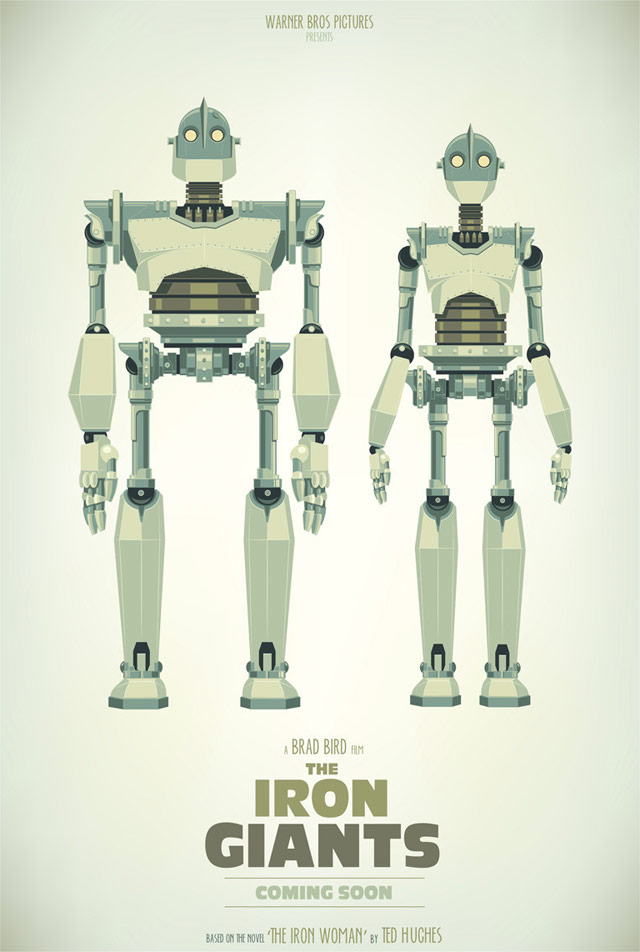
I am loving these posters for non-existent movie sequels, but the names might be even better. A sampling:
Fight Club: The 2nd Rule
Bigger Trouble in Little China
Spaceballs III: The Search for Spaceballs II
Titanic 2: Above Zero
Prints are available for all of these. (via @cabel)
Kip Thorne is a theoretical physicist who did some of the first serious work on the possibility of travel through wormholes. Several years ago, he resigned as the Feynman Professor of Theoretical Physics from Caltech in part to make movies. To that end, Thorne acted as Christopher Nolan’s science advisor for Interstellar. As a companion to the movie, Thorne wrote a book called The Science of Interstellar.
Yet in The Science of Interstellar, Kip Thorne, the physicist who assisted Nolan on the scientific aspects of Interstellar, shows us that the movie’s jaw-dropping events and stunning, never-before-attempted visuals are grounded in real science. Thorne shares his experiences working as the science adviser on the film and then moves on to the science itself. In chapters on wormholes, black holes, interstellar travel, and much more, Thorne’s scientific insights — many of them triggered during the actual scripting and shooting of Interstellar — describe the physical laws that govern our universe and the truly astounding phenomena that those laws make possible.
Wired has a piece on how Thorne and Nolan worked together on the film. Phil Plait was unimpressed with some of the science in the movie, although he retracted some of his criticism. If you’re confused by the science or plot, Slate has a FAQ.
Update: Well, well, the internet’s resident Science Movie Curmudgeon Neil deGrasse Tyson actually liked the depiction of science in Interstellar. In particular: “Of the leading characters (all of whom are scientists or engineers) half are women. Just an FYI.” (via @thoughtbrain)
Update: What’s wrong with “What’s Wrong with the Science of Movies About Science?” pieces? Plenty says Matt Singer.
But a movie is not its marketing; regardless of what ‘Interstellar”s marketing said, the film itself makes no such assertions about its scientific accuracy. It doesn’t open with a disclaimer informing viewers that it’s based on true science; in fact, it doesn’t open with any sort of disclaimer at all. Nolan never tells us exactly where or when ‘Interstellar’ is set. It seems like the movie takes place on our Earth in the relatively near future, but that’s just a guess. Maybe ‘Interstellar’ is set a million years after our current civilization ended. Or maybe it’s set in an alternate dimension, where the rules of physics as Phil Plait knows them don’t strictly apply.
Or maybe ‘Interstellar’ really is set on our Earth 50 years in the future, and it doesn’t matter anyway because ‘Interstellar’ is a work of fiction. It’s particularly strange to see people holding ‘Interstellar’ up to a high standard of scientific accuracy because the movie is pretty clearly a work of stylized, speculative sci-fi right from the start.
(via @khoi)
Neill Blomkamp (District 9, Elysium) is coming out with a new film in the spring, Chappie. Chappie is a robot who learns how to feel and think for himself. According to Entertainment Weekly, two of the movie’s leads are Ninja and Yo-Landi Vi$$er of Die Antwoord, who play a pair of criminals who robotnap Chappie.
Discussions of AI are particularly hot right now (e.g. see Musk and Bostrom) and filmmakers are using the opportunity to explore AI in film, as in Her, Ex Machina, and now Chappie.
Blomkamp, with his South African roots, puts a discriminatory spin on AI in Chappie, which is consistent with his previous work. If robots can think and feel for themselves, what sorts of rights and freedoms are they due in our society? Because right now, they don’t have any…computers and robots do humanity’s bidding without any compensation or thought to their well-being. Because that’s an absurd concept, right? Who cares how my Macbook Air feels about me using it to write this post? But imagine a future robot that can feel and think as well as (or, likely, much much faster than) a human…what might it think about that? What might it think about being called “it”? What might it decide to do about that? Perhaps superintelligent emotional robots won’t have human feelings or motivations, but in some ways that’s even scarier.
The whole thing can be scary to think about because so much is unknown. SETI and the hunt for habitable exoplanets are admirable scientific endeavors, but humans have already discovered alien life here on Earth: mechanical computers. Boole, Lovelace, Babbage, von Neumann, and many others contributed to the invention of computing and those machines are now evolving quickly, and hardware and software both are evolving so much faster than our human bodies (hardware) and culture (software) are evolving. Soon enough, perhaps not for 20-30 years still but soon, there will be machines among us that will be, essentially, incredibly advanced alien beings. What will they think of humans? And what will they do about it? Fun to think about now perhaps, but this issue will be increasingly important in the future.
Syfy is doing a 2001: A Space Odyssey sequel miniseries based on Arthur C. Clarke’s final book in his four-book Space Odyssey series, 3001: The Final Odyssey. Here’s the book’s synopsis:
One thousand years after the Jupiter mission to explore the mysterious Monolith had been destroyed, after Dave Bowman was transformed into the Star Child, Frank Poole drifted in space, frozen and forgotten, leaving the supercomputer HAL inoperable. But now Poole has returned to life, awakening in a world far different from the one he left behind — and just as the Monolith may be stirring once again
Ridley Scott is executive producing and Stuart Beattie (Pirates of the Caribbean, Collateral) will do the heavy adaptational lifting.
A new short episode of Every Frame a Painting, in which Tony Zhou talks about how to show character choice in movies without using dialogue. His main example is Snowpiercer. Spoilers ahoy.
The directorial debut of Alex Garland, screenwriter of Sunshine and 28 Days Later, looks interesting.
Ex Machina is an intense psychological thriller, played out in a love triangle between two men and a beautiful robot girl. It explores big ideas about the nature of consciousness, emotion, sexuality, truth and lies.
(via http://devour.com/)
From Silence of the Lambs (#1) to To Kill A Mocking Bird (#9) to Blade Runner (#28), these are the 50 best book-to-movie adaptations ever, compiled by Total Film.
Somehow absent is Spike Jonze’s Adaptation and I guess 2001 was not technically based on a book, but whatevs. The commenters additionally lament the lack of Requiem for a Dream, Gone with the Wind, The French Connection, Rosemary’s Baby, Last of the Mohicans, and The Wizard of Oz.
Tony Zhou’s excellent series on filmmaking, Every Frame a Painting, has become a much-watch for me. Here’s the latest one, a short look at a single scene from Silence of the Lambs in which Zhou asks: Who Wins the Scene?
From CineFix, their top ten slow motion sequences of all time.
Includes scenes from The Matrix, Hard Boiled, Reservoir Dogs, and The Shining. But no Wes Anderson!?! *burns down internet* (via @DavidGrann)
A short and sweet pixel art tribute to legendary animator and director Hayao Miyazaki.
See also 8-bit Ghibli.
From David Fear at Rolling Stone, an appreciation of the “Genius of Idiocracy”, the smartest stupid movie ever made.
This is Judge’s vision of the future — a landscape of staggering vulgarity and franchising run amuck, where Carl’s Jr. can take your kids if you can’t pay for their “big-ass fries,” consumers eat tubs of butter while watching the Masturbation Channel and the President is a porn star/five-time TV wrestling champion. As he mentions in the interview below (jump to the 27-and-a-half mark), Judge was in line at Disneyland with his family when two women, each with kids in strollers, started screaming obscenities at each other. “I [started] thinking, what if the movie 2001, instead of the monolith and everything being pristine and advanced…what if it was The Jerry Springer Show and giant WalMarts?” With basic human intelligence now bred out of existence, the profoundly stupid have inherited the earth and they’ve turned it into both a giant, poorly run superstore and an Orwellian dystopia sponsored by Olive Garden.
Counterpoint by Matt Novak at Paleofuture: Idiocracy Is a Cruel Movie And You Should Be Ashamed For Liking It.
What’s so wrong with this thinking? Unlike other films that satirize the media and the soul-crushing consequences of sensationalized entertainment (my personal favorite being 1951’s Ace in the Hole), Idiocracy lays the blame at the feet of an undeserved target (the poor) while implicitly advocating a terrible solution (eugenics). The movie’s underlying premise is a fundamentally dangerous and backwards way to understand the world.
If you haven’t seen it, decide for yourself and watch the film on Amazon. (via @khoi)
In a local Chicago TV segment from 1980, here’s film critic Gene Siskel reviewing The Empire Strikes Back.
Interesting that he spends most of his time commenting on the special effects. At the time of this review, Siskel had been doing a show with Roger Ebert called Sneak Previews, but they seemed to have missed reviewing the original Star Wars or Empire on the show. Ebert reviewed Empire in 1997, giving it four stars and calling it “the best of the three Star Wars films”.
“The Empire Strikes Back” is the best of three Star Wars films, and the most thought-provoking. After the space opera cheerfulness of the original film, this one plunges into darkness and even despair, and surrenders more completely to the underlying mystery of the story. It is because of the emotions stirred in “Empire” that the entire series takes on a mythic quality that resonates back to the first and ahead to the third. This is the heart.
The film was made in 1980 with full knowledge that “Star Wars” had become the most successful movie of all time. If corners were cut in the first film’s budget, no cost was spared in this one: It is a visual extravaganza from beginning to end, one of the most visionary and inventive of all films.
(via devour)

Over at Trivia Happy, Phil Edwards interviewed Ellen Lampl, who designed the logos for Mike Judge’s underrated Idiocracy.
Some logos came from the script, while some came from the designers’ brainstorming sessions. Brawndo and Carl’s Jr. were written, while Lampl made logos for companies like Nastea and Fedexx once the overall look was approved. For Lampl, it was a great release, because “coming from the past constraints of advertising, it was cathartic to have the liberty to be bawdy and irreverent. Making everything ridiculously over-emphasized with bright colors, outlines upon outlines, and exaggerated drop shadows was my personal jab at the world of branding and in-your-face typography.”
Tony Zhou of Every Frame a Painting looks at the constraints David Fincher chooses to operate under while shooting a film. For instance, he very rarely uses hand-held cameras.
The last half of the video featuring a breakdown of how some of Fincher’s scenes were shot is fascinating.
The soundtrack for David Fincher’s adaptation of Gone Girl is out and as with his last two films (The Social Network, The Girl with the Dragon Tattoo), the music is by Trent Reznor and Atticus Ross.
Whenever the words “Reznor”, “Fincher”, “Atticus”, and “soundtrack” get into a sentence together, you know it’s good news for your earholes. (via @arainert)
ps. Speaking of Fincher, he spoke to Disney about directing a Star Wars movie and had an interesting take on the original trilogy:
I always thought of Star Wars as the story of two slaves [C-3PO and R2-D2] who go from owner to owner, witnessing their masters’ folly, the ultimate folly of man.
I somehow didn’t know or forgot that PT Anderson was doing a movie based on Thomas Pynchon’s Inherent Vice. It turns out he totally is and here’s the first trailer:
That looks entirely goofy and good.
In 2011, Steven Soderbergh revealed he’d repeatedly watched Raiders of the Lost Ark in black & white. Now he’s released a full-length version of the film in b&w, with no dialogue and an alternate soundtrack (Reznor and Ross’s score to The Social Network) so that you can focus on how the film is constructed visually.
So I want you to watch this movie and think only about staging, how the shots are built and laid out, what the rules of movement are, what the cutting patterns are. See if you can reproduce the thought process that resulted in these choices by asking yourself: why was each shot — whether short or long — held for that exact length of time and placed in that order? Sounds like fun, right? It actually is. To me. Oh, and I’ve removed all sound and color from the film, apart from a score designed to aid you in your quest to just study the visual staging aspect. Wait, WHAT? HOW COULD YOU DO THIS? Well, I’m not saying I’m like, ALLOWED to do this, I’m just saying this is what I do when I try to learn about staging, and this filmmaker forgot more about staging by the time he made his first feature than I know to this day (for example, no matter how fast the cuts come, you always know exactly where you are — that’s high level visual math shit).
The Shawshank Redemption came out 20 years ago and promptly bombed. Now it’s one of the most popular movies of all time. Here’s how it came to be made.
Filming on location is often something to be endured, and Shawshank’s schedule was particularly brutal: workdays were 15 to 18 hours, six days a week, over three humid months inside the former Ohio State Reformatory, in Mansfield, and on nearby constructed sets, which included the huge cellblock. “We were lucky to have Sundays off,” says Darabont.
A bakery in Mansfield now sells Bundt-cake replicas of the Gothic prison, which these days is a tourist attraction that draws Shawshank pilgrims. But in 1993 the defunct penitentiary-closed three years earlier for inhumane living conditions-“was a very bleak place,” according to Darabont. Robbins adds, “You could feel the pain. It was the pain of thousands of people.” The production employed former inmates who shared personal stories similar to those in Shawshank’s script, “in terms of the violence of the guards and throwing people off the top of cellblocks,” says Deakins.
Robbins remembers “going to that place inside for three months. It was never depressing, because Andy had this hope inside. But it was, at times, dark because of the situations that the character goes through.” Deakins confirms that working on the film was “a very intense situation. Sometimes the performances really affected me while I was shooting it.” The scene that gave Deakins “a tingle down the spine” is also Robbins’s favorite: the prisoners drinking beer on the sunny license-plate-factory roof. Coming more than a half an hour into the movie-and two years into Andy’s sentence-it’s the first bright spot in a film heretofore gray in palette and tone. Andy risks being thrown off the roof by Captain Hadley in order to procure a few “suds” for his fellow prisoners-a moment when the character shifts from victim to burgeoning legend. That Andy himself doesn’t drink is beside the point.
The scene was shot over a “hard, hard day,” says Freeman. “We were actually tarring that roof. And tar doesn’t stay hot and viscous long. It tends to dry and harden, so you’re really working. For the different setups you had to keep doing it over and over and over and over and over.”
I was one of the few who saw Shawshank in the theater (I watched at least two or three movies a week back in those days) and loved it immediately. (via @aaroncoleman0)
Amidala friendzones Anakin, Obi-Wan hunts for drugs, and Jango Fett pumps the bass in this hilarious Auralnauts reimagining of Star Wars: Attack of the Clones.
You may have also seen their recent video of the Throne Room scene at the end of Star Wars without John Williams’ score (reminiscent of these musicless musicvideos) or Bane’s outtakes from The Dark Knight Rises. Still champion though: bad lip reading of NFL players. (via @aaroncoleman0)
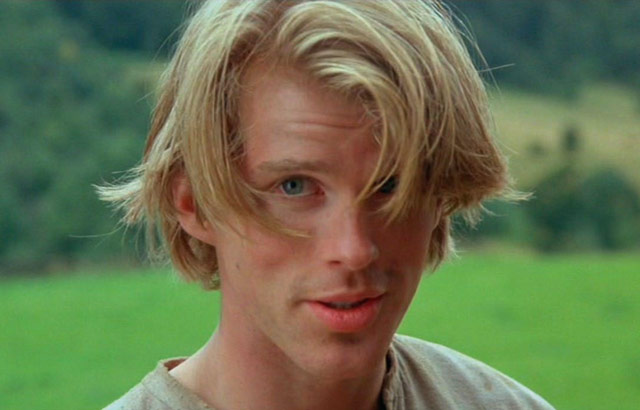
Actor Cary Elwes (Westley, The Dread Pirate Roberts) has written a book about the making of the Princess Bride, As You Wish: Inconceivable Tales from the Making of The Princess Bride.
From actor Cary Elwes, who played the iconic role of Westley in The Princess Bride, comes a first-person account and behind-the-scenes look at the making of the cult classic film filled with never-before-told stories, exclusive photographs, and interviews with costars Robin Wright, Wallace Shawn, Billy Crystal, Christopher Guest, and Mandy Patinkin, as well as author and screenwriter William Goldman, producer Norman Lear, and director Rob Reiner.
The Princess Bride isn’t currently streaming on Netflix, but you can rent it from Amazon.
David Gelb, the director of Jiro Dreams of Sushi, is going to be doing a six-part documentary series for Netflix about “culinary artists”.
Chefs featured in the docu-series are: Ben Shewry (of Attica Restaurant in Melbourne, Australia), Magnus Nilsson (Fäviken in Järpen Sweden), Francis Mallmann (El Restaurante Patagonia Sur in Buenos Aires, Argentina), Niki Nakayama (N/Naka Restaurant in Los Angeles), Dan Barber (Blue Hill in New York City and Blue Hill at Stone Barns in Pocantico Hills, N.Y.) and Massimo Bottura (Osteria Francescana in Modena, Italy).
Sounds a lot like a Jiro Dreams series. Looking forward to it. (via @MattH)
Update: The trailer for this series, Chef’s Table, is now out:
That looks fantastic. Available on Netflix on April 26th.
Erik Vance on why real working archaeologists don’t care for Indiana Jones.
“Oh God,” he groans, “Don’t even go there. Indiana Jones is not an archeologist.”
It’s not surprising that academics — hell bent on taking the fun out of everything — would hate our beloved and iconic movie version of them. But Canuto is no killjoy. His ironic tone and acerbic wit seem honed by long boring days in the sun. So I bite. I quickly learn that there’s a good reason why most every archeologist on Earth hates Indy. And that they might have a point. Because Jones isn’t an archeologist at all.
“That first scene, where he’s in the temple and he’s replacing that statue with a bag of sand — that’s what looters do,” Canuto says, grinning. “[The temple builders] are using these amazing mechanisms of engineering and all he wants to do is steal the stupid gold statue.”
Makes you wonder if Jones was one of the Raiders referred to in the title of the first movie. (via @riondotnu)
Socials & More