kottke.org posts about food
An epic post on MetaFilter about the original Iron Chef, the cooking show that aired in Japan from 1993-1999. YouTube links to every show are included, so there’s your holiday viewing all sorted. Iron Chef is my all-time favorite food show. I learned a lot about cooking watching it.
At Serious Eats, Kenji Lopez-Alt turned 32 pounds of flour and other ingredients into more than 1500 cookies and in the process discovered how to make the perfect chocolate chip cookie.
You see, I’ve never been able to get a chocolate chip cookie exactly the way I like. I’m talking chocolate cookies that are barely crisp around the edges with a buttery, toffee-like crunch that transitions into a chewy, moist center that bends like caramel, rich with butter and big pockets of melted chocolate. Cookies with crackly, craggy tops and the complex aroma of butterscotch. And of course, that elusive perfect balance between sweet and salty.
Some have come close, but none have quite hit the mark. And the bigger problem? I was never sure what to change in order to get what I want. Cookies are fickle and the advice out there is conflicting. Does more sugar make for crisper cookies? What about brown versus white? Does it matter how I incorporate the chocolate chips or whether the flour is blended in or folded? How about the butter: cold, warm, or melted?
So many questions to ask and answers to explore! I made it my goal to test each and every element from ingredients to cooking process, leaving no chocolate chip unturned in my quest for the best. 32 pounds of flour, over 100 individual tests, and 1,536 cookies later, I had my answers.
Dang, this is like The Power Broker for baked goods, a cookie magnum opus.
Update: Back in 2007, my wife took a different approach to making the perfect chocolate chip cookie: she averaged the ingredients from 12 of the best cookie recipes she could find. The averaged recipe reads, in part:
2.04 cups all-purpose flour
0.79 tsp. salt
0.79 tsp. baking soda
0.805 stick unsalted butter, softened to room temperature
0.2737 stick unsalted butter, cold
0.5313 stick unsalted butter, melted
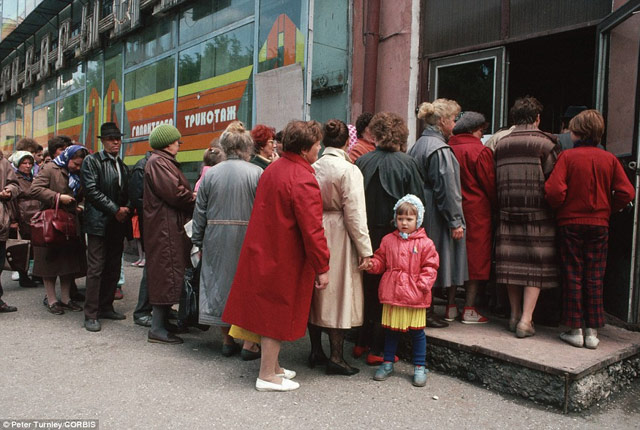
People waiting in line for food in the Soviet Union in the late 1980s:
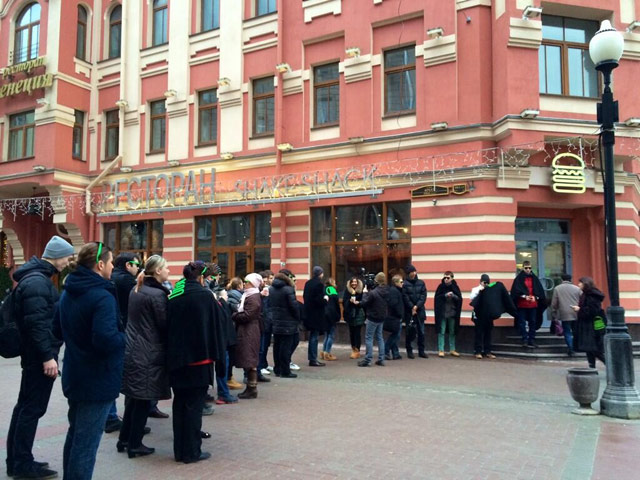
The opening day line for the newest outpost of the Shake Shack in Moscow:
That’s nothing, though, compared to the line to get into the first McDonald’s in the Soviet Union, which opened in Moscow in 1990.
A year later in Moscow, an estimated 1.6 million people turned out to see Metallica in concert. Look at all those people:
People are freaked out about the availability of sriracha sauce because a judge in California halted shipments of the trendy condiment until mid-January because of health concerns.
According the LA Times, the California Department of Public Health is enforcing a 30-day hold on the company’s products because no ingredients in their sauces are cooked. The idea is that the hold “helps ensure the sauce is free of harmful microorganisms for the duration of its shelf life” explains a DOH rep. While Huy Fong Foods expects shipments to resume normally following the hold, this is extremely bad news for distributors who are stuck without Sriracha.
But while the Huy Fong’s rooster sauce will be unavailable for awhile, plenty of other companies make sriracha…it’s like thinking you’ll have to go shoeless in the snow because you can’t buy Nikes for a month. For instance, try some of the other selections from this Serious Eats taste test from earlier this year. The Shark brand is even available on Amazon and will arrive in time for you to make your famous Volcanic Pigs in a Blanket for New Year’s Eve.
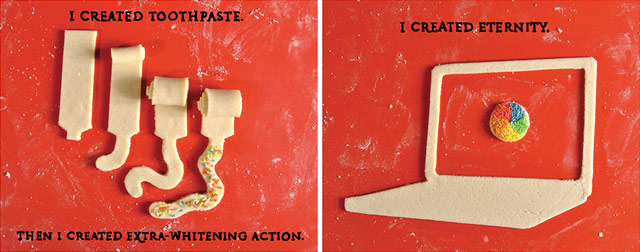
Christoph Niemann uses cookie dough, cookie cutters, and sprinkles to recreate the Bible’s book of Genesis. More or less.
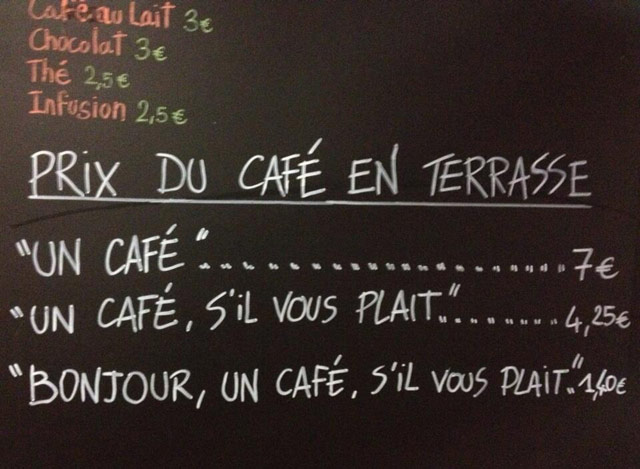
A cafe in Nice, France charges rude customers five times more for a cup of coffee than those who say hello and please.
“A coffee” will set you back €7, according to the sign, while “a coffee please” is a little more affordable, at €4.25.
If you want keep your expenses down, and stay friends with your local barista, however, the best option is “Hello, a coffee please,” which will only cost you €1.40.
The manager says that although the pricing scheme has never been enforced, customer civility is up. Cheekiness is on the rise as well:
“Most of my customers are regulars and they just see the funny side and exaggerate their politeness,” he said, adding “They started calling me ‘your greatness’ when they saw the sign.”
(via eater)
The Rolling Stones favorite American dish is something the band invented called Hot Dogs on the Rocks:
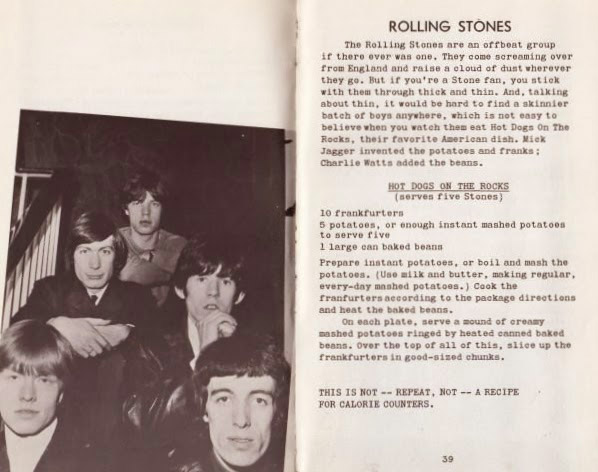
10 frankfurters
5 potatoes, or enough instant mashed potatoes to serve five
1 large can baked beans
Prepare instant mashed potatoes, or boil and mash the potatoes. (Use milk and butter, making regular, every-day mashed potatoes.) Cook the frankfurters according to the package directions and heat the baked beans.
On each plate, serve a mound of creamy mashed potatoes ringed by heated canned baked beans. Over all the top of this, slice up the frankfurters in good-sized chunks.
Emily from Dinner is Served made some Hot Dogs on the Rocks; this is what the finished product looks like:
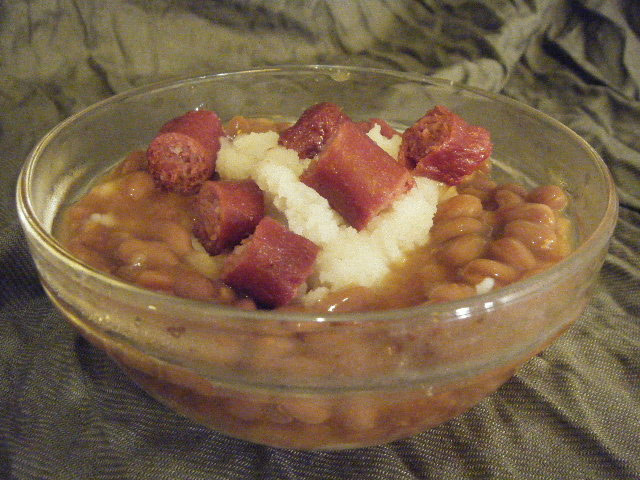
The recipe is from a 1967 “scene-makers cook book” called Singers & Swingers in the Kitchen (at Amazon). In addition to the Stones’ contribution, the book contained recipes like Paul Anka’s Party Spaghetti, Crepes Suzette by Liza Minelli, Leonard Nimoy’s Cold Soup Nimoy, and Barbra Streisand’s Instant Coffee Ice Cream. I dunno…I think I’d take burgers from Sinatra, Dean Martin, or even Hemingway over any of this celebrity fare. (via if charlie parker was a gunslinger)
From All-You-Can-Eat Press in Brooklyn, the New York Ramen Map.
Attention noodle lovers: this is your lucky day! Our third publication-the New York Ramen Map-is here !! It features 33 of New York’s most interesting and delicious noodle shops, plus a special glossary and regional map of ramen in Japan.
Not sure I see my favorite place on there. Same folks also do a New York Doughnut Map and a New York Burger Map.
This year’s allocation of Pappy Van Winkle’s cult bourbon was recently released. There’s never enough supply to meet demand, which means two things: lines rivaling iPhone release day queues and high resale prices.

On Craigslist in NYC, bottles of Pappy are for sale for hundreds and even thousands of dollars. One seller is offering a bottle of Pappy Van Winkle 23 Year for $1,250…that’s right around $80 for each 1.5 oz pour (without any markup).
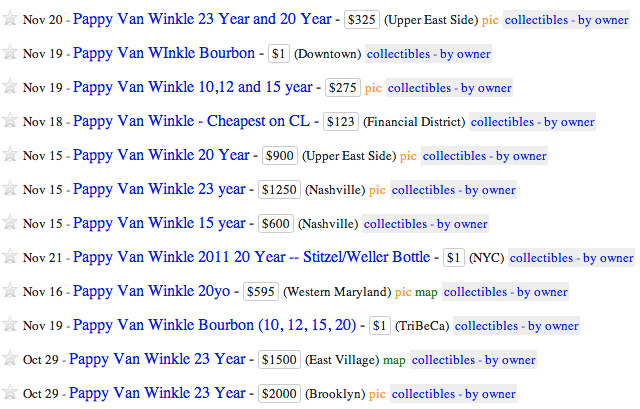
Luckily, there are some close-but-not-quite alternatives. As this article on the bourbon family tree notes, the W.L. Weller 12 Year contains the same whiskey as Pappy 15 Year, but aged three fewer years. It can be readily found online for around $26 a bottle. To bump it perhaps a little closer to actual, Bourbonr has concocted what they call Poor Man’s Pappy:
Pick up a bottle of both W.L. Weller 12 (90 proof) and Old Weller Antique 107 (107 proof). They will cost around $20-$30 each. Start off with a 50:50 mixture of the two Bourbons. The easiest way to do this is with a digital scale. If you don’t have a scale just add a tablespoon from both Bourbons to your glass. With a 50:50 ratio you have a 98.5 proof delicious Bourbon.
Next, try a different ratio. Try mixing 60:40 Antique to 12. The Bourbon blend is now 100.2 proof and much closer in taste to the 107 proof Pappy 15.
Anyone else tried this? Thoughts?
A chart of where many varieties of bourbon come from, along with five things you can learn from the chart.

Pappy Van Winkle is frequently described by both educated and uneducated drinkers as the best bourbon on the market. It is certainly aged for longer than most premium bourbons, and has earned a near hysterical following of people scrambling to get one of the very few bottles that are released each year. Of the long-aged bourbons, it seems to be aged very gently year-to-year, and this recommends it enormously. But if you, like most people, can’t find Pappy, try W. L. Weller. There’s a 12 year old variety that retails for $23 around the corner. Pappy 15-year sells for $699-$1000 even though it’s the exact same liquid as the Pappy (same mash bill, same spirit, same barrels); the only difference is it’s aged 3 years less.
The chart is taken from the Kings County Distillery Guide to Urban Moonshining.
Written by the founders of Kings County Distillery, New York City’s first distillery since Prohibition, this spirited illustrated book explores America’s age-old love affair with whiskey. It begins with chapters on whiskey’s history and culture from 1640 to today, when the DIY trend and the classic cocktail craze have conspired to make it the next big thing. For those thirsty for practical information, the book next provides a detailed, easy-to-follow guide to safe home distilling, complete with a list of supplies, step-by-step instructions, and helpful pictures, anecdotes, and tips.
(via df)
Felix Salmon shares perhaps the most reliable technique for turning money into happiness: buying and drinking expensive wine.
But here’s the trick: if you can’t buy happiness by spending more money on higher quality, then you can buy happiness by spending money taking advantage of all the reasons why people still engage in blind tastings, despite the fact that they are a very bad way to judge a wine’s quality. If you know what the wine you’re tasting is, if you know where it comes from, if you know who made it, if you’ve met the winemaker, and in general, if you know how expensive it is — then that knowledge deeply affects — nearly always to the upside — the way in which you taste and appreciate the wine in question.
From the Indiana Daily Student, the last days in the life of a Waffle House in Bloomington, Indiana.
Most of the students had stopped visiting years ago. The smoking ban forced out the puffers. Many of the regulars grew so old that they died or went to nursing homes.
Once Bud decided to close, it all slipped away even faster. Some of his staff had taken other jobs. The gumballs emptied out of the shiny red machine. No one bothered to mark the white board with the daily special.
They would close at precisely 3 p.m. Bud checked his watch, ignoring the broken wall clock, its hands frozen for more years than he could remember, stuck in time.
It suited the place.
Care of Google Maps, here’s the Waffle House before it got torn down. (via unlikely words)
Real Kitchen, a small Chicago eatery that mostly does take-out food, dressed up as Michelin 3-star Alinea for Halloween. Some genuine LOLs here, especially the table-side dessert to-go.
Hmm, this looks interesting: an upcoming book on the science of booze written by Adam Rogers.
In Proof, Adam Rogers reveals alcohol as a miracle of science, going deep into the pleasures of making and drinking booze-and the effects of the latter. The people who make and sell alcohol may talk about history and tradition, but alcohol production is really powered by physics, molecular biology, organic chemistry, and a bit of metallurgy-and our taste for those products is a melding of psychology and neurobiology.
Proof takes readers from the whisky-making mecca of the Scottish Highlands to the oenology labs at UC Davis, from Kentucky bourbon country to the most sophisticated gene-sequencing labs in the world — and to more than one bar — bringing to life the motley characters and evolving science behind the latest developments in boozy technology.
Rogers wrote the piece about the mystery whiskey fungus I linked to a couple of years ago.
On the occasion of leaving New York, Rebecca Flint Marx writes about one of her favorite New York City places (Russ & Daughters) and a particular counterman there, Paul.
Being a regular is a funny thing in a big city. Outside, you’re just an anonymous schmo. But if you come inside often enough, each visit starts to feel like a family reunion of sorts; like the extended members of your biological family, the people you encounter will likely be happy enough to see you, though they probably have little idea of who you actually are as a person. But there’s a beauty in deciding how much of yourself to offer as part of the general exchange of money and goods: You can be the thoughtfully curated version of you — the one who always smiles and never has any problems. The one who is a good person simply because she says “please” and “thank you,” exchanges salty banter with the cantankerous counterman, and bakes a cake for the Yom Kippur rush, as I started doing for the staff a few years ago.
What a lovely piece. See also the joys of being a regular.
You pull up to the fast-food drive-through window and pull out your wallet. But the cashier tells you to put your money away because the person in the car in front of you already paid for your meal. For some reason, that’s been happening to more and more people.
Whereas paying it forward in drive-throughs occurred maybe once or twice a year a decade ago, now fast-food operators said it might happen several times a day.
Last December, 228 consecutive cars paid it forward at a fast food joint in Winnipeg. According to one woman who pays it forward at least once a week:
It’s about giving, and letting people see not everybody is bad, and there are nice people out there and maybe we can turn it around.
Pretty cool. But these folks ought to pay forward some fruits and vegetables once in a while.
Here’s how Balthazar, one of Manhattan’s busiest and most-beloved restaurants, serves 1500 meals every single day.
Roughly one in 10 people who enter Balthazar orders the steak frites. It is far and away the restaurant’s best-selling dish, and Balthazar can sell as many as 200 on a busy day. A plate of steak and potatoes requires a tremendous input of labor if you’re going to charge $38 for it. At a smaller restaurant, cooks are typically responsible for setting up their own mise-en-place — preparing food for their stations — before each service begins, but at Balthazar, things are necessarily more atomized. The fries, for example, go through numerous steps of prep, done by a few different people, before they wind up on a plate.
Step 1 begins at about 6:30 a.m., when Diogene Peralta and Ramon Alvino, the prep cooks in charge of potatoes, each grab a 50-pound case of GPODs, from the Idaho company that sources Russet Burbank potatoes, known for their consistency, and place a massive plastic tub on the floor behind them. This morning, Alvino is flying, his left hand’s fingers imperceptibly rotating the potato between upward strokes of the peeler, blindly flipping the naked spuds over his shoulder into the tub. I pull up my phone’s stopwatch to time him for a minute, treating each potato as a lap: his slowest is 10.7 seconds, his quickest 6.4. Alvino, a shy man from the Dominican Republic, has been doing this same job for 15 years. “Like anything else, it was difficult at first,” he says, but he caught his rhythm after a couple of months. Peralta has been at it for 14 years. Today, they will peel and chip about 600 pounds of potatoes. (Since russet supplies are short in late summer, Balthazar stockpiles thousands of cases of potatoes in a New Jersey warehouse.) Next, they will soak them in water that must be changed three times in order to leach out starch. The potatoes that are peeled today won’t be fried, actually, until tomorrow, and then refried — but that’s another guy’s job.
What an intricately designed system; even the menu is designed to drive profit.
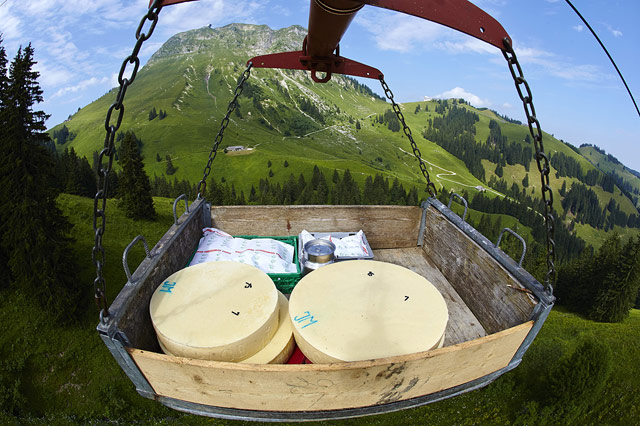
If you’re into cheese, you’ll want to take this photographic journey into a season with Swiss cheesemakers.
In Gruyeres, western Switzerland, from mid-May to mid-October, the fifth generation of the Murith family produces its distinctive mountain pasture Gruyere cheese. Each wheel of cheese weighs between 25 and 40 kilograms, and takes a minimum of six months to mature. The family produces 200 wheels each year to sell locally, using unpasteurized milk from their own herd of cows. Reuters photographer Denis Balibouse spent time with the Murith family over this past grazing season, capturing days and nights in the alpine pastures of Switzerland.
McDonald’s recently held an event where chefs took the ingredients used to make McDonald’s menu items and used them to make dishes that one might find at a nice restaurant. Thrillist has the report.
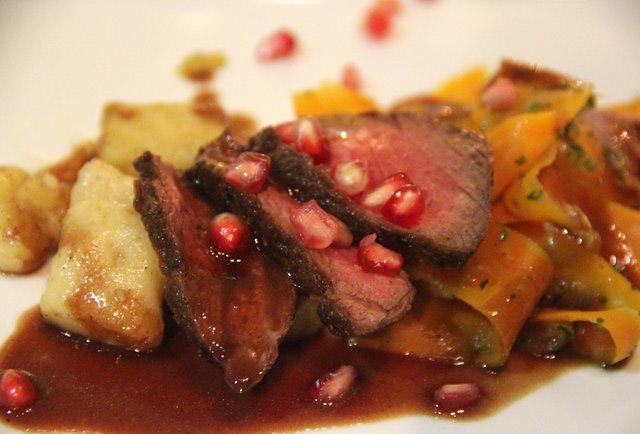
The slow-cooked beef with blueberry pomegranate sauce and Mac Fry gnocchi comes from McD’s chef Jessica Foust, and was, without a doubt, the best of the night. It’s their burger beef before it gets ground, plus blueberries and pomegranates from the smoothies, thinly ribboned carrots, and French fries magically turned into gnocchi.
See also a previous discussion of fast food and fine dining. Dammit, now I’m hungry for a Quarter Pounder… (via @jeb)
Smithsonian Mag goes way back to explain why we eat popcorn at the movies.
About 8,000 years ago, maize was cultivated from teosinte, a wild grass that doesn’t look much like the modern corn we know today. Popcorn — a name mostly associated with puffed kernels of corn — is actually a strain of corn, characterized by especially starchy kernels with hard kernel walls, which help internal pressure build when placed over heat. It was one of the first variations of maize cultivated in Central America. “Popcorn went north and it went south, but as far as I can see, it really only survived in South America,” says Andrew Smith, author of Popped Culture: A Social History of Popcorn. Eventually, trade and commerce brought the unique kernels northward. “Most likely, North American whalers went to Chile, found varieties of popcorn, picked them up and thought that they were cute, and brought them back to New England in the early 19th century,” Smith explains.
The NY Times on how Nacho Cheese Doritos are engineered to get people to eat as many of them as possible.
Despite the powerful tastes in Nacho Cheese, the Doritos formula balances them so well that no single flavor lingers in the mind after you’ve eaten a chip. This avoids what food scientists call “sensory specific satiety,” or the feeling of fullness caused by a dominant flavor. Would you eat a whole bag of rosemary chips? With Doritos, you go back for more.
I rarely eat Doritos (and when I do, it’s Cool Ranch), but my mouth was watering just from reading this.
Jay Porter recently wrote a series of posts about his experience running a restaurant that abolished tipping. Here’s part one:
This is a summary of the experiences I had in our no-tipping lab, and in my next few posts I’ll dig a little deeper into each of them. Then I’ll finish this series by talking about what I’ve learned this year from a couple new friends who are researchers from the University of Guelph, and who have brought me in contact with some deeper thoughts about the tipping issue, from the social justice side. After seeing what they and their colleagues have uncovered, I’ve become convinced that thoughtful cultures who value civil rights will make tipping not just optional but illegal; and that this could actually happen sooner rather than later, when courts assess the reality of the situation.
If you want the Cliff Notes version, Porter wrote a shorter piece for Slate.
When we switched from tipping to a service charge, our food improved, probably because our cooks were being paid more and didn’t feel taken for granted. In turn, business improved, and within a couple of months, our server team was making more money than it had under the tipped system. The quality of our service also improved. In my observation, however, that wasn’t mainly because the servers were making more money (although that helped, too). Instead, our service improved principally because eliminating tips makes it easier to provide good service.
Ernest Hemingway liked a good burger and had a specific recipe he wanted his staff to use when preparing meals. Using his instructions, Cheryl Lu-Lien Tan recently recreated the Hemingway burger.
Fingers deep, I kneaded. Fighting the urge to be careless and quick, I kept the pace rhythmic, slow. Each squeeze, I hoped, would gently ease the flavors — knobby bits of garlic, finely chopped capers, smatterings of dry spices — into the marbled mound before me.
I had made burgers before, countless times on countless evenings. This one was different; I wasn’t making just any burger — I was attempting to recreate Hemingway’s hamburger. And it had to be just right.
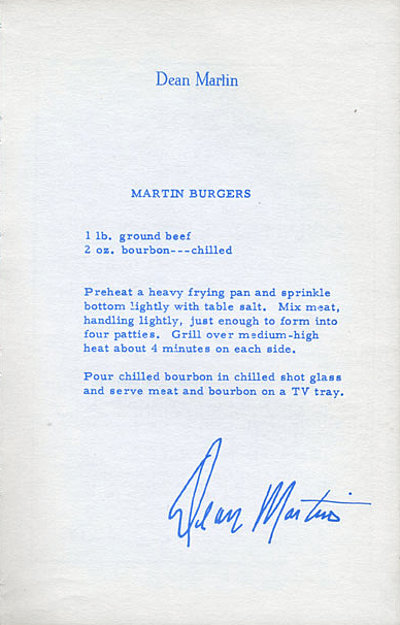
Surprisingly, with 11 different ingredients, Hemingway’s burger is not as stripped down as his prose. For a more minimalist burger, you have to turn to Dean Martin:
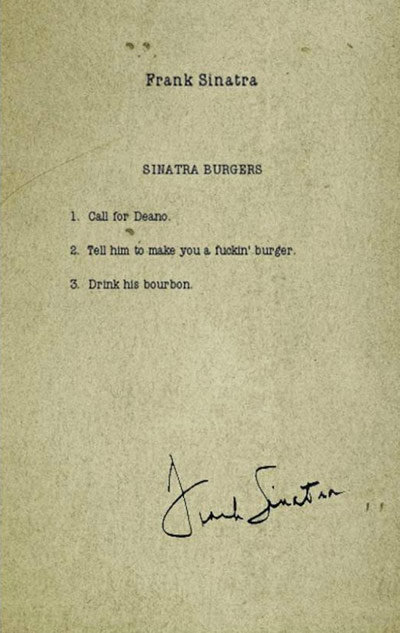
Frank Sinatra’s is perhaps even easier:
One thing is for sure: none of these gentlemen would cotton to the idea of the ramen burger, homemade or no. (via open culture)
A Texas man was getting drunk without drinking alcohol and his doctors think they figured out why: brewer’s yeast in his in gut was brewing beer and making the man intoxicated.
The patient had an infection with Saccharomyces cerevisiae, Cordell says. So when he ate or drank a bunch of starch — a bagel, pasta or even a soda — the yeast fermented the sugars into ethanol, and he would get drunk. Essentially, he was brewing beer in his own gut. Cordell and McCarthy reported the case of “auto-brewery syndrome” a few months ago in the International Journal of Clinical Medicine.
Some clever entrepreneur will undoubtedly turn this syndrome into a product…the market opportunity for a pill that allows you to get drunk on spaghetti *and* be the owner/operator of your own microbrewery is too large to ignore. (via ★interesting)
Former NY Times restaurant critic Frank Bruni writes about the joys of being a regular at your neighborhood restaurant.
What you have with a restaurant that you visit once or twice is a transaction. What you have with a restaurant that you visit over and over is a relationship.
My wife and I eat out at least once a week and we used to travel all over the city to try all sorts of different places, just-opened hot spots and old favorites alike. It was great. But now we mostly go to a bar/restaurant1 around the corner from where we live and that’s even better. Bruni covers the experience pretty well, but I just wanted to share a couple of seemingly small aspects of being a regular:
1. Our local is popular and always crowded, especially during the dreaded 7-10pm hours and double especially Thu-Sat nights. But even when I go in by myself at a peak time, when the bar’s jam-packed, there’s always a seat for me. It might take a bit, but something opens up and they slot me in, even if I’m only stopping in for a drink and they could seat a two-top for dinner at the bar. (A regular in the hand is worth two in the rush.)
2. This is a totally minor thing but I love it: more than once, I’ve come in early in the evening, had a drink, left without paying to go run an errand or meet someone somewhere else, and then come back later for another drink or dinner and then settle my bill. It’s like having a house account without the house account.
3. Another nice thing about being a regular at a place that values regulars is that you meet the other regulars. This summer I was often left to my own devices for dinner and a couple times a week, I ended up at my local. And almost without exception, I ended up having dinner with someone I’d previously met at the bar. Routinely turning a solo dining experience into dinner with a friend is an amazing accomplishment for a restaurant.
When I was just out of college, my dad and I went to Beijing. One of my anxieties about the trip concerned my left-handedness, specifically going against the custom of not using your left hand (aka your bathroom hand) to eat. It turned out fine; the semi-expected reprimand never came.
Times have changed. Now, in Shanghai, you can go to a restaurant called Modern Toilet, which is actually one in a chain of Taiwanese stores that are toilet themed.
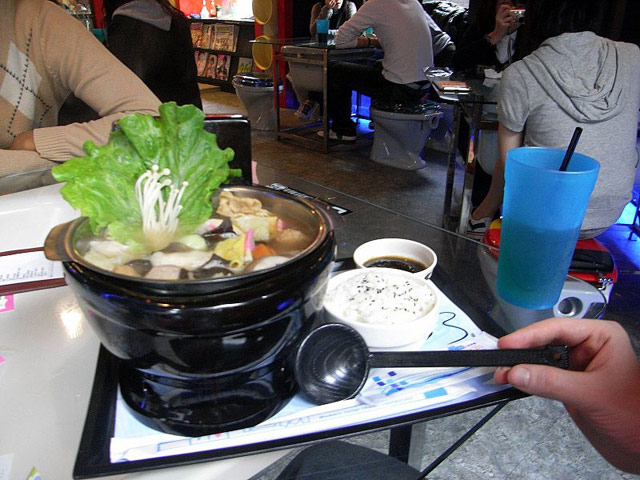
We are a group of “muckrakers” following our dreams. It all started when one of us was reading the manga, Dr. Slump on the toilet — and the rest is history. In the beginning, we mainly sold ice cream — a big pile of chocolate ice cream sold in containers shaped like a squat toilet. This humorous spin became a great success.
Susannah Breslin visited the Shanghai Modern Toilet and offers this report.
Upstairs, I took a seat at a table. My seat was a toilet. The table had a glass top. Under it, there was a bowl. In the bowl, there was a plastic swirly turd. The place mats were decorated with smiling turds.
(via @claytoncubitt)
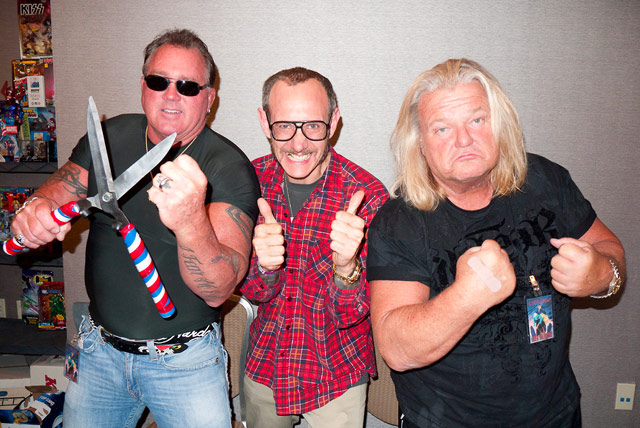
I watched a lot of pro wrestling when I was a kid and this photo of Brutus “The Barber” Beefcake, Greg “The Hammer” Valentine, and fashion photographer Terry Richardson is just too much for me. If nostalgia truly is death, someone better make some arrangements for me.
(If you’re not with me on this whole reminiscing about 1980s professional wrestlers thing, Richardson also recently took a photo of Miley Cyrus eating a salad, so you’re basically all caught up on current events and you’re welcome.)
Watch as people review video games after eating hot peppers. Here’s Erin Schmalfeld reviewing a Nintendo 3DS game after chewing and swallowing an entire habanero:
(via ★interesting)
The apples that you buy at the market are all from the same species of plant, Malus domestica. Within that species, there are 7,500 different varieties (or cultivars) of apples. The list of apple cultivars includes Red Delicious, Macoun, Honeycrisp, Granny Smith, and the like. They look and taste different but are all recognizable as apples.
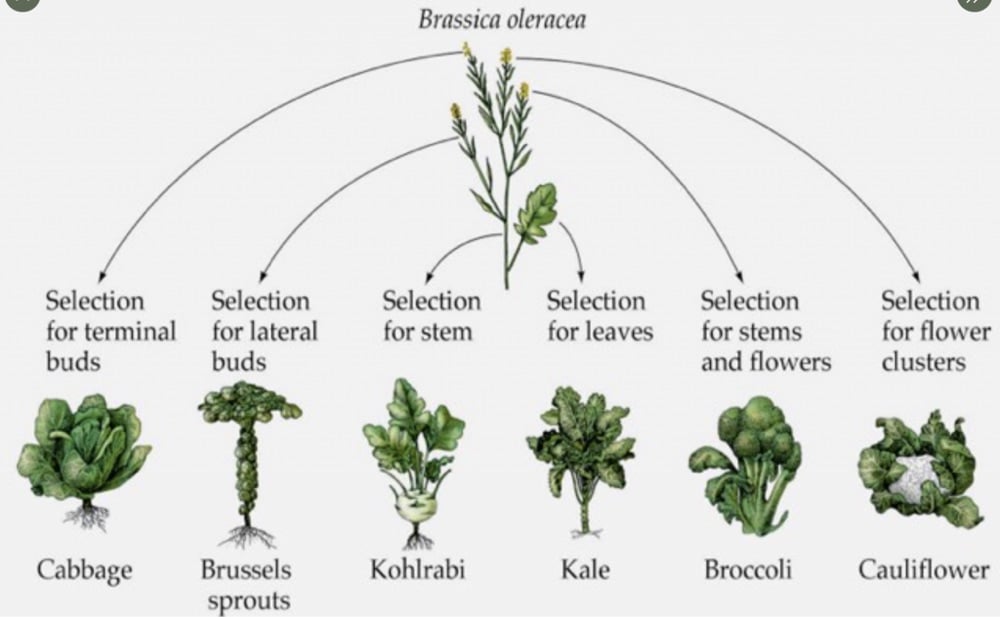
Brassica oleracea is a species of plant that, like the apple, has a number of different cultivars. But these cultivars differ widely from each other: cabbage, kale, broccoli, brussels sprouts, kohlrabi, collard greens, and cauliflower. Nutty that all those vegetables come from the same species of plant. (via @ajsheets)
This video seems like it was made specifically for kottke.org. In the first half of it, you learn how cranberries are harvested. In the second half, there’s gorgeous HD slo-mo footage of wakeskating through a cranberry bog.
And with a Tycho soundtrack no less…it’s all too perfect. (via ★interesting)
Newer posts
Older posts





Socials & More