kottke.org posts about cars
According to NASA, the Perseverance rover has driven just over 28 miles on the surface of Mars, making it the vehicle that has driven the farthest distance outside of Earth.
On Oct. 11, the rover’s odometer reached 28.10 miles (45.22 kilometers), eclipsing the record of 28.06 miles (45.16 kilometers) set by NASA’s Opportunity rover, which explored Mars from 2004 to 2018. Perseverance reached the mark on the 2,006th Martian day, or sol, of its mission, covering in five and a half years a distance that took Opportunity almost 15.
For a vehicle whose top speed is 0.1 mph and which stops all the time to do science, 28 miles is quite a distance. The route video is fun to watch…it resembles a dog’s path, sniffing out its favorite spots and doubling back along familiar routes.
BTW, the Guinness World Record for the number of miles driven by one vehicle on Earth is 3,039,122 miles. (And the guy kept driving it after the record was recorded…he reached 3,260,257 miles before he died.)
A lovely contemplative short video featuring Toshiyuki Ueno of the Japanese fashion brand Visvim talking about craftsmanship.
We want to make things that people will get attached to and will use for a long time. And that’s at the core of our creating process. It’s simple and not that complicated.
He continues:
I think about how people grow attached to things over time as they use them, and how those things add to its allure over time.
“Those things” is a little ambiguous without the context of the video…he means the wear that develops from use and how people grow attached to those “imperfections”. See also wabi-sabi.
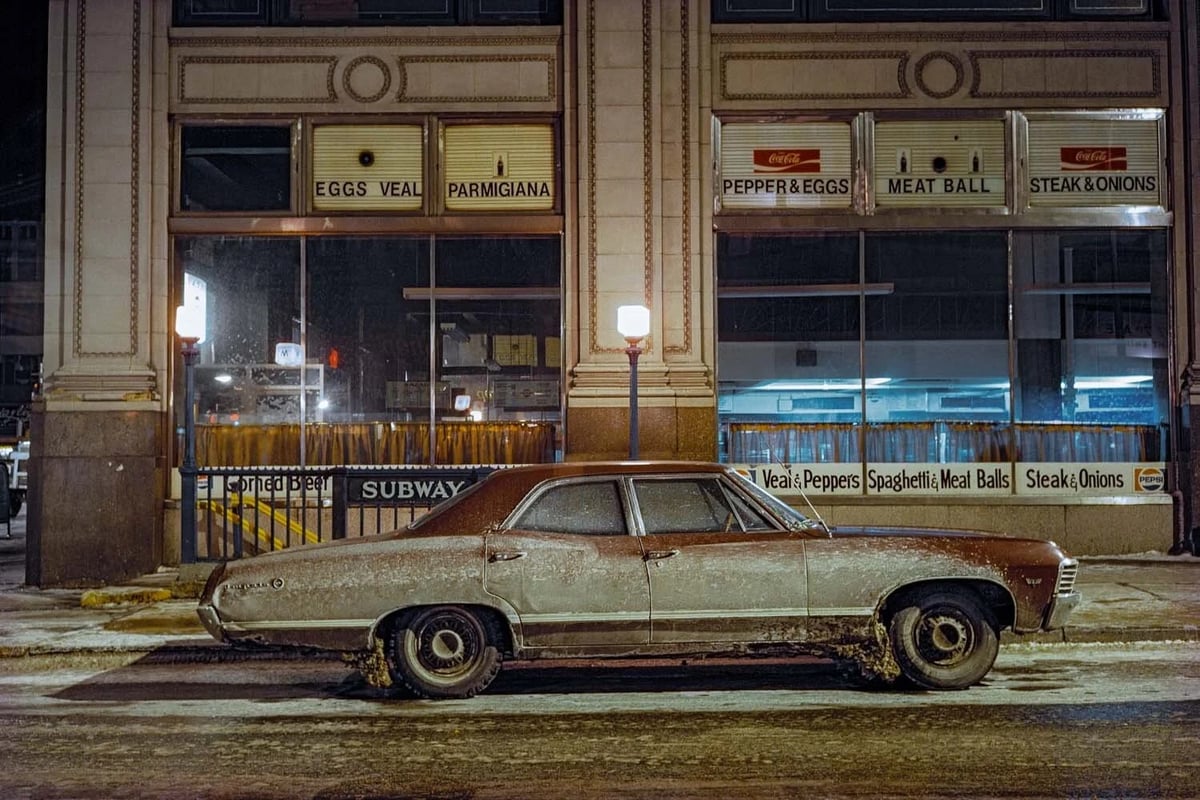
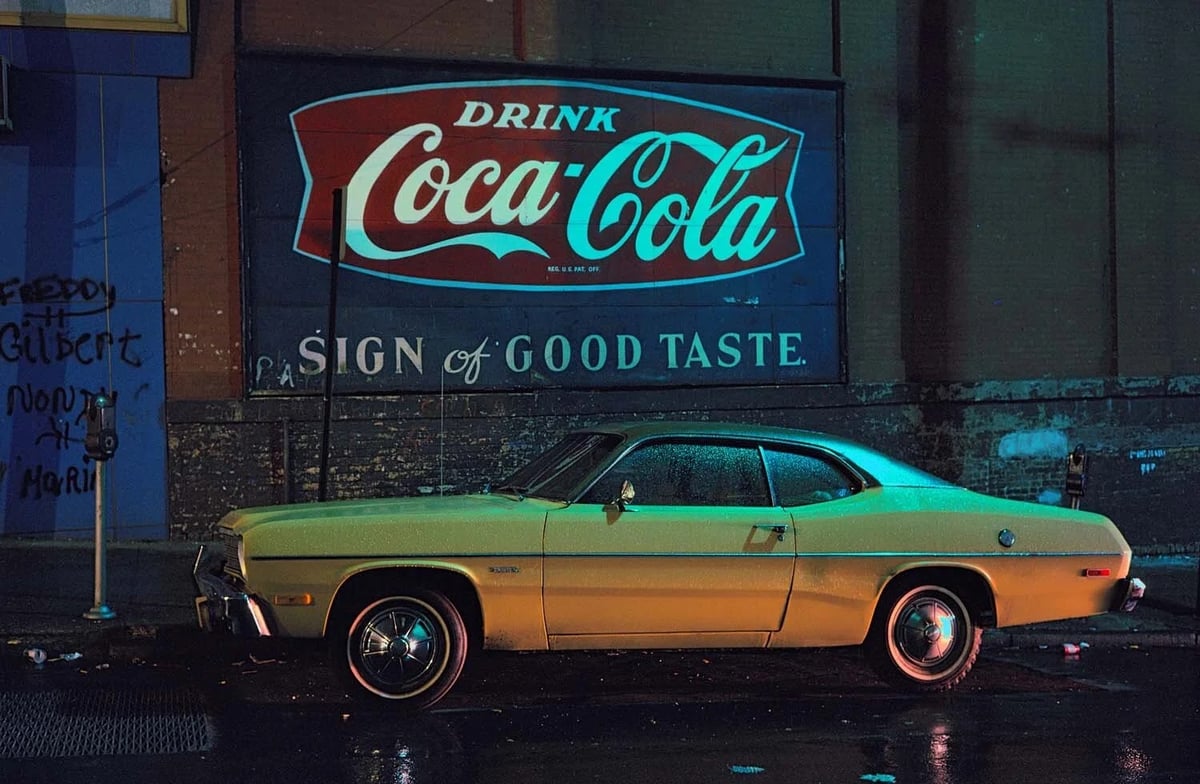
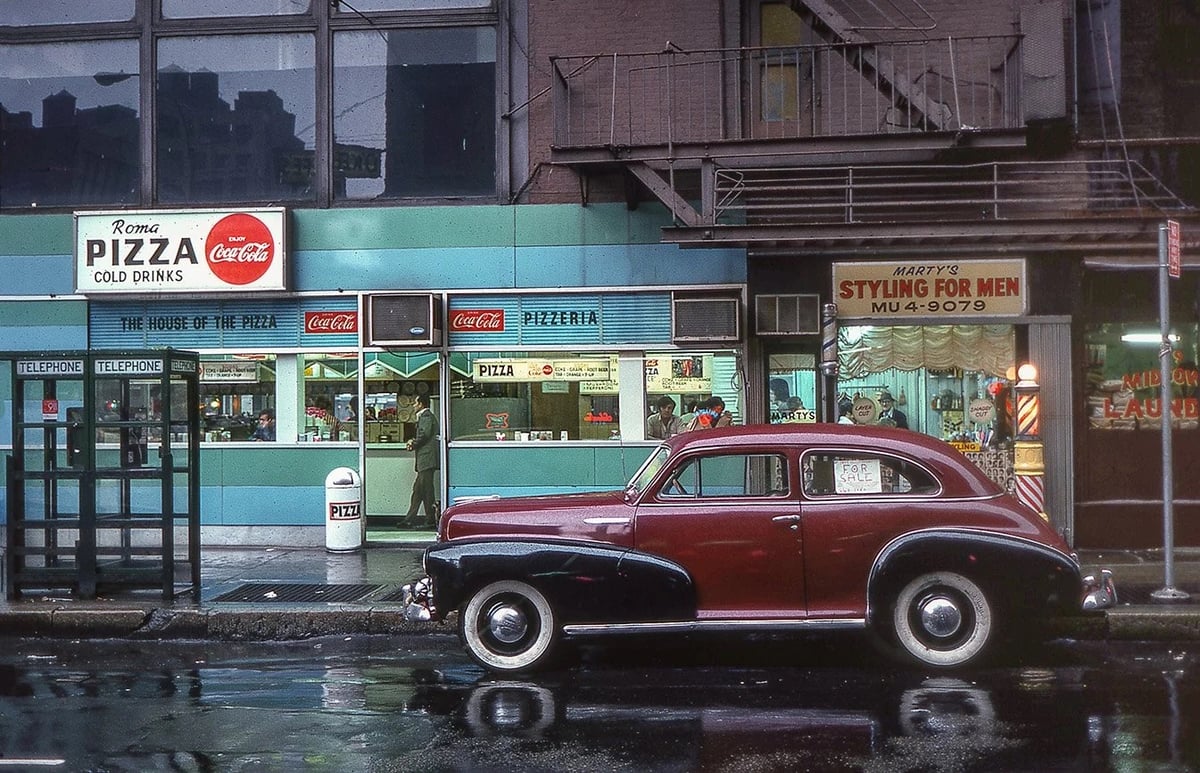
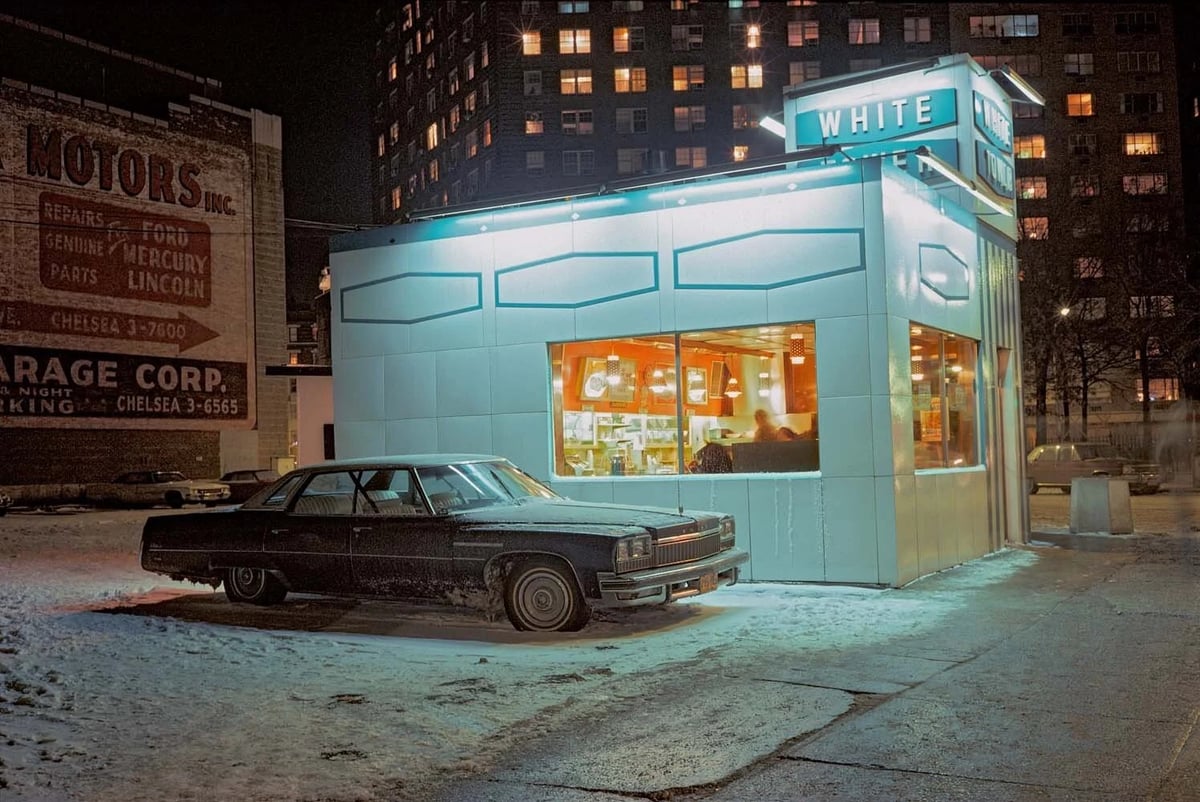
In the 70s, photographer Langdon Clay took photos of cars parked on NYC streets at night and compiled them into a project: Cars, New York City | 1974-1976.
Using his Leica CL, Kodachrome 25, and a 40 millimeter lens, Clay traversed the streets of 1970’s Manhattan finding automobiles that paralleled their environment. The cinematic images are a result of time exposure, sodium vapor street lights, and the tenacity of youth.
Luc Sante wrote about Clay’s car photographs for the New Yorker:
One of the things that used to make America so distinctive was its cars. If you lived there, you would really have to go abroad for a while and then come back to appreciate the difference. In most countries of the world, cars were modest things, little bean-shaped units designed to take two or three people from here to there. In America, cars were real estate. They were enormous boats in which you could eat, sleep, make love, change clothes, throw parties, maintain an office, practice unlicensed dentistry—or take your six best friends out for a spin. They were a testament to America’s unlimited natural resources: oil, steel, rubber, naugahyde, and, above all, space. American cars could be so huge because the nation’s highways were endless, its city streets were wide, and there was abundant free parking everywhere you went. And that included New York City then, since most of its population took the subway.
A 2016 book featuring these images is out of print, but you can find copies for several hundred dollars. (via atlas obscura)
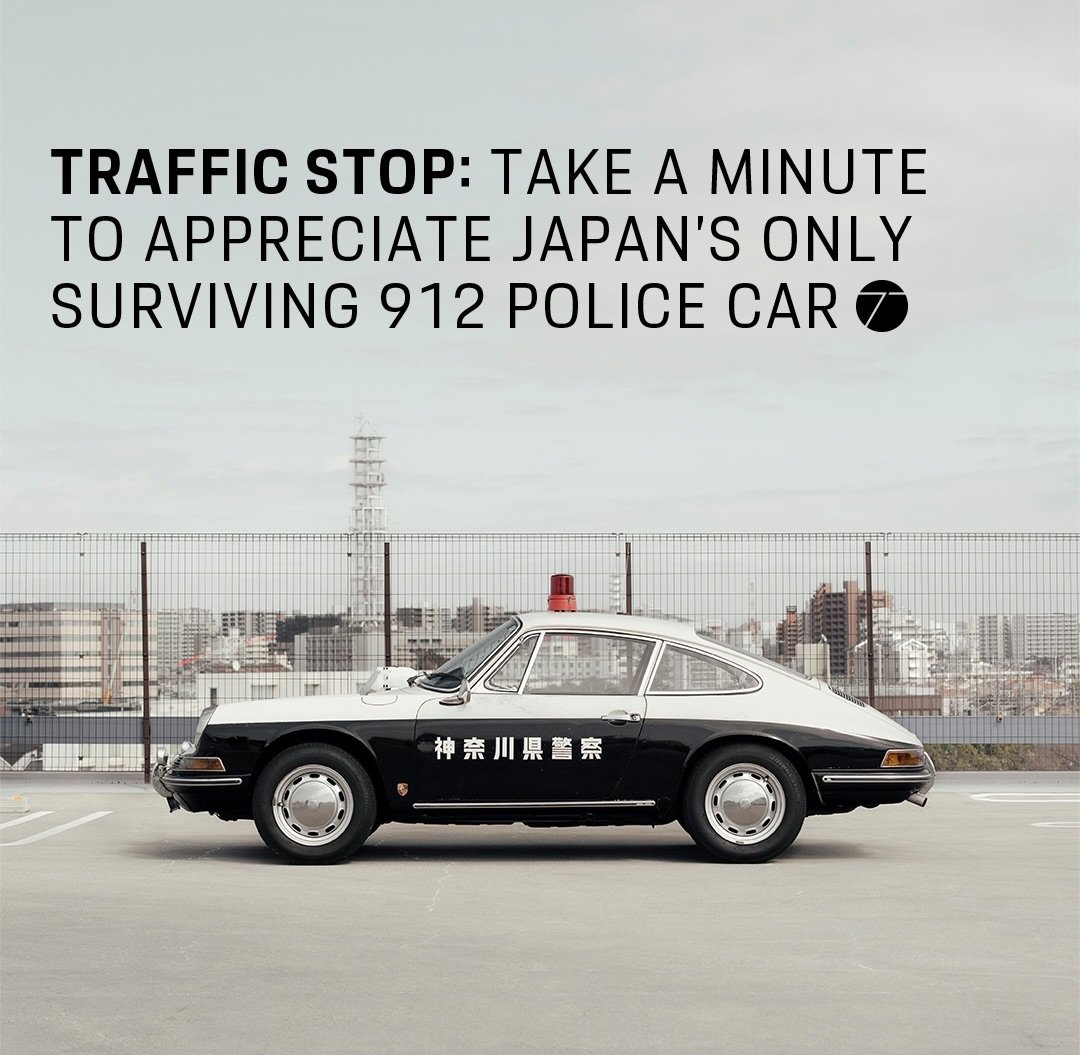
Oof, what a beauty. In the 1960s, four Porsche 912s were customized for use as police cars in Japan. This one, which was used in Kanagawa until 1973, is the only one left standing (and even it needed restoration).
This Japanese police 912 served in Kanagawa Prefecture from 1968 to 1973, operating on the Daisan Keihin and Tomei Expressways. Over five years of service, it covered more than 155,000km and even played a role in stopping a speeder traveling at 178 km/h.
Police vehicles are usually scrapped after their service life, but this one was an exception. After being retired due to engine failure, it was kept and displayed at a police academy for 26 years. Over time, exposure to the elements caused significant deterioration, and in 1999 it was sold to a scrapyard. After six months of negotiations, it was eventually recovered.

Here are a couple of photos of 912s while in service back in the day.


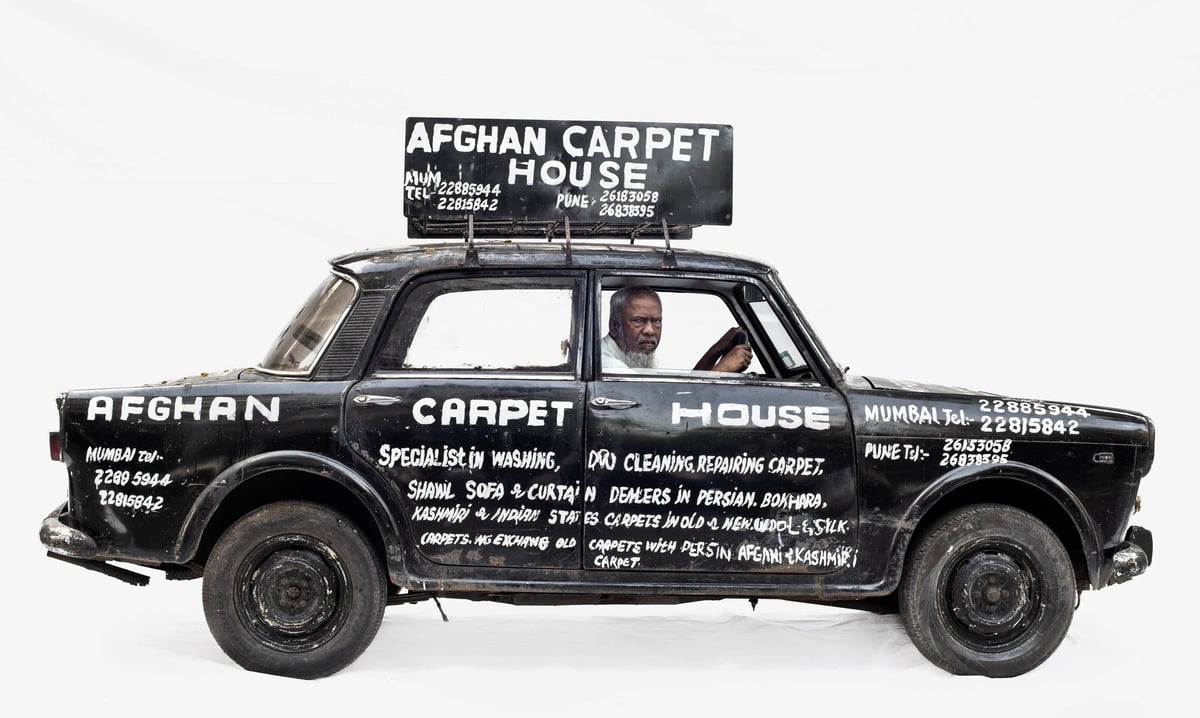
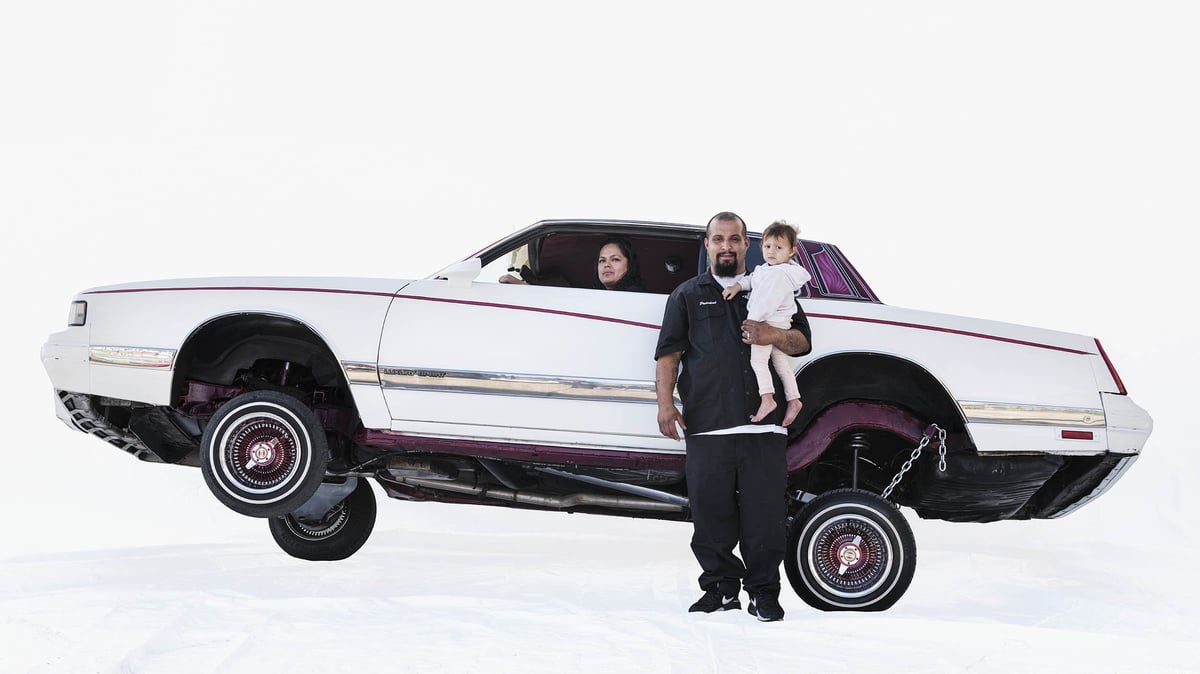


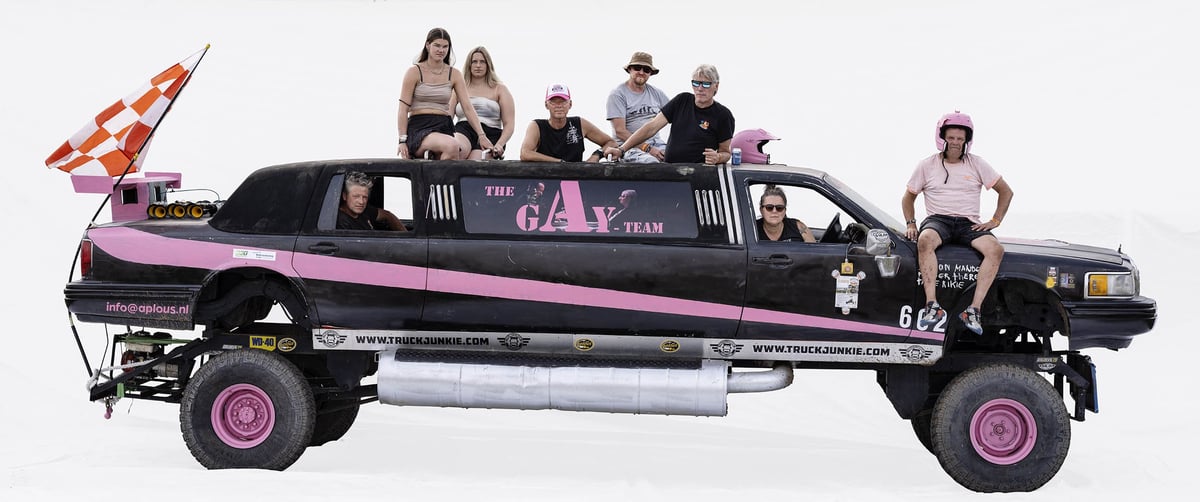
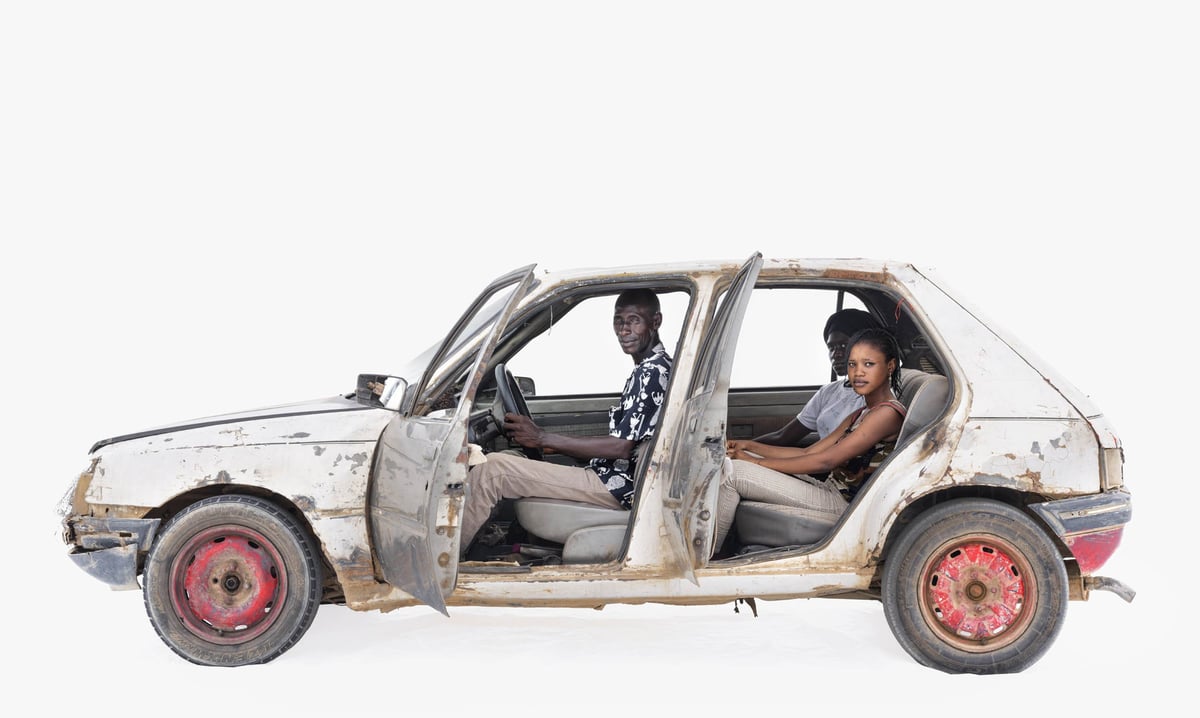
For his project called Homo Mobilis, Martin Roemers travelled the globe and photographed people with their cars, bikes, scooters, etc. You can see a selection of the photos on Roemers’ website, at The Guardian, or in his forthcoming book, Homo Mobilis (Amazon). (via @steveportigal.bsky.social)

The US Postal Service released a sneak peek at some of the stamps they’re going to release in 2026. Among them are these lowrider stamps:
Five models grace the stamps: a blue 1946 Chevrolet Fleetline named Let the Good Times Roll/Soy Como Soy; a blue 1958 Chevrolet Impala named Eight Figures; a red 1963 Impala named El Rey; an orange 1964 Impala named the Golden Rose; and a green 1987 Oldsmobile Cutlass Supreme named Pocket Change. The Gothic-style typography and the pinstriping on the stamps and pane evoke the detailed decoration that is a hallmark of the most celebrated lowrider cars.
Move over Ford Edsel, Pontiac Aztek, and AMC Pacer, there’s a new automotive flop in town: the dumpster-forward Tesla Cybertruck.
After a little over a year on the market, sales of the 6,600-pound vehicle, priced from $82,000, are laughably below what Musk predicted. Its lousy reputation for quality — with eight recalls in the past 13 months, the latest for body panels that fall off — and polarizing look made it a punchline for comedians. Unlike past auto flops that just looked ridiculous or sold badly, Musk’s truck is also a focal point for global Tesla protests spurred by the billionaire’s job-slashing DOGE role and MAGA politics.
“It’s right up there with Edsel,” said Eric Noble, president of consultancy CARLAB and a professor at ArtCenter College of Design in Pasadena, California (Tesla design chief Franz von Holzhausen, who styled Cybertruck for Musk, is a graduate of its famed transportation design program). “It’s a huge swing and a huge miss.”
It’s impossible for me to drive past one of these things without laughing at and/or mocking it. I was out driving with my daughter last week and a Cybertruck came into view and before I could even say anything, she said, “it’s just so *bad*”. (via @mims.bsky.social)


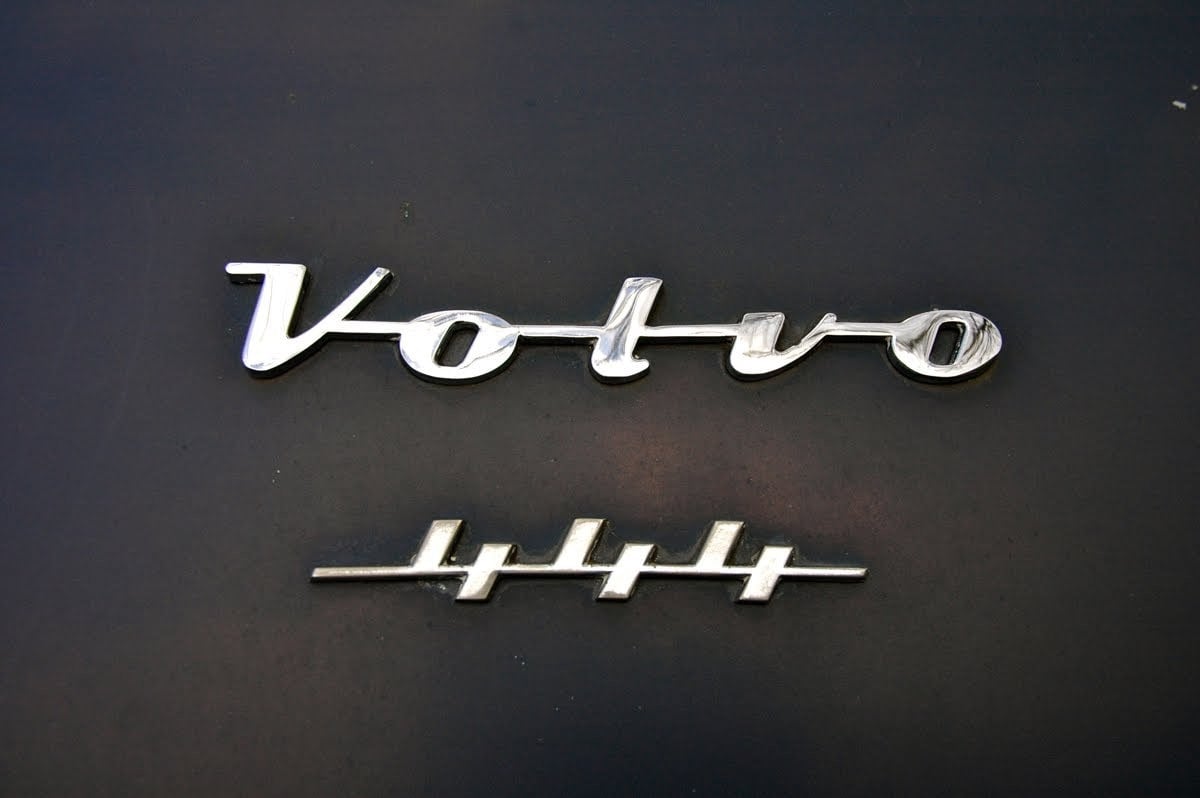
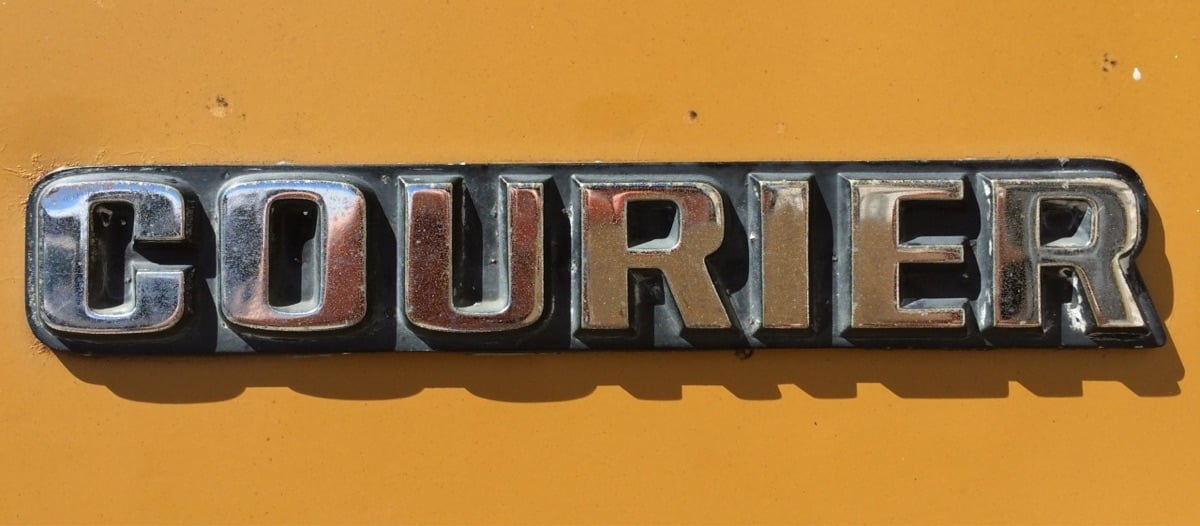
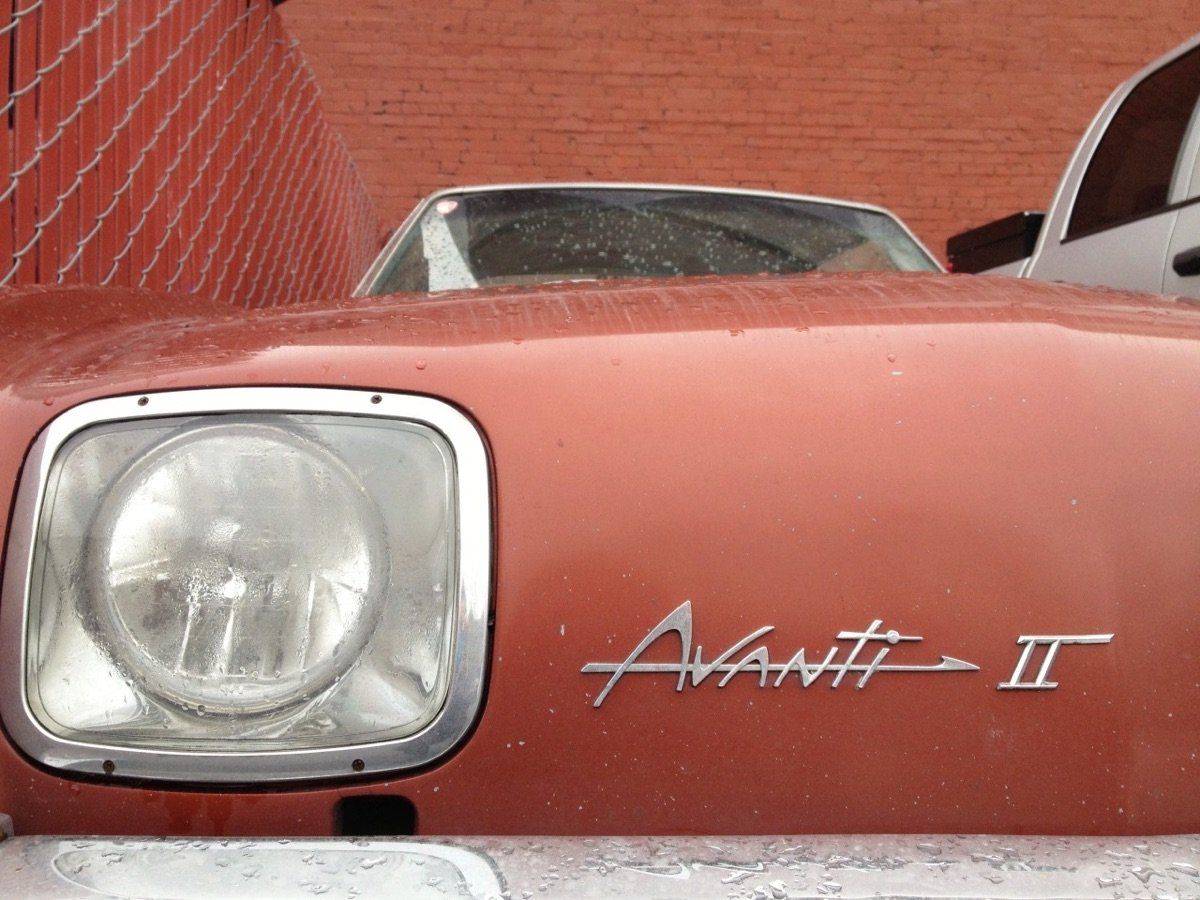
A site called Chromeography collects chrome logos and typography from vintage cars & electric appliances. As I was looking through these, I wondered: “What the hell is chrome anyway?” So I looked it up:
Chrome plating (less commonly chromium plating) is a technique of electroplating a thin layer of chromium onto a metal object. A chrome plated part is called chrome, or is said to have been chromed. The chromium layer can be decorative, provide corrosion resistance, facilitate cleaning, and increase surface hardness. Sometimes, a less expensive substitute for chrome, such as nickel may be used for aesthetic purposes.
(via @presentandcorrect)
The different kinds of sounds that carmakers have had to come up with to make EVs audible to pedestrians, bikers, and other drivers are wild: orchestras, pitch-shifted didgeridoos, gas car noises.
For over a century, the internal combustion engine powered vehicles with an intricate combination of moving parts and tiny explosions. That combustion process inevitably made noise, and that noise came to define the background soundscape of our roads, cities, and day-to-day life. But as hybrids and EVs became increasingly mainstream — and more of their near-silent electric motors filled the streets — it became clear that silent vehicles didn’t fit in the ecosystem we’d built around cars.
Spearheaded by associations of the blind and visually impaired, legislation eventually began to require electric vehicles to emit an artificial engine noise out of hidden external speakers. These hidden speaker systems, called “Acoustic Vehicle Alerting Systems” — or AVAS — had to meet certain sonic criteria. But they were also a blank slate for sound designers to decide how the cars of the future should sound.
Reminder: cities aren’t noisy, cars are.
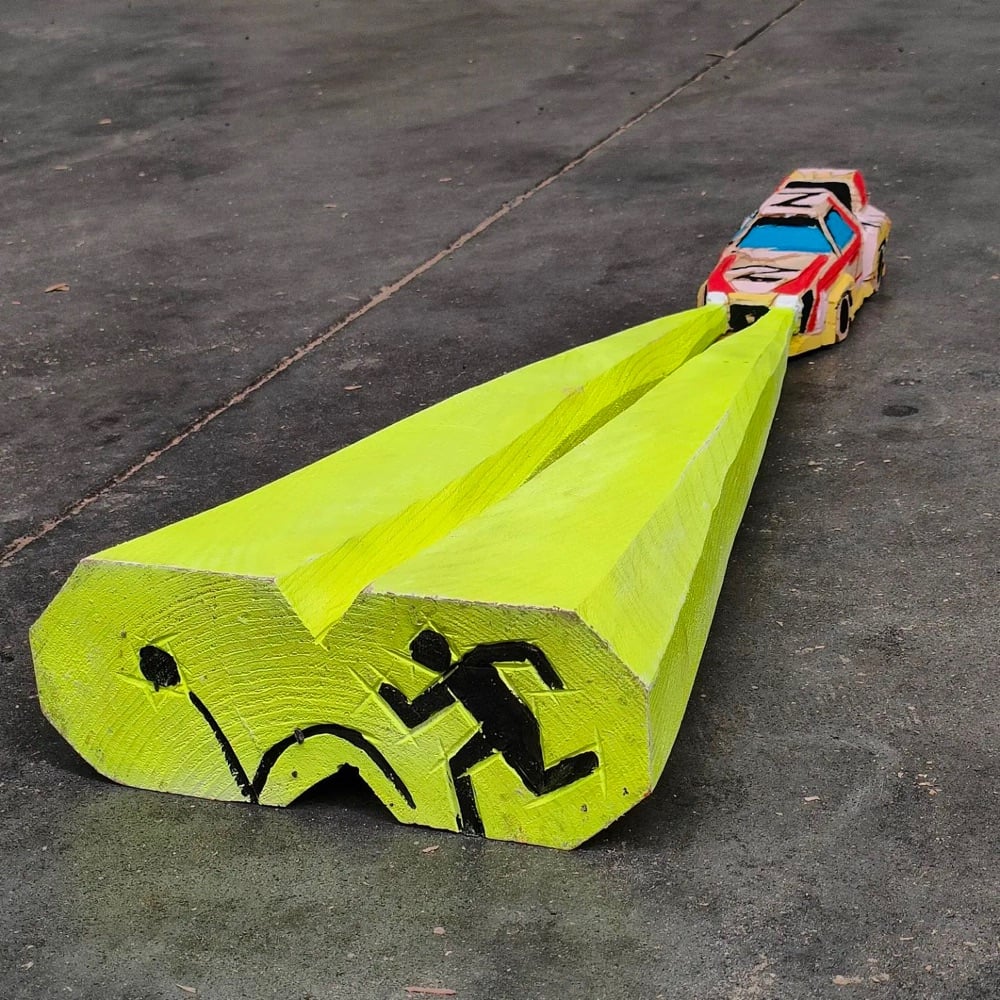
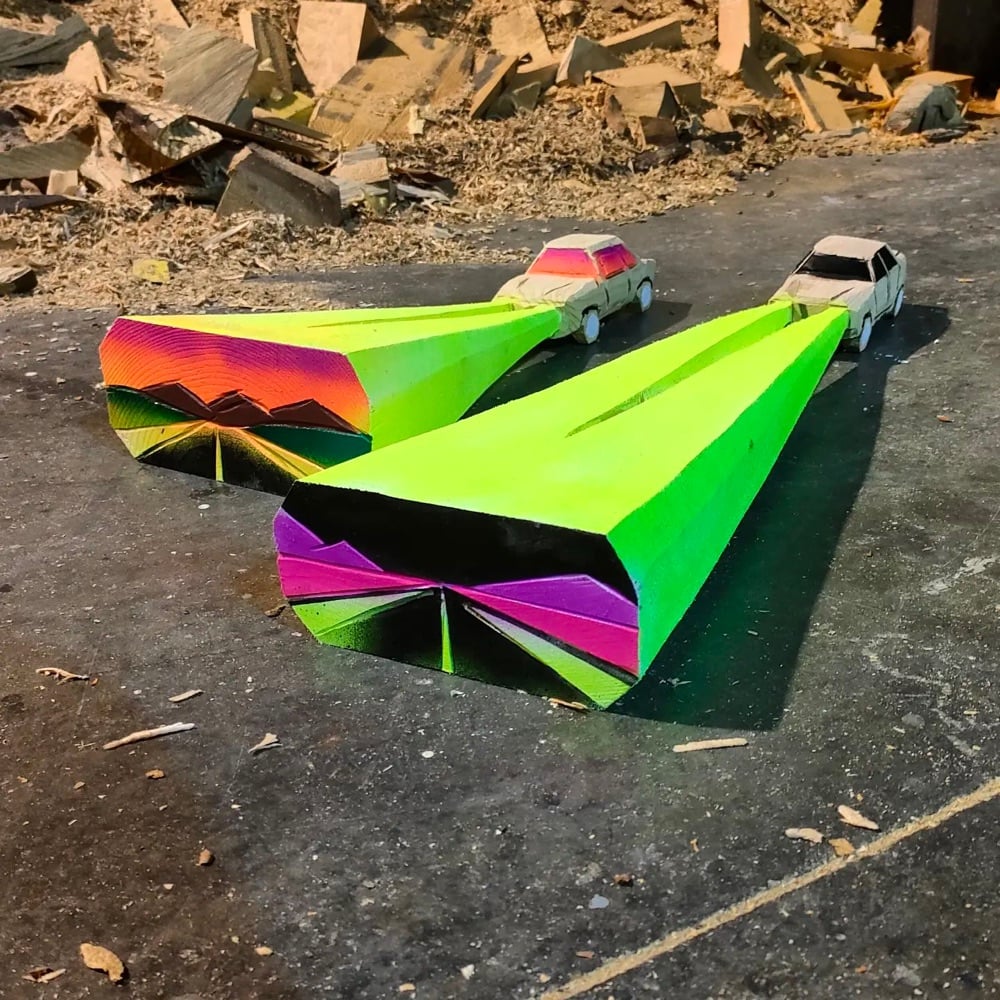
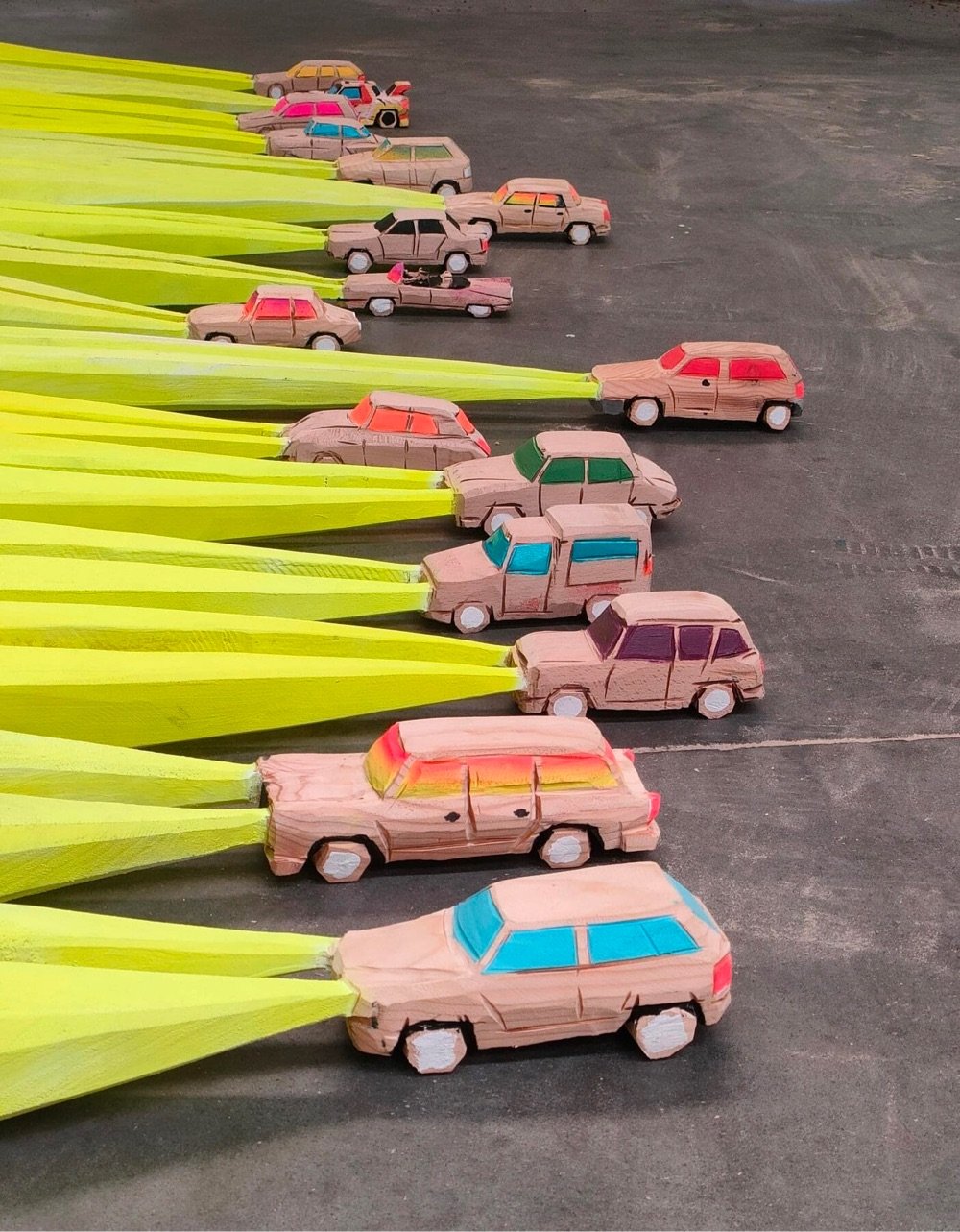
Holy crap, how cool are these carved wooden cars by Kiko Miyares! The style is just incredible. Is light a wave or a particle? Neither: light is wood. (via @scottmccloud)
Kyle Branchesi has created some fanciful “urban oddities” that imagine different locales in the UK being fully optimized for cars. For instance, here are Buckingham Palace and Westminster:
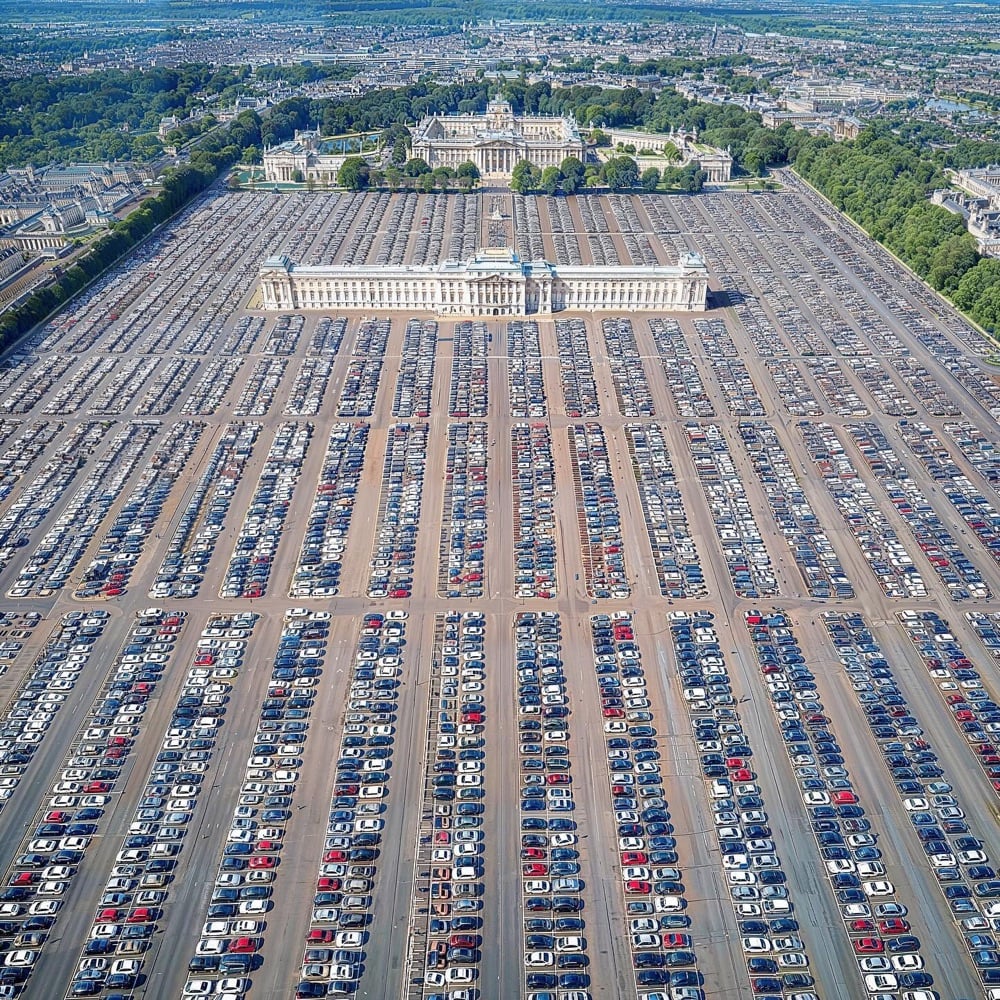
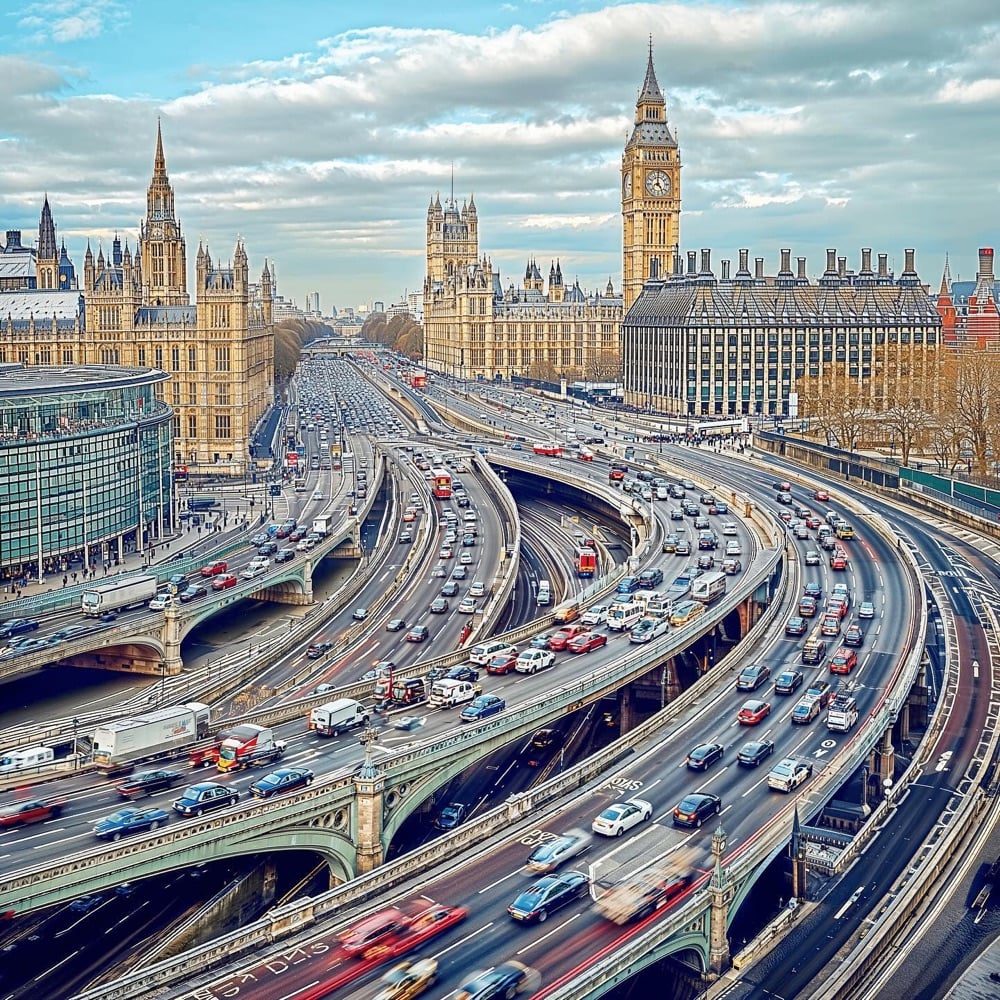
Writes Branchesi:
Amidst a political landscape where the ‘war on motorists’ is wielded as a populist tool, this series captures a future where this rhetoric has prevailed. The transformation of UK landmarks like Stonehenge into vast vehicular realms underscores the absurdity and danger of prioritizing short-term political gains over sustainable urban planning. These images mirror the contentious debates in the UK, challenging the narrative that prioritizes car ownership at the expense of public health and environmental sustainability.
Of course, in an America engineered by Robert Moses and his acolytes, many of those images don’t even look that far-fetched.

Well, it has been a loooong week and this made me laugh a stupid amount, so now you’re seeing it. ✌️
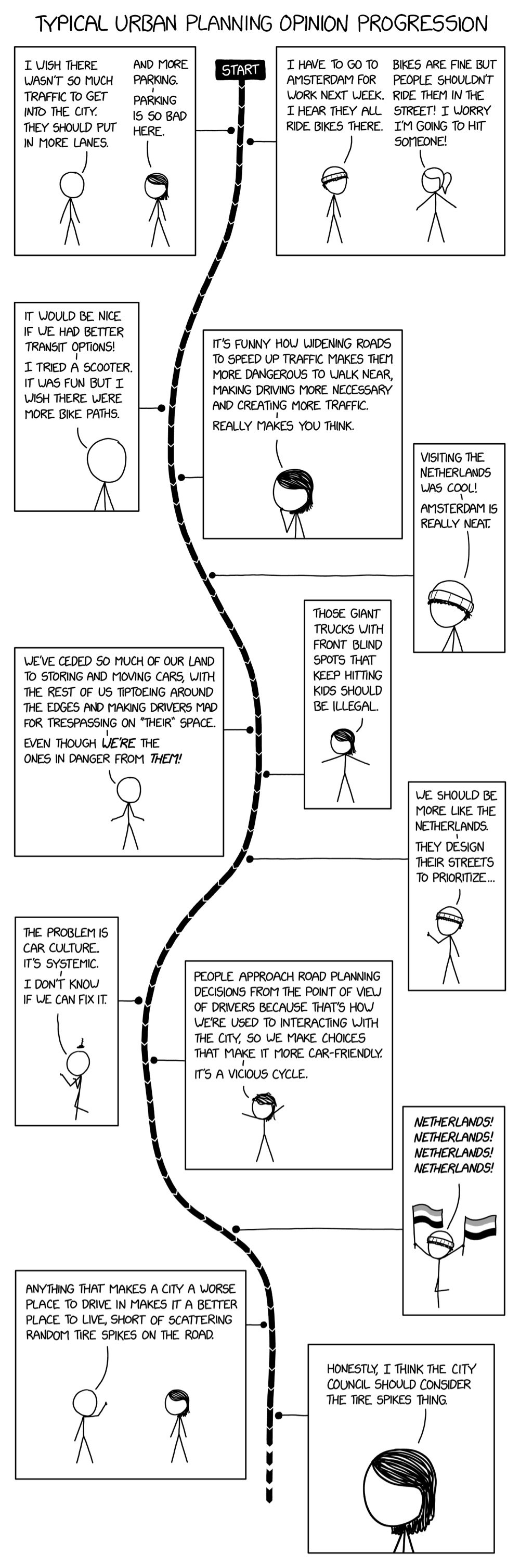
From XKCD, the progression of people’s opinions about cars & urban planning, from “I wish there wasn’t so much traffic to get into the city. They should put in more lanes.” to “Anything that makes a city a worse place to drive makes it a better place to live.” As The War on Cars said on Bluesky, “Randall Munroe, welcome to The War on Cars.”
P.S. Re: putting in more lanes, read up on induced demand and road dieting for why that’s often not a great idea.
European cities are transitioning to the use of cargo e-bikes and other micro-mobility solutions for package and other urban deliveries because they are safer, cleaner, and even faster in some cases than using vans or large trucks. The US isn’t making that same shift right now — this video from Vox explores why…and how we can move in that direction.
Fortunately, there’s a hero waiting in the wings: the e-cargo bike. Not only can these bad boys deliver packages in urban environments just as quickly (and sometimes faster) than delivery vans, they take up far less space and are much less likely to cause pedestrian deaths. Companies like Amazon, DHL, and UPS are using them in several European cities, but American cities haven’t followed suit.
In this video, we explore why that is, and lay out some of the big steps American cities would need to take to join the e-bike delivery revolution.
See also No Cars Allowed in This Swiss Town (Except Tiny Electric Ones).
A group of students from ETH Zurich and Lucerne University of Applied Sciences and Arts recently set a record for the fastest 0-62mph time with their hand-built electric car: 0.956 seconds. The 309-lb car got up to 62mph in just 40.3 feet, which is ~10 feet shorter than the width of a basketball court. The old record was 1.46 seconds, which this car just absolutely obliterated. For reference, the Tesla Plaid’s 0-60 time is 1.99 seconds.
The video of their run is kind of amazing…the car is just so ludicrously quick that I started giggling when it leapt off the line.
Older posts





Socials & More