



1-in-670 Americans has died of Covid-19 and 1-in-3 has lost someone they loved. This heart-wrenching interactive feature from the NY Times profiles some of those who have been lost and those left behind. Make some time for this.

Advertise here with Carbon Ads
This site is made possible by member support. 💞
Big thanks to Arcustech for hosting the site and offering amazing tech support.
When you buy through links on kottke.org, I may earn an affiliate commission. Thanks for supporting the site!
kottke.org. home of fine hypertext products since 1998.
Beloved by 86.47% of the web.
Entries for March 2021
Terry Boot takes over for Peter Foot at a shoe company. This is the best name-fits-the-job news since Doug Bowser became president of Nintendo of America.
The Earth Rising Over the Moon
Captured by the Kaguya lunar orbiter on April 5, 2008, this is an HD video of the Earth rising over the surface of the Moon. Watching stuff like this always puts me in a different frame of mind. (Turn off the sound if you don’t want to hear the super-cheesy narration.)
There’s No Real Reason to Eat 3 Meals a Day. “Your weird pandemic eating habits are probably fine.” In the past year, I’ve seen a big uptick in eating because I’m bored (and less healthily too).
The Kilobyte’s Gambit. Can you beat 1024 bytes of JavaScript in chess? (I love the disclaimer about not reporting en passant capturing as a bug.)
Van Gogh That Was in Private Hands for More Than a Century Up for Auction
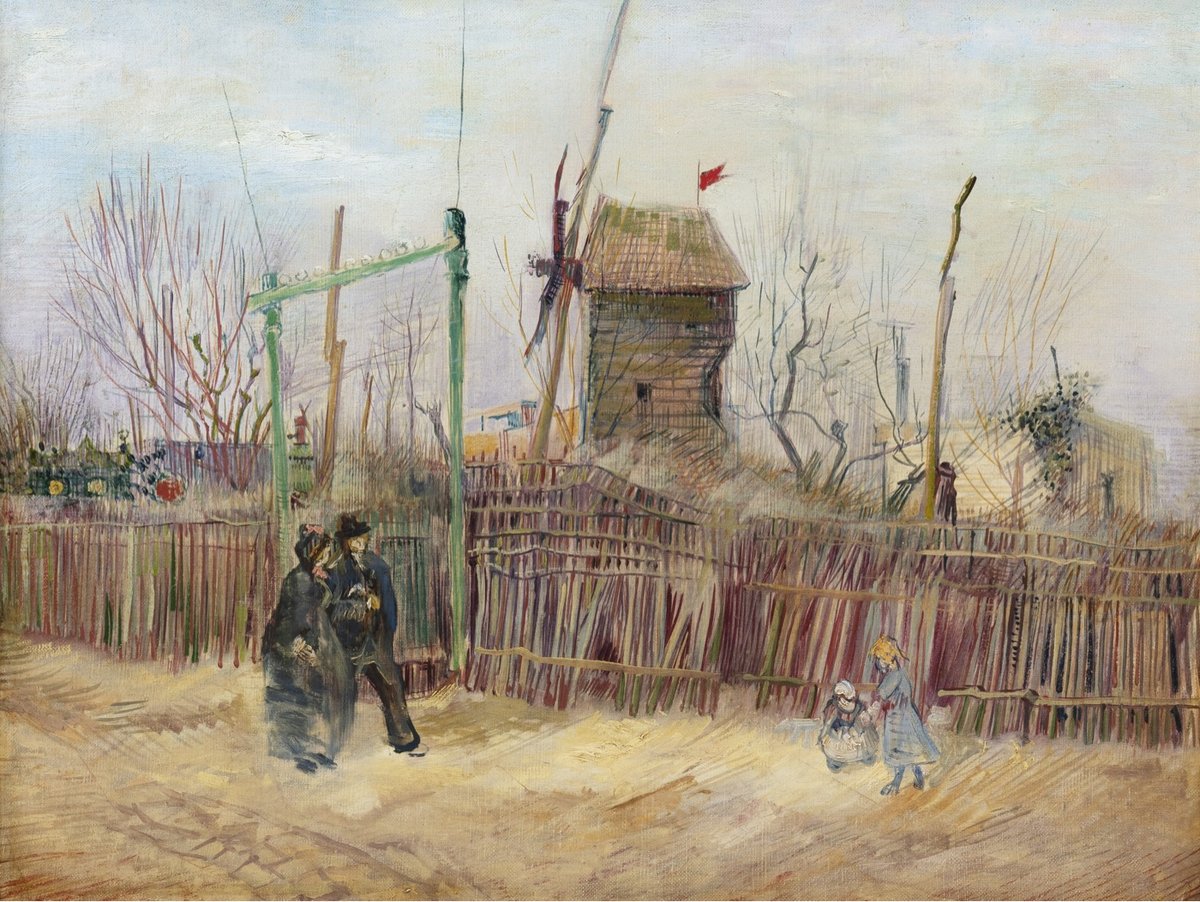
A painting by Vincent van Gogh that hasn’t been exhibited for the public since it was painted in 1887 is up for auction this month. The Paris landscape was created by the Dutch master on the cusp of his impressionist phase:
The work reflects Van Gogh’s exploration of a new city as well as his first encounter with the Impressionists and other avant-garde painters in Paris, which in turn sparked a transformation of his palette. “Gone were the dark tones of his early works, replaced with color in all its brilliance,” Sotheby’s writes in a statement. “It was in Montmartre, during these formative years, that the foundations of his inimitable style were established.”
There’s some press release sales bluster here, but looking at the painting, you can see inklings of his signature kinetic style — the flag appears to flutter, the trees wave in the wind, and the windmill spins. The whole thing is alive with motion. Wonderful. Here it is with the (assumed) original frame:

I hope that whoever buys it makes it available for public display; I’d love to see it someday.
Whoa, I heard this sonic boom created by a meteor last night. Didn’t see the fireball but the boom was so deep & loud that I legit started looking around for a mushroom cloud (80s kid habit).
R2-D2 and C-3PO Say “Get Vaccinated!”

In the 70s, the US government enlisted the droids of Star Wars to encourage parents to immunize their kids against childhood diseases like whooping cough and measles.
American parents weren’t getting their kids vaccinated. Measles, polio and whooping cough were taking a toll on young lives. Just as it is today, the message was important but the spot itself was horrible — a sludgy, if informative script. We shot it in a faux sci-fi control room. Most memorable was the way R2 appeared to pay no attention to the laws of physics.
(via kottke ride home)
The 50 Best Movie and TV Show Twists of All Time. Knives Out, Citizen Kane, Infinity War, The Good Place, Empire Strikes Back, and more.
America’s Vaccine Glut and “Vaccine Diplomacy”
After the Biden administration announced they will have enough Covid-19 vaccine supply to cover every single adult in the country by the end of May, I got to wondering about what they were going to do with the tens & hundreds of millions of surplus doses already procured for the remainder of the year. “Oh,” I thought, naively, “We’ll be able to distribute it to countries that can’t easily procure or manufacture vaccines of their own!” And I’m sure some of that will happen, if only for PR purposes. But it’s perhaps more likely that America will practice vaccine diplomacy and use the stockpile to reestablish its global leadership.
The United States has backed away from the world. This isn’t a Clinton thing or a W Bush thing or an Obama thing or a Trump thing or a Biden thing, but instead a United States thing. The American people lost interest in playing a constructive role in the world three decades ago, and America’s political leadership has molded itself around that fact. Trump may have been instinctually and publicly hostile to all things international, but Biden is only different in tone. Biden’s Buy-American program is actually more anti-globalization than Trump’s America-First rhetoric as it is an express violation of most of America’s international trade commitments. TeamBiden says it wants to reestablish America’s global leadership…but it plans to do so without any troops or money. Sorry, but that’s not how it works.
Which makes the possibilities for vaccine diplomacy wildly interesting. The United States has no responsibility to provide COVID vaccines to the world. It can — it will — distribute them, but it will want something in return.
Even if you disagree with some of the analysis here, it will be interesting to watch where America’s stockpile ends up. Given Biden’s rhetoric of “listening to the science” when it comes to the pandemic, I hope that at least some of that supply goes to places that need it most to make certain the pandemic doesn’t sputter on for years, generating potentially dangerous new variants, even if it’s politically disadvantageous.
Update: Countries now scrambling for COVID-19 vaccines may soon have surpluses to donate by Jon Cohen and Kai Kupferschmidt for Science magazine:
Like three dozen other countries, the United States contracted with multiple vaccine companies for several times the number of doses needed to cover its population. No one knew at the time which, if any, of the candidate vaccines would work or when they might prove safe and effective. But by now, most of the prepurchased vaccines appear to offer solid protection — which means many countries will receive far more vaccine than they need. The excess doses the United States alone may have by July would vaccinate at least 200 million people.
A chart in the article notes that the US has procured enough vaccine to cover almost 1.5 billion people after fully vaccinating its entire population.
A recent study found a correlation between places with Black Lives Matter protests and decreased killings by police. “Many cities with larger and more frequent BLM protests experienced greater declines in police homicides.”
Time Lapse of a Single Cell Growing Into a Salamander
In this six-minute time lapse video, you can watch a single cell grow into an alpine newt salamander. I got this via Craig Mod’s post about looking closely, in which he asks: when precisely does this collection of cells become a salamander?
The very definition of astonishing seems to be embedded in the way the cells move, as they grow from a “knowable” half-a-dozen dots to the millions and billions of the finished product. The phrase “sentience of the swarm” runs through my mind as I watch it. I am delighted and terrified: These little dots in aggregate know so much more than I ever will.
A new light installation by James Turrell is opening at MASS MoCA in May 2021. “I can make the sky any color you choose.”
Just sent out this week’s image-rich issue of the @kottke newsletter, featuring Wandavision cartoons (no spoilers!), letterlocking, and printed hair flowers.
“Why did Jack Dorsey buy Jay-Z’s failed music service?” Square bought a majority stake in TIDAL for some reason…
I have experienced absolutely no vaccine FOMO. It’s not my turn yet and mostly I just feel happy anytime people I know (or even folks I don’t) get their shot. Every jab gets us all closer to some normalcy.
Day Care Makes The World More Tender. “Silence the voice inside your head that has internalized the patriarchal belief that children are best loved at home, exclusively by their mothers.”
This Trained Singer Teaches Metal Bands How To Scream
Melissa Cross is a voice coach who works with metal bands so their screaming singers don’t damage their vocal cords. Her work involves switching singers from using their voice in an emotional way to a more classical and durable approach:
What metal singers do wrong is use an emotional response that feels like anger, or anxiety, in order to make the sound. And that involves too much tension. I use my acting training to imitate it, and my know-how vocally to do it in a way that could be healthy.
As someone whose throat starts hurting after 2 minutes of singing along to a favorite song, I’m fascinated by voice training. I don’t aspire to ever sing, but if I even want to do a podcast or some such, maybe I should hire a vocal coach? (via open culture)
Holy wow, this story by @choitotheworld. “All the pain of the past year taught me something: the true nature of intimacy.”
Johnson & Johnson announces trials to test their Covid-19 vaccine in children aged 12-17 and, following that, in younger children and infants. In an interview elsewhere, J&J’s CEO said those trials should be completed by Sept.
Create Escape — Bob Ross Narrates a Banksy Behind-the-Scenes Video
Banksy took some Bob Ross narration from The Joy of Painting and dubbed it over video footage that shows the street artist painting an image of an escaping inmate on the wall of a former prison in the dead of night. Colossal has more info on why Banksy picked the wall of this particular prison to do:
The expansive and unblemished prison wall was a daring and perfect spot for a Banksy piece. It’s best known for its most famous inmate: Oscar Wilde served two years in the prison from 1895-1897 for the charge of “gross indecency” for being gay. The work is clearly a tribute to the poet, as the escape mechanism appears to be a long strand of paper emerging from a typewriter in place of the usual bed sheets.
Colorful Floral Printing on Hair



After many years of experimentation, Spanish hairdresser Alexis Ferrer has developed a process for vibrant, full-color printing onto hair extensions, culminating in his recent collection, La Favorite (photographed by Rafael Andreu on model Emma Fuhrmann).1
Sidebar: why is it always so difficult to find out who the models are in fashion shoots like this? The articles and Instagram posts list the photographer, the stylist, the makeup artist, the assistant, and even the clothing brands but almost never the person actually being photographed (unless they are famous). Is Fuhrmann not an equal participant in the process of getting these photos just right? Seems retrograde.↩
Starlings Form Murmuration in the Shape of a Huge Bird
Photographer James Crombie and his friend Colin Hogg captured an amazing moment over Lough Ennell in County Westmeath, Ireland on Tuesday: a murmuration of starlings that, for a split second, looked like a huge bird. Crombie took the photo and Hogg the video:
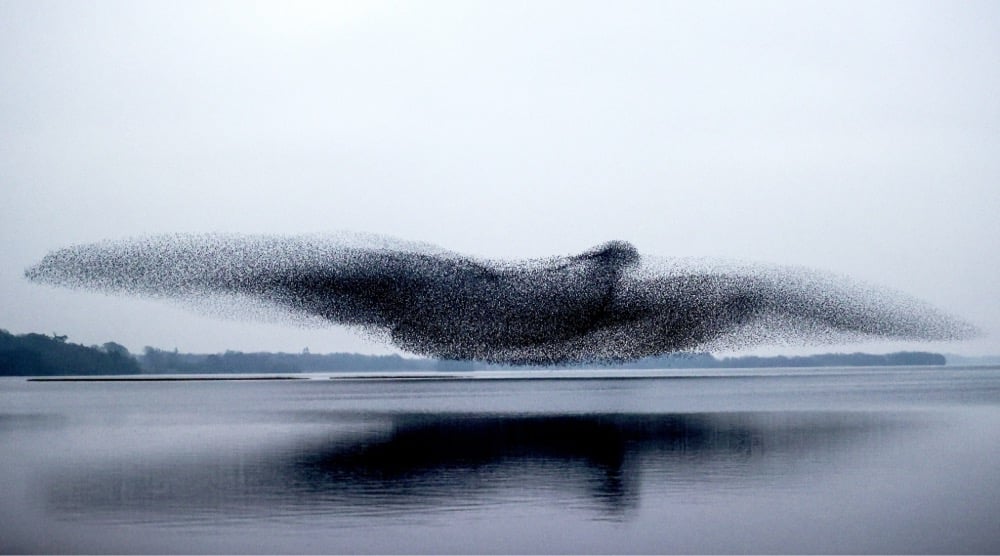
Crombie made, he thinks, about 50 trips to Lough Ennell in the past few months. “I’m usually a sports photographer, so for a while I’ve had a bit of time to think about other things. I had an image in my head,” he explains. “I could see they were making shapes. I kept going back, to get the image I had in my head.”
…
Finally, at about 6pm on Tuesday, Crombie focused his Canon EOS-1D X Mark III and got the image he wanted. That night alone he shot between 400 and 500 frames before capturing this unforgettable photograph. “It paid off,” he says.
I know there has to be a word for a collection of things that looks like an individual member of the group (like the school of fish in Finding Nemo) but I can’t find it right now. Anyone know? Or have a good suggestion? (thx, aaron)
It’s weird that a) NY will allow live performances to resume in April and b) this @nytimes piece about it doesn’t include a single quote from a scientist or public health official. Cases, positivity, deaths still at high levels in NYC.
Khoi Vinh and his 11-year-old daughter designed a family cookbook together. “It was a blast talking about these fairly esoteric topics…to have it come alive for her, demystifying the act of what it takes to create a ‘real’ book.”
Bob Odenkirk Action Movie??!
This is the trailer for Nobody, an action film that’s a cross between John Wick, Breaking Bad, and a tiny bit of Force Majeure (although maybe I’m alone in making this connection). The film stars Bob Odenkirk as an unassuming dad who decides he wants to be assuming again — violent hijinks ensue. Looks like it’s coming out in late March, which is still a bit too early for me to want to see a movie in a theater again.
Dolly Parton gets her first Covid-19 shot (she helped fund Moderna’s research) and sings a little song to the tune of Jolene. “Vaccine, vaccine, vaccine, vaccine, ‘cause once you’re dead, that’s a bit too late.”
The Gulf Stream, the Cold Blob, and a Potentially Frozen Europe
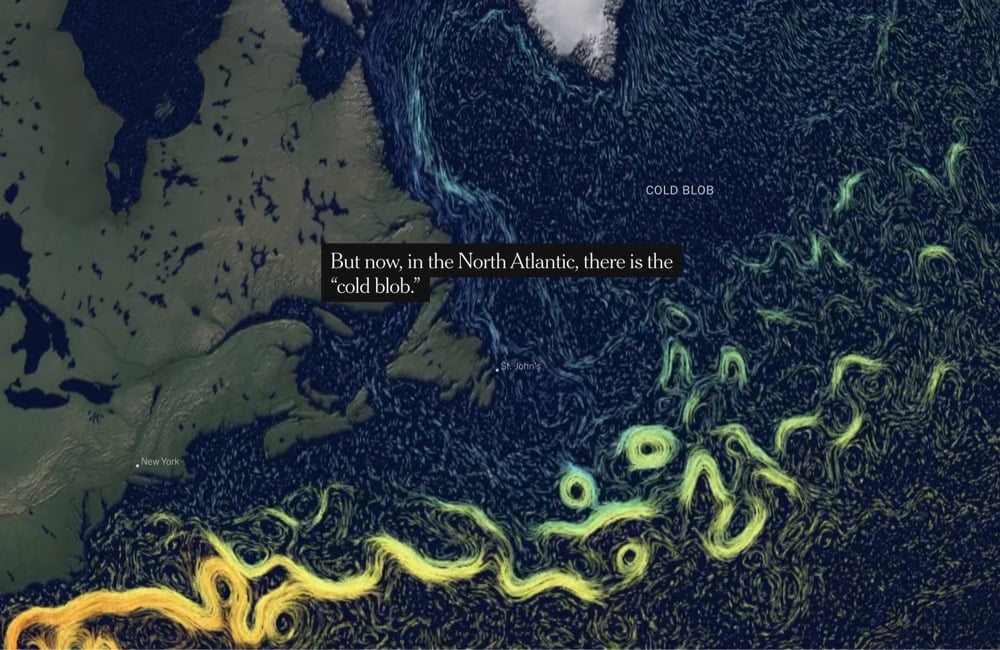
The NY Times has a fantastic interactive piece about a particularly disturbing aspect of the climate crisis: the evidence that a huge Atlantic circulation pattern is weakening and could collapse, leading to “a monstrous change” in temperature, precipitation, and other chaotic effects across the globe.
Now, a spate of studies, including one published last week, suggests this northern portion of the Gulf Stream and the deep ocean currents it’s connected to may be slowing. Pushing the bounds of oceanography, scientists have slung necklace-like sensor arrays across the Atlantic to better understand the complex network of currents that the Gulf Stream belongs to, not only at the surface, but hundreds of feet deep.
“We’re all wishing it’s not true,” Peter de Menocal, a paleoceanographer and president and director of the Woods Hole Oceanographic Institution, said of the changing ocean currents. “Because if that happens, it’s just a monstrous change.”
The consequences could include faster sea level rise along parts of the Eastern United States and parts of Europe, stronger hurricanes barreling into the Southeastern United States, and perhaps most ominously, reduced rainfall across the Sahel, a semi-arid swath of land running the width of Africa that is already a geopolitical tinderbox.
One of the potential reasons for this weakening is that the quickly melting Greenland ice sheet is dumping massive amounts of cold fresh water into the North Atlantic, disrupting the Gulf Stream. This is “the cold blob”.
The northern arm of the Gulf Stream is but one tentacle of a larger, ocean-spanning tangle of currents called the Atlantic Meridional Overturning Circulation, or AMOC. Scientists have strong evidence from ice and sediment cores that the AMOC has weakened and shut down before in the past 13,000 years. As a result, mean temperatures in parts of Europe may have rapidly dropped to about 15 degrees Celsius below today’s averages, ushering in arctic like conditions. Parts of northern Africa and northern South America became much drier. Rainfall may even have declined as far away as what is now China. And some of these changes may have occurred in a matter of decades, maybe less.
The AMOC is thus a poster child for the idea of climatic “tipping points” — of hard-to-predict thresholds in Earth’s climate system that, once crossed, have rapid, cascading effects far beyond the corner of the globe where they occur. “It’s a switch,” said Dr. de Menocal, and one that can be thrown quickly.
Which brings us to the cold blob. Almost everywhere around the world, average temperatures are rising — except southeast of Greenland where a large patch of the North Atlantic has become colder in recent years.
The title of this post references a “frozen Europe” but because the Earth is a nonlinear system, a weakened AMOC could actually have the opposite effect:
Scientists at the U.K.’s National Oceanography Centre have somewhat counterintuitively linked the cold blob in the North Atlantic with summer heat waves in Europe. In 2015 and 2018, the jet stream, a river of wind that moves from west to east over temperate latitudes in the northern hemisphere, made an unusual detour to the south around the cold blob. The wrinkle in atmospheric flow brought hotter-than-usual air into Europe, they contend, breaking temperature records.
“That was not predicted,” said Joel Hirschi, principal scientist at the centre and senior author of the research. It highlights how current seasonal forecasting models are unable to predict these warm summers. And it underscores the paradox that, far from ushering in a frigid future for, say, Paris, a cooler North Atlantic might actually make France’s summers more like Morocco’s.
(thx, meg)
Really happy to see that the Covid-19 vaccination effort is speeding up in Vietnam. In order to effectively end the pandemic (and guard against future dangerous variants), a fast, worldwide effort is necessary.
Digitally Reading 17th-Century Locked Letters
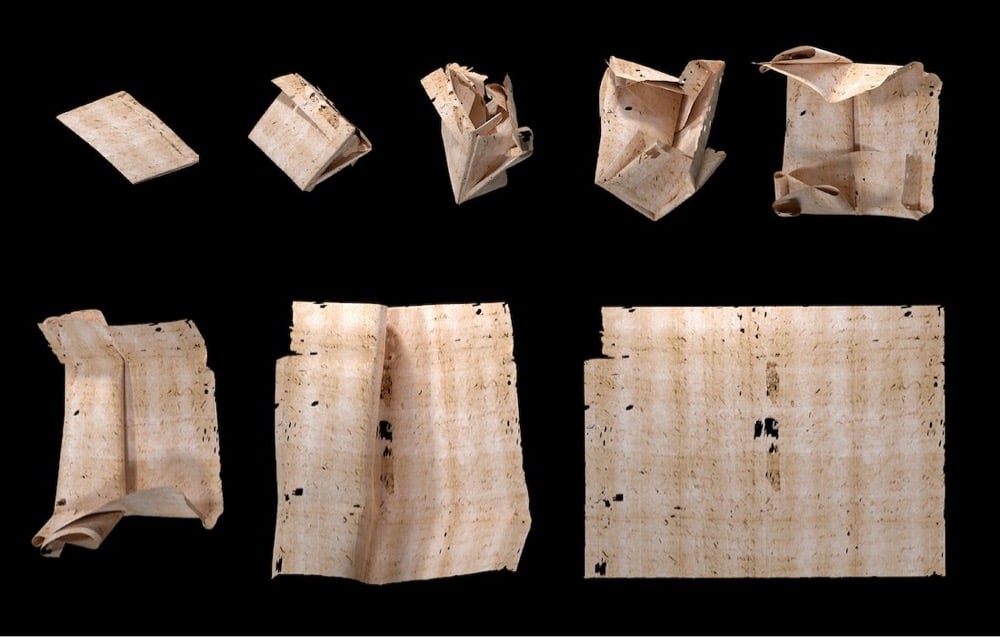
Using an x-ray technique, MIT researchers have digitally unfolded and read 17th-century letters that had been “letterlocked” by their authors to prevent them from being read in transit. Reading the letters in this way allows close study without actually unfolding and potentially damaging these letters or altering them against further study. This is a fully digital image of one of the unlocked letters:
From a NY Times piece about the research:
In an interview, Jana Dambrogio, the study’s lead author and a conservator at the M.I.T. Libraries, said that learning of the trove’s existence inspired her to see if more technologically inclined colleagues could find a way to digitally open the locked letters. At the time, in 2014, scholars could read and study such letters only by cutting them open, which often damaged the documents and obscured or eliminated clues as to how they had been secured.
“We really need to keep the originals,” Ms. Dambrogio said. “You can keep learning from them, especially if you keep the locked packets closed.”
The old letters were protected from prying eyes when the sheets of writing paper were carefully folded to become their own secure enclosures.
The first step of their digital opening is to scan a target letter with an advanced X-ray machine. The resulting three-dimensional image — much like a medical scan — reveals the letter’s internal configuration. A computer then analyzes the image to undo the folds and, almost magically, turn the layers into a flat sheet, revealing handwritten text that can be read.
Here’s a contemporary example of the letterlocking technique where folds, slits, and wax are used to lock the letter and provide authentication:
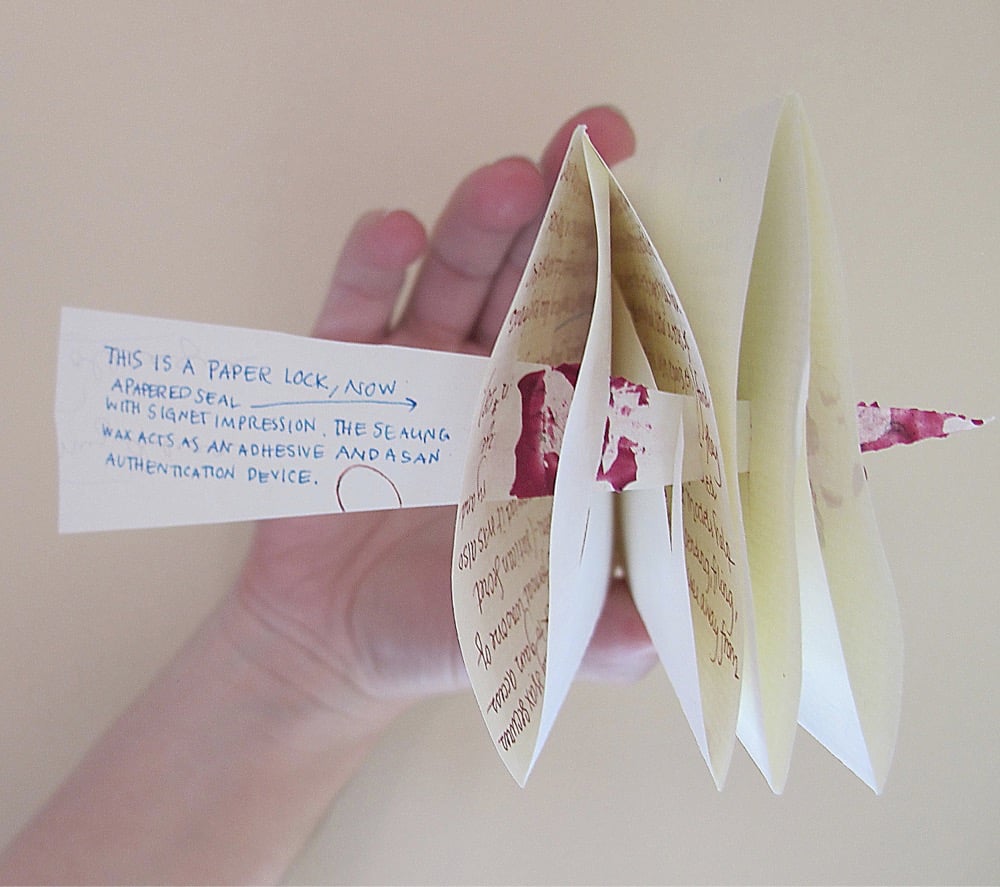
A letterlocking technique in action, modeled after a triangle-locked letter sent by Sir Francis Walsingham in 1587:
Whoa and this spiral-locked letter modeled on a message sent by Queen Elizabeth I to France’s Henry III in the 1570s:
And this is a list of all the letterlocking techniques and formats the researchers have identified:

You can explore more about letterlocking at Letterlocking.org.
Update: The group investigating letterlocking is back in the NY Times with updated research.
Topps Marks 70 Years of Baseball Cards with Special Artist-Designed Cards
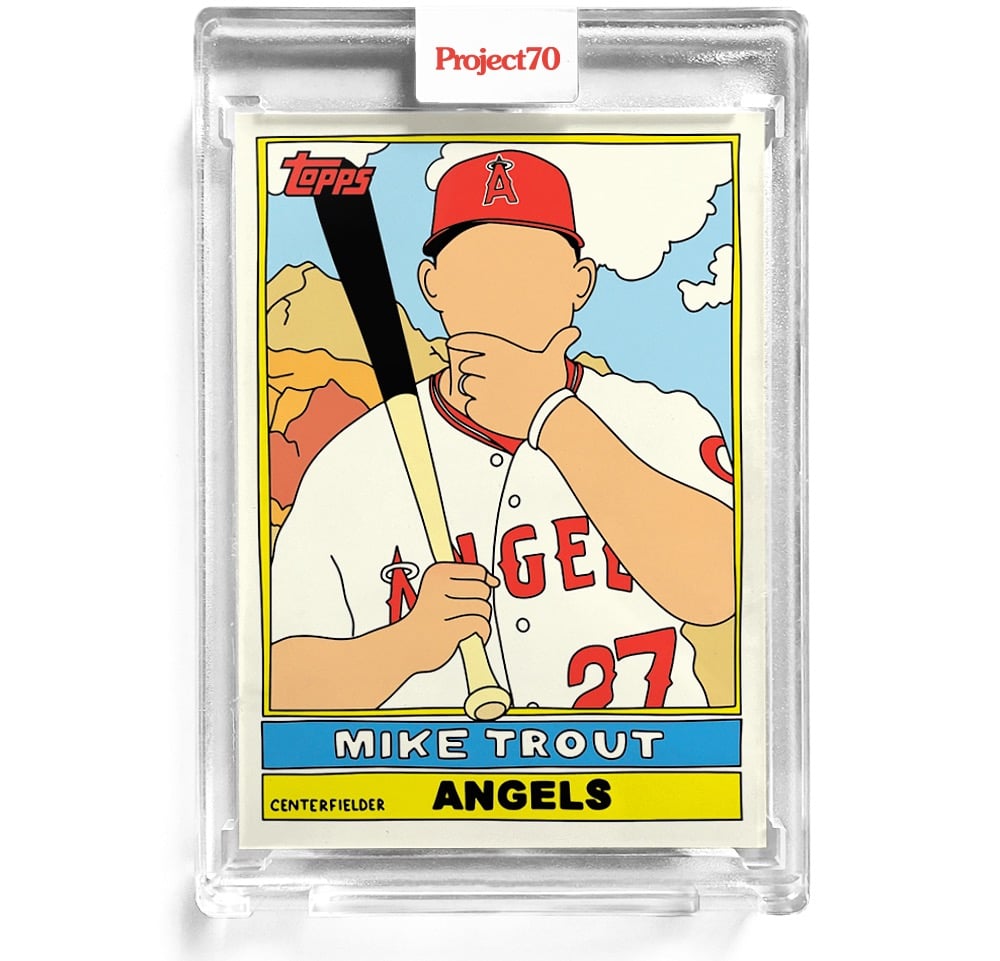
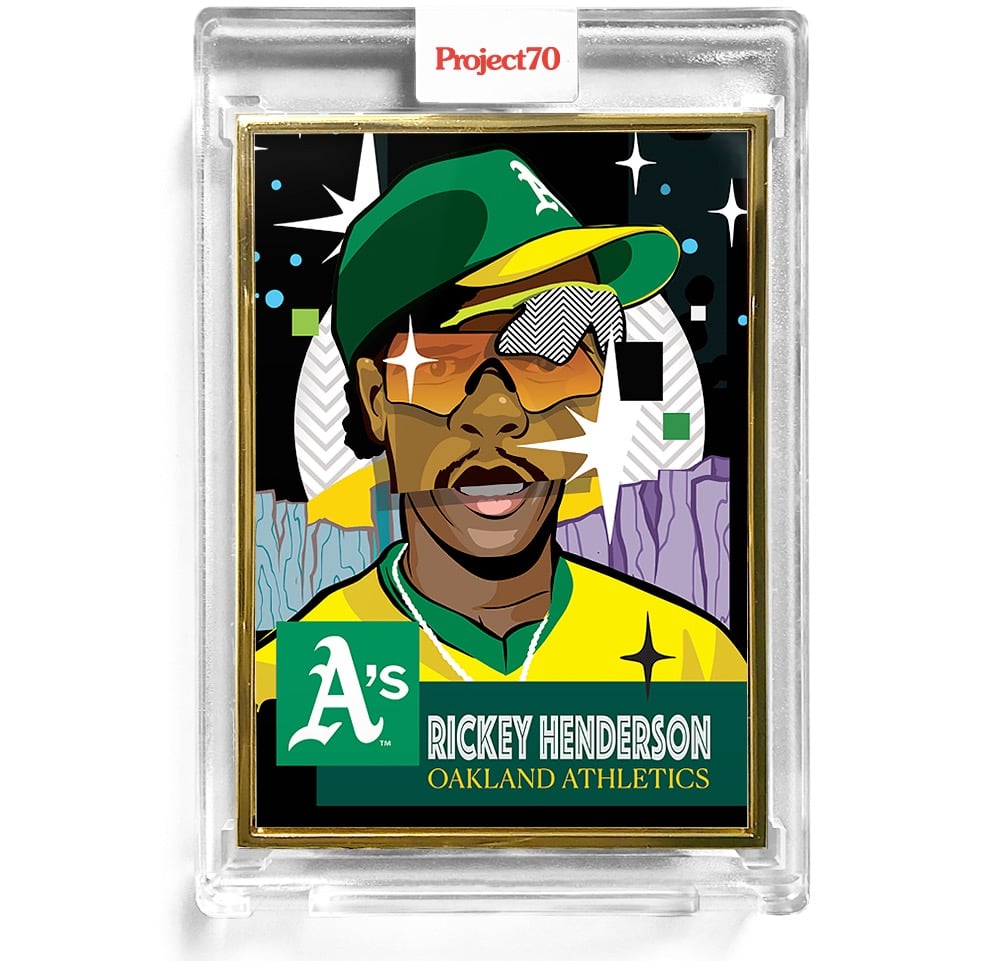
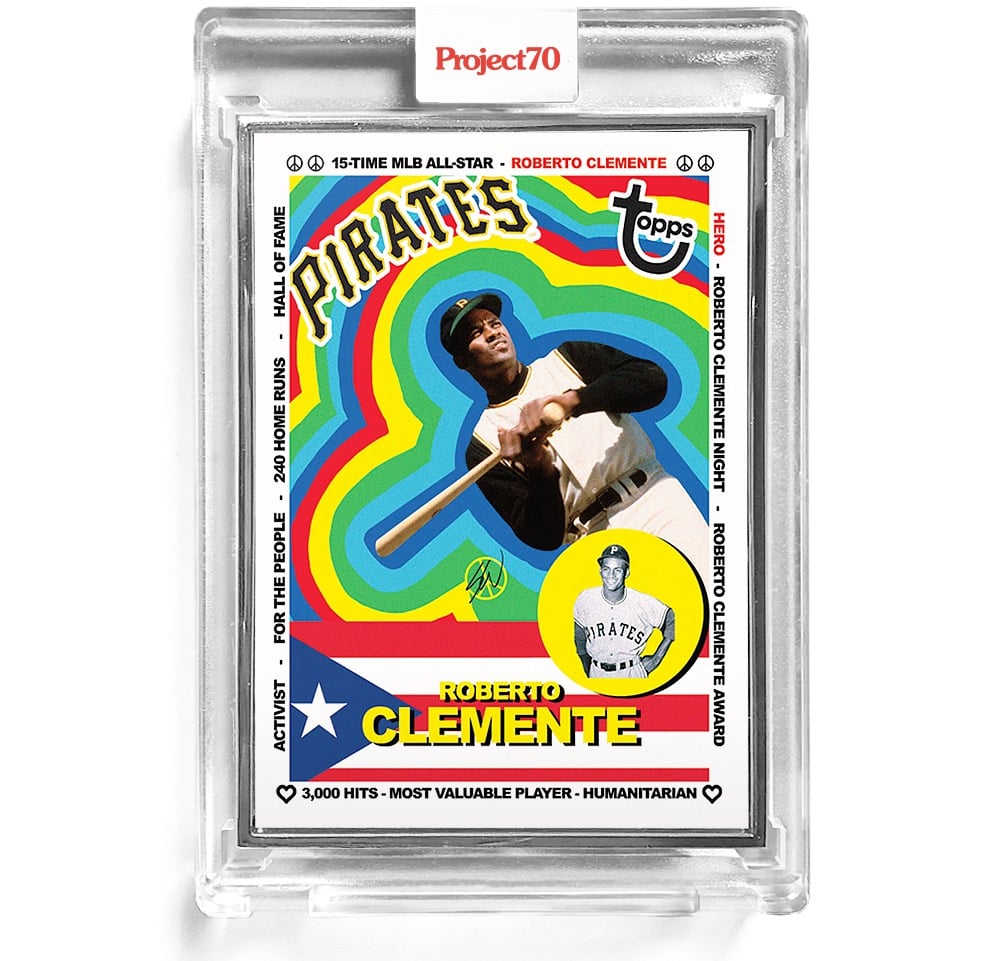
In 1951, Topps released their first set of baseball cards, hoping to entice people into buying their chewing gum. Instead, they created a sports collectable industry that’s still going strong 70 years later. To celebrate the anniversary, “artists and creatives around the globe are revisiting and reimagining 70 years of iconic baseball card designs” as part of Project70.
They’re releasing a few cards at a time for a limited time — you can find the current selection in the Topps online store. I’ve included three of my favorites above: 1976 Mike Trout by Fucci, 1953 Rickey Henderson by Pose, and 1983 Roberto Clemente by Sean Wotherspoon.
Question: Since the case is now part of the collectable being sold, do you have to put the whole thing in a bigger case to preserve its overall mint condition? Where does this end? (via print)
Sculpture by Valérie Hadida

I love this bronze sculpture by French artist Valérie Hadida. You can find more of her work on Colossal and Artsy.
A Concerto Is a Conversation
In this lovely short film, composer and pianist Kris Bowers talks to his grandfather, Horace Bowers, about his life in the Jim Crow South and how he found a new life in California as part of the Great Migration. Horace’s move across the country set in motion events that culminated in Kris premiering a concerto he wrote with the LA Philharmonic. You can read more about Horace in this 2019 profile.
Yet, in a sign of the times, Horace encountered discrimination while building his business. At the time, mainstream financial institutions rarely gave loans to Blacks and Bank of America had already denied him. His fortunes changed after he hired a White young man as a presser.
“I gave him a job and after two days, he asked me to tell the bank that he had been working for me for 30 days. He said that he needed a loan because he had just gotten divorced and was broke and wanted to borrow money to go back to Texas,” said Horace.
“Even though I was with Bank of America, they had turned me down for a loan and I did not think he could get one. But, a few days later, his loan was approved. I wondered why, but I immediately thought of the color of my skin.”
Armed with this knowledge, Horace devised another route. He visited a different branch, picked up the loan papers, completed the forms and mailed them in.
“A few days later, my loan was approved and from then on, nobody saw us. I did mostly everything by mail,” he said.
What if Reese’s Peanut Butter Cups but without the chocolate? “Both the outer shell and inside of the cup are all peanut butter.” YES.
Why Does Vladimir Putin Want Alexei Navalny Dead?
After Vladimir Putin, dictatorial leader of Russia for over 20 years now, had seemingly insulated himself against losing power through control of the media, law, elections, and the wealthy allies, a lawyer named Alexei Navalny began to expose the corruption in Putin’s regime with a series of posts to his blog and on YouTube. Navalny continued his investigations, gaining public popularity and running for public office. Putin imprisoned him and tried to have him killed. This Vox video explains in more detail why Putin wants Navalny dead.
More reading on Navalny: Vox explainer, Masha Gessen on recent pro-Navalny protests in Russia. (via open culture)
Socials & More