
What if the Earth were listed for sale on Zillow? “BEAUTIFUL, SUN-DRENCHED planet TRANSFORMED by human touch… The humans also redid all the floors in asphalt…”

Advertise here with Carbon Ads
This site is made possible by member support. 💞
Big thanks to Arcustech for hosting the site and offering amazing tech support.
When you buy through links on kottke.org, I may earn an affiliate commission. Thanks for supporting the site!
kottke.org. home of fine hypertext products since 1998.
Beloved by 86.47% of the web.
Entries for March 2021
Period-Specific Cartoon Homages to Wandavision
Art director Riana McKeith is watching Wandavision, each episode of which takes place in a different time period from the 50s to the present day. As a loving homage, she’s illustrating scenes from the show in the style of cartoons from each time period. Here’s the first episode, which takes place in the 50s a la I Love Lucy or Leave It to Beaver:
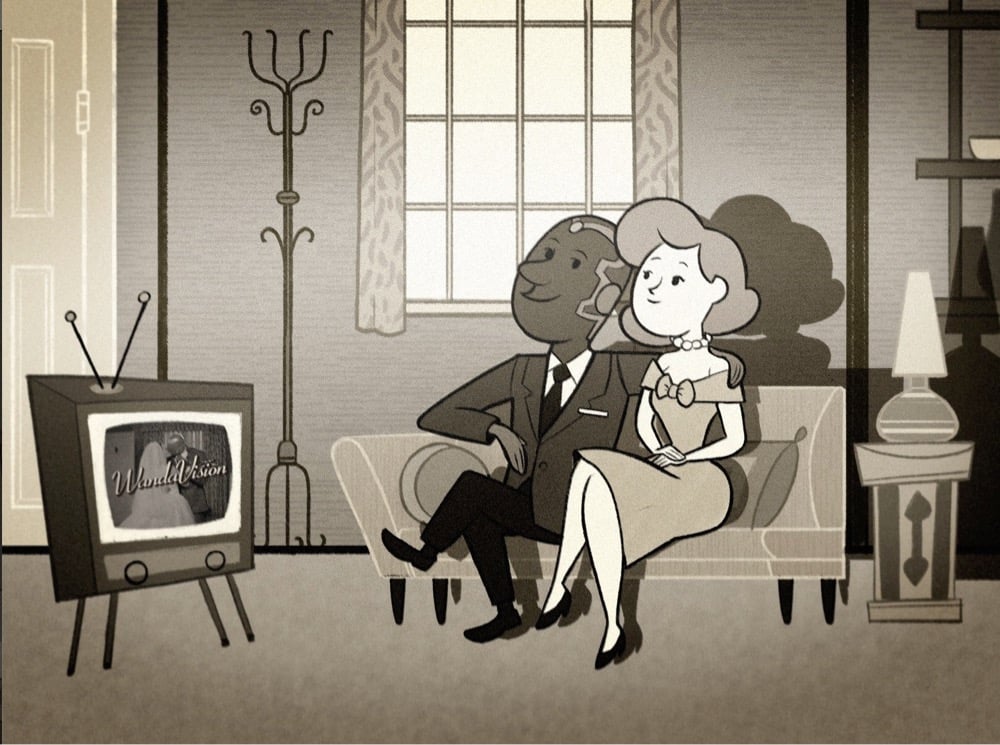
I don’t know enough about 50s cartoons to do more than guess at the inspiration of that one (Hanna Barbera? Looney Tunes?) but her 60s scene is obviously inspired by The Jetsons and The Flintstones:
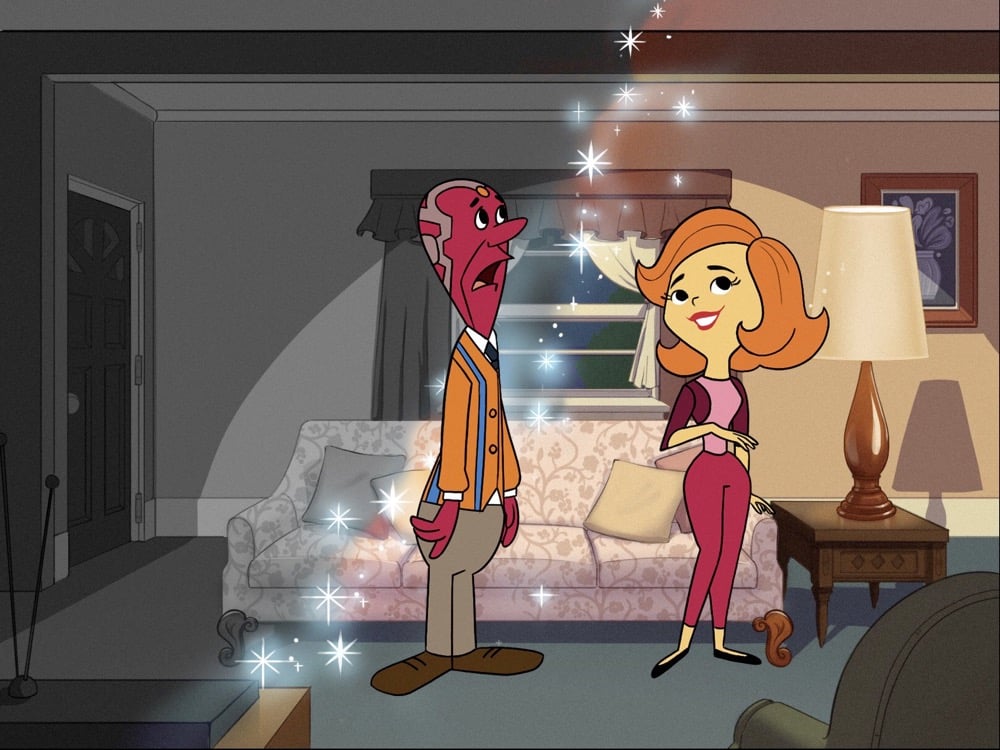
My kids and I are obsessed with Wandavision — it’s a big ol’ love letter to television — and this project is the perfect complement to the show.
Learning from the Five Pandemic Mistakes We Keep Making
Zeynep Tufekci has written an important piece for The Atlantic on the mistakes that the media, public health officials, and the public keep making during the pandemic and how we can learn from them. A big one for me is how scientists & other public health officials and agencies communicate their knowledge to the public and how the media interprets and amplifies those messages.
Thus, on January 14, 2020, the WHO stated that there was “no clear evidence of human-to-human transmission.” It should have said, “There is increasing likelihood that human-to-human transmission is taking place, but we haven’t yet proven this, because we have no access to Wuhan, China.” (Cases were already popping up around the world at that point.) Acting as if there was human-to-human transmission during the early weeks of the pandemic would have been wise and preventive.
Later that spring, WHO officials stated that there was “currently no evidence that people who have recovered from COVID-19 and have antibodies are protected from a second infection,” producing many articles laden with panic and despair. Instead, it should have said: “We expect the immune system to function against this virus, and to provide some immunity for some period of time, but it is still hard to know specifics because it is so early.”
Similarly, since the vaccines were announced, too many statements have emphasized that we don’t yet know if vaccines prevent transmission. Instead, public-health authorities should have said that we have many reasons to expect, and increasing amounts of data to suggest, that vaccines will blunt infectiousness, but that we’re waiting for additional data to be more precise about it. That’s been unfortunate, because while many, many things have gone wrong during this pandemic, the vaccines are one thing that has gone very, very right.
This pair of statements she highlights — “no clear evidence of human-to-human transmission” and “There is increasing likelihood that human-to-human transmission is taking place, but we haven’t yet proven this, because we have no access to Wuhan, China” — are both factually true but the second statement is so much more helpful, useful, and far less likely to be misinterpreted by people who aren’t scientists that making the first statement is almost negligent.
“An oily, 100-nanometer-wide bubble of genes has killed more than two million people and reshaped the world.” But are viruses alive?
Inside a Covid ICU, Through a Nurse’s Eyes
A film crew from the NY Times recently spent several days in the Covid-19 ICU in Arizona, at the time one of the hardest hit places in the world. Two of the nurses wore GoPro cameras while working to witness what they did on a daily basis — the 12-hour days, the grief, the care, the constant death. This video is incredible and incredibly difficult to watch — you actually see a patient die on camera, surrounded by nurses and family (virtually).
So many Americans have died in hospitals without family by their side, but they were not alone. Nurses brush patients’ teeth, change their catheters and hold their hands in their final moments.
At the beginning of the video, one of the nurses says, “Unless you’re actually in there, you have no idea.” Thanks to their willingness to share their experiences, now we at least have some idea.
Update: Vox talked to some ICU doctors about what it’s like for their patients when they die from Covid-19. Because of patient confidentiality and the contagious nature of the disease, society (and even the families) has been “protected and sheltered from seeing the worst of this disease”.
Imagine trying to breathe through a very narrow straw, says Jess Mandel, chief of pulmonary, critical care, and sleep medicine at UC San Diego Health. “You can do that for 15 to 20 seconds, but try doing it for two hours.” Or for days or weeks.
Patients struggling through low oxygen levels like this have told Kenneth Remy, an assistant professor of critical care medicine at Washington University School of Medicine in St. Louis, that it feels like a band across their chest or that their lungs are on fire. Or like a thousand bees stinging them inside their chest. Others might have thick secretions in their lungs that make it feel like they are trying to breathe through muck. Many people say it feels like they’re being smothered.
The ordeal is so taxing that many wish for death. “You hear the patients say, ‘I just want to die because this is so excruciating,’” Remy says. “That’s what this virus does.”
The COVID Zoom Boom Is Reshaping Sign Language. “Deaf people are adapting signs to accommodate the limitations of video communication while working from home.”
Spring Doorstop Musical Instrument. Booooiinnggg!
I didn’t realize it at the time, but making a spring doorstop keyboard was probably one of my greatest desires as a young child obsessed with those boingy door stoppers. We didn’t even have any of them in my house — playing with them was a rare treat when visiting friends’ and relatives’ houses. Thank you Ali Spagnola for fulfilling a childhood dream. (Can’t remember where I found this, but since it’s music-related it was probably via Ted Gioia.)
Update: See also the Quantum Garden, “an interactive art installation that demonstrates key concepts of quantum physics, such as quantum superposition, interference, and the Schrödinger equation.” (via @kayelcio)
Socials & More