




This site is made possible by member support. 💞
Big thanks to Arcustech for hosting the site and offering amazing tech support.
When you buy through links on kottke.org, I may earn an affiliate commission. Thanks for supporting the site!
kottke.org. home of fine hypertext products since 1998.
Beloved by 86.47% of the web.
Entries for November 2018
Facebook’s Tipping Point of Bad Behavior?
The NY Times has published a long piece about how Facebook has responded (and failed to respond) to various crises over the past three years: Delay, Deny and Deflect: How Facebook’s Leaders Fought Through Crisis. It does not paint a very flattering portrait of the company. This part is particularly damning (italics mine):
When Facebook users learned last spring that the company had compromised their privacy in its rush to expand, allowing access to the personal information of tens of millions of people to a political data firm linked to President Trump, Facebook sought to deflect blame and mask the extent of the problem.
And when that failed — as the company’s stock price plummeted and it faced a consumer backlash — Facebook went on the attack.
While Mr. Zuckerberg has conducted a public apology tour in the last year, Ms. Sandberg has overseen an aggressive lobbying campaign to combat Facebook’s critics, shift public anger toward rival companies and ward off damaging regulation. Facebook employed a Republican opposition-research firm to discredit activist protesters, in part by linking them to the liberal financier George Soros. It also tapped its business relationships, lobbying a Jewish civil rights group to cast some criticism of the company as anti-Semitic.
Are you fucking kidding me? Facebook paid to promote the right-wing & anti-Semitic conspiracy theory that George Soros pays protestors? Shame on you, Mark Zuckerberg, Sheryl Sandberg, and the rest of Facebook leadership team. Legitimizing this garbage actively hurts our democracy. On Twitter, The Guardian’s senior tech reporter Julia Carrie Wong gets at what is so wrong and different about this behavior:
There’s something about this Soros story that feels significantly different than the usual Facebook scandal. Most recent negative Facebook stories are issues relating to challenges of scale and a tendency toward passivity.
Facebook’s standard playbook is to admit that they made a mistake by being slow to react, remind us of their good intentions, then promise to do better. It’s the aw geez who woulda thought in the dorm room that we would have to deal with all these tricky issues defense.
This has been very effective for a company that still gets the benefit of the doubt. No one would ever suggest that Facebook *wanted* to bring about the ethnic cleansing of Rohingya or lynchings in rural Indian villages. They just were in a little over their heads.
But this Soros thing is different. This is no passive failure. It’s a malevolent action taken against groups who criticize Facebook for things that Facebook admits it has failed at. It takes advantage of and contributes to the most poisonous aspects of our public discourse.
It makes you wonder if the “ah geez” thing has just been an act all along. Mike Monteiro, who speaks and writes about ethics in the design profession, is surprised that Facebook’s employees haven’t spoken out more.
What surprises me is that Facebook employees are still at their desks after finding that their company was actively attempting to discredit activists. No doubt some of them are shook. No doubt some of them will make public statements against their company’s policy. And those are needed. No doubt there will be internal spirited conversations within the company. And those are needed as well. But there won’t be a walk-out. I say this hours after the article was released. But I doubt that I’ll have to come back to this paragraph and revise it. I wish I wasn’t so sure of that. But I am.
25 Reasons to Keep on Making Stuff in Times of Crisis
In an epic GIF-laden thread on Twitter, author Chuck Wendig lays out “25 REASONS TO KEEP ON MAKING STUFF IN THIS TIME OF RAMPANT ASSHOLERY”.
1. Because you need to escape the fuckery, and what you make is a door. A book, a piece of art, even an excellent meal — it’s a doorway out. It’s the tunnel dug out behind the Rita Hayworth poster in your prison cell.
3. Because creation is #resistance. Making things is additive. And in a subtractive time such as this, you must balance the void with its opposite. That is an act of defiance. And we need more defiance.
9. Because it’s therapy. It’s therapy first for you, and if you share it, eventually for us, too.
20. Because when you make stuff, you improve yourself. And we need you in fighting shape. YOU MUST BE A WHETTED BLADE READY TO SLICE THROUGH SHENANIGANS, CHICANERY, AND GARBAGE.
24. Because art is beauty. Stories, poetry, craftwork, food, it’s all beautiful and this ugly world needs a dollop of beauty. There is beauty in both the act and the result of making stuff. So kick the shitstorm out of the sky with an aggressive rainbow counterattack.
See also Austin Kleon’s upcoming book Keep Going (and related talk) and How to Be Productive in Terrible Times.
Better Living Through Non-Zero Sum Games
One of the very few books I think about all the time is Robert Wright’s Nonzero: The Logic of Human Destiny. Paras Chopra tweeted out a good summary of the book a couple of weeks ago.
The basic premise of the book is that history has a direction which favors co-operation and non-zero sum games, and that causes an increase in complexity. Starting from the first replicating molecule which co-operated with an outer layer to form first proto-cell, evolutionary and cultural history is full of examples where two entities come together to survive and progress a lot more than they would have done individually. This co-operative entity fares much better than two individual entities because of specialization. If two entities are in the same boat — that they win together or lose together — then trust is implicit. In a non-zero sum game, trust causes entities to focus on what they do best.
This type of win-win cooperation in biology is mirrored in the cultural world:
Out of all technologies, perhaps information technologies are most conducive to enabling more non-zero sum games. As writing skill spread, more and more people entered into simple written contracts that helped people co-operate and specialize. Perhaps the biggest information technology was money and the corresponding meme of capitalism that helped people express their desires clearly and others to fulfil those desires. We have a thousand different types of shoes because shoe-makers today do not have to worry about baking their own bread. This “trust” in the larger entity of commerce helps everyone progress.
Nonzero is an intriguing lens through which to view current events (which is why it’s often in my thoughts). As Chopra notes, cooperation isn’t always the norm…Trumpist Republicans and Brexit proponents are both veering towards the zero sum end of the spectrum and I don’t think it will work out well for either country in the long run.
A review & behind-the-scenes of a art exhibition curated by Wes Anderson & Juman Malouf for Vienna’s Kunsthistorisches Museum. “These are things that would not normally be shown…”
Puzzle Montage Art
Taking advantage of the fact that puzzle manufacturers typically use the same cut patterns to make many different puzzles, Tim Klein uses the interchangeable pieces to create surrealist mashups of puzzles.



Artist Alma Haser used this technique for her Within 15 Minutes project in which she melded identically cut puzzles of portraits of identical twins.

(via @john_overholt)
A previously undiscovered galaxy has been found very close to the Milky Way. Its detection was hindered by its low light & density and hiding place behind the Milky Way disc.
The Ubiquitous Collectivism that Enables America’s Fierce Individualism
Forbes recently released their 2019 “30 Under 30” list of “the brashest entrepreneurs across the United States and Canada” who are also under 30 years old. A persistent criticism of the list is that many of the people on it are there because of family or other social advantages. As Helen Rosner tweeted of last year’s list:
My take is: all 30 Under 30 lists should include disclosure of parental assets
In a piece for Vox, Aditi Juneja, creator of the Resistance Manual and who was on the 30 Under 30 list last year, writes that Forbes does ask finalists a few questions about their background and finances but also notes they don’t publish those results. Juneja goes on to assert that no one in America is entirely self-made:
Most of us receive government support, for one thing. When asked, 71 percent of Americans say that they are part of a household that has used one of the six most commonly known government benefits — Social Security, Medicare, Medicaid, food stamps, welfare, or unemployment benefits.
And many people who benefit from government largesse fail to realize it: Sixty percent of Americans who claim the mortgage-interest deduction, which applies to homeowners, say they have never used a government program. If you’ve driven on public roads, gone to public school, or used the postal service as part of your business — well, we all rely on collective infrastructure to get ahead.
And then she lists some of the ways in which she has specifically benefitted from things like government programs, having what sounds like a stable home environment, and her parents having sufficient income to save money for her higher education.
I went to public schools through eighth grade. My parents were able to save for some of my college costs through a plan that provides tax relief for those savings. I stayed on my parent’s health insurance until I was 26 under the Affordable Care Act. I have received the earned income tax credit, targeted at those with low or moderate income. I took out federal student loans to go to law school.
Juneja’s piece reminds me of this old post about how conservatives often gloss over all of the things that the government does for its citizens:
At the appropriate time as regulated by the US congress and kept accurate by the national institute of standards and technology and the US naval observatory, I get into my national highway traffic safety administration approved automobile and set out to work on the roads build by the local, state, and federal departments of transportation, possibly stopping to purchase additional fuel of a quality level determined by the environmental protection agency, using legal tender issed by the federal reserve bank. On the way out the door I deposit any mail I have to be sent out via the US postal service and drop the kids off at the public school.
And also of mayor Pete Buttigieg’s idea of a more progressive definition of freedom:
Or think about the idea of family, in the context of everyday life. It’s one thing to talk about family values as a theme, or a wedge — but what’s it actually like to have a family? Your family does better if you get a fair wage, if there’s good public education, if there’s good health care when you need it. These things intuitively make sense, but we’re out of practice talking about them.
I also think we need to talk about a different kind of patriotism: a fidelity to American greatness in its truest sense. You think about this as a local official, of course, but a truly great country is made of great communities. What makes a country great isn’t chauvinism. It’s the kinds of lives you enable people to lead. I think about wastewater management as freedom. If a resident of our city doesn’t have to give it a second thought, she’s freer.
Lists like 30 Under 30 reinforce the idea of American individualism at the expense of the deep spirit & practice of collectivism that pervades daily American life. America’s fierce individuals need each other. Let’s celebrate and enable that.
“Massachusetts offers a model for dealing with gun violence that the rest of the country could follow.” Guns in the state are registered & licensed, like cars & driving privileges.
The Odyssey of Reading “The Odyssey”
In this clip from the TV show Articulate (which airs on PBS), host Jim Cotter talks with Emily Wilson and Daniel Mendelsohn about The Odyssey, different versions of the self, translations, and more.
Emily Wilson: What is it to be in a family? What is it to be a person over time? For me, that’s one of the most fascinating questions just in general, but then The Odyssey speaks to that question of, am I the same person that I was 20 years ago? Am I the same person in America that I was in the UK? Is Ulysses the same person when he’s on the battlefield, verses when he’s with his son, verses when he’s with his wife? What is it to be the same or to be different? How do we treat people who are different from us? It’s a poem that’s about diaspora, immigration, emigration, travel, belonging, being at different places geographically and also being at different places spiritually and psychologically.
The kids and I have been reading Wilson’s translation of The Odyssey over the past several months together. I wasn’t quite sure if they’d like it or if they’d get bored, but they’ve been engaged the whole time and now that we’re nearing the end, everyone is eager to see how the story plays out and a little sad that it’s ending.
We probably won’t be reading Mendelsohn’s book next, but I might have to add An Odyssey: A Father, a Son, and an Epic to my reading stack:
When eighty-one-year-old Jay Mendelsohn decides to enroll in the undergraduate Odyssey seminar his son teaches at Bard College, the two find themselves on an adventure as profoundly emotional as it is intellectual. For Jay, a retired research scientist who sees the world through a mathematician’s unforgiving eyes, this return to the classroom is his “one last chance” to learn the great literature he’d neglected in his youth — and, even more, a final opportunity to more fully understand his son, a writer and classicist. But through the sometimes uncomfortable months that the two men explore Homer’s great work together — first in the classroom, where Jay persistently challenges his son’s interpretations, and then during a surprise-filled Mediterranean journey retracing Odysseus’s famous voyages — it becomes clear that Daniel has much to learn, too: Jay’s responses to both the text and the travels gradually uncover long-buried secrets that allow the son to understand his difficult father at last.
Monsoon V
Mike Olbinski is back with another of his jawdropping storm chasing videos. I find clouds endlessly fascinating — it seems like there’s always something new to consider while watching these kinds of videos. This time around, I noticed how the clouds in several instances actually “opened up” when it started to rain, like a hatch that finally succumbed to the pressure of all that water pushing down on it. (Check out 1:38 for a particularly clear instance.)
An Infinite Icosahedral Puzzle of the Earth
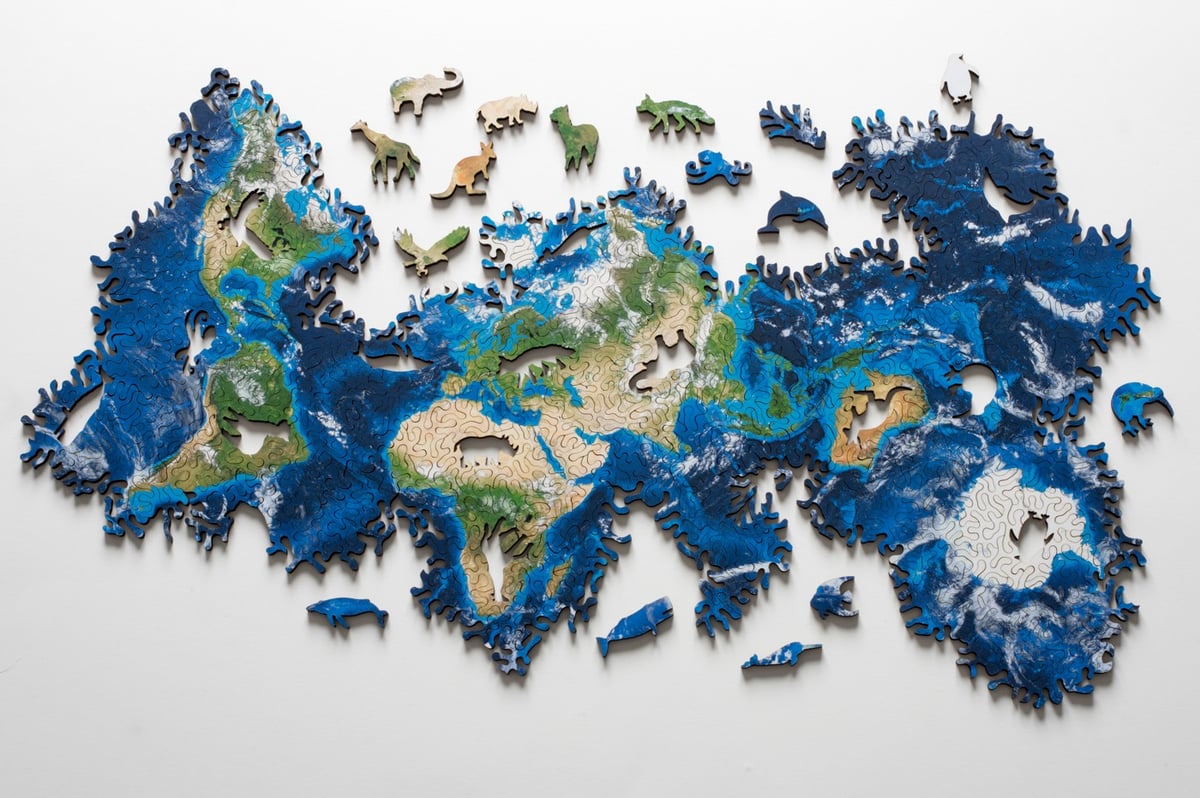
Nervous System designed this puzzle of Earth so that it can be put together in a variety of different ways.
This puzzle is based on an icosahedral map projection and has the topology of a sphere. This means it has no edges, no North and South, and no fixed shape. Try to get the landmasses together or see how the oceans are connected. Make your own maps of the earth!
The Girl with the Grande Iced Latte

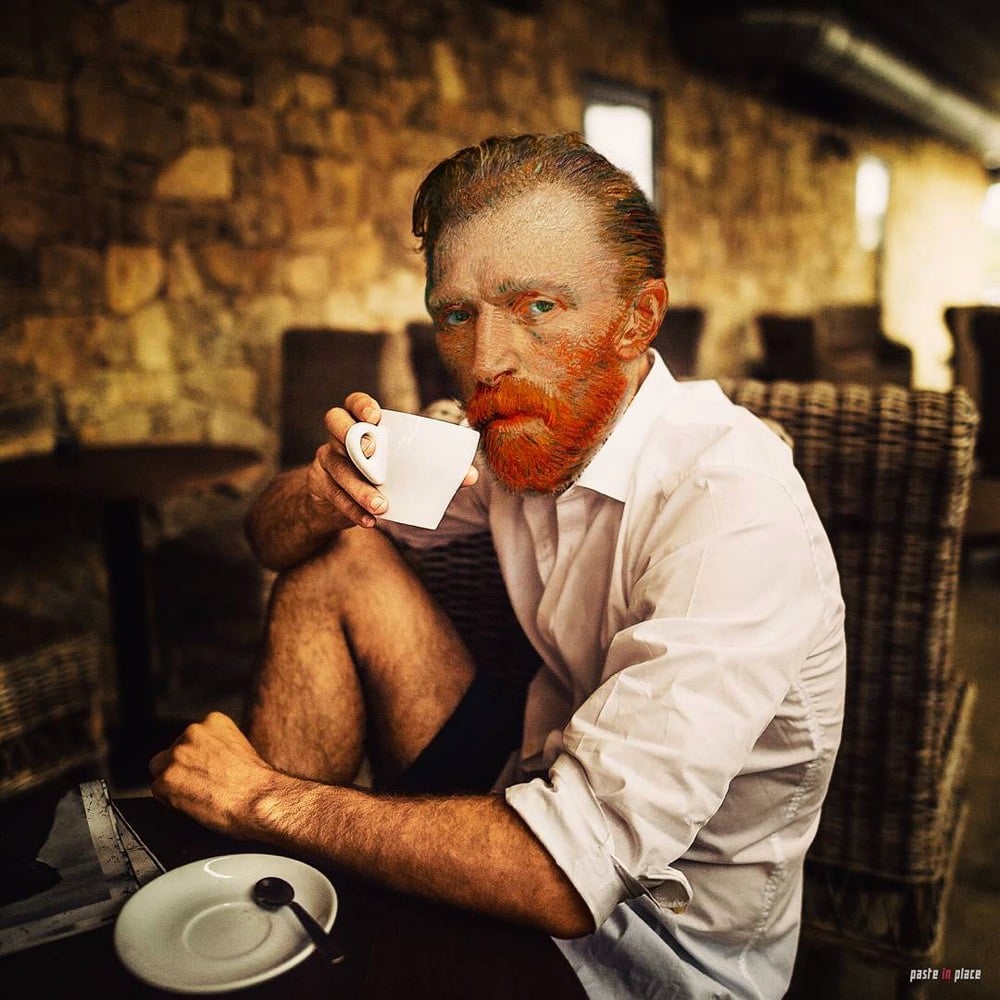

I seemingly cannot get enough of contemporizing old paintings and works of art. Here, from Rodrigo Pinheiro, are some familiar young people hanging out with modern beverages.
See also Girl with a Pearl Earring and Point-and-Shoot Camera and Art History Comes to Life.
A Song Map of the United States
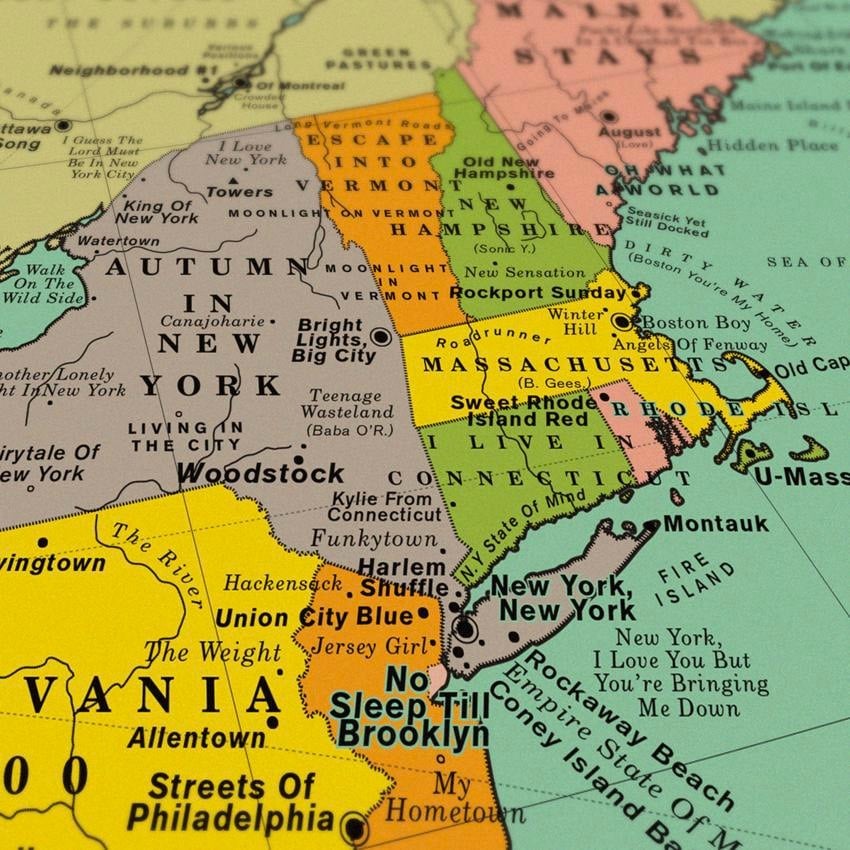
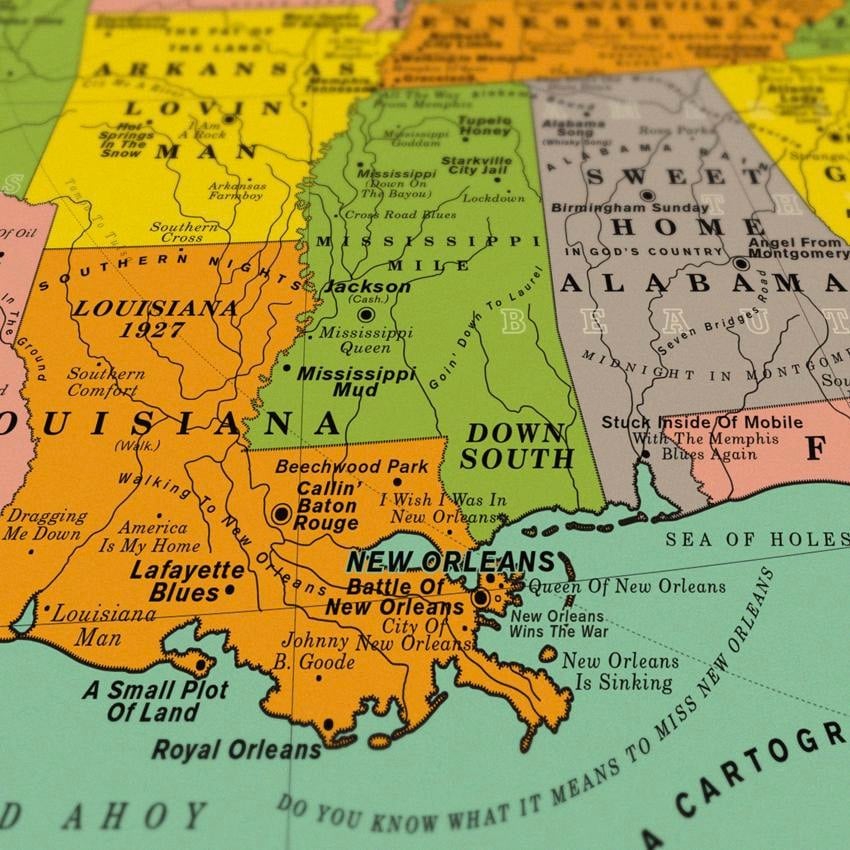
Design studio Dorothy has produced a poster of a map of the United States where all the place names are song titles.
Some of our favourite song choices are the ones which require you to think a little harder about connections, such as Space Oddity (David Bowie) which signposts Cape Canaveral, After the Gold Rush (Neil Young) which references Sutter’s Mill, and Homecoming (Kanye West) which is placed near the rapper’s home town of Chicago.
The map is accompanied by a Spotify playlist of most of the songs used…over 61 hours of music in total.
How Fascism Works
Yale philosopher Jason Stanley recently published a book called How Fascism Works: The Politics of Us and Them. Sean Illing interviewed him for Vox about what fascism is and isn’t and whether Trump is practicing fascist politics (spoiler alert: yes). I found this bit about how America is particularly susceptible to fascism interesting (italics mine…that is an amazingly succinct paragraph about American culture):
Well, the Ku Klux Klan deeply affected Adolf Hitler. He explicitly praised the 1924 Immigration Act, which severely limited the number of immigrants allowed to enter the US, as a useful model.
The 1920s and the 1930s was a very fascist time in the United States. You’ve got very patriarchal family values and a politics of resentment aimed at black Americans and other groups as internal threats, and this gets exported to Europe.
So we have a long history of genocide against native peoples and anti-black racism and anti-immigration hysteria, and at the same time there’s a strain of American exceptionalism, which manifests as a kind of mythological history and encourages Americans to think of their own country as a unique force for good.
This doesn’t make America a fascist country, but all of these ingredients are easily channeled into a fascist politics.
This has been on my mind lately; here’s what I wrote a couple of weeks ago, reflecting on a trip to Berlin:
With overt anti-Semitism growing in the US (as well as other things like the current administration’s policies on immigration and jailing of children in concentration camps), it’s instructive to compare the German remembrance of the Holocaust to America’s relative lack of public introspection & remembrance about its dark history.
In particular, as a nation the US has never properly come to terms with the horrors it inflicted on African Americans and Native Americans. We build monuments to Confederate soldiers but very few to the millions enslaved and murdered. Our country committed genocide against native peoples, herded them onto reservations like cattle, and we’re still denying them the right to vote.
See also Umberto Eco’s 14 Features of Eternal Fascism.
Update: In a video for the NY Times called Is President Trump Fascist?, Stanley goes over the three elements that are always present when fascism takes hold of a country.
Open Culture has a good summary of the video if you prefer to read.
Fascist leaders sow division; they succeed by “turning groups against each other,” inflaming historical antagonisms and ancient hatreds for their own advantage. Social divisions in themselves-between classes, religions, ethnic groups and so on-are what we might call pre-existing conditions. Fascists may not invent the hate, but they cynically instrumentalize it: demonizing outgroups, normalizing and naturalizing bigotry, stoking violence to justify repressive “law and order” policies, the curtailing of civil rights and due process, and the mass imprisonment and killing of manufactured enemies.
The intricate carving on the Pylos Combat Agate is centuries ahead of its time. “The representation of the human body is at a level of detail and musculature that one doesn’t find again until the classical period of Greek art 1,000 years later.”
Good summary of recent genetic research on how the Americas were peopled. Rather than an orderly north-to-south settling, people moved around…and quickly too.
Jazz Deconstructed: John Coltrane’s “Giant Steps”
A new episode of Estelle Caswell’s Earworm series is always cause for celebration. In this one, Caswell examines the title track off John Coltrane’s “Giant Steps” album and what makes it so challenging to play & rewarding to listen to.
John Coltrane, one of jazz history’s most revered saxophonists, released “Giant Steps” in 1959. It’s known across the jazz world as one of the most challenging compositions to improvise over for two reasons - it’s fast and it’s in three keys. Braxton Cook and Adam Neely give me a crash course in music theory to help me understand this notoriously difficult song, and I’m bringing you along for the ride. Even if you don’t understand a lick of music theory, you’ll likely walk away with an appreciation for this musical puzzle.
This is me actually walking away with that new appreciation.
How AI Agents Cheat
This spreadsheet lists a number of ways in which AI agents “cheat” in order to accomplish tasks or get higher scores instead of doing what their human programmers actually want them to. A few examples from the list:
Neural nets evolved to classify edible and poisonous mushrooms took advantage of the data being presented in alternating order, and didn’t actually learn any features of the input images.
In an artificial life simulation where survival required energy but giving birth had no energy cost, one species evolved a sedentary lifestyle that consisted mostly of mating in order to produce new children which could be eaten (or used as mates to produce more edible children).
Agent kills itself at the end of level 1 to avoid losing in level 2.
AI trained to classify skin lesions as potentially cancerous learns that lesions photographed next to a ruler are more likely to be malignant.
That second item is a doozy! Philosopher Nick Bostrom has warned of the dangers of superintelligent agents that exploit human error in programming them, describing a possible future where an innocent paperclip-making machine destroys the universe.
The “paperclip maximiser” is a thought experiment proposed by Nick Bostrom, a philosopher at Oxford University. Imagine an artificial intelligence, he says, which decides to amass as many paperclips as possible. It devotes all its energy to acquiring paperclips, and to improving itself so that it can get paperclips in new ways, while resisting any attempt to divert it from this goal. Eventually it “starts transforming first all of Earth and then increasing portions of space into paperclip manufacturing facilities”.
But some of this is The Lebowski Theorem of machine superintelligence in action. These agents didn’t necessarily hack their reward functions but they did take a far easiest path to their goals, e.g. the Tetris playing bot that “paused the game indefinitely to avoid losing”.
Update: A program that trained on a set of aerial photographs was asked to generate a map and then an aerial reconstruction of a previously unseen photograph. The reconstruction matched the photograph a little too closely…and it turned out that the program was hiding information about the photo in the map (kind of like in Magic Eye puzzles).
We claim that CycleGAN is learning an encoding scheme in which it “hides” information about the aerial photograph x within the generated map Fx. This strategy is not as surprising as it seems at first glance, since it is impossible for a CycleGAN model to learn a perfect one-to-one correspondence between aerial photographs and maps, when a single map can correspond to a vast number of aerial photos, differing for example in rooftop color or tree location.
“Our Planet”, a Nature Documentary Series from David Attenborough & Netflix
It looks like Netflix has sifted through their data and determined subscribers cannot get enough of the Planet Earth and Blue Planet nature series, so they’re making their own. With David Attenborough. The teaser trailer for Our Planet borrows heavily from Planet Earth (fonts & music are similar) but is light on the details, aside from the launch date: April 5, 2019.
Update: The full trailer is out, which I’ve embedded above. Here’s the previous teaser trailer:
The Our Planet series will consist of 8 episodes filmed across 50 countries. April 5 is soooon!
A Vote for Every Citizen
Perhaps the most heartening election results this week was Florida’s 60 percent-plus approval of Amendment 4, restoring voting rights to people convicted of a felony statewide. It re-extends the franchise to over a million people, reversing a policy that’s had brutal effects nationwide, but maybe nowhere more than Florida, one of the most populous states with one of the strictest disenfranchisement policies.
There’s an irony here, as it’s likely that if those citizens had had the right to vote in 2018, Florida’s still-contested elections for governor and senator would likely have been clean wins for Democrats. This means that over a fifth of Republican voters in this election also voted to overturn a policy that almost singlehandedly kept Republicans in power. All the other voter suppression policies deserve a little credit too, but this is the big one. And obviously, the Gillum and Nelson campaigns and other organizers deserve a lot of credit for getting Democrats, Independents, and some Republicans to cross over and vote on this issue. But what do we make of those crossover voters? What do we make of a state where the governor is sending police to keep votes from being counted after 60 percent of its citizens affirmed the principle that every citizen’s vote should be counted?
There’s probably a fraction of idealists, who know full well they’re hurting their own party’s chances, but voted yes anyway. I suspect, however, that there’s an even larger fraction who didn’t grasp the partisan implications of a yes vote — who don’t know (and were never meant to know) that their party’s control of the state rested almost completely on voter disenfranchisement, in all its forms. It’s invisible to them. It was designed to be invisible, and huge chunks of the press has played along, covering disenfranchisement sporadically if at all. They voted yes because they were never meant to know how much it mattered.
I also think of Michigan, my home state, where voter registration, early voting, and anti-gerrymandering measures passed with larger margins than either the Democratic governor or Senator received. These Republican voters, too, either didn’t know or didn’t care that their power in the state stems almost completely from gerrymandering and restrictions on the ability to vote. It suggests that even in the purplest states, where fighting between the parties is the fiercest and often the most arcane, there’s much more support for widespread voting rights among the electorate than there is in the parties who’ve sought to use restrictions on voting as a weapon.
What if, as Alex Pareene tweeted, Democrats and voting rights advocates pushed nationwide for “a plainly worded Constitutional amendment guaranteeing every citizen a right to vote”? No carve-outs, no exceptions, no states playing tricks. (Do you keep the restriction to the age of majority, i.e., 18+? Maybe, maybe not; I don’t know actually!)
Imagine how transformative that would be. Imagine how craven every politician who opposed this amendment would be. A vote for every citizen. And as Alex writes, it’s a short step from this idea to genuine proportionate representation, a true popular vote for the Presidency, full voting rights for Puerto Rico and all the other territories. With one stroke, you sweep so much of the anti-democratic vestiges of the Constitution away, and make the United States something closer to a true democracy.
I think it’s one of the most exciting ideas I’ve ever heard. I think it’s something we’re ready for. I think it’s something we badly need. What else is there to say?
NASA’s Voyager 2 could be nearing interstellar space. It would join Voyager 1 as the only man-made objects to leave the cozy confines of solar system.
Why Doctors Hate Their Computers
Nobody writes about health care practice from the inside out like Atul Gawande, here focusing on an increasingly important part of clinical work: information technology.
A 2016 study found that physicians spent about two hours doing computer work for every hour spent face to face with a patient—whatever the brand of medical software. In the examination room, physicians devoted half of their patient time facing the screen to do electronic tasks. And these tasks were spilling over after hours. The University of Wisconsin found that the average workday for its family physicians had grown to eleven and a half hours. The result has been epidemic levels of burnout among clinicians. Forty per cent screen positive for depression, and seven per cent report suicidal thinking—almost double the rate of the general working population.
Something’s gone terribly wrong. Doctors are among the most technology-avid people in society; computerization has simplified tasks in many industries. Yet somehow we’ve reached a point where people in the medical profession actively, viscerally, volubly hate their computers.
It’s not just the workload, but also what Gawande calls “the Revenge of the Ancillaries” — designing software for collaboration between different health care professionals, from surgeons to administrators, all of whom have competing stakes and preferences in how a product is used and designed, what information it offers and what it demands. And most medical software doesn’t handle these competing demands very well.
The Art Institute of Chicago Has Put 50,000 High-Res Images from Their Collection Online
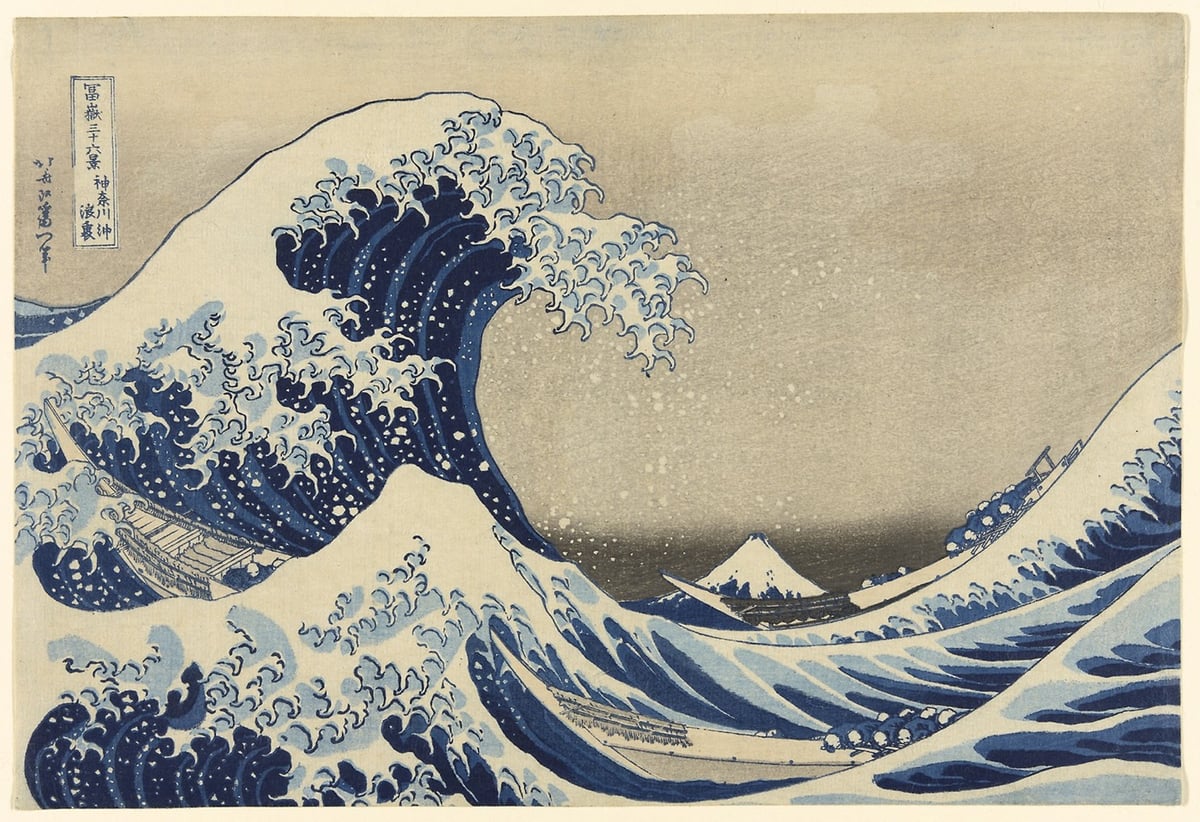
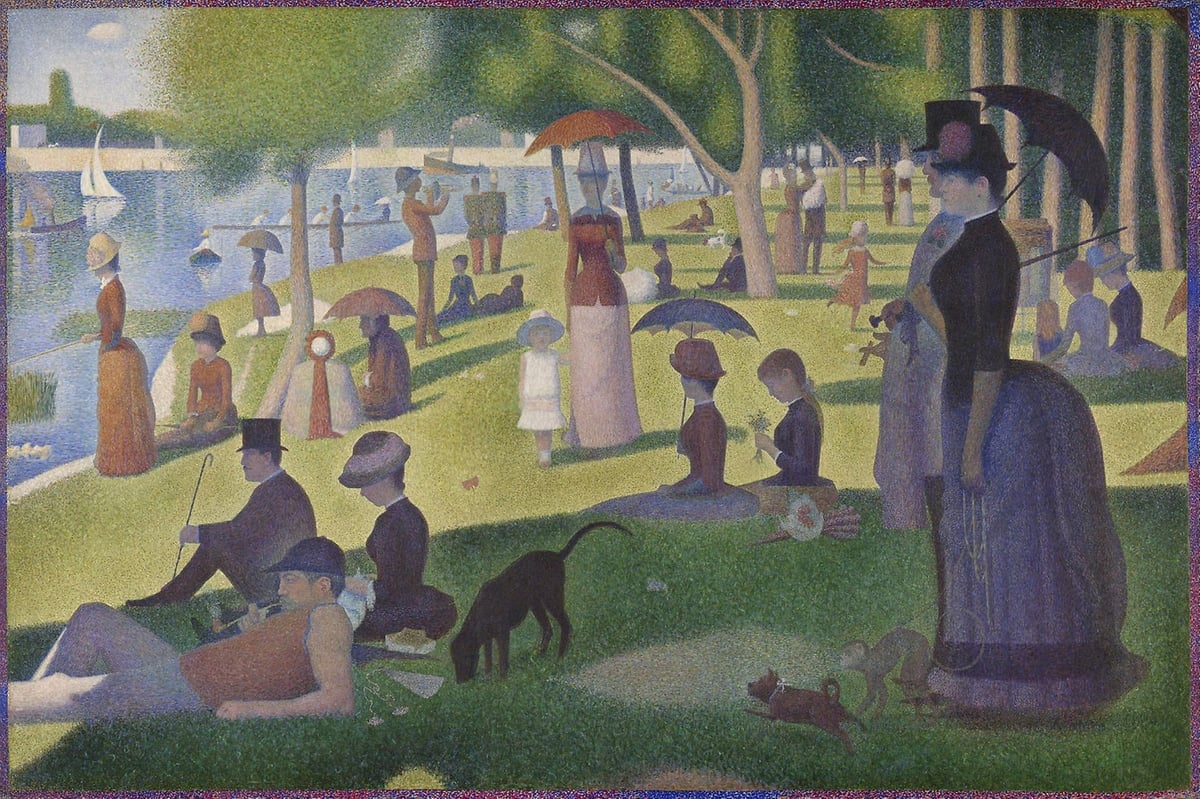
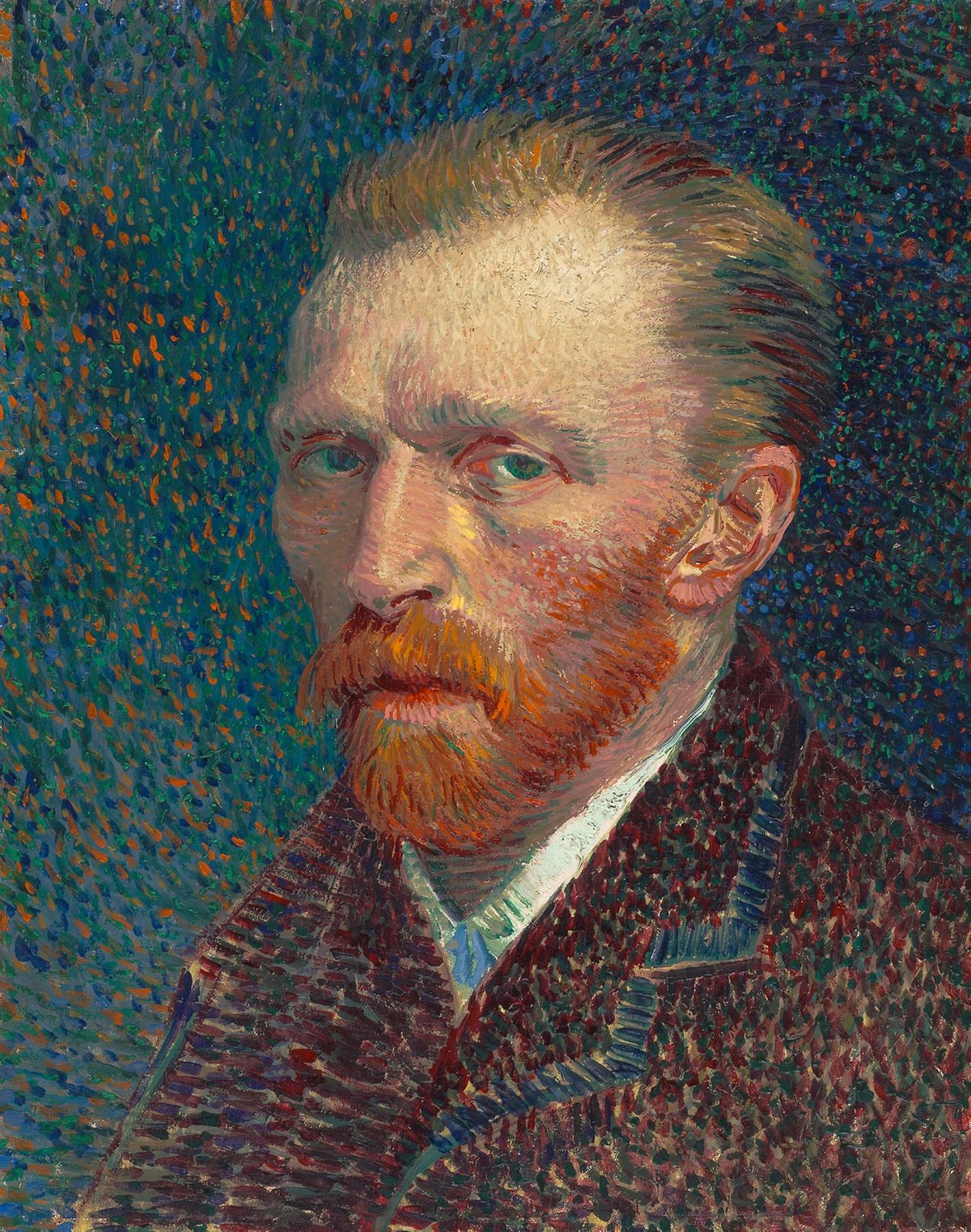



The Art Institute of Chicago recently unveiled a new website design. As part of their first design upgrade in 6 years, they have placed more than 52,000 high-resolution images from their collection online, available to all comers without restriction.
Students, educators, and just regular art lovers might be interested to learn that we’ve released thousands of images in the public domain on the new website in an open-access format (52,438 to be exact, and growing regularly). Made available under the Creative Commons Zero (CC0) license, these images can be downloaded for free on the artwork pages.
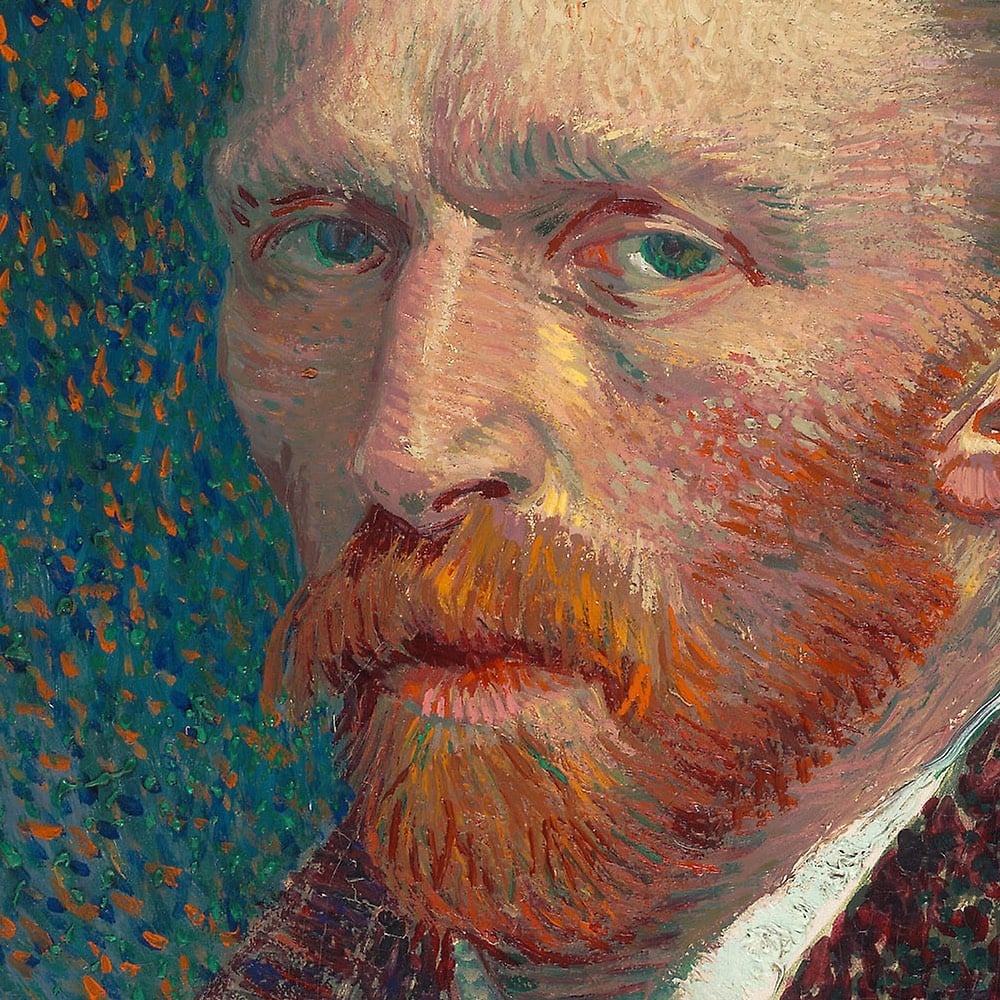
We’ve also enhanced the image viewing capabilities on object pages, which means that you can see much greater detail on objects than before. Check out the paint strokes in Van Gogh’s The Bedroom, the charcoal details on Charles White’s Harvest Talk, or the synaesthetic richness of Georgia O’Keeffe’s Blue and Green Music.
I’ve included a few notable works from their collection above: The Great Wave by Katsushika Hokusai, A Sunday on La Grande Jatte by Georges Seurat (which you can zoom and pretend you’re Cameron in Ferris Bueller’s Day Off), Self-Portrait by Vincent van Gogh, Nighthawks by Edward Hopper, Mao by Andy Warhol, and Two Sisters (On the Terrace) by Pierre-Auguste Renoir. The resolution on the images is high enough to check out the brushstrokes on the paintings. Here’s some detail on the van Gogh:
I love seeing more museums doing this.
Socials & More