




This site is made possible by member support. 💞
Big thanks to Arcustech for hosting the site and offering amazing tech support.
When you buy through links on kottke.org, I may earn an affiliate commission. Thanks for supporting the site!
kottke.org. home of fine hypertext products since 1998.
Beloved by 86.47% of the web.
Entries for October 2018
Trippy Geometric Illustrations by Andy Gilmore
The NY Times article about the Event Horizon Telescope that I wrote about here introduced me to Andy Gilmore’s geometric illustrations.





Really lovely stuff. More on his Instagram.
DO NOT WANT: Walmart Patented a Cart That Reads Your Pulse and Temperature. They might use it when a customer’s vital signs indicate they need assistance.
Schedule “Untouchable Days” each week for max creativity or productivity. I do this (in a less structured way) and get cranky if my Days get messed with.
Kurt Vonnegut on the Role of Artists in Society
In times of turmoil, it can be tough to feel like the work you do to support you and your family is also nourishing to society, if you’re doing “enough”. For artists and writers at least, Kurt Vonnegut had a compelling call to duty as messengers from the near future. As part of an address to the American Physical Society published as “Physicist, Heal Thyself” in the Chicago Tribune Magazine in 1969, the author wrote:
I sometimes wondered what the use of any of the arts was. The best thing I could come up with was what I call the canary in the coal mine theory of the arts. This theory says that artists are useful to society because they are so sensitive. They are super-sensitive. They keel over like canaries in poison coal mines long before more robust types realize that there is any danger whatsoever.
He said something similar in a 1973 interview in Playboy:
Writers are specialized cells doing whatever we do, and we’re expressions of the entire society — just as the sensory cells on the surface of your body are in the service of your body as a whole. And when a society is in great danger, we’re likely to sound the alarms. I have the canary-bird-in-the-coal-mine theory of the arts. You know, coal miners used to take birds down into the mines with them to detect gas before men got sick. The artists certainly did that in the case of Vietnam. They chirped and keeled over. But it made no difference whatsoever. Nobody important cared. But I continue to think that artists — all artists — should be treasured as alarm systems.
(via nitch)
Why The Fuck Isn’t Kobe Bryant A Pariah Yet? “…he is also an accused rapist who avoided a criminal trial verdict by bullying his accuser into silence”
Your IQ Matters Less Than You Think. “In studies of children and historical figures, IQ falls short as a measure of success.”
Fly Me to the Moonmoon
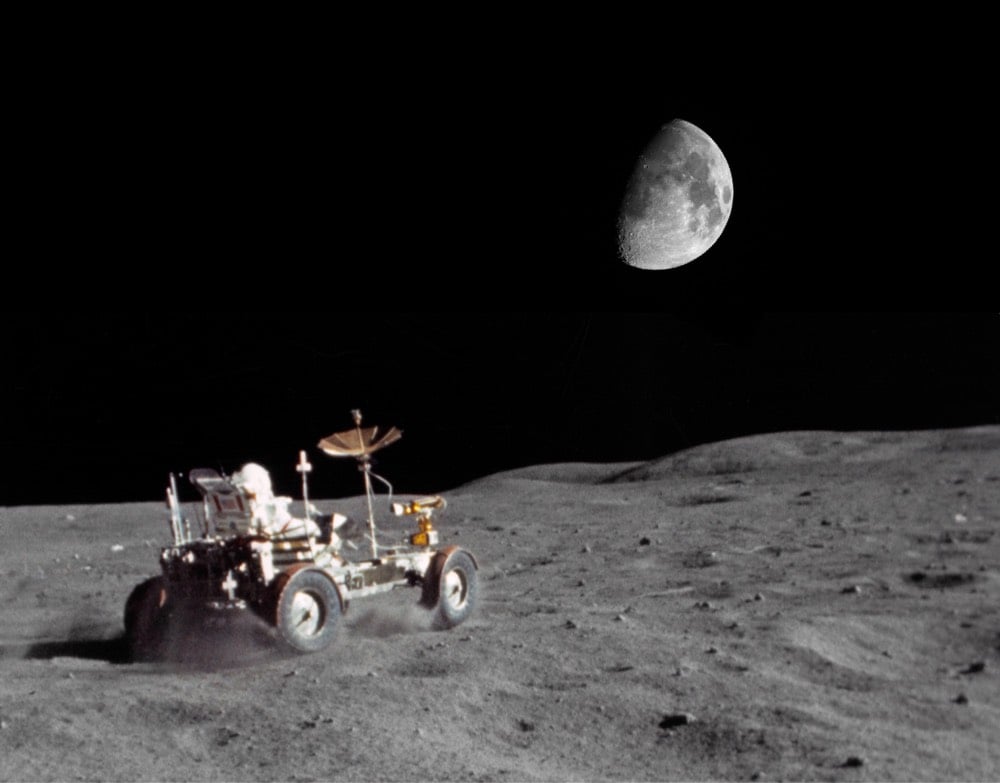
In a paper called “Can Moons Have Moons?”, a pair of astronomers says that some of the solar system’s moons, including ours, are large enough and far enough away from their host planets to have their own sizable moons.
We find that 10 km-scale submoons can only survive around large (1000 km-scale) moons on wide-separation orbits. Tidal dissipation destabilizes the orbits of submoons around moons that are small or too close to their host planet; this is the case for most of the Solar System’s moons. A handful of known moons are, however, capable of hosting long-lived submoons: Saturn’s moons Titan and Iapetus, Jupiter’s moon Callisto, and Earth’s Moon.
Throughout the paper, the authors refer to these possible moons of moons as “submoons” but a much more compelling name has been put forward: “moonmoons”.
Moonmoon is an example of the linguistic process of reduplication, which is often deployed in English to make things more cute and whimsical. In the pure form of reduplication, you get words like bonbon, choo-choo, bye-bye, there there, and moonmoon but relaxing the rules a little to incorporate rhymes and near-rhymes yields hip-hop, zig-zag, fancy-shmancy, super-duper, pitter-patter, and okey-dokey. And with contrastive reduplication, in which a word repeats as a modifier to itself:
“It’s tuna salad, not salad-salad.”
“Does she like me or like-like me?”
“The party is fancy but not fancy-fancy.”
“The car isn’t mine-mine, it’s my mom’s.”
Fun! And astronomy should be fun too. Let’s definitely call them moonmoons.
Miniature Replicas of Japanese Kodokushi (“Lonely Deaths”)
Dying alone in Japan is so common that they have a term for it: kodokushi (“lonely death”). Miyu Kojima works for a company that cleans up apartments after people die and for awhile now, she’s been creating miniature replicas of some of the rooms that she’s cleaned. Note: some of these images might be a little disturbing.

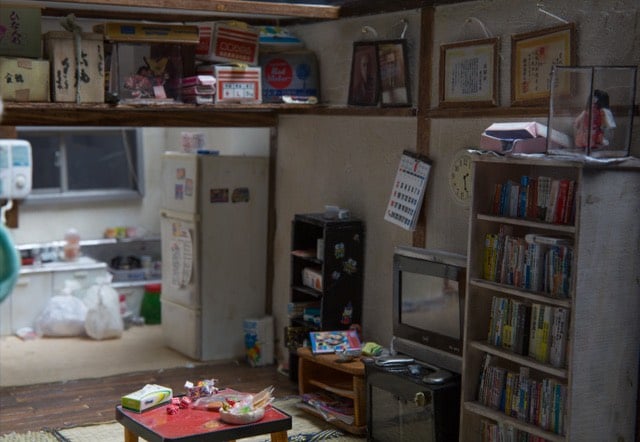

Kojima has been working for the clean-up company for about 4 years and explains that she cleans on average 300 rooms per year. To preserve and document the scene, the company always takes photographs of the rooms in case relatives want to see them. However, Kojima noticed that the photographs really don’t capture the sadness of the incident. And while she had no formal art training, she decided to go to her local craft store and buy supplies, which she used to create her replicas. She sometimes uses color-copies of the photographs, which she then sculpts into miniature objects. Kojima says that she spends about 1 month on each replica.
“A Geyser Erupted in Yellowstone and 80 Years of Human Trash Poured Out”. Hey dipshits, don’t litter in National Parks (or anywhere else).
Pantsdrunk, the Finnish Art of Relaxation

You’ve likely heard of hygge, the Danish word for a special feeling of coziness that’s been productized on Instagram and elsewhere to within an inch of its charming life. The Finns have a slightly different take on the good life called kalsarikännit, which roughly translates to “pantsdrunk” in English. A promotional site from the Finnish government defines it as “the feeling when you are going to get drunk home alone in your underwear — with no intention of going out”. They made the emoji above to illustrate pantsdrunkenness.1
Finnish journalist Miska Rantanen has written a book on kalsarikännit called Päntsdrunk (Kalsarikänni): The Finnish Path to Relaxation.
When it comes to happiness rankings, Finland always scores near the top. Many Finnish phenomena set the bar high: the best education system, gender equality, a flourishing welfare state, sisu or bull-headed pluck. Behind all of these accomplishments lies a Finnish ability to stay calm, healthy and content in a riptide of endless tasks and temptations. The ability comes from the practice of “kalsarikanni” translated as pantsdrunk.
Peel off your clothes down to your underwear. Place savory or sweet snacks within reach alongside your bed or sofa. Make sure your television remote control is nearby along with any and all devices to access social media. Open your preferred alcohol. Your journey toward inner strength, higher quality of life, and peace of mind has begun.
Kalsarikännit isn’t as photogenic as hygge but there is some evidence of it on Instagram. As Rantanen explains, this lack of performance is part of the point:
“Pantsdrunk” doesn’t demand that you deny yourself the little things that make you happy or that you spend a fortune on Instagrammable Scandi furniture and load your house with more altar candles than a Catholic church. Affordability is its hallmark, offering a realistic remedy to everyday stress. Which is why this lifestyle choice is the antithesis of posing and pretence: one does not post atmospheric images on Instagram whilst pantsdrunk. Pantsdrunk is real. It’s about letting go and being yourself, no affectation and no performance.
I have been off alcohol lately, but kalsarikännit is usually one of my favorite forms of relaxation, particularly after a hard week.
That’s right, the Finnish government made emoji of people getting pantsdrunk. Americans are suuuuuper uptight.↩
The Best Obituary Ever?
A Wilmington, Delaware man named Rick Stein recently died and his obituary is one of the most unique and entertaining I have ever read.
Stein’s location isn’t the only mystery. It seems no one in his life knew his exact occupation.
His daughter, Alex Walsh of Wilmington appeared shocked by the news. “My dad couldn’t even fly a plane. He owned restaurants in Boulder, Colorado and knew every answer on Jeopardy. He did the New York Times crossword in pen. I talked to him that day and he told me he was going out to get some grappa. All he ever wanted was a glass of grappa.”
Stein’s brother, Jim echoed similar confusion. “Rick and I owned Stuart Kingston Galleries together. He was a jeweler and oriental rug dealer, not a pilot.” Meanwhile, Missel Leddington of Charlottesville claimed her brother was a cartoonist and freelance television critic for the New Yorker.
One thing is certain: Stein and his family have a good sense of humor. My condolences to them on their loss. (via @mkonnikova)
Music Can Save Lives: A Playlist for Perfect CPR Chest Compressions
If you’re ever called on to perform CPR in an emergency but you don’t have training, the American Heart Association recommends performing “Hands-Only CPR”. There are two easy steps: you call 911 and then you press hard and fast in the center of the person’s chest 100-120 times per minute. As their fact sheet explains, familiar music can help maintain the proper tempo.
Song examples include “Stayin’ Alive” by the Bee Gees, “Crazy in Love” by Beyoncé featuring Jay-Z, “Hips Don’t Lie” by Shakira” or “Walk the Line” by Johnny Cash. People feel more confident performing Hands-Only CPR and are more likely to remember the correct rate when trained to the beat of a familiar song.
When performing CPR, you should push on the chest at a rate of 100 to 120 compressions per minute, which corresponds to the beat of the song examples above.
New York Presbyterian Hospital maintains a Spotify playlist of “Songs to do CPR to” that hit that 100-120 bpm sweet spot.
The playlist includes songs familiar to lifesavers of all generations, from Book of Love by the Monotones to Sweet Home Alabama by Lynyrd Skynyrd to Walk Like an Egyptian by The Bangles to Sorry by Justin Bieber. Stayin’ Alive or Justin Timberlake’s Rock Your Body are probably more appropriate to the situation, but should the need arise, my go-to CPR song is now Crazy in Love. Who knows, Beyoncé might help save someone’s life someday. (via @juliareinstein)
Scuba Diving Magazine’s 2018 Underwater Photo Contest Winners
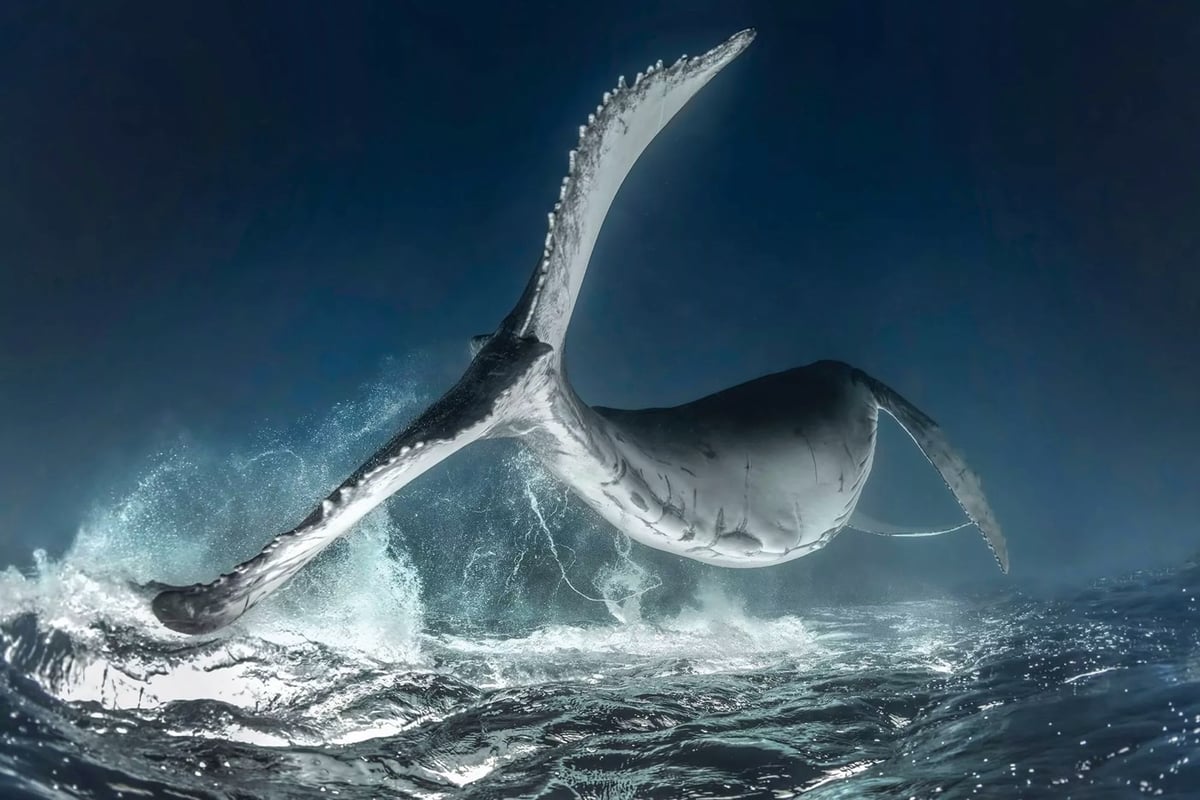
Scuba Diving magazine has announced the winners of their 2018 Underwater Photo Contest. The whale photo above is by Rodney Bursiel (see more of his whale and dolphin photos) and the one below is by Cai Songda.

Earth-Sized Telescope Aims to Snap a Photo of Our Galactic Black Hole
Astronomers behind the Event Horizon Telescope are building a virtual telescope with a diameter of the Earth to photograph the supermassive black hole at the center of our galaxy. The idea is that different observatories from all over the surface of the Earth all look at the black hole at the same time and the resulting data is stitched together by a supercomputer into a coherent picture. Seth Fletcher wrote a great piece about the effort for the NY Times Magazine (it’s an excerpt from his new book, Einstein’s Shadow: A Black Hole, a Band of Astronomers, and the Quest to See the Unseeable):
Astronomical images have a way of putting terrestrial concerns in perspective. Headlines may portend the collapse of Western civilization, but the black hole doesn’t care. It has been there for most of cosmic history; it will witness the death of the universe. In a time of lies, a picture of our own private black hole would be something true. The effort to get that picture speaks well of our species: a bunch of people around the world defying international discord and general ascendant stupidity in unified pursuit of a gloriously esoteric goal. And in these dark days, it’s only fitting that the object of this pursuit is the darkest thing imaginable.
Avery Broderick, a theoretical astrophysicist who works with the Event Horizon Telescope, said in 2014 that the first picture of a black hole could be just as important as “Pale Blue Dot,” the 1990 photo of Earth that the space probe Voyager took from the rings of Saturn, in which our planet is an insignificant speck in a vast vacuum. A new picture, Avery thought, of one of nature’s purest embodiments of chaos and existential unease would have a different message: It would say, There are monsters out there.
A video by the EHT team says that imaging the black hole is like trying to count the dimples on a golf ball located in LA while standing in NYC.
EHT team member Katie Bouman also did a TEDx talk on the project.
P.S. There’s a cloud near the center of the galaxy that tastes like raspberries and smells like rum.
Daniel Radcliffe, Checker of Facts
As research for a role in a Broadway play, Daniel Radcliffe recently did a stint as a fact-checker for the New Yorker. They had him fact-check a piece on a NYC restaurant called Oxomoco.
“Hi, Justin. I’m Dan, at The New Yorker,” Radcliffe began, twiddling a red pencil. “Some of these questions are going to feel very boring and prosaic to you,” he warned. “So bear with me. First off, your surname: is that spelled B-A-Z-D-A-R-I-C-H?” (It is.) “Does the restaurant serve guacamole?” (Yes.) “In the dip itself, would it be right to say there are chilies in adobo and cilantro?” (No adobo, but yes to the cilantro.) “Is there a drink you serve there, a Paloma?” (Yes.) “And that’s pale, pink, and frothy, I believe?” (Correct.) “Is brunch at your place-which, by the way, sounds fantastic-served seven days a week?” (Yes.) “That’s great news,” Radcliffe said, “for the accuracy of this, and for me.”
Joan Jett Rocks “Smells Like Teen Spirit” at Nirvana Reunion
The surviving members of Nirvana (minus Kurt Cobain, of course) held a six-song reunion at the Cal Jam festival with a couple of special guests, including Joan Jett taking over vocal duties on Smells Like Teen Spirit, and All Apologies, and Breed. The video above captures the whole thing from the crowd…here’s another view of just Smells Like Teen Spirit:
Time Lapse of a SpaceX Launch Looks Like a UFO
Sunday night, SpaceX launched a Falcon 9 rocket into orbit from Vandenberg Air Force Base in California. The nighttime launch created what looked like a nebula in the sky, prompting LA mayor Eric Garcetti to tweet that his city was not being visited by a flying saucer. This 4K time lapse of the launch is only 13 seconds long and is worth watching about 40 times in a row.
Banksy Painting Shreds Itself After Selling for $1.4 Million
A few years ago, the artist Banksy built a shredder into the frame of one of his paintings “in case it was ever put up for auction”. On Friday, that painting came up for auction at Sotheby’s and after selling for ~$1.4 million, the shredder in the frame activated and cut the painting into little strips. The video of the sale and subsequent shredding is amazing:
Fantastic. I imagine Banksy meant this as a commentary on the ridiculous prices people pay for art, but as this is the art world, the shredding will likely increase the value of the piece as well as the artist’s other pieces. As @Limericking said:
A painting by Banksy was smart;
At auction, it shredded apart.
Now tattered, in pieces,
Its value increases,
For such is the market for art.
Update: The winning bidder for the shredded Banksy says she’s going to keep it.
Update: Here’s a longer video of the stunt from Banksy…”The Director’s Cut”.
The shredder malfunctioned at the auction…it was supposed to eat the entire print. On Instagram, Banksy says:
Some people think it didn’t really shred. It did. Some people think the auction house were in on it, they weren’t.
Climate Scientists: Humans Have Only 12 Years to Limit Devastating Climate Changes
In a 700-page report detailing the latest research on climate change, a UN panel of scientists strongly warns that unless we make “massive and unprecedented changes to global energy infrastructure to limit global warming to moderate levels” to limit the world’s warming to 1.5 degrees Celsius, there will be widespread coastal flooding, food shortages, wildfires, and other issues related to climate change. If you are 60 or under, these changes will occur in your lifetime. From the NY Times:
A landmark report from the United Nations’ scientific panel on climate change paints a far more dire picture of the immediate consequences of climate change than previously thought and says that avoiding the damage requires transforming the world economy at a speed and scale that has “no documented historic precedent.”
The report, issued on Monday by the Intergovernmental Panel on Climate Change, a group of scientists convened by the United Nations to guide world leaders, describes a world of worsening food shortages and wildfires, and a mass die-off of coral reefs as soon as 2040 — a period well within the lifetime of much of the global population.
The report “is quite a shock, and quite concerning,” said Bill Hare, an author of previous I.P.C.C. reports and a physicist with Climate Analytics, a nonprofit organization. “We were not aware of this just a few years ago.” The report was the first to be commissioned by world leaders under the Paris agreement, the 2015 pact by nations to fight global warming.
The transformation described in the document is breathtaking, and the speed of change required raises inevitable questions about its feasibility.
Most strikingly, the document says the world’s annual carbon dioxide emissions, which amount to more than 40 billion tons per year, would have to be on an extremely steep downward path by 2030 to either hold the world entirely below 1.5 degrees Celsius, or allow only a brief “overshoot” in temperatures. As of 2018, emissions appeared to be still rising, not yet showing the clear peak that would need to occur before any decline.
Overall reductions in emissions in the next decade would probably need to be more than 1 billion tons per year, larger than the current emissions of all but a few of the very largest emitting countries. By 2050, the report calls for a total or near-total phaseout of the burning of coal.
If you’d like to dive into the report itself, two good places to start are the headline statements and the summary for policymakers.
Not Voting Doubles the Value of Someone Else’s Vote
In his Rolling Stone article on John McCain’s failed campaign for the 2000 Republican nomination for President, David Foster Wallace wrote about how not voting is like shooting yourself in the foot.
If you are bored and disgusted by politics and don’t bother to vote, you are in effect voting for the entrenched Establishments of the two major parties, who please rest assured are not dumb, and who are keenly aware that it is in their interests to keep you disgusted and bored and cynical and to give you every possible psychological reason to stay at home doing one-hitters and watching MTV on primary day. By all means stay home if you want, but don’t bullshit yourself that you’re not voting. In reality, there is no such thing as not voting: you either vote by voting, or you vote by staying home and tacitly doubling the value of some Diehard’s vote.
Please check your registration status and register to vote…it takes two minutes. Voter registration deadlines are fast approaching in many US states — there are deadlines tomorrow in Arizona, Arkansas, Florida, Georgia, Indiana, Kentucky, Louisiana, Michigan, Mississippi, New Mexico, Ohio, Pennsylvania, Tennessee, and Texas. If you don’t see your state in that list, don’t assume you have all the time in the world…check your status and register to vote anyway.
See also Dear Young People: “Don’t Vote”. (via nitch)
Rethinking American History on Indigenous Peoples’ Day
In most parts of the United States, the holiday listed on the calendar today is Columbus Day, which was designed to celebrate Italian-American heritage in America. However, there is a growing movement to replace the holiday commemorating the genocidal Cristòffa Cómbo with one that honors the original human inhabitants of the Americas, Indigenous Peoples’ Day.
In the forefront of the minds of many Native people throughout the Western Hemisphere, however, is the fact the colonial takeovers of the Americas, starting with Columbus, led to the deaths of millions of Native people and the forced assimilation of survivors. Generations of Native people have protested Columbus Day. In 1977, for example, participants at the United Nations International Conference on Discrimination against Indigenous Populations in the Americas proposed that Indigenous Peoples’ Day replace Columbus Day.
Indigenous Peoples’ Day recognizes that Native people are the first inhabitants of the Americas, including the lands that later became the United States of America. And it urges Americans to rethink history.
Join me in supporting the Native American Rights Fund today.
A history of video game speed runs
If you’ve never seen a video game speed run before, a decent place to start is this computer-assisted Metroid run, completing the game in less than ten minutes through an artful mix of exploiting glitches and improbably precise movement, shooting, and jumping.
Or, if you want to see a speed run broken down piece by piece, try this half-hour video where speedrunner Bismuth breaks down how his fellow runner Kosmic broke the world record for the fastest unassisted Super Mario Bros. run. As Jason wrote:
If you forget the video game part of it and all the negative connotations you might have about that, you get to see the collective effort of thousands of people over more than three decades who have studied a thing right down to the bare metal so that one person, standing on the shoulders of giants in a near-perfect performance, can do something no one has ever done before.
But if you want to understand how speed run culture got going? Ah, for that you need this document by Kat Brewster. While people always gunned for high scores and world records, almost as long as we’ve had games of any sort, speed run culture as it exists today starts with Usenet forums and obsessive players of the first-person shooters Wolfenstein 3D and especially Doom, which introduced the innovation of making it easy for players to record their gameplay.
Doom also posted a “par time” statistic on its end-of-level screens, taking the best time of designer John Romero and challenging players to beat it.
This is a theme which comes up again and again from speedrunners. ‘It’s a challenge,’ they say. ‘How fast can I get it?’ It’s a natural question to ask. When it comes to speedrunning games, there is no rulebook, no guide. There’s simply one possible way to do it, or one route which might be better than another. The game ceases to be the game it was authored to be, and becomes the landscape and language for an entirely separate practice. Players take what is given, and build something else out of it. It’s a kind of subversion, a subtle power play of guerrilla game design.
Now, there are whole companies built on sharing video game play results, from the dedicated platform Twitch to a not insignificant corner of YouTube.
My favorite part of Brewster’s story is her contrast between Doom (mostly glitchless, which makes speedruns both more constrained and more accessible — there’s no secret knowledge or special tricks) and The Legend of Zelda: Ocarina of Time, which is full of glitches. Documenting all these potential shortcuts was an obsession of the Zelda community in the mid-2000s, centering around the Speed Demos Archive forums, and a brand-new video sharing site called YouTube.
With both a community and the capability for easy video sharing in hand, folk experimentation could begin. Narcissa [Wright] credits the inspiration for early experimentation in the game to Kazooie’s videos, and specifically, certain jumps. Narcissa describes this period of time from 2006 to 2008 as one of rich experimentation. Few speedruns were actually attempted in this two year period, opting instead for creating a catalog of glitches from hours of chipping away at the game environment, or planning possible routes with what they knew already. “In fact,” she said in a video commentary, “it felt more like we were doing science than anything else.”
From an initial glitchless runthrough of about five hours in 2006, speedrunners can now exploit these built-in accidental hacks to finish the game in less than 17 minutes. That’s a different kind of fun.
This digital strategy document by the leadership at the Library of Congress is genuinely inspiring. Yes, throw open the treasure chest! Let’s liberate the vaults! I am HERE for it.
Knowing me (this is @tcarmody), you might think I’d have read James Gleick’s book on time travel when it came out two years ago. But no! I just read it now, and it’s terrifically brainy and entertaining:
The split-second choreography of a long one-shot
The Showtime series Kidding did something quite clever (really, two things): for a scene showing one of its characters’ transformation over the course of a year, it compressed multiple discordant events into a long, cut-free, panoramic photography shot of a single room. Outfits change, actors come and go, furniture, props, and lighting are moved in and out of the room, all without cuts.
Now, while the main camera shoots all around the increasingly unrecognizable room, a second camera, shooting from above the set, shows how they did it. A mix of body doubles, quick outfit changes, and grips and crew working furiously to move the entire set around just outside the camera’s field of vision.
It’s worth watching a couple of times. It’s a little like one of Penn and Teller’s bits where they show you how they pulled off the magic trick. You see everything they needed to do to do what they did, but you still don’t entirely believe they pulled it off.
One way the universe might end
My favorite astrophysicist Katie Mack recently reposted a Cosmos article she wrote about a relatively obscure model for the total annihilation of the universe, called “vacuum decay.”
Essentially, what vacuum decay relies on is the fact that we don’t know for sure whether space is in the lowest energy, most stable possible state (a true vacuum) or at an adjacent, slightly higher energy level (a false vacuum). Space could be only metastable, and a random quantum fluctuation or sufficiently high level energy event could push part of the universe from the false vacuum to the true one. This could cause “a bubble of true vacuum that will then expand in all directions at the speed of light. Such a bubble would be lethal.”
It’s compellingly badass, and as Mack notes, frightfully efficient. First, it’s not the slow petering out that is heat death. Also, it wouldn’t just eliminate our current universe, but all possibility of a universe anything like ours. Vacuum decay destroys space like Roman generals salting the earth at Carthage.
The walls of the true vacuum bubble would expand in all directions at the speed of light. You wouldn’t see it coming. The walls can contain a huge amount of energy, so you might be incinerated as the bubble wall ploughed through you. Different vacuum states have different constants of nature, so the basic structure of matter might also be disastrously altered. But it could be even worse: in 1980, theoretical physicists Sidney Coleman and Frank De Luccia calculated for the first time that any bubble of true vacuum would immediately suffer total gravitational collapse.
They say: “This is disheartening. The possibility that we are living in a false vacuum has never been a cheering one to contemplate. Vacuum decay is the ultimate ecological catastrophe; in a new vacuum there are new constants of nature; after vacuum decay, not only is life as we know it impossible, so is chemistry as we know it.
“However, one could always draw stoic comfort from the possibility that perhaps in the course of time the new vacuum would sustain, if not life as we know it, at least some creatures capable of knowing joy. This possibility has now been eliminated.”
Dynasties, a New Nature Documentary Series from BBC & David Attenborough
After the triumphs of Planet Earth II and Blue Planet II, 92-year-old David Attenborough is back with a new BBC nature series called Dynasties. The five-part series will follow five “celebrated, yet endangered” groups of animals — emperor penguins, tigers, lions, painted wolves, and chimpanzees — as they fight for survival. From the trailer, it looks as though Dynasties will be heavily narrative, perhaps even more so than Planet Earth and Blue Planet. No word on when this is airing yet.
See also 10 hours of extremely relaxing ocean scenes and 40 hours of relaxing Planet Earth II sounds.
The Alternative Limb Project


Founded by Sophie Oliveira Barata, The Alternative Limb Project makes stylish & artistic prosthetic limbs for people who want to express their personality through those items.
As with fashion, where physical appearance becomes a form of self-expression, Sophie sees the potential of prosthetics as a extension of the wearer’s personality. Merging the latest technology with traditional crafts, Sophie’s creations explore themes of body image, modification, evolution and transhumanism, whilst promoting positive conversations around disability and celebrating body diversity.
See also Izzy Wheels, stylish wheelchair wheel covers.
Bloomberg report says Chinese intelligence put tiny chips in US-bound electronics, including those at Apple & Amazon, to gain access to corporate & government networks. Apple & Amazon deny the report.
Socials & More