kottke.org posts about telephony
If you’re an Amazon Prime member, you can buy the BLU R1 HD smartphone for only $50 (or double the memory and RAM for $10 more). The phone is unlocked so you don’t need to sign a 2-year phone contract, but Amazon’s ads and product offers display on the lock screen (just like they do for the Kindle). According to Joanna Stern at the WSJ, it’s no iPhone or Galaxy, but it’s great for the price.
No, the R1 doesn’t feel or look like a premium phone, but it also doesn’t feel like something you’d find on a Toys “R” Us shelf. The metal frame and the touch screen’s curved edges give it a weighty feel, while the black plastic casing is more firm Coke bottle than flimsy ShopRite water bottle. Even the power and volume buttons have a satisfying click.
The 5-inch, 720p screen is very bright and viewable at multiple angles, even outdoors. It’s not as crisp as the 1080p displays you’ll get on $200 Moto G4 or Honor 5X, but again…$50.
In only 9 years, we’ve gone from smartphones with touchscreens being magical to companies nearly giving them away. Back in 2009, John Walkenbach predicted that Kindles would be free by sometime in 2011.
The price for Amazon’s Kindle 2 has dropped again. It started at $359, and then was reduced to $299 last July. Now it’s $259.
If this price trend continues, it will be free by June, 2011. I’m actually serious about this. At some point, the Kindle will be free. It will probably be before June, 2011.
The cheapest Kindle is currently $80, so we haven’t quite gotten there yet. Which is a bit puzzling now that I’m thinking about it again. Amazon is famous for playing the long game. If compare the cost to giving away a free Kindle (or highly subsidized higher-end Kindle) to every Prime member who signs up or re-ups for two years vs. a) the revenue gained from the ebooks purchased by those customers, b) the revenue from new Prime members, and c) being able to offer a package which is basically free shipping on all Amazon orders + Netflix + Spotify + a ton of free books + a free Kindle…that’s gotta make good economic sense for them, right? I mean, unless so many Prime users already have Kindles that giving them to those that don’t doesn’t make sense.
Anyway, it’ll be an interesting race…will the smartphone beat the Kindle to free? (via df)
From Kevin Slavin and Bunnie Huang on location in Shenzhen, China, a look at what changes when you stop designing phones for companies and start designing them for people. You end up with a variety of phones satisfying different desires, from tiny phones that double as Bluetooth earpieces to phones that look like a race car or a pack of cigarettes or a soda can to phones with built-in lamps.
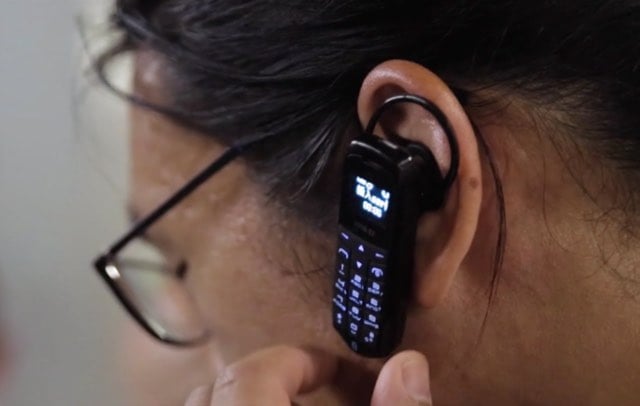
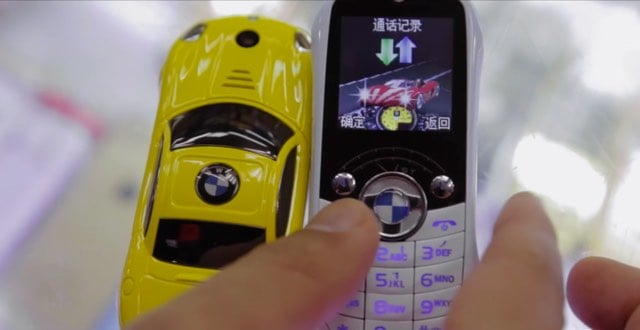
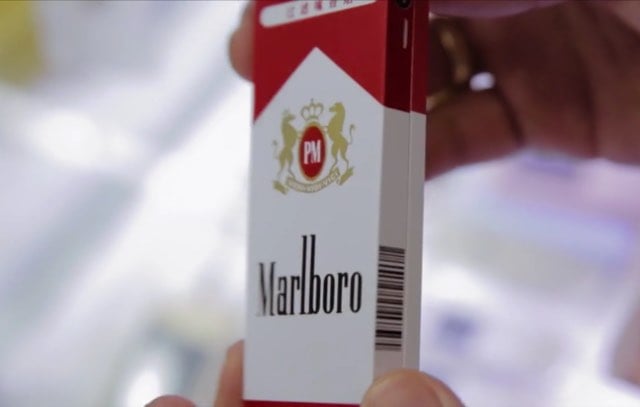
A spin around the internet reveals many more examples of these kinds of phones: flashlight phones, lighter phones, phones with up to 4 SIM slots, super-rugged phones w/ walkie talkie capability, credit card-sized phones, watch phones, and USB key phones. (via @triciawang)
In the NYT, Sherry Turkle provides the backup data to confirm what you already know about the digital age: Stop Googling. Let’s Talk.
Studies of conversation both in the laboratory and in natural settings show that when two people are talking, the mere presence of a phone on a table between them or in the periphery of their vision changes both what they talk about and the degree of connection they feel … Even a silent phone disconnects us.
Screen Addiction Is Taking a Toll on Children, from Jane Brody in the NY Times:
Parents, grateful for ways to calm disruptive children and keep them from interrupting their own screen activities, seem to be unaware of the potential harm from so much time spent in the virtual world.
In reply, John Hermann writing at The Awl:
The grandparent who is persuaded that screens are not destroying human interaction, but are instead new tools for enabling fresh and flawed and modes of human interaction, is left facing a grimmer reality. Your grandchildren don’t look up from their phones because the experiences and friendships they enjoy there seem more interesting than what’s in front of them (you). Those experiences, from the outside, seem insultingly lame: text notifications, Emoji, selfies of other bratty little kids you’ve never met. But they’re urgent and real. What’s different is that they’re also right here, always, even when you thought you had an attentional claim. The moments of social captivity that gave parents power, or that gave grandparents precious access, are now compromised. The TV doesn’t turn off. The friends never go home. The grandkids can do the things they really want to be doing whenever they want, even while they’re sitting five feet away from grandma, alone, in a moving soundproof pod.
As a writer for screens, someone who spends a tremendous amount of time each day staring at screens, and an involved parent of two grade-schoolers, this is precisely where my professional and personal lives meet, so I’ve done a bit of thinking about this recently. Here’s what I’ve come up with and am attempting to actually believe:
People on smartphones are not anti-social. They’re super-social. Phones allow people to be with the people they love the most all the time, which is the way humans probably used to be, until technology allowed for greater freedom of movement around the globe. People spending time on their phones in the presence of others aren’t necessarily rude because rudeness is a social contract about appropriate behavior and, as Hermann points out, social norms can vary widely between age groups. Playing Minecraft all day isn’t necessarily a waste of time. The real world and the virtual world each have their own strengths and weaknesses, so it’s wise to spend time in both.
The full story is behind a paywall,1 but the WSJ’s The Inside Story of How the iPhone Crippled BlackBerry is kind of amazing. The piece is an excerpt from Losing the Signal: The Untold Story Behind the Extraordinary Rise and Spectacular Fall of BlackBerry.
The next day Mr. Lazaridis grabbed his co-CEO Jim Balsillie at the office and pulled him in front of a computer.
“Jim, I want you to watch this,” he said, pointing to a webcast of the iPhone unveiling. “They put a full Web browser on that thing. The carriers aren’t letting us put a full browser on our products.”
Mr. Balsillie’s first thought was RIM was losing AT&T as a customer. “Apple’s got a better deal,” Mr. Balsillie said. “We were never allowed that. The U.S. market is going to be tougher.”
“These guys are really, really good,” Mr. Lazaridis replied. “This is different.”
“It’s OK — we’ll be fine,” Mr. Balsillie responded.
RIM’s chiefs didn’t give much additional thought to Apple’s iPhone for months. “It wasn’t a threat to RIM’s core business,” says Mr. Lazaridis’s top lieutenant, Larry Conlee. “It wasn’t secure. It had rapid battery drain and a lousy [digital] keyboard.”
“RIM’s chiefs didn’t give much additional thought to Apple’s iPhone for months.”
“RIM’s chiefs didn’t give much additional thought to Apple’s iPhone for months.”
“RIM’s chiefs didn’t give much additional thought to Apple’s iPhone for months.”
Oof. (via @craigmod)
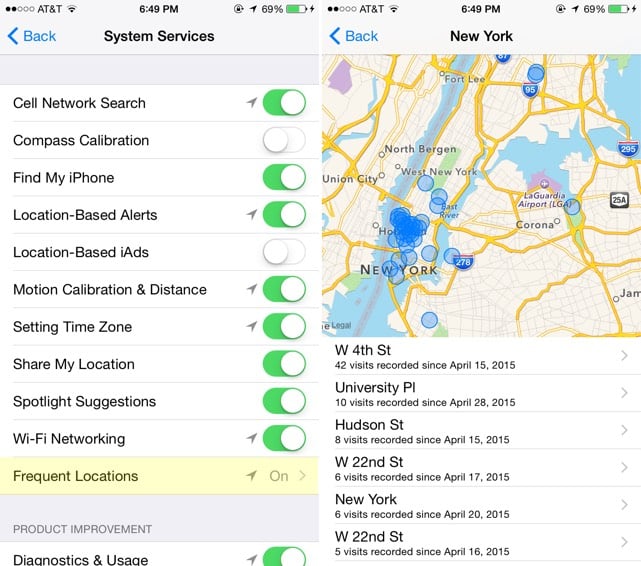
Since iOS 7 came out in 2013, your iPhone’s Location Services has included a little-known feature called Frequent Locations, which keeps very detailed track of every distinct location you visit. How detailed? This, precisely, was when I was in my apartment over a three-day period last month:
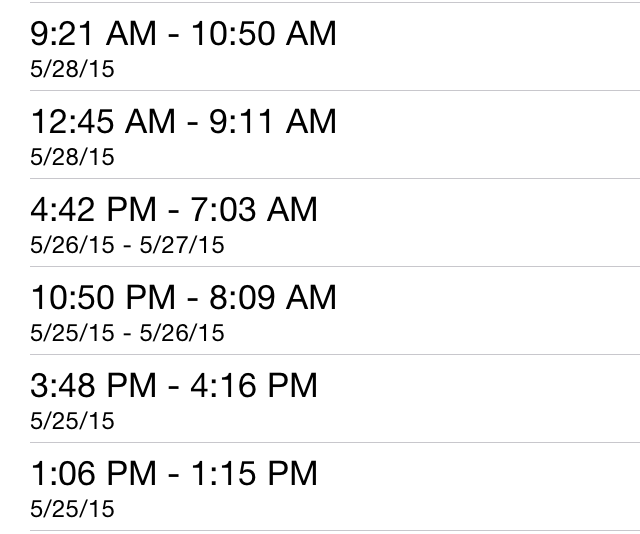
All told, my phone recorded all 33 different locations I’ve visited in NYC since April 15, including 84 visits to my apartment and 54 visits to my office, down to the minute and a ~130-foot radius. The feature is on by default if you’ve got Location Services switched on, so you can find your information by opening the Settings app and going to Privacy > Location Services > System Services (at the bottom) > Frequent Locations. You can also turn the feature off if you wish.
Apple says the feature is used to learn your favorite places and the data is kept only on the phone:
Your iPhone will keep track of places you have recently been, as well as how often and when you visited them, in order to learn places that are significant to you. This data is kept solely on your device and won’t be sent to Apple without your consent. It will be used to provide you with personalized services, such as predictive traffic routing.
It’s likely that Verizon, AT&T, Sprint, and the NSA (until recently) are collecting this same sort of data about you regardless of what sort of phone you use, except that these organizations do not share Apple’s public commitment to privacy. (via @dunstan)
Roger Pasquier hunts for coins on NYC sidewalks and keeps track of how much he finds. He discovered an odd consequence of everyone having a smartphone: people don’t pick up change on the sidewalk anymore.
From 1987 to 2006, he averaged about fifty-eight dollars a year. Then Apple introduced the iPhone, and millions of potential competitors started to stare at their screens rather than at the sidewalks. Since 2007, Pasquier has averaged just over ninety-five dollars a year.
I know, I know, that’s anecdotal and correlation != causation and whatever, but that’s an interesting theory.
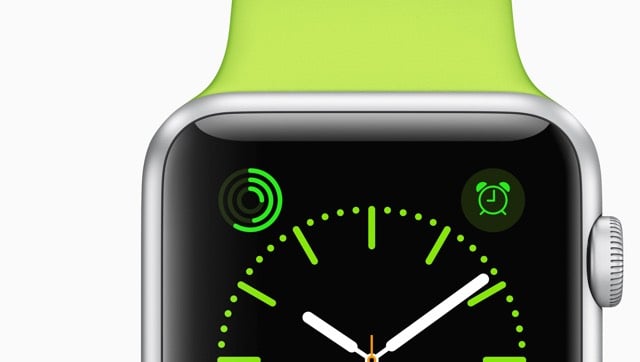
Some sort of embargo seems to have lifted because here come the Apple Watch reviews! As I’m unanointed by Apple, I haven’t experienced Apple Watch in the flesh, but I do have a few random thoughts and guesses.
John Gruber notes that why Apple made a watch is different from why they made the iPhone. People were generally dissatisfied with their mobile phones (I know I was) so Apple made one that was much better. But people who wear current watches like them.
But as Ive points out, this time, the established market — watches — is not despised. They not only don’t suck, they are beloved.
I’m one of the watch non-wearers Gruber discusses elsewhere in his review; I haven’t worn a watch since my Swatch band broke when I was 17. Part of the reason I don’t wear a watch is they look hideous. The more expensive watches get, the uglier they are. Have you seen the watch ads in the New Yorker or Vogue? Garish nasty looking objects. And men’s watches are generally massive, built for lumberjacks, linebackers, and other manly men, not for dainty-wristed gentlemen like myself. I tried on a regular men’s Rolex some years ago and it looked like I’d strapped a gold-plated Discman on my wrist.
I know, I know, not all watches. The point is that for me, Apple Watch looks like something I would consider wearing on a regular basis — imagining myself living in Steve Jobs’ living room has always been more my speed than J.P. Morgan’s library.1
The subtle notifications possible with Apple Watch (taps, drawings, heartbeats) are very interesting. Also from Gruber’s review:
You’re 16. You’re in school. You’re sitting in class. You have a crush on another student — you’ve fallen hard. You can’t stop thinking about them. You suspect the feelings are mutual — but you don’t know. You’re afraid to just come right out and ask, verbally — afraid of the crushing weight of potential rejection. But you both wear an Apple Watch. So you take a flyer and send a few taps. And you wait. Nothing in response. Dammit. Why are you so stupid? Whoa — a few taps are sent in return, along with a hand-drawn smiley face. You send more taps. You receive more taps back. This is it. You send your heartbeat. It is racing, thumping. Your crush sends their heartbeat back.
In 2005, I wrote about a feature I called sweethearting:
Pings would be perfect for situations when texting or a phone call is too time consuming, distracting, or takes you out of the flow of your present experience. If you call your husband on the way home from work every night and say the same thing each time, perhaps a ping would be better…you wouldn’t have to call and your husband wouldn’t have to stop what he was doing to answer the phone. You could even call it the “sweetheart ping” or “sweethearting”…in the absence of a prearranged “ping me when you’re leaving”, you could ping someone to let them know you’re thinking about them.
Like I said elsewhere in that post, this stuff always makes me think about Matt Webb’s Glancing project:
Glancing: An application to allow ultra-simple, non-verbal communication amongst groups of friends online.
It’s a desktop application that you use with a group of other people. It lets you “glance” at them in idle moments, and it gives all of you an indication of the activity of glancing going on.
A group is intended to be less than a dozen people. A person may belong to several groups simultaneously by running separate instances of Glancing. Groups are started deliberately, probably by using a www interface, and people are told the group secret so they can join (a “secret” is just a shared password).
But the thing that has struck me the most since the announcement of Apple Watch is the idea that if you’re wearing one, you’re going to be checking your devices a lot less. From TechCrunch last month:2
People that have worn the Watch say that they take their phones out of their pockets far, far less than they used to. A simple tap to reply or glance on the wrist or dictation is a massively different interaction model than pulling out an iPhone, unlocking it and being pulled into its merciless vortex of attention suck.
One user told me that they nearly “stopped” using their phone during the day; they used to have it out and now they don’t, period. That’s insane when you think about how much the blue glow of smartphone screens has dominated our social interactions over the past decade.
From Joshua Topolsky’s review at Bloomberg:
I’m in a meeting with 14 people, in mid-sentence, when I feel a tap-tap-tap on my wrist. I stop talking, tilt my head, and whip my arm aggressively into view to see the source of the agitation. A second later, the small screen on my new Apple Watch beams to life with a very important message for me: Twitter has suggestions for people I should follow. A version of this happens dozens of times throughout the day-for messages, e-mails, activity achievements, tweets, and so much more. Wait a second. Isn’t the promise of the Apple Watch to help me stay in the moment, focused on the people around me and undisturbed by the mesmerizing void of my iPhone? So why do I suddenly feel so distracted?
The promise of the Apple Watch is to make it more convenient to send & receive notifications and quick messages, although many of the reviews make it clear that Apple hasn’t entirely succeeded in this. In the entire history of the world, if you make it easier for people to do something compelling, people don’t do that thing less: they’ll do it more. If you give people more food, they eat it. If you make it easier to get credit, people will use it. If you add another two lanes to a traffic-clogged highway, you get a larger traffic-clogged highway. And if you put a device on their wrist that makes it easier to communicate with friends, guess what? They’re going to use the shit out of it, potentially way more than they ever used their phones.
Now, it’s possible that Apple Watch doesn’t make receiving notifications easier…instead, it may make controlling notifications easier. Like congestion pricing for your digital interactions. But that is generally not where technology has been taking us. Every new communications device and service — the telegraph, telephone, internet, email, personal computer, SMS, smartphones, Facebook, Whatsapp, Slack,3 etc. etc. etc. — makes it easier to 1) connect with more and more people in more and more ways, and 2) to connect with a few people more deeply. And I don’t expect Apple Watch will break that streak. The software will get faster & better, the hardware will get cheaper & longer-lasting, and people will buy & love them & use them constantly.
P.S. While I didn’t quote from it, The Verge review is great. But mainly I’m wondering…where are the reviews from the fashion world? I assume Vogue and other such magazines and media outlets received Apple Watches for review and their embargoes lifted as well, but after searching for a bit, I couldn’t find any actual reviews. And only a single major review by a woman, Lauren Goode’s at Re/code. If you run across any, let me know?
Update: Joanna Stern wrote a review for the WSJ with an emphasis on the fashion aspect. (via @trickartt)
Update: Executive editor Nicole Phelps wrote a review for style.com. (thx, louis-olivier)

If you’re thinking of switching mobile carriers (b/c perhaps a certain fruit company is releasing new models), you should check Sensorly for “unbiased” coverage maps of AT&T, Verizon, T-Mobile, Sprint, and even smaller companies like Metro PCS and US Cellular. Looks like the maps are somewhat inaccurate because they rely on contributions only from Sensorly app users. For example, there are large swaths of upper Manhattan and the Bronx which show coverage only along major roads. But still helpful to use beside the companies’ official coverage maps. (via @ludacrisofficia)
Update: Rootmetrics also has coverage maps for the major carriers. (via @ropiku)
This year, your back-to-school shopping may have included more devices and downloads than pieces of attire. According to the NYT, today’s teenagers favor tech over clothes. One retail analysts explains how his focus groups go these days: “You try to get them talking about what’s the next look, what they’re excited about purchasing in apparel, and the conversation always circles back to the iPhone 6.”
A plan used to be simple: you would agree to meet someone at a certain time and place and then you would meet them there and then. Now, a plan is subject to all sorts of revisions because “cellphones make people flaky as #%@*”.
A Plan: Once heralded as a firm commitment to an event in the future, a plan is now largely considered to be a string of noncommittal text messages leading up to a series of potential, though unlikely, events.
A Cellphone: Your primary device for making plans. More specifically, the medium with which most plans are conceived and later altered. It’s imperative that you keep your cellphone on your person at all times, as you can expect all plans to dissolve into an amorphous cloud upon conception.
I have experienced this recently and am convinced this is partially a generational thing. If you spent any part of your 20s without a cellphone, the sort of thing described in the video happens a lot less. But this practice is also contagious, as most social behavior is…if you witness friends doing it, over time it becomes more acceptable to do it yourself.
Ooh, I really like the idea of this smartphone card game on Kickstarter: Game of Phones.
One player picks a card and gets to judge that round. They read the prompt to everyone else. Something like ‘Find the best #selfie’ or ‘Show the last photo you took’. Everyone finds something on their phones and shows the judge, who gets to choose a winner for that round. First to win 10 rounds is the overall winner.
This is pretty much what people do when they get together anyway, why not make it a game?
Leave it to Werner Herzog to take the driver safety video to new heights. From One Second To The Next is a 35-minute documentary film by Herzog on the dangers of texting while driving.
Powerful stuff. Don’t text while you’re driving, okay? (via @brillhart)
Dillon Marsh photographs cell towers disguised (poorly) as trees.

There’s one of these as you drive north out of NYC on the Hutch…it’s twice as tall as any other tree in the area, like a redwood that got lost while visiting its grandparents back east.
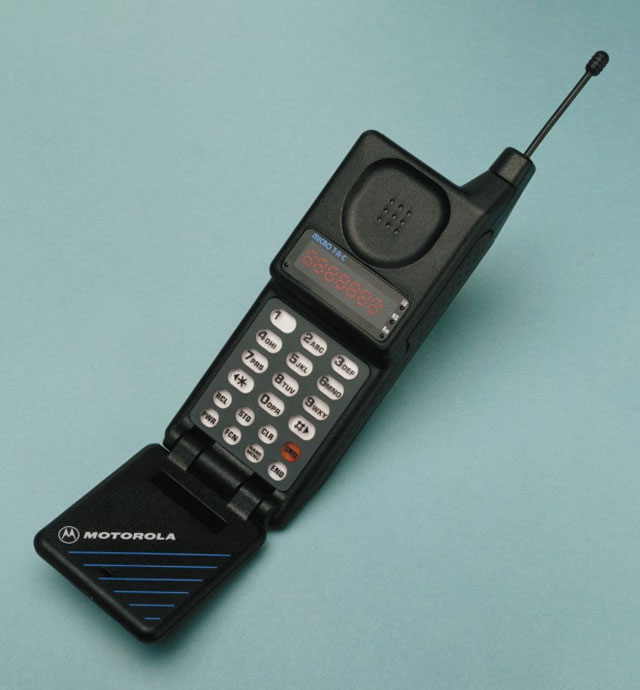
I still remember the first time I saw a guy at a restaurant talking on one of those prehistorically massive cellphones. My dad leaned over and said, “Look at that poor guy. Never let that happen to you. Never take a job that’s so all-consuming that you have to carry a phone around, even during lunch.” A lot has changed since then (although I still often see a lot of validity in my dad’s initial response to these devices) and in the forty years since Motorola engineer Martin Cooper made the first cellphone call. Wired takes a look back at the twelve cellphones that changed our world forever.
Newer posts
Older posts





Socials & More