Just in time for Halloween: a new study theorizes that eating too many Pez will land children in the pen. Researchers believe that using candy as a reward for a chore such as homework drives children to have difficulty handling anything but immediate gratification. The dopamine release that is caused by consuming sugar, and the inherent “addiction” that it causes, can lead to impulsive behavior when treats are withheld from kids. It’s the inability to successfully cope with delayed gratification that has doctors concerned, since rash behavior in children can be linked to criminal acts and violence in adults. The British study, which followed 17,000 children over four decades, found that, by the age of 34, 69% of daily candy eaters were apprehended for violent acts. Perhaps it’s the prevalence of penny candies that leads people to the penitentiary.
Update: It’s all in the subtleties. The article reads:
“The October 2009 study revealed that 69 per cent of those with a criminal record of violence consumed candy daily as children.”
This means that it can be inferred that those who have committed crime had sweet teeth as kids, but not that children who eat candy every day will therefore be predisposed to criminal behavior. Moreover, there are so many variables and unobserved factors that if you eliminated the sugary rewards, it wouldn’t necessarily mean a correlated drop in crime. It isn’t the candy that’s causing the trouble, it’s just that trouble-making and candy seem to be bedfellows. So much for trick or treat. (thx, neil and scott)
Flying in the shape of a “v” allows geese to have an equal field of vision while conserving energy, using wingtip vortices to decrease any drag in flight. The bird in the front is working the hardest, but when the leader grows weary it rotates to a position farther back and allows another feathered pilot to take its place. This formation is so successful in conserving energy that birds who fly in “v” formations have been recorded to have lower heart rates than those who do not. If one of the birds flies out of formation, they will feel the increase in drag nudging them back into position. Perhaps most impressive, if a bird in the formation falls ill or is shot, two other birds will accompany it on the descent, aiding and protecting the injured bird until it either recovers or dies. The two helpful geese will then rejoin the formation.
Nothing like a little science on the Moon, I always say.
Astronaut David Scott in 1971, from the Apollo 15 Lunar Surface Journal. Scott was part of the Apollo 15 crew, and applied Galileo’s findings about gravity and mass by testing a falcon feather and a hammer. The film, shown in countless high school physics classes, is the nerdy, oft-neglected cousin of Neil Armstrong’s space paces.
A new study concludes that babies and dogs do not have an advanced ability to read social cues, but that wolves do. Using a hiding-and-finding game, scientists at University of Iowa and Indiana University have concluded that babies and dogs are distracted by social cues such as adults’ facial expressions and vocal interactions, and that they don’t have a unique or enhanced ability to recall where an object is hidden simply based on social cues alone. Wolves, and older babies, performed better in the study, and were more capable of remembering where the object was hidden. Professor John Spencer, who was at the helm of the research, understands that this could be a difficult fact for parents and pet owners to accept.
“In our view, this is something to celebrate — that we can bring social cognition together with basic cognitive processes. The downside, of course, is that infants, and by analogy dogs, don’t have a special mind-reading ability. For some people, that’s an unpleasant pill to swallow.”
The study was in direct response to one from the Hungarian Academy of Sciences last year, which had found that babies were quite apt at object recall based when the experimenters interacted with them. The oppositional findings raise an interesting question when it comes to our newest arrivals’ cleverness. It remains to be seen how good wolves are at Memory.
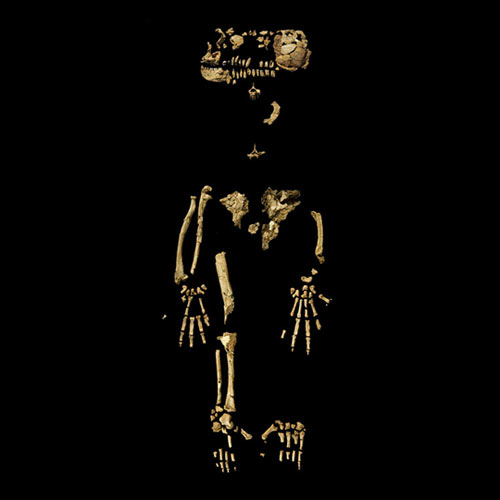
Internet, meet Ardi, the newest member of the human branch of the primate family tree.
Or rather, the oldest. Discovered in Ethiopia in 1994, Ardi is a 4.4 million-year-old partial skeleton of a female Ardipithecus ramidus.
The fossil puts to rest the notion, popular since Darwin’s time, that a chimpanzee-like missing link — resembling something between humans and today’s apes — would eventually be found at the root of the human family tree. Indeed, the new evidence suggests that the study of chimpanzee anatomy and behavior — long used to infer the nature of the earliest human ancestors — is largely irrelevant to understanding our beginnings.
Ardi instead shows an unexpected mix of advanced characteristics and of primitive traits seen in much older apes that were unlike chimps or gorillas. As such, the skeleton offers a window on what the last common ancestor of humans and living apes might have been like.
This is a major discovery; Science is devoting a special issue to the find with 11 detailed peer-review papers and general summaries. I expect we’ll be hearing more about this in the coming weeks as all that science filters through the lay media. (thx, jeff)
The Spanish ribbed newt has an interesting method of dealing with perceived threats. The creature activates its ribcage like mini switchblades, forcing them through its own skin. Even more remarkable, the newt’s highly adapted immune system and collagen-cased bones allow it to heal quickly and without risk of infection, which makes it one job interview away from a position with the X-Men.
In 1907, Dr. Duncan MacDougall found a bunch of people who were about to die and weighed them as they expired. MacDougall claimed that at the point of death, the bodies became lighter. That lost weight, the doctor assumed, was the escaping soul. He even postulated that the souls of the sluggish in life are slow in death:
The subject was that of a man of larger physical build, with a pronounced sluggish temperament. When life ceased, as the body lay in bed upon the scales, for a full minute there appeared to be no change in weight. The physicians waiting in the room looked into each other’s faces silently, shaking their heads in the conviction that out test had failed.
Then suddenly the same thing happened that had occurred in the other cases. There was a sudden diminution in weight, which was soon found to be the same as that of the preceding experiments.
I believe that in this case, that of a phlegmatic man slow of thought and action, that the soul remained suspended in the body after death, during the minute that elapsed before it came to the consciousness of its freedom. There is no other way of accounting for it, and it is what might be expected to happen in a man of the subject’s temperament.
The weight lost of MacDougall’s first subject at death was 3/4 of an ounce…or about 21 grams. (via radiolab)
It’s not only trials of new drugs that are crossing the futility boundary. Some products that have been on the market for decades, like Prozac, are faltering in more recent follow-up tests. In many cases, these are the compounds that, in the late ’90s, made Big Pharma more profitable than Big Oil. But if these same drugs were vetted now, the FDA might not approve some of them. Two comprehensive analyses of antidepressant trials have uncovered a dramatic increase in placebo response since the 1980s. One estimated that the so-called effect size (a measure of statistical significance) in placebo groups had nearly doubled over that time.
New Scientist reports that Czech beer tastes worse than it used to due to climate change.
Climatologist Martin Mozny of the Czech Hydrometeorological Institute and colleagues say that the quality of Saaz hops — the delicate variety used to make pilsner lager — has been decreasing in recent years. They say the culprit is climate change in the form of increased air temperature.
The starter would feature new products that have only recently been cultivated locally, thanks to climate change — Devon olive oil perhaps, accompanied by a nice glass of Kent rosé. The main course might be controversial: test-tube grown imitation meats and vegetables that recreate the flavour and mouthfeel of species that are already lost or threatened with extinction by climate change.
Assuming you’re not in a big lecture hall and the professor shuts the door at the start of class, how long does it take for you and your classmates to deplete the oxygen enough to feel it?
Here’s a taste of the reasoning behind the answer:
So one person needs about 2lb of oxygen a day, or .9 kg. But how many liters is that? Oxygen has a molar mass of 16 grams, so oxygen gas, or O2, has a mass of 32 grams per mole. One mole of gas at standard pressure and temperature takes up 22.4 liters.
I don’t know if they brought this up on physicsbuzz yet, but lack of oxygen isn’t really uncomfortable (though it can kill you). Increase in CO2 is what triggers the apparent need to breath. I am pretty sure the minimum partial pressure of O2 is around 0.16 bar. Actually, that is the min recommended, I don’t know if that is the pass-out limit.
Based upon what I read, and what I learned about the hookworms I decided that I was going to try and infest myself with hookworms in an attempt to cure my asthma. I was not willing to wait ten or more years for the drug companies to bring a drug to market. It was obvious to me that hookworms, for a healthy adult with a good diet, are quite benign. This account details my experiences, how I went about it, and the things I have done since infestation to calibrate my level of infestation so that in the end I was able to cure my asthma and hay fever with hookworms. These same techniques are of course applicable to any hookworm infestation, whether you want to control asthma, hay fever, colitis, Crohn’s disease or IBD.
Lawrence even sells hookworms to others so that they won’t have to travel to a third world country to contract them.
Dr Allesina, of the University of Chicago’s department of ecology and Evolution, told BBC News: “First of all we had to reverse the definition of the algorithm. “In PageRank, a web page is important if important pages point to it. In our approach a species is important if it points to important species.”
The researchers compared the performance of PageRank and found it comparable to that of much more complex computational biology algorithms.
Within hours, telegraph wires in both the United States and Europe spontaneously shorted out, causing numerous fires, while the Northern Lights, solar-induced phenomena more closely associated with regions near Earth’s North Pole, were documented as far south as Rome, Havana and Hawaii, with similar effects at the South Pole.
Meanwhile, individual beekeeping operations have been damaged, some beyond repair because of this malady. Others have been able to recover. The overall picture is, however, not quite as bleak as the press and the blogosphere might lead you to imagine. Colony numbers in the U.S. show the resiliency of American beekeepers.
The soprano problem is the mispronunciation of lyrics by sopranos at the high end of their range. In order to make themselves heard in opera houses, sopranos need their voices to resonate, which they only do when making certain sounds.
Jane Eaglen, a critically acclaimed soprano who has performed Wagner’s works in opera houses worldwide, explains that sopranos must try to find a balance between power and clarity. “It’s really about how you modify the vowels at the top of the voice so that the words are still understandable but so that you are also making the best sound that you can make,” she says.
Writing in the New York Times this weekend, Robert Wright attempts to reconcile religion and science. The middle ground is the “built-in” moral sense of our universe, in that the universe builds and rewards organisms that cooperate with one another.
I bring good news! These two warring groups have more in common than they realize. And, no, it isn’t just that they’re both wrong. It’s that they’re wrong for the same reason. Oddly, an underestimation of natural selection’s creative power clouds the vision not just of the intensely religious but also of the militantly atheistic.
If both groups were to truly accept that power, the landscape might look different. Believers could scale back their conception of God’s role in creation, and atheists could accept that some notions of “higher purpose” are compatible with scientific materialism. And the two might learn to get along.
This is essentially the subject of the last chapter or two of Wright’s The Evolution of God, the only part of this excellent book that I didn’t quite buy into, even though I’ve been thinking about his conclusion quite a bit since finishing the book.
Taken together, 30-plus years of research add up to an increasingly persuasive conclusion: exposure to pesticides and other toxins increases the risk of Parkinson’s disease, and we are only now beginning to wrestle with the true scope of the damage.
Even our closest relatives, the great apes, move smoothly from their juvenile to adult life phases — so why do humans spend an agonising decade skulking around in hoodies?
What do you think are the odds that you will die during the next year? Try to put a number to it — 1 in 100? 1 in 10,000? Whatever it is, it will be twice as large 8 years from now. This startling fact was first noticed by the British actuary Benjamin Gompertz in 1825 and is now called the “Gompertz Law of human mortality.” Your probability of dying during a given year doubles every 8 years. For me, a 25-year-old American, the probability of dying during the next year is a fairly miniscule 0.03% — about 1 in 3,000. When I’m 33 it will be about 1 in 1,500, when I’m 42 it will be about 1 in 750, and so on. By the time I reach age 100 (and I do plan on it) the probability of living to 101 will only be about 50%. This is seriously fast growth — my mortality rate is increasing exponentially with age.
Read the whole thing…it’s not that long and is super interesting. (via mr)
Perhaps most striking are the regional differences. “Peach and melon allergy is particularly common in the Mediterranean - in Spain and Greece,” says Fern’andez Rivas. Reports from clinics suggest that Iceland is a hotspot for fish allergy and Switzerland has a higher rate of celeriac allergy than elsewhere.
These regional variations are likely to be due in part to differences in eating habits, causing people to be exposed to different allergens. But that alone cannot explain a pronounced north-south divide in the type of apple allergy people experience. In northern Europe, people react to the uncooked flesh of apples, whereas in the south it’s the skin that sets them off, whether it’s cooked or not. What could be the cause of this strange invisible dividing line that skims across south-west France, cuts through Italy close to Florence, and continues eastwards through the middle of the Black Sea?
Significantly, this line marks the southern limit of the birch tree, a plant whose pollen is one of the causes of hay fever in northern Europe.
Our brains have Oprah neurons, Aniston neurons, Eiffel Tower neurons, and Saddam neurons that fire when we see pictures or hear the names of these people and places.
Yet “Oprah neuron” might be a misnomer. The same neuron also fired, albeit much more weakly, to Whoopi Goldberg in one patient. Similarly, Luke Skywalker neurons also responded to Yoda, and those famous Jennifer Aniston neurons flashed to her former Friends co-star Lisa Kudrow. Such connections could explain how our brain relates two abstract concepts, Quian Quiroga says.
And then the Skywalker neurons said, “these aren’t the memories you’re looking for”. Ba doomp.
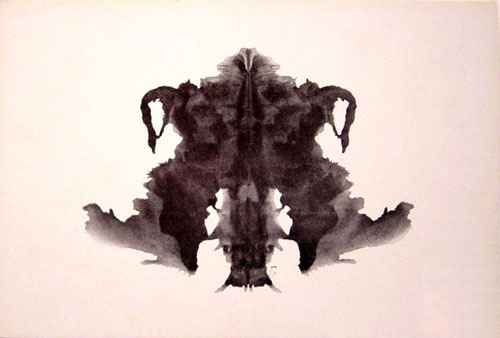
“The more test materials are promulgated widely, the more possibility there is to game it,” said Bruce L. Smith, a psychologist and president of the International Society of the Rorschach and Projective Methods, who has posted under the user name SPAdoc. He quickly added that he did not mean that a coached subject could fool the person giving the test into making the wrong diagnosis, but rather “render the results meaningless.”
To psychologists, to render the Rorschach test meaningless would be a particularly painful development because there has been so much research conducted - tens of thousands of papers, by Dr. Smith’s estimate - to try to link a patient’s responses to certain psychological conditions. Yes, new inkblots could be used, these advocates concede, but those blots would not have had the research - “the normative data,” in the language of researchers - that allows the answers to be put into a larger context.
I was not aware that the inkblot tests were even in use anymore…seems like an antiquated technique.
This research has important practical implications. It suggests that there are several simple steps we can all take to increase creativity, such as traveling to faraway places (or even just thinking about such places), thinking about the distant future, communicating with people who are dissimilar to us, and considering unlikely alternatives to reality. Perhaps the modern environment, with its increased access to people, sights, music, and food from faraway places, helps us become more creative not only by exposing us to a variety of styles and ideas, but also by allowing us to think more abstractly.
Programming such a computer is no easy task, however. The researchers coded a simplified version of the problem, using just three cities, by modifying the DNA of Escherichia coli bacteria. The cities were represented by a combination of genes causing the bacteria to glow red or green, and the possible routes between the cities were explored by the random shuffling of DNA. Bacteria producing the correct answer glowed both colours, turning them yellow.
But just as vacuum tube and silicon chip-based computers became capable of more abstract calculations, perhaps the bacteria computer will follow the same developmental trajectory.
On July 17, 1969, The New York Times issued a correction related to an editorial the paper published in 1920 that dismissed the idea of rocket travel in the vacuum of space. The editorial read, in part:
That Professor Goddard, with his ‘chair’ in Clark College and the countenancing of the Smithsonian Institution, does not know the relation of action to reaction, and of the need to have something better than a vacuum against which to react — to say that would be absurd. Of course he only seems to lack the knowledge ladled out daily in high school.
The correction stated:
Further investigation and experimentation have confirmed the findings of Issac Newton in the 17th Century and it is now definitely established that a rocket can function in a vacuum as well as in an atmosphere. The Times regrets the error.
The Times regrets the error! Wish I’d written that next to a few muffed physics exam questions. Here’s a pretty good explanation of why rockets work in vacuums. (via @davidfg)
Law of Gravitation - An Example of Physical Law
The Relation of Mathematics and Physics
The Great Conservation Principles
Symmetry in Physical Law
The Distinction of Past and Future
Probability and Uncertainty - The Quantum Mechanical View of Nature
Seeking New Laws
The fact that both of these important brain networks become active together suggests that mind wandering is not useless mental static. Instead, Schooler proposes, mind wandering allows us to work through some important thinking. Our brains process information to reach goals, but some of those goals are immediate while others are distant. Somehow we have evolved a way to switch between handling the here and now and contemplating long-term objectives. It may be no coincidence that most of the thoughts that people have during mind wandering have to do with the future.
This jibes well with the picture of the absentmindedness typical of some brilliant people.
Note: If you are a member and tried to log in, it didn't work, and now you're stuck in a neverending login loop of death, try disabling any ad blockers or extensions. Or try logging out and then back in. Still having trouble? Email me!





Socials & More