kottke.org posts about science
The holes drilled into Arctic, Antarctic, and glacial ice to harvest ice cores can be up to 2 miles deep. One of my all-time favorite sounds is created by dropping ice down into one of these holes — it makes a super-cool pinging noise, as demonstrated in these two videos:
Ice makes similar sounds under other conditions, like if you skip rocks on a frozen lake:
Or skate on really thin ice (ok this might actually be my favorite sound, with apologies to the ice core holes):
Headphones are recommended for all of these videos. The explanation for this distinctive pinging sound, which sounds like a Star Wars blaster, has to do with how fast different sound frequencies move through the ice, as explained in this video:
(via the kid should see this)
You’re probably aware that black holes are weird. You can learn more about just how extremely odd they are by watching this animated primer on black holes by Kurzgesagt. The explanation about how long black holes live starting at ~9:30 is legitimately mindblowing — that hourglass metaphor especially.
In his latest impeccably produced video, Neil Halloran looks at the science of climate change and uncertainty both in science and in the public’s trust of science.
Degrees of Uncertainty is an animated documentary about climate science, uncertainty, and knowing when to trust the experts. Using cinematic visualizations, the film travels through 20,000 years of natural temperature changes before highlighting the rapid warming of the last half century.
The vast majority of climate scientists seem pretty sure that human use of fossil fuels has warmed the Earth and that warming is increasingly having an impact on both nature and society. But how do we, as members of the public with a relatively poor understanding of science, evaluate how certain we should be?
FYI: This video includes some interactive elements that only work if you watch it on Halloran’s website.
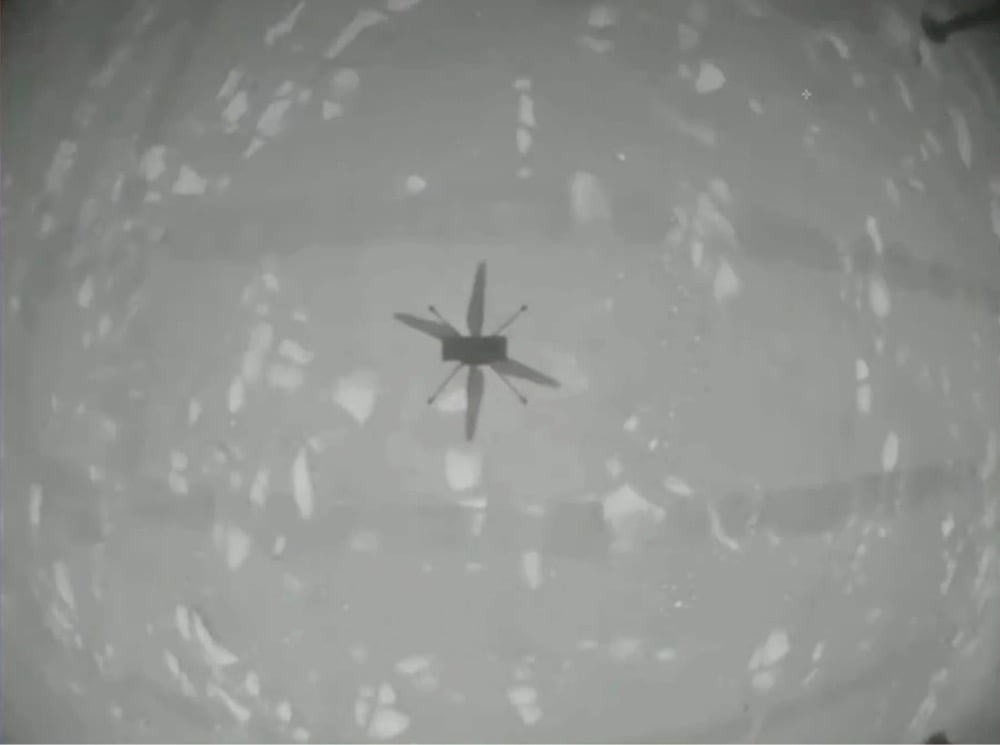
Deployed from NASA’s Perseverance rover, the Ingenuity helicopter took off and hovered for about 30 seconds in its first flight early this morning.
The solar-powered helicopter first became airborne at 3:34 a.m. EDT (12:34 a.m. PDT) — 12:33 Local Mean Solar Time (Mars time) — a time the Ingenuity team determined would have optimal energy and flight conditions. Altimeter data indicate Ingenuity climbed to its prescribed maximum altitude of 10 feet (3 meters) and maintained a stable hover for 30 seconds. It then descended, touching back down on the surface of Mars after logging a total of 39.1 seconds of flight. Additional details on the test are expected in upcoming downlinks.
Ingenuity’s initial flight demonstration was autonomous — piloted by onboard guidance, navigation, and control systems running algorithms developed by the team at JPL. Because data must be sent to and returned from the Red Planet over hundreds of millions of miles using orbiting satellites and NASA’s Deep Space Network, Ingenuity cannot be flown with a joystick, and its flight was not observable from Earth in real time.
NASA livestreamed the team in Mission Control as the test results were transmitted back to Earth. The photo above is of Ingenuity’s shadow taken while in flight by its onboard camera.
Update: Here’s video footage of the first flight:
And there’s always room for a little Great Span on this site. Alex Knapp:
The world’s oldest living person was alive when the Wright Brothers flew at Kitty Hawk and when the first helicopter flew on Mars.
In a letter published in The Lancet, a group of scholars argue, with an extensive review of the available evidence, that the primary mode of transmission from human to human of the virus responsible for Covid-19 is via aerosols, not through larger particles called droplets or through fomites (transfer from surfaces). Here are three of their ten reasons why:
Third, asymptomatic or presymptomatic transmission of SARS-CoV-2 from people who are not coughing or sneezing is likely to account for at least a third, and perhaps up to 59%, of all transmission globally and is a key way SARS-CoV-2 has spread around the world, supportive of a predominantly airborne mode of transmission. Direct measurements show that speaking produces thousands of aerosol particles and few large droplets, which supports the airborne route.
Fourth, transmission of SARS-CoV-2 is higher indoors than outdoors and is substantially reduced by indoor ventilation. Both observations support a predominantly airborne route of transmission.
Fifth, nosocomial infections have been documented in health-care organisations, where there have been strict contact-and-droplet precautions and use of personal protective equipment (PPE) designed to protect against droplet but not aerosol exposure.
The letter concludes with a plea by the authors for public health officials to finally embrace this reality: “The public health community should act accordingly and without further delay.”
I can’t believe we’re actually still arguing about this. One of the authors, Jose-Luis Jimenez, wrote this seminal Time magazine piece that provided the smoke analogy that is the mental model I’ve been using to think about potential risks during the pandemic.
When it comes to COVID-19, the evidence overwhelmingly supports aerosol transmission, and there are no strong arguments against it. For example, contact tracing has found that much COVID-19 transmission occurs in close proximity, but that many people who share the same home with an infected person do not get the disease. To understand why, it is useful to use cigarette or vaping smoke (which is also an aerosol) as an analog. Imagine sharing a home with a smoker: if you stood close to the smoker while talking, you would inhale a great deal of smoke. Replace the smoke with virus-containing aerosols, which behave very similarly, and the impact is similar: the closer you are to someone releasing virus-carrying aerosols, the more likely you are to breathe in larger amounts of virus. We know from detailed, rigorous studies that when individuals talk in close proximity, aerosols dominate transmission and droplets are nearly negligible.
Another of the authors, Zeynep Tufekci, has been arguing the case for aerosols (and masks & overdispersion) since early in the pandemic, and she succinctly explained in a Twitter thread how predominantly aerosol transmission fits with the mitigation methods that have really worked around the world:
Airborne transmission unites three things crucial to recognize for effective COVID-19 mitigation: transmission without symptoms (thus aerosols), clusters driving the epidemic (also aerosols) and masks/ventilation indoors being key (hey, also aerosols). This framework is coherent.
Her whole thread is worth a read — like this bit about how other respiratory pathogens are likely spread by aerosols and not droplets (as commonly believed):
Fascinatingly, you search the scientific record high and low, but there really is little to no direct evidence for gravity-sprayed droplets being predominant mode of transmission for respiratory illnesses outside of coughing/sneezing. It’s many… assumptions. Like a tradition.
If any good comes out of the pandemic at all, a better and more useful scientific understanding of how respiratory pathogens are transmitted would be a good start.
Update: One of the authors, Trisha Greenhalgh, responds succinctly to criticisms of the paper in this Twitter thread.
Criticism 1: “The paper is just opinion, and several authors aren’t even doctors.”
Response: No. It’s well-researched scholarly argument, produced by an interdisciplinary team of 6 professors including 3 docs, 2 aerosol scientists and 1 social scientist.
This new video from Kurzgesagt takes a look at the possible role of nuclear energy in helping to curb the effects of our climate emergency.
Do we need nuclear energy to stop climate change? More and more voices from science, environmental activists and the press have been saying so in recent years — but this comes as a shock to those who are fighting against nuclear energy and the problems that come with it. So who is right? Well — it is complicated.
Rebecca Tuhus-Dubrow wrote about climate change activists who are embracing nuclear energy for the New Yorker back in February.
In the course of years, Hoff grew increasingly comfortable at the plant. She switched roles, working in the control room and then as a procedure writer, and got to know the workforce — mostly older, avuncular men. She began to believe that nuclear power was a safe, potent source of clean energy with numerous advantages over other sources. For instance, nuclear reactors generate huge amounts of energy on a small footprint: Diablo Canyon, which accounts for roughly nine per cent of the electricity produced in California, occupies fewer than six hundred acres. It can generate energy at all hours and, unlike solar and wind power, does not depend on particular weather conditions to operate. Hoff was especially struck by the fact that nuclear-power generation does not emit carbon dioxide or the other air pollutants associated with fossil fuels. Eventually, she began to think that fears of nuclear energy were not just misguided but dangerous. Her job no longer seemed to be in tension with her environmentalist views. Instead, it felt like an expression of her deepest values.
For more reading on the topic, check out Kurzgesagt’s list of source materials used to make their video.
The NY Times has a profile of Dr. Katalin Kariko, who struggled for decades against a system unwilling to consider and fund her ideas about how messenger RNA could be used to instruct cells inside human bodies to “make their own medicines”. Her work has culminated in two highly effective vaccines for Covid-19 and is being extended to produce possible vaccines for HIV, the flu, tuberculosis, and malaria.
Now Katalin Kariko, 66, known to colleagues as Kati, has emerged as one of the heroes of Covid-19 vaccine development. Her work, with her close collaborator, Dr. Drew Weissman of the University of Pennsylvania, laid the foundation for the stunningly successful vaccines made by Pfizer-BioNTech and Moderna.
For her entire career, Dr. Kariko has focused on messenger RNA, or mRNA — the genetic script that carries DNA instructions to each cell’s protein-making machinery. She was convinced mRNA could be used to instruct cells to make their own medicines, including vaccines.
Stat also wrote a piece about Kariko and the development of the mRNA vaccines. It seems like Kariko will be strongly considered for a Nobel Prize in Chemistry for her achievements. The Covid vaccines will save hundreds of thousands of lives alone, and if mRNA can indeed be harnessed to protect against HIV and malaria, the effect on the world will be immense. Give Kariko all the prizes and whatever she wants to be happy in life — she’s earned it and more.
Update: From Derek Thompson at The Atlantic, How mRNA Technology Could Change the World.
But mRNA’s story likely will not end with COVID-19: Its potential stretches far beyond this pandemic. This year, a team at Yale patented a similar RNA-based technology to vaccinate against malaria, perhaps the world’s most devastating disease. Because mRNA is so easy to edit, Pfizer says that it is planning to use it against seasonal flu, which mutates constantly and kills hundreds of thousands of people around the world every year. The company that partnered with Pfizer last year, BioNTech, is developing individualized therapies that would create on-demand proteins associated with specific tumors to teach the body to fight off advanced cancer. In mouse trials, synthetic-mRNA therapies have been shown to slow and reverse the effects of multiple sclerosis. “I’m fully convinced now even more than before that mRNA can be broadly transformational,” Özlem Türeci, BioNTech’s chief medical officer, told me. “In principle, everything you can do with protein can be substituted by mRNA.”
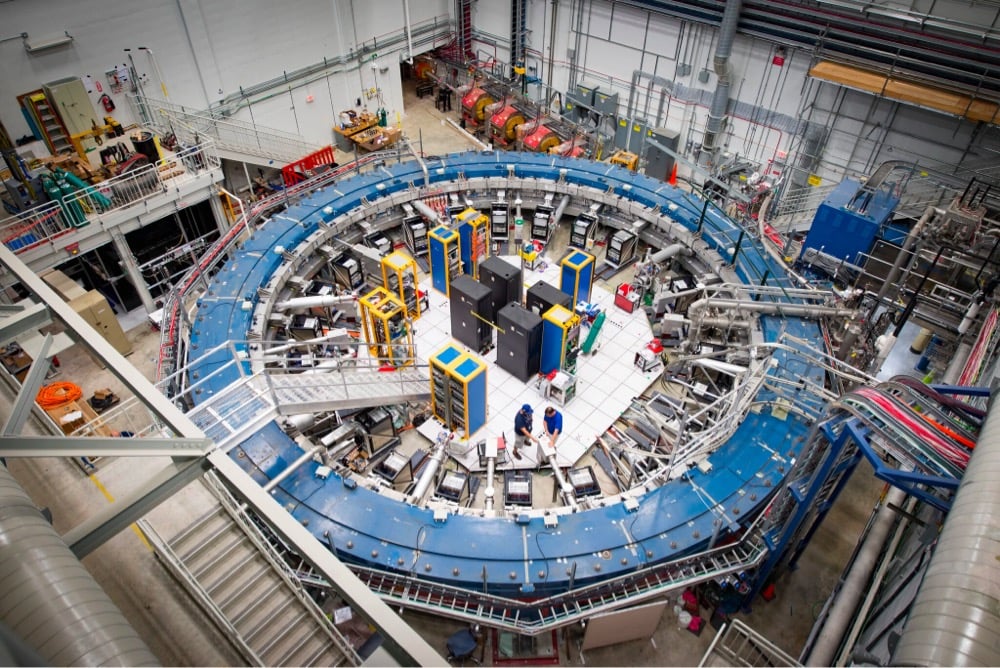
The preliminary results of a study of elementary particles at Fermilab and elsewhere show that the behavior of particles called muons deviates from standard physical theories, indicating that previously unknown forces are at work.
Evidence is mounting that a tiny subatomic particle seems to be disobeying the known laws of physics, scientists announced on Wednesday, a finding that would open a vast and tantalizing hole in our understanding of the universe.
The result, physicists say, suggests that there are forms of matter and energy vital to the nature and evolution of the cosmos that are not yet known to science.
“This is our Mars rover landing moment,” said Chris Polly, a physicist at the Fermi National Accelerator Laboratory, or Fermilab, in Batavia, Ill., who has been working toward this finding for most of his career.
The particle célèbre is the muon, which is akin to an electron but far heavier, and is an integral element of the cosmos. Dr. Polly and his colleagues — an international team of 200 physicists from seven countries — found that muons did not behave as predicted when shot through an intense magnetic field at Fermilab.
The aberrant behavior poses a firm challenge to the Standard Model, the suite of equations that enumerates the fundamental particles in the universe (17, at last count) and how they interact.
“This is strong evidence that the muon is sensitive to something that is not in our best theory,” said Renee Fatemi, a physicist at the University of Kentucky.
Update: At Quanta Magazine, Natalie Wolchover dives deeper into the preliminary results and what they might mean.
What do swaying bridges, flashing fireflies, clapping audiences, the far side of the Moon, and beating hearts have in common? Their behavior all has something to do with synchronization. In this video, Veritasium explains why and how spontaneous synchronization appears all the time in the physical world.
I was really into the instability of the Millennium Bridge back when it was first opened (and then rapidly closed), so it was great to hear Steven Strogatz’s explanation of the bridge’s failure.
Oh, and do go play with Nicky Case’s firefly visualization to see how synchronization can arise from really simple rules.
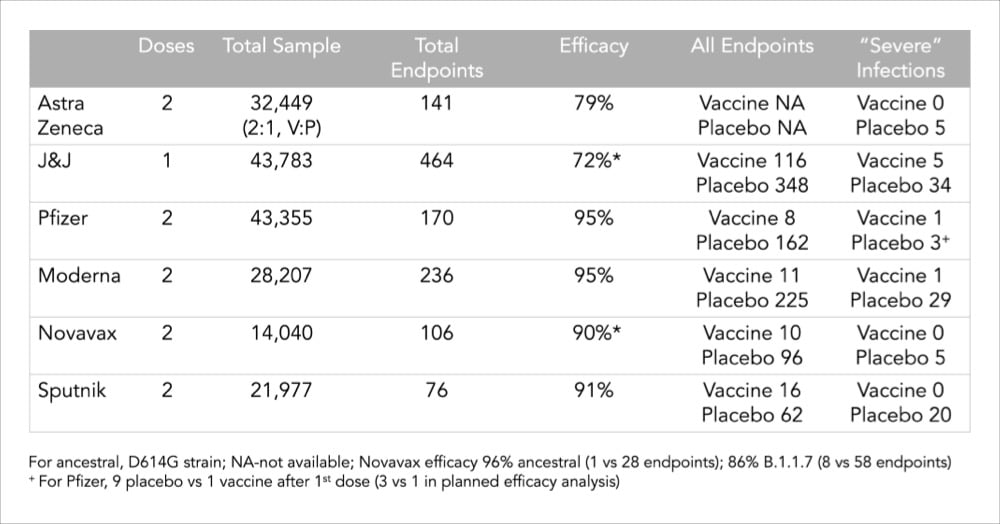
Related to my post from last month about what a 95% or 66% efficacy rate of a vaccine even means, Vox made a clear and concise video about why comparing vaccine efficacy rates is difficult — trials were done in different countries with different variants under different conditions with different levels of disease — and why protection against severe illness, hospitalization and death is a better way to compare and evaluate these vaccines. As this chart from Dr. Eric Topol shows, all of the major vaccines show strong protection against severe illness.
For their latest video, Kurzgesagt ventures into What If? territory with a hypothetical exploration of what would happen if King Midas turned the entire Earth into gold. This video did not go where I thought it was going to. Ten minutes of freefall? Shrinking mountains?
I thought this interview with Dr. Ashish K. Jha, dean of the Brown University School of Public Health, was really good and useful in terms of calibrating expectations with regard to the “end” of the pandemic, vaccines, and variants. On the guidance that vaccinated people should be getting:
I think it is essential that we give guidance to people. And I think we should give guidance to people on what they can do safely once they are vaccinated. People say, “Can your behavior change?” My answer is: absolutely! That’s a major motivation for getting vaccinated. First of all, what’s very clear to me is vaccinated people hanging out with other vaccinated people is pretty darn close to normal. You don’t have to wear a mask. You can share a meal. The chance that a fully vaccinated person will transmit the virus to another fully vaccinated person who then will get sick and die … I mean, sure, people get struck by lightning, too. But you don’t make policy based on that. And we need to remind people that there is a huge benefit to getting vaccinated, which is that you are safe enough to do the things you love with other vaccinated people.
According to a study conducted by the Pew Research Center, among those people who said they probably or definitely won’t get a Covid-19 vaccine, the top two reasons given were “concern about side effects” and “the vaccines were developed and tested too quickly”. For our purposes here, I’m going to ignore the first concern — the data is pretty conclusive that, on average, the vaccine side effects are minimal when compared to the effects of actually contracting Covid-19 — and focus on the quick development timeline. If you’re among those who are apprehensive about the unprecedented speed at which the world’s governments and scientific community mobilized to create several effective Covid-19 vaccines, I hope the following will help you make a good decision.
In reading a bunch of different resources (linked below throughout), I identified six main reasons why the Covid-19 vaccines were developed so quickly compared to past efforts.
1. The need was urgent. Covid-19 changed the entire world in a very short span of time and it was evident in the absence of an effective vaccine, tens of millions more people would unnecessarily die and/or suffer and the rest of us would be living in fear of disease and death. This urgency drove several of the other factors here: the availability of funding, resources, and collaboration.
2. Funding & focus. Companies and governments threw billions and billions of dollars at this. Companies, research centers, and scientists dropped other stuff they were working on to study SARS-CoV-2 and Covid-19. Governments prioritized regulatory approval for trials, etc. From a thread by Dr. Kat Arney:
Relatively few in the scientific, pharma & policy worlds care about vaccines compared w/ drugs. Most vaccine programmes are underfunded as they’re perceived as not profitable, only relevant to LMICs, & have few research groups/companies working on them. Getting funding & research capacity for vax usually takes months/years. COVID-19 vaccine was a massive global research effort w/ $millions for multiple groups/projects in weeks. Years of funding cycles & lab research happened in months, huge amount of time saved.
And from a presentation given by Dr. Anthony Fauci:
We proceeded at risk. So people say, what do you mean by “at risk”? Are you risking safety? Are you risking scientific integrity? No, it’s a financial risk. In other words, you invest in things that cost a lot of money before you even have an answer to whether the prior step worked.
And a classic example is the production of large scale amounts of clinical lots, which have been produced and are being produced before you even know that your vaccine works, so that you have hundreds of millions of doses ready to go. If the vaccine works, you’ve saved many months. If the vaccine doesn’t, you lost a lot of money, to the tune of hundreds of millions if not billions of dollars. But it was felt it was worth that investment and that risk financially in order to save time.
More on that here. As Dr. Faheem Younus put it, “We didn’t cut corners; we cut the crap!”
3. Availability of volunteers & high incidence of disease. In order to statistically show the vaccine works, you need people to test it on and you need enough people in the studies to get sick. Kat Arney again:
To show vax effectiveness, you need a high number of people with the disease in the population — big problem with the Ebola vax is that it took so long to develop the outbreak was over & the couldn’t get enough numbers to conclusively show it worked
We’re in a global pandemic — the vaccine is being tested in places with very high community prevalence, so trials can hit pre-determined statistical milestones very quickly. Huge amount of time saved.
Hundreds of thousands of people around the world volunteered to test these vaccines — without them, we’d be months and years away from a safe, tested vaccine.
4. International & corporate collaboration. Countries and companies shared research, data, and resources because the primary goal was to develop effective vaccines and save lives, not make a profit. For instance, Chinese researchers posted the genome for SARS-CoV-2 on January 11, 2020, allowing the effort to develop a vaccine to begin.
5. We knew a lot about coronaviruses from previous work. This wasn’t an effort that started from scratch. From Bloomberg:
The Pfizer-BioNTech and Moderna vaccines may seem brand new, but they are the culmination of more than a decade of work that started during the SARS and MERS outbreaks. Vaccines were even developed against MERS but were never needed. Nevertheless, scientists learned a huge amount from working with that virus, which is from the same family as the one that causes Covid-19.
From Dr. Habibul Ahsan:
Really, most of the vaccine platform development work is already done. You just have to do the remaining part, which is adding the right viral antigens to the already-proven platform and making sure it’s safe and effective in humans. Even in just the last five to 10 years, we’ve made big leaps in developing new kinds of vaccine platforms like those being tested for SARS-CoV-2.
6. Scientific and technological capability. Ok, we know a lot about coronaviruses but humanity’s general scientific and technological abilities have never been stronger or more powerful. Again from Bloomberg:
Remember also that technology has evolved rapidly — for example, we’re now about able to sequence the genomes of every mutant version of the virus in less than a day. That helps in speeding up vaccine development.
Dr. Mark Toshner sums up the effort:
However we have collectively now shown that with money no object, some clever and highly motivated people, an unlimited pool of altruistic volunteers, and sensible regulators that we can do amazing things.
Further reading: The lightning-fast quest for COVID vaccines — and what it means for other diseases (Nature), How were researchers able to develop COVID-19 vaccines so quickly? (Univ. of Chicago), The race for the COVID-19 vaccine: A story of innovation and collaboration (Carnall Farrar), COVID-19 vaccines: development, evaluation, approval and monitoring (European Medicines Agency).
Stat’s Andrew Joseph and Helen Branswell on the short-term, middle-term, and long-term future of the coronavirus in the US. The short-term outlook is dominated by vaccination & variants; some parts of the country will continue to be affected by outbreaks:
Conditions may be ripe for a better summer, however. Vaccine supplies should be flowing more freely, at least in the U.S.; the Biden administration now expects enough vaccine doses in hand for all adults by the end of May. With most vulnerable populations protected, there should be fewer hospitalizations and deaths. And with warmer weather, people can return to outdoor life.
Widespread transmission of the virus could be replaced by more sporadic and localized outbreaks. There’s also growing evidence that vaccines don’t just protect people from getting symptomatic Covid-19, but can reduce transmission.
And in the long-term, well, SARS-CoV-2 will be around for years and even decades to come:
Years from now, SARS-CoV-2 could join the ranks of OC43, 229E, NL63, and HKU1 — the four endemic, seasonal coronaviruses that cause a chunk of common colds every year. Essentially, our immune systems — primed by vaccines, boosters, and previous encounters with the coronavirus — will be ready to knock back SARS-2 when we see it again, potentially blocking an infection or leading to one that causes no symptoms or maybe just the sniffles.
It’s good to read stuff like this — it provides a basis to use when calibrating your optimism or pessimism for future activities and desires.
After the Biden administration announced they will have enough Covid-19 vaccine supply to cover every single adult in the country by the end of May, I got to wondering about what they were going to do with the tens & hundreds of millions of surplus doses already procured for the remainder of the year. “Oh,” I thought, naively, “We’ll be able to distribute it to countries that can’t easily procure or manufacture vaccines of their own!” And I’m sure some of that will happen, if only for PR purposes. But it’s perhaps more likely that America will practice vaccine diplomacy and use the stockpile to reestablish its global leadership.
The United States has backed away from the world. This isn’t a Clinton thing or a W Bush thing or an Obama thing or a Trump thing or a Biden thing, but instead a United States thing. The American people lost interest in playing a constructive role in the world three decades ago, and America’s political leadership has molded itself around that fact. Trump may have been instinctually and publicly hostile to all things international, but Biden is only different in tone. Biden’s Buy-American program is actually more anti-globalization than Trump’s America-First rhetoric as it is an express violation of most of America’s international trade commitments. TeamBiden says it wants to reestablish America’s global leadership…but it plans to do so without any troops or money. Sorry, but that’s not how it works.
Which makes the possibilities for vaccine diplomacy wildly interesting. The United States has no responsibility to provide COVID vaccines to the world. It can — it will — distribute them, but it will want something in return.
Even if you disagree with some of the analysis here, it will be interesting to watch where America’s stockpile ends up. Given Biden’s rhetoric of “listening to the science” when it comes to the pandemic, I hope that at least some of that supply goes to places that need it most to make certain the pandemic doesn’t sputter on for years, generating potentially dangerous new variants, even if it’s politically disadvantageous.
Update: Countries now scrambling for COVID-19 vaccines may soon have surpluses to donate by Jon Cohen and Kai Kupferschmidt for Science magazine:
Like three dozen other countries, the United States contracted with multiple vaccine companies for several times the number of doses needed to cover its population. No one knew at the time which, if any, of the candidate vaccines would work or when they might prove safe and effective. But by now, most of the prepurchased vaccines appear to offer solid protection — which means many countries will receive far more vaccine than they need. The excess doses the United States alone may have by July would vaccinate at least 200 million people.
A chart in the article notes that the US has procured enough vaccine to cover almost 1.5 billion people after fully vaccinating its entire population.
Newer posts
Older posts





Socials & More