kottke.org posts about politics
Climate change has shifted from being a scientific issue to a political issue, both because the science is settled1 and because conservatives have embraced climate denialism. As a result, when deep-sea biologist Andrew Thaler talks to people about climate change, he doesn’t talk about science. He talks to people about things like fishing:
Fishermen know that things are changing, that black bass, scup, and butterfish (an important prey species in the tuna fishery) are moving further and further north. Oystermen know that the increasingly high high tides have a negative effect on the recruitment and growth of commercial oysters. More importantly, fishing communities have records and cultural knowledge that go back centuries, and they can see from multi-generational experience that the seasons are less predictable now than in the past and that the changes taking place today are nothing like the more gradual changes of previous generations.
And flooding:
I know fishermen in Guinea living in houses that have stood for hundreds of years. Some of those houses now flood at high tide. Every high tide. They weren’t built at the water’s edge, the water’s edge came to them. I lived in the same house in Beaufort, North Carolina for ten years. When I moved in, we were high and dry. Now our street has a permanent “high water” sign. The farm I just left in coastal Virginia is inundated after heavy rains or strong tidal surges. The front fields, which once held vibrant gardens, now nurture short grass and salty soil.
And other things like farming and faith. People who aren’t scientists and have grown distrustful of them won’t be convinced by science. But they will believe stories that relate to important matters in their lives. (via @EricHolthaus)
In November, shortly after the election, Vann Newkirk wrote an article for The Atlantic called This Is Who We Are, a reflection on racism in America.
At a gas station just outside of Rockingham, serendipity found us. As we pulled up to the pump, just there in front of our car was Mr. Confederate Plate, leaning like all villains do against the side of his car. I’m not sure who recognized whom first, but I remember the shouting match, and Mr. Confederate Flag calling my father the one name he would never answer to, looking at me and saying the same, and then pantomiming that he had a gun in the car. I remember looking around at similar flags on another truck and inside the gas station, and knowing instinctively that we were not in friendly territory. I also remember my father shaking with rage and that same hot shame as my own when he climbed back in the truck.
After another cussing fit, Vann Newkirk Sr. looked at me and said the thing that’s always stuck with me since. “This is who we are,” he told me. “Don’t forget.” And we went back down the road.
The piece was adapted into the short video above. Both are worth your time.
Scifi Policy reviews Rogue One as an engineering ethics case study (spoilers!).
The film also makes its engineering ethics explicit. Before the opening scene, Galen Erso had escaped the Death Star project because of his moral objections, likely against the Empire as well as the concept of making such a terrifying weapon at all. After Krennic captures him, Galen later tells his daughter Jyn that he had a choice: he could have continued abstaining, and let someone else build the Death Star, or he could dive deep into the project, become indispensable to it, and find a way to stop it. He chooses to dive deep, and succeeds in building a subtle flaw in the Death Star design. Then 15 years later, he sends a messenger to the Rebellion informing them of the weapon’s existence, power and most importantly, its fatal flaw.
Part of the point of the review is that resistance can take many forms. Erso resists by working within the system to help bring about a better outcome. The problem, for the outside observer, is that for such resistance to be effective, it needs to be indistinguishable from collaboration. Something to think about in relation to the incoming Trump administration and how best to work against it, particularly in the area of technology. (via mr)
Why does the US have only two main political parties? Is it because that’s what people want? Nope! It’s just an artifact of our system of voting. From C.G.P. Grey, a video explaining the problems with first-past-the-post voting systems (like the one used in US elections). Great simple explanation…well worth watching. Check out the rest of Grey’s videos in this series, particularly the one on gerrymandering.
Nothing in politics gets my blood boiling faster than gerrymandering…it is so grossly and obviously unfair. I bet you don’t even need to guess which of the two US political parties has pushed unfair redistricting in recent years.
More than anything for me, this is the story of politics in America right now: a shrinking and increasingly extremist underdog party has punched above its weight over the past few election cycles by methodically exploiting the weaknesses in our current political system. Gerrymandering, voter suppression, the passing of voter ID laws, and spreading propaganda via conservative and social media channels has led to disproportionate Republican representation in many areas of the country which they then use to gerrymander and pass more restrictive voter ID laws. They’ve limited potential conservative third party candidates (like Trump!) by incorporating them and their views into the main party. I would not be surprised if Republican donors strategically support left-of-center third-party candidates as spoilers — it’s a good tactic, underhanded but effective. They increasingly ignore political norms and practices to stymie Democratic efforts, like the general inaction of the Republican-led Congress over the past few years and the Senate’s refusal to consider Obama’s appointment of Merrick Garland to the Supreme Court.
None of this is an accident. They are a small but (and this is important) unified team that works for the benefit of the group above all else. In football terms, the Democrats are the stronger team: they gain more yards (look at Clinton’s ever-growing lead in the popular vote), they earn more first downs, and they might even score more points over the course of the season. But the Republicans won the Super Bowl by sticking together and deftly pressing their advantages to change the rules of the game in their favor. It’s a Moneyball strategy, but for politics.1 By almost any measure, the US is more liberal than it was 20 years ago and yet we have an incoming administration which is potentially authoritarian, influenced and advised by extremist white nationalists, and unapologetically corruptible. Somehow, we need to make the game more fair again. Fairness and justice should not be partisan. Americans — all Americans, liberal, centrist, and conservative — deserve a fair political process that reflects as closely as possible the collective needs and desires of the citizenry. Anything less should be unacceptable.
Update: Ross Lincoln makes some similar points about the election and liberal majority in America in a series of tweets about the importance of talking about Clinton’s popular vote totals.
14) Meanwhile, the great lie told by GOPs is that they’re ‘real’ America and that they’re a true majority, not liberals.
15) So when they win, regardless of circumstances, press & even many ostensible liberals fall in line w/demands liberals stop being liberal.
16) That’s happening now bigly. Even the LA Weekly published a horrid little illiterate screed about how liberals suck. LA Weekly!
17) but here’s the thing: Hill’s campaign seriously erred in ignoring key swing states. But she still is getting a historic pop vote margin
18) pushing 3 million more votes than Trump got. Possibly going to have gotten more votes than Obama got in 2012.
19) by any reasonable standard of judgment, clear majority of voters did not want Trump in office and most of those voters wanted Hillary.
20) Trump literally won only thanks to a technicality. And yet everyone is trying to push this idea that liberal votes don’t really count.
21) we’re told *we* live in a bubble. But as other ppl have noted, Los Angeles looks a hell of a lot more like America than Sapulpa, OK.
22) before anyone accuses me of being a snooty coastal elite, I am from Sapulpa, OK.
23) if Dems reacted to winning E.C. but not pop vote by saying OK isn’t a real place and doesn’t count, there’d be riots and impeachment.
24) That’s literally what is happening to liberals. But we didn’t just win the pop vote b/c of a quirk. We won it BIG. There are more of us.
25) if anything, we’re the ignored majority. Not conservatives, who literally cannot win fair and square.
See also Steven Johnson’s piece about how the wealthiest, most liberal, and most urban states pay the most taxes and have the least representation.
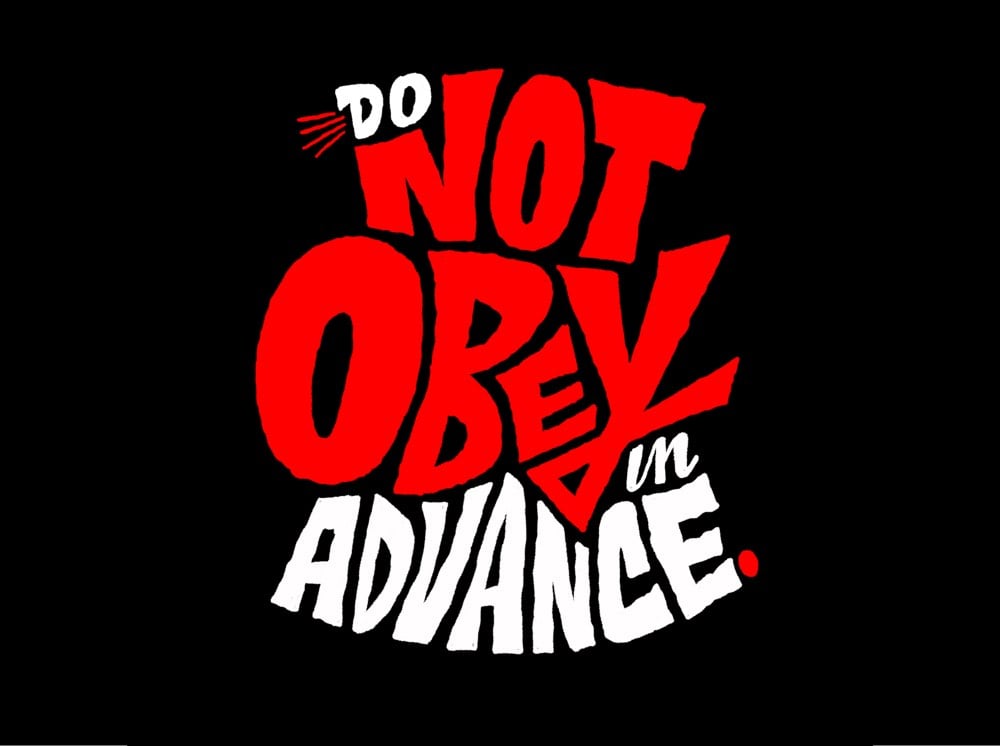
Yale history professor Timothy Snyder took to Facebook to share some lessons from 20th century about how to protect our liberal democracy from fascism and authoritarianism. Snyder has given his permission to republish the list, so I’ve reproduced it in its entirety here in case something happens to the original.
Americans are no wiser than the Europeans who saw democracy yield to fascism, Nazism, or communism. Our one advantage is that we might learn from their experience. Now is a good time to do so. Here are twenty lessons from the twentieth century, adapted to the circumstances of today.
1. Do not obey in advance. Much of the power of authoritarianism is freely given. In times like these, individuals think ahead about what a more repressive government will want, and then start to do it without being asked. You’ve already done this, haven’t you? Stop. Anticipatory obedience teaches authorities what is possible and accelerates unfreedom.
2. Defend an institution. Follow the courts or the media, or a court or a newspaper. Do not speak of “our institutions” unless you are making them yours by acting on their behalf. Institutions don’t protect themselves. They go down like dominoes unless each is defended from the beginning.
3. Recall professional ethics. When the leaders of state set a negative example, professional commitments to just practice become much more important. It is hard to break a rule-of-law state without lawyers, and it is hard to have show trials without judges.
4. When listening to politicians, distinguish certain words. Look out for the expansive use of “terrorism” and “extremism.” Be alive to the fatal notions of “exception” and “emergency.” Be angry about the treacherous use of patriotic vocabulary.
5. Be calm when the unthinkable arrives. When the terrorist attack comes, remember that all authoritarians at all times either await or plan such events in order to consolidate power. Think of the Reichstag fire. The sudden disaster that requires the end of the balance of power, the end of opposition parties, and so on, is the oldest trick in the Hitlerian book. Don’t fall for it.
6. Be kind to our language. Avoid pronouncing the phrases everyone else does. Think up your own way of speaking, even if only to convey that thing you think everyone is saying. (Don’t use the internet before bed. Charge your gadgets away from your bedroom, and read.) What to read? Perhaps “The Power of the Powerless” by V’aclav Havel, 1984 by George Orwell, The Captive Mind by Czeslaw Milosz, The Rebel by Albert Camus, The Origins of Totalitarianism by Hannah Arendt, or Nothing is True and Everything is Possible by Peter Pomerantsev.
7. Stand out. Someone has to. It is easy, in words and deeds, to follow along. It can feel strange to do or say something different. But without that unease, there is no freedom. And the moment you set an example, the spell of the status quo is broken, and others will follow.
8. Believe in truth. To abandon facts is to abandon freedom. If nothing is true, then no one can criticize power, because there is no basis upon which to do so. If nothing is true, then all is spectacle. The biggest wallet pays for the most blinding lights.
9. Investigate. Figure things out for yourself. Spend more time with long articles. Subsidize investigative journalism by subscribing to print media. Realize that some of what is on your screen is there to harm you. Bookmark PropOrNot or other sites that investigate foreign propaganda pushes.
10. Practice corporeal politics. Power wants your body softening in your chair and your emotions dissipating on the screen. Get outside. Put your body in unfamiliar places with unfamiliar people. Make new friends and march with them.
11. Make eye contact and small talk. This is not just polite. It is a way to stay in touch with your surroundings, break down unnecessary social barriers, and come to understand whom you should and should not trust. If we enter a culture of denunciation, you will want to know the psychological landscape of your daily life.
12. Take responsibility for the face of the world. Notice the swastikas and the other signs of hate. Do not look away and do not get used to them. Remove them yourself and set an example for others to do so.
13. Hinder the one-party state. The parties that took over states were once something else. They exploited a historical moment to make political life impossible for their rivals. Vote in local and state elections while you can.
14. Give regularly to good causes, if you can. Pick a charity and set up autopay. Then you will know that you have made a free choice that is supporting civil society helping others doing something good.
15. Establish a private life. Nastier rulers will use what they know about you to push you around. Scrub your computer of malware. Remember that email is skywriting. Consider using alternative forms of the internet, or simply using it less. Have personal exchanges in person. For the same reason, resolve any legal trouble. Authoritarianism works as a blackmail state, looking for the hook on which to hang you. Try not to have too many hooks.
16. Learn from others in other countries. Keep up your friendships abroad, or make new friends abroad. The present difficulties here are an element of a general trend. And no country is going to find a solution by itself. Make sure you and your family have passports.
17. Watch out for the paramilitaries. When the men with guns who have always claimed to be against the system start wearing uniforms and marching around with torches and pictures of a Leader, the end is nigh. When the pro-Leader paramilitary and the official police and military intermingle, the game is over.
18. Be reflective if you must be armed. If you carry a weapon in public service, God bless you and keep you. But know that evils of the past involved policemen and soldiers finding themselves, one day, doing irregular things. Be ready to say no. (If you do not know what this means, contact the United States Holocaust Memorial Museum and ask about training in professional ethics.)
19. Be as courageous as you can. If none of us is prepared to die for freedom, then all of us will die in unfreedom.
20. Be a patriot. The incoming president is not. Set a good example of what America means for the generations to come. They will need it.
A great thought-provoking list. “Corporeal politics”…I like that phrase. And I’ve seen many references to Hannah Arendt’s The Origins of Totalitarianism in recent weeks.
See also Five Steps to Tyranny and The 14 Features of Eternal Fascism.
Update: Snyder has turned this list into a short book called On Tyranny: Twenty Lessons from the Twentieth Century.
Note: Illustration by the awesome Chris Piascik.
Political scientists Yascha Mounk and Roberto Stefan Foa have been doing research on the stability of contemporary liberal democracies, looking in particular at the assumption a country becomes a democracy, it will stay that way. Their conclusion? We may be in trouble: “liberal democracies around the world may be at serious risk of decline”.
But since 2005, Freedom House’s index has shown a decline in global freedom each year. Is that a statistical anomaly, a result of a few random events in a relatively short period of time? Or does it indicate a meaningful pattern?
Mr. Mounk and Mr. Foa developed a three-factor formula to answer that question. Mr. Mounk thinks of it as an early-warning system, and it works something like a medical test: a way to detect that a democracy is ill before it develops full-blown symptoms.
The first factor was public support: How important do citizens think it is for their country to remain democratic? The second was public openness to nondemocratic forms of government, such as military rule. And the third factor was whether “antisystem parties and movements” — political parties and other major players whose core message is that the current system is illegitimate — were gaining support.
Regarding that first factor, public support for democracy, their research indicates a worrying trend: younger people around the world think it’s less “essential” to live in a democracy.

Younger people would also be more in favor of military rule:
Support for autocratic alternatives is rising, too. Drawing on data from the European and World Values Surveys, the researchers found that the share of Americans who say that army rule would be a “good” or “very good” thing had risen to 1 in 6 in 2014, compared with 1 in 16 in 1995.
That trend is particularly strong among young people. For instance, in a previously published paper, the researchers calculated that 43 percent of older Americans believed it was illegitimate for the military to take over if the government were incompetent or failing to do its job, but only 19 percent of millennials agreed. The same generational divide showed up in Europe, where 53 percent of older people thought a military takeover would be illegitimate, while only 36 percent of millennials agreed.
What’s interesting is that Trump, who Mounk believes is a threat to liberal democracy in the US, drew his support from older Americans, which would seem to be a contradiction. It is also unclear if young people have always felt this way (i.e. do people appreciate democracy more as they get older?) or if this is a newly growing sentiment (i.e. people are now less appreciative of democracy, young people particularly so).
Something I think about often is cultural memory and how it shifts, seen most notably on kottke.org in my mild obsession with The Great Span. Back in July, writer John Scalzi tweeted:
Sometimes feels like a strong correlation between WWII passing from living memory, and autocracy seemingly getting more popular.
Scalzi is on to something here, I think. Those who fought in or lived through World War II are either dead or dying. Their children, the Baby Boomers, had a very different experience in hunky dory Leave It to Beaver postwar America.1 Anyone under 50 probably doesn’t remember anything significant about the Vietnam War and anyone under 35 didn’t really experience the Cold War.2 Couple that with an increasingly poor educational experience in many areas of the country and it seems as though Americans have forgotten how bad it was (Stalin, Hitler, the Holocaust, Vietnam, the Cold War) and take for granted the rights and protections that liberal democracy, despite its faults, offers its citizens. Shame on us if we throw all of that hard-fought progress away in exchange for — how did Franklin put it? — “a little temporary safety”.
Update: The graph above showing public support for democracy is misleading and overly dramatic. Looking at the average scores is more instructive for people’s feelings on democracy:
So where does this graph go wrong? It plots the percentage of people who answer 10, and it treats everyone else the same. The graph treats the people who place themselves at 1 as having the same commitment to democracy as those who answer 9. In reality, almost no one (less than 1 percent) said that democracy is “not at all important.”
Here’s a less misleading graph:

The kicker?
Vast majorities of younger people in the West still attach great importance to living in a democracy.
Dave Pell from Nextdraft on the connection between OJ Simpson and Donald Trump and how celebrity warps American minds.
By the time OJ Simpson was arrested after the infamous ride in the White Ford Bronco, it was totally impossible to imagine he’d be found not guilty.
By the time Trump reached election day, he had broken every rule of politics. He committed more campaign-ending gaffes in a week than most losing presidential campaigns during an entire run.
Both men had a fame that completely cut across all American demographics.
I thought I’d mentioned this somewhere at the time — Twitter? kottke.org? Can’t find it… — but when I watched the excellent OJ: Made in America documentary this summer, the parallels between the OJ story and Trump made me feel very uneasy. Two men, both broadly famous, both wealthy, both charming, both outcasts from their respective social groups, both misogynist abusers, both committed crimes, both gamed the American political and legal systems to get away with something that they shouldn’t have. OJ eventually got his but will Trump? Are Americans doomed to keep repeating these mistakes when it comes to celebrity?
Lost in the shuffle over the past two weeks — with the focus on the incoming presidential administration and the Thanksgiving holiday — was President Obama’s awarding of the Presidential Medal of Freedom to 21 worthy recipients.
The Presidential Medal of Freedom is the Nation’s highest civilian honor, presented to individuals who have made especially meritorious contributions to the security or national interests of the United States, to world peace, or to cultural or other significant public or private endeavors.
Many of the honorees have dedicated their lives to science, technology, and social justice, including:
Margaret H. Hamilton led the team that created the on-board flight software for NASA’s Apollo command modules and lunar modules.
Rear Admiral Grace Hopper, known as “Amazing Grace” and “the first lady of software,” was at the forefront of computers and programming development from the 1940s through the 1980s.
Bill and Melinda Gates established the Bill & Melinda Gates Foundation in 2000 to help all people lead healthy, productive lives. In developing countries, the foundation focuses on improving people’s health and giving them the chance to lift themselves out of hunger and extreme poverty.
Kareem Abdul-Jabbar is the National Basketball Association’s all-time leading scorer who helped lead the Los Angeles Lakers to five championships and the Milwaukee Bucks to another.
Ellen DeGeneres is an award-winning comedian who has hosted her popular daytime talk show, The Ellen DeGeneres Show, since 2003 with her trademarked humor, humility, and optimism.
Maya Lin is an artist and designer who is known for her work in sculpture and landscape art. She designed the Vietnam Veterans Memorial in Washington D.C. and since then has pursued a celebrated career in both art and architecture.
You can watch the full event here or just catch the highlights:
Obama has made the most awards of the medal by any President since it was established by President Kennedy in 1963. Notable recipients though the years include Thurgood Marshall, Kennedy himself (posthumously), Cesar Chavez, Mother Teresa, Aretha Franklin, Stephen Hawking, Maya Angelou, Mies van der Rohe, Lucille Ball, Yo-Yo Ma, Julia Child, and Rosa Parks.
It is important these days to remember the good work, the good deeds, and the good fight being fought by many creative, fierce, dynamic, and rational people who need our help and attention more than ever.
In 2000, the BBC broadcast an hour-long documentary called Five Steps to Tyranny, a look at how ordinary people can do monstrous things in the presence of authority.
Horrific things happen in the world we live in. We would like to believe only evil people carry out atrocities. But tyrannies are created by ordinary people, like you and me.
[Colonel Bob Stewart:] “I’d never been to the former Yugoslavia before in my life, so what actually struck me about the country was how beautiful it was, how nice people were, and yet how ghastly they could behave.”
The five steps are:
- “us” and “them” (prejudice and the formation of a dominant group)
- obey orders (the tendency to follow orders, especially from those with authority)
- do “them” harm (obeying an authority who commands actions against our conscience)
- “stand up” or “stand by” (standing by as harm occurs)
- exterminate (the elimination of the “other”)
To illustrate each step, the program uses social psychology experiments and explorations like Jane Elliott’s blue eyes/brown eyes exercise on discrimination, the Stanford prison experiment conducted by Philip Zimbardo (who offers commentary throughout the program), and experiments by Stanley Milgram on obedience, including his famous shock experiment, in which a participant (the “teacher”) is directed to shock a “learner” for giving incorrect answers.
The teacher is told to administer an electric shock every time the learner makes a mistake, increasing the level of shock each time. There were 30 switches on the shock generator marked from 15 volts (slight shock) to 450 (danger — severe shock).
The “learners” were in on the experiment and weren’t actually shocked but were told to react as if they were. The results?
65% (two-thirds) of participants (i.e. teachers) continued to the highest level of 450 volts. All the participants continued to 300 volts.
The program also shows how real-life tyrannies have developed in places like Rwanda, Burma, and Bosnia. From a review of the show in The Guardian:
But there is no doubt about the programme’s bottom line: tyrannies happen because ordinary people are surprisingly willing to do tyranny’s dirty work.
Programmes like this can show such things with great vividness — and there is news footage from Bosnia, or from Rwanda, or from Burma to back it up with terrible clarity. It isn’t clear why the majority is so often compliant, but the implication is that democracy should always be grateful to the protesters, the members of the awkward squad, the people who challenge authority.
But don’t take it for granted that the awkward squad must be a force for good: in Germany, in the 1920s, Hitler was an outsider, a protester, a member of the awkward squad. When he came to power in 1932, he found that German medical professors and biologists had already installed a racial ideology for him, one which had already theorised about the elimination of sick or disabled German children, and the rejection of Jewish professionals as agents of pollution.
Zimbardo himself offers this final word in the program:
For me the bottom line message is that we could be led to do evil deeds. And what that means is to become sensitive to the conditions under which ordinary people can do these evil deeds — what we have been demonstrating throughout this program — and to take a position of resisting tyranny at the very first signs of its existence.

The New York Times took a map of the US and split it in two based on areas that voted for Clinton and Trump in the 2016 election. (Clinton’s map is pictured above.)
Mrs. Clinton’s island nation has large atolls and small island chains with liberal cores, like college towns, Native American reservations and areas with black and Hispanic majorities. While the land area is small, the residents here voted for Mrs. Clinton in large enough numbers to make her the winner of the overall popular vote.
That’s fun, but it’s another reminder of how strictly geographical maps distort election results.
P.S. They missed a real opportunity to call the chain of islands in the southern states The Cretaceous Atoll.
In 1995, Italian novelist and philosopher Umberto Eco wrote a piece for The New York Review of Books on fascism.1 As part of the article, Eco listed 14 features of what he called Ur-Fascism or Eternal Fascism. He began the list with this caveat:
These features cannot be organized into a system; many of them contradict each other, and are also typical of other kinds of despotism or fanaticism. But it is enough that one of them be present to allow fascism to coagulate around it.
Here’s an abbreviated version of Eco’s list:
1. The cult of tradition. “One has only to look at the syllabus of every fascist movement to find the major traditionalist thinkers. The Nazi gnosis was nourished by traditionalist, syncretistic, occult elements.”
2. The rejection of modernism. “The Enlightenment, the Age of Reason, is seen as the beginning of modern depravity. In this sense Ur-Fascism can be defined as irrationalism.”
3. The cult of action for action’s sake. “Action being beautiful in itself, it must be taken before, or without, any previous reflection. Thinking is a form of emasculation.”
4. Disagreement is treason. “The critical spirit makes distinctions, and to distinguish is a sign of modernism. In modern culture the scientific community praises disagreement as a way to improve knowledge.”
5. Fear of difference. “The first appeal of a fascist or prematurely fascist movement is an appeal against the intruders. Thus Ur-Fascism is racist by definition.”
6. Appeal to social frustration. “One of the most typical features of the historical fascism was the appeal to a frustrated middle class, a class suffering from an economic crisis or feelings of political humiliation, and frightened by the pressure of lower social groups.”
7. The obsession with a plot. “The followers must feel besieged. The easiest way to solve the plot is the appeal to xenophobia.”
8. The humiliation by the wealth and force of their enemies. “By a continuous shifting of rhetorical focus, the enemies are at the same time too strong and too weak.”
9. Pacifism is trafficking with the enemy. “For Ur-Fascism there is no struggle for life but, rather, life is lived for struggle.”
10. Contempt for the weak. “Elitism is a typical aspect of any reactionary ideology.”
11. Everybody is educated to become a hero. “In Ur-Fascist ideology, heroism is the norm. This cult of heroism is strictly linked with the cult of death.”
12. Machismo and weaponry. “Machismo implies both disdain for women and intolerance and condemnation of nonstandard sexual habits, from chastity to homosexuality.”
13. Selective populism. “There is in our future a TV or Internet populism, in which the emotional response of a selected group of citizens can be presented and accepted as the Voice of the People.”
14. Ur-Fascism speaks Newspeak. “All the Nazi or Fascist schoolbooks made use of an impoverished vocabulary, and an elementary syntax, in order to limit the instruments for complex and critical reasoning.”
I found this list via Paul Bausch, Blogger co-inventor and long-time MetaFilter developer, who writes:
You know, we have a strong history of opposing authoritarianism. I’d like to believe that opposition is like an immune system response that kicks in.
It difficult to look at Eco’s list and not see parallels between it and the incoming Trump administration.2 We must resist. Disagree. Be modern. Improve knowledge. Welcome outsiders. Protect the weak. Reject xenophobia. Welcome difference. At the end of his piece, Eco quotes Franklin Roosevelt saying during a radio address on the “need for continuous liberal government”:
I venture the challenging statement that if American democracy ceases to move forward as a living force, seeking day and night by peaceful means to better the lot of our citizens, fascism will grow in strength in our land.
And Eco himself adds: “Freedom and liberation are an unending task.”
All 43 US Presidents up to this point have been men, and now our next President will also be a man. Joss Fong looks at the history of women running for President and the difficulty they face in the political arena.
Women running for office faced a double bind. They had to appear tough enough to lead but if they were too tough or too confident, they violated norms about how women were supposed to behave.
Oh, and how about that Ward Cleaver clip from Leave It To Beaver at ~2:25! [appalled emoji] I watched Leave It To Beaver all the time when I was a kid and never consciously noticed the sexism. Glad it didn’t sink in too deeply.
David Remnick, writing on the occasion of Donald Trump’s election to the Presidency of the United States.
The election of Donald Trump to the Presidency is nothing less than a tragedy for the American republic, a tragedy for the Constitution, and a triumph for the forces, at home and abroad, of nativism, authoritarianism, misogyny, and racism. Trump’s shocking victory, his ascension to the Presidency, is a sickening event in the history of the United States and liberal democracy. On January 20, 2017, we will bid farewell to the first African-American President — a man of integrity, dignity, and generous spirit — and witness the inauguration of a con who did little to spurn endorsement by forces of xenophobia and white supremacy. It is impossible to react to this moment with anything less than revulsion and profound anxiety.
I’ve had the good fortune to meet David Remnick — he calls Obama “a man of integrity, dignity, and generous spirit” because it takes one to know one — and it is remarkable to hear him write like this. At times, he sounds downright unhinged. But he’s not wrong. This is our reality now and looking for upsides right now seems like grasping at straws. Donald Trump has told us, repeatedly and proudly, who he is over the past 16 months, and it seems foolish not to take him at his word.
—
On a personal note, I am so emotionally overloaded right now I feel empty. It’s difficult to see how to move on from this, where to go from here, even as it relates to my work. Right now, I can’t access the part of me that knows kottke.org, if only in a small way, is a thing that needs doing. At its best, I hope that the site is a source of thoughtful optimism and that it celebrates the best of humanity, the spirit of curiosity, and the necessity of art, writing, photography, science, music, and other pursuits that allow people tell their stories and explore what it means to be human. I hope we’ll be able to explore those things together again soon, but not today.
Today, hug your loved ones. Connect with your friends. Be there for someone else. Yes, look for the helpers, but also take a moment to help someone out. Start small. Build. We’ll get there.
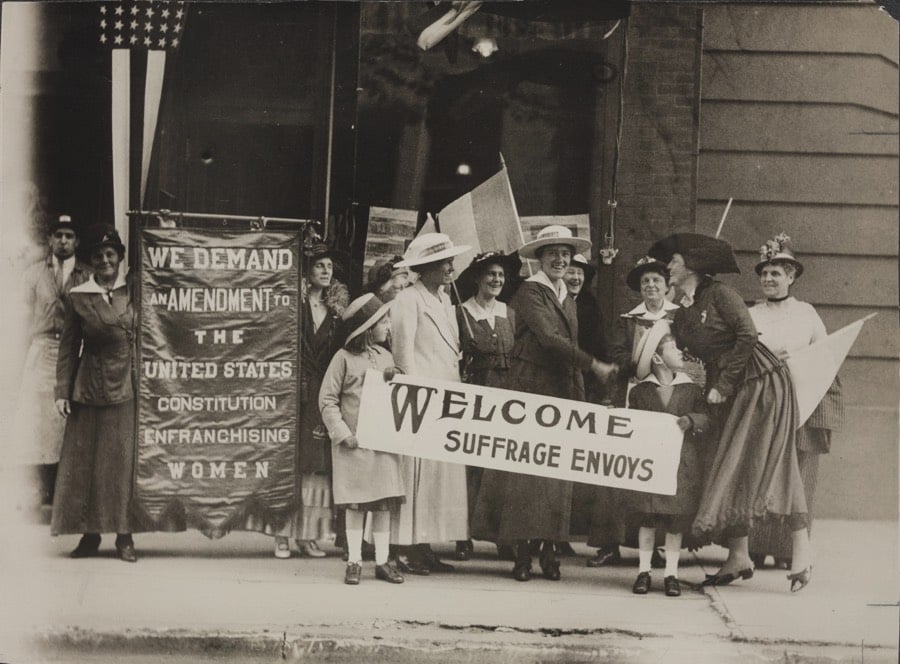
This morning, after scraping a layer of frost from the windshield, I drove to my local polling place, a small elementary school. There was no line in the school’s gymnasium and only a couple of the booths were occupied. I filled out my ballot, turned it in, got my sticker, and left. Three minutes flat. Done. Finally, after more than a year. I have done what I can.
I voted for Hillary Clinton for President, I don’t mind telling you. I’m With Her. The “Her” supposedly refers to Clinton herself, leading some critics to complain of her “all about me” campaign strategy. But I prefer to think the “Her” stands for the women of America, who gained the right to vote less than 100 years ago and have never had the opportunity to elect a woman to the highest office in the land. And not just any woman, but a woman who is among the most qualified candidates for President over the past 25 years. This is long long overdue and I’m proud to have done my tiny bit in making it happen.
With almost every election comes a push from some to change the way Americans elect their representatives in government. The problem is, there’s no perfect method of voting. The Exploratorium has produced a video that looks at how different voting methods fail in different ways, including through the spoiler effect, cyclic preferences, and the failure of monoticity. In short, every potential way of voting allows for some irrational outcome to arise out of the choices of individuals. So says Kenneth Arrow, who came up with Arrow’s impossibility theorem, explained in more layman’s terms here on Marginal Revolution.
Paradoxes such as the above have been known for centuries. What Arrow showed is that no decision mechanism can eliminate all of these types of paradoxes. (n.b. Arrow’s theorem actually applies to any mechanism for aggregating any rankings not just voting and not just preferences.) We can tamp down some paradoxes but only at the expense of creating others (or eliminating democracy altogether.)
More generally, what Arrow showed is that group choice (aggregation) is not like individual choice.
Also, think for a minute about how Arrow’s impossibility theorem might affect what Facebook, Twitter, Pinterest, Digg, and hundreds of other media companies and apps are trying to do in aggregating the world’s news and information by social media “voting”.
Newer posts
Older posts





Socials & More