kottke.org posts about medicine
With news of more than 70,000 confirmed cases and 1700 deaths from the COVID-19 virus, the importance of handwashing is once again front and center. Using data from a 1978 study on the hygiene of health professionals, this is a map of the most missed areas when washing hands.
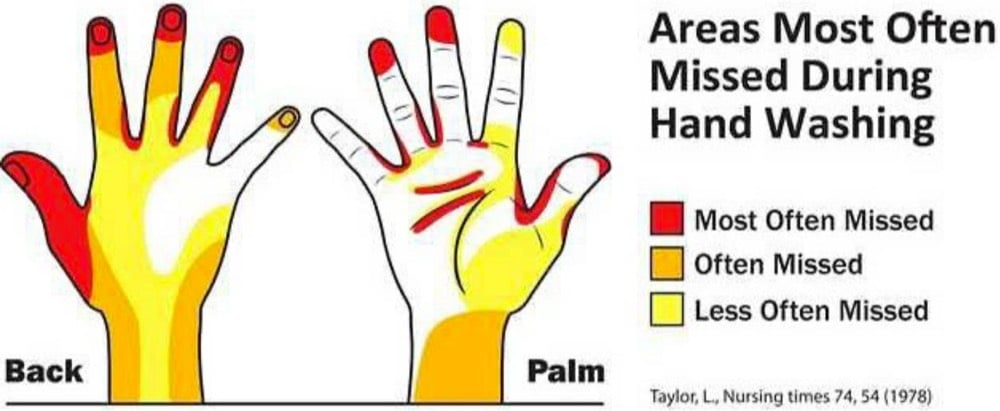
This more recent paper contains a short review of various studies of missed areas, most of which conclude that people often forget to wash their fingertips:
In 2008, the WHO designed a handwashing leaflet, making reference to Taylor, who indicated that the fingertips, interdigital areas, thumbs, and wrists are the most commonly missed areas in handwashing. Pan et al. also found that the tips of the nails and the fingertips had the largest amount of residual florescent stains left after handwashing among healthcare workers in Taiwan. The commonly missed areas among medical students in the study conducted by Vanyolos et al. was the first metacarpal, the proximal part of the palm (lateral), the distal phalanges, and the nail beds. In healthcare workers in Škodová et al.’s study, the thumbs and fingertips were the most commonly missed areas. In this study, the most frequently missed area was also the fingertips. However, the medial aspect and back of the hand were the second and third most missed areas, respectively. Moreover, the interdigital area and the front and back of the fingers were the least missed areas, which is in contrast to Taylor’s study.
So wash those fingertips! Here’s the CDC-recommended guide to washing your hands properly.
- Wet your hands with clean, running water (warm or cold), turn off the tap, and apply soap.
- Lather your hands by rubbing them together with the soap. Lather the backs of your hands, between your fingers, and under your nails.
- Scrub your hands for at least 20 seconds. Need a timer? Hum the “Happy Birthday” song from beginning to end twice.
- Rinse your hands well under clean, running water.
- Dry your hands using a clean towel or air dry them.
See also this TED Talk on how to properly dry your hands with a paper towel. (via a map a day)

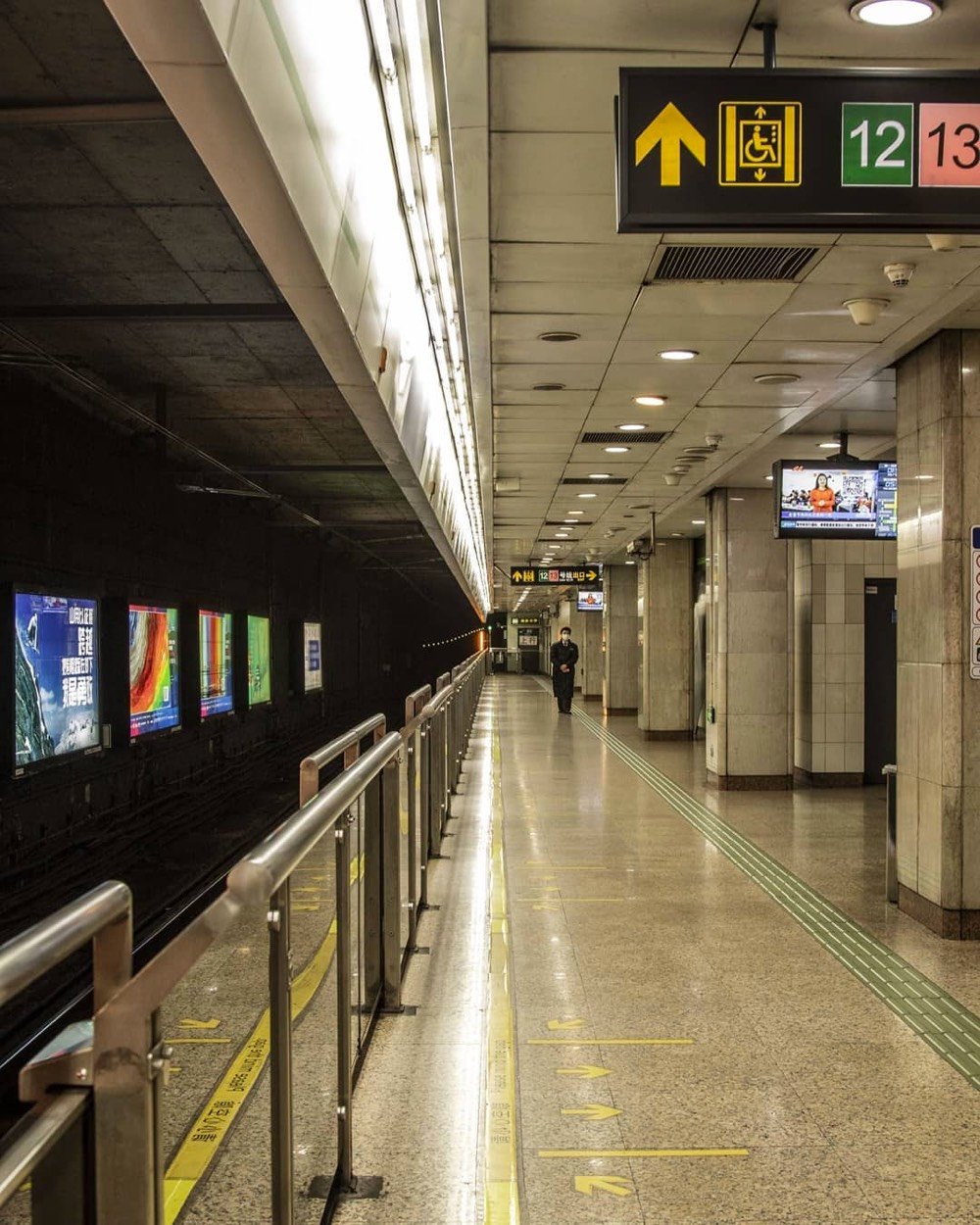
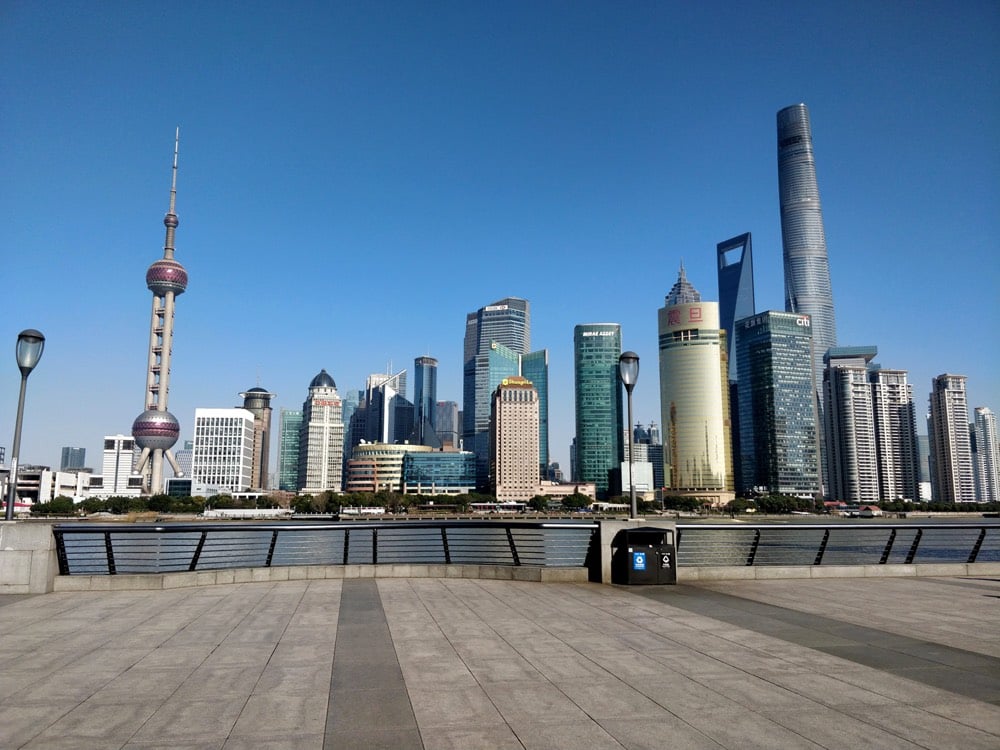
For her series One Person City, photographer nicoco has been taking photos of Shanghai that emphasize how deserted the city was due to the COVID-19 outbreak that has killed more than 1000 people in China. In an interview with Hyperallergic, the photographer said:
My objective for this series was to capture the feeling of apocalyptic emptiness. Some of the photos may look as if they were captured at strange early morning hours, but as a collection, it seeks to reinforce there were no people, anywhere.
These are Shanghai’s busiest locations that can compare to Times Square in New York City, Big Ben in London, the Bean in Chicago, or the Washington Monument in DC. They are very popular on an average day, and very, very popular during holidays as domestic tourists and residents spend time with their families and check out festive displays, shop, or just meander around.
You can find the photos on her Instagram.
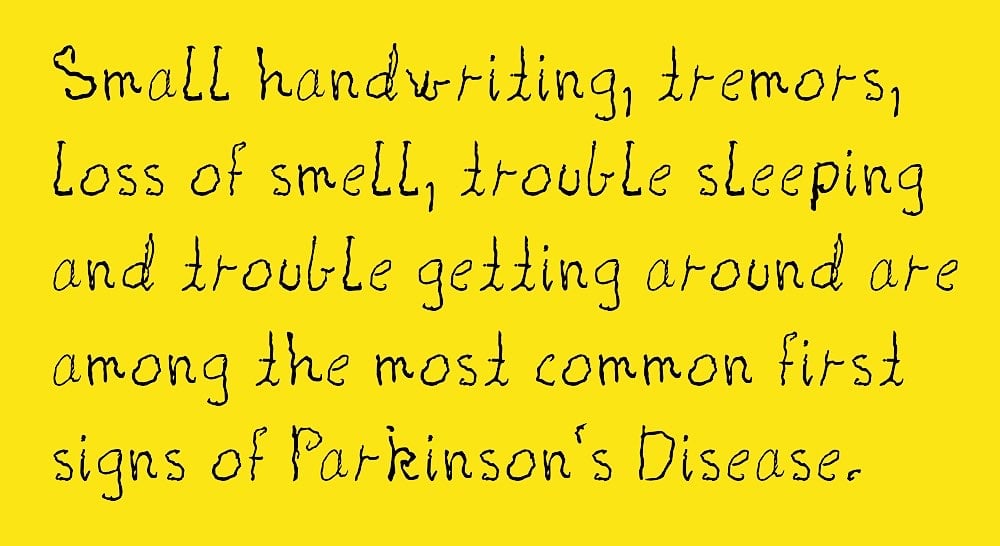
Shake is a typeface made from the real handwriting of a person living with Parkinson’s disease. Creative director Morten Halvorsen:
My mother was diagnosed with Parkinson’s eight years ago. And her handwriting has changed in the years since. I created this font to preserve her handwriting, and enable her to continue to write with her own letters.
A new version of the font will be available each year to capture his mother’s worsening condition. Donate a few dollars (or more!) to download the font — all proceeds go to finding a cure. You can also download a template so that you can document the handwriting of a loved one living with Parkinson’s — for a fee (donated to Parkinson’s research), Halvorsen will turn it into a font for you. (thx, kevin)
With the Wuhan coronavirus in the news, this is a timely release from Netflix: Pandemic is a 6-part series on the inevitable worldwide disease outbreak and what’s being done to stop it, or at least to mitigate its effects.
At the Sebrell Funeral Home in Ridgeland, MS (just outside of Jackson), they perform funerals and cremations for people with HIV/AIDS, some of whom have been abandoned by their families because of their disease or sexual orientation.
In almost one-third of the AIDS-related deaths serviced by Sebrell Funeral Home, the family or next-of-kin will either abandon the deceased entirely or refuse to accept the cremains.
HIV/AIDS is a growing problem in the American South, due to social stigma, poverty, and decreased access to healthcare. In this short documentary, we meet Trey Sebrell, who thinks of caring for all deceased people, no matter who they were in life, as part of his mission as a funeral director.
In a piece for the NY Times, obstetrician-gynecologist Dr. Lisa Harris shares her experience of a typical day at her practice, where she and her staff provide abortions.
My youngest patient of the day is 14 and here with her parents. The oldest patient is 41, here with her husband. As on all days, my patients come from every walk of life. Most have children already; many have arranged their appointment so that they’ll be done in time to pick them up after school. They assure me, again, that they are certain about their decision.
By the end of the day, I’ve seen 17 people, and made sure each received the care and time she needed. After counseling, two others left without having an abortion. One decided to continue her pregnancy and become a parent. Another appeared to need more time to think about it, and I encouraged her to do that. I support all of my patients’ decisions and needs; doing so is core to my work.
This was a typical day, and on the way home some of it plays back in my mind. A mother of three crosses herself and then takes the mifepristone pill she requested. Another requests a copy of the ultrasound picture for her memory box. After the abortion procedure, one asks to see what had been in her uterus and is relieved that the fetus is less than an inch, so much smaller than she had imagined.
See also What Illegal Abortion Was Like in the 1960s and Harrowing Illegal Abortion Stories from Before Roe v. Wade.
From filmmaker David Freid, Nobody Dies in Longyearbyen is a short film about Longyearbyen, Norway, the one of the northernmost towns in the world. The town of about 2100 residents is situated on the Svalbard archipelago and is the home of the Global Seed Vault. Freid went to investigate the rumor that no one is allowed to die in Longyearbyen and discovered that if climate change results in the permafrost melting in places like this, diseases from long ago may be released back into the world.
But for more than 70 years, not a single person has been buried in Longyearbyen. That’s due to the region’s year-round sub-zero temperatures: Bodies don’t decompose, but are preserved, as if mummified, in the permafrost. Should anyone die there, the government of Svalbard requires that the body is flown or shipped to mainland Norway to be interred.
See also A Trip to the Northernmost Town on Earth.
Ten years ago, in the midst of the 2009 swine flu pandemic, I wrote about the manufacturing process for the H1N1 flu vaccine. It involves billions of chicken eggs.
The most striking feature of the H1N1 flu vaccine manufacturing process is the 1,200,000,000 chicken eggs required to make the 3 billion doses of vaccine that may be required worldwide. There are entire chicken farms in the US and around the world dedicated to producing eggs for the purpose of incubating influenza viruses for use in vaccines. No wonder it takes six months from start to finish.
The post holds up pretty well because, according to the CDC, this is still the way most flu vaccines in America are manufactured. Here’s a look at pharmaceutical company GSK’s egg-based process:
Two other techniques for making flu vaccines were approved for use in the US in 2012 and 2013 respectively, cell-based flu vaccines:
‘Cell-based’ refers to how the flu vaccine is made. Most inactivated influenza vaccines are produced by growing influenza viruses in eggs. The influenza viruses used in the cell-based vaccine are grown in cultured cells of mammalian origin instead of in hens’ eggs.
A cell-based flu vaccine was developed as an alternative to the egg-based manufacturing process. Cell culture technology is potentially more flexible than the traditional technology, which relies upon adequate supply of eggs. In addition, the cell-based flu vaccine that uses cell-based candidate vaccine viruses (CVVs) has the potential to offer better protection than traditional, egg-based flu vaccines as a result of being more similar to flu viruses in circulation.
And recombinant flu vaccines:
NIAID and its industry partners have made progress in moving from both the egg-based and cell-based flu vaccine production methods toward recombinant DNA manufacturing for flu vaccines. This method does not require an egg-grown vaccine virus and does not use chicken eggs at all in the production process. Instead, manufacturers isolate a certain protein from a naturally occurring (“wild type”) recommended flu vaccine virus. These proteins are then combined with portions of another virus that grows well in insect cells. The resulting “recombinant” vaccine virus is then mixed with insect cells and allowed to replicate. The flu surface protein called hemagglutinin is then harvested from these cells and purified.
Both of these new techniques make production quicker, thereby resulting in more effective vaccines because they are more likely to match the strains of whatever’s “going around”.
As a reminder, you should get a flu shot every year in the fall. The CDC recommends that “everyone 6 months of age and older should get a flu vaccine every season with rare exception”, especially those “who are at high risk of serious complications from influenza”. Flu vaccines are covered by your health insurance without copay (thanks, Obama!) and are often available at drug stores without an appointment or a long wait. So go get one!
For the New Yorker, Nick Paumgarten writes about this year’s measles outbreak in the US, the largest such outbreak in decades. The outbreak is solely due to a growing number of people who decline to vaccinate their children, so the fight has become one not against a disease, as it was decades ago, but against dangerous ideas.
But, if we have to pick a Patient Zero, Andrew Wakefield will do. Wakefield is the British gastroenterologist who produced the notorious article, published in The Lancet in 1998, linking the M.M.R. vaccine to autism. The study, which featured just twelve subjects, was debunked, the article was pulled, and Wakefield lost his license to practice medicine — as well as his reputation, in scientific circles anyway. But, owing to his persistence in the years since, his discredited allegations have spread like mold. In the anti-vaxxer pantheon, he is martyr and saint. There are also the movement’s celebrities, such as Jenny McCarthy and Robert F. Kennedy, Jr., stubborn in the face of ridicule, and the lesser-known but perhaps no less pernicious YouTube evangelists, such as Toni Bark, a purveyor of homeopathic products, and the Long Island pediatrician Lawrence Palevsky. If your general practitioner is Dr. Google, you can find a universe of phony expertise. The movement seems to sniff out susceptibility. Not surprisingly, there is money there, though the financial incentives behind this strand of advocacy are less clear than, say, what has led the Koch brothers to champion fossil fuels. This spring, the Washington Post reported that the New York hedge-fund manager Bernard Selz and his wife, Lisa, have given more than three million dollars to anti-vaccination causes and helped finance “Vaxxed,” Wakefield’s 2016 documentary, which purports to reveal a C.D.C. conspiracy to cover up the connection between vaccines and autism. Needless to say, the anti-vaccination ethos is by no means exclusive to the New York tristate-area Orthodox community. It thrives in certain pockets — affluent boho-yoga moms, evangelical Christians, Area 51 insurgents. The vaccination rates are about the same in Monsey and in Malibu. Before New Square, the three most recent big outbreaks of measles occurred among Somali immigrants, in Minnesota; Amish farmers, in Ohio; and a hodgepodge of visitors to Disneyland.
“It’s shocking how strong the anti-vax movement is,” Zucker said. “What surprises me is the really educated people who are passionately against vaccinations. I see this as part of a larger war against science-based reality. We need to study vaccine hesitancy as a disease.” He gave a TEDX talk recently about the crippling disconnect between the speed at which information, good or bad, spreads now and the slow, grinding pace of public-health work. He managed, by way of the general theory of relativity, to establish the equivalence of H1N1, Chewbacca Mask Lady, and Pizzagate: “How do we immunize and protect ourselves from the damaging effects of virality?”
The internet is such an efficient way to spread ideas (regardless of their validity) that you begin to wonder if instant global individual-to-individual and individual-to-everyone communication is an insurmountable Great Filter for societies.
The servers at The Restaurant of Mistaken Orders, a series of pop-up restaurants in Tokyo, are all living with dementia, which means that you might not receive what you ordered.
All of our servers are people living with dementia. They may, or may not, get your order right.
However, rest assured that even if your order is mistaken, everything on our menu is delicious and one of a kind. This, we guarantee.
“It’s OK if my order was wrong. It tastes so good anyway.” We hope this feeling of openness and understanding will spread across Japan and through the world.
At the first pop-up, 37% of the orders were mistaken. This video explains a bit more about the concept and shows the restaurant in action.
For the New Yorker, Brooke Jarvis reviews Timothy C. Winegard’s The Mosquito: A Human History of Our Deadliest Predator.
It turns out that, if you’re looking for them, the words “mosquitoes,” “fever,” “ague,” and “death” are repeated to the point of nausea throughout human history. (And before: Winegard suggests that, when the asteroid hit, dinosaurs were already in decline from mosquito-borne diseases.) Malaria laid waste to prehistoric Africa to such a degree that people evolved sickle-shaped red blood cells to survive it. The disease killed the ancient Greeks and Romans — as well as the peoples who tried to conquer them — by the hundreds of thousands, playing a major role in the outcomes of their wars. Hippocrates associated malaria’s late-summer surge with the Dog Star, calling the sickly time the “dog days of summer.” In 94 B.C., the Chinese historian Sima Qian wrote, “In the area south of the Yangtze the land is low and the climate humid; adult males die young.” In the third century, malaria epidemics helped drive people to a small, much persecuted faith that emphasized healing and care of the sick, propelling Christianity into a world-altering religion.
And then there’s this:
In total, Winegard estimates that mosquitoes have killed more people than any other single cause — fifty-two billion of us, nearly half of all humans who have ever lived. He calls them “our apex predator,” “the destroyer of worlds,” and “the ultimate agent of historical change.”
Two other recent reviews of the book: In ‘The Mosquito,’ Humans Face A Predator More Deadly Than The Rest (NPR) and The mosquito isn’t just annoying — Timothy C. Winegard says we’re at war (LA Times).
From Outside magazine, an article on what your body goes through and what it feels like to die from heat stroke. A perhaps unnecessary note: this gets intense and a little graphic.
There are two kinds of heatstroke: classic and exertional. Classic heatstroke hits the very young, the elderly, the overweight, and people suffering from chronic conditions like uncontrolled diabetes, hypertension, and cardiovascular disease. Alcohol and certain medications (diuretics, tricyclic antidepressants, antipsychotics, and some cold and allergy remedies) can increase susceptibility as well. Classic heatstroke can strike in the quiet of upper-floor apartments with no air-conditioning.
Exertional heatstroke, on the other hand, pounces on the young and fit. Exercise drastically accelerates temperature rise. Marathon runners, cyclists, and other athletes sometimes push into what used to be known as the fever of exercise and is now called exercise-induced hyperthermia, where internal temperatures typically hit 100 to 104 degrees. Usually, there’s no lasting damage. But as body temperature climbs higher, the physiological response becomes more dramatic and the complications more profound. The higher temperature can ultimately trigger a cascading disaster of events as the metabolism, like a runaway nuclear reactor, races so fast and so hot that the body can’t cool itself down. A person careens toward organ failure, brain damage, and death.
It’s a sequel of sorts to this piece about what it feels like to freeze to death, which I vividly remember reading many years ago.
At 85 degrees, those freezing to death, in a strange, anguished paroxysm, often rip off their clothes. This phenomenon, known as paradoxical undressing, is common enough that urban hypothermia victims are sometimes initially diagnosed as victims of sexual assault. Though researchers are uncertain of the cause, the most logical explanation is that shortly before loss of consciousness, the constricted blood vessels near the body’s surface suddenly dilate and produce a sensation of extreme heat against the skin.
Olga Khazan on The Reason Anxious People Often Have Allergies:
“There is good circumstantial evidence that’s growing that a number of mental illnesses are associated with immune dysfunction,” says Sandro Galea, a physician and epidemiologist at the Boston University School of Public Health.
If the link is in fact real, allergies could be causing anxiety and other mood disorders in a few different ways. For one, it’s stressful to be sick, and people with allergies frequently feel like they have a bad cold. The experience of straining to breathe, or of coughing and wheezing, could simply make people feel anxious.
Then there are biological explanations. Allergies trigger the release of the stress hormone cortisol, which can interfere with a feel-good brain chemical called serotonin. It’s not clear how the cortisol does this, Nanda says; it might inhibit the production of serotonin or make it fail to bind with its receptors properly. But when something goes wrong with serotonin, the theory goes, depression or anxiety might set in.
Huh. I definitely suffer from seasonal allergies (they have thankfully slacked off for the summer) and have struggled with anxiety since I was a kid (though I’ve never been clinically diagnosed). I’ll be following this research with interest.
According this video by Kurzgesagt (and their extensive list of sources), the answer to that question for now is: no, our electronic devices are not causing long- or short-term health problems in the brains or bodies of people who use them.
Electrosmog is one of those things that is a bit vague and hard to grasp. When personal health is involved, feelings clash extra hard with scientific facts and there is a lot of misinformation and exaggeration out there. On the other hand, some people are really worried and distressed by the electricity that surrounds them. And just to wave this off is not kind or helpful.
While there is still a lot of researching being done on the dangers of constant weak electromagnetic radiation, it is important to stress that so far, we have no reason to believe that our devices harm us. Other than… well… spending too much time with them.
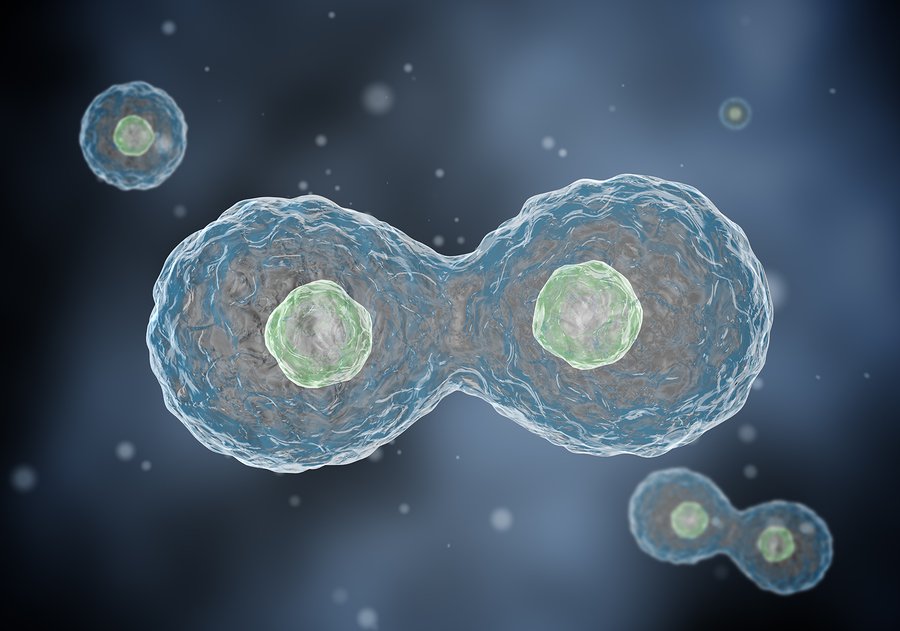
Biology is one field I don’t know supremely well, having had a couple of college courses and then mostly just public television documentaries. So it’s always cool to get a new concept or two to play with, like the Hayflick Limit.
What is it?
In normal, replicating cells, all the important genetic code in a cell’s nucleus is protected by telomeres—sections of non-coding DNA on the ends of chromosomes. (Elizabeth Blackburn, who won a Nobel for her work on telomeres, compares them to the caps on the end of shoelaces that keep them from fraying.) Every time cells divide, telomeres shorten ever so slightly; the white blood cells in newborn humans have telomeres that consist of about 8,000 base pairs, which falls to around 1,500 in the elderly.
The Hayflick limit is thought to occur when telomeres are gone and cell division would be risky, because without their protection, loss of genetic information would occur. When cells no longer replicate, they’re considered “senescent”: they carry on most of their normal cellular activity and eventually die. The Hayflick limit is one cause, but external stress, like an infection, physical trauma, or UV radiation can hasten cell death, according to Jan van Deursen, a cancer biologist at the Mayo Clinic in Rochester, Minnesota.
Senescent cells are a culprit in aging, but they also have benefits. They give off proteins that can recruit immune cells, which can promote wound healing, and they’re one of our body’s defenses against cancer. One of the reasons cancer occurs is when cells switch on a gene that allows them to rebuild their telomeres—kind of like speeding through a stop sign. That’s why the only immortal human cells are cancer cells.
So the Hayflick Limit, if it could be waived, could theoretically prevent or delay aging. But as it is, it’s a built-in cap on how many replications a body’s cells and tissues can undergo, so it guarantees our mortality.
Here’s what Hayflick himself had to say about it:
To slow, or even arrest, the aging process in humans is fraught with serious problems in the relationships of humans to each other and to all of our institutions. By allowing asocial people, tyrants, dictators, mass murderers, and people who cause wars to have their longevity increased should be undesirable. Yet, that would be one outcome of being able to tamper with the aging process.
I guess at a minimum, as bad as everyone is, at least they (as an individual) are not around to be bad forever? I’ll take that silver lining.
Newer posts
Older posts





Socials & More