kottke.org posts about medicine
Social distancing has been recommended by epidemiologists and public health officials as a way to slow the spread of COVID-19, flatten the curve, and save lives. Avoiding rock concerts and sporting events is easy, but what about going to the grocery store or visiting with a friend? The Atlantic’s Kaitlyn Tiffany talked to a number of public health experts about The Dos and Don’ts of ‘Social Distancing’.
Q: Should I be avoiding bars and restaurants?
Cannuscio: People should avoid gathering in public places. People should be at home as much as possible. The measures that have worked to get transmission under control or at least to bend the curve, in China and South Korea, have been extreme measures to increase social distancing.
Q: Should I stop visiting elderly relatives?
Cannuscio: I think if we are fortunate enough to live near our elders and we get into the mode of seriously isolating our own families, then one person should be designated to go and visit. If we’re not in a situation where we can truly limit our own social contact, then we will be putting that elder at risk by going to visit.
In my estimation, the answers that Carolyn Cannuscio, of Penn’s Center for Public Health Initiatives, gives are the ones to follow. Dr. Asaf Bitton’s advice is even stricter:
2. No kid playdates, parties, sleepovers, or families/friends visiting each other’s houses and apartments.
This sounds extreme because it is. We are trying to create distance between family units and between individuals. It may be particularly uncomfortable for families with small children, kids with differential abilities or challenges, and for kids who simply love to play with their friends. But even if you choose only one friend to have over, you are creating new links and possibilities for the type of transmission that all of our school/work/public event closures are trying to prevent. The symptoms of coronavirus take four to five days to manifest themselves. Someone who comes over looking well can transmit the virus. Sharing food is particularly risky — I definitely do not recommend that people do so outside of their family.
They both rightly talk about how the early actions we take will end up having a big impact in limiting the damage. (Check out this video about epidemics & exponential growth if you haven’t already.) Singapore, Hong Kong, Taiwan, and other places were able to nip the epidemic in the bud in part because of aggressive social distancing practices.
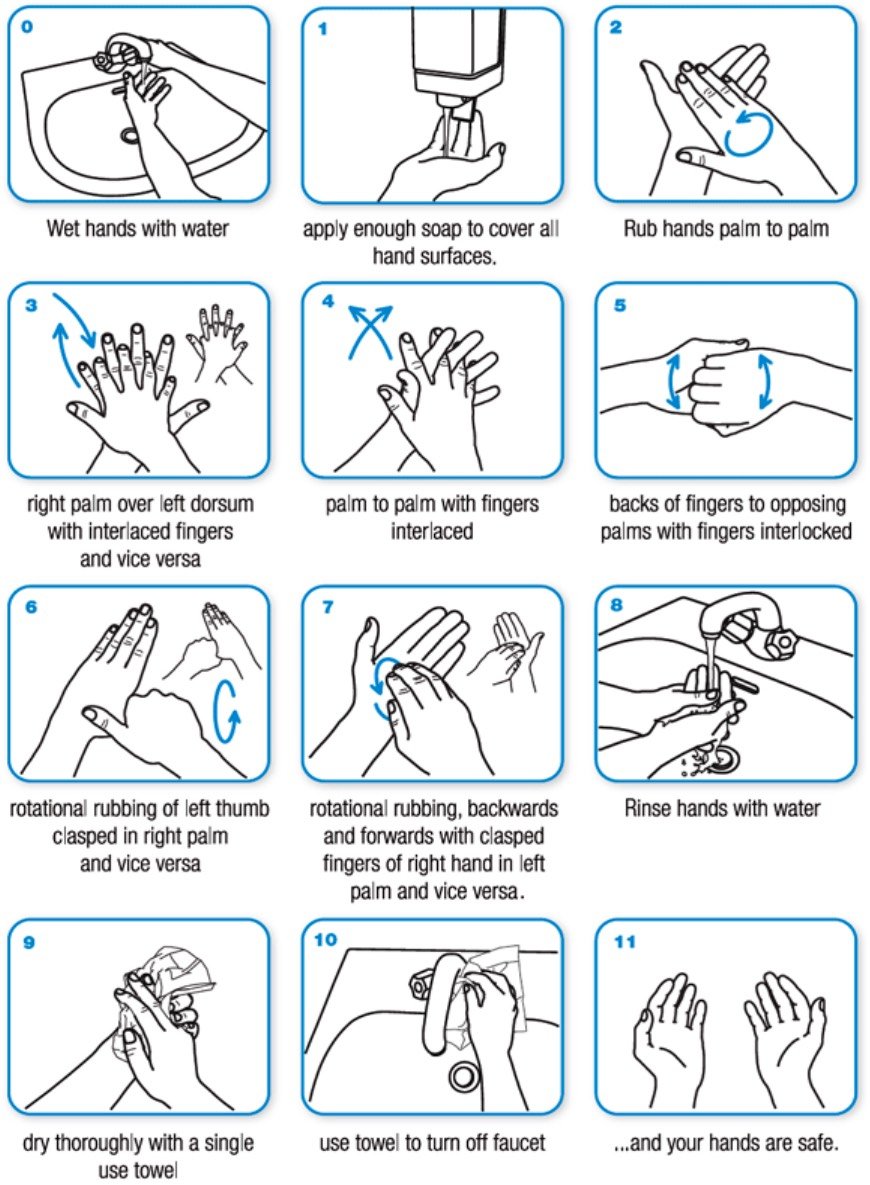
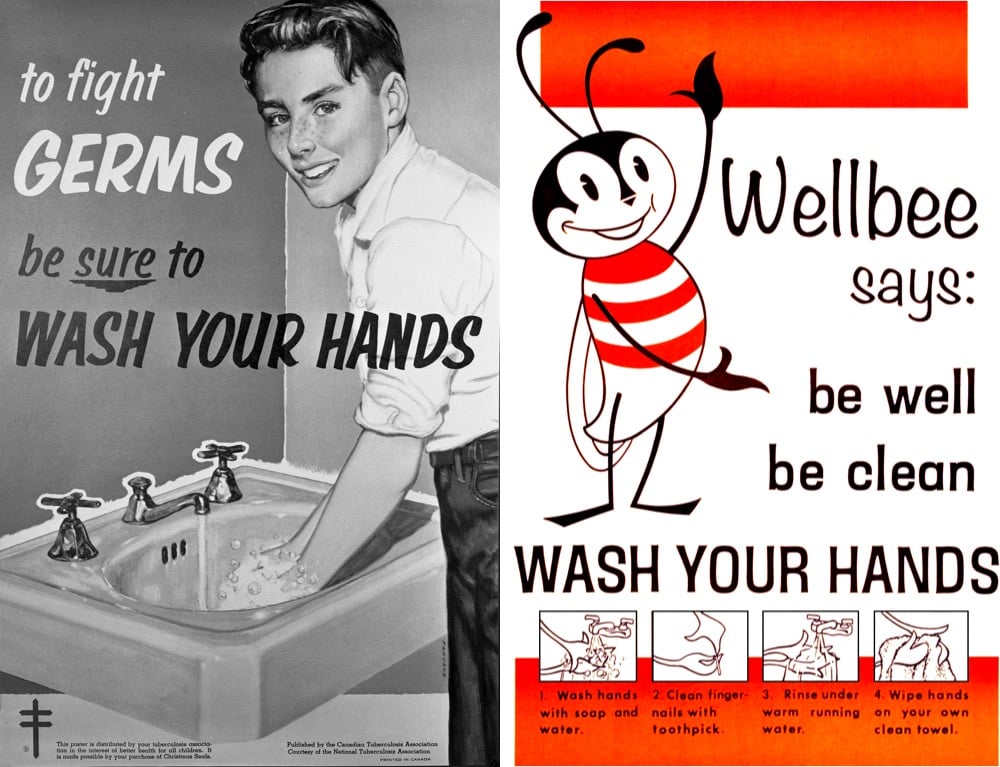
Most humans have been washing their hands since childhood, but I bet very few of us have been doing it correctly. Because of the effectiveness of hand-washing with soap in preventing the spread of COVID-19, the CDC and the WHO (and health professionals everywhere) both make it their top recommendation and provide guidance on how to do it properly: CDC hand-washing instructions, WHO hand-washing instructions.
Lather your hands by rubbing them together with the soap. Be sure to lather the backs of your hands, between your fingers, and under your nails. Scrub your hands for at least 20 seconds. Need a timer? Hum the “Happy Birthday” song from beginning to end twice.
Here’s a video from the WHO on proper hand-washing technique (and a similar one from Johns Hopkins that has subtitles):
And a graphic from the WHO:
And if you’re getting sick of singing Happy Birthday while washing your hands, a site called Wash Your Lyrics can help you make a hand-washing infographic with your favorite song’s lyrics.
According to an ongoing investigation at The Atlantic, the US has tested only about 14,000 people for COVID-19 so far (a stat CDC data seems to confirm). 14,000 out of 330 million people. Olga Khazan writes about the four main reasons why the US is so behind in testing for the virus.
Interviews with laboratory directors and public-health experts reveal a Fyre-Festival-like cascade of problems that have led to a dearth of tests at a time when America desperately needs them. The issues began with onerous requirements for the labs that make the tests, continued because of arcane hurdles that prevented researchers from getting the right supplies, and extended to a White House that seemed to lack cohesion in the pandemic’s early days. Getting out lots of tests for a new disease is a major logistical and scientific challenge, but it can be pulled off with the help of highly efficient, effective government leadership. In this case, such leadership didn’t appear to exist.
Here’s another take on the problem from a few days ago in the NY Times.
The US has bungled the situation so badly that a pair of Chinese foundations announced this morning that they were donating 500,000 testing kits and 1 million masks to the US. Last month in my Asian travelogue, I wrote that my main observation after spending three weeks in Asia was: “America is a rich country that feels like a poor country”. That we have to rely on foreign aid in situations like this is a good example of what I was referring to.
The number one recommendation on the list of protective measures for COVID-19 from both WHO and the CDC is to regularly wash your hands. The CDC in particular recommends hand-washing over using hand sanitizer.
Vox recently talked with chemistry professor Palli Thordarson about why washing with soap is so effective when dealing with coronaviruses.
The soap takes care of the virus much like it takes care of the oil in the water. “It’s almost like a crowbar; it starts to pull all the things apart,” Thordarson says.
One side of the soap molecule (the one that’s attracted to fat and repelled by water) buries its way into the virus’s fat and protein shell. Fortunately, the chemical bonds holding the virus together aren’t very strong, so this intrusion is enough to break the virus’s coat. “You pull the virus apart, you make it soluble in water, and it disintegrates,” he says.
Then the harmless shards of virus get flushed down the drain. (And even if it the soap doesn’t destroy every virus, you’ll still rid them from your hands with soap and water, as well as any grease they may be clinging to.)
And why do you need to wash for 20 seconds? Because that gives soap time to do its work.
First off, your skin is wrinkly, and it takes time for soap to penetrate into all the tiny folds and demolish the viruses that lurk within. Then the soap needs a few moments to do its chemical work. “You do need a bit of time for all the soap to interact back and forth with the virus particle,” he says. Twenty seconds should do the trick just fine.
See also Why Soap Works from the NY Times, which explains why soap & water is better than hand sanitizer in these cases:
On the whole, hand sanitizers are not as reliable as soap. Sanitizers with at least 60 percent ethanol do act similarly, defeating bacteria and viruses by destabilizing their lipid membranes. But they cannot easily remove microorganisms from the skin. There are also viruses that do not depend on lipid membranes to infect cells, as well as bacteria that protect their delicate membranes with sturdy shields of protein and sugar. Examples include bacteria that can cause meningitis, pneumonia, diarrhea and skin infections, as well as the hepatitis A virus, poliovirus, rhinoviruses and adenoviruses (frequent causes of the common cold).
Update: Thordarson also wrote an article for The Guardian on how effective soap is at killing coronavirus.
Many stores have long since sold out of hand sanitizer in the US and washing your hands is a better move anyway, but if you’d like to have some sanitizer on hand for when you can’t get to a sink, the World Health Organization has you covered. The WHO recipe is for making 10-liter batchs, so Popular Science helpfully scaled it down to a more reasonable size:
1 cup 99% isopropyl alcohol
1 tablespoon 3% hydrogen peroxide
1 teaspoon 98% glycerin/glycerol
1/4 cup, 1 tablespoon, and 1 teaspoon sterile distilled or boiled cold water
To the alcohol, add the hydrogen peroxide & glycerin and stir or shake if you’re mixing in a container with a lid. Then add the water.
For COVID-19 prevention, the CDC recommends a hand sanitizer that contains at least 60% alcohol; this recipe will end up being about 75% alcohol. The Popular Science piece also includes another recipe for a hand sanitizing gel that’s much closer to store-bought gels that involves mixing isopropyl alcohol, aloe vera gel, and tea tree oil. They also note that vodka does not contain enough alcohol to meet the CDC’s recommendation, especially when mixed with the other ingredients.
In recent years, many media outlets have joined publications like the WSJ and NY Times in erecting paywalls around their online offerings, giving visitors access to a few articles a month before asking them to pay for unlimited access. Due to the continuing worldwide COVID-19/coronavirus crisis and in order to make information about the pandemic more accessible to the public, several publications have dropped their paywalls for at least some of their coronavirus coverage (thanks to everyone who responded to my tweet about this).
Among them are The Atlantic, WSJ, Talking Points Memo, Globe and Mail, Seattle Times, Miami Herald (and other McClatchy-owned properties), Toronto Star, Stat, Dallas Morning News, Medium, NY Times, Washington Post, Baltimore Sun, Chicago Tribune, Christian Science Monitor and several medical/science journals. Notably, The Guardian relies on online subscription revenue but doesn’t put anything behind a paywall, including their coronavirus coverage.
In addition, a group of archivists have created an online directory of scientific papers related to coronaviruses, available for free download.
“These articles were always written to be shared with as many people as possible,” Reddit user “shrine,” an organizer of the archive, said in a call. “From every angle that you look at it, [paywalled research] is an immoral situation, and it’s an ongoing tragedy.”
Kudos to those media organizations for doing the right thing — this information can save people’s lives. Let’s hope others (*cough* Washington Post) will soon follow suit. And if you find the coverage helpful, subscribe to these outlets!
BTW, like The Guardian, kottke.org is supported by readers just like you who contribute to make sure that every single thing on the site is accessible to everyone. If you’re a regular reader, please consider supporting this experiment in openness.
Update: Added the NY Times to the list above. I am also hearing that many European papers are not dropping their paywalls in the face of the crisis.
Update: Added several media outlets to the list, including Washington Post and Chicago Tribune. At this point, it seems to be standard practice now (at least in the US & Canada) so this will be the final update. (thx, @maschweisguth)
In a media briefing that’s still ongoing as I’m writing this, Dr. Tedros Adhanom Ghebreyesus, the Director General of the World Health Organization, has officially characterized the COVID-19 outbreak as a pandemic. A pandemic is defined as:
An influenza pandemic is a global epidemic caused by a new influenza virus to which there is little or no pre-existing immunity in the human population. Influenza pandemics are impossible to predict; and they may be mild, or cause severe disease or death. Severe disease may occur in certain risk groups, which may correspond to those at risk of severe disease due to seasonal influenza.
Here’s a transcript of Dr. Tedros’s opening remarks from the briefing.
WHO has been assessing this outbreak around the clock and we are deeply concerned both by the alarming levels of spread and severity, and by the alarming levels of inaction.
We have therefore made the assessment that COVID-19 can be characterized as a pandemic.
Pandemic is not a word to use lightly or carelessly. It is a word that, if misused, can cause unreasonable fear, or unjustified acceptance that the fight is over, leading to unnecessary suffering and death.
Describing the situation as a pandemic does not change WHO’s assessment of the threat posed by this virus. It doesn’t change what WHO is doing, and it doesn’t change what countries should do.
Progress on fighting COVID-19 can be made everywhere when the right steps are taken:
If countries detect, test, treat, isolate, trace, and mobilize their people in the response, those with a handful of cases can prevent those cases becoming clusters, and those clusters becoming community transmission.
Even those countries with community transmission or large clusters can turn the tide on this virus.
Several countries have demonstrated that this virus can be suppressed and controlled.
The challenge for many countries who are now dealing with large clusters or community transmission is not whether they can do the same — it’s whether they will.
But WHO also acknowledges how disruptive the pandemic can be:
We are grateful for the measures being taken in Iran, Italy and the Republic of Korea to slow the virus and control their epidemics.
We know that these measures are taking a heavy toll on societies and economies, just as they did in China.
All countries must strike a fine balance between protecting health, minimizing economic and social disruption, and respecting human rights.
And in closing he deflects attention from the word “pandemic”:
Let me give you some other words that matter much more, and that are much more actionable.
Prevention.
Preparedness.
Public health.
Political leadership.
And most of all, people.
We’re in this together, to do the right things with calm and protect the citizens of the world. It’s doable.
Yascha Mounk writing for The Atlantic:
These three facts imply a simple conclusion. The coronavirus could spread with frightening rapidity, overburdening our health-care system and claiming lives, until we adopt serious forms of social distancing.
This suggests that anyone in a position of power or authority, instead of downplaying the dangers of the coronavirus, should ask people to stay away from public places, cancel big gatherings, and restrict most forms of nonessential travel.
Given that most forms of social distancing will be useless if sick people cannot get treated-or afford to stay away from work when they are sick-the federal government should also take some additional steps to improve public health. It should take on the costs of medical treatment for the coronavirus, grant paid sick leave to stricken workers, promise not to deport undocumented immigrants who seek medical help, and invest in a rapid expansion of ICU facilities.
This is very close to my own personal thinking right now, particularly after watching this excellent video about exponential growth and epidemics.
From 3blue1brown’s Grant Sanderson, this is an excellent quick explanation of exponential growth and how we should think about it in relation to epidemics like COVID-19. Depending on how rusty your high school math is, you might need to rewind a couple of times to fully grasp the explanation, but you should persevere and watch the whole thing.
The most important bit is at the end, right around the 7:45 mark, when he talks about how limiting person-to-person exposure and decreasing the probability of exposures becoming infections can have a huge effect on the total number of people infected because the growth is exponential. If large numbers of people start doing things like limiting travel, cancelling large gatherings, social distancing, and washing their hands frequently, the total number of infections could fall by several orders of magnitude, making the exponential work for us, not against us. Small efforts have huge results. If, as in the video, you’re talking about 100 million infected in two months (at the current transmission rate) vs. 400,000 (at the lowered rate) and if the death rate of COVID-19 is between 1-3%, you’re looking at 1-3 million dead vs. 4-12,000 dead.
So let’s start flattening that exponential curve. South Korea and China both seem to have done it, so there’s no reason the rest of the world can’t through aggressive action. (thx, david)
Update: Vox has a nice explainer on what epidemiologists refer to as “flattening the curve”.
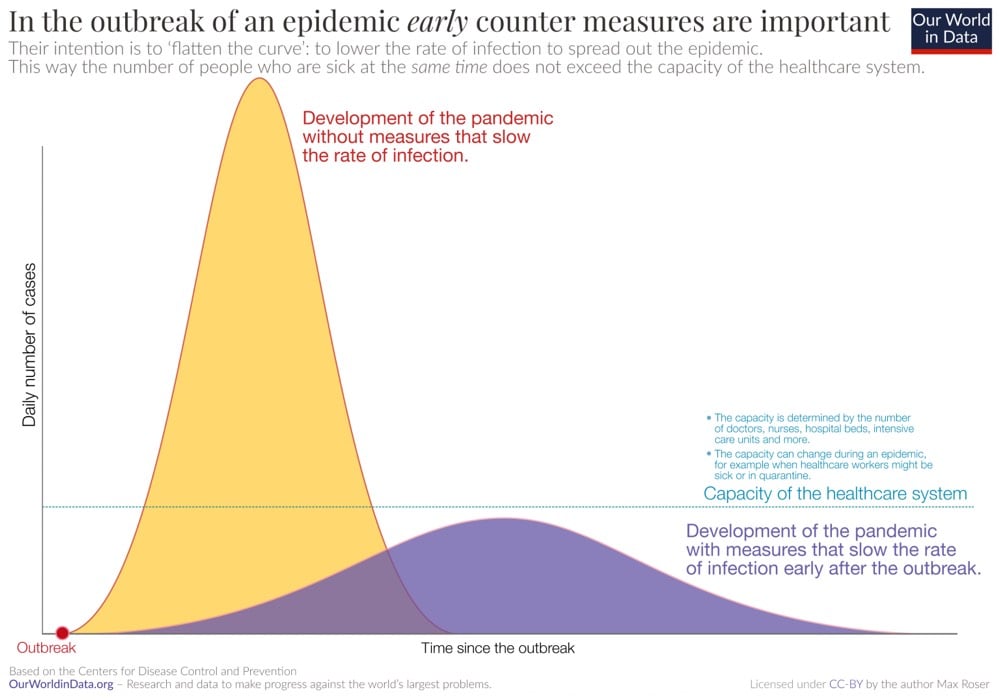
Yet the speed at which the outbreak plays out matters hugely for its consequences. What epidemiologists fear most is the health care system becoming overwhelmed by a sudden explosion of illness that requires more people to be hospitalized than it can handle. In that scenario, more people will die because there won’t be enough hospital beds or ventilators to keep them alive.
A disastrous inundation of hospitals can likely be averted with protective measures we’re now seeing more of — closing schools, canceling mass gatherings, working from home, self-quarantine, avoiding crowds - to keep the virus from spreading fast.
Epidemiologists call this strategy of preventing a huge spike in cases “flattening the curve”.
Here’s the relevant graphic explanation from Our World in Data’s COVID-19 package:
A few days ago, Dr. Daniele Macchini, a physician in Bergamo, Italy, made a long post on Facebook (also reprinted here) about how the outbreak of COVID-19 (coronavirus) is overwhelming the hospitals there and pleads with the rest of the world to take the virus seriously. The original post is in Italian and Google Translate does pretty well with it. Dr. Silva Stringhini translated the important bits of Dr. Macchini’s post in this Twitter thread and is somewhat easier to read:
After much thought about whether and what to write about what is happening to us, I felt that silence was not responsible.
“I will therefore try to convey to people far from our reality what we are living in Bergamo in these days of Covid-19 pandemic. I understand the need not to create panic, but when the message of the dangerousness of what is happening does not reach people I shudder.
“I myself watched with some amazement the reorganization of the entire hospital in the past week, when our current enemy was still in the shadows: the wards slowly ‘emptied’, elective activities were interrupted, intensive care were freed up to create as many beds as possible.
“All this rapid transformation brought an atmosphere of silence and surreal emptiness to the corridors of the hospital that we did not yet understand, waiting for a war that was yet to begin and that many (including me) were not so sure would ever come with such ferocity.
“I still remember my night call a week ago when I was waiting for the results of a swab. When I think about it, my anxiety over one possible case seems almost ridiculous and unjustified, now that I’ve seen what’s happening. Well, the situation now is dramatic to say the least.
“The war has literally exploded and battles are uninterrupted day and night. But now that need for beds has arrived in all its drama. One after the other the departments that had been emptied fill up at an impressive pace.
“The boards with the names of the patients, of different colours depending on the operating unit, are now all red and instead of surgery you see the diagnosis, which is always the damned same: bilateral interstitial pneumonia.
Dr. Macchini urges: “Let’s stop saying it’s a bad flu.” But this is the part that stopped me in my tracks and got me to write this post:
So have patience, too, that you cannot go to the theater, museums or gym. Try to have mercy on that myriad of older people you could exterminate.
His overall message is that we shouldn’t panic, but that we should take COVID-19 seriously. The goal here is to keep the most vulnerable of us as safe as possible and work to slow the spread of the virus so it doesn’t overwhelm our healthcare system. So let’s do that — the elderly and those most at risk are counting on us.
There are certain links I’ve posted here that I think about more often than others. One that I think a lot about — weekly at least — is Emma Young’s story for Mosaic about Iceland’s very successful program that’s steered the nation’s teens away from drug and alcohol abuse. At the center of the Icelandic strategy is an insight by psychologist Harvey Milkman about a strategy of replacing substance and other unhealthy addictions with healthier natural highs:
At Metropolitan State College of Denver, Milkman was instrumental in developing the idea that people were getting addicted to changes in brain chemistry. Kids who were “active confronters” were after a rush — they’d get it by stealing hubcaps and radios and later cars, or through stimulant drugs. Alcohol also alters brain chemistry, of course. It’s a sedative but it sedates the brain’s control first, which can remove inhibitions and, in limited doses, reduce anxiety.
“People can get addicted to drink, cars, money, sex, calories, cocaine — whatever,” says Milkman. “The idea of behavioural addiction became our trademark.”
This idea spawned another: “Why not orchestrate a social movement around natural highs: around people getting high on their own brain chemistry — because it seems obvious to me that people want to change their consciousness — without the deleterious effects of drugs?”
BTW, this is a somewhat controversial view but it has always made sense to me for those with mild addictions or depression. Speaking strictly for myself, I’ve found that when healthier alternatives are available to me (spending time with family & friends, exercise, exploring, reading a good book), I spend a lot less time mindlessly doing things that give me the same sort of brain buzz but which I don’t consider positive or worthwhile (drinking alcohol, watching TV, eating poorly, and especially reloading Instagram over and over again like a lab rat slapping that lever to get more cocaine).
But back to Iceland. By giving teens access to more healthy activities, getting parents more involved in their children’s lives, implementing curfews, and administering annual surveys, the country has made great strides over the past two decades:
Today, Iceland tops the European table for the cleanest-living teens. The percentage of 15- and 16-year-olds who had been drunk in the previous month plummeted from 42 per cent in 1998 to 5 per cent in 2016. The percentage who have ever used cannabis is down from 17 per cent to 7 per cent. Those smoking cigarettes every day fell from 23 per cent to just 3 per cent.
The way the country has achieved this turnaround has been both radical and evidence-based, but it has relied a lot on what might be termed enforced common sense. “This is the most remarkably intense and profound study of stress in the lives of teenagers that I have ever seen,” says Milkman. “I’m just so impressed by how well it is working.”
Young did a follow-up last year about the expansion of the program into other areas of the world.
Even though larger animals like elephants and blue whales have up to 100 billion more cells than humans in their bodies — and therefore many more chances for harmful mutations to develop — they are much more immune to cancer. This is called Peto’s paradox the subject of Kurzgesagt’s latest video. Scientists aren’t sure why this happens, but one hypothesis is that in order to have grown so large, the evolutionary process that resulted in these animals provided built-in defenses against cancer that other animals didn’t need. Further reading on the topic is available here.
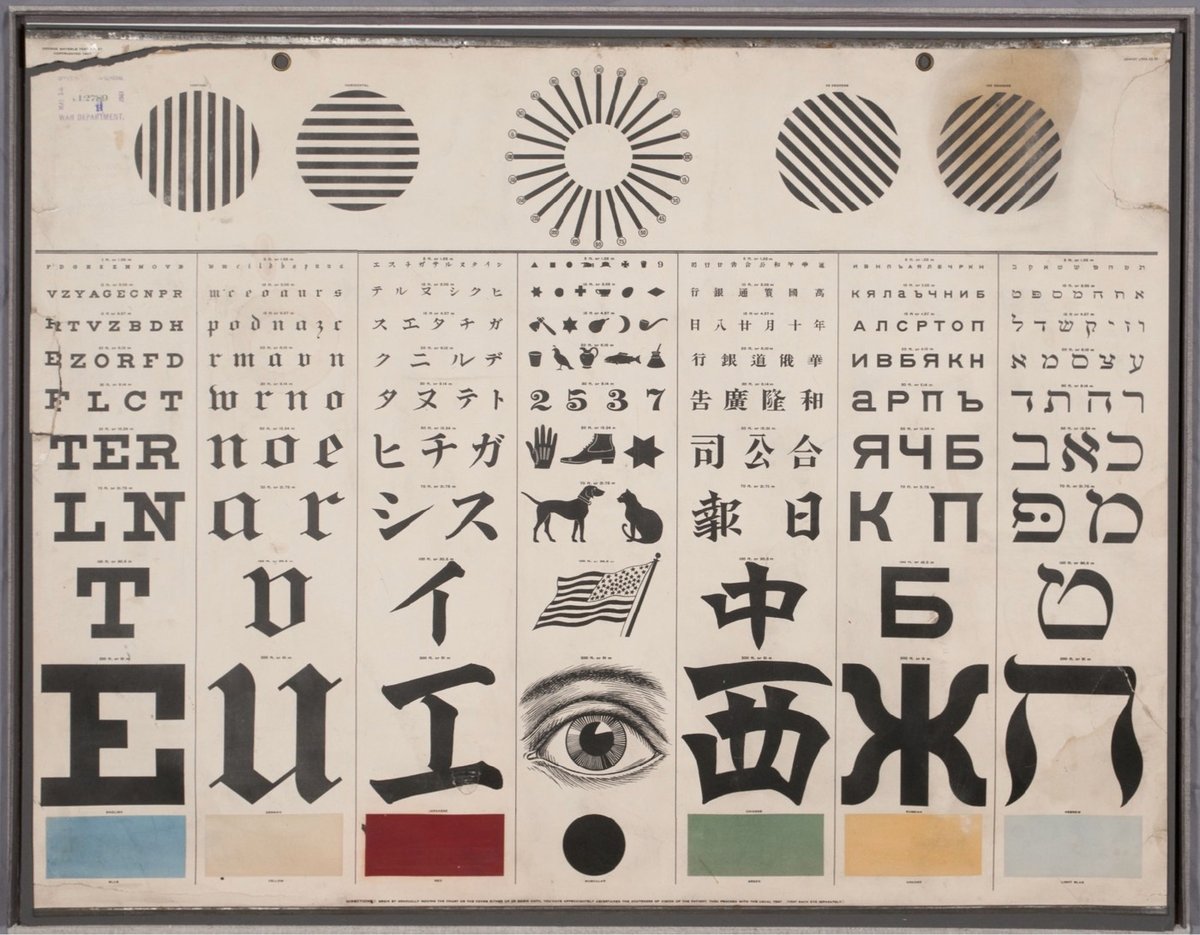
From the collection of the US National Library of Medicine, an eye test chart designed by George Mayerle around 1907 to be a complete vision testing solution for speakers of several languages.
Running through the middle of the chart, the seven vertical panels test for acuity of vision with characters in the Roman alphabet (for English, German, and other European readers) and also in Japanese, Chinese, Russian, and Hebrew. A panel in the center replaces the alphabetic characters with symbols for children and adults who were illiterate or who could not read any of the other writing systems offered. Directly above the center panel is a version of the radiant dial that tests for astigmatism. On either side of that are lines that test the muscular strength of the eyes. Finally, across the bottom, boxes test for color vision, a feature intended especially (according to one advertisement) for those working on railroads and steamboats.
Mayerle was a German optometrist working in San Francisco when he made the chart, designing it for use in a city with a diverse population. My pals at 20x200 are offering limited-edition prints of Mayerle’s chart in a variety of sizes.
See also the history & typography of eye test charts, Optician Sans (a font based on eye chart typography), and Eye Charts for Drones.
This is the most metal shit ever: the doctors removing violinist Dagmar Turner’s brain tumor woke her up during the procedure to play the violin to make sure that she didn’t lose any parts of her brain vital to her playing.
After explaining concerns she had over losing the ability to play the violin, Prof Ashkan and the neurosurgical team at King’s devised a plan. Prior to Dagmar’s operation they spent two hours carefully mapping her brain to identify areas that were active when she played the violin and those responsible for controlling language and movement. They also discussed with Dagmar the idea of waking her mid-procedure so she could play. This would ensure the surgeons did not damage any crucial areas of the brain that controlled Dagmar’s delicate hand movements specifically when playing the instrument. With her agreement, a team of surgeons, anaesthetists and therapists went on to meticulously plan the procedure.
During the operation Prof Ashkan and the team performed a craniotomy (an opening in the skull) and Dagmar was brought round from the anaesthetic. She played violin while her tumour was removed, while closely monitored by the anaesthetists and a therapist.
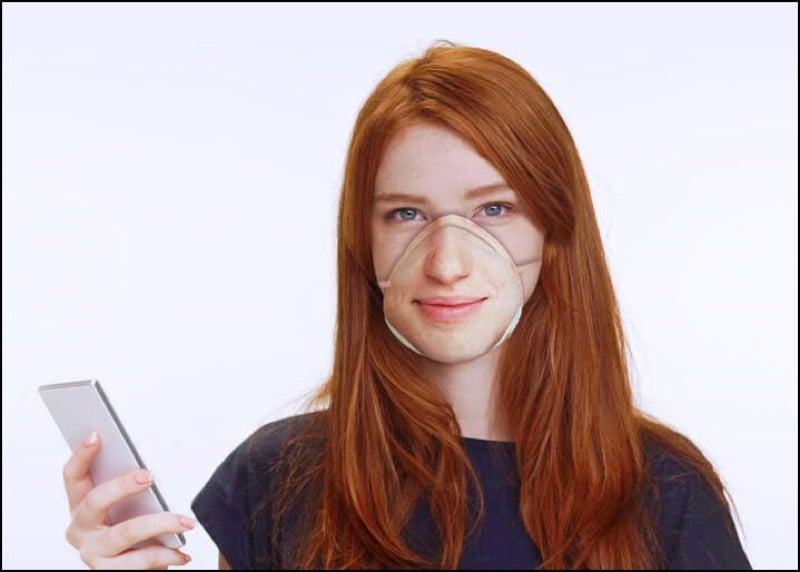
This site is making N95 respirator masks that work with facial recognition software, so that, for example, you can unlock your phone while still wearing a mask.
After uploading your face, we use computational mapping to convert your facial features into an image printed onto the surface of N95 surgical masks without distortion.
Our printer uses inks made of natural dyes. It’s non-toxic and doesn’t affect breathability.
You can use your mask for everyday life as a barrier for airborne particle droplets.
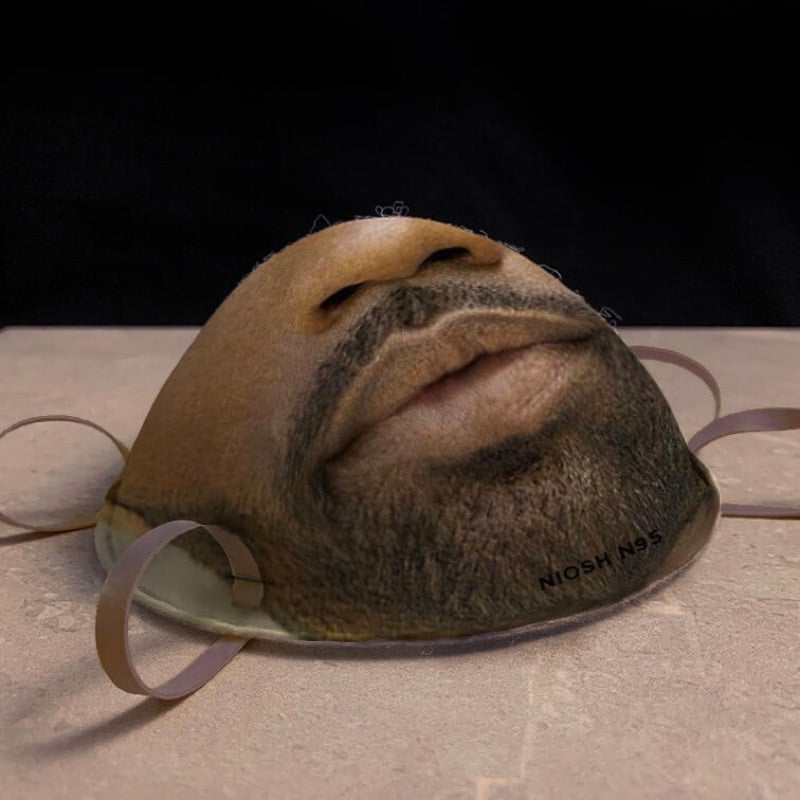
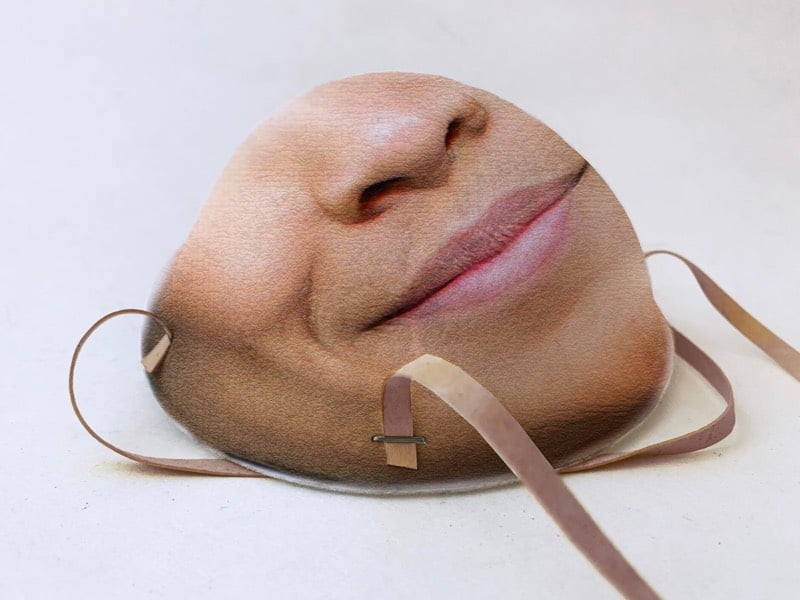
It is unclear whether these will actually ship or not — “Q: Is this a joke? A: Yes. No. We’re not sure.” — but they’re definitely not planning to make them while there are mask shortages related to COVID-19. And it appears the masks will work with iPhones…you just add a new face (while wearing the mask) to your phone’s face database.
Newer posts
Older posts




Socials & More