kottke.org posts about language
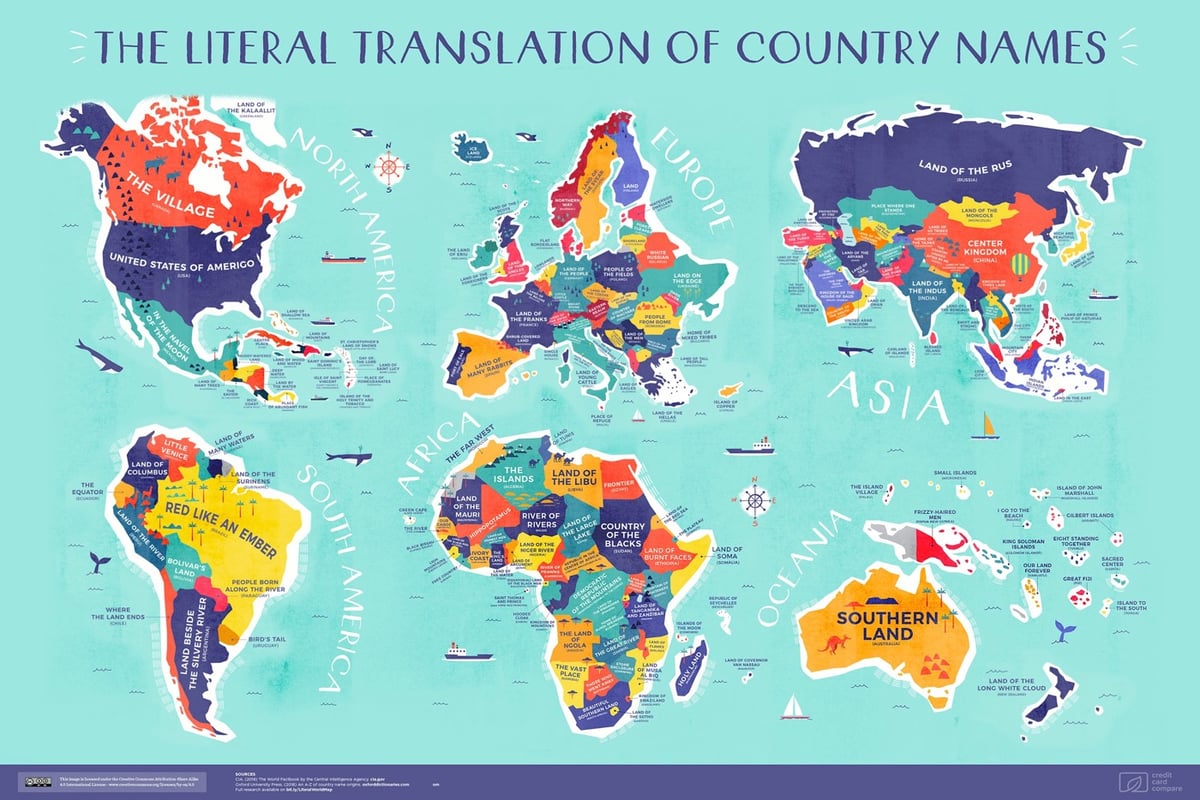
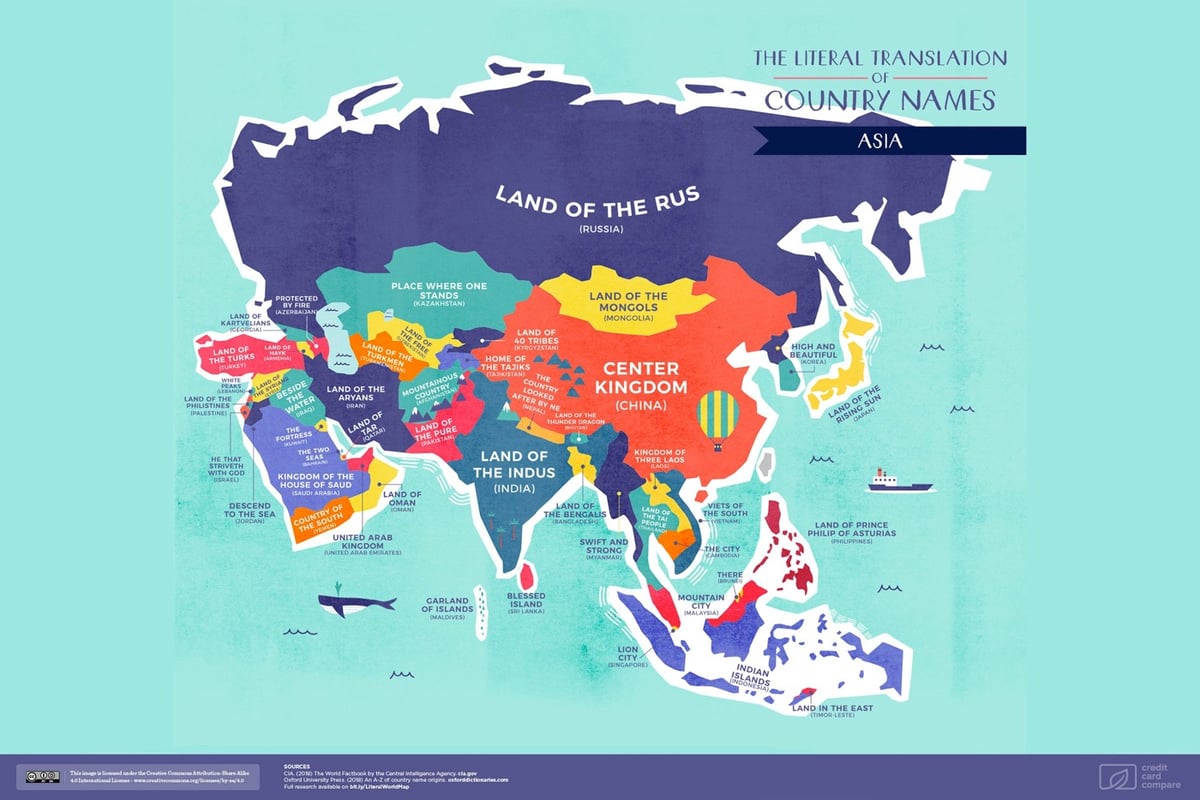
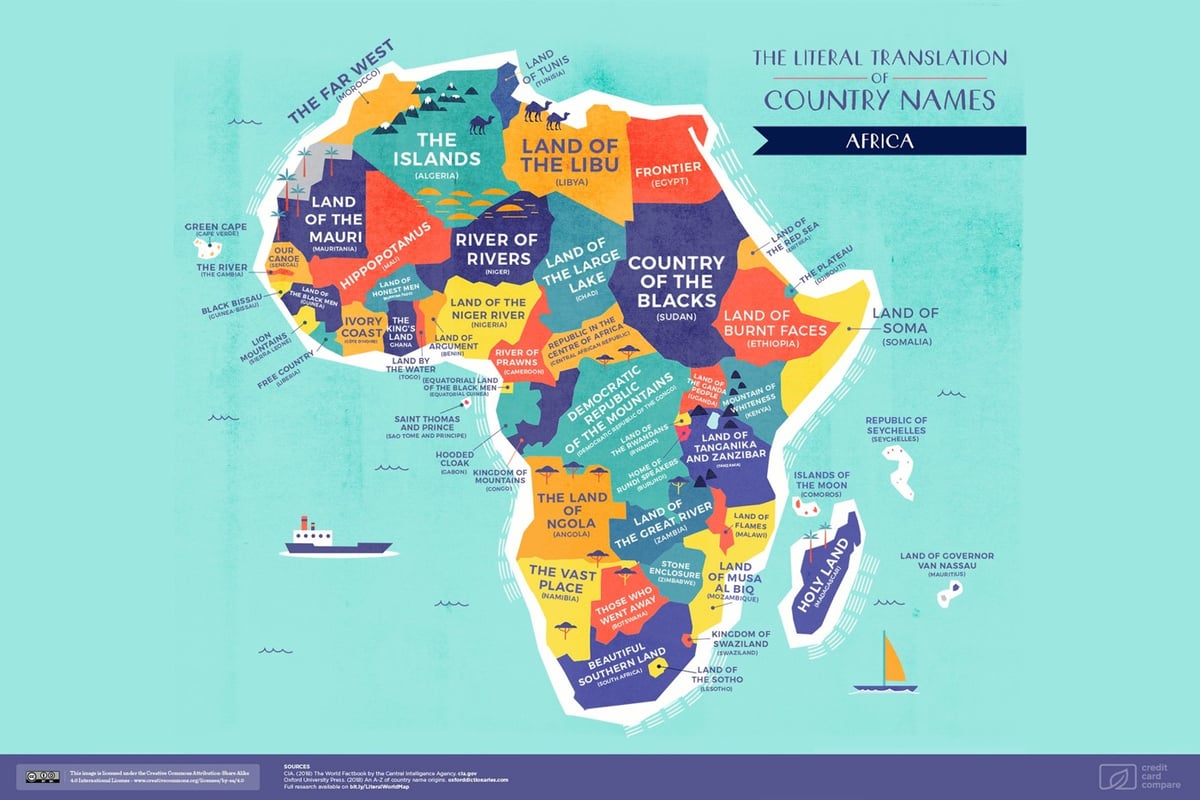
This is a map of the literal translations for the names of the world’s countries (bigger size). Some of the translations include:
Panama: Place of Abundant Fish
Paraguay: People Born Along the River
Namibia: The Vast Place
Ethiopia: Land of Burnt Faces
Egypt: Temple of the Soul of Ptah
Spain: Land of Many Rabbits
Hungary: 10 Arrows
Qatar: Land of Tar
Israel: He That Striveth with God
Thailand: Land of the Free
Nauru: I Go to the Beach
Australia: Southern Land
A spreadsheet of the translations and their sources is available here. See also a world map of every country’s tourism slogan. (via @danielhale)
Update: See also the Etymological Map of Africa. (via @danielhale)
Update: Two things. 1. This is not my map. I didn’t make it…it seems that (based on the logo in the lower right-hand corner) an Australian credit card comparison company did, but I can’t find any record of them having posted it anywhere online. 2. I have gotten many messages indicating the map is incorrect in one aspect or another, so you might want to take the whole thing with a healthy grain of salt (despite the research).
A guide to the proper usage of the word “dank.”
The protean adjective (or adverb if you want to slink dankly along) is now used for so much more than to merely describe things that are “unpleasantly moist.” In modern usage, dank can be used to pinpoint particular qualities in marijuana, beer, and internet humor, or as a general term of praise. If that sounds confusing, it can be.
Airport Novella by Tom Comitta is what he calls a “literary supercut”. Constructed exclusively from the kinds of novels one normally finds in airport bookshops, the 48-page book contains four chapters, one each for the gestures most often found in airport prose: nodding, shrugging, odd looks, and gasps. An short excerpt from the shrugging chapter:
Jeremy was silent for a moment before finally shrugging.
She shrugged without answering. “Can I be frank now?”
He shrugged. “Anything that might help me with the history of the cemetery and the town.”
She shrugged. “Shows me what I know. Being that you’re a journalist from the big city.”
He shrugged, acting innocent.
She suddenly remembered that he’d been trying to guess her age yesterday. “Yep,” she said with a shrug.
He gave a sheepish shrug, and she had a sudden vision of what he must have looked like as a small boy. “Hey, I know it’s none of my business, but how did it go with Rodney?”
She hesitated before finally shrugging. “You’re right. It is none of your business.” He could almost hear her shrug.
He gave a sheepish shrug. “I suppose that depends on the perspective.”
For source material, Comitta used books like The Da Vinci Code, the Twilight series, and a novel commissioned by Donald Trump (tagline: “Leave your modesty downstairs. Trump Tower is the sexiest novel of the decade.”)
The New Yorker interviewed a bunch of top Scrabble players about favorite moves they’ve played…their best, worst, and most humbling. I dislike playing Scrabble1 but love watching expert practitioners talk about about their areas of expertise.
In the latest installment of the newish video series Internetting with Amanda Hess, Hess discusses The White Internet’s Love Affair with Digital Blackface. From Teen Vogue, an explanation of digital blackface by Lauren Michelle Jackson:
Adore or despise them, GIFs are integral to the social experience of the Internet. Thanks to a range of buttons, apps, and keyboards, saying “it me” without words is easier than ever. But even a casual observer of GIFing would notice that, as with much of online culture, black people appear at the center of it all. Or images of black people, at least. The Real Housewives of Atlanta, Oprah, Whitney Houston, Mariah Carey, NBA players, Tiffany Pollard, Kid Fury, and many, many other known and anonymous black likenesses dominate day-to-day feeds, even outside online black communities. Similar to the idea that “Black Vine is simply Vine,” as Jeff Ihaza determined in The Awl, black reaction GIFs have become so widespread that they’ve practically become synonymous with just reaction GIFs.
If you’ve never heard of the term before, “digital blackface” is used to describe various types of minstrel performance that become available in cyberspace. Blackface minstrelsy is a theatrical tradition dating back to the early 19th century, in which performers “blacken” themselves up with costume and behaviors to act as black caricatures. The performances put society’s most racist sensibilities on display and in turn fed them back to audiences to intensify these feelings and disperse them across culture. Many of our most beloved entertainment genres owe at least part of themselves to the minstrel stage, including vaudeville, film, and cartoons. While often associated with Jim Crow-era racism, the tenets of minstrel performance remain alive today in television, movies, music and, in its most advanced iteration, on the Internet.
Psst, I added some Cyber Monday deals to the bottom of the post.
Good morning! I hope you had a good Thanksgiving…or at least annoyed your family with this NY Times piece, Most Everything You Learned About Thanksgiving Is Wrong.
Today however, is “Black Friday”, which…wait, why do they call it that? Ben Zimmer explains that the term originated in Philadelphia’s law enforcement circles:
Today is the day after Thanksgiving, when holiday shopping kicks off and sales-hunters are in full frenzy. The day has come to be known in the United States as “Black Friday,” and there are a number of myths about the origin of the name. Retailers would like you to believe that it’s the day when stores turn a profit on the year, thus “going into the black.” But don’t you believe it: the true origins come from traffic-weary police officers in Philadelphia in the early 1960s.
Retailers love invented holidays, and the name with the negative connotation was later twisted into a shopping event. But with carefully targeted online shopping, you can now skip the rush and get some great deals on things you might need or gifts for family & friends. Poking around a little this morning, I found the following:
- The 6-qt pro version of the KitchenAid stand mixer for $280 (51% off).
- Everyone loves the Instant Pot. The larger 8-qt and the smaller 3-qt are both on sale for $82 (37% off) and $49 (30% off) respectively. The 6-qt model, the one I have in my own kitchen, was also on sale for $68 but is totally sold out already.
- Kindles are on sale. The regular one starts at just $50 (38% off) while the Paperwhite (my fave) is $90 (25% off).
- Build your own computer with The Kano Computer Kit for $100 (17% off).
- The 23andMe DNA test kit for $99 (50% off).
- I know, I know, Moore’s Law and all, but it still boggles my mind that you can buy a 4TB portable external hard drive for only $96 (26% off).
- For easy sous vide cooking, the Anova Precision Cooker is only $109 (40% off).
Update: That sound you hear is Cyber Monday kicking in. Here are a few more deals to be had today:
- This 11.6-inch Acer Chromebook is on sale for $99 (44% off). $99!
- The 6-qt Instant Pot is going for $75 (38% off)…I bet this sells out pretty quickly.
- A bunch of LEGO sets are on sale today, which is a pretty rare event.
- My pals at 20x200 are offering discount codes on orders of $75 or more today only…20-30% off.
- This quadcopter drone is only $30 (46% off).
- I’ve heard good things about these Amazon-branded t-shirts, on sale for $8.40 (30% off). I just ordered a couple to see how they compare to American Apparel b/c who knows how long that’ll be a thing…
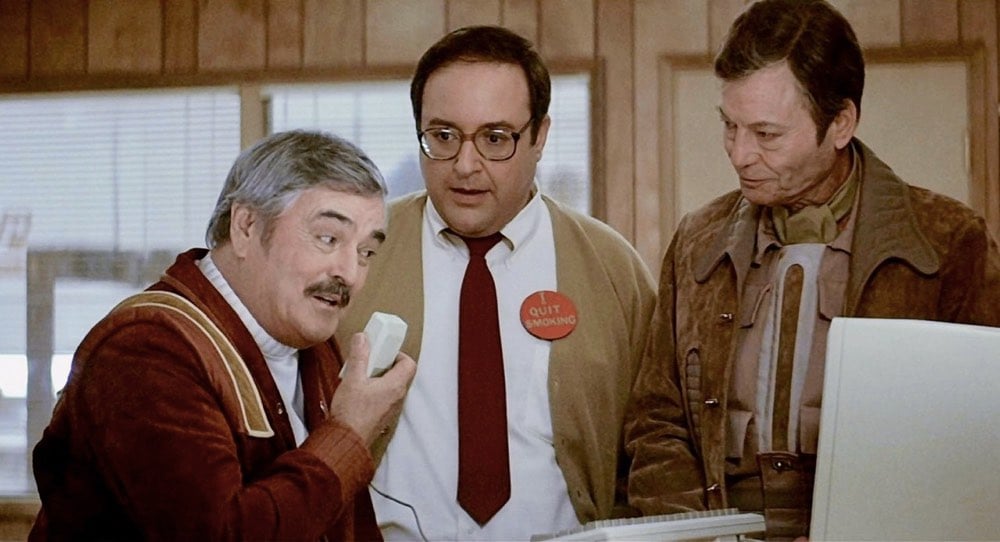
Dan Hon, who you may remember trained a neural network to make up British placenames, has now done the same thing with Star Trek. He fed all the episode titles for a bunch of Treks (TOS, DS9, TNG, etc.) into a very primitive version of Commander Data’s brain and out came some brand new episode titles, including:
Darmok Distant (TNG)
The Killing of the Battle of Khan (TOS)
The Omega Mind (Enterprise)
The Empath of Fire (TNG)
Distance of the Prophets (DS9)
The Children Command (TNG)
Sing of Ferengi (Voyager)
Spock, Q, and mirrors are also heavily featured in episode titles.

Written by Robert Macfarlane and illustrated by Jackie Morris, The Lost Words is a collection of words related to the natural world that are fading from our children’s minds as the “wild childhood” disappears from western society.
All over the country, there are words disappearing from children’s lives. These are the words of the natural world — Dandelion, Otter, Bramble and Acorn, all gone. The rich landscape of wild imagination and wild play is rapidly fading from our children’s minds.The Lost Words stands against the disappearance of wild childhood. It is a joyful celebration of nature words and the natural world they invoke.


For Topic, photographer Daniella Zalcman went to Ohio to document high school sports teams using names and mascots that refer to Native Americans.
Outside of professional sports, words and names referring to indigenous Americans abound: there are high-school teams and squads called the Redskins, Redmen, Big Reds, Braves, Warriors, Chieftains, Indians, Savages, Squaws, Apaches, Mohawks, and Seminoles. Many of them are in the state of Ohio, which, some reports say, has over 60 high-school mascots with names considered to be slurs. (It’s worth considering the cost of “tradition”: a 2014 report by the Center for American Progress found links between these team names and the lowered self-esteem-and increased suicide rates-of young Native Americans.)
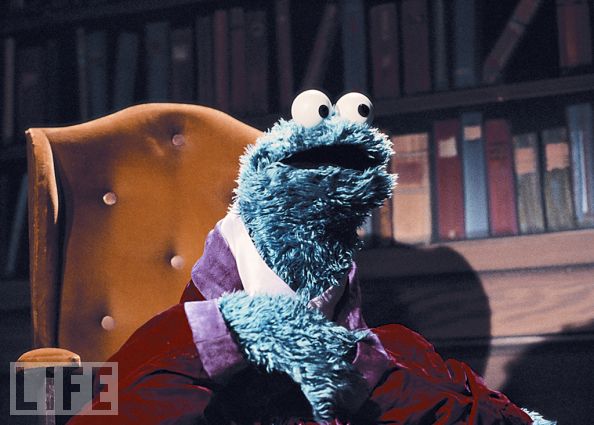
In De pueris instituendis (On the education of children, 1529), the great Renaissance humanist Erasmus, borrowing from the classical rhetoricians Horace and Quintillian, helped reintroduce an important idea:
I have now come to the stage of my argument where I shall briefly explain how love of study may be instilled in children - a subject which I have already touched upon in part. As I have said, through practice we acquire painlessly the ability to speak. The art of reading and writing comes next; this involves some tedium, which can be relieved, however, by an expert teacher who spices his instruction with pleasant inducements. One encounters children who toil and sweat endlessly before they can recognize and combine into words the letters of the alphabet and learn even the bare rudiments of grammar, yet who can readily grasp the higher forms of knowledge. As the ancients have demonstrated, there are artful means to overcome this slowness. Teachers of antiquity, for instance, would bake cookies of the sort that children like into the shape of letters, so that their pupils might, so to speak, hungrily eat their letters; for any student who could correctly identify a letter would be rewarded with it.
In grad school, I worked with a British literary historian who expertly broke this down into a post-psychoanalytic framework. Biscuits, like speech and writing, form a circuit between the eyes, hand, and mouth. The regulation of desire clears the way for the discipline of discourse. Like Plato, we move from the immanent and particular to the abstract and universal, but this is always mediated by the body, whose conflicting drives trouble these ideal categories.
I responded: “It’s Cookie Monster.” Growing up in England, he’d never heard of him.
Cookie’s idiosyncratic pronouns and truncated consonant clusters are a ruse. He’s easily the most verbally adept, best-educated character on Sesame Street. He teaches children the alphabet and vocabulary, and of course doubles as Alistaire Cookie on Monsterpiece Theatre. The growly voice, googly eyes, and outsized yearnings mask the heart of a scholar.
I bet he used to be a graduate student. You can’t show any of us free food without us reacting like this.
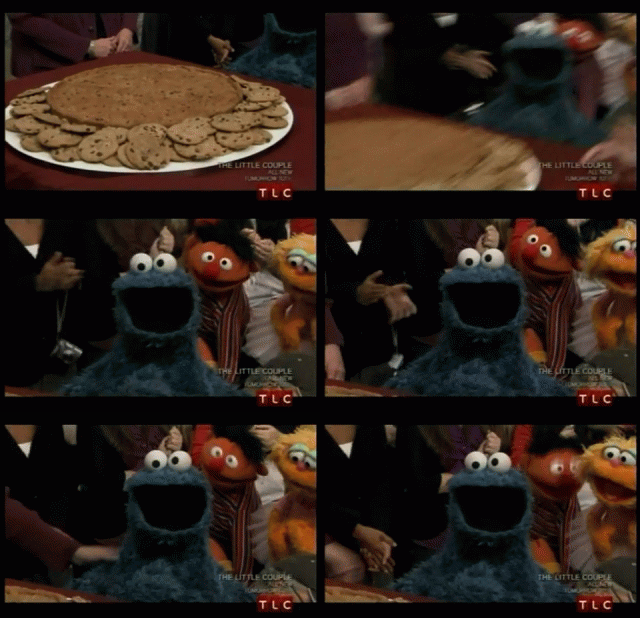
He even loves absurdist metafiction:
Cookie is all of us who always get underestimated, just because we refused to always change how we talk and how we act because we went to school. But we love those sweet leatherbound books, too.
NOTE: Cookie Monster was invited and was originally slated to collaborate on this post. He was excited; I was excited. Unfortunately, due to a scheduling conflict, he wasn’t able to appear. You have his and my regrets. (I swear on Mr. Snuffleupagus: All of this is 100 percent true.)
The Ikea Dictionary is a listing of the meanings of the names of more than 1300 Ikea products.
Part of what makes IKEA unique is their product names. Each name means something, often in a funny or ambigious way. When IKEA went international, they decided to use the same Swedish names everywhere. This makes sense from an organizational sanity standpoint, but it deprives most of the world of this particular joy.
Some examples:
JERRIK - Ancient Scandinavian boy name
TROLSK - magic/enchanted, troll-like
MÖRRUM - city in south east Sweden
SNITTA - (to) cut (flowers)
SOLVAR - Norwegian boy name
VÄGGIS - made up -IS word ‘Vägg’ means ‘wall’, so ‘väggis’ could mean ‘wall thingie’

From illustrator, designer, and writer Jez Burrows comes a book called Dictionary Stories, a collection of illustrated short stories that are composed entirely of example sentences from the dictionary.
One day, while looking up a word in the New Oxford American Dictionary, Jez Burrows was stopped in his tracks by an example sentence: “He perched on the edge of the bed, a study in confusion and misery.” It seemed like a tiny piece of fiction had gotten lost, wandered out of another book and settled down in the dictionary. With that spark, and a handful of experimental stories posted to Tumblr, Dictionary Stories was born.
Super clever.
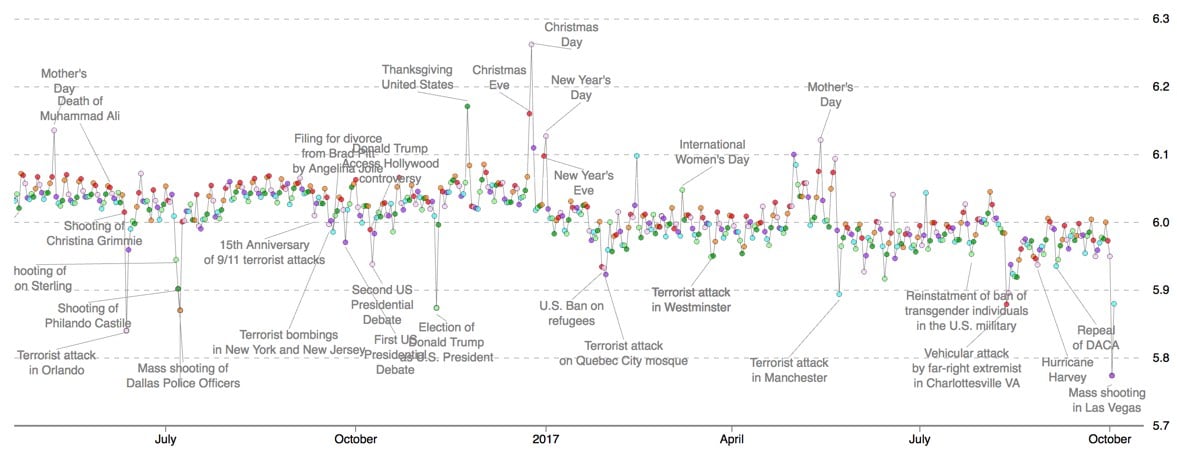
The Hedonometer measures the average happiness of Twitter on a daily basis and the shooting in Las Vegas has pushed the index to a new low. The previous low point was after the terror attack in Orlando last July. The two other lowest scores have occurred in the past year and a half: the mass shooting of Dallas police officers and the election of Donald Trump, which is the only non-shooting or non-terror attack to achieve such a low score in the 9-year history of the index.
In the Upper Midwest, particularly in Minnesota and the northern part of Wisconsin (where I’m originally from), there’s a tendency to never say exactly what you’re thinking. Which, dontcha know, can lead to some misunderstandings when communicating with people who didn’t grow up in the area. This short video, taken from a longer documentary on How to Talk Minnesotan, demonstrates how a Minnesotan speaker uses negative words (e.g. bad, not, can’t, worse) to express positive feelings. For example, a translation of the phrase “I’m so excited, I can’t believe it!!” into Minnesotan yields:
A guy could almost be happy today if he wasn’t careful.
If you look at the basic colors from a variety of cultures & languages from around the world, there are differences in the number of colors represented in each language. Some languages only have words for black, white, and red while others have words for more than 10 basic colors. Surprisingly, there’s a pattern behind the development of these color words across many of these languages: the words for colors were often invented in the same order.
See also one of my favorite segments of Radiolab on the color blue.
Newer posts
Older posts


Socials & More