kottke.org posts about TV
Season four of Halt and Catch Fire finds the show in the 90s and the music has changed accordingly. Here’s the official playlist on Spotify.
See also the playlists for season 3, 1985, 1984, and many more from the show, including playlists for each main character.
In a multi-part series, ScreenPrism will be looking at the codes and values of some of the main characters in The Wire. The first installment is about Jimmy McNulty, who is “good po-lice” but also doesn’t always take personal responsibility for his actions (“what the fuck did I do?”).
A newly released study by Gregory Martin and Ali Yurukolu published in the American Economic Review shows that watching Fox News has a significant effect on the overall Republican vote share in Presidential elections. They analyzed the channel position of the three major cable networks (Fox News, MSNBC, CNN), compared it to voting patterns, and found that “Fox News increases Republican vote shares by 0.3 points among viewers induced into watching 2.5 additional minutes per week by variation in position”. Using that result, they constructed a model to estimate the overall influence.
In other results, we estimate that removing Fox News from cable television during the 2000 election cycle would have reduced the overall Republican presidential vote share by 0.46 percentage points. The predicted effect increases in 2004 and 2008 to 3.59 and 6.34 percentage points, respectively. This increase is driven by increasing viewership on Fox News as well as an increasingly conservative slant. Finally, we find that the cable news channels’ potential for influence on election outcomes would be substantially larger were ownership to become more concentrated.
6.3% is an astounding effect. Fox News appears to be uniquely persuasive when compared to the other channels, particularly in bringing people across the aisle:
Were a viewer initially at the ideology of the median Democratic voter in 2008 to watch an additional three minutes of Fox News per week, her likelihood of voting Republican would increase by 1.03 percentage points. Another pattern that emerges from the table is that Fox is substantially better at influencing Democrats than MSNBC is at influencing Republicans.
They also estimate that cable news has contributed greatly to the rise in political polarization in the US over the period studied:
Furthermore, we estimate that cable news can increase polarization and explain about two-thirds of the increase among the public in the United States, and that this increase depends on both a persuasive effect of cable news and the existence of tastes for like-minded news.
This analysis is especially interesting/relevant when you consider other recent activist media efforts with an eye toward conservative influence: the Russian ad-buying on Facebook during the last election (and related activities), billionaire Trump-backer Sheldon Adelson’s purchase of The Las Vegas Review-Journal, and conservative-leaning Sinclair Media’s proposed acquisition of Tribune Media. (via mr)
I was lukewarm on season 2 of Mr. Robot but am hoping, based on this trailer, that season 3 is a return to form for the show. See also the teaser trailer.
Oh, and you can reacquaint yourself with last season in just 7 minutes. Handy!
On September 19, Netflix is airing Jerry Before Seinfeld, a comedy special about how the world’s richest comedian got his start.
(BTW, Netflix is killing it this fall. Without having to seek anything out specifically, I already have at least 5 things I want to watch on there between now and November…not counting the backlog.)
Former NFL player Ed Cunningham has resigned from his job as a college football color analyst for ABC/ESPN because of “his growing discomfort with the damage being inflicted on the players he was watching each week”.
If Ed Cunningham had not already seen enough, he would be back in a broadcast booth on Saturday afternoon, serving as the color analyst for another top college football game televised on ABC or ESPN. It is the work he has done each fall for nearly 20 years.
But Cunningham, 48, resigned from one of the top jobs in sports broadcasting because of his growing discomfort with the damage being inflicted on the players he was watching each week. The hits kept coming, right in front of him, until Cunningham said he could not, in good conscience, continue his supporting role in football’s multibillion-dollar apparatus.
Another domino falls. Unless there are big changes to the game play, sooner or later football will likely become a marginalized sport in the US.
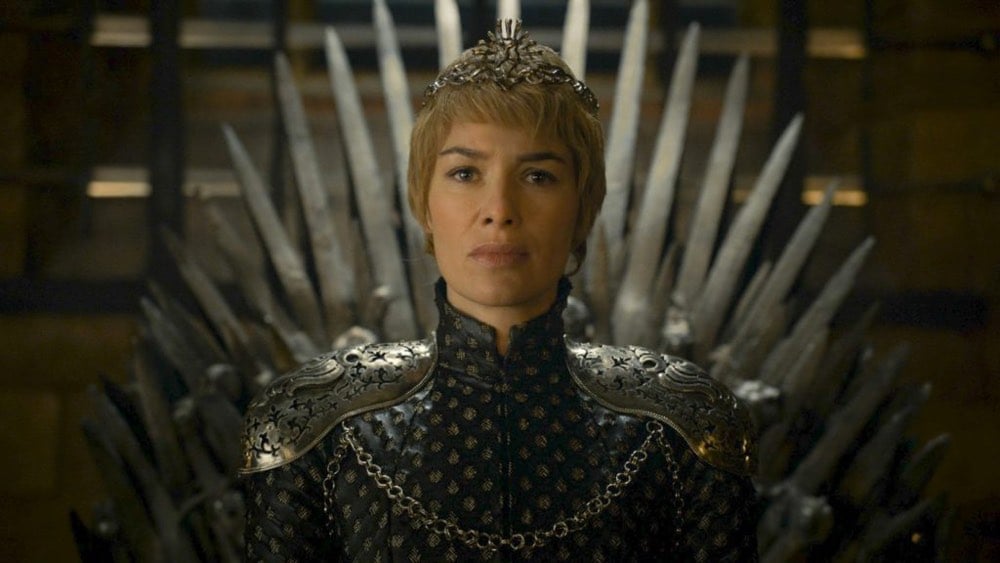
The amount of media coverage of Game of Thrones was a touch too much this summer, but this ranking of the political strategies of the main players in season seven by Zack Beauchamp was both entertaining and informative. I mean:
To understand Cersei’s success, we need to reach back to the classic work of Prussian military theorist Carl von Clausewitz.
Before looking at the list, I’d assumed Jon Snow would get lower marks (he left the North vulnerable and cratered his coalition’s chances at a truce with Cersei), but Beauchamp makes a good case here.
I’ve argued before that the best way to think about the White Walkers, from the human point of view, is as a threat akin to climate change — a massive collective threat that humans were ignoring in favor of petty internal squabbling. Jon, to his immense credit, is the only leader who recognized the enormity of the threat early enough to try to rally others to stop it. He’s kind of a Westerosi Al Gore, only he succeeded in getting to run a country.
So the best way to think about Jon’s mission is through the lens of environmental diplomacy: He needed to convince the world’s leading powers to abandon the internecine struggle over the throne and refocus on the White Walker threat. He didn’t have a ton to work with: The North is a distinctly third-tier power, weaker militarily than both the Targaryen and Lannister alliances and the country most vulnerable to the White Walkers.
Jon may have failed to rally Cersei to his cause, but he succeeded in bringing on Daenerys. And that’s by far the most important, mostly because her dragons and cache of dragonglass represent the only chance humanity has at fending off the White Walker threat. If it weren’t for Jon, humanity would be fundamentally doomed.
True crime OG Errol Morris has teamed up with Netflix for a 6-part series called Wormwood. The series is an exploration of the CIA experiments with LSD in the 1950s and the death of CIA employee Frank Olson, who was covertly given LSD more than a week before he died. Olson’s death was ruled a suicide, but many years later, the US government settled a potential wrongful death lawsuit out-of-court with a $750,000 payment to the family.
The show itself is a mixture of documentary and historical reenactment (starring Peter Sarsgaard & Bob Balaban) that is now somewhat standard in the true crime genre, having been pioneered by Morris in The Thin Blue Line. Of the show, Morris writes:
Isn’t journalism the pursuit of truth? But what if the truth proves to be elusive, hard to get at? How far does one go? Where does one stop? Are there limits, emotional and otherwise, to the pursuit of truth? Can it be injurious to one’s health? Here we have the story of one man’s sixty-year quest to identify the circumstances of his father’s death. Did he jump from a hotel window? Or was he pushed? And if he was pushed, why? What for? A shadowy world of hidden and imagined intentions coupled with dark and horrifying revelations. In many ways, a personal family story, but in many other ways, a story of America’s decline in the period following World War II. It asks the question: To what extent can a democracy lie to its citizens and still, in the end, remain a democracy?
On Netflix on December 15.
Update: Here’s the full trailer for Wormwood:
Quick reviews of some things I’ve read, seen, heard, and experienced in the past few weeks. As always, don’t take the letter grades so seriously. Somehow it’s been almost two months since my last installment?
Paterson. I would pay to watch Adam Driver read the phone book and that’s kinda what this is so I was satisfied. (B)
Despicable Me 3. I have a soft spot for the Minions movie (don’t know why, afraid to ask myself) but not for this one. (C+)
Cars and Trucks and Things That Go by Richard Scarry. This was my favorite book to read to my kids, but both of them can read by themselves now, so this is perhaps the last time I will get to sit down and read it with them and oh no I’m crying right now. (A+)
Mr. Holmes. This could have been good but 24 hours after watching, I’d forgotten everything about it. (C)
Spider-Man: Homecoming. My brain let out a big ol’ “ohhhhhh” after I realized two-thirds of the way through where they got the title. (B)
The Defiant Ones. Great. But I felt Dre’s apology for his violence against women was lacking. As with many apologies from the wealthy and powerful, it had more to do with him than with his victims. (A)
Where the Sidewalk Ends by Shel Silverstein. I love reading weirdo books with my kids. (A)
Game of Thrones (season 7). Pure pulp and soap at this point. (A-)
Hey, Cool Job Episode 21: Wellness Expert And Swole Woman Casey Johnston. I LOL’d at “I’m going to remain poor and right”. (B+)
Dunkirk. I feel like Christopher Nolan watched Mad Max: Fury Road and said, “I can do that…but my way.” Also reminded me strongly of Run Lola Run. (A-)
Dunkirk: Original Motion Picture Soundtrack. Hans Zimmer’s soundtrack contributed heavily to my enjoyment of this film. (A)
Baby Driver. A 2-hour music video. If were 25 and had never seen a Tarantino movie, I would have thought this was the coolest shit ever. (B)
The total solar eclipse. A once-in-a-lifetime experience I will attempt to replicate at the earliest opportunity. (A+++)
Past installments of my media diets can be found here.
Six new episodes of Black Mirror are headed our way when the fourth season premieres later this year. There’s a short teaser trailer (above) and Netflix has also announced casts and directors for the season.
“Arkangel” stars Rosemarie Dewitt, Brenna Harding and Owen Teague. It is directed by Jodie Foster.
“Black Museum” stars Douglas Hodge, Letitia Wright and Babs Olusanmokun. It is directed by Colm McCarthy.
“Crocodile” stars Andrea Riseborough, Andrew Gower and Kiran Sonia Sawar. It is directed by John Hillcoat.
At the beginning of each episode of The Wire, a quote from one of the show’s characters is shown on the screen, a epigraph that suggests the theme of the episode. This video shows the characters from each episode saying those opening quotes — Lester: “all the pieces matter”; Omar: “all in the game”; The Greek: “business, always business”; Poot: “world going one way, people another” — for all five seasons.
James Poniewozik, chief TV critic for the NY Times, wrote about his favorite scene from Freaks and Geeks. Here’s the scene:
I loved this bit:
First, the music. “I’m One” by the Who, from the 1973 album “Quadrophenia.” It builds from mournfulness (“I’m a loser / No chance to win”) to a defiant chorus. And it’s a great example of how “Freaks and Geeks” chose its soundtracks. The episode is set in 1981, but it avoids on-the-nose ’80s-song choices. Paul Feig, the show’s creator, once told me that the thing about the early ’80s in the Midwest was that they were really still the ’70s.
I grew up in the Midwest in the early 80s and though I’ve never really thought about it before, Feig’s observation that they were still really the 70s is spot on. (via @tcarmody)
The first season of the Netflix series The Crown was a surprise for me. I thought it was going to be pleasant-but-soapy look at the royals a la Downton Abbey (which I love, don’t get me wrong), but the acting and the substance of the script and production elevated it, putting it among the best shows to debut last year. Claire Foy as Queen Elizabeth, in particular, was a revelation; her one-on-one scenes with her sister and with Churchill were some of the best TV I watched last year. From the season 2 trailer, it appears that we’re in for more of the same come December.
Oh, this is a clever bit of TV/film analysis by Evan Puschak: he reconstructs the Loot Train Battle from the most recent episode of Game of Thrones using clips from other movies and TV shows (like 300, Lord of the Rings, Stagecoach, and Apocalypse Now). In doing so, he reveals the structure that many filmed battle scenes follow, from the surprising enemy attack presaged by the distant sound of horses (as in 300) to the quiet mid-chaos reflection by a shocked commander (as in Saving Private Ryan). Everything is a Remix, right?
This reminds me of how the Rogue One production team made a full-length reel of the film for director Gareth Edwards from scenes from other movies so that the timing and pacing could be worked out.
It’s very simple to have a line [in the script] that reads “Krennic’s shuttle descends to the planet”, now that takes maybe 2-3 seconds in other films, but if you look at any other ‘Star Wars’ film you realise that takes 45 seconds or a minute of screen time. So by making the whole film that way — I used a lot of the ‘Star Wars’ films — but also hundreds of other films too, it gave us a good idea of the timing.
For example the sequence of them breaking into the vault I was ripping the big door closing in ‘Wargames’ to work out how long does a vault door take to close.
This fascinating behind-the-scenes look at the battle doesn’t allude to any such storyboarding, but as Puschak notes, battle scenes from dozens of other movies surely weren’t far off in their minds while putting this one together.
Together with Lynn Novick, filmmaker Ken Burns, who has previously made long documentary films on The Civil War and World War II, has made a film about perhaps the most controversial and contentious event in American history, The Vietnam War. The film runs for 18 hours across 10 installments and begins on September 17 on PBS.
David Kamp interviewed Novick and Burns for Vanity Fair and proclaims the film a triumph:
I watched the whole series in a marathon viewing session a few days before meeting with the filmmakers — a knock-you-sideways experience that was as enlightening as it was emotionally taxing. For all their unguarded anxiety about doing the war justice, Burns and Novick have pulled off a monumental achievement. Audiovisually, the documentary is like no other Burns-branded undertaking. Instead of folksy sepia and black-and-white, there are vivid jade-green jungles and horrific blooms of napalm that explode into orange and then gradually turn smoky black. The Vietnam War was the first and last American conflict to be filmed by news organizations with minimal governmental interference, and the filmmakers have drawn from more than 130 sources for motion-picture footage, including the U.S. networks, private home-movie collections, and several archives administered by the Socialist Republic of Vietnam. The series’s depiction of the Tet offensive, in which the North Vietnamese launched coordinated attacks on the South’s urban centers, is particularly and brutally immersive, approaching a 360-degree experience in its deft stitching together of footage from various sources.
The sound and music promises to thrill as well. Trent Reznor and Atticus Ross (who did the scores for The Social Network, Gone Girl, and The Girl with the Dragon Tattoo) provided original music to supplement popular music contemporary to the time. They even got The Beatles.
Then there’s all that popular music from the 60s and 70s: more than 120 songs by the artists who actually soundtracked the times, such as Bob Dylan, Joan Baez, the Animals, Janis Joplin, Wilson Pickett, Buffalo Springfield, the Byrds, the Rolling Stones, and even the ordinarily permissions-averse and budget-breaking Beatles. Of the Beatles, Novick noted, “They basically said, We think this is an important part of history, we want to be part of what you’re doing, and we will take the same deal everybody else gets. That’s kind of unprecedented.”
I’m very much looking forward to this.
Newer posts
Older posts





Socials & More