kottke.org posts about TV
The Downton Abbey movie is nearly upon us (it’s out in Sept) and the first full-length trailer is here. The action picks up a couple of years after the TV show ended and concerns the visit of King George V and Queen Mary to the estate. I’ve embedded the UK trailer above — it’s better than the American trailer even though it gives away a bit more of the plot. Plus, in the UK version you get to see the deployment of Carson in the Battle of the Head Butlers. Carson’s glance of disdained indifference toward the royal butler might be the most spine-tingling battle moment since Aragon uttered “for Frodo” and charged headlong into the hordes of Mordor.
Update: Some real talk from Robert Bennett about the escapist fantasy of Downton Abbey:
really the point of the entire show was to let middle american viewers dabble in the lavish lives and costumes of the edwardian .001% without feeling bad about what made that lifestyle possible
anything that threatened that “safari in the aristocracy” aspect — be it the realism of class warfare, or the actual, historical evolutions of the era that would have upended everything that happened — was quickly neutered and turned into quaint fluff.
Still excited for the movie though. Butler Battle 2019!!
In this NASA promotional film from 1977, Star Trek star Nichelle Nichols takes a tour of the Johnson Space Center with Apollo 12 astronaut Al Bean and urges viewers, especially women and people of color, to sign up to be astronauts on NASA’s Space Shuttle program.
As one of the first black women to play a lead role on television, Nichols was a role model for women and people of color, particularly those interested in science, space, and engineering. When she was she thinking of quitting Star Trek, Nichols met Martin Luther King Jr. at a NAACP fundraiser and he talked her into staying on the show. She recalled King telling her:
Do you not understand what God has given you? … You have the first important non-traditional role, non-stereotypical role. … You cannot abdicate your position. You are changing the minds of people across the world, because for the first time, through you, we see ourselves and what can be.
So when NASA came calling, Nichols used her position well:
She relayed her response to NASA with a mischievous twinkle in her eye, “I am going to bring you so many qualified women and minority astronaut applicants for this position that if you don’t choose one… everybody in the newspapers across the country will know about it.”
Nichols credited Star Trek with the success of her recruiting efforts. “Suddenly the people who were responding were the bigger Trekkers you ever saw. They truly believed what I said… it was a very successful endeavor. It changed the face of the astronaut corp forever.”
Among the recruits drawn to NASA by Nichols’ efforts were Sally Ride, the first American woman in space, Ronald McNair & Judith Resnick, who both died in the Challenger accident, Guion Bluford, the first African-American in space, and Mae Jemison, who was the first black woman in space. The diversity of the latest batch of NASA astronauts-in-training is a testament to Nichols’ and NASA’s joint efforts as well. (via open culture)
Black Mirror is back for a fifth season on Netflix starting June 5. The season will consist only of three episodes and will star, among others, Miley Cyrus, Topher Grace, Andrew Scott, and Anthony Mackie. Here’s the trailer:
I have to admit that I haven’t watched all of season 4 yet…or Bandersnatch. Living in an episode of Black Mirror isn’t exactly conducive to wanting to watch Black Mirror.
Running From COPS is a new podcast that examines the cultural influence of the long-running TV show COPS. Vox did a short video on the main themes of the show:
From a Fast Company article about the podcast and its creator, Dan Taberski:
The problem is that Cops is more reality show than documentary, and Taberski, a veteran reality show producer, knows there’s a huge disparity between reality show “reality” and documentary reality. In the course of their investigation, the Running from Cops team discovered that the police had final cut approval for the series. “When you start to look at the contractual relationship between producers and police-and we got our hands on a few of those contracts between Cops and the police departments — I think people will be really surprised how much the police are controlling their own message on the show,” Taberski says. Watching the show in that light, he adds, “It just shows how dicey it is to be using reality-show storytelling techniques for something so real and important as policing, and how your biases can creep in even unintentionally.”
Taberski and the producers also found that while prostitution, drugs, and violence make up 58% of crime depicted on Cops, according to the FBI, those three categories only account for barely 17% of crime IRL.
The first four episodes are available now on your favorite podcasting platform. I binged them over the past week and they’re worth a listen.
A clip from 1985 of James Burke talking about how microchips will change politics by making it possible for everyone’s opinion about the nature of the world to be heard and tallied. This slightly longer version of the same clip is worth watching:
You can also watch the entire episode from which it was taken.
Personal computing and the internet changed (and continues to change) the balance of power in the world so much and with such speed that we still can’t comprehend it. Ordinary people have more power today than they have ever had in history, but already powerful people have seen their potential reach and influence grow even more quickly. The system enabled by connected microchips can make everyone heard, but it can also make a reality TV star President of the United States. And this dynamic is still very young…we’re in for a wild ride, folks.

A few months ago I noticed that several friends (who speak English and aren’t deaf) routinely watch TV and movies with closed captions and subtitles on. I asked about this on Twitter and the resulting thread was fascinating. Turns out many of you watch TV this way for all kinds of different reasons — to follow complex dialog in foreign or otherwise difficult accents, some folks better retain information while reading, keeping the sound down so as not to wake sleeping children in tight living spaces, and lots of people who aren’t deaf find listening difficult for many reasons (some have trouble listening to dialogue when there’s any sort of non-ambient noise in the background).
For instance, Stephanie Buck wrote:
I turned them on last night when watching Sex Education because the mixture of strong accents, British slang, and fast talking means I miss a lot otherwise. Also I’d had 2 margaritas.
David Sun Lee:
When I watch tv alone at night I gotta keep the tv low so the effects and soundtrack don’t wake up the kids. Usually that means the voice track is lost.
Jeremy Negrey:
Typically the whole family is in the living room, but some might be watching their iPad or on their phone so there is a lot of competing noise. I found it helps me focus on what I’m watching.
As Sebastian Greger notes in his summary of the resulting thread, closed captioning is a great example of how accessibility features can benefit everyone, especially those who may have disabilities or limitations that aren’t typically acknowledged as such.
The reasons why people watch TV with closed captions on, despite having good hearing abilities and not being constrained by having to watch muted video, are manifold and go far beyond those two most commonly anticipated use cases.
See also Why Gen Z Loves Closed Captioning.
This post first appeared in an issue of Noticing, kottke.org’s weekly newsletter. You can subscribe here.

Before his death in 2016, Prince had begun work on a memoir about his wonderfully creative life. The Beautiful Ones, due out in October 2019, will incorporate the 50 hand-written pages the artist had completed before he died, along with other writings, personal photos, and handwritten lyric sheets.
The Beautiful Ones is the story of how Prince became Prince — a first-person account of a kid absorbing the world around him and then creating a persona, an artistic vision, and a life, before the hits and fame that would come to define him. The book is told in four parts. The first is composed of the memoir he was writing before his tragic death, pages that brings us into Prince’s childhood world through his own lyrical prose. The second part takes us into Prince’s early years as a musician, before his first album released, through a scrapbook of Prince’s writing and photos. The third section shows us Prince’s evolution through candid images that take us up to the cusp of his greatest achievement, which we see in the book’s fourth section: his original handwritten treatment for Purple Rain — the final stage in Prince’s self-creation, as he retells the autobiography we’ve seen in the first three parts as a heroic journey.
The book is being produced in partnership with his estate, which is also behind the forthcoming Netflix documentary series about Prince directed by Ava DuVernay.
The project has the full cooperation of the late artist’s estate, which is providing with interviews, archival footage, photos and archive access. The multiple-part documentary will cover the artist’s entire life.
The book and documentary sound similar…I wonder if they’ll share a title?
Update: In an interview with the LA Times, DuVernay shares that she’s no longer working on the Prince documentary.
She does note she’s no longer working on Netflix’s multipart Prince documentary, saying she had “creative differences” with the company after working for a year on the project. “It just didn’t work out,” she says. “There’s a lot of beautiful material there. I wish them well.”
In a Q&A with the NY Times back in October, George R.R. Martin connected the goings-on in Westeros with the challenges raised by climate change here in the real world.
The people in Westeros are fighting their individual battles over power and status and wealth. And those are so distracting them that they’re ignoring the threat of “winter is coming,” which has the potential to destroy all of them and to destroy their world. And there is a great parallel there to, I think, what I see this planet doing here, where we’re fighting our own battles. We’re fighting over issues, important issues, mind you — foreign policy, domestic policy, civil rights, social responsibility, social justice. All of these things are important. But while we’re tearing ourselves apart over this and expending so much energy, there exists this threat of climate change, which, to my mind, is conclusively proved by most of the data and 99.9 percent of the scientific community. And it really has the potential to destroy our world. And we’re ignoring that while we worry about the next election and issues that people are concerned about, like jobs. Jobs are a very important issue, of course. All of these things are important issues. But none of them are important if, like, we’re dead and our cities are under the ocean. So really, climate change should be the number one priority for any politician who is capable of looking past the next election. But unfortunately, there are only a handful of those. We spend 10 times as much energy and thought and debate in the media discussing whether or not N.F.L. players should stand for the national anthem than this threat that’s going to destroy our world.
That message has always lurked in the background of the HBO show but seemed closer to the surface in the latest episode — mild spoilers! — which finds several factions that were formerly set against each other in various configurations all working together to defeat a much more threatening common enemy. It is quite difficult, nearly impossible even, to imagine a similar coalition of Democrats, Republicans, Democratic Socialists, Libertarians, and everyone in between allied with each other to combat climate change, but we’re going have to get there somehow. We either do it soon and get the world we want or we continue to do very little and pay a much heavier price later for a world that no one wants.
Update: See also Democratic Presidential candidate Elizabeth Warren’s recap of the first episode of the current season of Game of Thrones. Wait, what?!
And as much as Dany wants to take on her family’s enemies and take back the Iron Throne, she knows that she must first fight the army of the dead that threatens all mankind. This is a revolutionary idea, in Westeros or anywhere else. A queen who declares that she doesn’t serve the interests of the rich and powerful? A ruler who doesn’t want to control the political system but to break the system as it is known? It’s no wonder that the people she meets in Westeros are skeptical.
From the BBC and hosted by David Attenborough, “Climate Change: The Facts” is an hour-long program on the science of climate change and what we might be able to do about it.
Sir David’s new programme laid out the science behind climate change, the impact it is having right now and the steps that can be taken to fight it.
“In the 20 years since I first started talking about the impact of climate change on our world, conditions have changed far faster than I ever imagined,” Sir David stated in the film.
“It may sound frightening, but the scientific evidence is that if we have not taken dramatic action within the next decade, we could face irreversible damage to the natural world and the collapse of our societies.”
With each successive nature series, Attenborough has become more vocal about the effects of climate change on our planet and its plant and animal populations. In his new Netflix series Our Planet, climate change takes center stage.
Compared to its predecessors, the series also frames the value of nature in a new way. Usually Attenborough’s programs establish a place or a species as a thing of remarkable beauty-this soulful orangutan, that industrious bird of paradise-before warning that it is somehow imperilled. The value of the creature is its existence. We may never see a polar bear, but we take pleasure from knowing that they’re out there. In “Our Planet,” the value of nature is presented as something much closer to home, and more practical. Attenborough reminds viewers again and again of the connections that link these far-flung ecosystems to our own species’s survival. Protect the sea otter because it’s lovely, if you like, but also because it keeps in check the sea urchins that otherwise mow down kelp forests, which act as crucial carbon sinks. “We are part of nature. We aren’t separate from nature,” Attenborough told me.
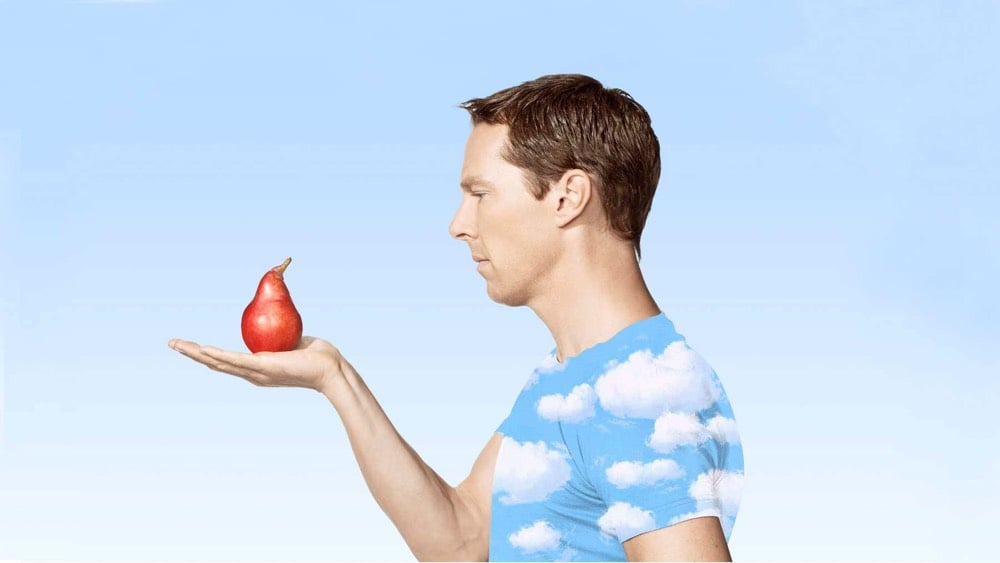
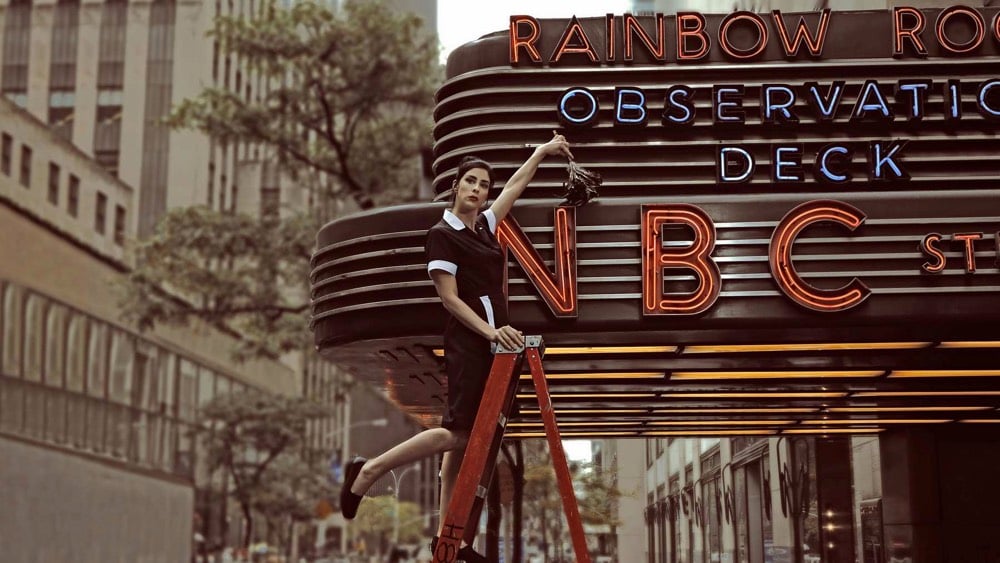
Since 1999, Mary Ellen Matthews has been the official photographer of SNL. For each show, Matthews captures a stylized portrait of the host, which is then used for “bumpers” between commercials and the live program.
“I kind of think of them as billboards. They pop off the screen,” Matthews, a self-described “one-woman circus,” told Vulture in a recent interview. “I like to make it as easy as possible for everyone. I don’t want them overthinking this part of the show. It should be super fun and super easy. It’s an open invitation to get kooky.”
With a tweet at 3:20am this morning, Beyoncé announced her latest album, a 40-track live album of her acclaimed 2018 Coachella performance. You can listen to Homecoming right now on Spotify, Apple Music, Tidal, Amazon, YouTube, and Pandora.
The album is a complement to a Netflix film of the performance, also called Homecoming and also available today. Here’s the trailer for that:
After the Coachella performance last year, the NY Times’ music critic Jon Caramanica wrote:
Let’s just cut to the chase: There’s not likely to be a more meaningful, absorbing, forceful and radical performance by an American musician this year, or any year soon, than Beyoncé’s headlining set at the Coachella Valley Music and Arts Festival on Saturday night.
It was rich with history, potently political and visually grand. By turns uproarious, rowdy, and lush. A gobsmacking marvel of choreography and musical direction.
Game of Thrones made its return to HBO last night and, surprise, someone died! According to this compilation video, over 174,000 people have died on the show in seven seasons. The sheer numbers and the fact that some of the deaths have been, shall we say, a little creative (even for a fantasy show) sometimes interfered with my ability to fully suspend my disbelief when watching. Take Khal Drogo killing Viserys Targaryen by pouring molten gold on his head in the first season:
That’s a pretty outlandish death, an over-the-top display of sadism for the benefit of a TV audience. Right? Well, I’ve been reading Peter Frankopan’s The Silk Roads: A New History of the World and I’ve discovered that Game of Thrones hews close to historical precedent when it comes to inventive murder.
According to some sources, after the Roman Emperor Valerian was captured in battle in the 3rd century, he was subjected to something much worse than a simple death at the hands of the Persian Emperor, Shapur I:
The Emperor Valerian was humiliated after being taken prisoner and held in “the abject form of slavery”: used as a human footstool for the Persian ruler “by bending his back to raise the king as he was about to mount his horse,” his body was eventually flayed “and his skin, stripped from the flesh, was dyed with vermilion, and placed in the temple of the gods of the barbarians, that the remembrance of a victory so signal might be perpetuated and that this spectacle might always be exhibited for our ambassadors.” He was stuffed so all could see the folly and shame of Rome.
Around the end of the 10th century, a leader of the Rus’ was ritually executed by Pecheneg steppe nomads:
The capture of the prince was gleefully celebrated, and his skull was lined with gold and kept as a victory trophy, to be used to celebrate ceremonial toasts.
In 1182, rising tension between the Byzantine Empire and the rising Italian city-states like Venice resulted in attacks against citizens of the city-states who were living in Constantinople:
Many were killed, including the representative of the Latin church, whose head was dragged through the city’s streets behind a dog.
The Mongols, under Genghis Khan and subsequent rulers, used brutality as a tool to shock and awe local populations into peaceful submission, making examples of those who resisted their advances:
Nīshāpūr was one of the locations that suffered total devastation. Every living being — from women, children and the elderly to livestock and domestic animals — was butchered as the order was given that not even dogs or cats should be left alive. All the corpses were piled up in a series of enormous pyramids as gruesome warnings of the consequences of standing up to the Mongols.
It was a very effective technique:
In 1241, the Mongols struck into the heart of Europe, splitting their forces into two, with one spur attacking Poland and the other heading for the plains of Hungary. Panic spread through the entire continent, especially after a large army led by the King of Poland and the Duke of Silesia was destroyed, and the head of the latter paraded on the end of a lance, together with nine sacks filled with “the ears of the dead.”
When the Mongols conquered Baghdad in 1258, they moved through the city “like hungry falcons attacking a flight of doves, or like raging wolves attacking sheep,”
The city’s inhabitants were dragged through the streets and alleys, like toys, “each of them becoming a plaything.” The Caliph al-Mustaʿṣim was captured, rolled up in fabric and trampled to death by horses. It was a highly symbolic moment that showed who held real power in the world.
And finally, if there was any remaining doubt that George R.R. Martin modelled the Dothraki on the Mongols and Khal Drogo on Genghis Khan, consider the death of Inalchuq, a 13th-century Persian governor:
Stories such as that of a high-ranking official who was ordered into the presence of a newly arrived Mongol warlord and had molten gold poured into his eyes and ears became widely known — as was the fact that this murder was accompanied by the announcement that this was fitting punishment for a man “whose disgraceful behaviour, barbarous acts and previous cruelties deserved the condemnation of all.”
Perhaps Game of Thrones doesn’t seem so fantastical after all…
In one of his recent media diet* posts, Jason mentioned Russian Doll.
Russian Doll. Groundhog Day adjacent. Natasha Lyonne is mesmerizing. (B+)
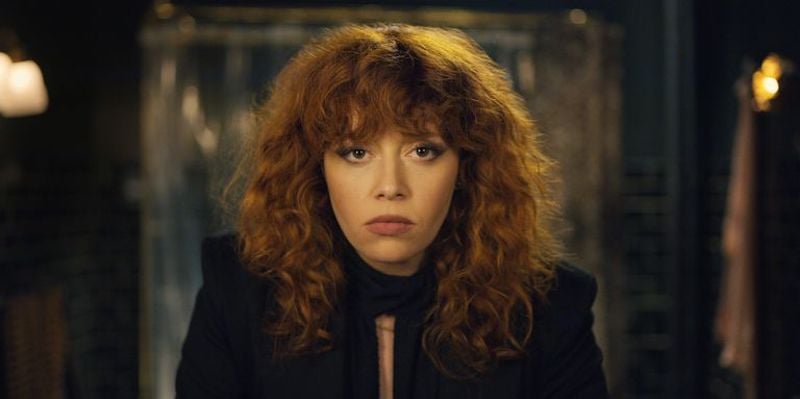
Natasha Lyonne is quite mesmerizing in Russian Doll, and both Greta Lee and Chloe Sevigny give layered performances around her curly bangs and gruff but sensitive delivery. But the Groundhog Day comparison sells it short.
Russian Doll is all at once a New York story, a story of rediscovery, of addiction, of healing, of trauma, and of how visually stunning a vivid palate can be on the small screen. The full season was utterly captivating on many levels, and deserves more recognition than just being good episodic television. The soundtrack is note-perfect as well, though Love’s “Alone Again Or” will forever stand in my mind as part of this scene in Bottle Rocket. (The best Wes Anderson film. Fight me.)
I lived by Lyonne’s tidbit of advice via The Cut for a couple cold weeks in March, but really it’s always applicable for introverts.
This is all to say, please watch Russian Doll if you haven’t already, and let’s discuss. Find me on Twitter.
I’ve been keeping track of every media thing I “consume”, so here are quick reviews of some things I’ve read, seen, heard, and experienced in the past month and a half. For books, I’m currently reading Silk Roads and listening to the audiobook of Guns, Germs, and Steel, which are rhyming in interesting ways. Looking back, I haven’t listened to any significant new music in months and months. What am I missing?
Turnton kitchen scissors. Ernest Wright very kindly sent me a pair of their kitchen scissors. I’ve posted so much about their story that I can’t really be objective at this point no matter what, so I feel ok saying the craftsmanship of these scissors is flat out amazing. (A-)
Lord of the Rings: The Two Towers. Never not entertaining. (A-)
Tag. Kinda fun but the real-life story was better. (C+)
Alita: Battle Angel. The big eyes worked. (B)
Spider-Man: Into the Spider-Verse. Liked this even more the second time around and I love reading and watching all the making-of stuff. (A-)
Cold War. Along with Roma, Spider-Verse, The Favourite, and If Beale Street Could Talk, this was one of the most beautifully shot films of 2018. Every frame a painting, indeed. (B+)
The Grinch. I wasn’t expecting to sympathize so much with The Grinch here. The social safety net constructed by the upper middle class Whos totally failed the most vulnerable member of their society in a particularly heartless way. Those Whos kinda had it coming. (B)
Mortal Engines. Why was this panned so much? It wasn’t great but it was entertaining…this and Alita felt similar to me. (B)
Leaving Neverland. I wrote some thoughts about this here. (A)
Why Is This Happening? The Uninhabitable Earth with David Wallace-Wells. Fascinating and scary interview of David Wallace-Wells about his new book, The Uninhabitable Earth. Weirdly, I felt almost hopeful at the end of it though. (A)
Captain Marvel. I liked Brie Larson in this role very much. Looking forward to seeing more in Avengers: Endgame. (B+)
Crouching Tiger, Hidden Dragon. Great movie. Very few films have matched the inventiveness of its action sequences since it came out. (A)
Apollo 11. The nearest IMAX theater is more than a 3-hour drive from where I live, so I had to watch this in a tiny theater with what sounded like a single speaker located at the front of the room. This greatly diminished the intended effect of the pristine 65mm footage. (B)
Living more than a 3-hour drive from the nearest IMAX theater. (F)
The History of English Podcast. This was recommended to me by a reader because of this post. I listened to a pair of episodes about surnames: What’s In a Name? and Trade Names. Super interesting stuff. (A-)
Kohler 10282-AK-CP shower head. My shower head sucked, I replaced it with this one, and now my shower head doesn’t suck anymore. (B+)
Salt Fat Acid Heat. The Salt episode intensified my desire to go to Japan. (B+)
Aquaman. Not as good as Wonder Woman, but way better than Justice League or any of the other recent DC movies. (B)
Cooking As an Art, With Jerry Saltz. This podcast episode is pretty uneven in spots, but when Chang just lets Saltz talk, it’s a goldmine of quotable ideas. “Pleasure is an important form of knowledge.” (A-)
The Unknown Known. Late in the film, Donald Rumsfeld says to his interlocutor Errol Morris: “I think you’re probably, Errol, chasing the wrong rabbit here.” Morris got a bit unlucky here in his choice of subject — by the end of the movie, we don’t know anything more about Rumsfeld than when we started. (C+)
Chef’s Table, Enrique Olvera. Oh man, I can’t wait to go to Pujol next week. (A-)
Kindle Paperwhite. I upgraded from my old Paperwhite. I like the flat screen, that it’s lighter, and the waterproofing is going to come in handy, but the speed and screen quality are pretty much exactly the same. Are e-ink interfaces already as sharp & responsive as they are ever going to be? (A)
Bumblebee. Entertaining, but I still have a problem with the Transformers movies because the robots are so overly detailed that it’s hard to know where to look when they’re on-screen. They should be more abstract and iconic (a la Scott McCloud’s Big Triangle in Understanding Comics). (B+)
Emily Wilson on Translations and Language. Having not read multiple translations of Homer, some of this was over my head, but the rest was really interesting. (A-)
Generative.fm. Been listening to this while working more or less constantly for the past week, mostly the “Otherness” and “Meditation” tracks. (A-)
Past installments of my media diet are available here.
Open the canned peaches because Al Swearengen, Seth Bullock, and the rest of your Deadwood favorites are back on May 31 in Deadwood: The Movie. Here’s a tease:
Swearengen: You ever think, Bullock, of not going straight at a thing?
…
Bullock: No.
I’m in 1000%. For more on the movie’s action/plot, read Tim’s post from December.
Newer posts
Older posts


Socials & More