kottke.org posts about Covid-19
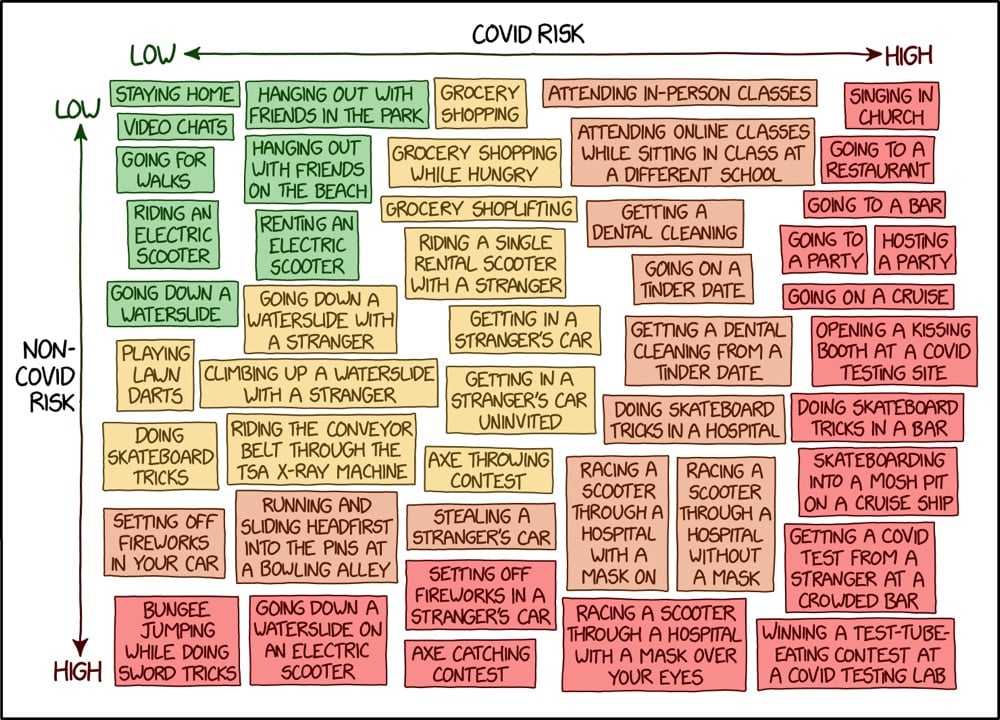
If you’ve been wondering about the risk of contracting Covid-19 while performing common activities vs. the risk of doing stupid shit, XKCD has you covered. I feel like “getting a dental cleaning from a Tinder date” should have been much more high risk than its position on the chart.
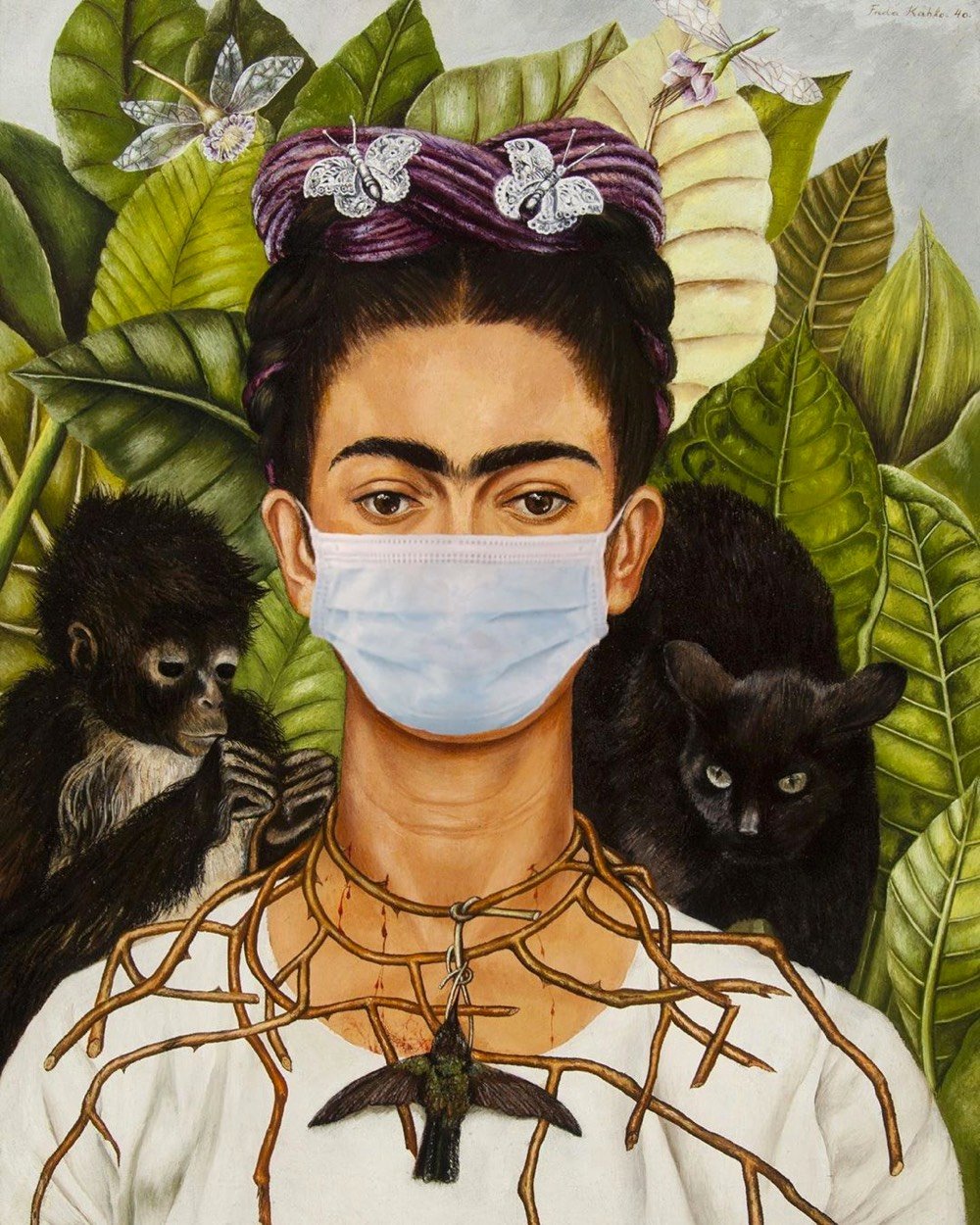
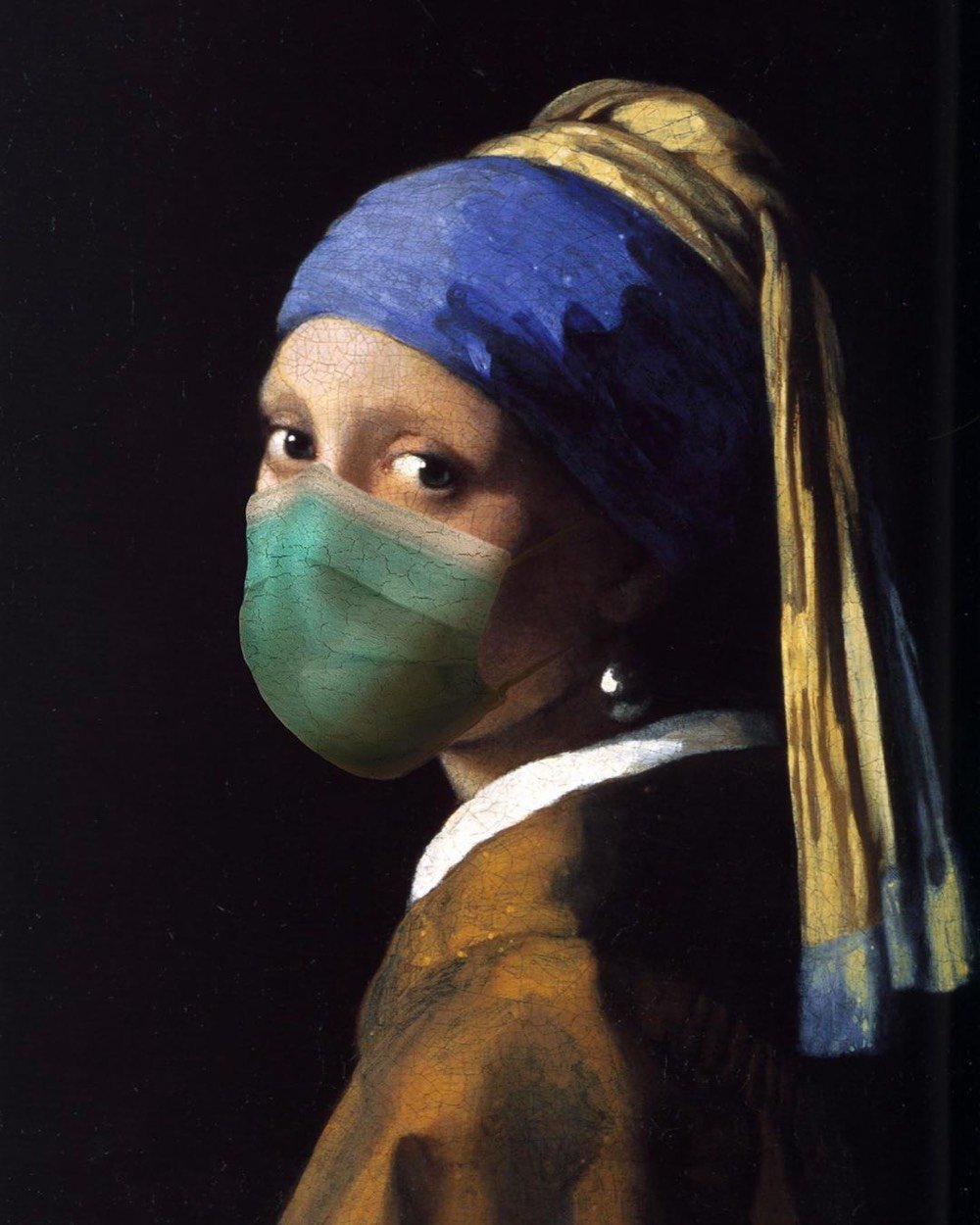
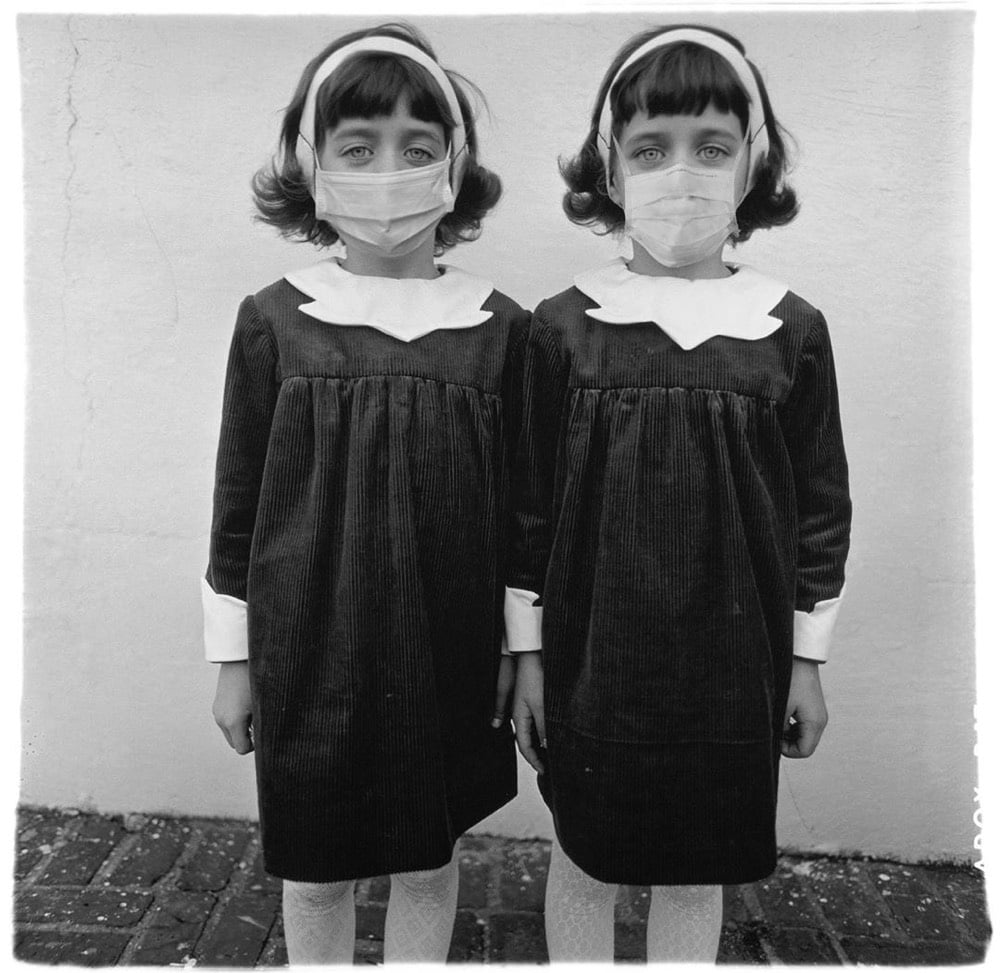

On an Instagram account called Plague History, artist Genevieve Blais has been modifying the subjects of artworks to give them face masks. You know I couldn’t resist including her rendition of Vermeer’s Girl with a Pearl Earring.
See also Iconic Art & Design Reimagined for the Social Distancing Era, Famous Art Recreated at Home During the Pandemic, and Jesus Christ, Just Wear a Face Mask! (via moss & fog)
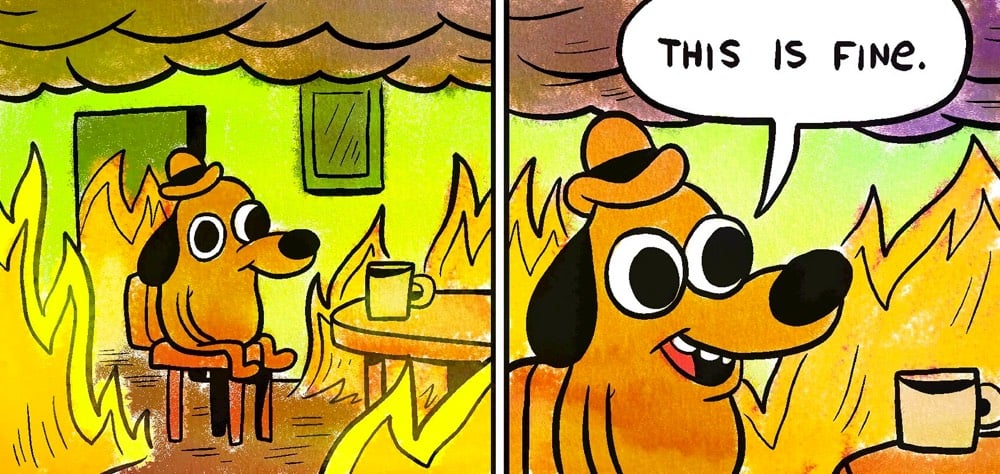
For Vox, David Roberts writes about how “shifting baselines” affect our thinking and how easily overwhelmingly large issues like climate change or a pandemic can become normalized.
Maybe climate chaos, a rising chorus of alarm signals from around the world, will simply become our new normal. Hell, maybe income inequality, political dysfunction, and successive waves of a deadly virus will become our new normal. Maybe we’ll just get used to [waves hands] all this.
Humans often don’t remember what we’ve lost or demand that it be restored. Rather, we adjust to what we’ve got.
The concept of shifting baselines was introduced in a 1995 paper by Daniel Pauly. Roberts explains:
So what are shifting baselines? Consider a species of fish that is fished to extinction in a region over, say, 100 years. A given generation of fishers becomes conscious of the fish at a particular level of abundance. When those fishers retire, the level is lower. To the generation that enters after them, that diminished level is the new normal, the new baseline. They rarely know the baseline used by the previous generation; it holds little emotional salience relative to their personal experience.
And so it goes, each new generation shifting the baseline downward. By the end, the fishers are operating in a radically degraded ecosystem, but it does not seem that way to them, because their baselines were set at an already low level.
Over time, the fish goes extinct — an enormous, tragic loss — but no fisher experiences the full transition from abundance to desolation. No generation experiences the totality of the loss. It is doled out in portions, over time, no portion quite large enough to spur preventative action. By the time the fish go extinct, the fishers barely notice, because they no longer valued the fish anyway.
And it’s not just groups of people that do this over generations:
It turns out that, over the course of their lives, individuals do just what generations do — periodically reset and readjust to new baselines.
“There is a tremendous amount of research showing that we tend to adapt to circumstances if they are constant over time, even if they are gradually worsening,” says George Loewenstein, a professor of economics and psychology at Carnegie Mellon. He cites the London Blitz (during World War II, when bombs were falling on London for months on end) and the intifada (the Palestinian terror campaign in Israel), during which people slowly adjusted to unthinkable circumstances.
“Fear tends to diminish over time when a risk remains constant,” he says, “You can only respond for so long. After a while, it recedes to the background, seemingly no matter how bad it is.”
Ok, I’ll let you just read the rest of it, but it’s not difficult to see how shifting baselines apply to all sorts of challenges facing the world today. I mean the lines “You can only respond for so long. After a while, it recedes to the background, seemingly no matter how bad it is.” seem like they were written specifically about the pandemic.
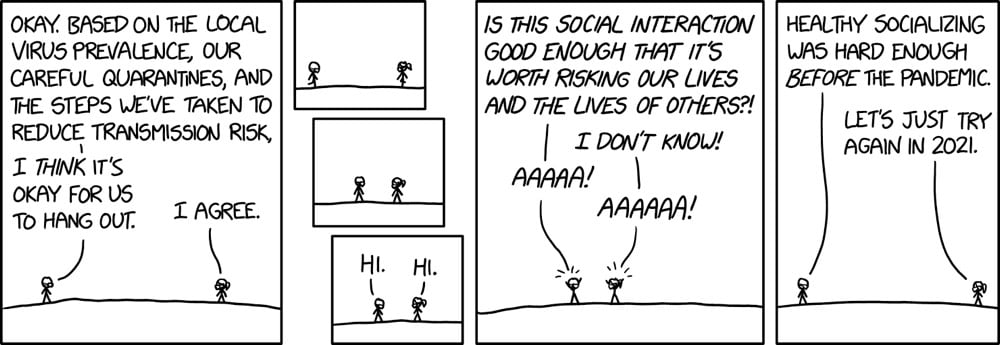
Some Americans obviously aren’t troubling themselves with this but many of us are constantly running risk calculations in our heads for every little thing we do and don’t do during the course of the week during the pandemic.
Is it ok to visit the grocery store more than once this week? Can my kid have a playdate with her friend? Has her friend’s family been careful about seeing other people and how do I even ask them about it without sounding judgmental? Should I order that thing online or go to the store for it? Is it safe to take a roadtrip to a neighboring state? (Where the hell are we supposed to stop to use the bathroom?) Can I get a haircut? Do I need to order that thing online or do I just want it? Should schools reopen in the fall? And if they do, should I send my kids? Is eating at a restaurant safe for the staff? Can a friend come over for dinner? Can my son safely play in a baseball league? Will there be too many people not wearing masks in the store that I need to visit to get this one thing? Should I keep going to my favorite coffee shop when the barista just can’t seem to keep his mask up over his nose?
It goes on and on and on and IT’S EXHAUSTING. Comic from XKCD.
From January to the end of June, over 500,000 people died of confirmed cases of Covid-19. In order to demonstrate the magnitude of the pandemic, James Beckwith made a time lapse map of each Covid-19 death.
Each country is represented by a tone and an expanding blip on the map when a death from Covid-19 is recorded. Each day is 4 seconds long, and at the top of the screen is the date and a counter showing the total numbers of deaths. Every country that has had a fatality is included.
As was the case with the pandemic, the video starts slow but soon enough the individual sounds and blips build to a crescendo, a cacophony of death. The only way this could be made more ominous & upsetting is by including the first song off of Cliff Martinez’s Contagion soundtrack as a backing track. As Beckwith notes in the description: “It is likely a sequel will need to be made.” (via open culture)
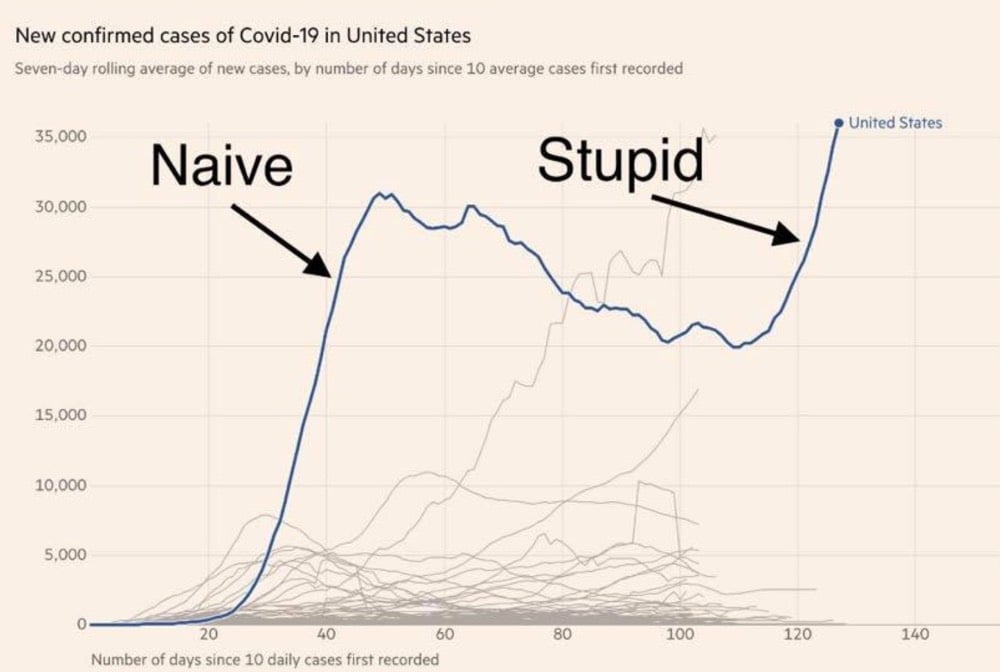
The director of the National Institute of Allergy and Infectious Diseases, Anthony Fauci, told a Senate committee today that the US could be heading towards 100,000 new reported cases of Covid-19 per day. 100,000 cases per day. Yesterday the US recorded about 40,000 new cases.
“It is going to be very disturbing, I will guarantee you that,” he said.
“What was thought to be unimaginable turns out to be the reality we’re facing right now,” Fauci said, adding that “outbreaks happen, and you have to deal with them in a very aggressive, proactive way.”
Fewer than 20 countries have recorded more than 100,000 cases in total. Canada, for instance, has confirmed about 106,000 Covid-19 cases since the outbreak began.
Public health and infectious diseases experts, who have been gravely concerned about the way the U.S. response has unfolded, concurred with Fauci’s assessment.
Bars and restaurants are reopening around the country without any serious effort to test/trace/isolate/support. In the absence of strident guidance from the federal government, people are worrying less about social distancing and wearing masks to protect others. As this guy says, it’s just a matter of math:
“It’s unfortunately just a simple consequence of math plus a lack of action,” said Marm Kilpatrick, an infectious diseases dynamics researcher at the University of California, Santa Cruz. “On the one hand it comes across as ‘Oh my God, 100,000 cases per day!’ But then if you actually look at the current case counts and trends, how would you not get that?”
Absolutely nothing has changed about the virus, so its spread is determined by pretty simple exponential growth.
Limiting person-to-person exposure and decreasing the probability of exposures becoming infections can have a huge effect on the total number of people infected because the growth is exponential. If large numbers of people start doing things like limiting travel, cancelling large gatherings, social distancing, and washing their hands frequently, the total number of infections could fall by several orders of magnitude, making the exponential work for us, not against us. Small efforts have huge results.
We’ve known for months (and epidemiologists and infectious disease experts have known for their entire careers) what works and yet the federal government and many state governments have not listened and, in some cases, have actively suppressed use of such measures. So the pandemic will continue to escalate in the United States until proper measures are put in place by governments and people follow them. The virus will not change, the mathematics will not change, so we must.
Graph at the top of the post via Rishi Desai.
For his piece The 3 Weeks That Changed Everything in The Atlantic, James Fallows talked to many scientists, health experts, and government officials about the US government’s response to the pandemic. In the article, he compares the pandemic response to how the government manages air safety and imagines what it would look like if we investigated the pandemic catastrophe like the National Transportation Safety Board investigates plane crashes.
Consider a thought experiment: What if the NTSB were brought in to look at the Trump administration’s handling of the pandemic? What would its investigation conclude? I’ll jump to the answer before laying out the background: This was a journey straight into a mountainside, with countless missed opportunities to turn away. A system was in place to save lives and contain disaster. The people in charge of the system could not be bothered to avoid the doomed course.
And he continues:
What happened once the disease began spreading in this country was a federal disaster in its own right: Katrina on a national scale, Chernobyl minus the radiation. It involved the failure to test; the failure to trace; the shortage of equipment; the dismissal of masks; the silencing or sidelining of professional scientists; the stream of conflicting, misleading, callous, and recklessly ignorant statements by those who did speak on the national government’s behalf. As late as February 26, Donald Trump notoriously said of the infection rate, “You have 15 people, and the 15 within a couple of days is going to be down close to zero.” What happened after that — when those 15 cases became 15,000, and then more than 2 million, en route to a total no one can foretell — will be a central part of the history of our times.
But he rightly pins much of the blame for the state we’re in on the Trump administration almost completely ignoring the plans put into place for a viral outbreak like this that were developed by past administrations, both Republican and Democratic alike.
In cases of disease outbreak, U.S. leadership and coordination of the international response was as well established and taken for granted as the role of air traffic controllers in directing flights through their sectors. Typically this would mean working with and through the World Health Organization — which, of course, Donald Trump has made a point of not doing. In the previous two decades of international public-health experience, starting with SARS and on through the rest of the acronym-heavy list, a standard procedure had emerged, and it had proved effective again and again. The U.S, with its combination of scientific and military-logistics might, would coordinate and support efforts by other countries. Subsequent stages would depend on the nature of the disease, but the fact that the U.S. would take the primary role was expected. When the new coronavirus threat suddenly materialized, American engagement was the signal all other participants were waiting for. But this time it did not come. It was as if air traffic controllers walked away from their stations and said, “The rest of you just work it out for yourselves.”
From the U.S. point of view, news of a virulent disease outbreak anywhere in the world is unwelcome. But in normal circumstances, its location in China would have been a plus. Whatever the ups and downs of political relations over the past two decades, Chinese and American scientists and public-health officials have worked together frequently, and positively, on health crises ranging from SARS during George W. Bush’s administration to the H1N1 and Ebola outbreaks during Barack Obama’s. As Peter Beinart extensively detailed in an Atlantic article, the U.S. helped build China’s public-health infrastructure, and China has cooperated in detecting and containing diseases within its borders and far afield. One U.S. official recalled the Predict program: “Getting Chinese agreement to American monitors throughout their territory — that was something.” But then the Trump administration zeroed out that program.
Americans, and indeed everyone in the world, should be absolutely furious about this, especially since the situation is actively getting worse after months (months!) of inactivity by the federal government.
My God, this aerial photo of dozens of recent graves in the Nossa Senhora Aparecida cemetery in Manaus, Brazil:

The photo is one of several from In Focus’s look at the Thousands of Burials Across Latin America. Brazil has 1.2 million confirmed Covid-19 cases, second most in the world (but only half the total of the US) and 55,000 confirmed deaths, though the number is likely much higher when you take excess mortality rates into account. Way back in April, when the reported death toll in Brazil was only (only!) ~3300, NPR reported on the mass graves and modified funeral procedures that were necessary due to Covid-19 and the Brazilian government’s disastrous response to it.
Yet the coronavirus has introduced a new kind of horror. The Nossa Senhora Aparecida cemetery has begun using backhoes to dig mass graves.
This has become “the only option” because it is “humanly impossible” to dig the required number of graves, says Viana, who runs a funeral company and is president of the Syndicate of Funeral Businesses in Amazonas.
According to Viana, the city’s daily average of deaths has risen from 30 to more than 100. The mayor’s office confirmed to NPR that there have been 340 burials just in the past three days. In most cases, the cause of death was listed as unknown, said a city hall spokeswoman.
City authorities are in little doubt that COVID-19 victims account for most of the spike. This means the virus is taking a far deadlier toll on Manaus than the official count of 172 virus-related deaths suggests. The reported death toll throughout Brazil is 3,313.
Video footage has appeared online showing the collapse of Manaus’ burial services and public hospitals. In one, corpses lie on beds in a hospital alongside live patients undergoing treatment. Another shows a line of vans waiting to deliver bodies for burial at the Nossa Senhora Aparecida cemetery.
The many layers of trauma from the pandemic are going to resonate for decades in places like Brazil and the US. Decades.
From Christie Aschwanden’s Scientific American article about How ‘Superspreading’ Events Drive Most COVID-19 Spread comes this speculation by a group of scientists that the way in which some people talk or breathe might spread many more potential coronavirus-carrying droplets than other people.
The scientists also have found intriguing evidence that a small subset of people may behave as “speech superemitters” — individuals who consistently broadcast an order of magnitude more respiratory particles than their peers. “It is very difficult to identify who is going to be a superemitter ahead of time,” he says. “One of the superemitters was a very petite young woman. And I was a bigger, bulkier guy and was not a superemitter.”
I don’t know why I find this so interesting, but I do. Add “speech superemitter” to the list of new Covid-19 vocabulary.
For the New Yorker, Kyle Chayka looks at how the pandemic will change how we see our homes, workplaces, and public spaces — and the architectural shifts resulting from our new perspectives.
Unlike the airy, pristine emptiness of modernism, the space needed for quarantine is primarily defensive, with taped lines and plexiglass walls segmenting the outside world into zones of socially distanced safety. Wide-open spaces are best avoided. Barriers are our friends. Stores and offices will have to be reformatted in order to reopen, our spatial routines fundamentally changed. And, at home, we might find ourselves longing for a few more walls and dark corners.
The reimagining of our living spaces, where everyone is now eating, sleeping, working, and homeschooling, reminded me of this recent tweet:
I think we need to stop calling it ‘working from home’ and start calling it ‘living at work’
I’m also intrigued by the “6 Feet Office” concept:
The result was “the 6 Feet Office.” Carpet tiles demarcate six-foot black circles around every desk in the open floor plan. Extra chairs, positioned outside of the circles, facilitate conversation among colleagues. Conference-room chairs have been thinned out, and closed spaces must be exited clockwise, in unison, so that co-workers don’t bump into each other. “Hotdesking,” or the sharing of one desk by multiple workers, is made possible with disposable paper desk pads, on which a worker sets her laptop or keyboard and mouse when she arrives.
Cushman & Wakefield is slowly testing the 6 Feet Office design at its Amsterdam office, which used to hold two hundred and seventy-five people but now only has seventy-five at a time. As the lockdown lifts, Lokerse expects to start with twenty-five per cent of employees back at the office, but as more workers come back they’ll have staggered start times to avoid overcrowding on public transportation, and thirty-per-cent fewer desks over all. Bruce Mosler, the chairman of global brokerage at Cushman & Wakefield, noted that office spaces were already feeling too crowded before the pandemic and had started to limit crowding, a trend that is now accelerating. “We got carried away in the over-all densification process, in the effort to be as efficient as possible,” he said. “We went a bit too far. This is going to change that.”
See also Tape As Pandemic Architectural Element.
In The Price of Isolation for Rolling Stone, Alex Morris writes about how trends toward increasing social isolation in America left us ill-prepared to face weeks and months of time by ourselves during the pandemic. Studies have shown that humans in isolation are less healthy and less able to fight off disease than when other humans are around. This part in particular really really resonated with me:
Sometimes, though, the body can be tricked. When Cole and his colleagues started looking for ways to combat the physical effects of loneliness, they didn’t find that positive emotions made a difference at all. But one thing did: “It was something called eudaimonic well-being, which is a sense of purpose and meaning, a sense of a commitment to some kind of self-transcendent goal greater than your own immediate self-gratification. People who have a lot of connection to some life purpose? Their biology looked great.” Even when researchers compared lonely people with purpose to social butterflies without it, purpose came out on top. In other words, it’s possible when we’re doing things to better our society, the body assumes there’s a society there to better. We’re technically alone, but it doesn’t feel that way.
Which has profound implications in the moment in which we currently find ourselves, a moment when the physical isolation and disconnection the virus has inflicted is now layered over the clear divisions and systemic inequities that have always plagued our country. In the midst of our solitude, we’ve been confronted with the terrible knowledge that people of color are dying of the virus at the highest rates and that 40 percent of families making less than $40,000 a year have lost their livelihoods. We’ve been confronted with the killings of Ahmaud Arbery, Breonna Taylor, and George Floyd. We’ve been confronted with the lie that the virus is a great equalizer. We’ve witnessed the many ways it isn’t.
See also We’re All Lonely Together and An Epidemic of Middle-aged Male Loneliness.
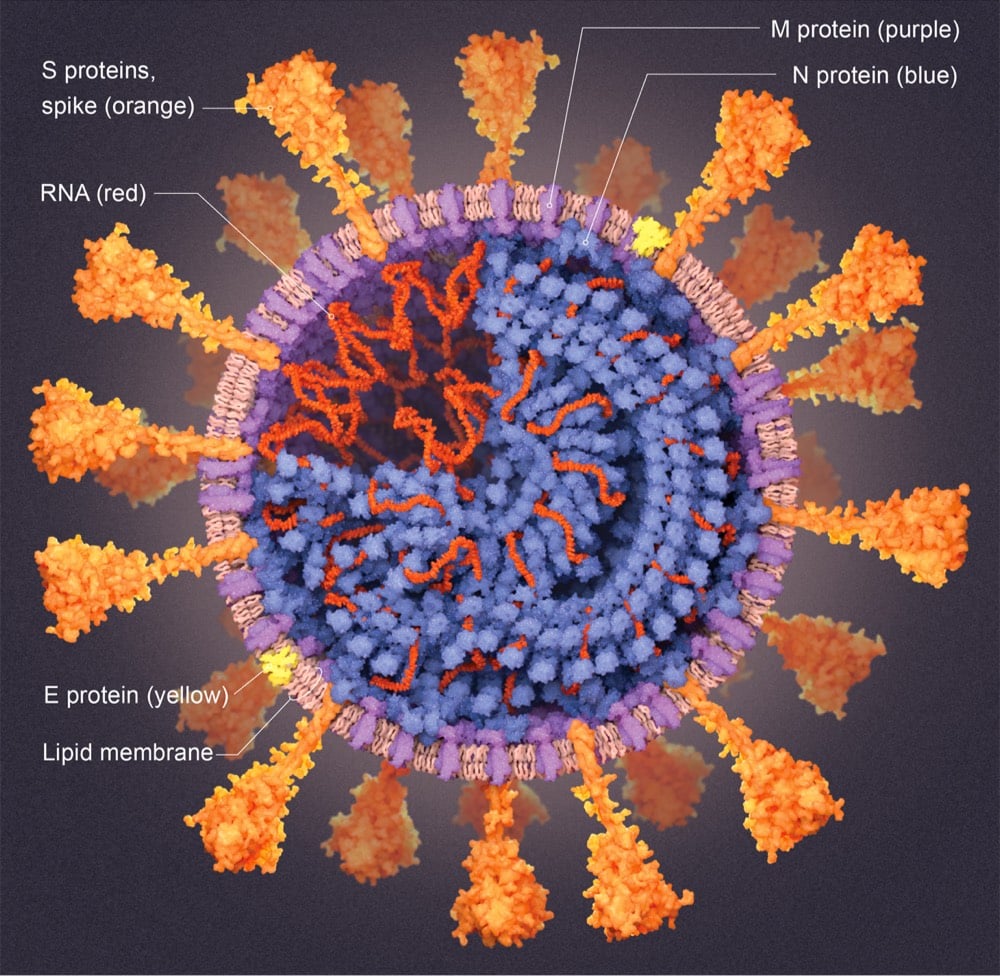
For its July 2020 issue, Scientific American has published A Visual Guide to the SARS-CoV-2 Coronavirus detailing what scientists have learned about this tiny menace that’s brought our world to a halt.
In the graphics that follow, Scientific American presents detailed explanations, current as of mid-May, into how SARS-CoV-2 sneaks inside human cells, makes copies of itself and bursts out to infiltrate many more cells, widening infection. We show how the immune system would normally attempt to neutralize virus particles and how CoV-2 can block that effort. We explain some of the virus’s surprising abilities, such as its capacity to proofread new virus copies as they are being made to prevent mutations that could destroy them. And we show how drugs and vaccines might still be able to overcome the intruders.
Several countries have been celebrated for their success in curtailing the Covid-19 pandemic — Iceland, New Zealand, Mongolia, Hong Kong, Taiwan — but Vietnam, a nation of 95 million people that borders China, has recorded only 334 total infections and 0 deaths. 0 deaths. They are currently on a 61-day streak without a single community transmission. (For reference, the US has recorded 2.1 million cases and more than 115,000 deaths with just 3.4 times the population of Vietnam.)
How have they done it? They acted early and aggressively.
Experts say experience dealing with prior pandemics, early implementation of aggressive social distancing policies, strong action from political leaders and the muscle of a one-party authoritarian state have helped Vietnam.
“They had political commitment early on at the highest level,” says John MacArthur, the U.S. Centers for Disease Control and Prevention’s country representative in neighboring Thailand. “And that political commitment went from central level all the way down to the hamlet level.”
With experience gained from dealing with the 2003 SARS and 2009 H1N1 pandemics, Vietnam’s government started organizing its response in January — as soon as reports began trickling in from Wuhan, China, where the virus is believed to have originated. The country quickly came up with a variety of tactics, including widespread quarantining and aggressive contact tracing. It has also won praise from the World Health Organization and the CDC for its transparency in dealing with the crisis.
From the BBC:
Vietnam enacted measures other countries would take months to move on, bringing in travel restrictions, closely monitoring and eventually closing the border with China and increasing health checks at borders and other vulnerable places.
Schools were closed for the Lunar New Year holiday at the end of January and remained closed until mid-May. A vast and labour intensive contact tracing operation got under way.
“This is a country that has dealt with a lot of outbreaks in the past,” says Prof Thwaites, from Sars in 2003 to avian influenza in 2010 and large outbreaks of measles and dengue.
“The government and population are very, very used to dealing with infectious diseases and are respectful of them, probably far more so than wealthier countries. They know how to respond to these things.”
By mid-March, Vietnam was sending everyone who entered the country - and anyone within the country who’d had contact with a confirmed case — to quarantine centres for 14 days.
Costs were mostly covered by the government, though accommodation was not necessarily luxurious. One woman who flew home from Australia — considering Vietnam a safer place to be - told BBC News Vietnamese that on their first night they had “only one mat, no pillows, no blankets” and one fan for the hot room.
Forced bussing to quarantine centers in the US, could you even imagine? Better that hundreds of thousands of people die, I guess.
The Vietnamese health system also implemented aggressive contact tracing:
Authorities rigorously traced down the contacts of confirmed coronavirus patients and placed them in a mandatory two-week quarantine.
“We have a very strong system: 63 provincial CDCs (centers for disease control), more than 700 district-level CDCs, and more than 11,000 commune health centers. All of them attribute to contact tracing,” said doctor Pham with the National Institute of Hygiene and Epidemiology.
A confirmed coronavirus patient has to give health authorities an exhaustive list of all the people he or she has met in the past 14 days. Announcements are placed in newspapers and aired on television to inform the public of where and when a coronavirus patient has been, calling on people to go to health authorities for testing if they have also been there at the same time, Pham said.
More from Axios and The Guardian.
Using census data (which she acknowledges can be imperfect in capturing the full range of people’s identities), data scientist/artist Mona Chalabi created a drawing of 100 people who are representative of NYC’s population for a NY Times opinion piece on inequality and coronavirus.
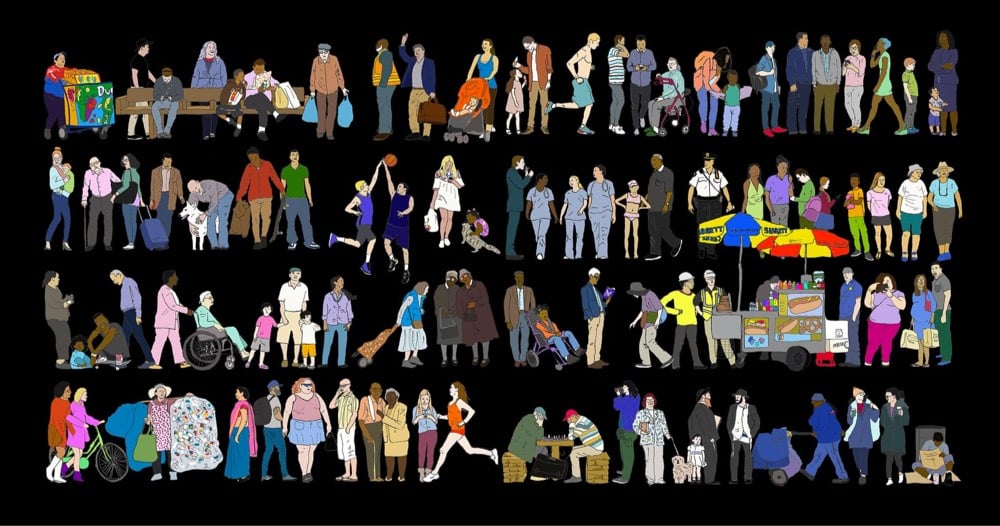
Chalabi writes on Instagram:
When you think about who is most affected by Covid-19, you need to consider inequalities in housing, in access to healthcare, in wealth. And so much of that ends up consistently affecting people of color. You could think of it as overlapping circles in a Venn diagram. Or, you could look at these 100 people.
She’s selling prints of this on her website (pink background, black background), with all profits going towards a Covid-19 rent relief fund for families organized by The Conscious Kid.
See also If Only 100 People Lived on Earth…
The conclusion from a recent paper in the Proceedings of the Royal Society A:
We conclude that facemask use by the public, when used in combination with physical distancing or periods of lock-down, may provide an acceptable way of managing the COVID-19 pandemic and re-opening economic activity. These results are relevant to the developed as well as the developing world, where large numbers of people are resource poor, but fabrication of home-made, effective facemasks is possible. A key message from our analyses to aid the widespread adoption of facemasks would be: ‘my mask protects you, your mask protects me’.
From a Reuters report on the paper:
The research, led by scientists at the Britain’s Cambridge and Greenwich Universities, suggests lockdowns alone will not stop the resurgence of the new SARS-CoV-2 coronavirus, but that even homemade masks can dramatically reduce transmission rates if enough people wear them in public.
“Our analyses support the immediate and universal adoption of face masks by the public,” said Richard Stutt, who co-led the study at Cambridge.
A pair of recent papers used the geographic differences in mask usage in Germany to gauge the effectiveness of masks in preventing the spread of Covid-19. Face Masks Considerably Reduce COVID-19 Cases in Germany:
We use the synthetic control method to analyze the effect of face masks on the spread of Covid-19 in Germany. Our identification approach exploits regional variation in the point in time when face masks became compulsory. Depending on the region we analyse, we find that face masks reduced the cumulative number of registered Covid-19 cases between 2.3% and 13% over a period of 10 days after they became compulsory. Assessing the credibility of the various estimates, we conclude that face masks reduce the daily growth rate of reported infections by around 40%.
And Compulsory face mask policies do not affect community mobility in Germany suggests that people don’t go out more or “feel invincible” when they’re wearing masks:
We use anonymised GPS data from Google’s Location History feature to measure daily mobility in public spaces (groceries and pharmacies, transport hubs and workplaces). We find no evidence that compulsory face mask policies affect community mobility in public spaces in Germany. The evidence provided in this paper makes a crucial contribution to ongoing debates about how to best manage the COVID-19 pandemic.
And these are just from the last few days. Why WHY WHY!!!! are we still talking about this? There’s no credible evidence that wearing a mask is harmful, so at worse it’s harmless. If there’s like a 1-in-10 chance that masks are somewhat helpful — and the growing amount of research suggests that both 1-in-10 and “somewhat helpful” are both understatements — isn’t it worth the tiny bit of effort to wear one and help keep our neighbors safe from potential fucking death? Just in case?
I mean, look at where we are as a country right now. Most of the US is reopening while the number of infections continue to rise. Testing is still not where it needs to be in many areas. Tracing and isolation are mostly not happening. According to epidemiologists, those are the minimum things you need to do to properly contain a pandemic like this. Maybe if you’re Iceland you can pooh pooh the efficacy of masks because you test/trace/isolated to near-perfection, but if you’re going to half-ass it like the US has chosen to do, then wearing masks under semi-lockdown conditions is all we have left! Can we do the bare minimum that is asked of us?
Update: And some anecdotal evidence from Missouri: two hairstylists saw 140 clients while symptomatic last month and it resulted in zero infections. Both the hairstylists and their clients wore masks and took other precautions (staggered appointments, chairs spaced apart).
Update: I deleted a reference to this paper that many epidemiologists et al. have flagged as problematic (see here, here, and here for instance). (via @harrislapiroff)
The Masks Masquerade by Nassim Nicholas Taleb is worth a read.
“Libertarians” (in brackets) are resisting mask wearing on grounds that it constrains their freedom. Yet the entire concept of liberty lies in the Non-Aggression Principle, the equivalent of the Silver Rule: do not harm others; they in turn should not harm you. Even more insulting is the demand by pseudolibertarians that Costco should banned from forcing customers to wear mask — but libertarianism allows you to set the rules on your own property. Costco should be able to force visitors to wear pink shirts and purple glasses if they wished.
Note that by infecting another person you are not infecting just another person. You are infecting many many more and causing systemic risk.
Wear a mask. For the Sake of Others.
And finally, obviously, if wearing a mask is not advisable for you — for a genuine medical reason or if it makes you look dangerous to a racist policing system for instance — then you shouldn’t wear one! But the vast majority of us should be able to manage it.
Update: A study in Health Affairs analyzing the infection rates in US states with face mask mandates versus those without finds that a mandate was associated with a decline in the Covid-19 growth rate (italics mine).
Mandating face mask use in public is associated with a decline in the daily COVID-19 growth rate by 0.9, 1.1, 1.4, 1.7, and 2.0 percentage points in 1-5, 6-10, 11-15, 16-20, and 21+ days after signing, respectively. Estimates suggest as many as 230,000-450,000 COVID-19 cases possibly averted By May 22, 2020 by these mandates. The findings suggest that requiring face mask use in public might help in mitigating COVID-19 spread.
In a comparison among countries, those where people wore masks early fared much better than those where people didn’t. This is a pretty stark difference:
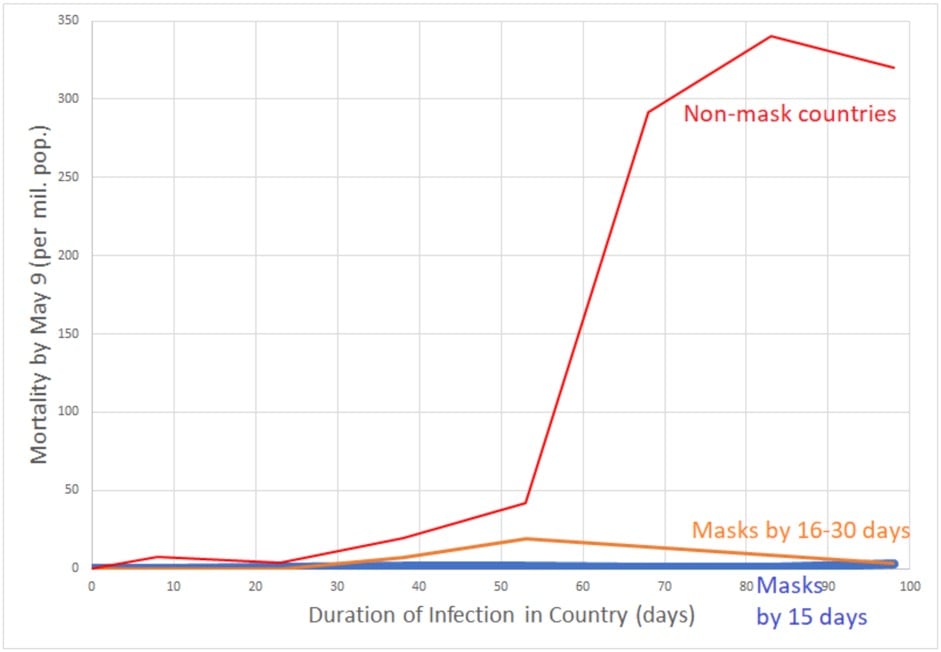
And this study noted that Google search volume of people searching for masks in various countries correlated with the infection rate — in general, the earlier the search volume increased in a given country, the fewer infections recorded in that country.
Update: A list of 70 scientific studies, dating all the way back to 2003, that support the wearing of face masks to prevent disease spread.
Bill Nye recently did a quick mask demonstration featuring a candle to show how effective homemade cloth masks are at blocking exhaled breath. He calls wearing a mask in public to protect other people “literally a matter of life and death”.
Stewart Reynolds shares some reasons to not wear a face mask, including selfish syndrome and chronic dickishness.
And this is a sad and all-too-typical American story in four parts. April: I’m not buying a mask; June: crowded pool party; July: complaining about being sick followed by an obituary. We need to fix this, now. People should not be dying like this — this is a 100% preventable death.
Update: The most recent version of an ongoing review of scientific studies about face mask efficacy was recently published online. From the abstract:
We recommend that public officials and governments strongly encourage the use of widespread face masks in public, including the use of appropriate regulation.
Newer posts
Older posts




Socials & More