kottke.org posts about China

This is the collision of two interesting “topic fields” I like to pay attention to. China in general, especially how media, social media, and commerce differ from the western models. And how the verticality of smartphones (and apps) is affecting media at large.
First, in this piece on The Next web about Chinese vertical dramas, we get a quick dive into the growing number of series built for the format. Aside from the visual shape, they are usually short episodes, fast-paced with many punchlines, and are exploring the possibilities of top to bottom transitions. You can find quite a few links and screenshot examples in the article.
Last time I guest edited here, I posted about an Ian Bogost piece on how Stories are overtaking social media, which focused in part on the vertical rectangle.
That name is vestigial now, because it’s only incidental that an iPhone or a Pixel is a telephone. Instead, it’s a frame that surrounds everything that is possible and knowable. A rectangle, as I’ve started calling it.
Back to China, this fascinating piece by Connie Chan at Andreessen Horowitz looks at the varied business models local internet companies are using, contrasting that to the mostly “one trick pony” approach of American counterparts. Chan focuses on books, podcasts, videos, and music, and although the examples are varied, they can be boiled down to a couple of main ideas; gamification of every possible aspect of the app and experience, and up-selling to VIP memberships and all kinds of merchandise.
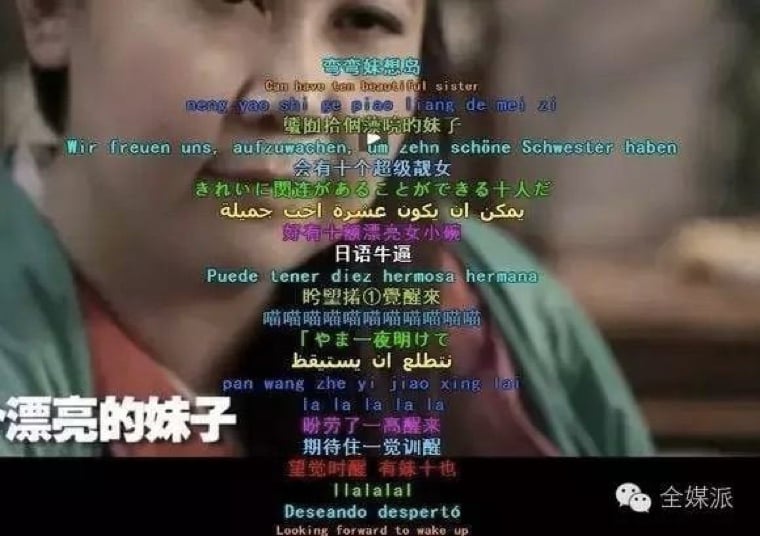
Finally on the always excellent Logic mag, Christina Xu with a look at bullet comments culture in China, “an invasive species from Japan,” which layers comments over video, each attached to a specific moment. Originally popularized on the Bilibili platform, they are now present in a number of other places and media.
They represent the essence of Chinese internet culture: fast-paced and impish, playfully collaborative, thick with rapidly evolving inside jokes and memes. They are a social feature beloved by a generation known for being antisocial. And most importantly, they allow for a type of spontaneous, cumulative, and public conversation between strangers that is increasingly rare on the Chinese internet.
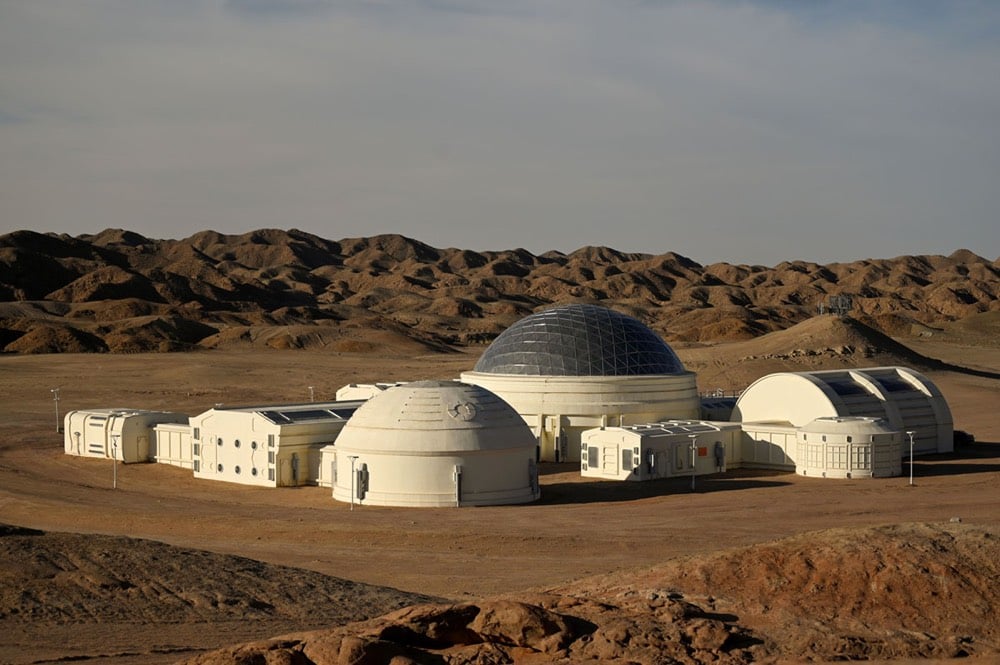
A Chinese company called C-Space has built a simulation of a Mars base in the Gobi desert. Currently used for educational purposes, the company plans to open “Mars Base 1” up for tourism to give visitors a glimpse of what living on Mars would be like.
The facility’s unveiling comes as China is making progress in its efforts to catch up to the United States and become a space power, with ambitions of sending humans to the moon someday.
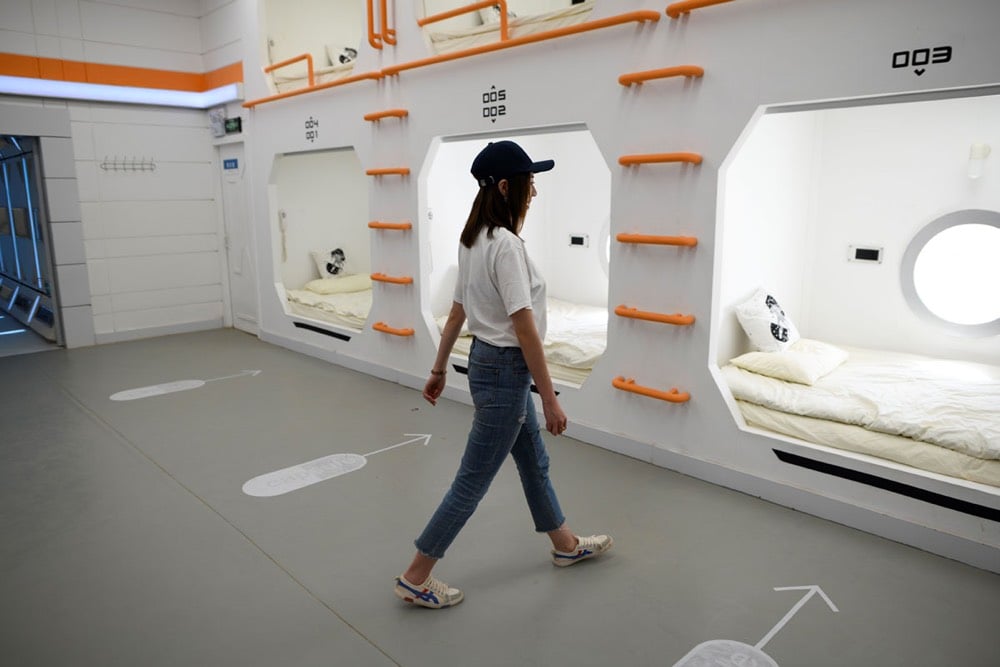
The white-coloured base has a silver dome and nine modules, including living quarters, a control room, a greenhouse and an airlock.
Alan Taylor featured some photos of Mars Base 1 recently.

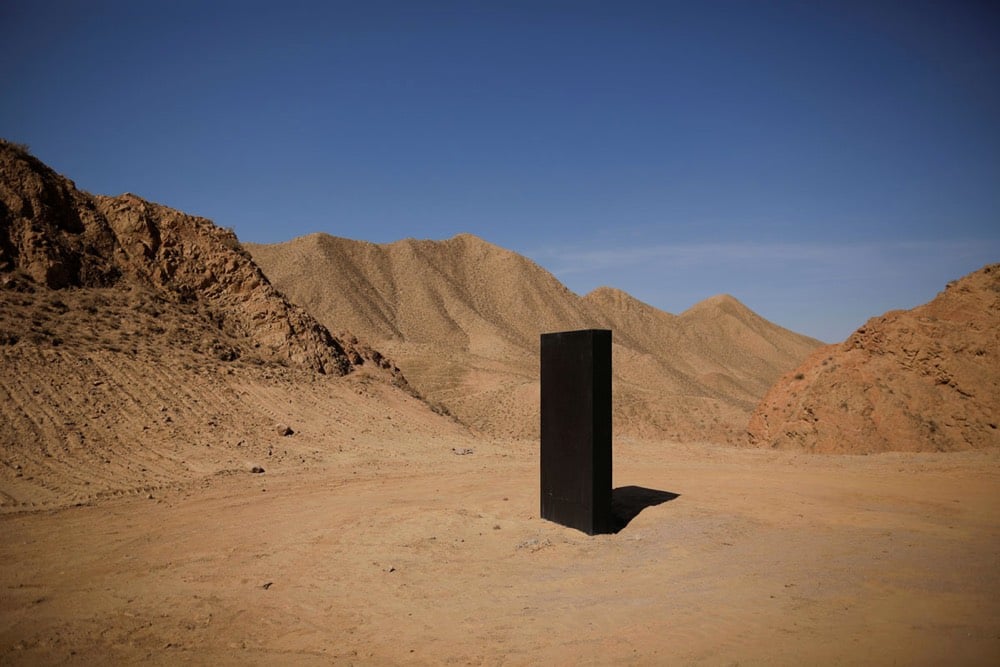
It’s all a little surreal, even before you get to the 2001 monolith:
In this lovely short film by Noah Sheldon, we meet Wo Guo Jie, a migrant worker from rural China who makes a living in Shanghai collecting styrofoam boxes and reselling them at a wholesale fish market. Even though styrofoam is a relatively light material, she packs so much of it onto her bike that the front wheel bounces off the ground as she motors slowly down the street, unable to see anything but what’s right in front of her.
My hometown is all farmland, there are no factories. During the winter there is nothing to do so people work elsewhere. Now everyone has left to go find work. No one farms anymore. It’s rare for me to get a chance to go home. Sometimes I don’t even go back once a year. When my son was younger, around 7 or 8 years old, I came home and he refused to call me ‘Mom’. He didn’t recognize me because I hadn’t been home for 3 years. I take each day as it comes. I haven’t thought too much about the future.
(via @rmpenguino)
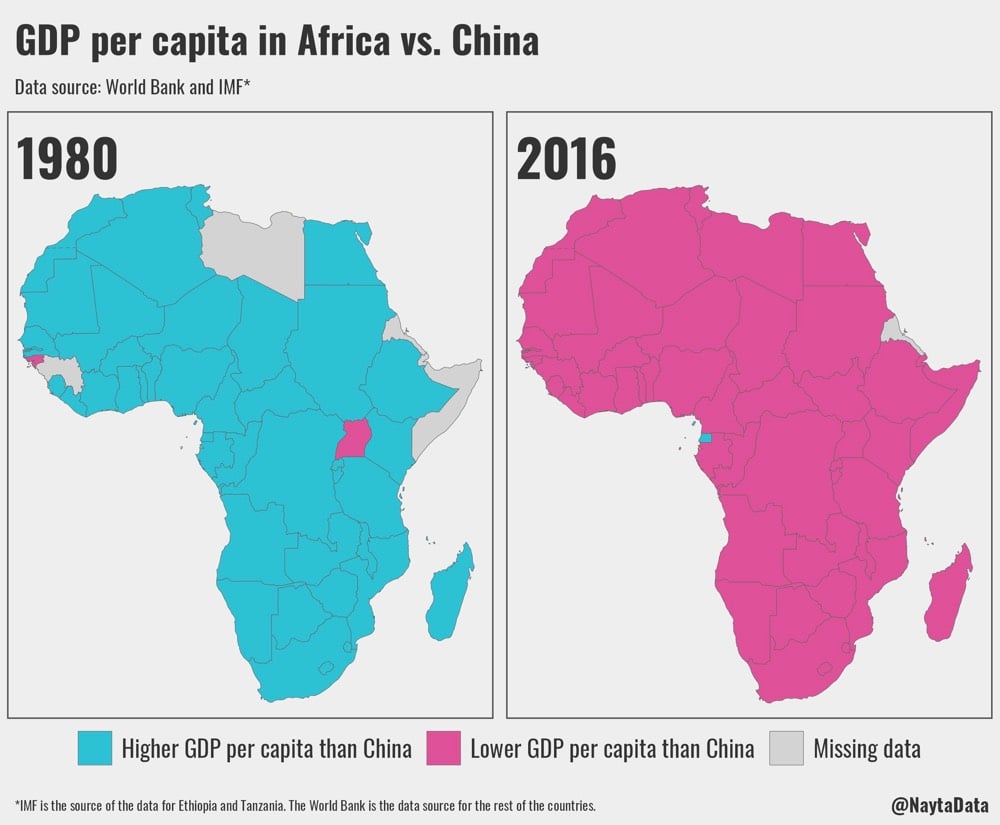
Using data from the IMF and World Bank, this map by Näytä Data shows how quickly the relative fortunes of China and African countries changed over the last few decades. For reference, in 1980, Africa had an estimated population of 480 million and China’s population was 994 million, while in 2016, Africa had 1.23 billion people and China had 1.4 billion people.
Lanzhou, a city in northwestern China, is well-known for its beef noodle soup…and the shops serving them. In order to keep those shops well-stocked with chefs who can produce perfect hand-pulled noodles at a fast pace, the Gansu Dingle Noodle School offers training to people from all walks of life in the art of noodle making. This short film by Jia Li profiles a group of students at the school as they learn their new trade.
For Vice’s Munchies series, Clarissa Wei travelled to Lanzhou to visit another noodle school there and found out just how difficult it is to learn noodle-making.
Noodle school holds classes three times a day, seven days a week. You stand there with your classmates and pull dough, at least 100 times a day. Students aren’t given recipes; the secret to success lies in rote repetition. There are three different course lengths: 15 days, 30 days, and 40 days. Tuition includes housing and food. Most people are Chinese nationals, though Li says that in recent years an influx of foreigners have come in pursuit of the perfect noodle. The school also teaches soup basics, pickling, and beef stewing techniques.
“We’ll have over 20 different types of herbs in the broth,” he says. “And our flour is custom-made and imported in from Henan. They have different levels of elasticity depending on what we request.”
“Commodity City” is a short documentary directed by Jessica Kingdon about a huge wholesale market in China with 75,000 vendors selling everything from flowers, pens, and clocks to dolls, rope, and Santas.
Ultimately, Kingdon decided to focus on what she describes as “the quieter, more subtle moments” amidst the chaotic atmosphere of the five-mile-long consumer metropolis. Comprised of mostly static shots, her short observational documentary, Commodity City, is a mesmerizing window into the daily lives of some of the 75,000 individual vendors who exhibit more than 400,000 products at Yiwu.
“I saw directly how lives are built around market forces,” Kingdon said of her experience shooting the film. “It’s similar to most other places in the world participating in global capitalism, but in China, it’s more obvious right now.”
I know this is pretty slow in spots — It’s meditative! Why are you in such a dang hurry? — but there are great little moments sprinkled in here and there (at 7:10 for one). It also weirdly reminded me of Koyaanisqatsi.
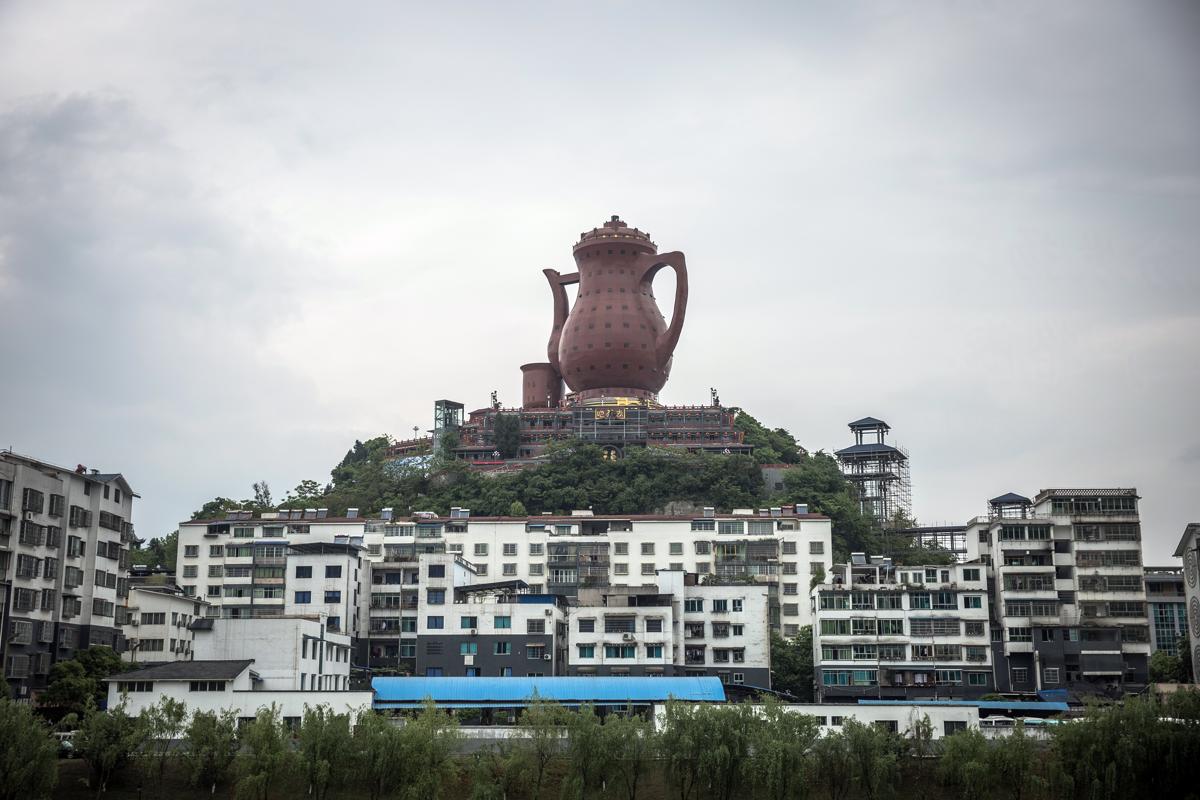
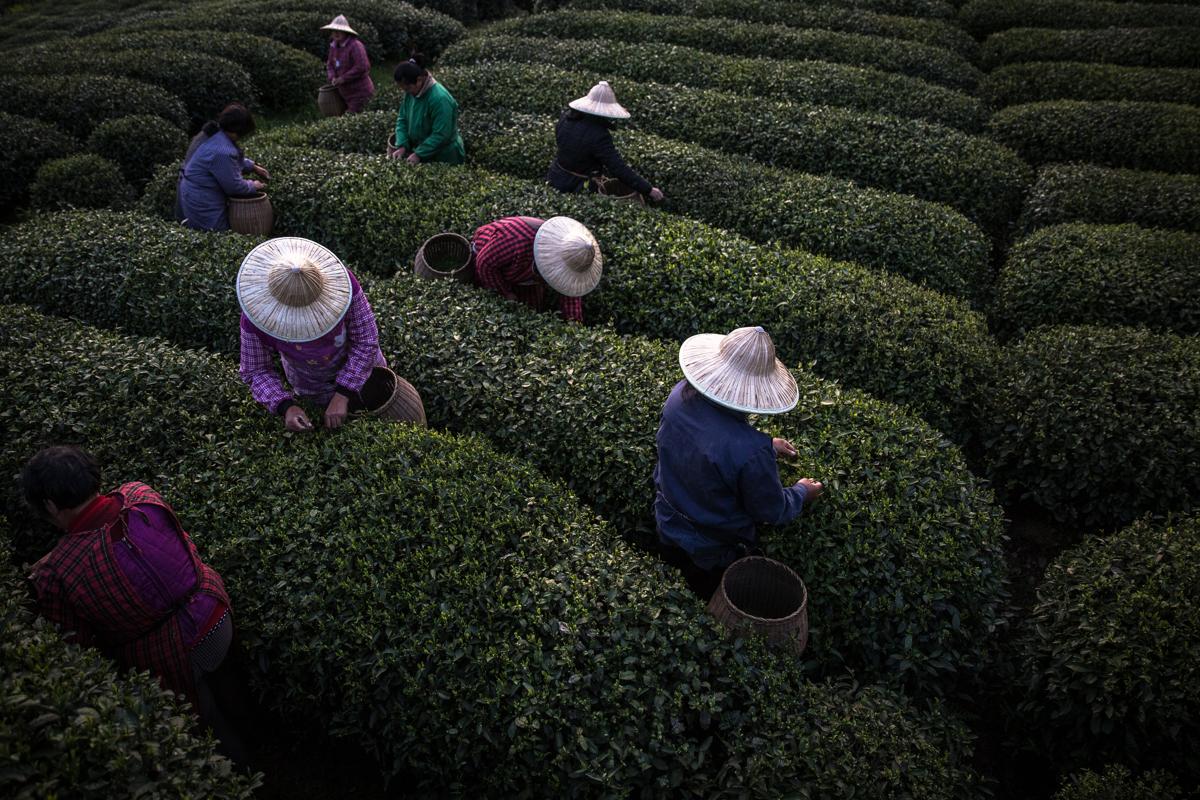
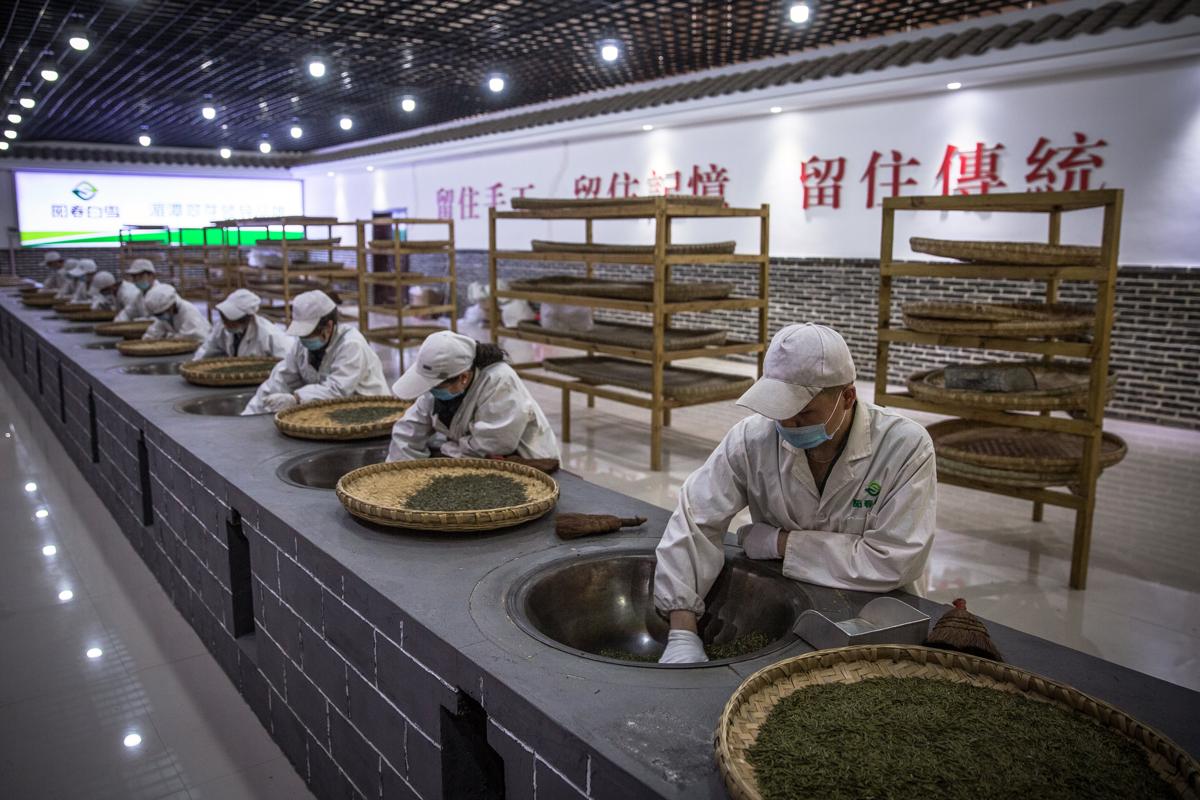
Last fall, The Big Picture did a series of photographs of tea workers in China. According to the accompanying short article, “The Chinese tea industry employs around 80 million people as farmers, pickers and sales people. Tea pickers tend to be seasonal workers who migrate from all parts of the country during harvest time. The pickers work from early morning until evening for an average wage of around 120 RMB (around 16 euros) a day.”

In 1990, China, Hong Kong, and Taiwan had only a handful of subway lines. In the early 2000s, growth in the number of cities with subways started to increase dramatically, as did the number of lines in the bigger cities like Beijing and Shanghai. As of 2020, more than 40 Chinese cities will have subway systems. Check out this time lapse map by “transit nerd” Peter Dovak (who also did these Mini Metros maps):
In this time, Beijing and Shanghai in particular have ballooned from nearly nothing into the world’s two largest, in both length and annual ridership. The timeline of their expansion alone is mesmerizing.
Meanwhile, the NYC subway system is…
A Bite of China is documentary TV series on food and cooking in China. Writing for The Guardian, Oliver Thring called it “the best TV show I’ve ever seen about food” and one commenter called it “the Planet Earth of food”. While A Bite of China predates it by 3 years, Chef’s Table might be a better comparison. Here’s a trailer:
China has a large population and the richest and most varied natural landscapes in the world. Plateaus, forests, lakes and coastlines. These various geographical features and climate conditions have helped to form and preserve widely different species. No other country has so many potential food sources as China. By collecting, fetching, digging, hunting and fishing, people have acquired abundant gifts from nature. Traveling through the four seasons, we’ll discover a story about nature and the people behind delicious Chinese foods.
The first season is available on Amazon Prime (with English subtitles) but you can also find it on YouTube at varying levels of quality with and without subtitles and dubbed in English. (thx, seamus)
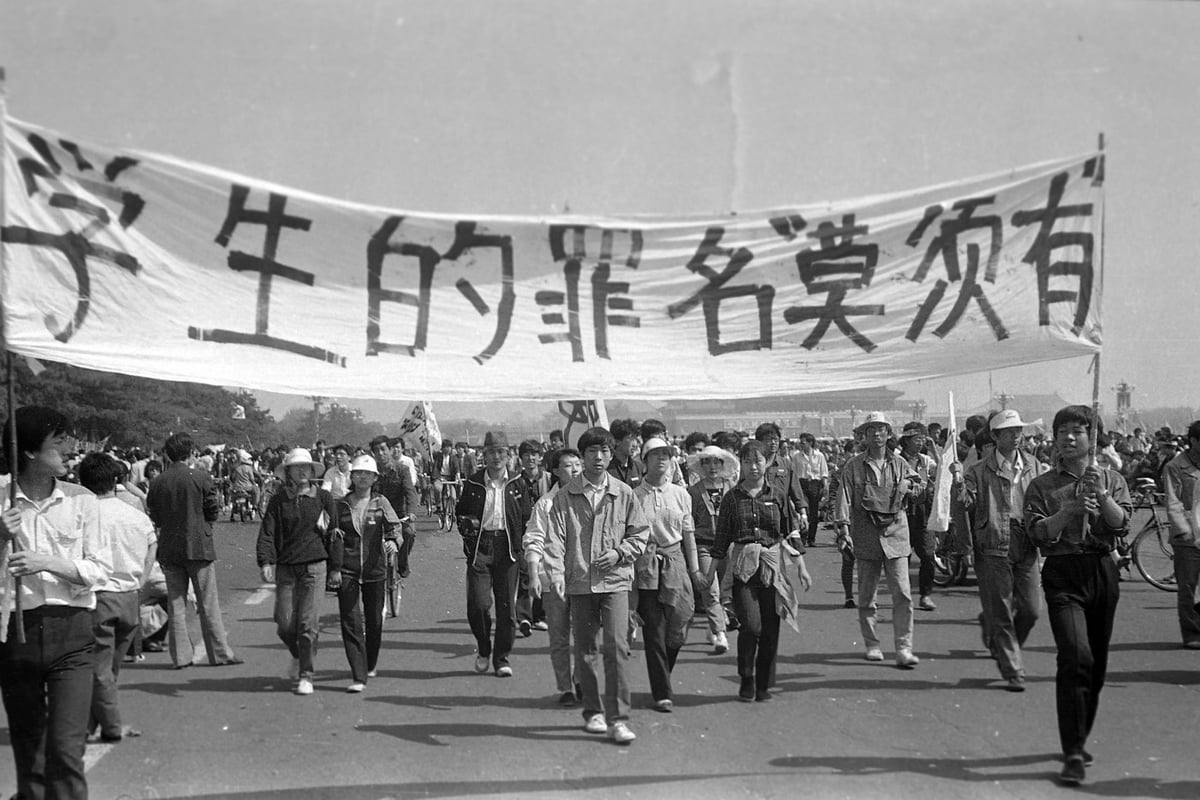
At the time of the pro-democracy Tiananmen Square protests in 1989, David Chen was a 25-year-old student. Using a camera his uncle had given him, he spent a week taking photos of the protests. Those photos have been hidden away until now: the NY Times has published a selection of them today.
Scotty Allen built a working iPhone 6S from scratch using parts bought in the electronics markets of Shenzhen, China.
I built a like-new(but really refurbished) iPhone 6S 16GB entirely from parts I bought in the public cell phone parts markets in Huaqiangbei. And it works!
I’ve been fascinated by the cell phone parts markets in Shenzhen, China for a while. I’d walked through them a bunch of times, but I still didn’t understand basic things, like how they were organized or who was buying all these parts and what they were doing with them.
So when someone mentioned they wondered if you could build a working smartphone from parts in the markets, I jumped at the chance to really dive in and understand how everything works.
It is kind of amazing that he ends up with a fully functional iPhone, complete with a box with charger, headphones, etc. The era of transistor radio kits is not quiiiite dead yet. (via bb)
Update: Allen also modified his iPhone 7 to include a dedicated headphone jack.

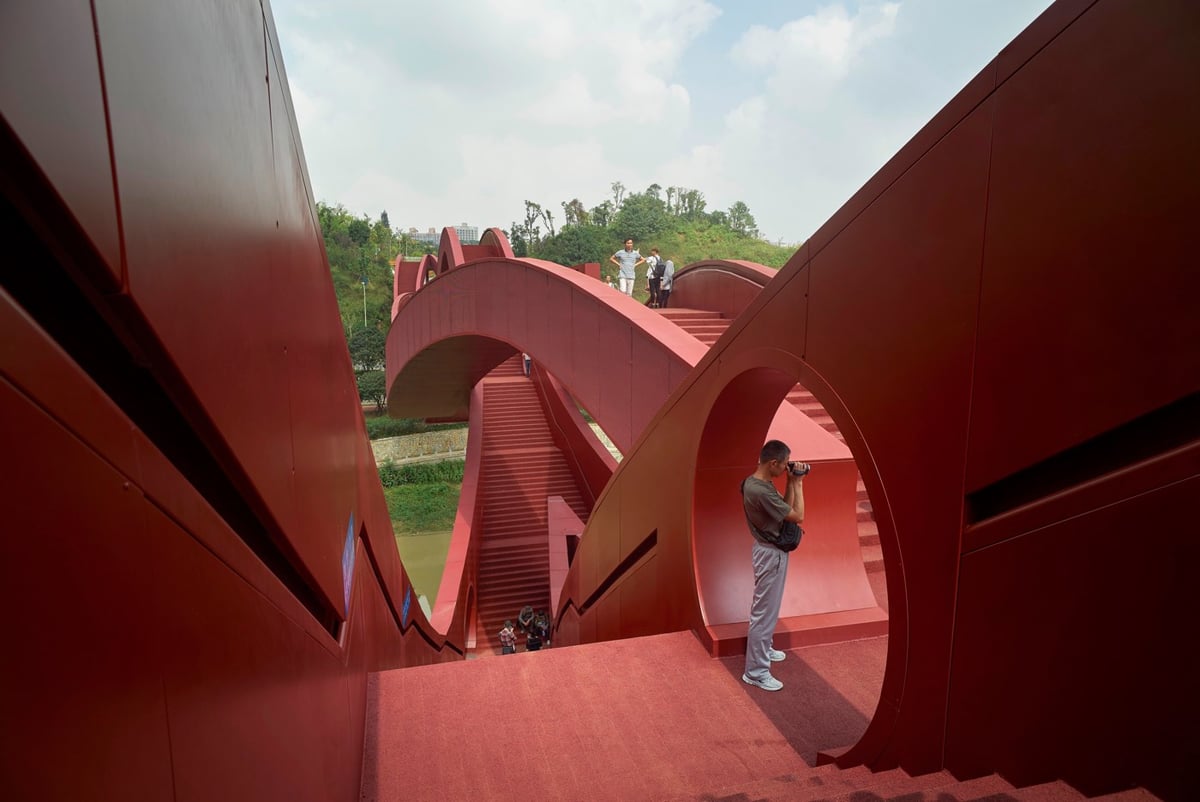

Built by NEXT architects in the Chinese city of Changsha,1 the Lucky Knot bridge is a wonderfully inventive piece of architecture and engineering. It does not, however, appear very accessible to cyclists or the handicapped in the way that their Melkwegbridge project is. (via @robinsloan)
In the village of Nanshan in China, traditional Suomian noodles are still very much made by hand. The noodles are made and dried outside, which puts the whole process at the mercy of the weather.
The noodle maker has to add different amounts of salt and flour according to the seasons and has to be very observant about the weather when it comes to choosing the days to dry the noodles.
The video doesn’t say, but I’d be very interested to hear what the unique stretching and drying process does to the taste and texture of the noodles.
Jan Chipchase is the founder of Studio D Radiodurans, which is sort of a modern day A-Team, except with more field research and fewer guns. For example, Chipchase is the sort of person who, for vacation, does not sip pina coladas in Bali but heads for “Kyrgyzstan, Tajikistan’s GBAO region and China’s western provinces”. At the conclusion of the trip, which was actually only partially a vacation, Chipchase jotted down 61 Glimpses of the Future. A few of my favorite observations:
7. A white male travelling alone in interesting places, will always need to disprove they are a spy. Thanks Hollywood.
24. There is only one rule for driving in the GBAO: give a lift to every local that wants one, until the car is full. It’s common to travel main thoroughfares for a day and only see a couple of vehicles.
33. People wearing fake Supreme are way more interesting than those that wear the real deal.
34. An iPhone box full of fungus caterpillar in Kham Tibet sold wholesale, is worth more than a fully specced iPhone. It’s worth 10x at retail in 1st/2nd Tier China. It is a better aphrodisiac too.
38. Tibetan monks prefer iOS over Android.
53. Visitors to Tibet proper are supposed to go in a tour group and hire a local guide. With the right agent you can become a tour group of one and on arrival tell the guide you don’t need their services. It helps to look like you’re going to behave.
This is, as Tyler Cowen might say, interesting throughout. (via @themexican)
Worries over the slowing Chinese economy spilled out into the streets of Hebei province last weekend as two construction firms battled with bulldozers while competing for the same business. That is some end-times shit right there.
Newer posts
Older posts





Socials & More