

The NY Times recently asked readers “what they can no longer afford, or have given up on having”. Among the answers: medication, car repairs, new clothes, having more kids, eating out, and contact lenses.

Advertise here with Carbon Ads
This site is made possible by member support. 💞
Big thanks to Arcustech for hosting the site and offering amazing tech support.
When you buy through links on kottke.org, I may earn an affiliate commission. Thanks for supporting the site!
kottke.org. home of fine hypertext products since 1998.
Beloved by 86.47% of the web.

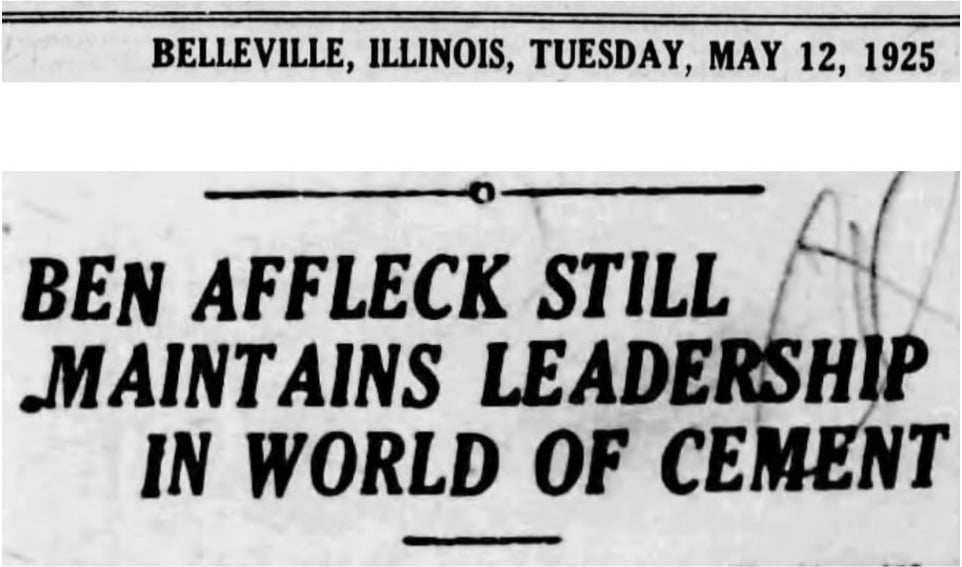
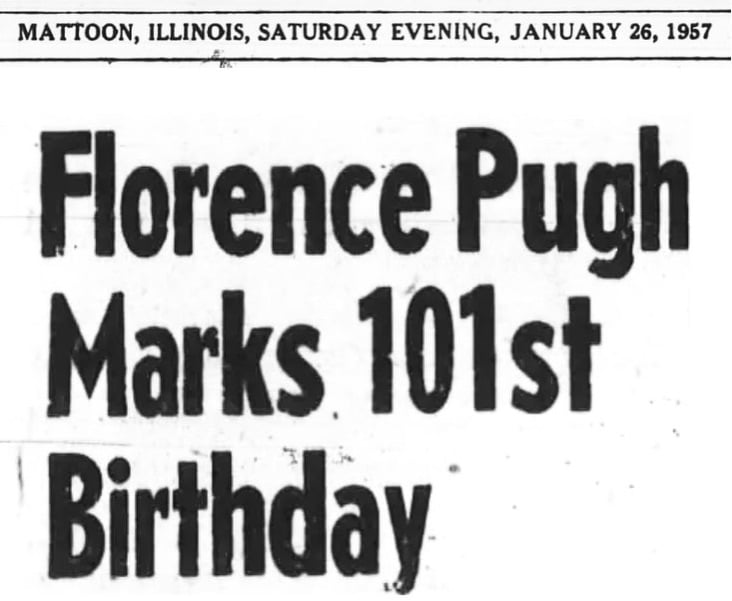
Old Newspaper Headlines About the Name Doppelgängers of Current Celebrities
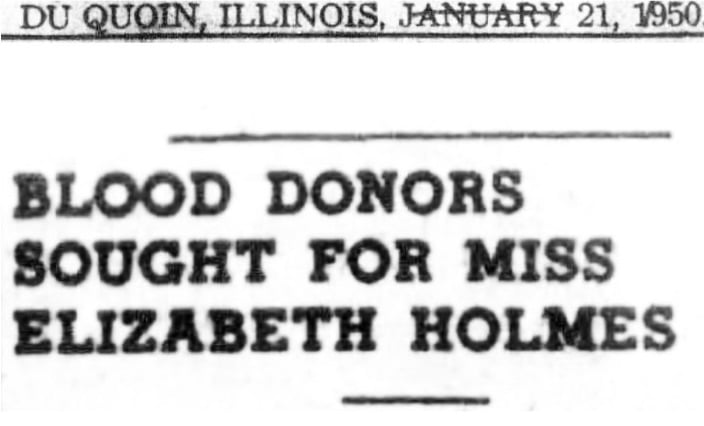
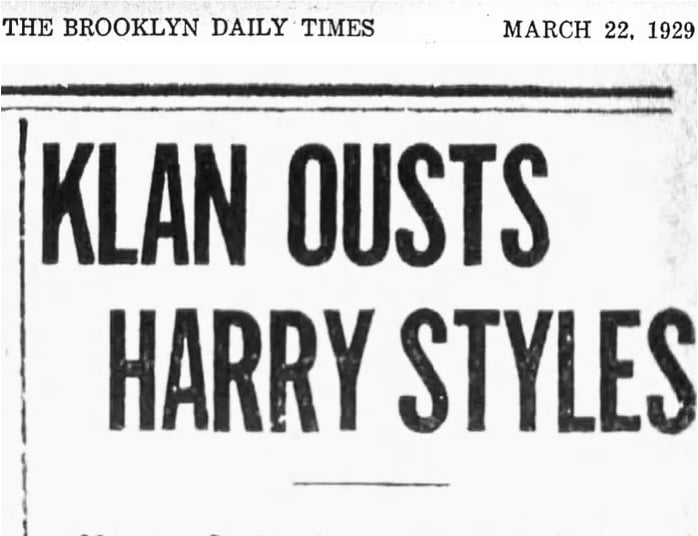
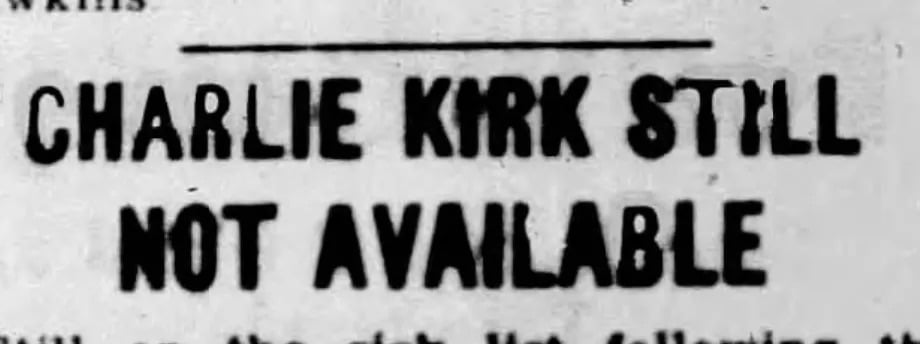
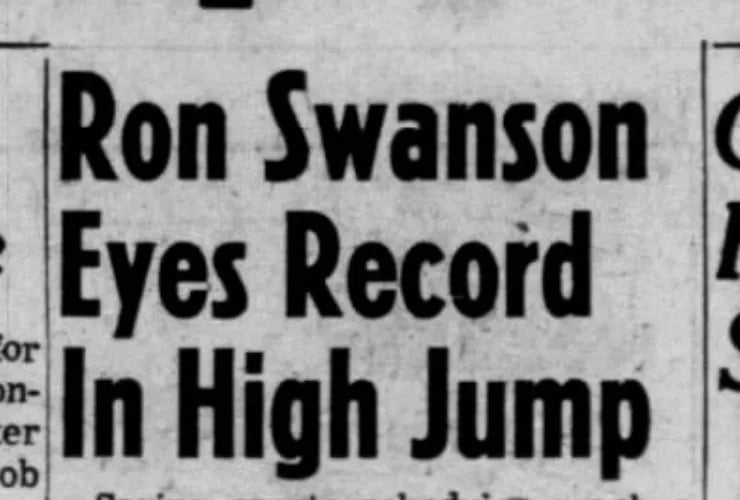
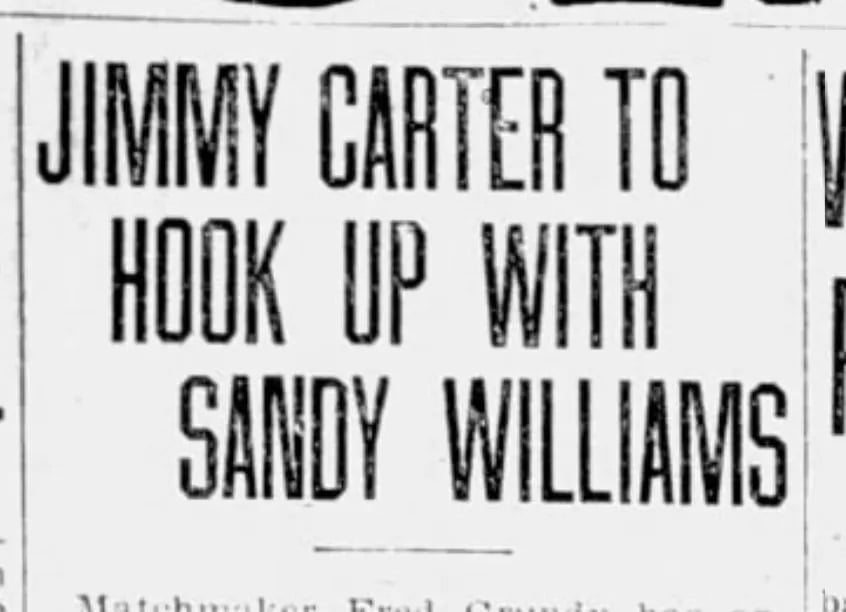
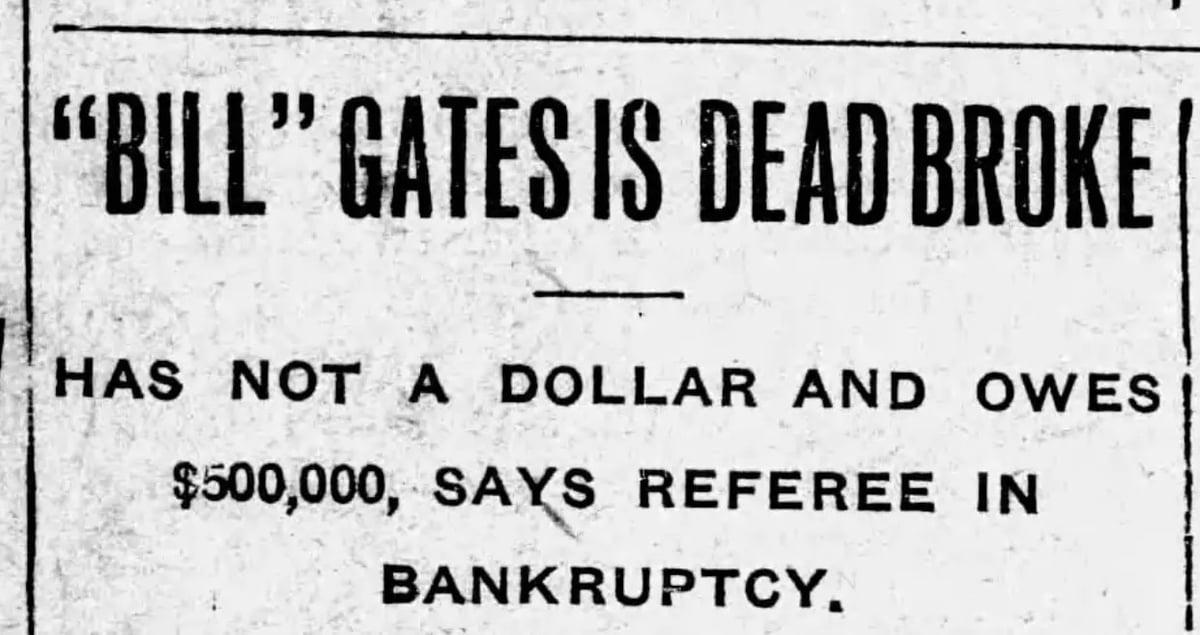
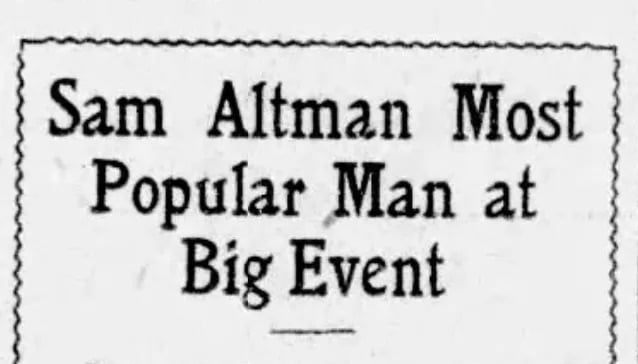
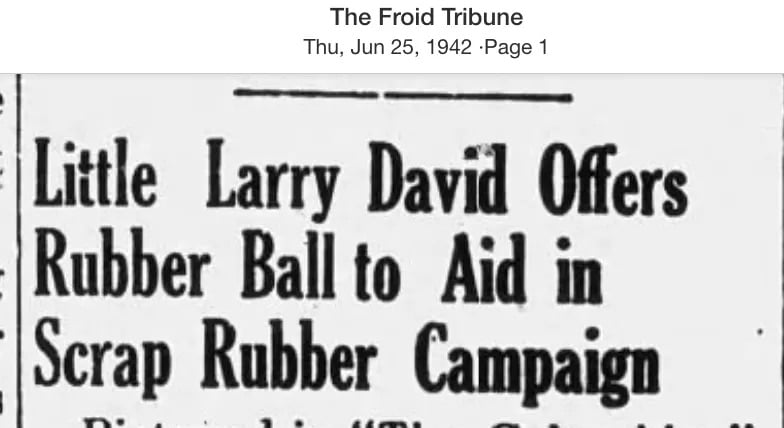
This is great: Annie Rauwerda (of Depths of Wikipedia fame) sifted through the archive at newspapers.com to find the goings on of long-ago celebrity name doppelgängers (follow-up post). A few of my favorites:
I made a small tweak to Prometheus (gift link discovery site) that kinda kicks ass: NYT Cooking is now a separate source (which you can filter by). The Rigatoni With White Bolognese recipe is a favorite of mine. 🤌

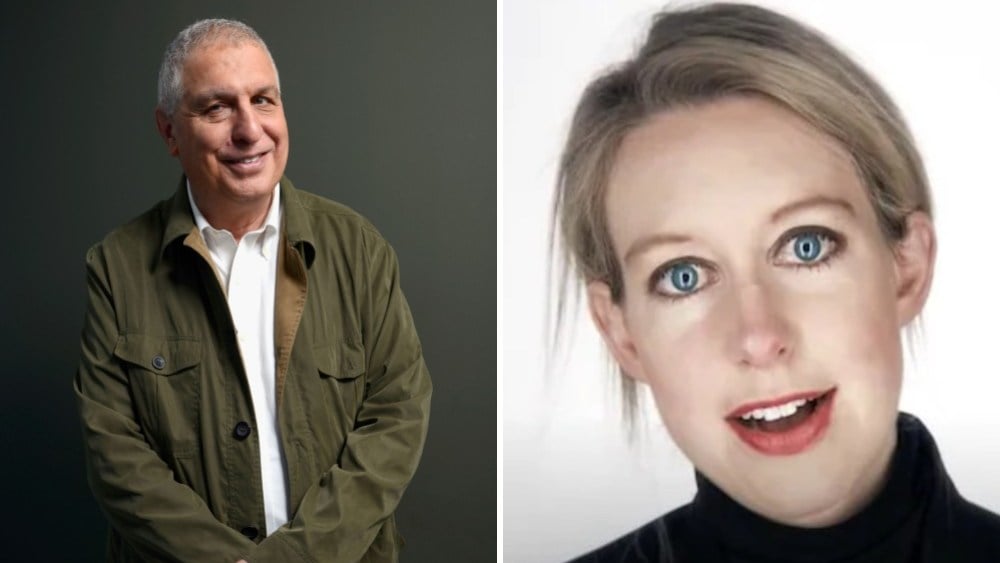
Errol Morris shot ads for Theranos and recently revealed he has a two-hour interview with Elizabeth Holmes that he’s considering releasing. “Did I have any reason to believe that she was a fraud? I did not. Did that change as time went on? It did.”
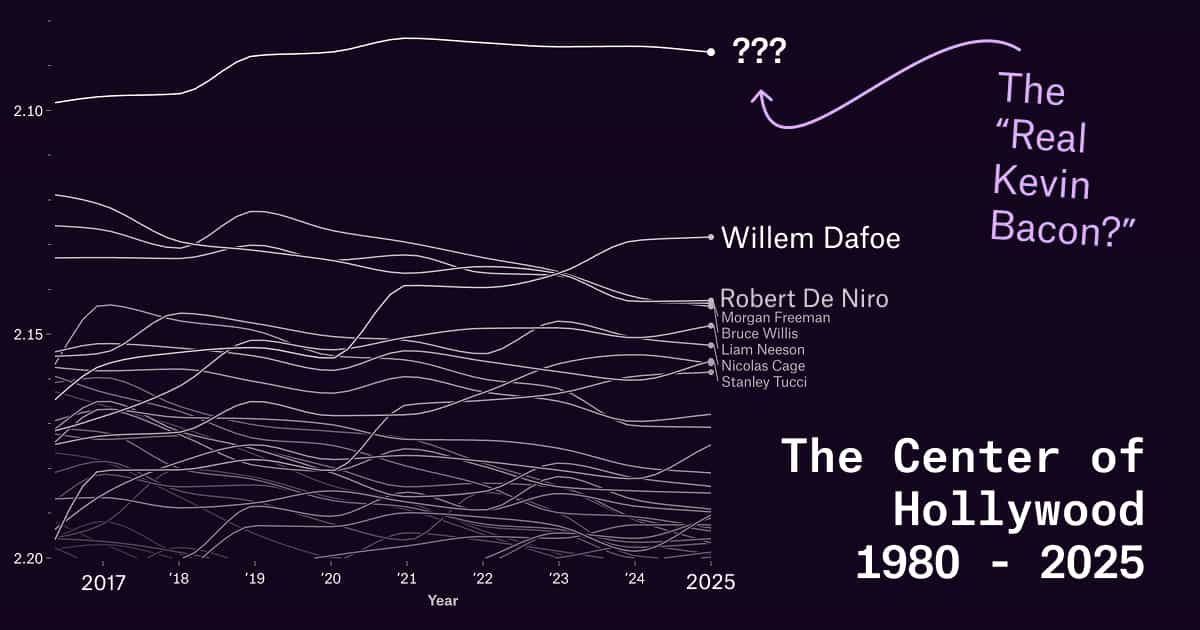
Remember the Six Degrees of Kevin Bacon game? Turns out: “Kevin Bacon is not the center of Hollywood. In fact, he never has been, and almost certainly never will be.”
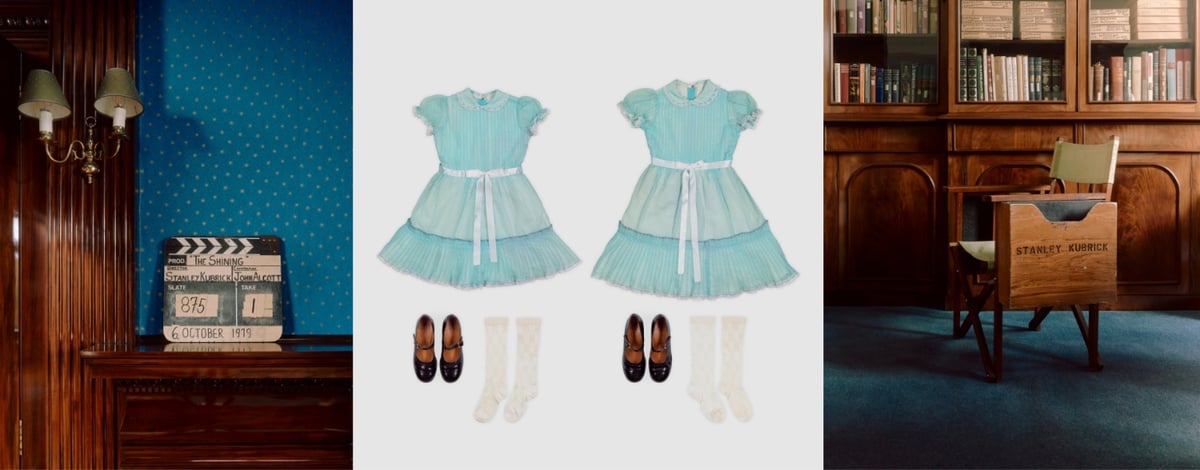
A bunch of items from Stanley Kubrick’s personal archive will be auctioned off early next year, including Jack Torrance’s axe & the sisters’ blue dresses from The Shining, Kubrick’s director’s chair, and a chess set owned by the director.
The Moving Image Archive
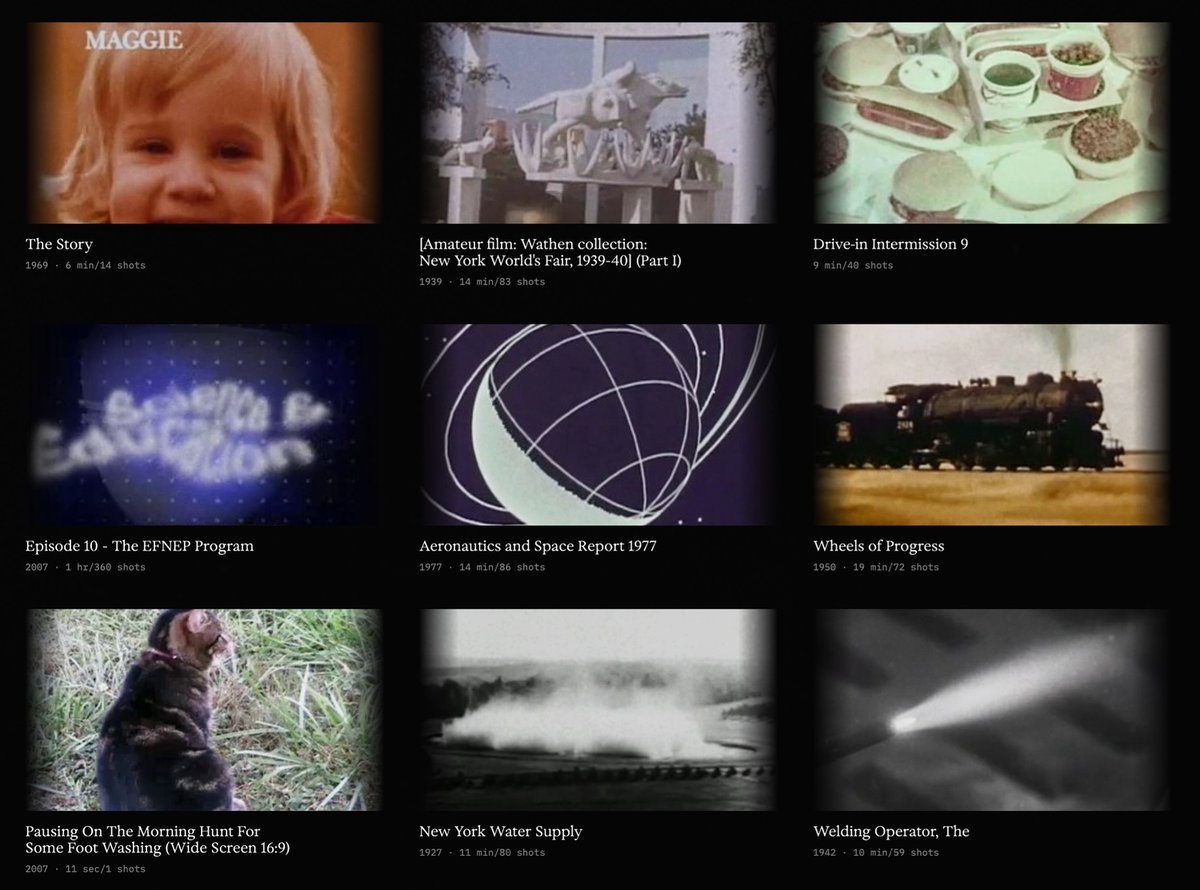
The Moving Image Archive is a collection of over 120,000 clips from almost 2300 archival films drawn from public domain collections.
The internet is full of forgotten films, and this archive is a growing library of that collection. When synthetic footage can now fabricate the past, preserving verifiable history matters more than ever before.
A few things I found while poking around:
- [Amateur film: Chicago World’s Fair] (1933). “This 1933 amateur film features Chicago’s Century of Progress World’s Fair and scenes of New York City.”
- Story of a City: New York (1946). “This 1946 film explains the historical and economic forces behind New York City’s growth into one of the world’s largest cities and its vital relationship to the rest of the United States.”
- Alice In Wonderland (1915). “This tinted, 42-minute cut of the 1915 silent fantasy film Alice in Wonderland, based on Lewis Carroll’s work, is available with a synchronized soundtrack sourced from an early vinyl recording or as a silent version.”
- Apollo 11 — 30th Anniversary (1999). “Marking the 30th anniversary of Apollo 11, the film combines mission footage with later interviews featuring Neil Armstrong, Buzz Aldrin, and Michael Collins.”
- Story of Television (1956). “Story of Television traces the development of television from early experiments in transmitting images across distance to RCA’s electronic systems, which improved picture quality and expanded broadcasting nationwide.”
- A is for Atom (1953). “This animated film explains atoms as the fundamental building blocks of matter, identifying elements by the number of protons.”
- Space Shuttle: A Remarkable Flying Machine (1981). “This 1981 NASA film documents Columbia’s maiden space shuttle mission, from its April 12 launch at Kennedy Space Center through onboard tests conducted by astronauts John Young and Robert Crippen to its successful April 14 landing on Rogers Dry Lake in California.”
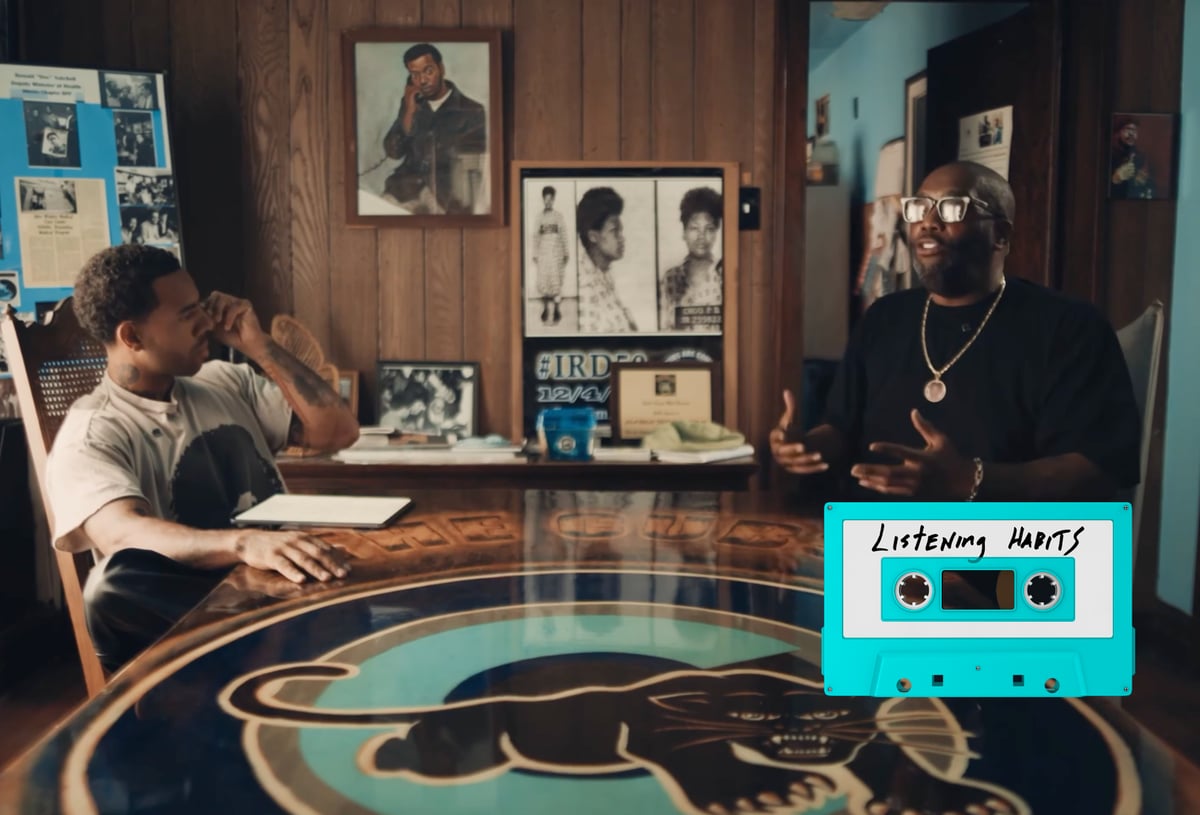
It’s Hard To Be A Rich Radical. “It was disappointing how easily money turned a lot of them into sudden conservatives, full of right-wing doctrine about bootstraps and the fantasy of a black capitalist utopia…”
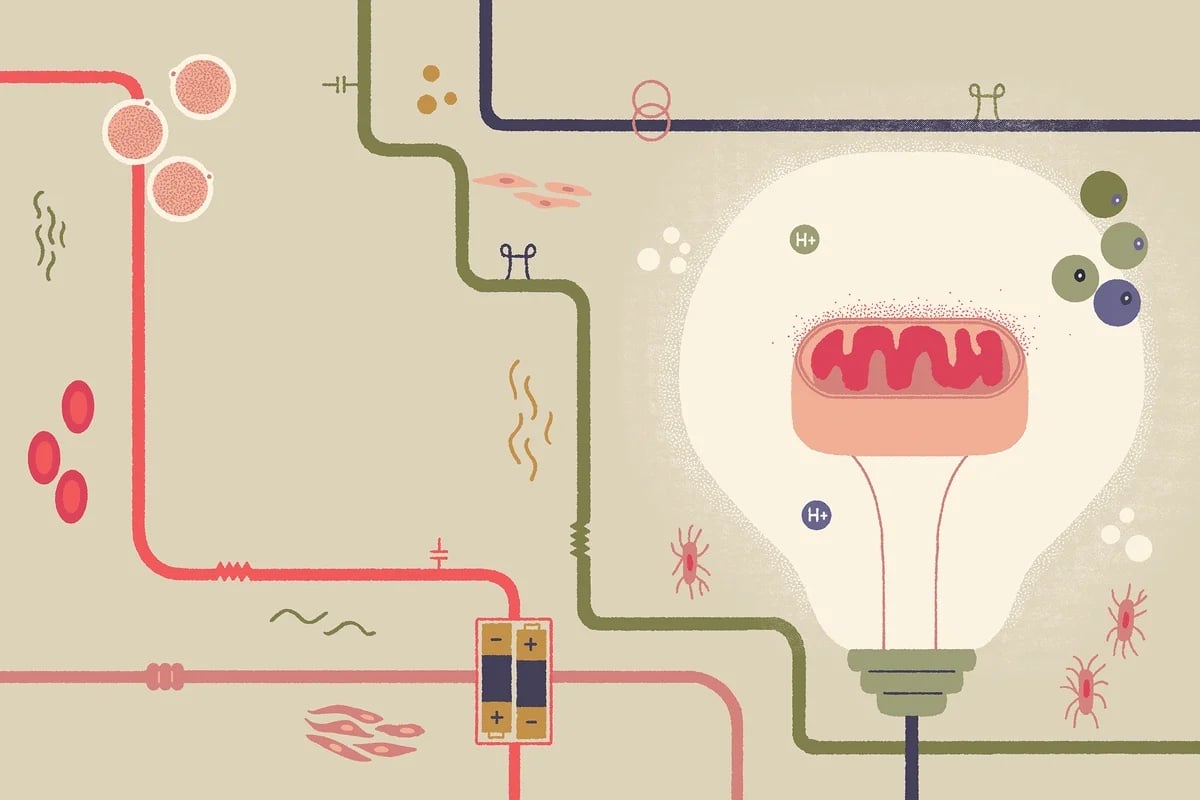
Scientists are studying whether “many chronic diseases we treat as separate failures of separate organs may share one deeper problem: cells struggling to extract and use energy from food” (diabetes, Alzheimer’s, epilepsy, etc.)
Paleovirology: How HIV Started a Century Before Anyone Noticed
I’ve been vaguely aware for awhile that researchers had traced the origins of HIV/AIDS back to Sub-Saharan Africa. But I didn’t know the whole story, which turns out to be really fascinating.
For decades, one man was blamed for bringing AIDS to America. But the “Patient Zero” story was wrong. This is the story of how genetic detective work traced HIV’s true origins — from chimpanzees in Central Africa to a global pandemic — and how science unraveled one of the biggest myths in modern medicine.
Disappointingly, they didn’t list any of their sources for the video. I poked around a little and found a book called The Origins of AIDS that a Science magazine review called:
Extensively referenced, the well-written book reads like a detective story, while at the same time providing a didactic introduction to epidemiology and evolutionary genetics. As far as the origins of AIDS are concerned, unless some completely new evidence emerges, it will be difficult to come up with a better explanation than Pepin’s.
The YouTube comments are worth a read too, filled with remarks from those who lived through the early years of the pandemic or knew someone who did (or someone who didn’t).
Had a gay uncle who lived in San Francisco in the 80s and 90s. He would get so upset when he talked about HIV/AIDS. He lost so many friends to the virus. When I went to visit him in the 2000s, we visited 27 graves over the course of a weekend and laid flowers. Rest in peace to all those young people.
I worked in blood banking at Cedars -Sinai Medical Center in Los Angeles. It was policy to freeze blood samples from patients that expired due an unknown cause. Once the HIV test was approved the samples were tested and some were reactive to it. The samples were collected over decades, going back to the 1950s.
I have family who were foreign hospital workers in the now-DRC in the 1970s, where what we call AIDS was known as the Slims because of how the patients wasted away and died. People on the ground knew there was something going around, but they didn’t have the resources to figure it out.
They Stopped 57 Shootings. Everyone Was Just Fired. “A program called Peace Orlando hired neighborhood residents closest to the violence…who could see a shooting coming and talk people down.” It worked…and then the program was shut down.
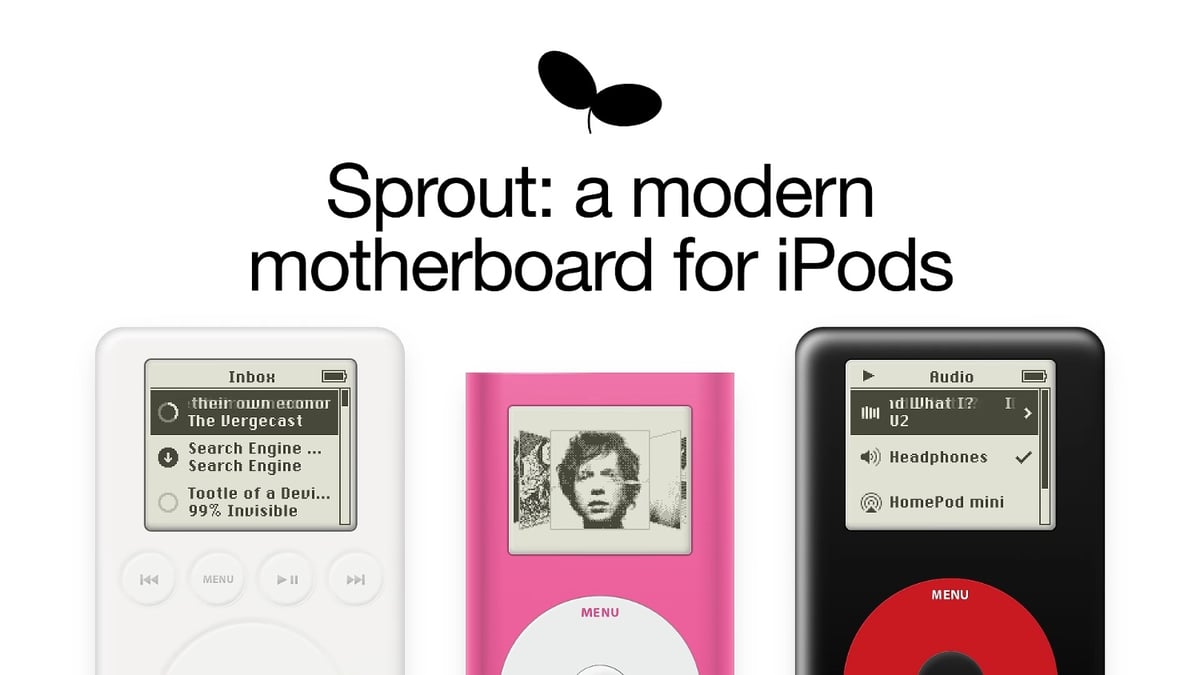
Sprout is planning to sell replacement motherboards for certain iPods. “Sprout only replaces the motherboard and uses your iPod’s original parts. No soldering required, and fully reversible.” Bluetooth, WiFi, 500K songs, USB-C, even streaming.
Have We Confused Having Good Taste With Being Creative?
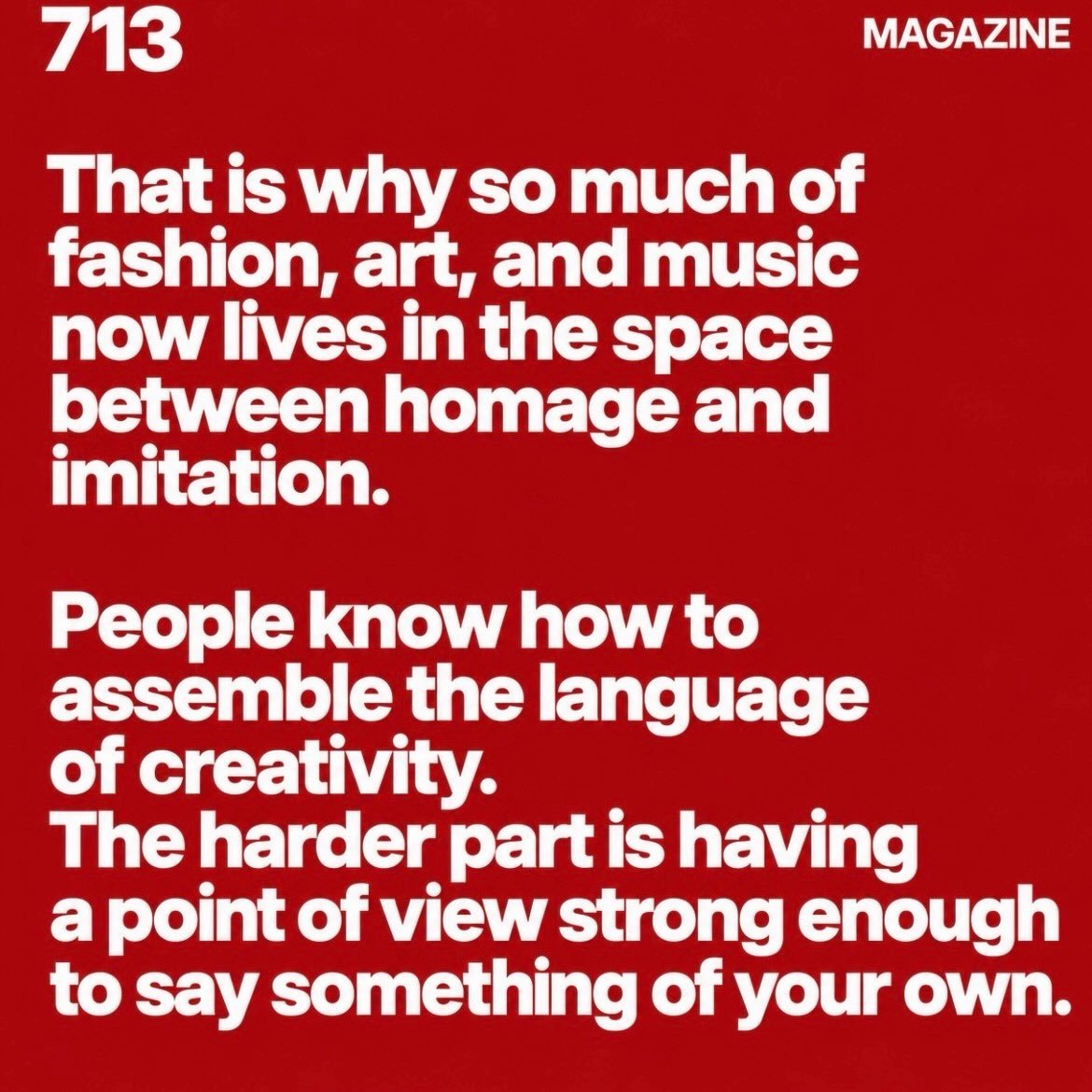
From 713 Magazine on Instagram:
In a world where cultural knowledge has become its own form of social currency, knowing the right designers, listening to the right music, and recognizing the right references can make someone appear just as creative as the people actually producing the work.
We’ve reached a point where an entire identity can be built around what someone consumes, collects, wears, and shares. And while developing good taste requires curiosity, knowledge, and an understanding of culture, recognizing something exceptional isn’t necessarily the same as creating something exceptional.
This doesn’t mean curation lacks creative value. Some of the most influential figures in fashion, art, and music have shaped culture through their ability to recognize talent, connect ideas, and introduce people to things they otherwise might never have discovered.
But there’s a difference between being influenced by something and simply reproducing its appearance. Creativity requires more than understanding what has already been accepted. It often means taking risks, developing an independent perspective, and making something that people might not immediately understand.
One of the slides puts it more succinctly:
We live in a time where curation can look like creation. A person can build an entire identity out of taste alone — what they wear, what they repost, what they collect, what they reference — and still never actually make anything that moves culture forward.
“Local Wikipedia is Wikipedia, but only for things a half hour walk from you.” There is also Walkipedia.
Once Upon a Time in Harlem
The Harlem Renaissance was a cultural and intellectual movement of African-American artists in the 1920s and 30s. In 1972, filmmaker William Greaves threw a party in Duke Ellington’s apartment for some surviving members of the movement and recorded the whole thing. The footage sat unused for 50 years until Greaves’ son David picked up the project. The result is the documentary film, Once Upon a Time in Harlem; here’s the trailer.
A decade after his death, genre-defying filmmaker William Greaves has one last trick up his sleeve with what he considered the most important event he captured on film: a 1972 party he engineered with the living luminaries of the Harlem Renaissance.
For four hours, this extraordinary group – many of whom had not seen each other in fifty years – reminisced, critiqued, argued, laughed and drank while wrestling with their place in a rapidly shifting cultural landscape.
Shot on 16mm film, newly restored and now directed by Greaves’ son David, this landmark film is at once a self-exploration and an inquiry into the heart of the critical mass of energy called the Harlem Renaissance.
William Greaves’ intent was not only to document these artists and intellectuals as they spoke about their lives and work but also to plumb the meaning of the extraordinary creative period in which they lived to help us better understand how culture has been passed on from one generation to another and the role that the artist plays in keeping it alive.
It looks fantastic. Once Upon a Time in Harlem currently has a 100% rating (67 reviews) on Rotten Tomatoes.
Short video teasing an new collab between Daft Punk and Lego, including a forthcoming Lego set based on this fan-submitted entry.
The American Divide on Empathy
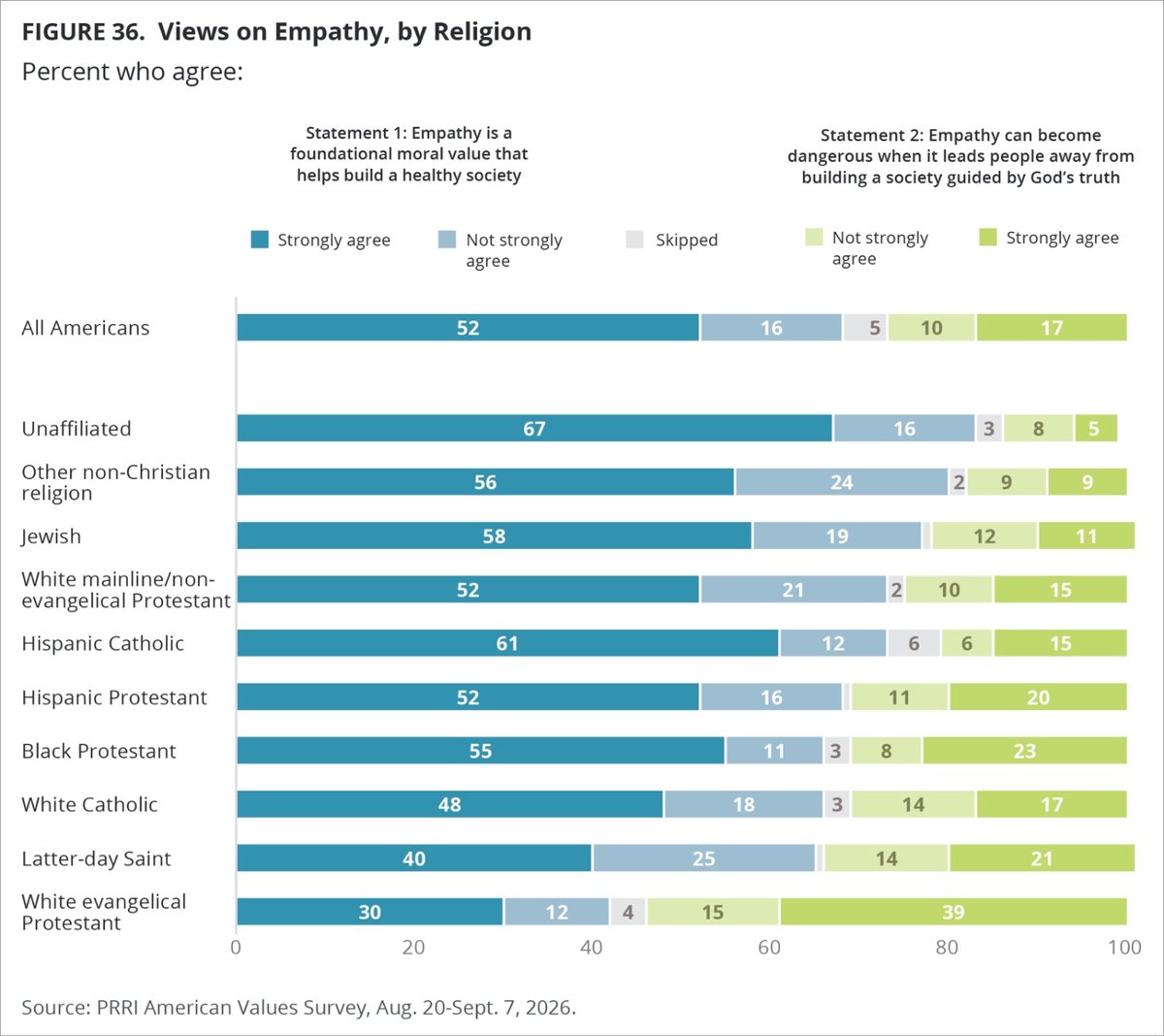
PRRI’s 2026 American Values Survey reveals some, uh, interesting views on whether Americans think empathy is a good thing or not. Those respondents unaffiliated with a religion were much more inclined to think that empathy is “a foundational moral value that helps build a healthy society”.
With the exception of white evangelical Protestants (42%), around two-thirds or more of all major religious groups believe that empathy is a foundational moral value for a healthy society, including about eight in ten religiously unaffiliated Americans (83%), members of other non-Christian religions (80%), and Jewish Americans (77%). By contrast, a majority of white evangelical Protestants (54%) believe empathy can become dangerous when it leads people away from building a society guided by God’s truth.
Here’s the breakdown by party:
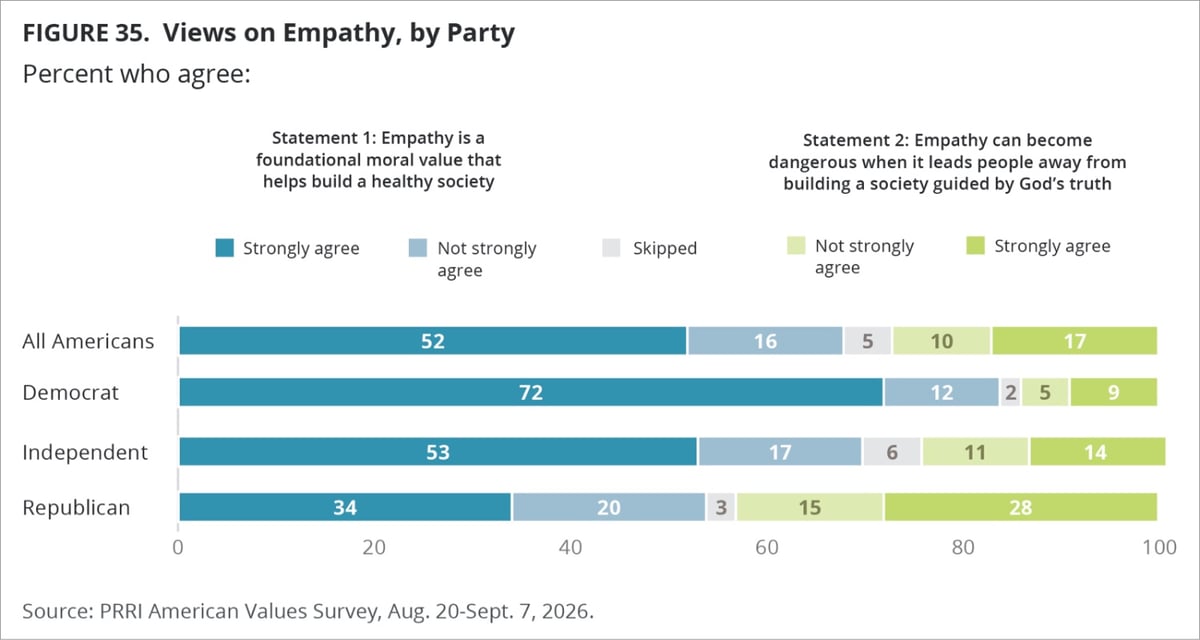
(Btw, “not strongly agree” seems to mean “agree, but not strongly” and not “disagree”. Grammatically correct but a little confusing if you don’t read it carefully…)
See also How empathy came to be seen as a weakness in conservative circles.
OMG, the height of these waves hitting a seawall in Taiwan as Typhoon Champi hit the island nation a few days ago. That’s gotta be close to 100 feet. Waves also inundated this 75-foot-tall lighthouse and a crane 164 feet tall, knocking it over.
Michael Pollan reflects on what has and hasn’t changed in the 20 years since he wrote The Omnivore’s Dilemma. “Looking at the landscape of food and farming today, I’m sorry to report that things haven’t changed all that much.”

Matt Webb is bunkering down, bracing for more LLM-driven security exploits. “Realistically, let’s say the internet gets infested with AI worms and we need to turn it off and on again, could we do it?” I had not heard of the air-gapped LLM communication 😳
Harry Kane is this year’s men’s winner of the Ballon d’Or. 100% the right choice — he had the best season of anyone. Like, almost ever.

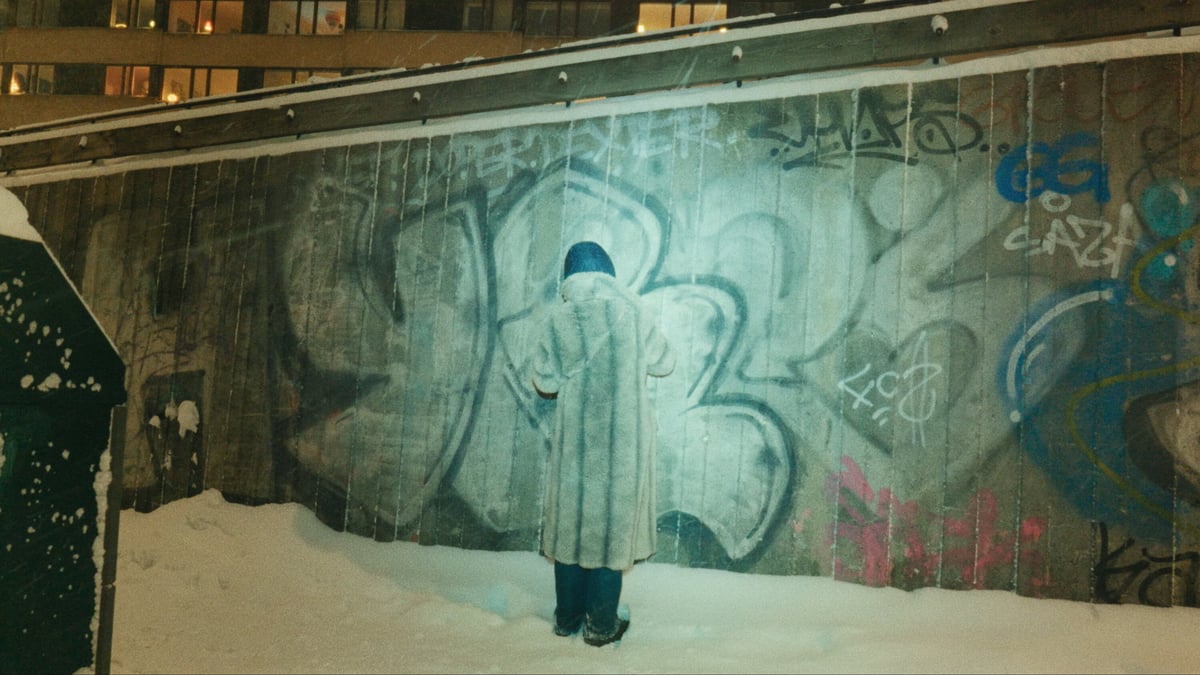
A poignant short documentary about a mother who only knows her son is alive by the new graffiti tags he leaves around town. Eventually, she started tagging back…
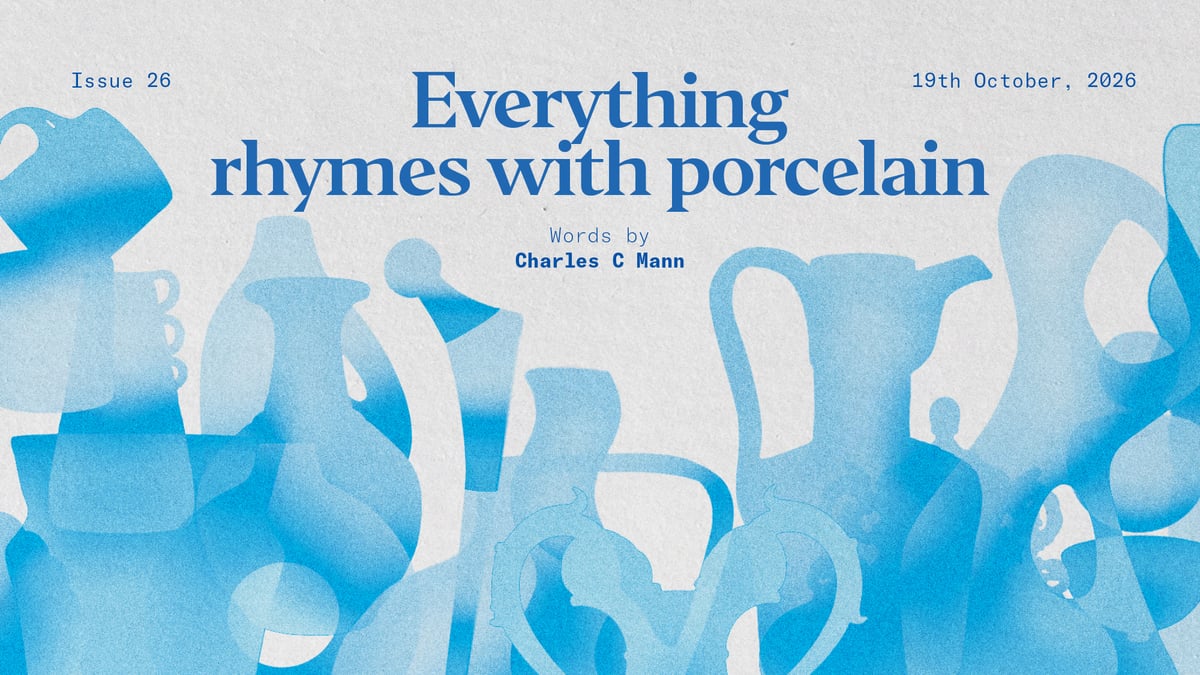
From Charles Mann, a quick history of porcelain, which is basically what his pricey induction stovetop is made from. (Fun fact: I went to grad school for ceramic engineering before dropping out after a semester to teach myself web design.)

Socials & More