

A roundup of some of the most fun and informative bar chart races.

Advertise here with Carbon Ads
This site is made possible by member support. 💞
Big thanks to Arcustech for hosting the site and offering amazing tech support.
When you buy through links on kottke.org, I may earn an affiliate commission. Thanks for supporting the site!
kottke.org. home of fine hypertext products since 1998.
Beloved by 86.47% of the web.
Entries for March 2022
Why is Russia invading Ukraine?, a recent episode of Vermont Public Radio’s But Why: A Podcast For Curious Kids.
Surrealist Makeup




Mimi Choi is a makeup artist who specializes in creating visual illusions — you can check out her work on her website or on Instagram. If you click into her individual posts on Instagram (like this one or this one), you can see how she does each look and also get freaked out when she starts blinking her real eyes and opening her hidden mouth and such. So cool!
See also Alexa Meade’s Living Paintings.
RCA SelectaVision, the Weird and Doomed Early 80s Video Record Player
I have to admit that about 3 minutes into this video, I was not entirely sure that the RCA SelectaVision, a vinyl record-based system for playing videos released in 1981, was not a made-up thing. I’d never heard of this contraption before, but apparently it was an actual product that got released into the world and was apparently pretty much a disaster, as you might expect.
This video, as well as parts 2 & 3 (below), is a pretty deep and entertaining dive into the SelectaVision and the Capacitance Electronic Discs it played.
(via open culture)
You Don’t Really Ever Own an EV. “If carmakers can dictate how you use your car, do you really even own it?” (Most of this applies to any vehicle with an extensive software component.)
The 2020 US census undercounted Hispanic, Black and Native American residents. The pandemic & Republican meddling hampered efforts at an accurate count, but the census also chronically undercounts those groups.
Small independent creators on Vimeo are seeing massive increases in their monthly bills. Pay up or leave, says Vimeo.
A Taxonomy of Video Game Difficulty
When someone tells you that a particular video game (like Elden Ring) is hard, it can be tough to figure out what they might mean by that because games are hard in different ways. As Tolstoy might have said had he been a gamer: “All easy games are alike; each difficult game is difficult in its own way.”
Two recent articles have attempted to categorize the different ways in which players are challenged while playing games. Back in September 2021, Rhys Frampton outlined three main types of difficulty: comprehensive, executive, and strategic. Comprehensive difficulty relates to understanding the rules of the game while executive difficulty is about physicality (e.g. fast reflexes, coordination). Strategic difficulty relates to how to use your understanding of the rules and your reflexes to best master the game, your opponent, or yourself.
Once you understand a task’s goals, as well as the physical abilities required to perform the task’s actions, your final hurdle will be optimizing those actions to most effectively achieve those goals. This is strategic difficulty, the third and final category, and it is often the trickiest both to overcome and define. To demonstrate this, examine the difference between an intermediate Go player and a master. Both of them fully understand the game’s rules, while also being capable of reliably moving their pieces to any desired spot on the board — thus, they both have an equal mastery of Go’s comprehensive and executive difficulty. However, the Go master will always win against the intermediate player, because they have a superior understanding of Go’s strategic difficulty (i.e., the various tactics and divergent outcomes that will best lead them to victory). Go is a particularly important case subject for those interested in strategic difficulty, because despite being very simple to pick up and play, its strategic depths have still not been fully mastered even after thousands of years. Within the framework of “what,” “how,” and “why,” strategic difficulty represents “why,” and Go is one of the only examples of an activity whose difficulty is almost solely strategic.
I found Frampton’s piece via Clive Thompson, who riffs briefly on it here.
Earlier this month, Ars Technica’s Kyle Orland listed “five noncomprehensive subcategories” of gaming difficulty. Mechanical difficulty is about reflexes, punishing difficulty relates to how much of penalty you pay for mistakes (e.g. does the game make you start from the beginning when you die), arcane difficulty is about how much the game helps you learn to play, grindable difficulty is about the game giving you an option to power up via spending a lot of time performing tedious actions, and difficulty walls is about the presence of “impassable walls that fully impeded a player’s progress”. About grindable difficulty, Orland says:
Even the hardest mountain can be ground down by a gentle stream if given enough time. Similarly, some games that seem tough at first can eventually be completed if you’re willing to put in the time to grind out improvements to your character’s power level.
In a game like Super Meat Boy, there’s no item you can find to make a difficult series of jumps any easier. In Elden Ring, on the other hand, the game can become significantly easier as you put in more time collecting the runes and items needed to power up your character level, weapons, and spells.
It’s unclear whether Orland read Frampton’s piece or not (there’s no reference to it in the article), but there’s both overlap and not between the two systems. I am sure there is prior art here, both related to video games and in describing the various types of athletic or intellectual challenges — let me know if you know of anything I should read about. But anyway, it’s interesting to think about this stuff in the context of games I like to play and ones that I really really do not…and also in hobbies I like to do and don’t.
A Demo of Pockit, a Tiny, Powerful, Modular Computer
Admission time: it’s been a long time since I considered myself any sort of gadget nerd, but I have to tell you that I watched much of this demo of Pockit with my jaw on the floor and my hand on my credit card. 12-year-old Jason would have run through a wall to be able to play with something like this. It does web browsing, streaming video, AI object detection, home automation, and just anything else you can think of. Reminded me of some combination of littleBits, Arduino, and Playdate. What a fun little device! (via craig mod)
Over two dozen family members whose loved ones have died due to OxyContin addiction were able to address members of the Sackler family directly in court for the first time. “You murdered my daughter and destroyed my family.”
An appreciation of the old-school Chowhound by Robert Sietsema. “Chowhound was at least partly responsible for setting us on the culinary path we’re on today, one that’s more inclusive and less Euro-centric.”
The commercials to showcase the incentives for electric cars in Vermont are embarrassingly bad. This makes people want to buy EVs?
SNL on Amazon Go’s Grab-and-Go Shopping Experience
This short sketch from Saturday Night Live highlights how Amazon Go’s “grab-and-go” shopping experience (where you walk out of the store with your items without having to check out first) doesn’t work that well for all shoppers.
Back in 2016 when Amazon announced their new store concept, Xavier Harding wrote Amazon Go’s “just walk out” technology sounds like a headache for shoppers of color.
White people who have never been “randomly” followed around at a Walgreens may have no problem walking into a store, grabbing an item and leaving — like this guy in the Amazon Go promo video.
But shoppers of color, who already see enough unwanted attention, may have their doubts. Especially in a store where the employees are mostly there for customer service, as Amazon’s promo video suggests. They roam the store, stock shelves and hang out near shoppers.
Why It’s Almost Impossible to Lose Anything in Japan
Japan’s lost and found system is legendarily good — millions of items are turned into local police stations by residents every year and most of those items make their way back to their owners (unless it’s a cheap umbrella). As this short video explains, there are a few reasons why the system works so well — the importance of the “societal eye”1 in Japanese culture is one of them.
The Japanese concept of ‘hitono-me’ or the ‘societal eye’ is an important part of the process. “Our internal morals usually help us modify our behavior, but so does the ‘societal eye.’” The culture prevents people from doing wrong, even without a police presence. “Japanese people care deeply about how other people view their behavior. So their attitude to lost property is tied to their image in society.” The moral discipline is upheld even in the face of natural disasters. “It’s often the case in Japan that when disasters happen, crime doesn’t go up. The only exception was the Fukushima disaster when we had cases of crime. So I think that the power of people’s eyes around us is far greater than the power of public authority.”
This article goes into more detail about why Japan’s lost and found system works so well. The comments on YouTube are full of people describing their experience w/ the lost and found system, many by foreigners who are stunned at the honesty. Here’s one:
This is really true. I lost my bag that had all our passports, laptops, money… everything. Somehow they managed to track it down 200km in Nagoya and bring it to me the next morning in Takayama. I offered to give them something as a token of my gratitude but they didn’t accept because this is considered normal in their country. Absolutely amazing.
It is not quite the same thing, but “hitono-me” reminds me of Jane Jacobs’ emphasis on the importance in cities of having “eyes upon the street”:
A city street equipped to handle strangers, and to make a safety asset, in itself, out of the presence of strangers, as the streets of successful city neighborhoods always do, must have three main qualities:
First, there must be a clear demarcation between what is public space and what is private space. Public and private spaces cannot ooze into each other as they do typically in suburban settings or in projects.
Second, there must be eyes upon the street, eyes belonging to those we might call the natural proprietors of the street. The buildings on a street equipped to handle strangers and to insure the safety of both residents and strangers, must be oriented to the street. They cannot turn their backs or blank sides on it and leave it blind.
And third, the sidewalk must have users on it fairly continuously, both to add to the number of effective eyes on the street and to induce the people in buildings along the street to watch the sidewalks in sufficient numbers. Nobody enjoys sitting on a stoop or looking out a window at an empty street. Almost nobody does such a thing. Large numbers of people entertain themselves, off and on, by watching street activity.
Almost no need to note here that “eyes upon the street” is a thing that almost does not exist in most American cities these days. ↩
Today is Equal Pay Day in the US for 2022. “This date symbolizes how far into the year women must work to earn what men earned in the previous year.”
Ukrainian Stamp Design Contest
After Russia invaded the country, Ukraine’s post office (Ukrposhta) decided to hold a contest to design a stamp that illustrated “Ukrainians’ determination to defend their land”. Out of 500 submissions, Ukrposhta chose 20 designs as the finalists.
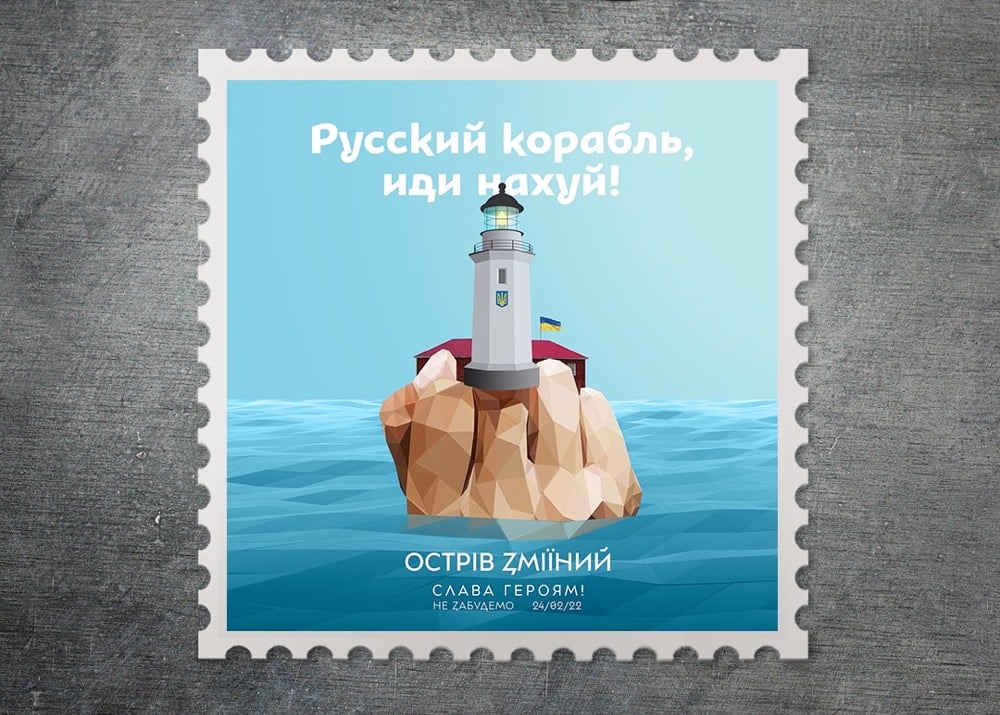

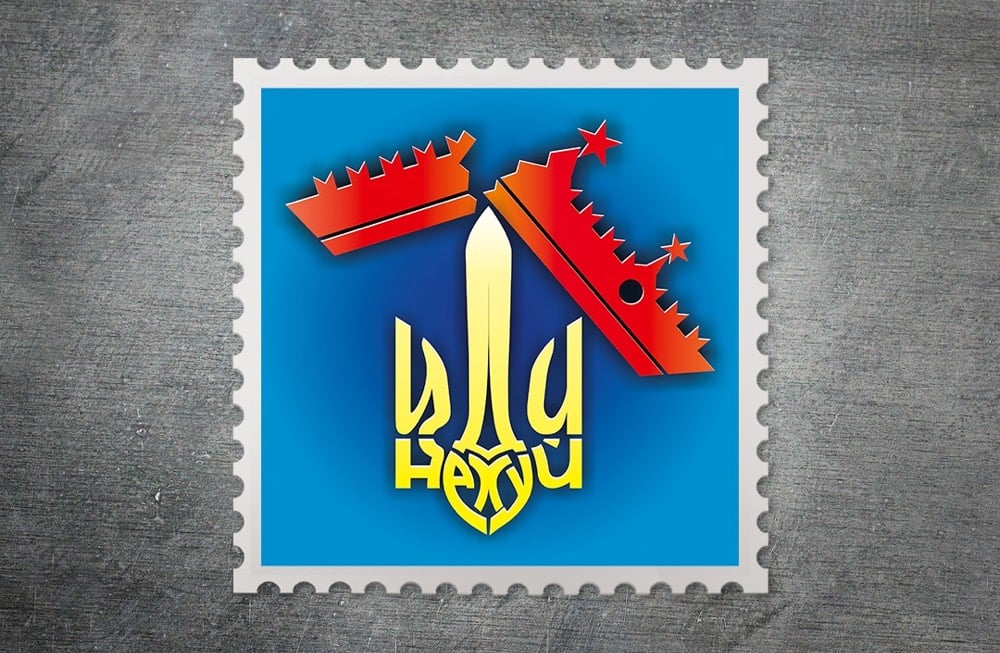
(Paweł Jońca’s illustration would also have made an amazing stamp.) Many of the finalists, including the winning entry (middle stamp above), reference the Ukrainian soldiers on Snake Island who told a Russian warship “Go fuck yourself”. Ukrposhta is now working on getting the winning stamp printed so that people can use it for postage — because, perhaps unbelievably, the post office continues to deliver the mail & packages throughout much of the country. (thx, @jackisnotabird)
50 years after playing Michael Corleone in The Godfather, Al Pacino looks back. “It’s a piece of work that I was so fortunate to be in. But it’s taken me a lifetime to accept it and move on.”
24 Years
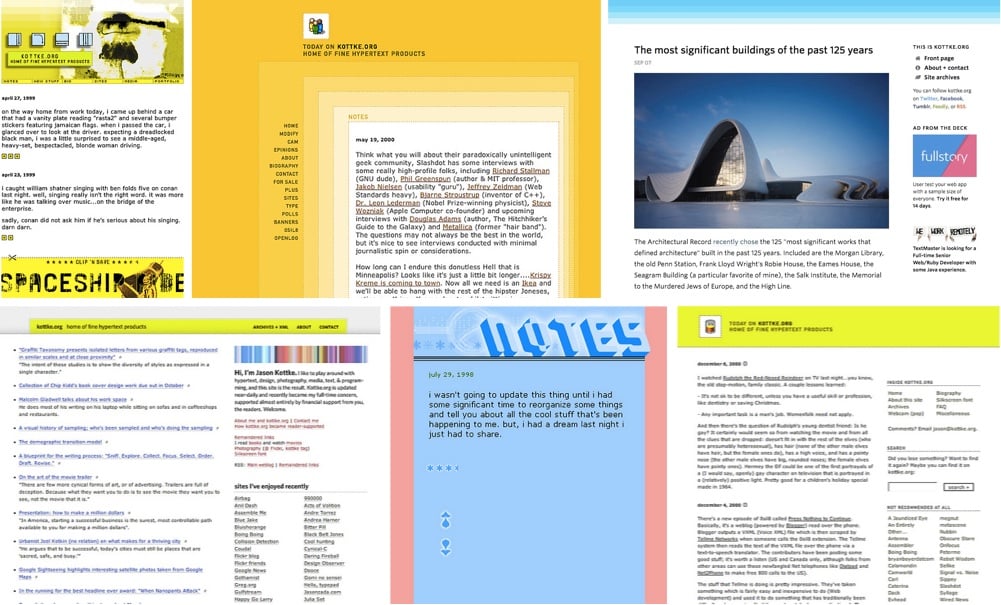
24 years ago today, I published the first post on kottke.org and, aside from a few weeks-long stretches (including a two-month paternity break when my son was born), I just never stopped. 1998! The late 20th century, for god’s sake. I write an anniversary post like this every year and I’m increasingly unsure how to think about the magnitude of that length of time — 24 years is just a few months away from being half of my life. Half. Of. My. Life. How? Why?!
In 2018, on the 20th anniversary of the site, I wrote a little bit about what I’ve gotten out of the site:
Some of my older posts are genuinely cringeworthy to read now: poorly written, cluelessly privileged, and even mean spirited. I’m ashamed to have written some of them.
But had I not written all those posts, good and bad, I wouldn’t be who I am today, which, hopefully, is a somewhat wiser person vectoring towards a better version of himself. What the site has become in its best moments — a slightly highfalutin description from the about page: “[kottke.org] covers the essential people, inventions, performances, and ideas that increase the collective adjacent possible of humanity” — has given me a chance to “try on” hundreds of thousands of ideas, put myself into the shoes of all kinds of different thinkers & creators, meet some wonderful people (some of whom I’m lucky enough to call my friends), and engage with some of the best readers on the web (that’s you!), who regularly challenge me on and improve my understanding of countless topics and viewpoints.
I had a personal realization recently: kottke.org isn’t so much a thing I’m making but a process I’m going through. A journey. A journey towards knowledge, discovery, empathy, connection, and a better way of seeing the world. Along the way, I’ve found myself and all of you. I feel so so so lucky to have had this opportunity.
I’ve been going through a bit of a rough patch for the past several months, both related to the site and not, and it’s so helpful for me to read that today, to be reminded of what kottke.org has given me and the special place it occupies in my life. I know some of you have been reading since the very beginning and others only for a few weeks/months, but I’d like to thank all of you for coming along with me on this journey.
And hey, while I have you here, I’d especially like to thank those readers who have supported kottke.org with a membership over the last five years — that financial support has allowed me to keep this site open and free for everyone to read, an increasing rarity in today’s subscription media environment. If you would like to join them (or if you’re a former member1 wanting to contribute again), step right this way.
I discovered the other day that there are nearly as many former members of kottke.org as current members. That seems surprising to me, but I’m not entirely sure why…↩
Experience the Lake District of Beatrix Potter
This is a really nice way to start the week: with relaxing bucolic scenes from the Lake District, a mountainous region in NW England that inspired the tales of Beatrix Potter. The lovely short film is part of an exhibition on Potter at the V&A.
The Lake District is a region and national park in Cumbria, North West England known for its glacial lakes and rugged fell mountains. Beatrix Potter eventually settled here after growing up in her ‘unloved birthplace’ of London, becoming an award-winning sheep farmer and respected member of the local community. When Potter died aged 77 on 22 December 1943, she left 14 farms and more than 4,000 acres to the National Trust.
Produced and directed by award-winning filmmaker and photographer Terry Abraham, this film captures intimate shots of the native wildlife that Potter would have sketched and later immortalised in her storybooks, alongside epic panoramic footage of its mountains and lakes, featuring locations where Potter lived, worked and admired.
Here’s an interview with filmmaker Terry Abraham about the film.
Over the last year or so I’ve been volunteering for my local red squirrel charity in the Eden Valley. Sadly, our beloved Squirrel Nutkin is on the verge of extinction within England and Wales thanks to the non-native grey squirrel brought in by the Victorians from North America. Little did they know that greys are immune carriers of a virus that wipes out red squirrel communities. Cumbria is the last major stronghold for Nutkin now and so along with many others I do my best to protect them and ensure their survival. Consequently, I’ve befriended many wild reds and can easily capture them on camera. Some even eat from my hand or sit by my side in the forest!
You can see some red squirrel footage starting right around 3:20 in the video. (via the kid should see this)
The Winners of Sony World Photography Awards for 2022

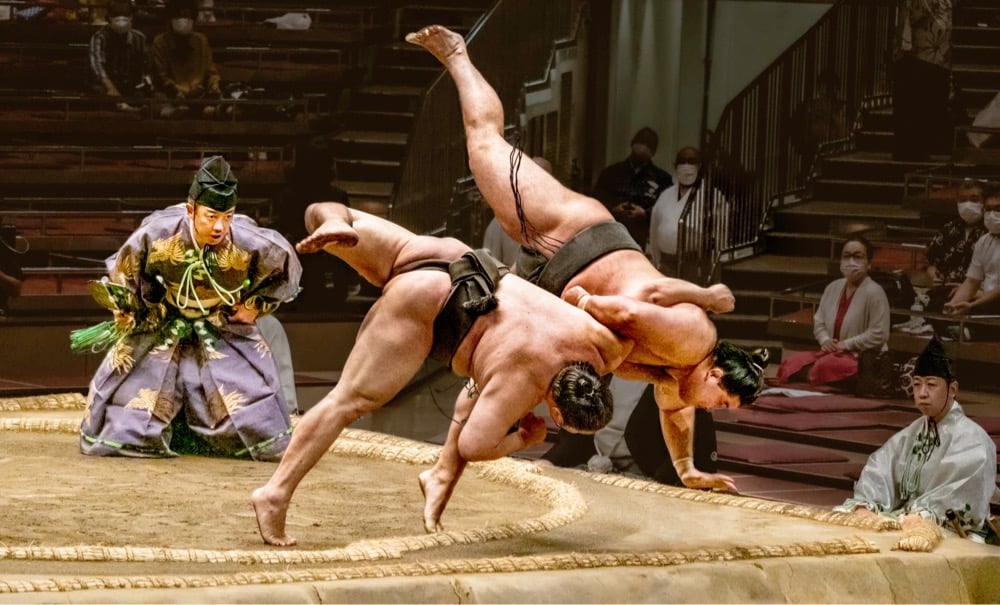



The Sony World Photography Awards have announced the winners of their national and regional competitions. As usual with these awards, there’s a bunch of great work in here. I’ve selected a few of my favorites above — from top to bottom, Sergio Carrasco, Chin Leong Teo, Kazi Arifuzzaman, Thanh Nguyen Phuc, and Wonyoung Choi. View the rest of the winning images here. (via colossal)
IBM’s $300 Open Source Lego Microscope


Using Lego bricks, a Raspberry Pi mini-computer, an Arduino microcontroller, some off-the-shelf components like lenses, and 3D-printed components, IBM scientist Yuksel Temiz built a fully functional microscope to help him with his work. The materials cost around $300 and the microscope performs as well as scopes many times more expensive — the images above were taken with the Lego scope.
The microscope works so well that for the past two years Temiz and his colleagues in the microfluidics lab at IBM Research, just meters away from the picturesque Zurich lake, have been using the images they took with it in their papers, published in leading journals. They also use them for presentations at major conferences. Not all images relate to microfluidics — the area of science that involves manipulating fluids on miniscule chips in a very precise manner. The liquids can be blood or urine, used for cancer and infectious diseases research as well as understanding heart attack conditions, and more. Researchers also routinely take images of typical computer chips, and Temiz showed me, for instance, how to take a stunning close up of a fruit fly.
Here’s a quick video look at how to build your own:
The the full set of open-sourced instructions are available on GitHub.
How Abraham Lincoln Used the Telegraph to Help Win the Civil War. “The nearly 1,000 bite-sized telegrams that he wrote during his presidency helped win the Civil War by projecting presidential power in unprecedented fashion.”
Minimalist Wordle Grid Art
The Twitter account 5x6 Art is posting extremely abstract versions of notable artworks using the constraint of fitting them into Wordle’s familiar 5x6 pixel grid.



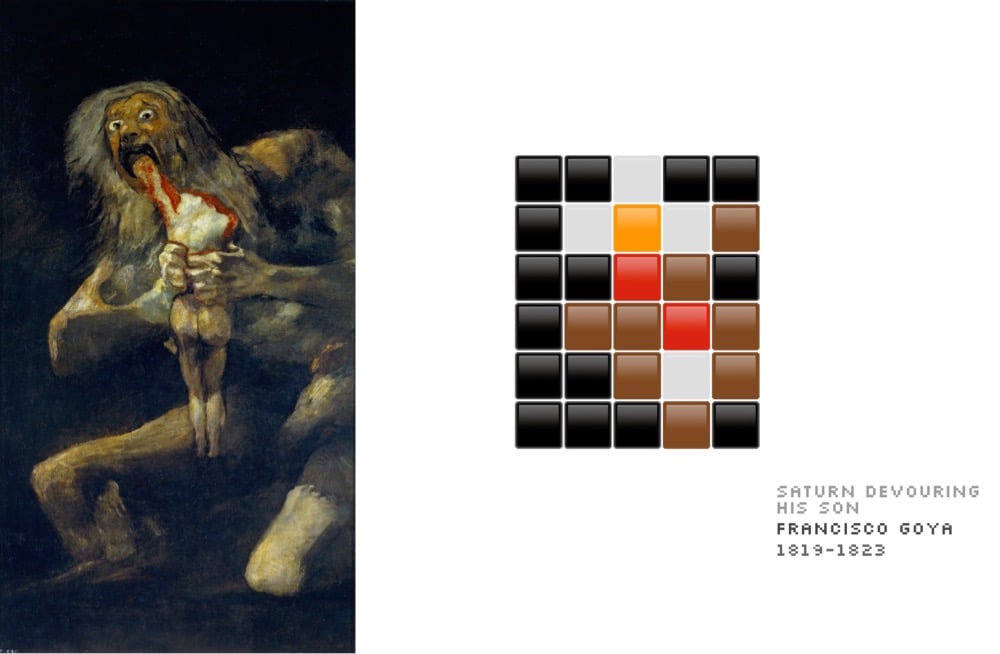
Obviously when you’re reducing artworks down to only 30 pixels of information, some of these are going to work better than others (e.g. Rothko and Mondrian). Still, some of the more detailed ones are just recognizable if you squint.
Looking back to the birth of Google, situated above a beloved bookstore. “The nerds upstairs had a cheap plastic banner made with the Google name emblazoned on it…[it] was an embarrassment and an eyesore.”
The Winners of the 2021 World Nature Photography Awards




The winning photos in the World Nature Photography Awards for 2021 were recently unveiled and it is always such a pleasure and balm to see how well these photographers capture the beauty of the natural world and the creatures who dwell in it. As always, I’ve included some of my favorites above — from top to bottom, photos by Vince Burton, Gautam Kamat Bambolkar, Chin Leong Teo, and Amos Nachoum. (via in focus)
Mesmerizing Ice Crystal Formations
For his music video for Sébastien Guérive’s Bellatrix, Thomas Blanchard filmed ice crystals forming at close range and ultra-high resolution.
Bellatrix Sébastien Guérive music video is an experimental film on the crystallization of ice stars. It is a chemical saturation in hot water which is then cooled. The chemical saturation becomes very unstable when the liquid cools. The slightest disturbance in the liquid activates crystallization.
I spent hours and hours as a kid watching snowflakes accumulate on windowsills, raindrops rolling down windows, clouds rolling in from the west, and frost advance on surfaces, looking for patterns in the seeming randomness, so this is right up my alley. (via colossal)
Working with Edward Lorenz, programmers Ellen Fetter and Margaret Hamilton (who would later work on the Apollo program) played a pivotal role in the birth of chaos theory. “Today, [they] would have been listed as co-authors on that seminal paper.”
As an experiment, Dr. Tab Combs removed any signs of being a woman from her Twitter acct. The result? Less mansplaining, harassment, and threats. “For the first time, I felt like the expert my friends & colleagues say I am.”
Sanctions Would Bite Russia Harder with Pro-Transparency Finance Reforms
The other day I shared a video and article by Oliver Bullough on how the UK enables Russia’s oligarchs to launder their money: Putin’s Oligarchs and the London Laundromat. Writer and researcher Casey Michel, author of American Kleptocracy: How the U.S. Created the World’s Greatest Money Laundering Scheme in History, is here to tell us that the US and EU countries are also guilty here. In a piece for The Atlantic, Michel argues that the present sanctions against Russia would be much more effective if the West were willing to address the use of anonymous shell companies and trusts to launder funds.
The Western response has been far broader than most experts anticipated, and threatens to throw the Russian economy into chaos. Yet there’s a catch. Absent significant domestic reforms in the West — reforms that should have been enacted long ago — sanctions targeted at the oligarchic and official figures close to Russian President Vladmir Putin risk inflicting little more than a flesh wound on Russia’s imperial kleptocracy.
Rampant financial anonymity in places like the U.S. makes it relatively easy for powerful rich people to evade sanctions. A Russian oligarch may have multimillion-dollar mansions in Washington, D.C.; or multiple steel plants across the Rust Belt; or a controlling stake in a hedge fund in Greenwich, Connecticut; or an entire fleet of private jets in California; or an array of lawyers setting up purchases at art houses around the country. And all of that wealth can be hidden-perfectly legally-behind anonymous shell companies and trusts that are enormously difficult to penetrate.
If Western policy makers hope to hold Putin’s cronies truly accountable, sanctions will have to be paired with pro-transparency reforms that can disassemble this web of secrecy. Western governments should start by ending anonymity in shell companies and trusts; demanding basic anti-money-laundering checks for lawyers, art gallerists, and auction-house managers; and closing loopholes that allow anonymity in the real-estate, private-equity, and hedge-fund industries. That is, if the sanctions are to retain their bite, the entire counter-kleptocracy playbook needs to be implemented-immediately.
Are Gas Prices Too High? Or Is Your Car Too Big? “What if, facing those high prices [in 2012], we had made changes on the demand side instead?”
Karaoke Torii Made of Speakers


For the Kobe Biennale held in Kobe, Japan in 2016, sculptor Benoît Maubrey created a traditional Japanese torii gate out of speakers and a bunch of inputs (Bluetooth, line-in, even an 8-track). Using microphones or their phones, passersby could connect to the torii to play music or sounds, talk to each other over the mics, or sing karaoke. The structure was later relocated to Kamiyama. Maubrey has made several similar artworks; here’s what he says about his work:
Artistically I use loudspeakers much in the same way that a sculptor uses clay or wood: as a modern medium to create monumental artworks with the added attraction that they can make the air vibrate (“sound”) around them and create a public “hotspot”.
The audio part of my sculptures is also site-specific and flexible: in all my work the sound level is controllable and the interactivity is regulated via a mixing board (a bell tower or pendulum clock also make sound).
Participation: according to the sculpture site and purpose my sculptures can be equipped with a microphone (self expression), Bluetooth receivers (individuals can play their own tunes music), telephone answering machines (people can call and express themselves Live), radio receivers (for low-level cosmic white noise that sound like whispering pines), and “audio” twitter that allows people to send phonic messages. In some cases the whole system can be used as a PA system for announcements, concerts, open mike sessions, and DJ events.
Ernest Shackleton’s Ship Found After 106 Years
Ernest Shackleton’s ship, The Endurance, has been lost since it sank in the Antarctic in 1915. A team of explorers and researchers just found it in icy waters 10,000 feet beneath the surface.
The ship was found about four miles south of the last location recorded by Shackleton’s captain and navigator, Frank Worsley. The search had been conducted over a wide area to account for errors in Worsley’s navigation equipment.
Endurance’s relatively pristine appearance was not unexpected, given the cold water and the lack of wood-eating marine organisms in the Weddell Sea that have ravaged shipwrecks elsewhere.
Mr. Bound also described the wreck as “intact.” Although Hurley’s photographs before the sinking had shown major damage to, and the collapse of, the ship’s mast and rigging, and there had been damage to the hull, Mr. Bound had expected most of the ship to be in one piece.
The video above was taken by the underwater drones that found the wreck.
The Hidden Secret in a Famous Painting
The set design of The Andy Griffith Show is perhaps an odd place to start when talking about 19th century French painter Jean-François Millet, but this video hits its stride when Salvador Dali enters the picture. After viewing, you can read more about Millet’s painting The Angelus.
I, High-Powered Fashion Editor Miranda Priestly, Demand an Assistant Who Is Terrible. “If you should falter, even once, I vow that I will become briefly aggravated with you and then keep you in your position.”
A 4-year-old unvaccinated child has tested positive for polio in Israel. It’s the first case there since 1989. (Something tells me we’ll be seeing more of this.)
“The European Commission on Tuesday outlined its strategy to cut [natural gas] import needs from Russia by two-thirds this year.” It’s amazing what can be done when the urgency is there…
Socials & More