



This site is made possible by member support. 💞
Big thanks to Arcustech for hosting the site and offering amazing tech support.
When you buy through links on kottke.org, I may earn an affiliate commission. Thanks for supporting the site!
kottke.org. home of fine hypertext products since 1998.
Beloved by 86.47% of the web.
Entries for November 2021
Why Starting a Cannabis Business Is So Hard
This video provides a good overview of the difficulty involved in starting a business that grows, sells, or distributes cannabis products, which can include money, federal illegality, state regulations, and structural racism.
Jeannette: So you really got to get your business funded from your personal wealth or from your network wealth.
Nancy: Those situations begin to favor people who’ve traditionally had good access to capital.
Jeremy: And oftentimes that correlate with being white.
Adriana: It is very white male-dominant. And there’s no reason that that is what it should be.
Narrator: Only 2% of cannabis entrepreneurs are Black. Yet Black Americans were most affected by marijuana’s illegal status in the past.
Jeremy: There is kind of a clear throughline from the war on drugs. According to the ACLU, Black people are four times as likely than whites to get arrested for cannabis use, despite using at very similar rates across age groups, across different states.
Clive Thompson built a fun web app for right-angle doodling. “It’s been pretty well-established that doodling is cognitively useful.”
The Ultimate Ski Run
This is a really entertaining ski video from Markus Eder that combines the playful free skiing of Candide Thovex with JP Auclair’s street skiing. My kids do free skiing — not on stuff like this quite yet — and let me assure you that as steep, fast, and big as everything looks in that video, it’s steeper faster, and bigger in real life. It took so much effort and planning to make that run look so easy.
The Root 100, a list of the most influential African Americans aged 25 to 45 for 2021. The list includes NIH viral immunologist Kizzmekia Corbett, 1619 Project instigator Nikole Hannah-Jones, and tech video maven Marques Brownlee.
Time Lapse of Carnivorous Plants and Their Prey Preparing for Battle
Backed by a soundtrack from Alexis Dehimi that sounds like it’s from a Christopher Nolan or Denis Villeneuve movie, Thomas Blanchard’s short film provides a glimpse into the tiny, dynamic world of plants and insects: “A butterfly in the process of being born, plants in the process of growing, Carnivorous plants in the process of hunting.”
It’s all very dramatic, but never fear, a tender disclaimer in the video’s description: “All insects captured by the plants have been released.” (via colossal)
China’s plan to reduce their carbon emissions hinges on nuclear power. “China is planning at least 150 new reactors in the next 15 years, more than the rest of the world has built in the past 35.”
Finch? Finch.
Finch is a movie starring Tom Hanks, whose character befriends a dog in post-apocalyptic America and then builds a robot to protect the dog. It’s like Short Circuit meets I Am Legend meets Turner and Hooch meets Castaway meets Terminator 2. The only reason I am telling you about this preposterous-sounding entertainment product is that David Ehrlich (who is responsible for the epic movie recaps I post every year) wrote a mostly favorable review of it. The star of the show, says Ehrlich, is Jeff, the dog’s robot bodyguard:
Dewey sets the tone as the first of Finch’s manufactured friends. An articulating arm that’s attached to a metal cube on wheels, the prototype is lovable despite being only lightly anthropomorphized, and the decision to cast him as a 100-percent practical animatronic makes it that much easier for your eyes to accept that Jeff is just as real (Jones’ on-set motion-capture work and top-notch CGI help to complete the illusion). From the moment Finch powers him up, there isn’t a doubt in your mind. In fact, Jeff is so tactile and endearing that a more adorable design might have risked a kind of overkill; essentially an oblong, gourd-like orange cushion affixed with two protruding camera eyes and squished on top of a giant chassis of exposed titanium joints, Finch’s magnum opus doesn’t seem like the solution to all his problems so much as a robot Cousin Greg who’s been programmed with Asimov’s Three Laws plus a prime directive to “protect dog above all else.” He can only be loved for his potential.
It’s streaming on Apple+ starting this Friday. I might….watch it?
An Animated Music Video for a Jarvis Cocker Cover, Directed by Wes Anderson
Wes Anderson has directed a stylish animated music video for Jarvis Cocker’s lovely cover of Christophe’s “Aline”, which was a big hit in France in the summer of 1965. The video, illustrated by Javi Aznarez, also doubles as a trailer/moving poster of sorts for the film in which the song appears, Anderson’s own The French Dispatch.
The song appears on the soundtrack for The French Dispatch, as well as on an album called Chansons d’Ennui Tip-Top, a collection of French pop songs covered by Cocker in character as Tip-Top, the character he voices in the movie. (via open culture)
The Beach, a “Infinity-Looping Experience” from A24
The Beach is a documentary from Australian filmmaker Warwick Thornton that documents his time living on a isolated beach in order to “transform his life through the healing power of nature”. From the looks of the trailer, it’s a little bit ASMR combined with slow TV — A24 is playing the film in a continuous loop (an “infinity-looping experience”) from November 22-28 so you can just dip in and out of it during the week. More info here and here. Looks beautiful. More cool weird stuff like this please. (via craig mod)
Nature’s Hitchhikers




Those are a selection of Dillon Marsh’s macro photographs of the sneaky and clever seeds of various hitchhiker plants. The seeds of this type of plant can attach themselves to the fur, hair, clothing, or skin of animals, catching a ride in order to spread themselves over a wider geographic area in order to ensure a greater chance at survival.
In perhaps one of the best examples of biomimicry, a hitchhiker plant called the burdock was the inspiration for Velcro:
In 1941, George de Mestral had the inspiration for the hook and loop fastener while he was on a hunting trip in the Alps with his dog Milka. George noticed that burdock burrs — a tiny seed covered in hundreds of microscopic ‘hooks’ that catch onto the natural ‘loops’ that cover fur, clothing and hair — kept sticking to his dog’s fur.
This was the moment that George saw a huge opportunity. He spent the next decade with a microscope investigating how the burdock burr’s barbed, hook-like seeds engaged with the ‘loops’ on his trousers, trying to create a new type of clothing fastener.
(via moss & fog)
A Brief History of the Pixel

Computer graphics legend Alvy Ray Smith (Pixar, Lucasfilm, Microsoft) has written a new book called A Biography of the Pixel (ebook). In this adapted excerpt, Smith traces the origins of the pixel — which he calls “a repackaging of infinity” — from Joseph Fourier to Vladimir Kotelnikov to the first computers to Toy Story.
Taking pictures with a cellphone is perhaps the most pervasive digital light activity in the world today, contributing to the vast space of digital pictures. Picture-taking is a straightforward 2D sampling of the real world. The pixels are stored in picture files, and the pictures represented by them are displayed with various technologies on many different devices.
But displays don’t know where the pixels come from. The sampling theorem doesn’t care whether they actually sample the real world. So making pixels is the other primary source of pictures today, and we use computers for the job. We can make pixels that seem to sample unreal worlds, eg, the imaginary world of a Pixar movie, if they play by the same rules as pixels taken from the real world.
The taking vs making — or shooting vs computing - distinction separates digital light into two realms known generically as image processing and computer graphics. This is the classical distinction between analysis and synthesis. The pixel is key to both, and one theory suffices to unify the entire field.
Computation is another key to both realms. The number of pixels involved in any picture is immense - typically, it takes millions of pixels to make just one picture. An unaided human mind simply couldn’t keep track of even the simplest pixel computations, whether the picture was taken or made. Consider just the easiest part of the sampling theorem’s ‘spread and add’ operation - the addition. Can you add a million numbers? How about ‘instantaneously’? We have to use computers.
Birds With People Arms
So photos of birds with people arms are pretty funny but videos of birds with people arms are even better. I think my favorites are selfie bird, the ostrich, and the penguins.
The Ten Contradictory Traits of Creative People
The late psychologist Mihaly Csikszentmihalyi identified and popularized the concept of flow and also did research around the linked ideas of creativity and happiness. In his book Creativity: Flow and the Psychology of Discovery and Invention, he listed 10 pairs of contradictory traits that creative people tend to have.
1. Creative individuals have a great deal of physical energy, but they are also often quiet and at rest.
2. Creative individuals tend to be smart, yet also naive at the same time.
3. A third paradoxical trait refers to the related combination of playfulness and discipline, or responsibility and irresponsibility.
4. Creative individuals alternate between imagination and fantasy at one end, and a rooted sense of reality at the other.
5. Creative people seem to harbor opposite tendencies on the continuum between extroversion and introversion.
6. Creative individuals are also remarkably humble and proud at the same time.
7. Creative individuals to a certain extent escape this rigid gender role stereotyping [of ‘masculine’ and ‘feminine’].
8. Creative people are both traditional and conservative and at the same time rebellious and iconoclastic.
9. Creative persons are very passionate about their work, yet they can be extremely objective about it as well.
10. The openness and sensitivity of creative individuals often exposes them to suffering and pain yet also a great deal of enjoyment.
(via open culture & austin kleon)
The Metaverse Is Here. It’s Called Minecraft.
In the wake of Facebook’s lifeless demo of their metaverse vision, Clive Thompson asserts what many parents of young children already know: The Metaverse Is Already Here. It’s Minecraft.
The truth is, a thriving metaverse already exists. It’s incredibly high-functioning, with millions of people immersed in it for hours a day. In this metaverse, people have built uncountable custom worlds, and generated god knows how many profitable businesses and six-figure careers. Yet this terrain looks absolutely nothing the like one Zuckerberg showed off.
It’s Minecraft, of course.
The ability to tinker with the game so easily attracts players to it…something that companies like Facebook, who desire revenue-extracting control above all else, will be reticent to enable:
Minecraft is really easy to hack. On several levels! If you’re good with graphic design, for example, you could make skins that change the appearance of your character. You can use the game’s built-in scripting language to create custom devices. Or if you know a bit of coding, you can build mods that create entirely new objects in the game, or change the gameplay.
This hackability is part of why the game has remained so vibrant: Players are constantly revitalizing Minecraft, and inventing new things you can do inside it. Third-party folks build tools like skin editors, to make it easier for players to be creative.
As a piece of software, Minecraft isn’t open-source, but it’s very friable and gas-permeable around the edges. Mojang was willing to give their players a lot of control, and it’s part of why people are devoted to the game.
I could be wrong, but I honestly can’t imagine many of the big tech metaverses allowing this sort of Xtreme tinkerability.
I’ve seen all of this up close — both of my kids are Minecraft devotees, especially my son, who apparently is one of the better mobile-only players on The Hive (so! proud?). He’s had to navigate politics in guilds, both as a member and as a creator, and has formed friendships with kids from all over the world that are as real to him as any local relationships. He’s immersed in the media and economies created around the game, almost none of which were created by Mojang or Microsoft. But sometimes it’s still just the two of them, in a world created on one of their devices, building a cool world just because it’s fun.
Bookshop and Penguin Random House are working with independent book stores to provide copies of The 1619 Project to schools and community organizations. You can donate a copy or two, via your local bookstore, here.
Leonardo da Vinci’s Best Painting (Is Not The Mona Lisa)
For the latest episode of Nerdwriter, Evan Puschak (after briefly introducing his forthcoming book) discusses his favorite Leonardo da Vinci painting, The Virgin and Child with Saint Anne.
In this way, moving from the apex of the pyramid to its bottom right corner is actually a trip through time, from the past to the present to the future. And that timeline also extends along a three-dimensional axis — the lamb is in front of Jesus, who’s in front of Mary, who’s in front of Anne. But on this axis, it goes even further — behind Anne, we’re launched into the geological past. These mountains, these bones of the Earth, suggest a deep time — so deep that it conflicts with the Christian sense of the age of the world. Now that reflects a larger conflict in the Renaissance between religion and a growing appreciation for natural science, which is embodied in no person more than Leonardo da Vinci, the insatiably curious polymath.
9 Ways to ‘Rewild Your Attention’. “How to inject more weirdness and randomness into the stuff you read and see.” I use many of these techniques in my work here at @kottke.
Tiny Soccer Stars



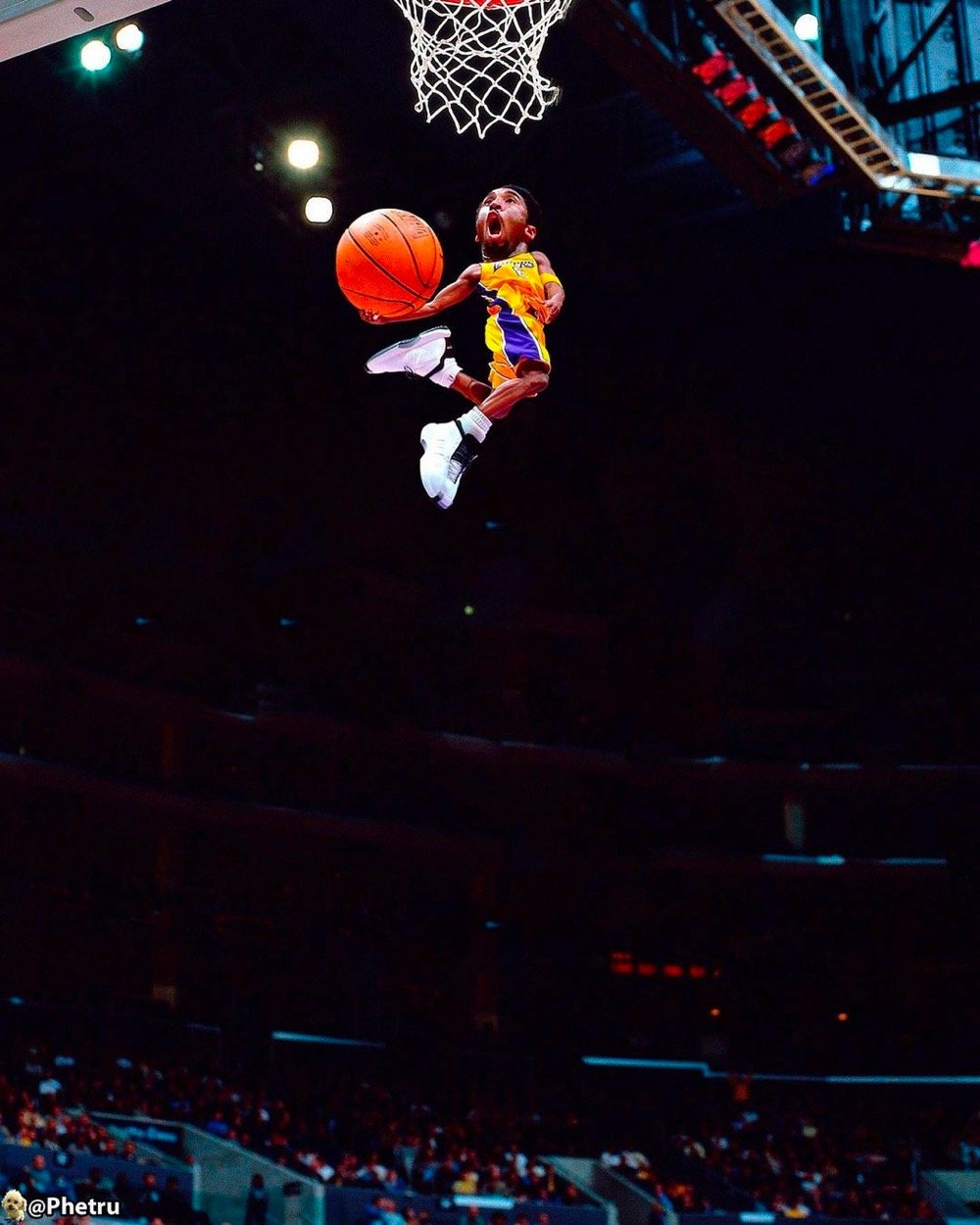
I am a little bit obsessed with Phetru’s miniaturized soccer stars (along with the occasional other sports stars or celebrities, like Kobe above or Emma Raducanu) — they’re like bobbleheads come to life. It was tough picking out just 3 or 4 to feature…each successive photo was funnier than the last.
Which famous old people could identify Nintendo’s Mario? “Not only does Rushdie know who Mario is, but also Luigi and, I don’t think this is too much of a stretch, Yoshi, Bowser, and the Koopalings.”
The Library of Misremembered Books

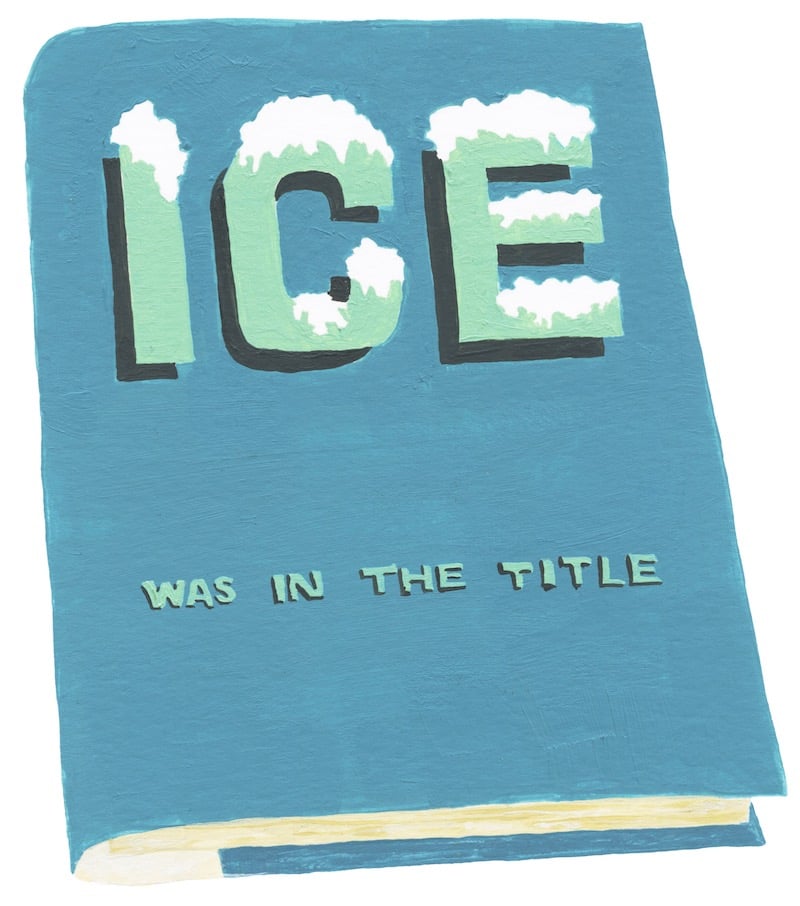
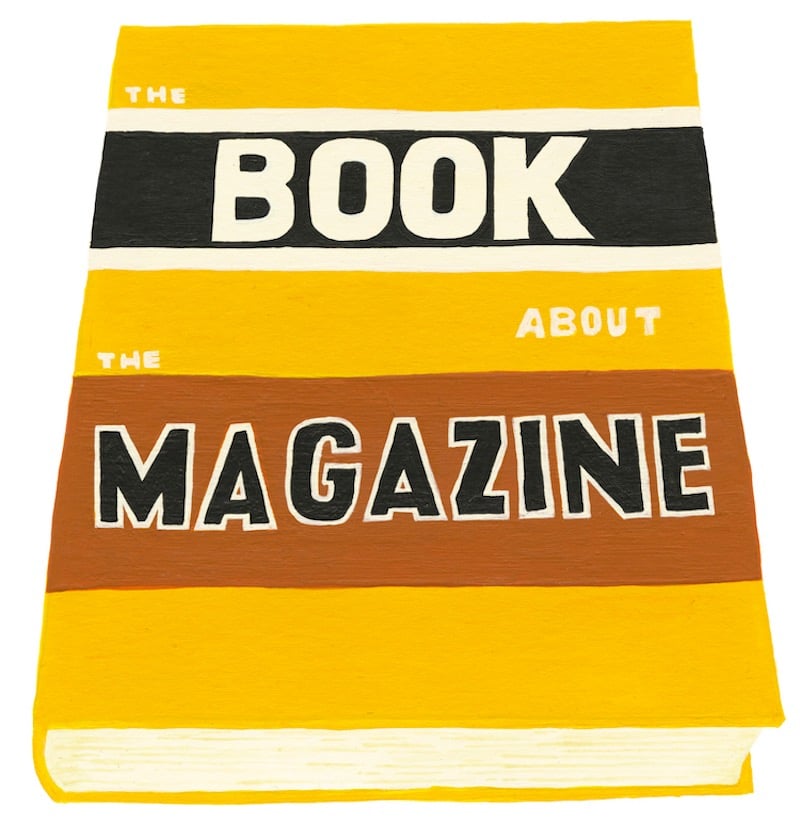
In her new book Library of Misremembered Books, Marina Luz creates new book covers from the vague and hilarious ways in which people can’t recall the exact names of books.
Anyone who has worked in a bookstore knows only too well that moment when a customer approaches by saying, “So I don’t remember the title, or the author, but-.” And we’ve all been on the other side of the counter, trying to pinpoint something we can’t quite describe at a bookstore (“It’s a murder mystery, but also quite funny”), or at a video store (“Could be subtitled, but then again, now that I think about it, maybe it wasn’t”), or at a mechanic (“The car is kind of going gu-chunk, gu-chunk; except on hills, when it’s more of a clickety-tickety”). We are usually left not only without an answer, but also with the overwhelming sense that we have lost some small piece of our dignity in the attempt.
See also (via this thread) a list of misremembered titles from the Fukui Prefectural Library in Japan. (via literary hub)
These 4 charts explain why the stakes are so high at the U.N. climate summit. “The world is not on track to avoid extreme climate change.”
It’s Membership Time!

Hey folks, it’s time for the annual unpleasantness: me telling you about kottke.org’s membership program. Five years ago I introduced the kottke.org membership program so that folks reading the site could directly support my efforts here, and it’s been wonderfully successful. Or to put it another way, without that member support, this site would not exist. Thanks to those members for keeping this site free for everyone to read!
Why wouldn’t it exist? The online advertising market for small sites like this sucks (especially for non-vertical sites) and I’ve nearly stopped linking to Amazon, losing the corresponding affiliate revenue that comprised 15-20% of my total annual revenue. Poof, gone. As much as I like linking to Bookshop.org instead, the revenue from their affiliate program has only filled a tiny bit of that absence. Member support is far and away the thing that’s keeping me going here.
I know these are ųŋųʂųąƖ ɬıɱɛʂ and that can make it tough to support things like non-essential websites. If you can’t swing it right now, please don’t! And don’t worry about it. If you’re currently a member worried about your finances and a refund of this year’s membership amount would help out, send me an email and let’s make that happen. But if you find value in this site and can manage it, I’d appreciate you supporting the site with a membership, especially if you’re someone who values the switch to Bookshop.org and that the advertising on the site is both minimal and relevant. And if you’re already a member and want to remain so (or even to bump up your membership level), maybe log in to check your status — it’s easy for a credit card to expire and you miss the email…
For the past 7-8 years, this Weird Internet Career has felt precarious, dependent on the whims of massive companies that don’t give a shit about individual creators. Facebook and Google sucked up all the online advertising revenue several years ago, Amazon has marginalized their affiliate program, Medium has changed their business model more times than I can count, Substack is going to run out of VC money to spread around at some point, and…I could go on. These companies have also made decisions that have angered and harmed their customers, employees, publishers, and even democracy. None of this provides the stability that small sites like mine need to exist in the world. After five years of the membership program, five years of support from readers like you, this feels stable and sustainable. It feels real and good. Thanks for giving a shit.
Note: I’ve been writing some version of this post for five years now and there’s only so many ways to tell the same story, so I reused bits from last year’s post for this one. Just wanted to let you know in case you were feeling some deja vu.
Japan’s Best Mundane Halloween Costumes for 2021
It’s become a tradition in Japan to dress up in mundane costumes that depict everyday situations for Halloween and once again Johnny Waldman of Spoon & Tamago has collected some of the best and most creative efforts for 2021. Here are a few favorites. “Guy who leans in as his Mario Kart character turns a curve” (I am 100% this guy when I play):

“That person who showed up for the free trial lesson”:

“That cashier who looks away as you enter your debit PIN”:

“Girl who started decluttering but ended up on her phone”:
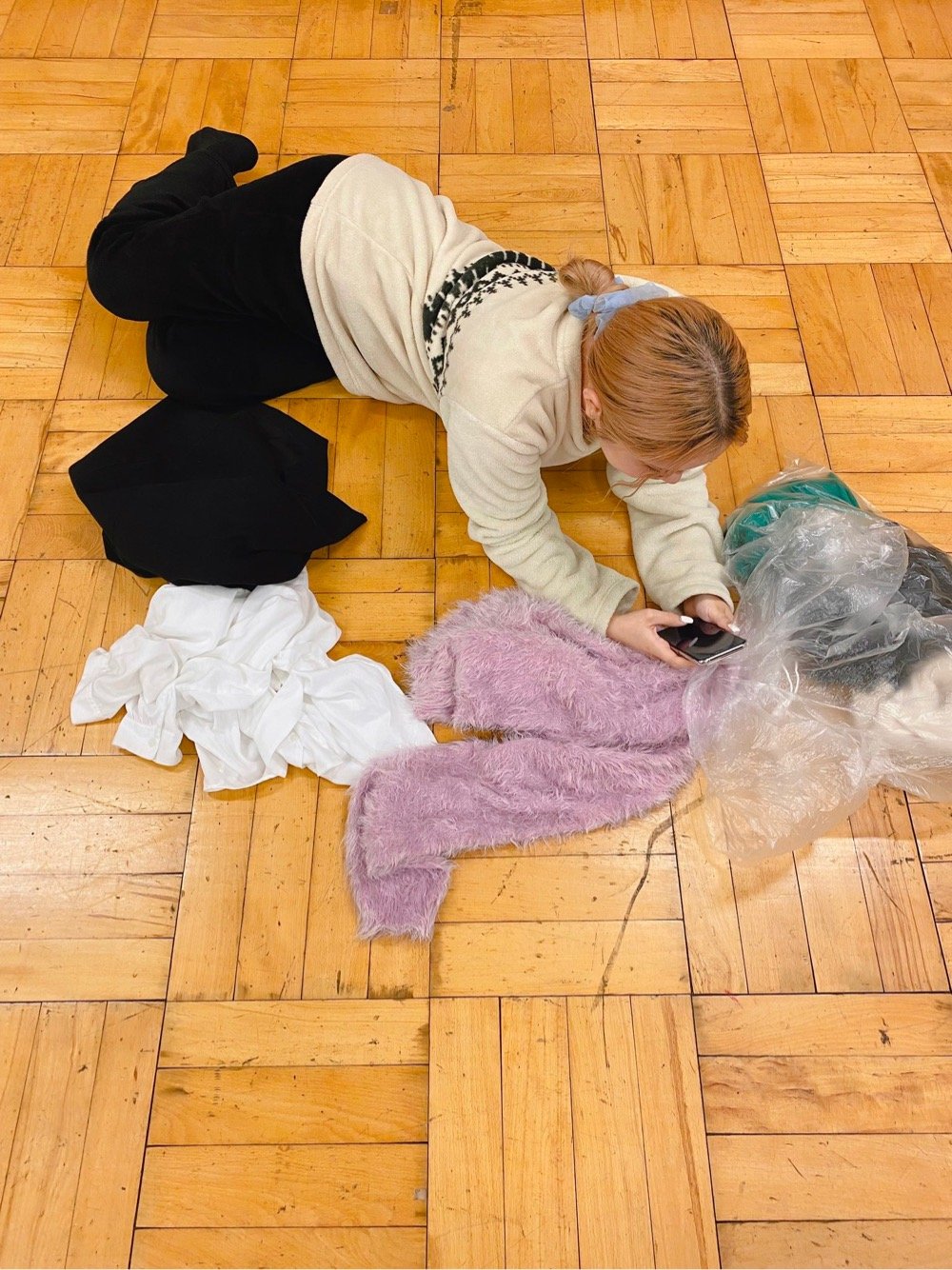
You can see the rest here or check out the costumes from 2019 and 2020.

Socials & More